Navigating Bangkok's Aviation Gateways
Bangkok is served by two international airports, each catering to distinct types of air travel and routes into the capital.
Suvarnabhumi Airport (BKK), situated thirty kilometres east of central Bangkok in neighbouring Samut Prakan province, functions as Thailand's primary international gateway. The facility handles roughly sixty million passengers a year, accommodating most long-haul scheduled flights, global airline alliances, and full-service flag carriers such as Thai Airways and British Airways.
By contrast, Don Mueang International Airport (DMK) sits twenty-four kilometres north of the city centre along the Vibhavadi Rangsit corridor. Opened in 1914, it ranks among the world's oldest operating airfields and operates as a dedicated regional base for budget carriers, including Thai AirAsia, Nok Air, and Thai Lion Air.
Choosing where to arrive or depart shapes your journey across the capital. Ground transport contrasts sharply, pairing Suvarnabhumi’s dedicated Airport Rail Link against Don Mueang’s SRT Dark Red Line suburban rail, alongside differences in taxi queues, road congestion, terminal layouts, and flight transfer requirements.

Suvarnabhumi Airport
Suvarnabhumi Airport is Bangkok's primary international gateway, located in Samut Prakan province roughly 30 kilometres east of central Bangkok. The facility handles the capital's full-service legacy airlines, global alliance carriers, and long-haul connections, functioning as the hub for Thai Airways alongside international operators such as EVA Air. The main passenger terminal spans more than 560,000 square metres, complemented by the SAT-1 satellite terminal, meaning arriving travellers can face a walk of up to one kilometre from remote gates to central passport control. During the heavy afternoon arrival window between 14:00 and 17:00, queues at immigration counters often back up significantly as thousands of international passengers arrive each hour.
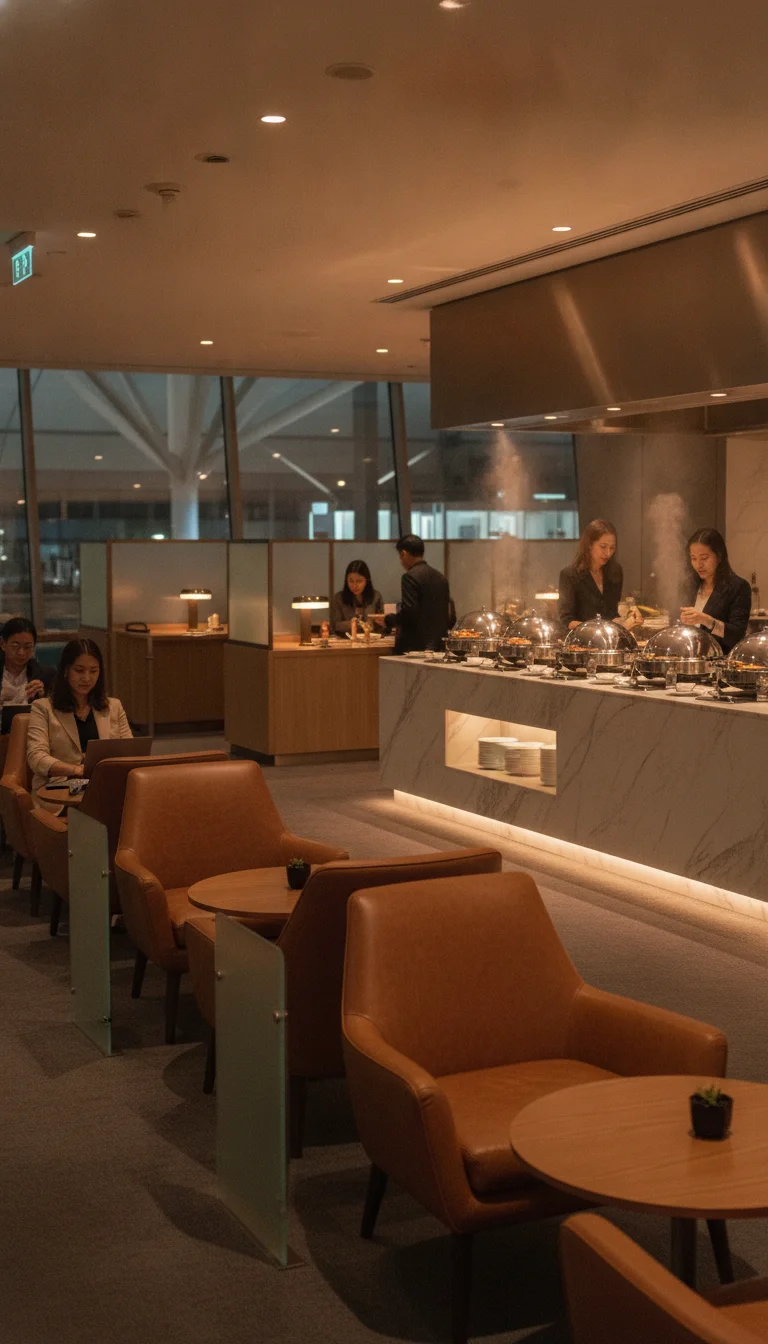
Inside the terminal, amenities cater to both premium and budget travellers. Miracle Lounges operate across Concourses A, C, D, F, and G, with two-hour access passes typically starting from 1,300 THB (approximately £29). Arriving visitors can exchange cash at the SuperRich kiosks on Basement Level B, which offer significantly better rates than standard commercial bank counters on the arrivals level. For affordable dining, the Magic Food Point canteen operates 24 hours a day on Level 1 near Gate 8, selling local Thai dishes at street-level prices through a prepaid card system. However, travellers using terminal cash machines must pay Thailand's standard 220 THB foreign card withdrawal fee across all local bank machines.
Ground transport provides dependable transit into Bangkok. On Basement Level B, the Airport Rail Link City Line departs every 10 to 15 minutes between 05:30 and midnight. The train avoids highway congestion entirely, stopping at Makkasan for the MRT Blue Line and reaching Phaya Thai for the BTS Skytrain in 26 to 30 minutes for a 45 THB fare (around £1.00). Alternatively, official metered taxis operate via automated ticketing machines on Level 1. A typical metered ride into central districts such as Sukhumvit or Silom costs between 350 and 500 THB (£7.85 to £11.20), plus a mandatory 50 THB airport surcharge and roughly 75 THB in expressway tolls.
Don Mueang Airport
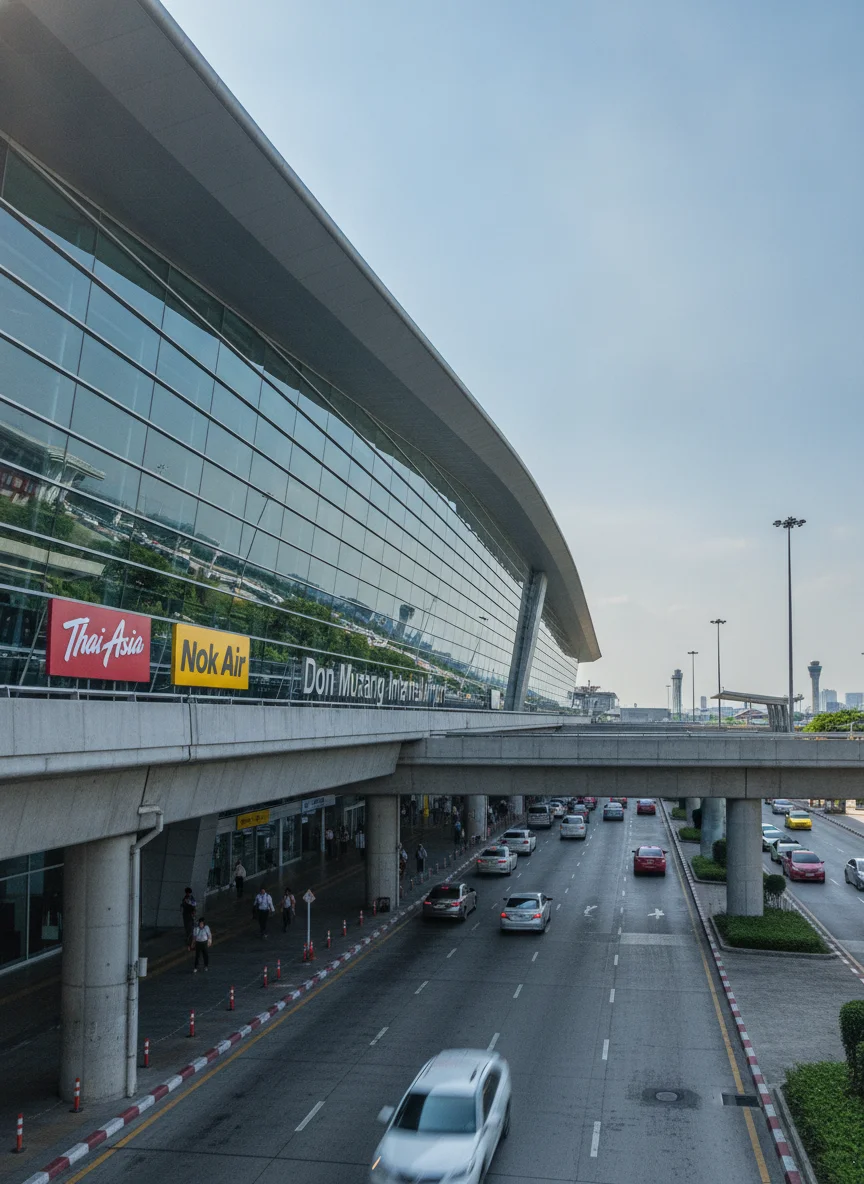
Positioned 24 kilometres north of central Bangkok along Vibhavadi Rangsit Road, Don Mueang International Airport is the capital's secondary aviation hub and the primary base for low-cost regional and domestic airlines. The airport functions across two adjoining terminals: Terminal 1 handles international flights, while Terminal 2 manages domestic departures and arrivals. The domestic terminal experiences substantially heavier foot traffic, and passenger concourses maintain noticeably chilly air conditioning throughout both buildings.
Terminal amenities focus firmly on practical convenience. On the fourth floor of Terminal 2, Sleep Box by Miracle provides compact hourly rooms for short layovers, with rates typically running between 1,000 THB and 1,500 THB (£22.70 to £34.10) for three-hour stays. For meals, the landside Magic Food Point food court delivers authentic Thai dishes such as noodle soups and chicken rice for under 80 THB (£1.80), avoiding the higher markups found in the airside departure lounges.
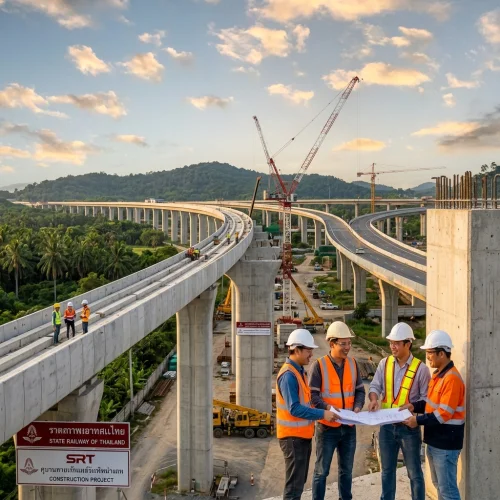
Public rail transport operates via an elevated walkway connecting Terminal 2 to Don Mueang station on the State Railway of Thailand (SRT) Dark Red Line. Trains run regularly to Krung Thep Aphiwat Central Terminal, taking roughly twenty minutes and costing 33 THB (£0.75). From there, passengers transfer directly to the underground MRT Blue Line to reach central districts. Metered taxis and Grab pick-ups operate outside arrivals, though vehicles face heavy traffic along Vibhavadi Rangsit Road, and passengers pay expressway toll fees of 70 to 120 THB (£1.60 to £2.70) in cash.
Connecting to Suvarnabhumi involves a free inter-airport shuttle bus covering the 48-kilometre motorway transfer, accessible to passengers presenting a valid passport and a confirmed same-day onward ticket. Don Mueang suits independent backpackers, regional travellers, and domestic flyers securing budget fares, but lacks the expansive executive lounges, high-end duty-free outlets, and global alliance connections of Suvarnabhumi. Passengers should also factor in checked baggage costs on carriers such as Thai AirAsia and Nok Air, which can add 800 to 1,200 THB (£18.20 to £27.30) per flight.
Complete UK traveller guide to Suvarnabhumi Airport in Bangkok, covering arrivals, immigration fast track, Airport Rail Link transfers, taxis, and facilities.
Transport Network and City Connections
Suvarnabhumi connects directly to the Airport Rail Link City Line on the basement level, running from 05:30 until midnight. This elevated rail bypasses road traffic, reaching the Phaya Thai BTS Skytrain interchange in 26 minutes for a maximum fare of 45 THB (£1.05), with an intermediate connection at Makkasan for the MRT Blue Line at Phetchaburi. Because the carriages lack luggage racks, peak commuter hours (07:00–09:00 and 17:00–20:00) can feel cramped with heavy bags. Don Mueang connects via an elevated walkway to the SRT Dark Red Line, taking roughly 20 minutes to reach Krung Thep Aphiwat Central Terminal for 33 THB (£0.75). Reaching central hotel districts requires transferring to the underground MRT Blue Line. Slower, irregular State Railway of Thailand surface trains still stop at the older ground station opposite Don Mueang, but infrequent departures make them impractical for most arrivals.
For road transfers, Suvarnabhumi manages public taxis through automated Level 1 kiosks. Metered fares to central areas like Sukhumvit or Silom run from 350 to 500 THB (£8.00 to £11.50), plus a 50 THB (£1.15) airport surcharge and roughly 75 THB (£1.70) in expressway tolls. At Don Mueang, Level 1 taxi stands yield metered fares of 250 to 400 THB (£5.75 to £9.20) plus the 50 THB fee; chronic congestion along Vibhavadi Rangsit Road makes taking the elevated tollway—adding 70 to 120 THB (£1.60 to £2.75)—advisable. Both airports support ride-hailing services such as Grab with designated pickup zones: Level 1 near Gate 4 at Suvarnabhumi, and Terminal 2 near Gate 14 at Don Mueang. Budget travellers at Don Mueang can also board air-conditioned BMTA buses (routes A1 to A4) outside the terminal for 30 to 50 THB (£0.70 to £1.15), providing direct links to BTS Mo Chit, Victory Monument, and Khao San Road.
Terminal Facilities and Passenger Comfort
The physical environment at each airport shapes your arrival experience, particularly after a long flight from the UK. Suvarnabhumi is a colossal single-terminal facility covering 563,000 square metres, where contemporary glass-and-steel concourses come with a catch: walking distances from remote arrival gates to passport control often exceed one kilometre. Terminal amenities cater well to long-haul passengers. Walk-in access to Miracle Lounges costs from roughly 1,300 THB (£29) for three hours, and the Level 1 Magic Food Point serves classic Thai dishes for 50 to 80 THB (£1.10 to £1.80). Savvy travellers head to the basement concourse beside the Airport Rail Link, where independent SuperRich kiosks provide substantially tighter currency exchange spreads than the arrivals-floor bank counters.
Don Mueang feels distinctly utilitarian, dividing operations between Terminal 1 for international flights and Terminal 2 for domestic services. Rather than an arduous trek, an enclosed walkway on Level 2 connects the two buildings in roughly five minutes. Facilities reflect its low-cost carrier focus, pairing aggressive air conditioning with high-street bank exchange booths that charge standard airport margins. Cheap meals remain accessible at its own Magic Food Point and food courts for under 90 THB (£2.00). While premium airline lounges are sparse, transit travellers can book short-stay micro-rooms at Sleep Box by Miracle on Terminal 2's fourth floor, typically priced from 1,000 to 1,500 THB (£22 to £33) for daytime layovers.
Airline Alliances and Route Networks
Bangkok’s two international airports operate under a defined division of air traffic. Suvarnabhumi functions as Thailand’s primary intercontinental hub, hosting all three major global airline alliances: Star Alliance, oneworld, and SkyTeam. Direct flights from London touch down here, with Thai Airways and EVA Air flying non-stop from London Heathrow using Boeing 777-300ER aircraft, alongside British Airways operating from London Gatwick. Long-haul carriers including Emirates, Qatar Airways, and Singapore Airlines also route their passengers through Suvarnabhumi. Domestically, Suvarnabhumi is the operating base for boutique carrier Bangkok Airways, providing key connections to Koh Samui, alongside low-cost carrier Thai Vietjet.
Don Mueang functions primarily as Bangkok’s low-cost carrier base for point-to-point domestic connections and short-haul regional flights across Asia. Thai AirAsia, Nok Air, and Thai Lion Air dominate operations across its two terminals. Domestic one-way tickets to regional destinations such as Chiang Mai and Phuket typically sit between 1,000 THB (£22.40) in off-peak months and 2,500 THB (£56.00) during peak travel periods. Base fares exclude hold luggage. Pre-booking a 15 kg to 20 kg checked bag online costs roughly 350 THB to 660 THB (£7.80 to £14.80), whereas paying at the airport counter can reach 1,100 THB to 1,500 THB (£24.60 to £33.60), quickly eroding savings if travelling with heavy suitcases.
Inter-Terminal Transfers and Connection Logistics
Transferring between Suvarnabhumi and Don Mueang requires careful planning, as the two airports sit roughly 48 kilometres apart across Bangkok's urban sprawl. When travelling on separate tickets, you must clear immigration, retrieve your checked luggage, cross the city, and re-check in at the opposite hub.
Airports of Thailand operates a free inter-terminal shuttle bus between 05:00 and midnight daily. At Suvarnabhumi, departures leave from Level 2, Gate 3; at Don Mueang, the shuttle picks up outside Terminal 1, Gate 6. The service is complimentary, provided you present your passport and a valid same-day onward boarding pass or e-ticket for a flight departing from the destination airport.
Under normal road conditions via the expressway, the journey takes around 50 to 60 minutes. However, transit times regularly exceed 90 minutes during morning and evening rush hours, or over two hours during heavy monsoon rain in September and October. Given the time required for immigration formalities and luggage collection, a minimum layover window of four to five hours is strongly recommended when changing airports.
If arriving outside shuttle operating hours or facing a tight connection, a metered taxi is the simplest alternative. Fares generally total around 500 THB (£11.40) to 600 THB (£13.70) including the airport surcharge and expressway tolls, which must be paid in cash to the driver.
Aviation Gateway Comparison
This side-by-side comparison outlines key operational differences, onward transit links, and typical transfer costs across Bangkok's two international airports.
| Suvarnabhumi Airport (BKK) | Don Mueang Airport (DMK) | |
|---|---|---|
| Price range | Airport Rail Link at 45 THB (£1.05), public taxis at 350–500 THB (£8.00–£11.50), and Miracle Lounge access at 1,300 THB (£30) | SRT Red Line at 33 THB (£0.75), domestic flights typically 1,000–2,500 THB (£23–£58), and Miracle Sleep Box at 1,000–1,500 THB (£23–£35) |
| Location type | Primary eastern hub, 30km east of central Bangkok in Samut Prakan province | Secondary northern hub, 24km north of central Bangkok on Vibhavadi Rangsit Road |
| Target guest | Long-haul international passengers, business travellers, and first-time visitors to Thailand | Budget-conscious travellers, regional backpackers, and domestic transit passengers |
| Signature feature | Vast modern single-terminal layout spanning over 500,000 square metres | Historic airfield dating to 1914, operating as a dedicated low-cost carrier base |
| Atmosphere | Colossal and modern, though subject to immigration queues during peak 14:00–17:00 arrival banks | Functional and practical, with dual terminals and shorter walks between gates |
| Transport links | Direct 26-minute Airport Rail Link to Phaya Thai and regulated taxi ranks on Level 1 | 20-minute SRT Red Line train to Krung Thep Aphiwat and A1–A4 express buses |
| Biggest drawback | Long walking distances exceeding one kilometre from remote arrival gates to passport control | Severe road traffic congestion on Vibhavadi Rangsit Road and older terminal facilities |
| Best season | Peak cool season from November to February; heavy afternoon arrival peaks daily | Cool season from November to February; lower flight fares from May to October |
Our Final Verdict
Choose Suvarnabhumi Airport if you are arriving on a direct flight from London Heathrow or travelling on a long-haul itinerary with full-service airline alliances like Star Alliance, Oneworld, or SkyTeam. Business travellers and visitors staying in central districts benefit from the airport's modern single-terminal setup and extensive airline lounges. Transferring into central Bangkok is direct: the basement Airport Rail Link reaches Phaya Thai station on the BTS Skytrain in 26 minutes for 45 THB (around £1), bypassing road traffic.
Choose Don Mueang Airport if you are an independent backpacker, a cost-conscious traveller, or planning multiple regional hops across Thailand. Don Mueang is Bangkok's primary low-cost carrier hub, with domestic and regional routes on budget airlines such as Thai AirAsia and Nok Air, where one-way fares frequently start around 1,000 THB (about £23). Rail-dependent budget travellers can take the SRT Dark Red Line, which links the terminal to Krung Thep Aphiwat Central Terminal in roughly 17 minutes, connecting to the MRT Blue Line underground network.
Compared in This Article
FAQ: Suvarnabhumi Airport vs Don Mueang Airport
What type of flights does Suvarnabhumi Airport handle?
What are the potential challenges for arriving passengers at Suvarnabhumi Airport?
Where can I get the best currency exchange rates at Suvarnabhumi Airport?
How can I travel from Suvarnabhumi Airport to central Bangkok by train?
What type of flights does Don Mueang Airport handle?
How can I travel from Don Mueang Airport to central Bangkok by train?
Is there a shuttle service between Don Mueang and Suvarnabhumi airports?
What is the recommended layover time when transferring between Bangkok's two airports?
What are the potential extra costs for checked baggage on budget airlines at Don Mueang Airport?
What is the recommended way to take a taxi from Don Mueang Airport to avoid traffic?
Reviewed by the Thailand Guide Editorial Team • Last reviewed: 29 September 2026
This page is provided for general information only. While we aim for accuracy, details can change — please verify anything important independently before relying on it.