Buying Property in Thailand
UK nationals can buy property in Thailand — specifically apartments (up to 49% of building floor area) or land via registered 30-year leasehold. Direct freehold land ownership is not permitted. Attempting to bypass this restriction through nominee company structures carries severe criminal penalties and risks total asset seizure.
This page details exactly how UK nationals can legally acquire property in Thailand, from freehold apartments to long-term land leases. It breaks down the permitted ownership routes, the true costs of purchasing, and the severe risks of using illegal nominee structures. This guide is for serious buyers and investors who need factual legal grounding before signing a reservation agreement. It is not for those seeking loopholes to bypass Thai property laws.

The Freehold Apartment Route
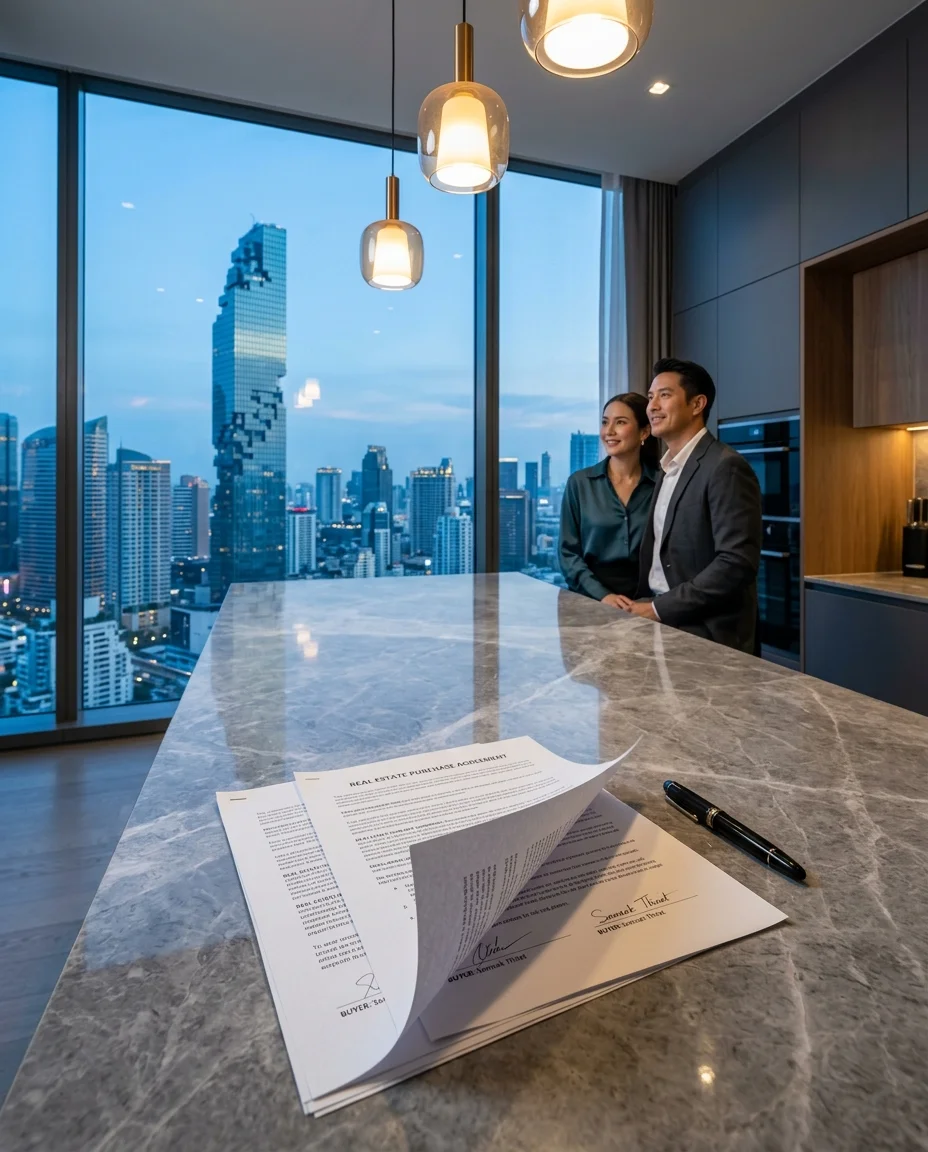
Purchasing a freehold apartment offers the only route to absolute, permanent residential ownership for UK nationals. Under the 1979 Apartment Act, foreigners can legally own up to 49% of the total saleable floor area of a registered building. Once you purchase within this foreign quota, your name is registered directly onto the Chanote title deed at the local Land Department office. This grants you absolute control over the asset. You possess the exact same ownership rights as a Thai citizen, meaning you can sell, rent out, or leave the property to your heirs under UK or Thai inheritance law. If a building's foreign quota is already full, you can only acquire a unit through a leasehold agreement. This fundamentally changes your legal standing from an owner to a tenant. Prices for foreign quota units often carry a premium compared to Thai quota units in the same building. This premium sometimes reaches 10% to 15% higher in high-demand areas like Phuket or central Bangkok. Securing a unit requires verifying the current quota ratio with the building's juristic person before you transfer any deposit.
Learn how to rent property in Thailand as a UK national. Understand lease agreements, deposits, agent fees, tenant rights, and the mandatory TM30 filing.
Always demand written confirmation from the juristic office that your chosen unit falls within the 49% foreign freehold quota before signing a reservation contract.
| Ownership Type | Legal Status | Inheritance Rights | Market Value Impact |
|---|---|---|---|
| Foreign Freehold | Absolute ownership registered on Chanote | Can be inherited directly by foreign heirs | Highest resale value and demand |
| Leasehold | Tenant rights for up to 30 years | Requires specific succession clauses in contract | Depreciates as lease term reduces |
| Thai Freehold | Absolute ownership for Thai nationals only | Cannot be inherited by foreign nationals as freehold | Standard market value |
The Reality of Land Ownership and Leases

Thai law explicitly prohibits foreign nationals from owning land freehold, making long-term registered leases the standard legal alternative for villa buyers. When you buy a villa, you are typically purchasing the physical building outright while leasing the land it sits on. The maximum lease term permitted under Thai civil law is 30 years. Developers often advertise 90-year leases structured as three consecutive 30-year terms. However, only the first 30 years are guaranteed and enforceable at the Land Department. The subsequent renewals are contractual promises between you and the landowner, which can become legally precarious if the land is sold or the owner dies. To secure your position, the lease must be registered against the Chanote title deed. Otherwise, the agreement is only enforceable for three years regardless of what the contract states. You will pay a registration fee of 1% of the total lease value plus 0.1% stamp duty at the Land Department. During the lease term, you possess exclusive rights to use the land. Yet, you fundamentally remain a tenant with a depreciating asset.
Never rely on verbal or unrecorded promises of lease renewals; ensure your initial 30-year lease is officially registered on the back of the land's Chanote.
Thai Company Structures and Usufructs
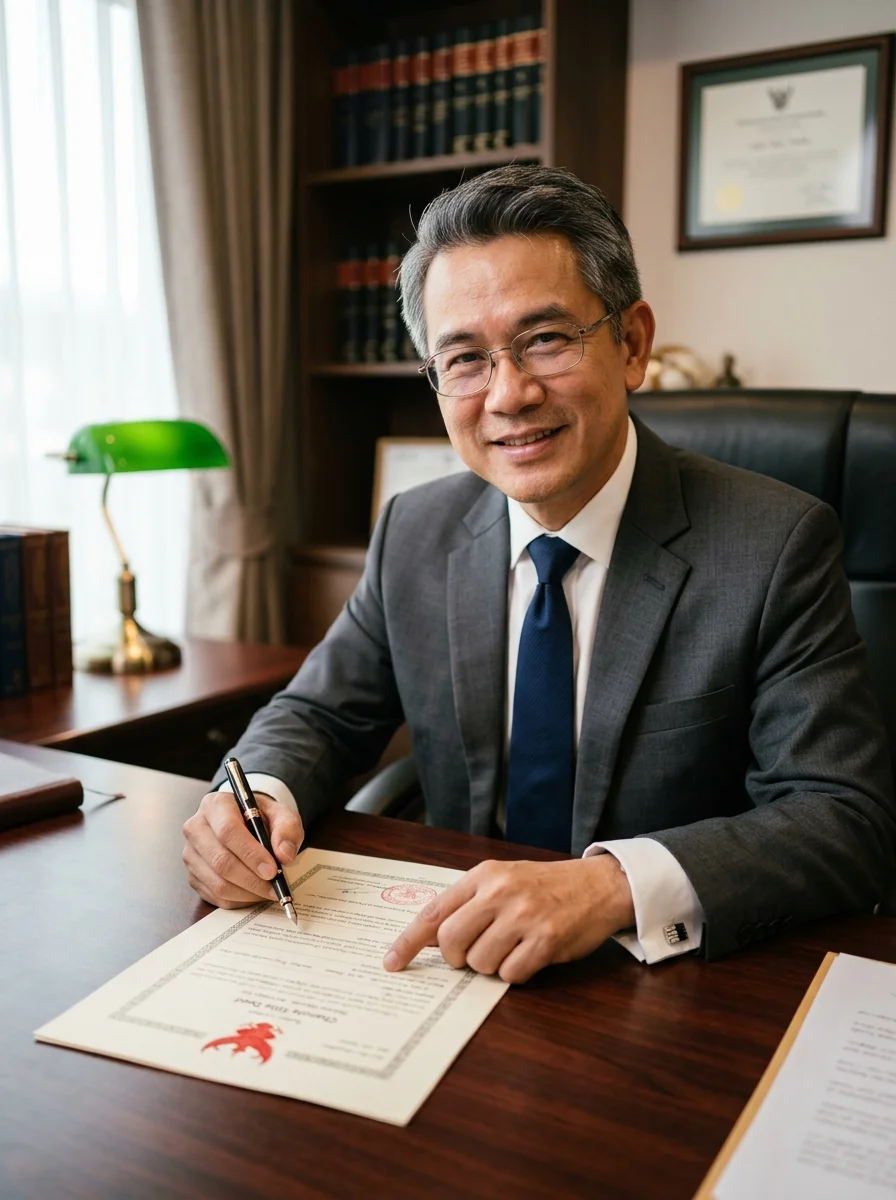
Using a Thai limited company to bypass land ownership restrictions is a high-risk strategy, whereas a usufruct offers a legally sound alternative for specific family situations. Historically, foreigners established Thai limited companies, holding 49% of the shares while using Thai nominees for the remaining 51%, simply to buy land. The Land Department and Ministry of Commerce now actively investigate these structures. If authorities prove the Thai shareholders are mere nominees who did not contribute actual capital, the company can be dissolved. The property is then seized by the state. Penalties include heavy fines and potential imprisonment for all involved parties. A safer legal instrument for UK nationals married to Thai citizens is a usufruct (Sidhi-kep-kin). This grants you the legal right to use, manage, and derive income from land owned by your Thai spouse for the duration of your life. It costs roughly 75 THB (£1.70) to register at the Land Department. This provides absolute security against eviction, even in the event of divorce or your spouse's death. However, a usufruct cannot be sold or inherited. It extinguishes entirely upon your death, returning full control to the landowner.
Avoid nominee company structures entirely, and utilise registered usufruct agreements if you are purchasing land jointly with a Thai spouse.
| Legal Instrument | Primary Purpose | Risk Level | Validity Period |
|---|---|---|---|
| Nominee Company | Bypassing foreign land ownership laws | Extremely High (Illegal) | Subject to immediate dissolution |
| 30-Year Lease | Securing long-term tenancy on land | Low (Legally protected) | 30 years (registered on deed) |
| Usufruct | Securing lifetime use of spouse's land | Low (Legally protected) | Lifetime of the foreign national |
Transferring Funds and The FETF Requirement
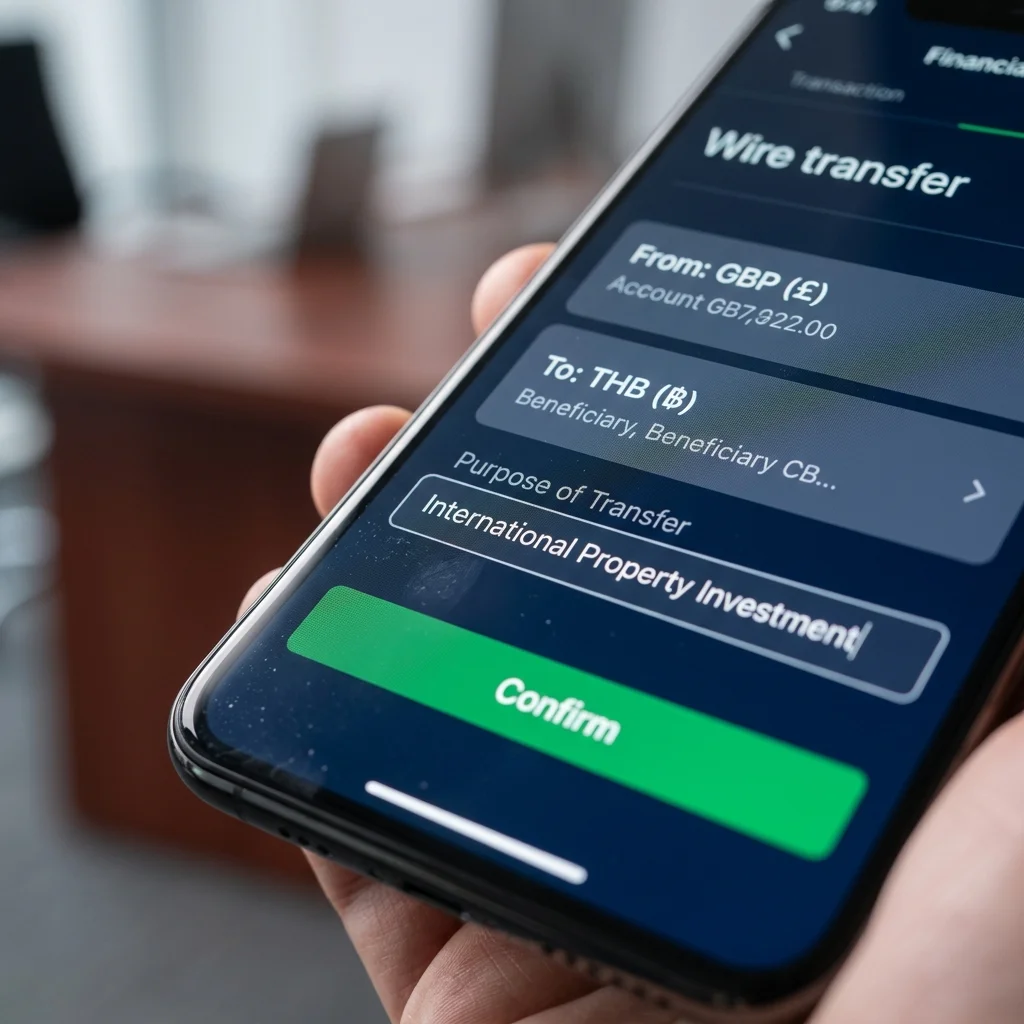
To legally register a freehold apartment in your name, your purchase funds must originate outside Thailand in a foreign currency. The Land Department requires proof that foreign capital was brought into the country specifically for purchasing property. When you wire funds from your UK bank, you must send the money in British Pounds (GBP) and allow the receiving Thai bank to convert it into Thai Baht (THB). If you transfer the exact equivalent of a 5,000,000 THB (£111,100) purchase price in Baht directly from the UK, the transfer will fail to qualify. The receiving bank issues a Foreign Exchange Transaction Form (FETF) for incoming transfers exceeding 50,000 USD (approximately £39,500). This document is absolutely vital for foreign buyers. Without it, the Land Department will simply refuse to transfer the title deed into your name. You must instruct your UK bank to include a specific reference note on the transfer. It should explicitly state "Funds for the purchase of an apartment unit [number] in [building name]". Developers usually manage the FETF process if you are buying off-plan. Still, you must ensure the initial transfer instructions are flawless.
Always send funds in GBP, never THB, and explicitly state the property purchase details on the bank transfer reference to secure your FETF.
Legal Due Diligence and The Role of a Lawyer
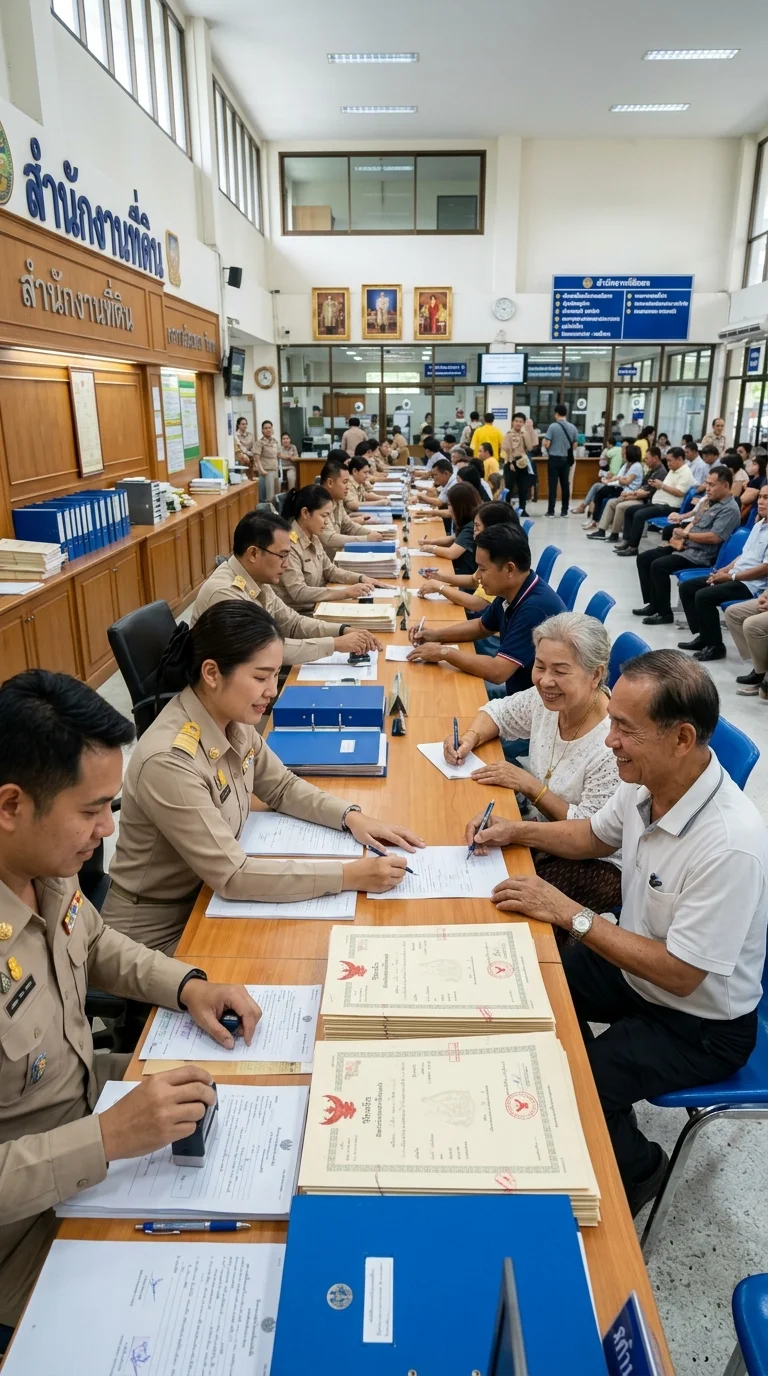
Engaging an independent Thai property lawyer is absolutely essential because Thailand does not have a mandatory licensing system for property agents. You are entirely responsible for ensuring the property you are buying is legally sound. A qualified lawyer will conduct a physical title search at the Land Department. They verify that the seller actually owns the property and check for any registered mortgages or liens. The lawyer also confirms the title deed is a full Chanote (Nor Sor 4 Jor) rather than a lesser, unbuildable land document like Nor Sor 3. For off-plan projects, they review the developer's background, environmental impact assessment (EIA) approval, and building permits. Never use the seller's or developer's legal team. Their primary duty is to close the sale, not protect your deposit. Your lawyer will review the sale and purchase agreement closely. They ensure penalty clauses for delayed completion are balanced and that the exact payment schedule aligns with construction milestones. Legal fees for a standard property transaction usually range from 30,000 THB (£665) to 60,000 THB (£1,330). This is a minor expense compared to losing a 30% deposit on an illegal build.
Instruct a fully independent, licensed Thai property lawyer to execute a comprehensive title search and contract review before transferring any reservation fee.
Property Purchase Costs and Taxes
Buying property in Thailand involves several government fees and taxes. These are calculated based on the property's appraised value or registered sale price, whichever is higher. The main expense is the transfer fee. This is set at 2% of the appraised value, which is legally shared equally between buyer and seller unless negotiated otherwise. You will also encounter Stamp Duty at 0.5%. This applies only if the seller has owned the property for more than five years. If they have owned it for less than five years, a Specific Business Tax (SBT) of 3.3% applies instead. The seller is legally responsible for SBT and withholding tax. Withholding tax is calculated on progressive income tax rates. Developers often try to pass these costs onto buyers in the contract. Ongoing costs include an annual property tax. This typically ranges from 0.02% to 0.1% of the appraised value. You must also pay monthly maintenance fees for apartments, alongside a one-off sinking fund contribution upon purchase for major future repairs.
| Cost Item | Rate or Amount | Paid By | Notes |
|---|---|---|---|
| Transfer Fee | 2% of appraised value | Shared 50/50 | Can be negotiated in the purchase contract |
| Stamp Duty | 0.5% of sale price | Seller | Applies only if property held for over 5 years |
| Specific Business Tax | 3.3% of sale price | Seller | Replaces Stamp Duty if property held under 5 years |
| Withholding Tax | Progressive (1% to 35%) | Seller | Calculated on the seller's income bracket |
| Legal Fees | 30,000 to 60,000 THB (£665 to £1,330) | Buyer | Varies based on transaction complexity |
| Sinking Fund | 400 to 800 THB per sqm | Buyer | One-time payment for new apartment purchases |
Common Mistakes UK Buyers Make in Thailand
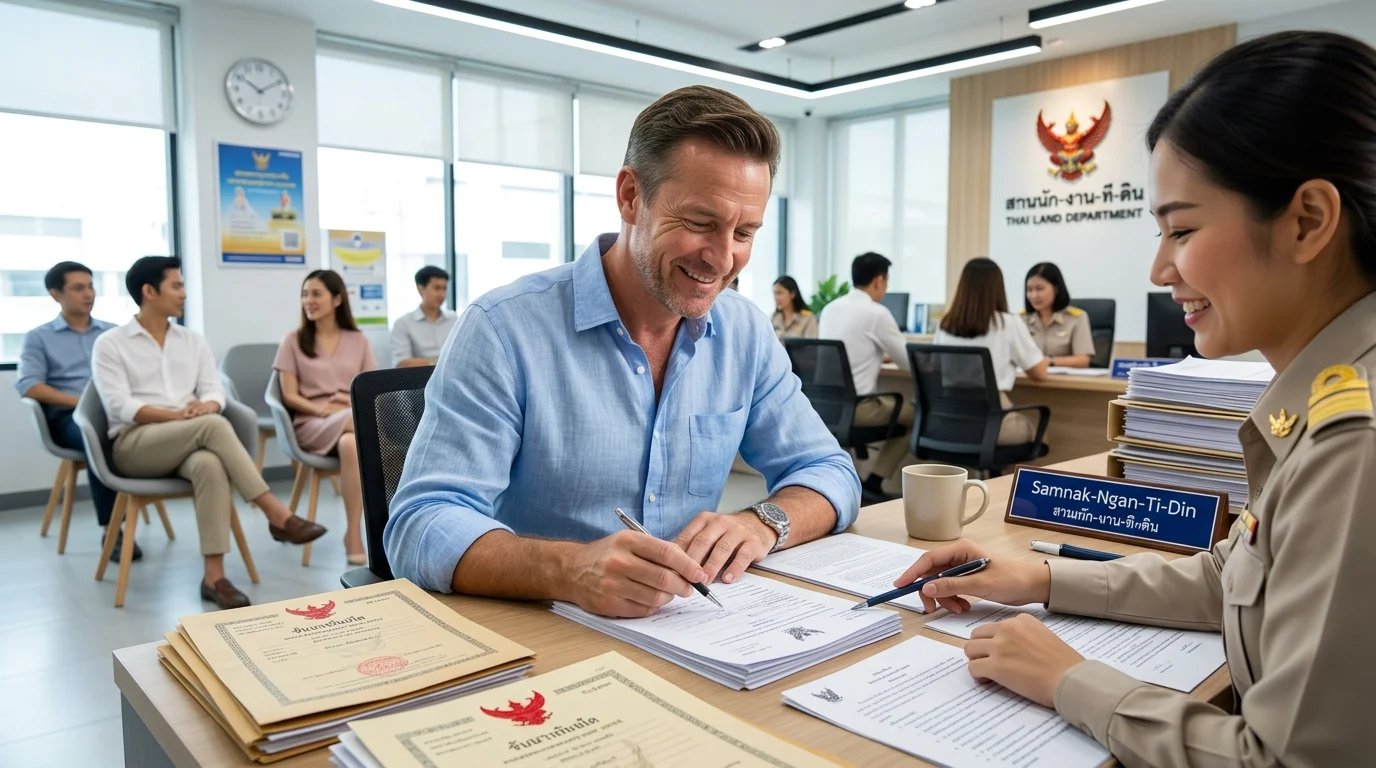
Signing a reservation agreement before conducting legal due diligence is a critical error. The reservation deposit, often up to 100,000 THB (£2,220), is generally non-refundable if you later discover issues with the title deed or building permits. You must hire a lawyer to review the contract and perform a title search before handing over any funds.
Assuming "leasehold" equates to ownership is a significant misconception. A 30-year lease merely grants you tenancy rights, meaning the landowner can legally refuse renewal and reclaim the property once the term expires. Ensure your lawyer structures the lease agreement with strict, legally binding succession and renewal clauses.
Transferring funds directly in Thai Baht from a UK bank will halt your apartment purchase. The Land Department requires proof of foreign currency entering Thailand to issue the mandatory Foreign Exchange Transaction Form. Always wire money in GBP and allow the receiving Thai bank to perform the conversion.
Relying solely on property agents for legal advice exposes you to immense risk. Thailand does not legally regulate property brokers, meaning they have no fiduciary duty to protect your financial interests. You must retain independent legal counsel to verify all claims, contracts, and property boundaries.
Practical Tips for a Secure Property Purchase
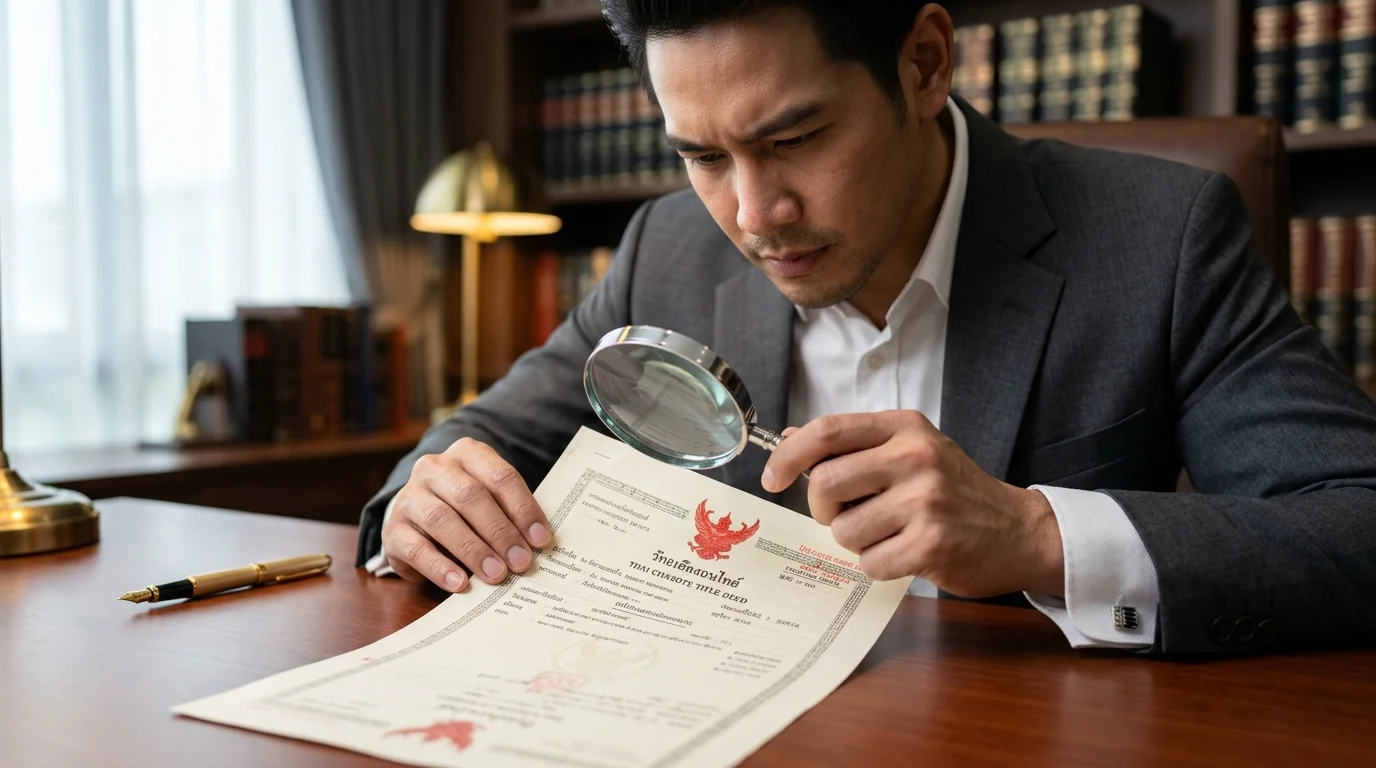
Always verify the exact title deed type before proceeding with a purchase. You should only ever buy land or property built on a full Chanote (Nor Sor 4 Jor), as lower-tier deeds do not guarantee exact surveyed boundaries.
Demand that the developer provides proof of Environmental Impact Assessment (EIA) approval for off-plan apartments. If the project fails to secure EIA approval, construction cannot legally begin, and your deposit could be tied up for years.
Check the building's juristic person financial health if buying a resale apartment. A poorly managed sinking fund indicates the building will quickly fall into disrepair, destroying your property value and rental yield.
Insist on a snagging inspection before making your final payment on a newly built property. Developers are notoriously slow at fixing defects once the final handover balance is cleared.
Open a Thai bank account as early as possible in the buying process. You will need this account to receive your incoming foreign funds and obtain the crucial Foreign Exchange Transaction Form.
Calculate your annual common area fees in advance to understand your true holding costs. These fees are charged per square metre and must be paid yearly, regardless of whether you occupy the property.
Request English translations of all official Thai documents from your legal representative. You should never sign any contract or land office form where you do not fully comprehend the legal obligations.
Verify the seller's identity against the name listed on the back of the Chanote title deed. This ensures you are negotiating with the legal owner rather than an unauthorised relative or tenant.
Thailand Property Ownership Summary
| Item | Detail | Notes |
|---|---|---|
| Foreign Freehold Property | Apartments only | Must fall within the 49% foreign building quota |
| Foreign Land Ownership | Prohibited | Nominee companies are illegal and highly scrutinised |
| Maximum Lease Term | 30 years | Must be registered at the Land Department to be valid |
| Best Title Deed | Chanote (Nor Sor 4 Jor) | Offers exact GPS surveyed boundaries and full rights |
| Fund Transfer Rule | Must be sent in foreign currency | Required for the Foreign Exchange Transaction Form (FETF) |
| Buyer Transfer Taxes | Typically 1% | Represents half of the 2% government transfer fee |
| Legal Representation | Not legally mandated but essential | Thailand has no regulated property agent licensing |
| Typical Timescale | 30 to 60 days | For completed resale properties from deposit to transfer |