Investing in New Developments
Foreign buyers purchasing off-plan property in Thailand frequently overpay by up to 15% when buying through UK property exhibitions due to hidden marketing commissions baked into the developer's launch price. Furthermore, without checking if a project has secured its Environmental Impact Assessment (EIA) approval before signing, you risk your deposit being trapped in a development that legally cannot begin construction.
This guide details exactly how the new-build and pre-launch property market operates in Thailand, specifically for UK investors. It explains how to bypass inflated exhibition pricing, verify a developer's financial standing, and navigate the off-plan purchase timeline from reservation to legal transfer. This is for buyers actively considering a new development who need to understand contractual protections and the genuine risks of buying before completion. It is not for those seeking rural land or secondary market renovations.

The Reality of UK Property Exhibitions and Pre-Launch Pricing
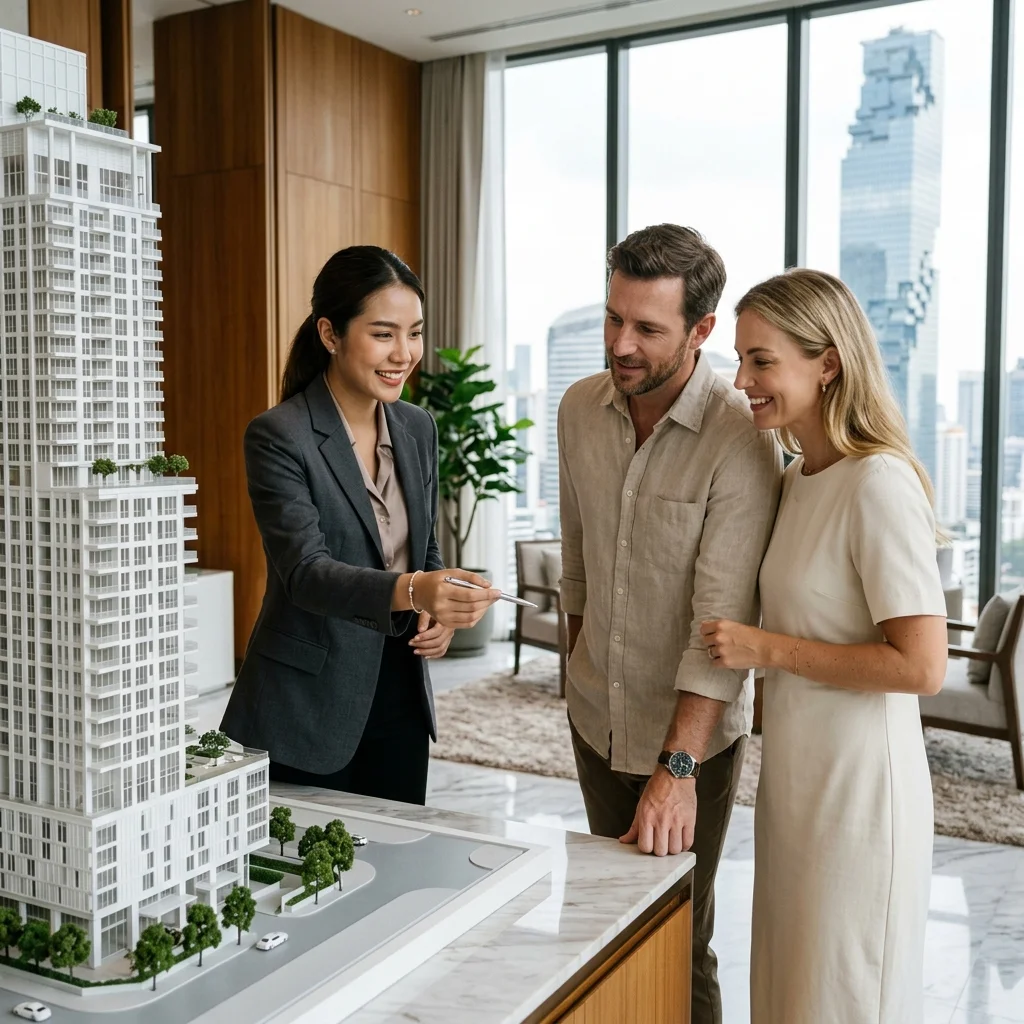
Many UK investors first encounter Thai new-builds at overseas property exhibitions in London or Manchester, where convenience heavily masks inflated pricing structures. While these events offer direct access to sales representatives, the prices advertised rarely reflect the true market value of the units on offer. Developers frequently inflate prices by 10% to 15% specifically for foreign roadshows to cover expensive exhibition costs and high agent commissions. You are essentially paying a heavy premium for the convenience of buying from the UK, effectively starting your investment with negative equity. Furthermore, a 'UK launch' often happens simultaneously with or even after the domestic Thai launch. This means the prime units with the best views or layouts have already been secured by local investors at lower domestic rates. To secure genuine market value, you must bypass the overseas exhibition circuit entirely and approach the developer or a local Thailand-based broker directly. Purchasing locally ensures you access the standard domestic price list rather than an inflated foreign quota tier. Always compare the price per square metre offered at an overseas event against the developer's official Thai website or local property portals. Never commit to a purchase at a UK exhibition without first verifying the local Thai launch price directly with the developer's Bangkok or Phuket sales office.
A complete guide for UK nationals buying or investing in Koh Samui property. Navigate leaseholds, Thai companies, villa yields, and local due diligence.
Verifying Developer Track Record and Financial Standing
Buying into a new development requires rigorous due diligence on the company building it, rather than relying solely on promotional brochures or 3D renderings. Your primary check must focus on the developer's registered capital and their history of completed projects. Publicly listed developers on the Stock Exchange of Thailand (SET), such as Sansiri or Supalai, offer greater financial transparency and carry a significantly lower risk of abandoning a project mid-construction. For private developers, your lawyer must check their company registration at the Ministry of Commerce to ensure they have sufficient paid-up capital to complete the build. Critically, you must verify if the development has passed its Environmental Impact Assessment (EIA). Selling off-plan before EIA approval is a common practice in Thailand, but it carries a severe financial risk for the buyer. If the government rejects the EIA due to issues with wastewater, traffic impact, or building height, construction cannot commence. Recovering your initial deposit in this scenario can take months of protracted legal action. A reliable developer will hold your deposit in a separate account or offer a full, legally binding refund clause if EIA approval fails. Instruct your lawyer to verify the developer's registered capital and the project's official EIA status before you transfer any reservation funds.
| Developer Type | Financial Transparency | Risk of Abandonment | Typical Price Point |
|---|---|---|---|
| SET-Listed Public Company | Very High (public financial reporting) | Very Low | Premium market rates |
| Established Private Developer | Moderate (requires corporate search) | Low to Medium | Often highly competitive |
| New/First-Time Developer | Low (limited track record) | High | Discounted off-plan rates |
The Purchase Process and Fund Transfer Rules
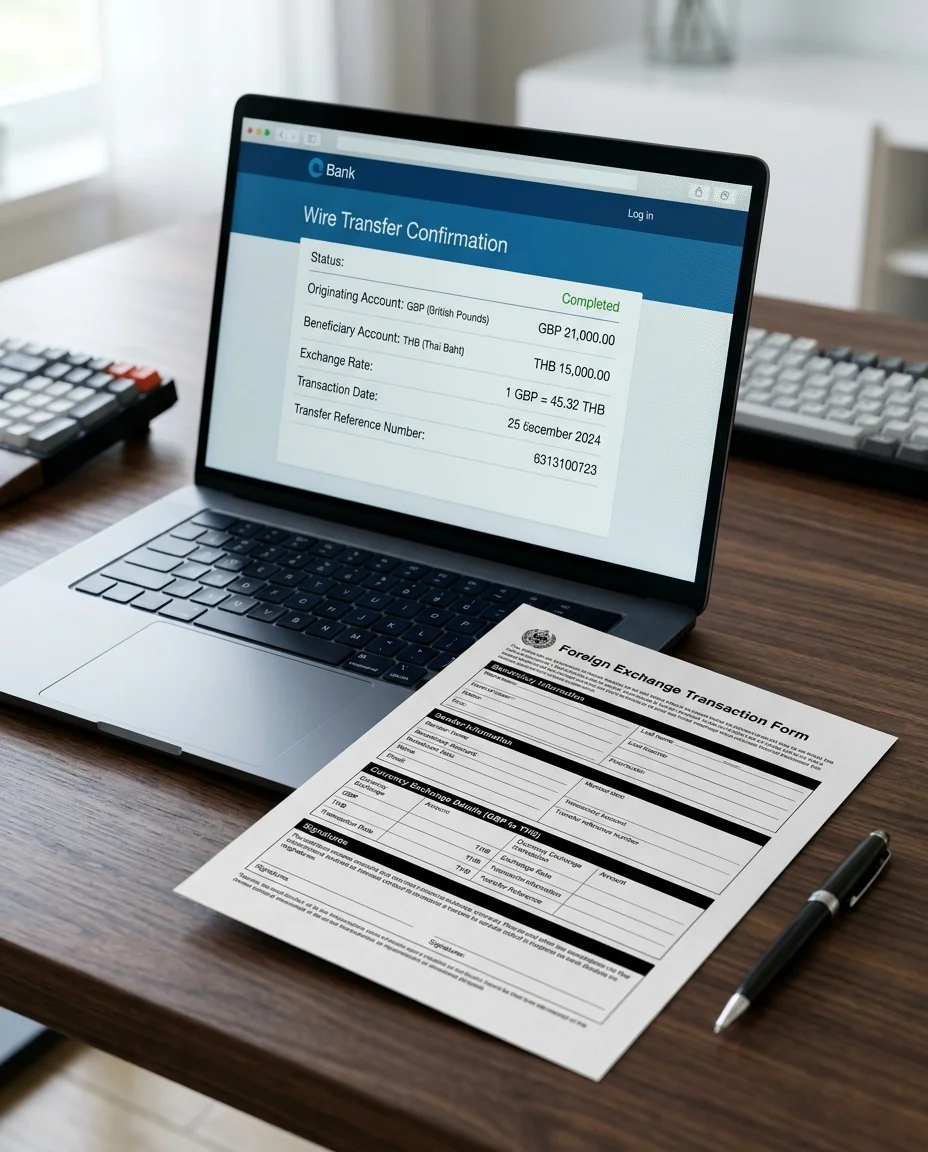
Purchasing a new-build property in Thailand follows a strict financial sequence governed by the Apartment Act of 1979. Once you select a unit, you pay a reservation fee, typically between 50,000 THB (£1,100) and 100,000 THB (£2,200), to take the property off the market. The developer then issues the Sales and Purchase Agreement (SPA). You usually have 14 to 30 days to review the contract, sign, and pay the down payment, which ranges from 15% to 30% of the total purchase price. The remaining 70% to 85% is strictly payable upon completion and official handover of the unit. Crucially, to register an apartment in your name under the foreign ownership quota, the funds must legally originate from outside Thailand. You must transfer the purchase money from your UK bank account directly into Thailand in British Pounds, allowing the receiving Thai bank to execute the currency conversion locally. The Thai bank will then issue a Foreign Exchange Transaction Form (FETF) for any incoming transfer exceeding 50,000 USD (or the GBP equivalent). The Land Department mandates this FETF document to legally transfer the Chanote (title deed) into a foreign national's name. Always transfer funds in British Pounds and instruct the receiving Thai bank to issue an FETF, as you cannot register the property without it.
Construction Delays and Contractual Protections
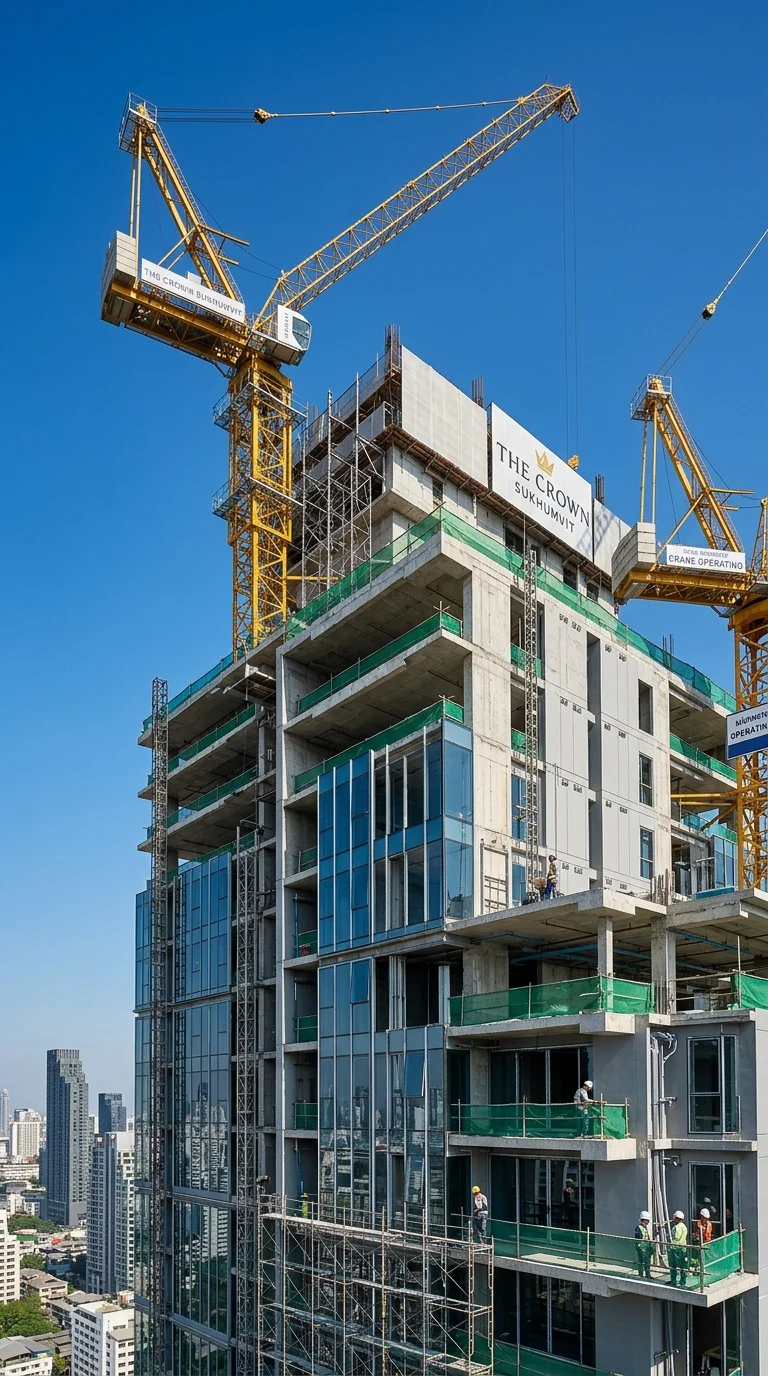
Construction timelines for off-plan developments in Thailand typically range from 18 to 36 months, depending heavily on the scale and complexity of the project. However, delays are incredibly common and should be factored into your financial planning. Supply chain issues, labour shortages, or delayed EIA approvals frequently push completion dates back by six to twelve months. Thai law provides specific protections for buyers in these scenarios, but they must be explicitly written into your SPA. Under the Consumer Protection Board regulations, standard contracts must include a daily penalty rate that the developer pays the buyer if they fail to deliver the unit by the agreed date. This is usually calculated at 0.01% of the purchase price per day of delay. If the delay extends beyond an unreasonable period—often legally defined as 60 or 90 days past the contractual grace period—you have the right to cancel the contract and demand a full refund plus interest. Your lawyer must ensure the SPA adheres to the standard format mandated by the Ministry of Interior, as developers sometimes try to use custom contracts that dilute these critical penalty clauses. Ensure your contract includes a specific daily financial penalty for construction delays and a clear exit clause if the project stalls indefinitely.
The Resale Market and Off-Plan Flipping Risks
Many UK investors buy off-plan intending to sell the contract for a profit before completion, a speculative practice known locally as 'flipping'. While this strategy was highly profitable a decade ago, the current market dynamics make it significantly riskier. Selling a contract before the unit is physically finished requires the developer's direct cooperation, as they must execute a formal name change on the SPA. Developers often charge a substantial name change fee, which can range from 30,000 THB (£660) to 100,000 THB (£2,200). Some developers restrict your ability to sell entirely until all their remaining primary units are cleared. Furthermore, you are directly competing against the developer's own unsold inventory. If the developer is offering heavy discounts or free furniture packages to clear their remaining stock, your partially paid contract becomes unsellable unless you take a financial loss. Finally, if you cannot find a buyer before the final completion payment is due, you are legally obligated to complete the purchase. Defaulting means losing your reservation fee and your entire 30% down payment to the developer. Only commit to an off-plan purchase if you have the funds and intention to complete the final transfer, rather than relying on a speculative pre-completion sale.
Location Strategy: Genuine Demand vs. Speculative Oversupply
Assessing whether a new development sits in a high-demand area or an oversupplied zone is vital for determining your investment's long-term viability. Developers heavily market certain provincial areas to foreign buyers precisely because local domestic demand is non-existent. For example, the outer edges of Pattaya and certain outer-ring districts of Chiang Mai have seen speculative overbuilding, resulting in thousands of empty units and severely suppressed rental yields. Conversely, genuine demand-led development is concentrated in areas with strong local employment, infrastructure growth, and established expatriate communities. In Bangkok, developments along the new MRT mass transit lines or established Sukhumvit BTS stations offer solid, verifiable tenant demand. In Phuket, the west coast areas like Bang Tao and Kamala maintain high occupancy rates due to strict municipal zoning laws that limit high-rise construction, effectively capping supply and driving up yields. Always research the secondary market in the immediate vicinity of a new launch. If older buildings nearby have high vacancy rates and stagnant resale prices, the new development is likely relying entirely on foreign marketing rather than organic housing demand. Verify local rental demand by checking vacancy rates in adjacent, completed buildings before buying into an untested new development zone.
Costs and Fees
Purchasing a new-build property involves several transactional costs beyond the headline price that you must budget for. When buying directly from a developer, Thai law mandates that the 2% transfer fee is split equally, meaning you pay exactly 1%. The developer is legally responsible for paying the Specific Business Tax (3.3%) and the Withholding Tax (usually 1% to 3%), though you must review the contract to ensure they do not attempt to pass these onto you. Legal fees for contract review and due diligence typically range from 30,000 THB (£660) to 80,000 THB (£1,770). Property agent commissions are paid entirely by the developer, not the buyer. For new apartments, you will also pay a one-off sinking fund contribution on completion, usually 500 THB (£11) to 800 THB (£17) per square metre. You must also pay the first year of common area maintenance (CAM) fees in advance, averaging 40 THB (£0.88) to 80 THB (£1.75) per square metre per month.
| Cost Item | Rate or Amount | Paid By | Notes |
|---|---|---|---|
| Transfer Fee | 2% of appraised value | Buyer (1%) and Developer (1%) | Split equally by law for new builds |
| Specific Business Tax | 3.3% of registered value | Developer | Developer legally required to pay this |
| Sinking Fund | 500 - 800 THB per sqm | Buyer | One-off payment due at handover |
| Legal Fees | 30,000 - 80,000 THB | Buyer | Covers SPA review and title checks |
Common Mistakes When Buying New Developments

Signing the developer's contract without independent legal review. Developers routinely use contracts that protect their own commercial interests, omitting penalty clauses for delayed construction or failing to guarantee EIA approval. You must hire a licensed Thai property lawyer to review the Sales and Purchase Agreement and negotiate standard Ministry of Interior protections before signing.
Transferring funds in Thai Baht from the UK. If you convert your British Pounds to Thai Baht before sending the money, the receiving Thai bank will not issue a Foreign Exchange Transaction Form (FETF). You must send the funds in GBP and let the Thai bank execute the conversion to secure the exact documentation required for foreign ownership.
Assuming rental yield guarantees are risk-free. Developers frequently inflate the baseline property price to cover the cost of a 'guaranteed' 7% to 10% rental return for the first three years. Investigate the actual market rental rates for similar units nearby to ensure you are not simply paying for your own returns upfront through an inflated purchase price.
Failing to check the foreign quota ratio. An apartment building can legally only allocate 49% of its total floor space to foreign freehold owners, and if you buy a unit after this quota is full, you can only lease it. Always have your lawyer verify the exact foreign quota status with the developer before paying a reservation deposit.
Practical Tips for UK Buyers

Verify the EIA status independently. Do not take the sales agent's word that environmental approval is guaranteed; ask your lawyer to check the official government database.
Negotiate the payment schedule. Instead of paying a massive 30% lump sum upfront, request milestone payments tied to specific construction phases like foundation completion or topping out.
Keep copies of all promotional materials. Thai consumer protection law dictates that the developer's marketing brochures and showroom specifications are legally binding parts of your contract.
Inspect the unit before final payment. Hire a professional property inspector to conduct a snagging check on the finished unit, and refuse to sign the handover document until all defects are rectified.
Open a Thai bank account early. You will need a local account to set up direct debits for your monthly utilities and annual maintenance fees once the property is completed.
Understand the sinking fund's purpose. This mandatory one-off payment acts as an emergency reserve for major structural repairs, ensuring the building does not fall into disrepair a decade after completion.
Use a dedicated currency broker. High street UK banks offer poor exchange rates for large international transfers, so using an FCA-regulated currency specialist will save you thousands of pounds on the final conversion.
New Development Quick Reference
| Item | Detail | Notes |
|---|---|---|
| Foreign Ownership Route | Freehold (Apartment) or Leasehold | Land cannot be owned freehold by foreigners |
| Maximum Foreign Quota | 49% of total floor area | Applies strictly to multi-unit apartment buildings |
| Accepted Title Deed | Chanote (Nor Sor 4 Jor) | The only deed offering full private ownership |
| Typical Purchase Costs | 1% to 1.5% of property price | Excludes legal fees and ongoing maintenance |
| Fund Transfer Requirement | Must enter Thailand in foreign currency | Required to obtain the FETF document |
| Legal Representation | Highly recommended | Essential for checking EIA and SPA terms |
| Typical Timeline | 18 to 36 months | From off-plan launch to physical completion |
| Initial Reservation Fee | 50,000 to 100,000 THB | Usually non-refundable unless EIA is rejected |