Chatuchak Market Bangkok
Covering 35 acres and housing more than 15,000 individual stalls, Chatuchak Weekend Market is the largest open-air market in Asia. On a typical weekend, over 200,000 visitors navigate its 27 designated sections to buy everything from museum-grade Asian antiques to first-edition vintage denim.
Operated by the Bangkok Metropolitan Administration, Chatuchak (often referred to locally as JJ Market) serves as the primary wholesale and retail hub for independent Thai merchants. It sits at the apex of Bangkok's retail hierarchy, offering a gritty, authentic alternative to the city's air-conditioned megamalls. The market operates strictly as a weekend affair, functioning as a magnet for serious bargain hunters, interior designers, and culinary explorers. It best suits determined shoppers who are willing to brave intense heat and dense crowds in exchange for wholesale pricing and an enormous variety of goods.

Navigating the 27 Sections
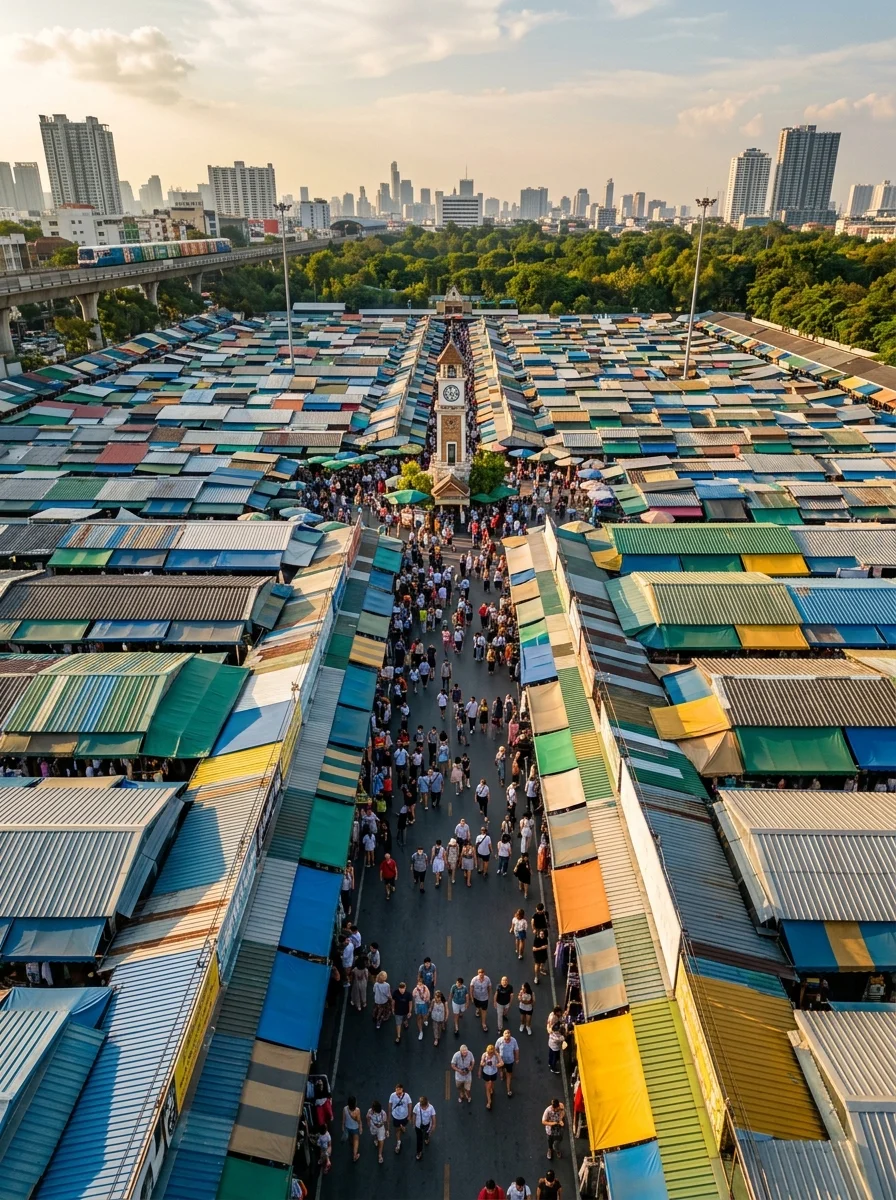
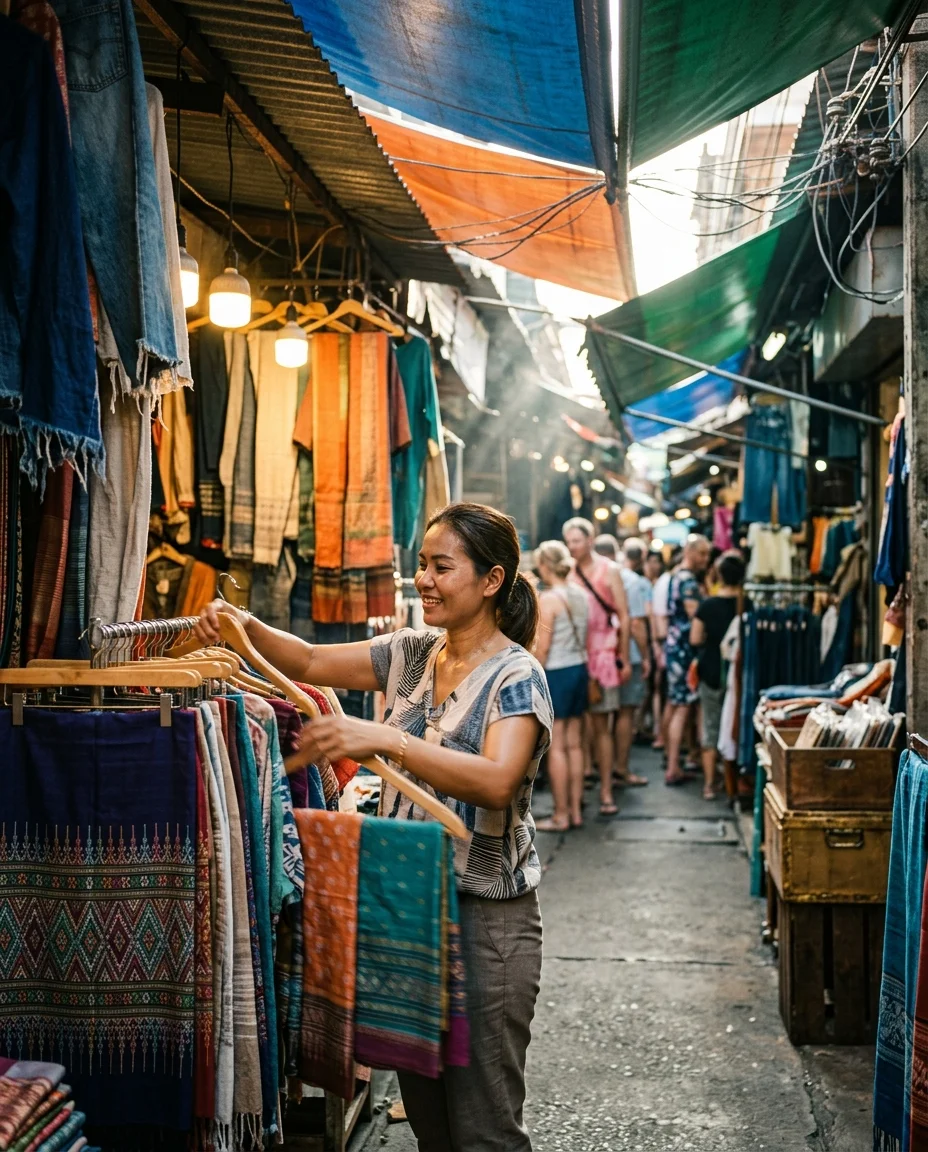
The sheer scale of Chatuchak demands a strategic approach to navigation rather than aimless wandering. The complex spans 35 acres, divided into 27 numbered sections that are further split into highly specific product categories. These sections are bisected by a main circular ring road. Narrow pedestrian alleyways, known locally as Sois, branch off this main artery into the dense interior of the market. The central Clock Tower, built in 1987 to commemorate King Bhumibol Adulyadej’s 60th birthday, serves as the primary visual anchor. It is the most reliable meeting point if your group gets separated among the stalls. To move efficiently into the complex, use the MRT Kamphaeng Phet entrance. This drops you directly into Section 2, bypassing the heavier foot traffic found at the northern Mo Chit gates. Free physical maps are available at the information kiosks near the main entrances. Pick one up immediately, as they are essential for locating specific categories quickly. The inner alleys are roofed with corrugated iron and tarpaulins, creating an intense greenhouse effect by midday. You will find the main walkways heavily congested by 11:00 AM. Arrive by 9:00 AM to cover the deep interior sections before the midday heat peaks.
Plan your Bangkok trip with our guide to navigating the city's districts, transport, food, and accommodation. Discover the real Bangkok beyond the chaos.
Vintage Clothing and Antiques
Sections 5 and 6 form the core of Chatuchak's vintage apparel trade, drawing serious collectors looking for rare denim, band t-shirts, and military surplus. Dealers here source heavily from the Thai-Cambodian border, resulting in high-quality, curated second-hand items rather than mass-produced factory rejects. You will find individual stalls dedicated entirely to 1980s Levi's 501s, heavily embroidered bomber jackets, and refurbished leather work boots. Some vendors even offer on-the-spot alterations using vintage sewing machines. For antiques and collectables, Section 26 is the undisputed centre of the market. Vendors in this zone specialise in heavy Thai wooden carvings, brass Buddhist amulets, and mid-century teak furniture. Buyers should verify the provenance of high-ticket items, as high-quality reproductions are frequently mixed with genuine antiques. Unlike the tourist-focused souvenir stands near the main gates, these interior sections cater to dedicated collectors and wholesale buyers. Pricing in the vintage sections accurately reflects the rarity of the items. You will not find the rock-bottom clearance rates seen in the fast-fashion alleys located in Sections 12 and 14. Focus your budget on these specialist stalls if you want items that hold genuine long-term value.
Home Goods, Ceramics, and Plants
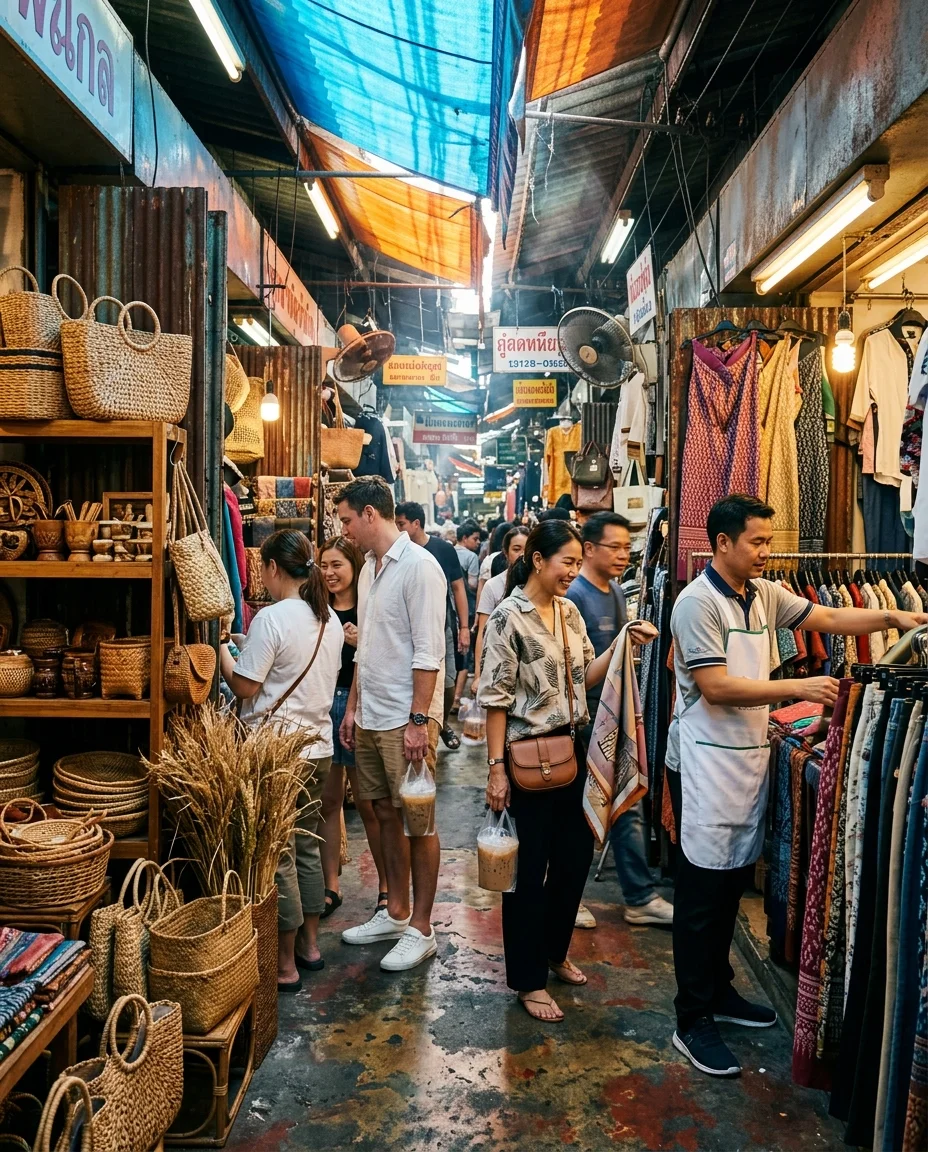
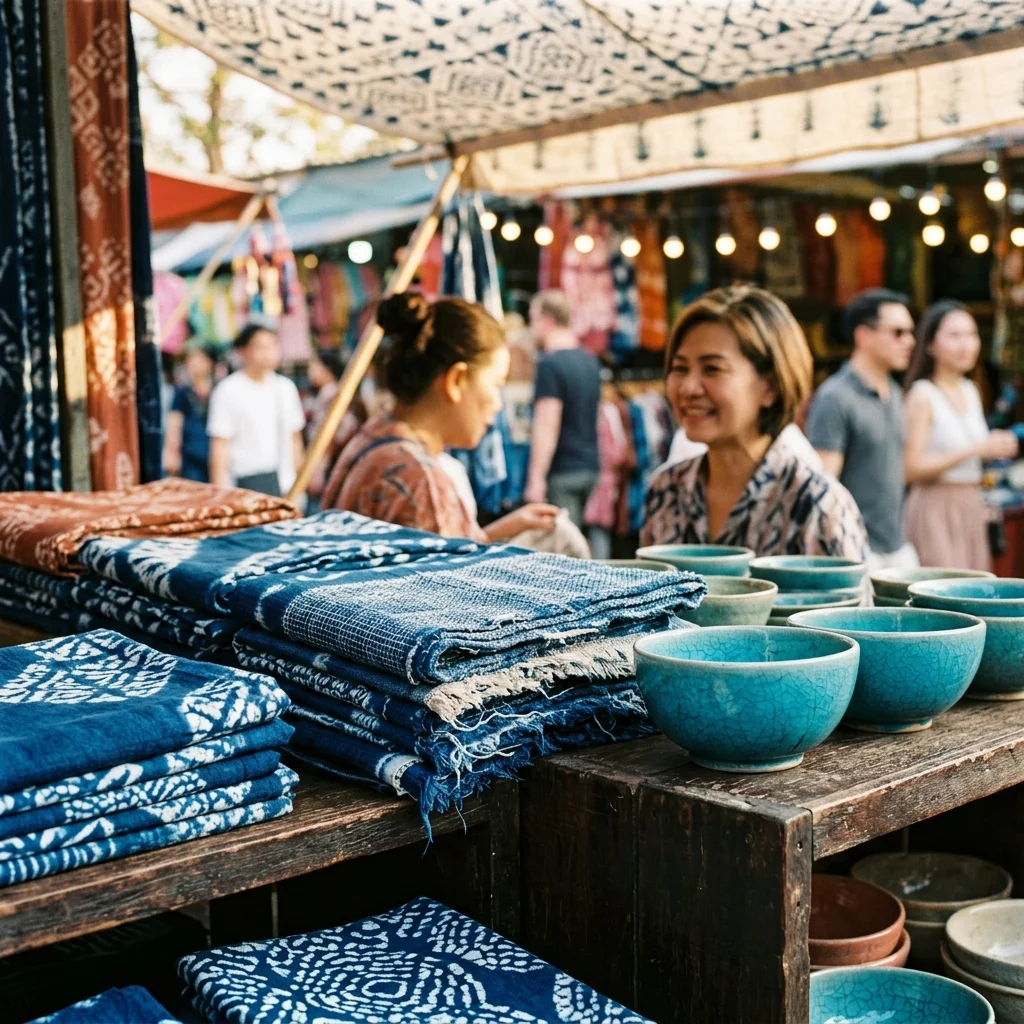
Interior designers and home decorators focus their attention on Sections 7, 8, and 15, which house an enormous array of ceramics, woodwork, and homewares. The pottery stalls here range from unglazed terracotta pots to intricate Benjarong porcelain. Benjarong is a traditional Thai craft featuring complex, hand-painted geometric patterns in five distinct colours. You will also find extensive collections of heavy celadon stoneware sourced directly from traditional kilns in Chiang Mai. Sections 3 and 4 are dedicated to plants and gardening supplies. These alleys transform into a dense urban jungle of rare orchids, massive monsteras, and grafted fruit trees. While the dedicated wholesale plant market actually runs on Wednesdays and Thursdays, weekend visitors still have access to hundreds of botanical stalls lining the main circular road. Packing and shipping services operate directly within these sections. Companies like DHL and local Thai couriers allow you to send bulky items back to the UK without carrying them through the market heat. Secure your shipping arrangements before purchasing large ceramic pieces to ensure safe transit.
Street Food and Dining
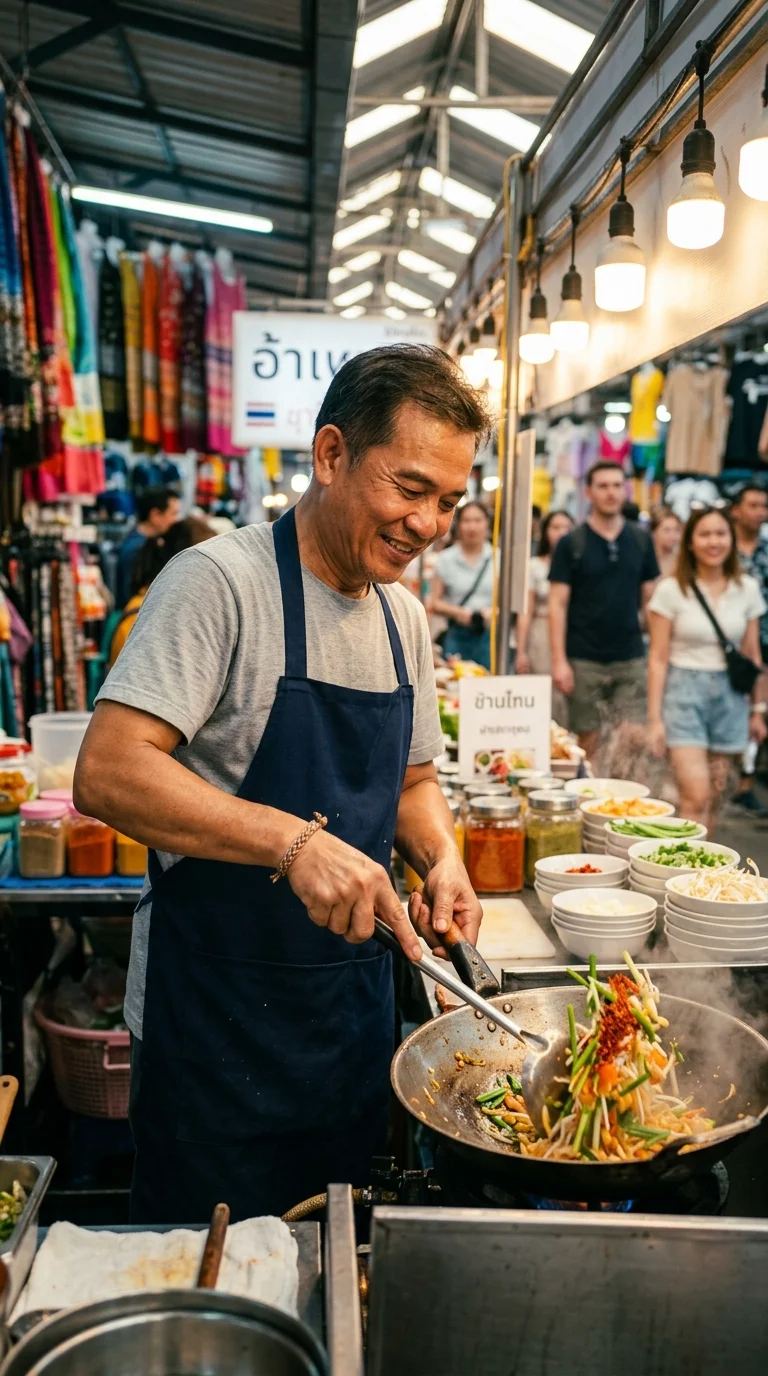
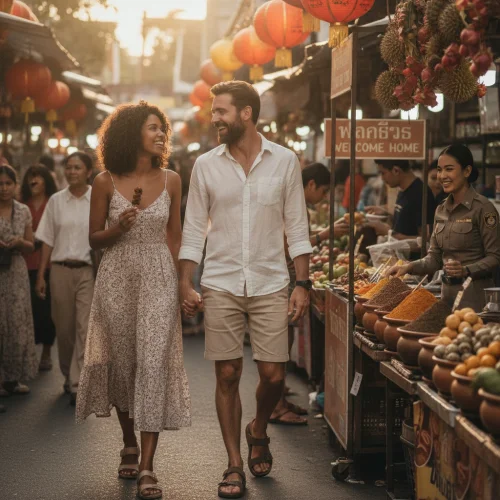
Chatuchak functions as a major culinary destination, offering hundreds of food stalls concentrated heavily in Sections 2, 3, and 26. The food scene here prioritises quick, highly flavoured street snacks designed to be eaten while navigating the narrow alleys. Standout items include grilled honey-glazed pork skewers known as moo ping, crispy fried quail eggs, and fresh coconut ice cream served in the shell with roasted peanuts. For a seated meal, the market's interior features several open-air canteens serving rich boat noodles and spicy green papaya salad at very low prices. Viva 8 in Section 8 provides a distinct change of pace from the traditional Thai offerings. This bar is famous for its massive pans of Spanish paella and a resident DJ playing house music, creating an impromptu street party atmosphere right on the main walkway. Hydration is absolutely critical during your visit. Vendors selling fresh tangerine juice, iced Thai milk tea, and cold bottled water are positioned every few metres. Carry small denomination banknotes, as busy food vendors cannot break large bills during peak lunch hours.
Market Comparisons and Worthwhile Purchases
Understanding the distinction between Chatuchak and Bangkok's night markets is essential for setting accurate shopping expectations. While adjacent night markets like the former JJ Green and the current Talad Rod Fai focus heavily on retro aesthetics, street food, and youth-oriented socialising after dark, Chatuchak remains a serious daytime retail engine. The weekend market offers a much deeper inventory of raw materials, textiles, and wholesale household goods. To avoid tourist tat, bypass the main entrance avenues selling thin elephant-print trousers, mass-produced soap carvings, and generic slogan t-shirts. Instead, seek out Section 24 to find independent Thai designers selling original clothing labels. You can also visit Section 11 for high-quality essential oils, handmade soaps, and professional spa products. A common mistake first-time visitors make is buying the very first souvenir they see near the entrance. They often find the exact same item priced 30 percent lower in a deeper, less trafficked alley just ten minutes later. Walk the inner sois to find original Thai craftsmanship rather than imported factory goods.
Bargaining Etiquette and Budgets
Negotiation at Chatuchak is expected, but it must always be approached with politeness and a smile rather than aggressive haggling. A good rule of thumb is to counteroffer at 20 to 30 percent below the initial asking price. The goal is to find a middle ground that satisfies both you and the vendor. Wholesale discounts are extremely common across all sections. Buying three or more items from the exact same vendor will almost always trigger a lower per-unit rate. While the PromptPay QR code system is ubiquitous among local Thai shoppers, UK visitors without a Thai bank account must rely heavily on physical cash. ATMs are located near the main entrances and the central Clock Tower. However, these machines charge a standard 220 THB (£4.80) withdrawal fee for foreign cards, so it is wise to bring sufficient cash from the city. A realistic budget for a full day of eating, drinking, and moderate clothing shopping is around 2,500 THB (£55) per person. Always keep your cash secure in a zipped cross-body bag, as pickpockets occasionally operate in the densest crowds.
Location and Getting There
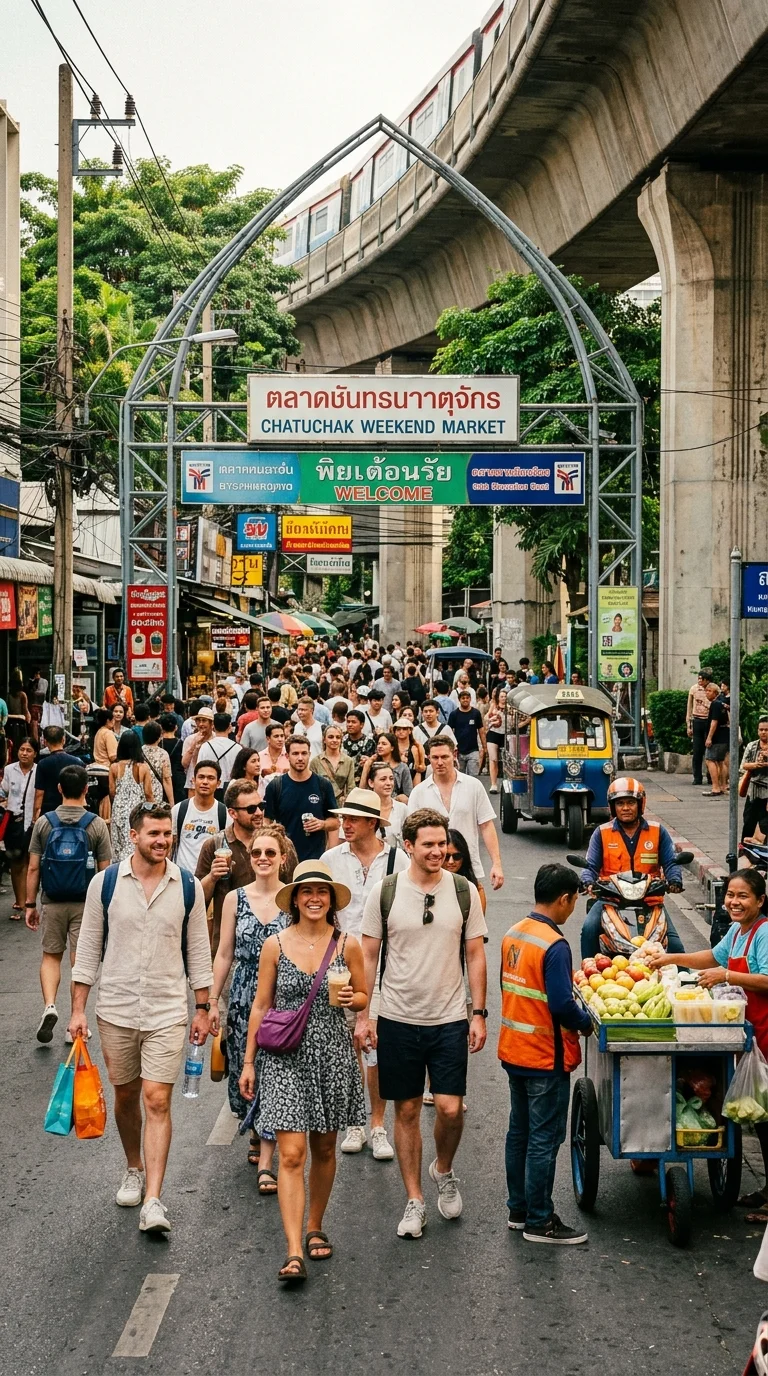
Chatuchak Weekend Market is situated in the Chatuchak district of northern Bangkok, bordered by Kamphaeng Phet Road and Phahonyothin Road. Reaching the market from central Bangkok is straightforward using the city's mass transit systems. The most efficient route from the Sukhumvit or Silom areas is the MRT Blue Line, alighting at Kamphaeng Phet station. This journey takes approximately 30 minutes and costs between 30 and 45 THB (£0.65 to £1.00). Crucially, Kamphaeng Phet station's Exit 2 deposits you directly inside the market's clothing and plant sections. Alternatively, take the BTS Skytrain Sukhumvit Line to Mo Chit station, which requires a five-minute walk through Chatuchak Park to reach the main gates. A metered taxi from central Bangkok will take 40 to 60 minutes depending on traffic, costing roughly 150 to 250 THB (£3.30 to £5.50), plus toll fees. Avoid taking a tuk-tuk for the return journey, as drivers frequently inflate prices for tired shoppers carrying heavy bags.
Costs and Booking
Entry to Chatuchak Weekend Market is completely free, with no admission charges or mandatory fees for visitors. Your costs will depend entirely on your shopping habits, dining choices, and transport. While there is no seasonal variation in entry costs, the high season (November to February) brings significantly larger crowds. This high foot traffic can make bargaining slightly harder as vendor demand remains consistently elevated. Low season (May to October) means fewer tourists and potentially better discounts. However, you must contend with sudden monsoon downpours that flood the outer walkways. Street food is exceptionally cheap, with most individual snacks and drinks costing between 40 and 80 THB (£0.90 to £1.75). Standard clothing items like printed t-shirts range from 150 to 300 THB (£3.30 to £6.60). Vintage pieces and antiques can run into the thousands of Baht, requiring careful negotiation. If you plan to ship large items back to the UK, international couriers like DHL operate on-site, with prices varying by volume and weight.
| Expense Category | Typical Cost (THB) | Cost (GBP approx) | Notes |
|---|---|---|---|
| Street Food Snack | 40 - 80 | 0.90 - 1.75 | Skewers, sliced fruit, coconut ice cream |
| Standard T-Shirt | 150 - 300 | 3.30 - 6.60 | Mass market and printed souvenir designs |
| Independent Designer Clothing | 500 - 1,500 | 11.00 - 33.00 | Original pieces located in Section 24 |
| Large Ceramic Bowl | 300 - 800 | 6.60 - 17.50 | Authentic Benjarong or celadon pieces |
| International Shipping | 2,000+ | 44.00+ | Varies heavily by exact weight and destination |
Who It Suits Best
Chatuchak Market is ideal for determined bargain hunters, interior design enthusiasts, and street food lovers who thrive in high-energy environments. It rewards visitors willing to dig through dense stalls to find wholesale deals and rare vintage items. Conversely, it is not suitable for travellers seeking a relaxed, air-conditioned shopping experience. Families with very young children in pushchairs will find the narrow, crowded alleys highly frustrating and potentially unsafe in the midday heat. Those looking for luxury brands or high-end designer boutiques should head to central Bangkok's megamalls instead.
What to Know Before You Book
The market is only fully operational on Saturdays and Sundays. Booking a weekday visit will result in disappointment, as only the wholesale plant sections are open. The heat inside the covered alleys becomes oppressive by 1:00 PM. The corrugated iron roofs trap the humidity, making early morning visits essential for your physical comfort. There is no central air conditioning anywhere in the market complex. You must rely on battery-operated fans, shaded rest areas, and cold drinks to regulate your body temperature. Restrooms are available but charge a small entry fee of 5 to 10 THB. You will need to bring your own tissues or toilet paper, as the facilities frequently run out of supplies by mid-afternoon.
Practical Tips
Wear lightweight, breathable clothing and comfortable walking shoes. You will likely cover several miles of uneven pavement during a typical visit.
Bring a large, reusable tote bag or a small wheeled suitcase. Carrying multiple plastic bags will cut into your hands and make navigating the crowds difficult.
Download a digital map of the market on your phone before arriving. The cellular network can become overloaded on weekends, making it hard to load web pages on the go.
Take a photograph of the section and soi number if you plan to return to a specific stall. The repetitive nature of the alleys makes it nearly impossible to find a vendor again from memory.
Keep a bottle of water in your hand at all times. Dehydration occurs rapidly in the dense, covered sections of the market.
Arrange a specific meeting point, like the central Clock Tower, if you are travelling with a group. This ensures you can easily reconnect if you get separated in the heavy foot traffic.
Carry plenty of small denomination notes, particularly 20, 50, and 100 THB bills. Vendors often struggle to provide change for 1,000 THB notes early in the morning.
Quick Reference Table
| Item | Detail | Notes |
|---|---|---|
| Attraction Name | Chatuchak Weekend Market | Often referred to locally as JJ Market |
| Location | Chatuchak District, Bangkok | Situated north of the city centre |
| Attraction Type | Open-Air Weekend Market | The largest open-air market in Asia |
| Number of Stalls | Over 15,000 | Divided into 27 specific product sections |
| Operating Hours | 09:00 to 18:00 (Saturday and Sunday) | Wholesale plant market open Wed-Thu |
| Nearest Transit | MRT Kamphaeng Phet | Exit 2 drops you directly inside the market |
| Admission Cost | Free | No entry fees or mandatory charges |
| Food & Drink | Hundreds of street food stalls | Concentrated heavily in sections 2, 3, and 26 |
| Facilities | Paid public toilets, ATMs, shipping | Tissues and toilet paper not always provided |