Thai Cooking Classes
Pounding a heavy granite mortar until raw green chillies, lemongrass, and galangal release a sharp, eye-watering vapour is the exact moment you begin to understand Thai cuisine. It is a physical, loud, and deeply aromatic process that no standard recipe book can accurately capture.
This guide covers everything required to select, book, and complete a cooking class in Thailand, from half-day organic farm tours in Chiang Mai to intensive skill courses in downtown Bangkok. You will learn how to identify authentic, hands-on instruction over mass-market demonstrations, understand the distinct regional differences in menus, and budget accurately for varying levels of expertise. By the end, you will know exactly which style of class matches your culinary ambitions and travel itinerary.

The Market Tour and Ingredient Sourcing
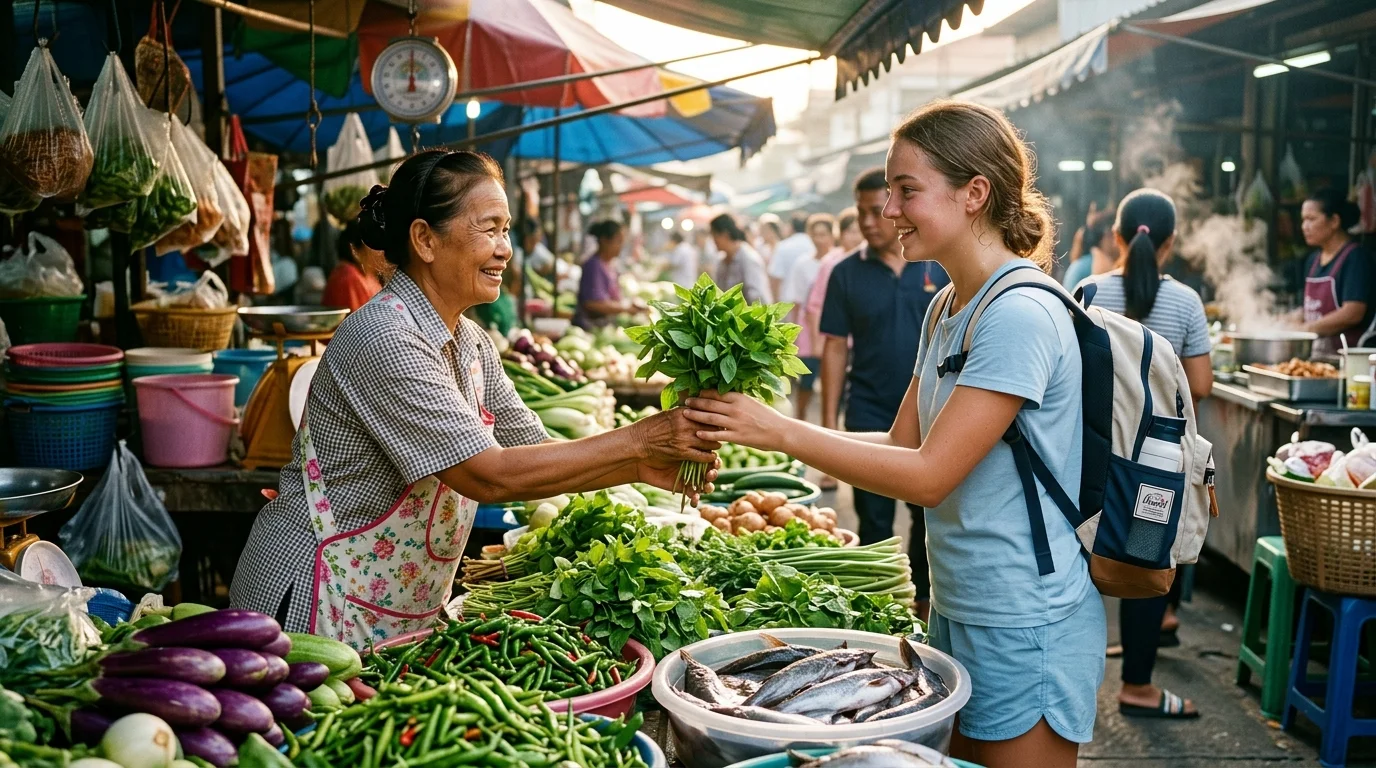
A guided market tour provides essential context for the ingredients you will later cook with, transforming unfamiliar produce into recognisable staples. Wet markets in Thailand operate at a frantic pace, filled with the sharp odours of fermented shrimp paste, crushed ice, and fresh coriander. If you book a class with a market component, such as those offered by Silom Thai Cooking School in Bangkok, you will meet your instructor early in the morning before the ambient heat peaks. They will walk you through narrow, wet alleys, pointing out the distinct differences between sweet basil, holy basil, and lemon basil. You will likely taste raw palm sugar, observe mature coconut flesh being mechanically grated and pressed for thick milk, and learn how to select the correct firmness of green papaya for a crisp salad. These walking tours add roughly an hour to your overall experience and usually involve navigating slippery, uneven concrete floors alongside heavily laden delivery trolleys. Prices for classes including a comprehensive market tour generally start around 1,200 THB (£26). Wear closed-toe shoes with a decent rubber grip to navigate the puddles of melting ice and fish water safely.
Discover Thailand's nightlife scene, from Bangkok clubs and beach parties to local drinking culture. Get realistic costs, safety tips, and venue advice.
| Experience Type | Typical Duration | Sensory Environment | Key Benefit |
|---|---|---|---|
| Urban Wet Market | 45 to 60 minutes | Loud, wet, highly aromatic | Seeing real local commerce in action |
| Rural Farm Tour | 30 to 45 minutes | Quiet, earthy, hot | Harvesting ingredients straight from the soil |
| Supermarket Run | 20 to 30 minutes | Air-conditioned, sterile | Learning to navigate packaged Thai ingredients |
Choosing Between Regional Cuisines
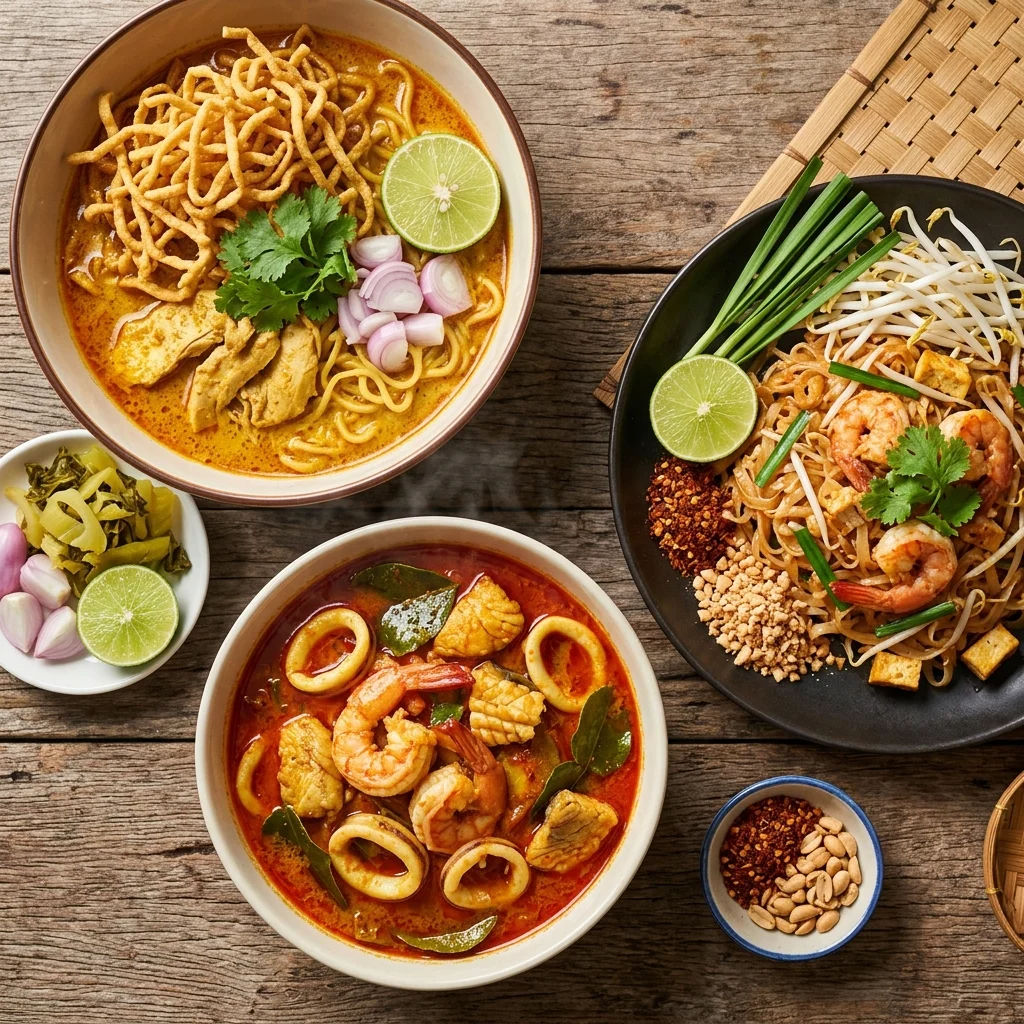
The dishes you learn to cook depend entirely on where in the country you take your class, as Thai food varies heavily by region. In Chiang Mai, northern Lanna cooking focuses on bitter, herbal, and earthy notes, featuring dishes like Khao Soi (curry noodle soup) and Sai Oua (herb sausage), which rarely rely on heavy coconut milk. Central Thai classes in Bangkok teach the international staples you likely know from UK takeaways, such as Pad Thai, Tom Yum Goong, and intensely sweet Green Curry. Down south in places like Phuket or Krabi, the instruction shifts toward fiery, turmeric-heavy curries and seafood, heavily influenced by Malaysian and Muslim culinary traditions. A class at Blue Elephant in Bangkok will yield a completely different recipe booklet than one at Zabb E Lee in Chiang Mai. If you try to learn southern dishes in a northern school, you will likely be working with compromised, transported ingredients rather than fresh local produce. Select your location based on the specific regional flavour profiles you actually want to recreate at home.
| Regional Cuisine | Key Ingredients | Famous Dishes | Best Location to Learn |
|---|---|---|---|
| Northern (Lanna) | Dried chillies, galangal, pork | Khao Soi, Hung Lay Curry | Chiang Mai, Chiang Rai |
| Central | Coconut milk, palm sugar, lime | Pad Thai, Green Curry | Bangkok, Ayutthaya |
| Southern | Turmeric, shrimp paste, seafood | Massaman Curry, Khua Kling | Phuket, Krabi, Koh Samui |
Half-Day vs Full-Day Experiences
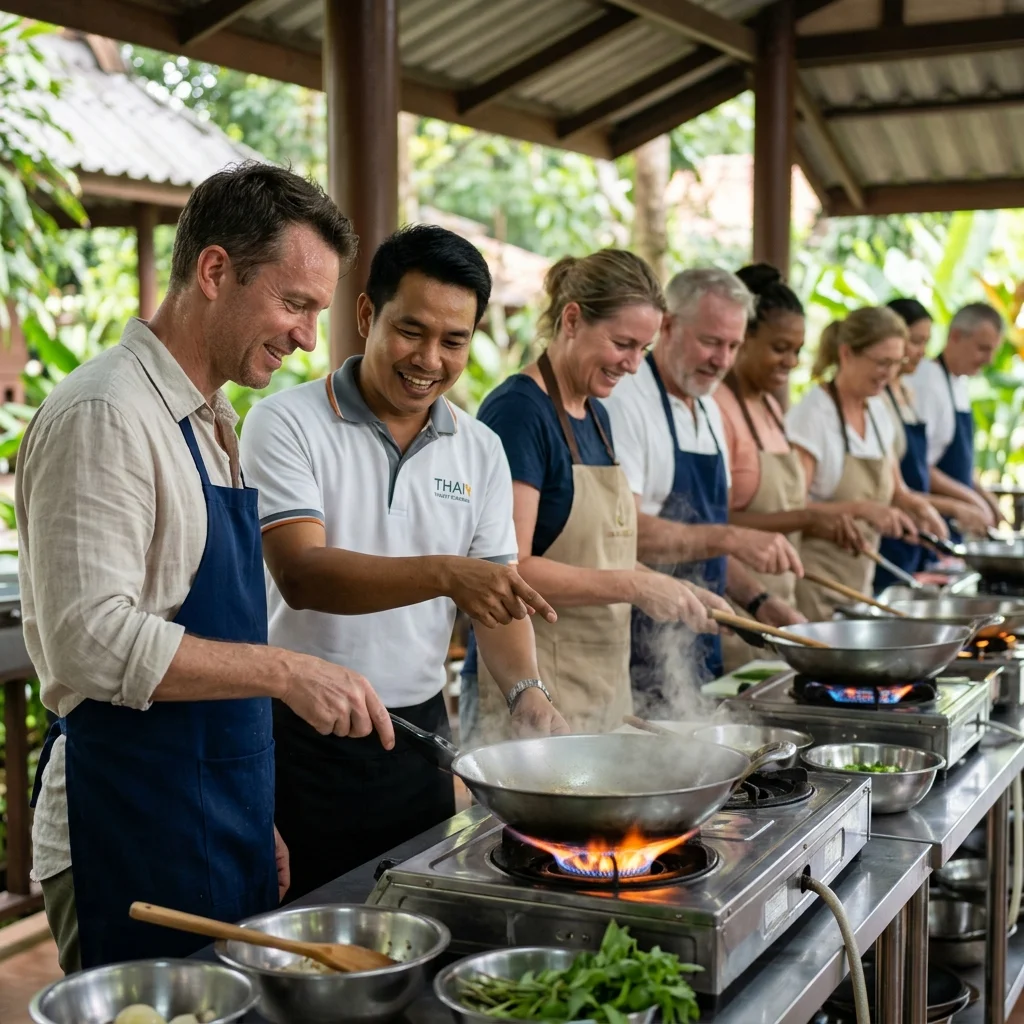
Your choice between a half-day and full-day class should be dictated by your physical stamina and your tolerance for standing in extreme heat. Half-day classes run for about four hours, usually starting at 8:30 AM or 1:00 PM, and teach three to four basic dishes. You will do a moderate amount of chopping, but the kitchen assistants will often pre-measure the fish sauce and palm sugar to save time and keep the class moving. Full-day classes last up to seven hours, teaching six or seven dishes, and demand significant physical effort from the student. You will spend extended periods standing over a roaring gas wok in temperatures that regularly exceed 35 degrees Celsius. In a full-day session, you are also much more likely to pound your own complex curry paste from scratch rather than relying on a pre-made mix. A half-day session typically costs between 1,000 and 1,500 THB (£22 to £33), whereas full-day courses range from 2,000 to 2,500 THB (£44 to £55). Be entirely honest about your energy levels, as heavy wok cooking in the tropics is exhausting work.
| Duration | Time Commitment | Dishes Cooked | Physical Demand |
|---|---|---|---|
| Half-Day Morning | 4 hours (inc. market) | 3 to 4 | Moderate |
| Half-Day Evening | 3 to 4 hours | 3 to 4 | Low (cooler temperatures) |
| Full-Day | 6 to 7 hours | 6 to 7 | High (extended standing/heat) |
Farm-to-Table vs Urban Kitchens
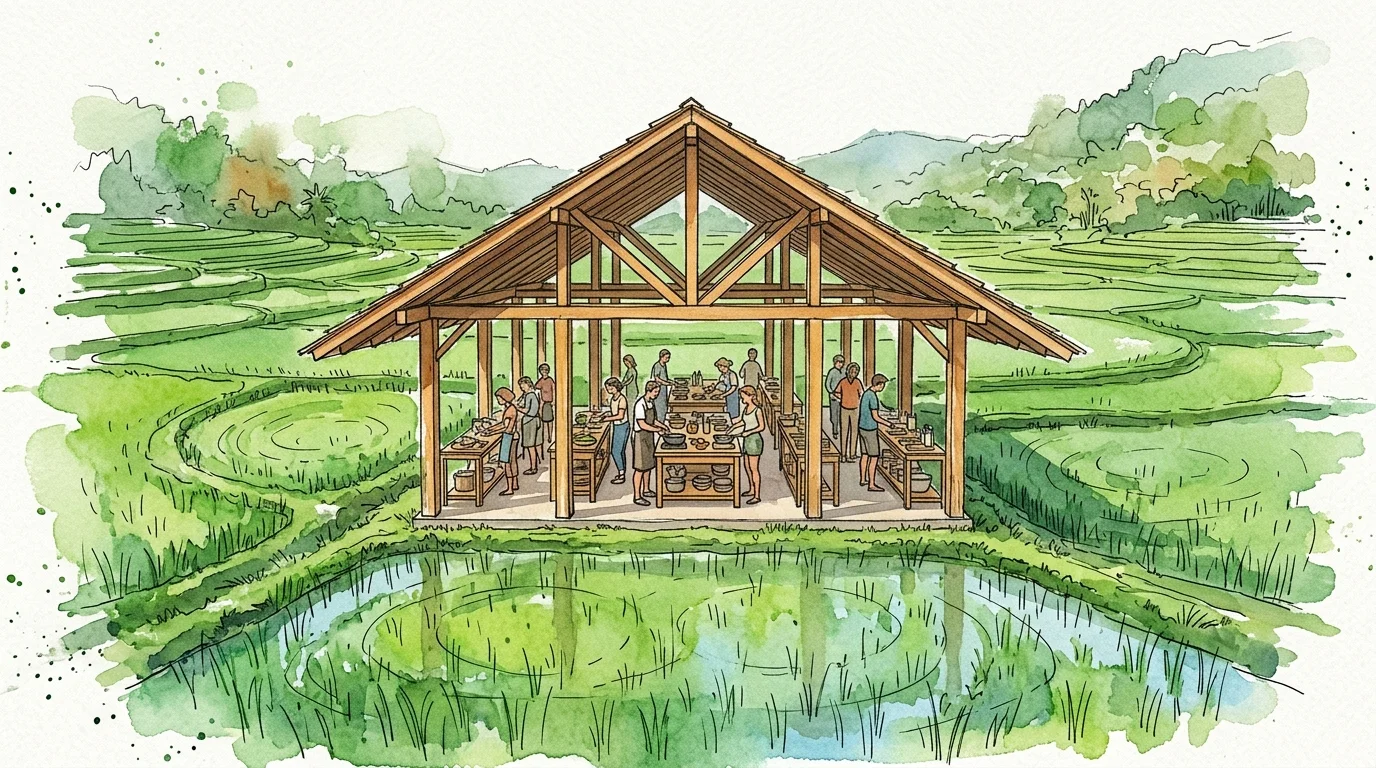
The physical setting of your cooking class drastically alters the atmosphere, dividing roughly into rural organic farms and air-conditioned city studios. In Chiang Mai, farm-based schools like Thai Farm Cooking School operate on plots of land forty-five minutes outside the city centre. You will pick your own aubergines and chillies straight from the soil, cooking in an open-air pavilion surrounded by working rice paddies. These environments are highly atmospheric but expose you to mosquitoes and the intense ambient outdoor temperature. Conversely, urban kitchens in Bangkok are often housed in converted shophouses or commercial buildings equipped with powerful air-conditioning. You sacrifice the romantic agricultural setting for a sterile, highly comfortable, and strictly controlled cooking environment. Farm classes often require a full-day commitment simply because of the transit time required to leave the city grid. City classes allow you to cook your meal, eat it, and be back at your hotel or a nearby shopping mall within a brisk three hours. Choose the farm setting for the environment, but opt for the urban studio if you prioritise physical comfort and time efficiency.
| Setting | Travel Time | Climate Control | Vibe and Atmosphere |
|---|---|---|---|
| Rural Farm | 45+ mins each way | Open-air, natural breeze | Rustic, agricultural, scenic |
| Urban Studio | Minimal (near public transport) | Full air-conditioning | Fast-paced, modern, practical |
| Hotel Kitchen | Minimal (on-site) | Full air-conditioning | Luxury, clinical, highly structured |
Masterclasses and Professional Instruction
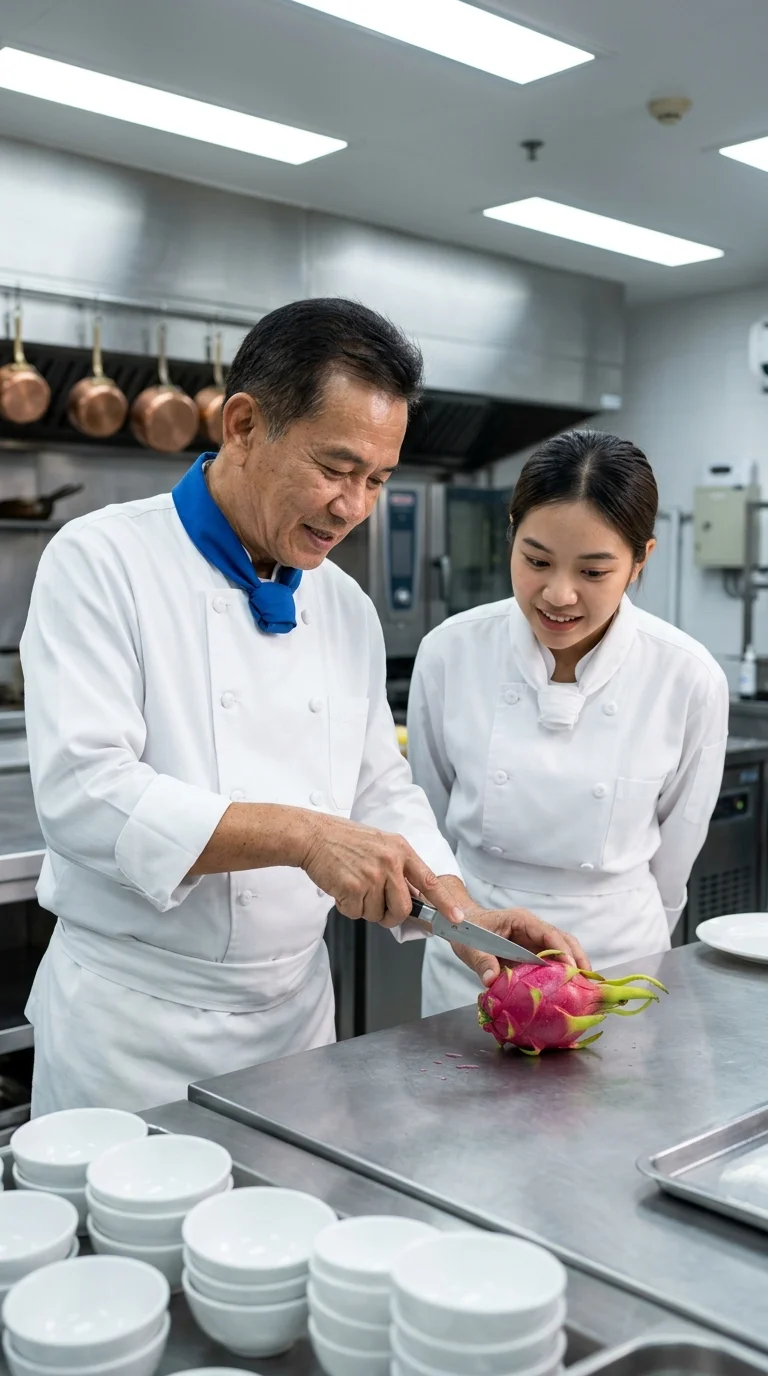
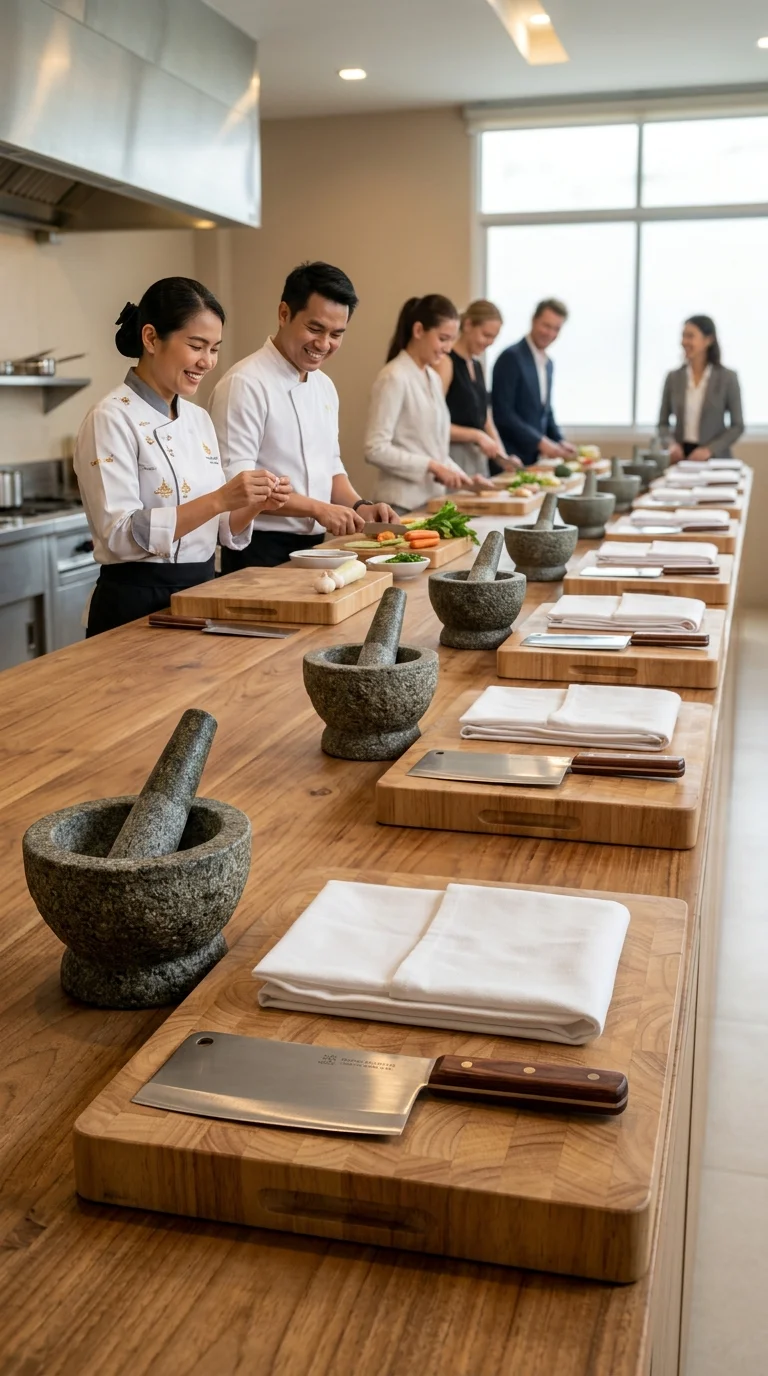
Advanced home cooks looking to genuinely refine their technique should bypass tourist-focused schools and invest in professional culinary instruction. Standard tourist classes are deliberately designed so that nobody fails; the instructor heavily guides the process and corrects mistakes to ensure everyone produces an edible lunch. Masterclasses, such as those offered by Le Cordon Bleu Dusit or the Oriental Thai Cooking School at the Mandarin Oriental, treat you as a serious culinary student. You will focus intensely on professional knife skills, traditional fruit carving, the specific science of balancing salty, sweet, sour, and spicy notes, and the elusive concept of wok heat control. These sessions often dive deep into royal Thai cuisine, teaching intricate presentation and complex, multi-stage curry pastes that take hours to refine. You will work at individual, professional-grade stainless steel stations rather than clustered around a shared wooden table. Expect to pay significantly more for this level of expertise, with half-day masterclasses starting around 4,000 THB (£88) and multi-day intensive courses running well over 15,000 THB (£330). This financial investment is only worthwhile if you already possess strong fundamental kitchen skills.
| Class Level | Target Audience | Instruction Style | Cost Estimate (THB) |
|---|---|---|---|
| Tourist Basic | Beginners, casual travellers | Guided, fail-safe, fun | 1,000 - 1,500 |
| Intermediate | Confident home cooks | Pacing is faster, less pre-prep | 1,800 - 2,500 |
| Professional | Chefs, serious foodies | Technical, strict, detail-oriented | 4,000 - 8,000+ |
Dietary Requirements and Customisation
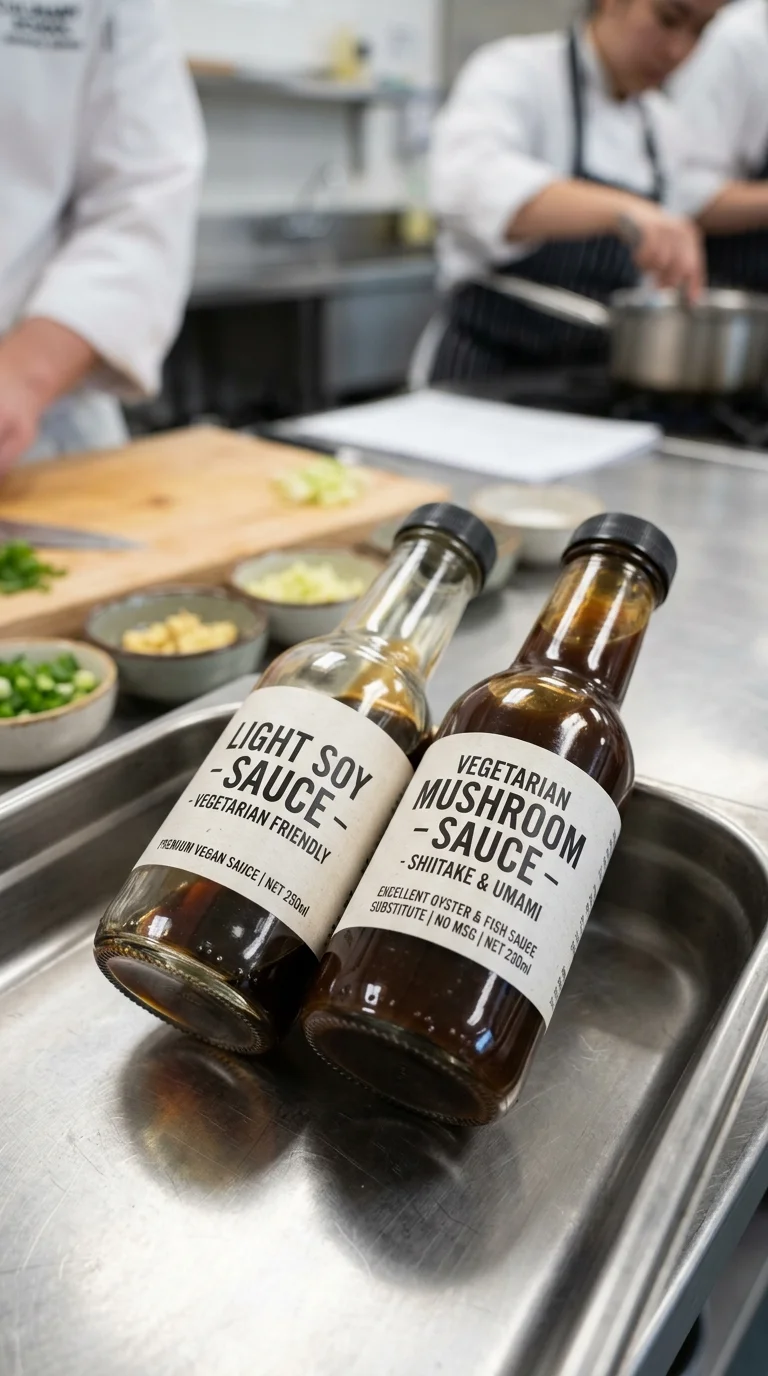
Thai cooking relies heavily on animal-derived ingredients, but almost all reputable cooking schools can adapt their menus for specific dietary requirements if notified well in advance. Fish sauce, oyster sauce, and dried shrimp are the absolute backbone of Thai seasoning, providing the essential umami depth that salt alone cannot achieve. For vegetarians and vegans, knowledgeable instructors will substitute these with thin soy sauce, mushroom sauce, and fermented soybean paste. Be aware that cross-contamination is highly likely in shared wok environments, so strict vegans may prefer booking dedicated plant-based schools like May Kaidee, which operates branches in both Bangkok and Chiang Mai. Peanut allergies require extreme caution, as crushed peanuts are a staple table garnish and peanut oil is occasionally used, though soybean or palm oil is far more common in commercial kitchens. If you have a severe allergy, you must communicate this clearly during the booking process and reiterate it directly to the instructor upon arrival. Bringing a translated allergy card written in Thai is a highly effective way to ensure your safety in a busy kitchen.
| Dietary Need | Common Thai Ingredient | Standard Substitution | Difficulty to Accommodate |
|---|---|---|---|
| Vegetarian/Vegan | Fish sauce, oyster sauce | Soy sauce, mushroom sauce | Very Easy |
| Gluten-Free | Soy sauce, wheat noodles | Tamari, rice noodles | Easy |
| Nut Allergy | Crushed peanuts, cashews | Omitted entirely | Moderate (cross-contamination risk) |
Top Locations for Thai Cooking Classes
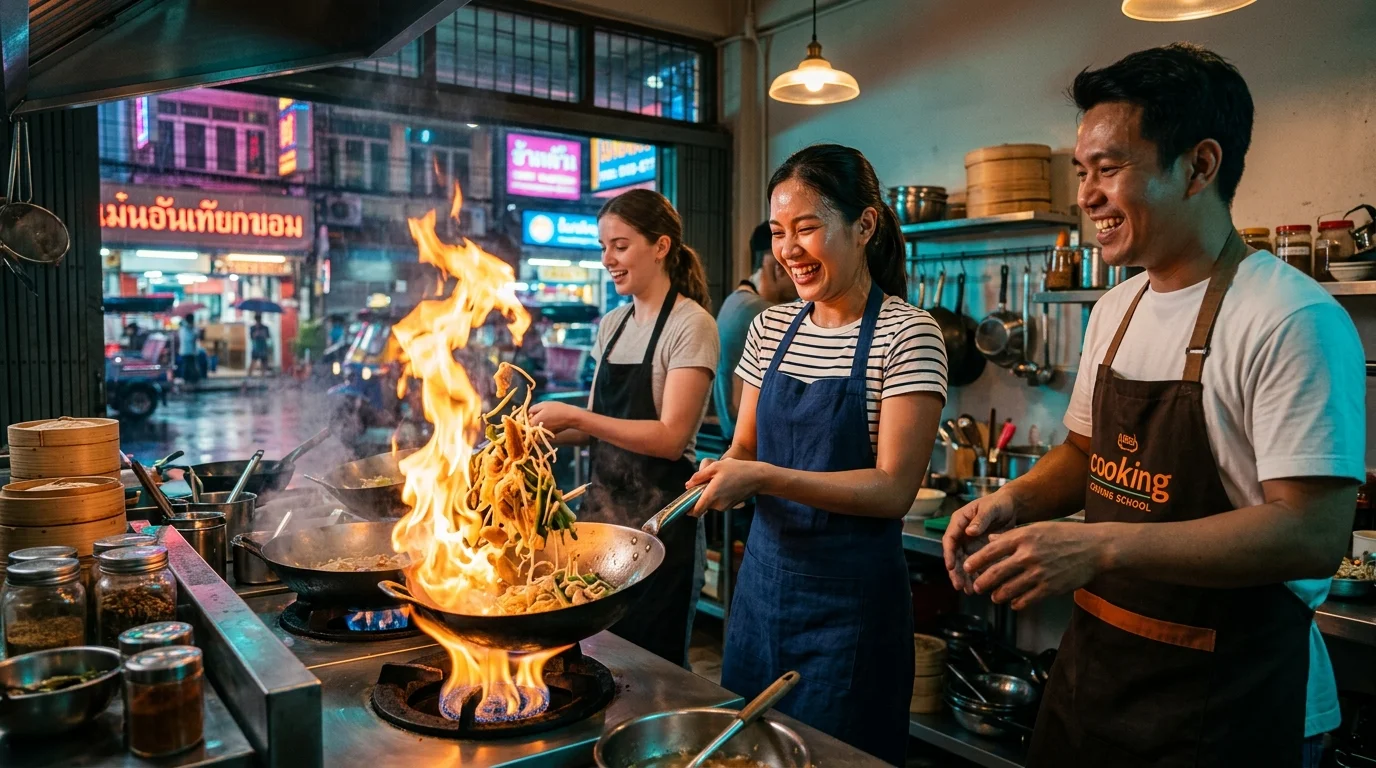
Chiang Mai is widely considered the cooking class capital of Thailand, offering the highest density of excellent farm-to-table experiences. Schools are clustered around the Old City moat for easy morning pickups, with the actual cooking taking place in the agricultural land of the Mae Rim or San Sai districts. Bangkok provides the best urban, fast-paced classes, heavily concentrated in the Silom and Sukhumvit areas, making them incredibly easy to reach via the BTS Skytrain. In the south, Phuket offers excellent seafood-focused classes, particularly around the Kathu and Kata beach areas, though prices here are generally twenty percent higher than in the north. Koh Samui also hosts several highly regarded boutique cooking schools, often set in open-air hilltop villas with sweeping ocean views, such as the Jungle Kitchen. If you are travelling across the country, Chiang Mai is undeniably the best place for a first-timer to book a class due to the sheer variety of options, the cooler morning climate, and the exceptional value for money.
Costs and Budgeting
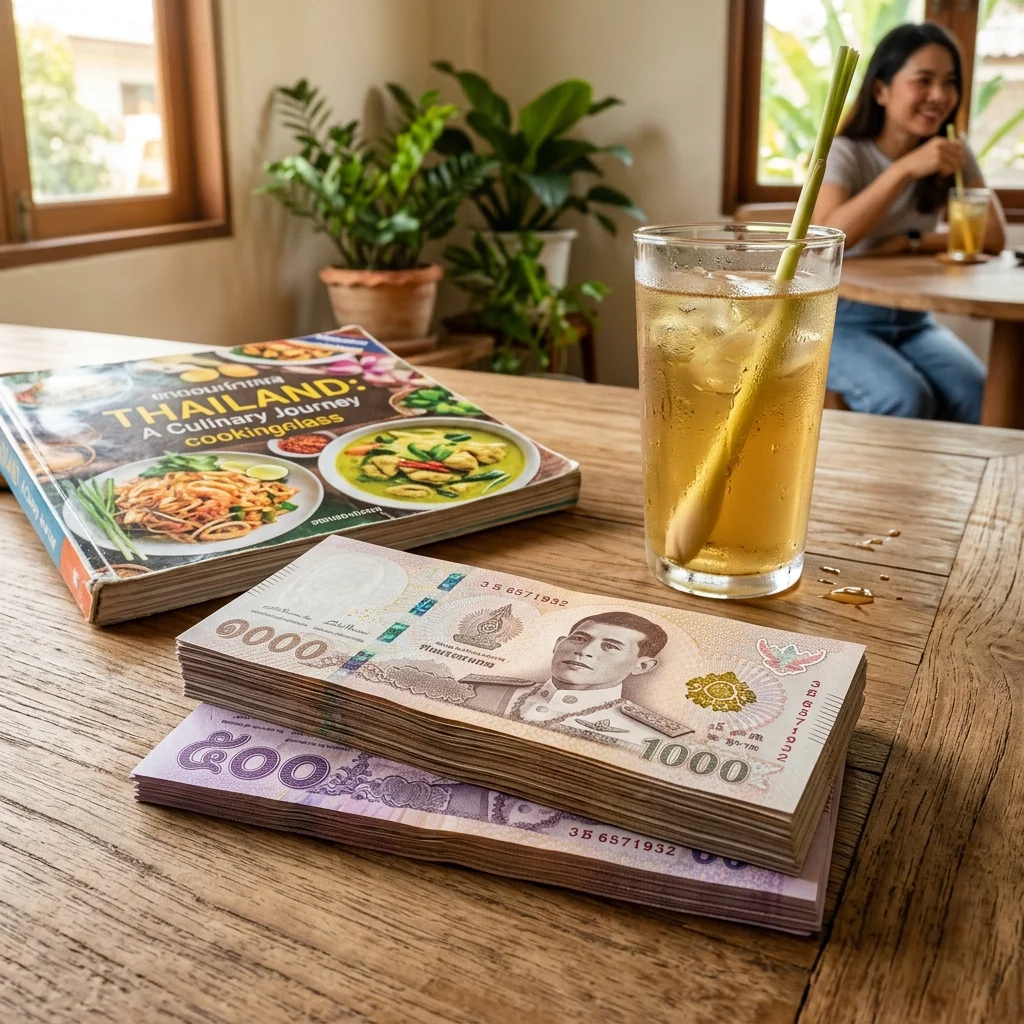
Cooking classes in Thailand offer excellent value, but prices vary sharply depending on the specific location, the duration of the session, and the prestige of the school. Budget options, usually found in Chiang Mai, provide basic instruction in large groups of up to fifteen people, keeping costs low but severely reducing individual attention. Mid-range classes represent the absolute sweet spot for most UK visitors, offering small group sizes of six to eight people, a comprehensive market tour, and a dedicated wok station for each student. Premium options are typically affiliated with five-star luxury hotels or international culinary institutes, featuring elite chefs, premium ingredients like giant river prawns, and professional-grade kitchen facilities. You should also carry a few hundred Baht in cash to tip your instructor and the kitchen assistants who clean your station.
| Option | Cost (THB) | Cost (GBP approx) | Notes |
|---|---|---|---|
| Budget Half-Day | 800 - 1,000 | £17 - £22 | Large groups, shared woks, basic ingredients |
| Mid-Range Half-Day | 1,200 - 1,800 | £26 - £39 | Small groups, individual stations, market tour included |
| Full-Day Farm Tour | 2,000 - 2,500 | £44 - £55 | Includes transport, extensive menu, farm setting |
| Premium Masterclass | 4,000 - 8,000 | £88 - £177 | Professional instruction, luxury setting, advanced techniques |
What to Know Before You Go
Do not eat a heavy breakfast before attending a morning cooking class. You will be tasting food constantly throughout the session and will ultimately sit down to eat three or four full dishes you have prepared yourself.
Wear lightweight, breathable clothing that you do not mind getting dirty or smelling heavily of wood smoke. Wok cooking generates a massive amount of airborne grease and strong garlic odours that will cling to your clothes for days.
Inform the school of any dietary restrictions at the exact moment of booking, not when you arrive at the venue. Instructors purchase highly specific quantities of fresh ingredients at the 5:00 AM market run, and they cannot magically produce tofu if you wait until 9:00 AM to declare you are vegetarian.
Accept that authentic Thai spice levels are significantly hotter than UK takeaway standards. Start with one single bird's eye chilli in your mortar and pestle, as you can always add more heat later, but you cannot extract it once the dish is heavily spiced.
Practical Tips for Your Cooking Class
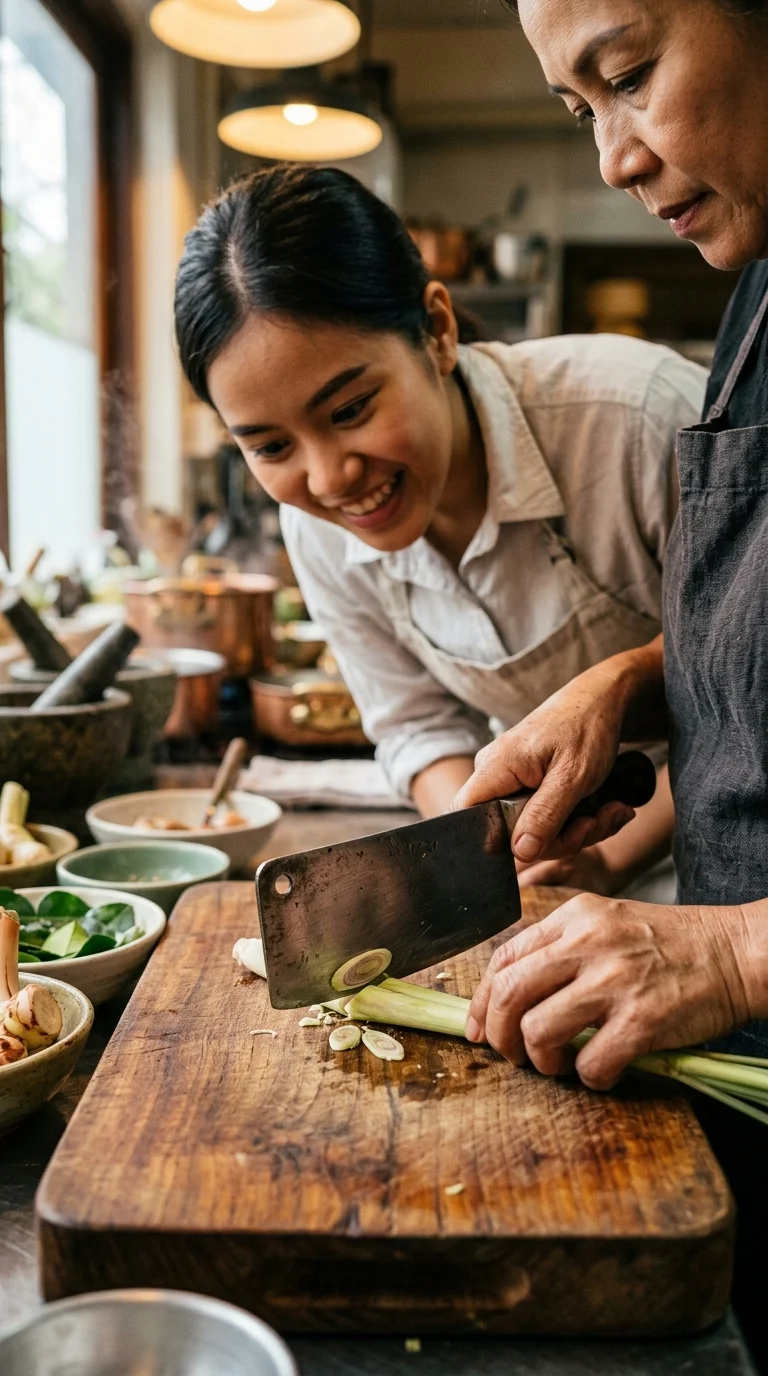
Tie your hair back securely and avoid wearing dangling jewellery or loose, flowing sleeves. You will be leaning directly over open gas flames and handling hot oil, making loose items a severe fire hazard in the kitchen.
Take photographs of the raw ingredients before they are chopped or pounded into pastes. This visual reference will heavily help you identify unfamiliar items like fresh galangal or makrut lime leaves when you try to source them in Asian supermarkets back in the UK.
Keep a bottle of water at your station and drink from it constantly throughout the class. The combination of tropical weather and standing next to multiple roaring woks leads to rapid, often unnoticed dehydration.
Do not feel pressured to eat everything you cook during the scheduled tasting breaks. Most schools provide plastic takeaway containers, allowing you to save your freshly made Pad Thai or massaman curry for your dinner later that evening.
Pay close attention to the specific order in which ingredients are added to the wok, rather than just memorising the quantities. Authentic Thai cooking relies heavily on layering flavours, such as frying the curry paste in coconut cream until the oil separates before adding any raw meat.
Wash your hands immediately and thoroughly with soap after handling raw chillies. Touching your eyes or face with residual chilli oils on your skin will cause intense, lingering pain that cold water alone cannot fix.
Ask your instructor for practical recommendations on substitute ingredients that are easier to find in Europe. They often know exactly which common Western vegetables can successfully replace hard-to-find items like Thai apple aubergines or holy basil.
Quick Reference Guide
| Item | Detail | Notes |
|---|---|---|
| Average Cost | 1,200 - 2,500 THB (£26 - £55) | Varies by duration and setting (urban vs farm). |
| Duration | 3 to 7 hours | Half-day is standard; full-day requires stamina. |
| Best Locations | Chiang Mai, Bangkok, Phuket | Chiang Mai is best for farm tours; Bangkok for urban efficiency. |
| Group Sizes | 6 to 12 people | Avoid classes with more than 15 people for better instruction. |
| Booking Lead Time | 2 to 3 days | Book earlier during the peak season (December to February). |
| Dietary Options | Veg, Vegan, Gluten-Free | Must be stated clearly at the time of booking. |
| Attire | Casual, breathable, closed shoes | Avoid loose sleeves due to open flames. |
| Best Time of Day | Morning | Morning classes include cooler, livelier market tours. |