Songkran Festival Bangkok
During the three-day Thai New Year from 13 to 15 April, Bangkok closes a five-kilometre stretch of Silom Road to traffic, replacing vehicles with fire engines and tens of thousands of locals and tourists armed with high-capacity water guns. This event transforms the capital into the largest coordinated water festival on the planet, drawing over half a million international arrivals specifically for the celebrations.
Songkran in Bangkok represents the modern, high-energy evolution of Thailand’s traditional Buddhist New Year. Overseen by the Bangkok Metropolitan Administration alongside local districts, the festival splits distinctly between massive, officially sanctioned water fights in commercial centres and quiet, respectful religious ceremonies at the city's royal temples. It sits at the absolute peak of the Thai domestic tourism calendar, creating an intense, city-wide atmosphere. This event suits energetic travellers willing to embrace complete immersion, both culturally and physically, while navigating the hottest month of the Thai year.
Traditional Ceremonies and Merit-Making
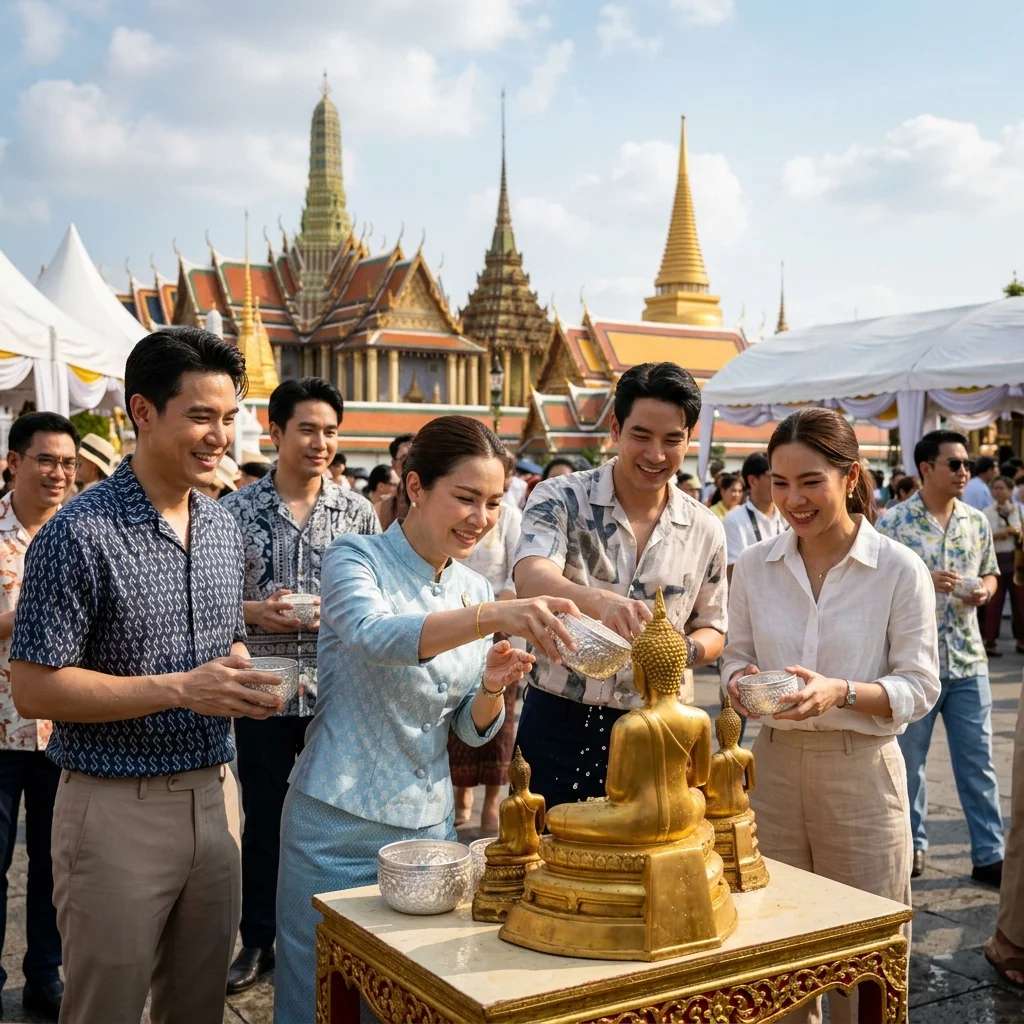
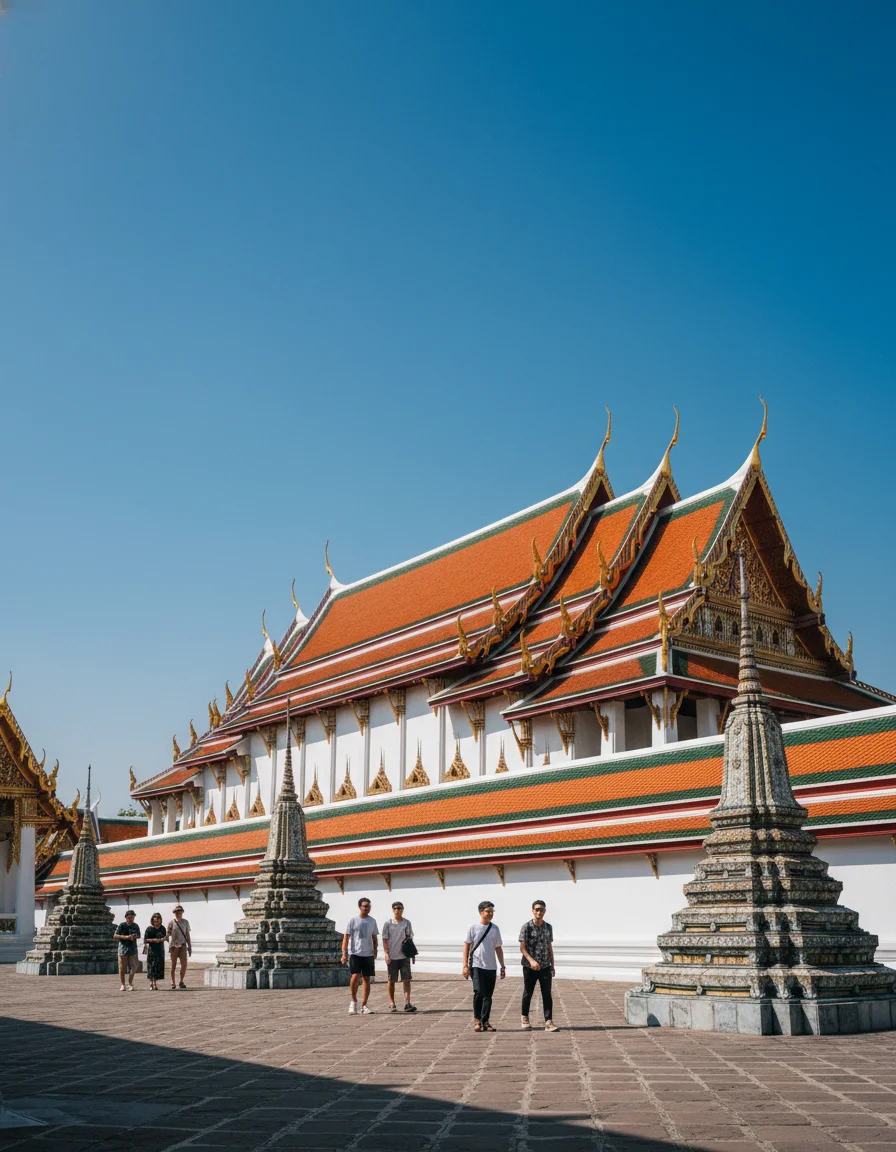
While the street parties dominate international coverage, the foundation of Songkran remains deeply religious and family-oriented. The festival marks the sun's transition into Aries, dictating a period of renewal, cleansing, and respect across the nation. Across Bangkok, particularly at Sanam Luang and major temples like Wat Pho and Wat Arun, the day begins with early morning merit-making. Locals offer food to monks before participating in 'Song Nam Phra', the ritual of pouring jasmine-scented water over Buddha images to wash away bad luck. You will also see 'Rod Nam Dum Hua', where younger Thais pour water over the palms of their elders to ask for blessings for the year ahead. Many temple grounds also host competitions to build elaborate sand pagodas, known as Chedi Sai, decorated with small paper flags. These temple grounds enforce strict dress codes, prohibiting the water guns, wet clothing, and exposed shoulders seen elsewhere in the city. Observing these rituals provides necessary context to the widespread water throwing, which originally began as a simple way to share the blessed water after the temple ceremonies concluded.
Expect 32C days and 80 percent humidity in Bangkok. Beat the 4 PM monsoon downpours by grabbing a 49 THB / 1.15 GBP local poncho at any corner shop.
The Major Water Battle Zones
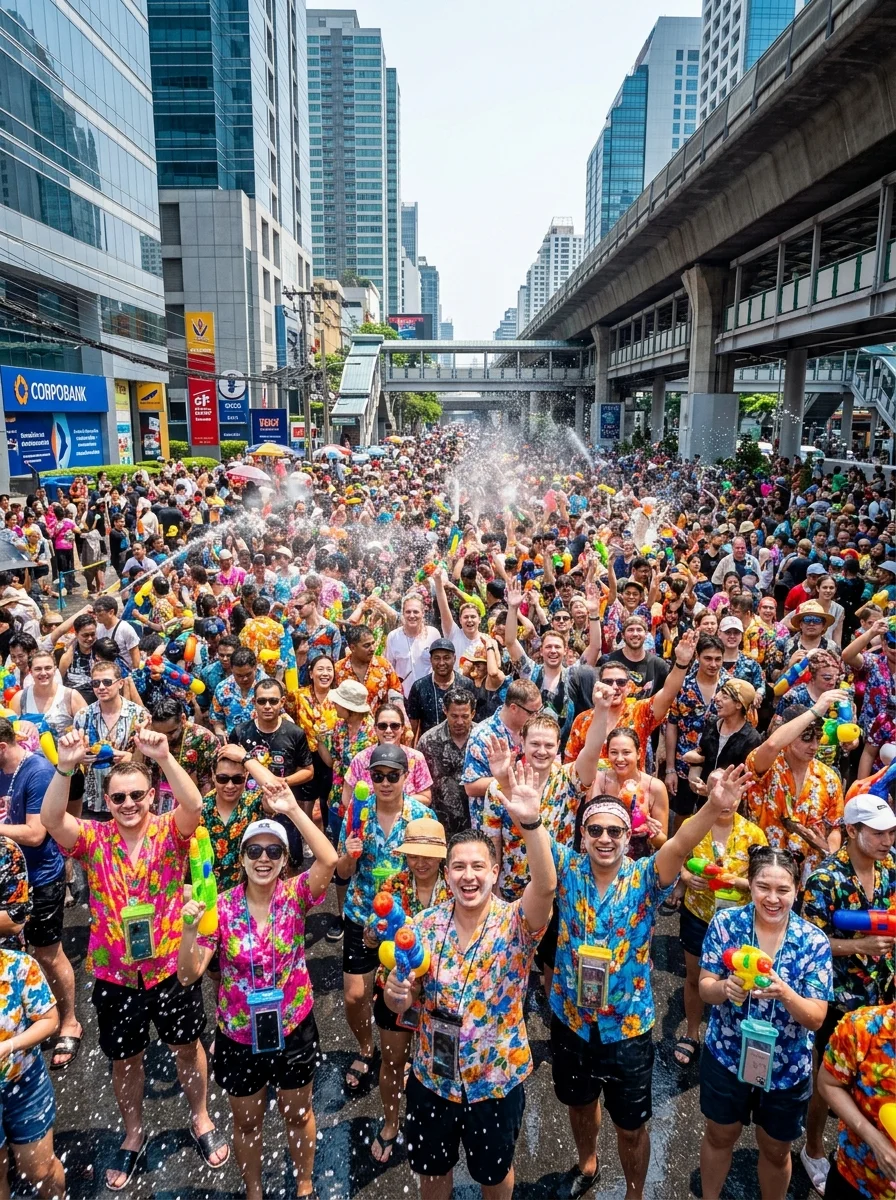
The sheer scale of the water fights in central Bangkok surpasses anything found in Chiang Mai or the southern islands. Silom Road serves as the primary battleground, completely pedestrianised from Sala Daeng BTS station down to Naradhiwas Road. Here, you walk through a slow-moving gauntlet of hoses, buckets, and water pistols, with local fire brigades occasionally spraying the crowds from overhead overpasses to provide relief from the intense heat. Khao San Road offers a more confined, chaotic experience favoured by young backpackers, where the narrow street creates a dense crush of people while electronic music blasts from every bar. For a slightly more regulated environment, Siam Square hosts family-friendly events with designated stages, foam machines, and live music performances, usually sponsored by major Thai brands. The water used across these official zones is generally clean tap water, though locals often mix it with cooling 'din sor pong' (marl powder) that leaves white streaks on your face and clothes. Keep your mouth closed when navigating the heaviest crossfire and accept that staying dry in these areas is impossible.
| Celebration Zone | Primary Atmosphere | Crowd Density | Best Suited For |
|---|---|---|---|
| Silom Road | High-energy, massive scale, local and tourist mix | Extreme | Energetic adults, groups |
| Khao San Road | Backpacker party, loud music, alcohol-heavy | Extreme | Young adults, party-goers |
| Sanam Luang | Traditional, religious, respectful, dry | Moderate | Families, cultural observers |
| Siam Square | Brand-sponsored, foam parties, stage shows | High | Teenagers, families |
Navigating the City Without Getting Wet
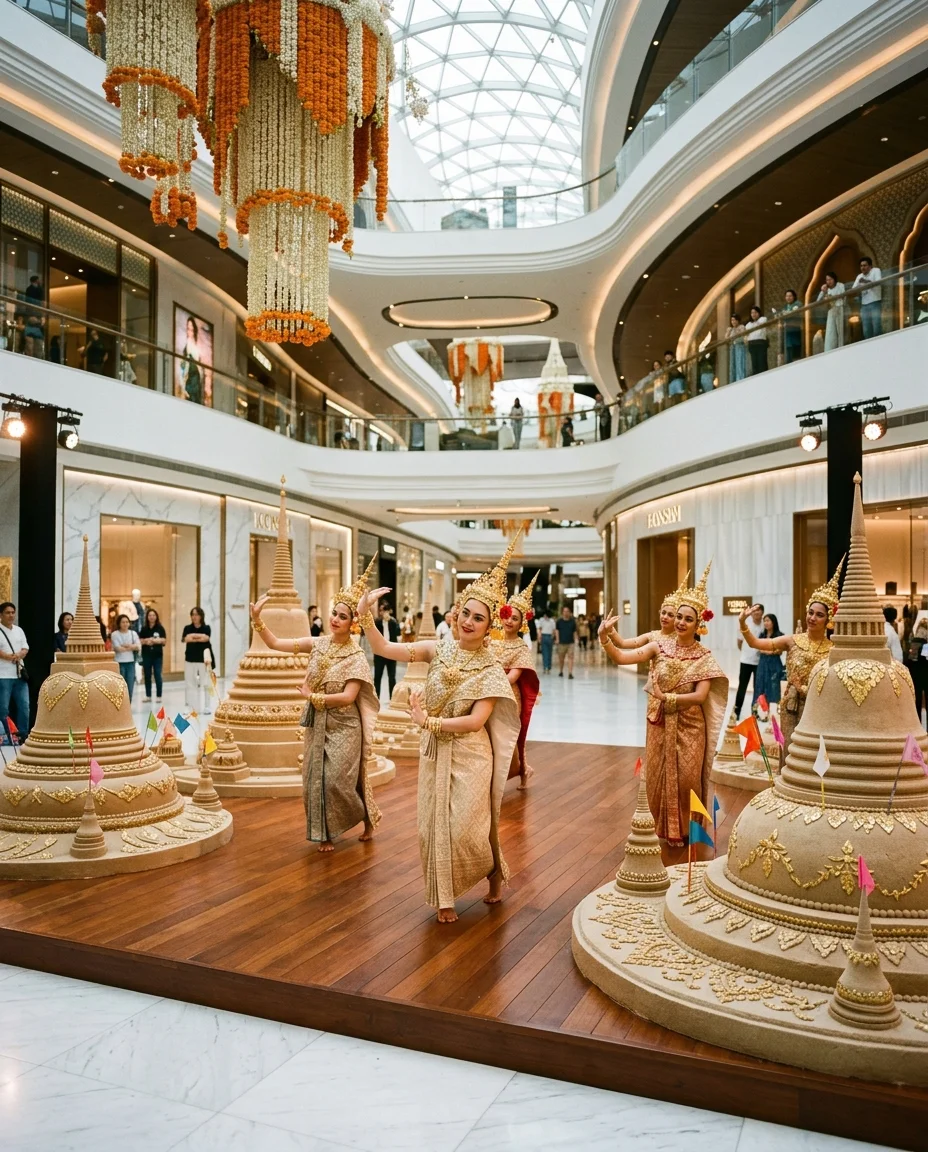
Escaping the water fights entirely requires careful planning, as stepping onto any major pavement almost guarantees a soaking. The large shopping complexes, including CentralWorld, Siam Paragon, and IconSiam, become safe havens offering extensive dry programming. These malls construct elaborate indoor cultural exhibitions featuring traditional Thai dance, regional food markets, and indoor sand pagoda building displays. You can spend entire days moving between these complexes via the interconnected skywalks that run from Chit Lom to Siam without taking a direct hit. Office buildings, banks, and many independent shops shut down entirely, leaving the commercial districts eerily quiet outside the designated party zones. If you need to travel to the airport or attend a non-festival engagement, you must rely on the elevated train networks or pre-booked enclosed taxis, as tuk-tuks and motorcycle taxis leave you completely exposed to roadside ambushes. Staying dry is entirely possible in Bangkok, but it severely limits your street-level mobility and confines you primarily to the major retail centres.
Essential Gear and Preparation
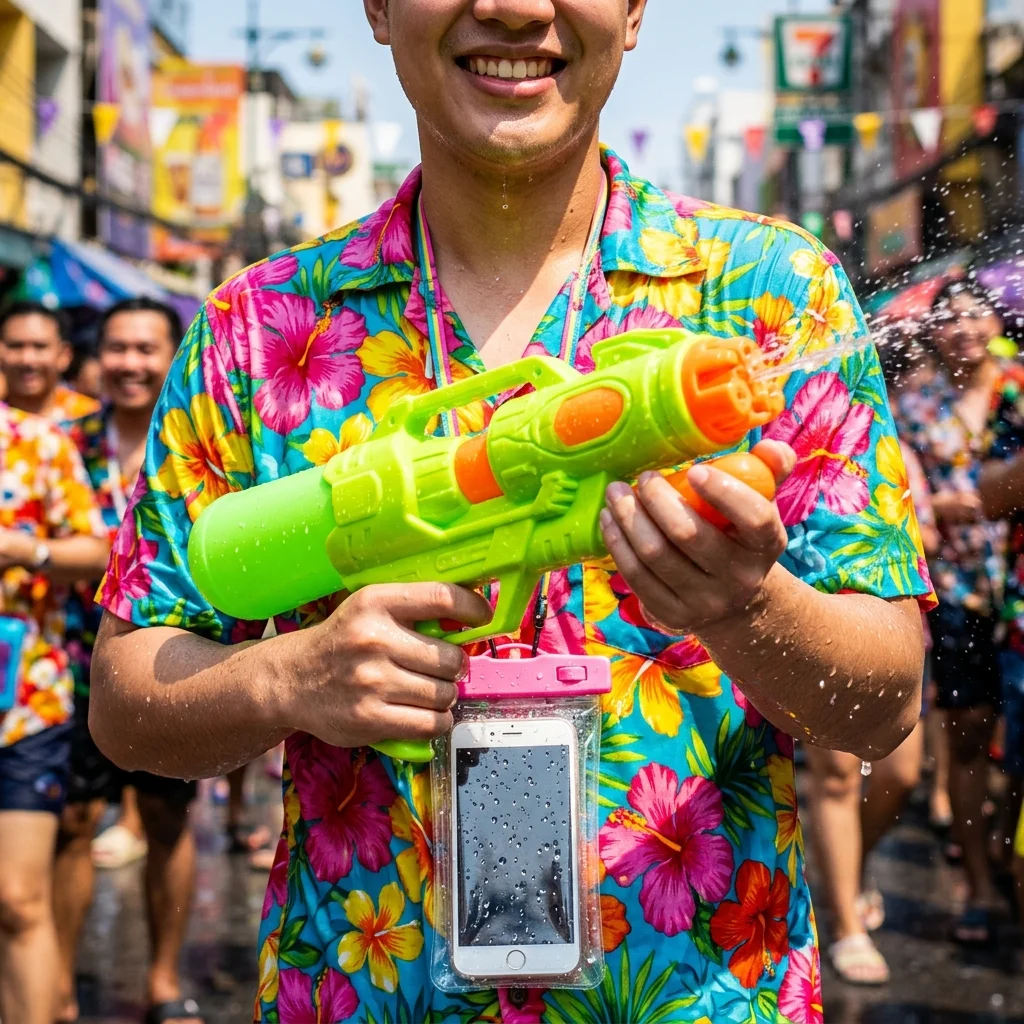
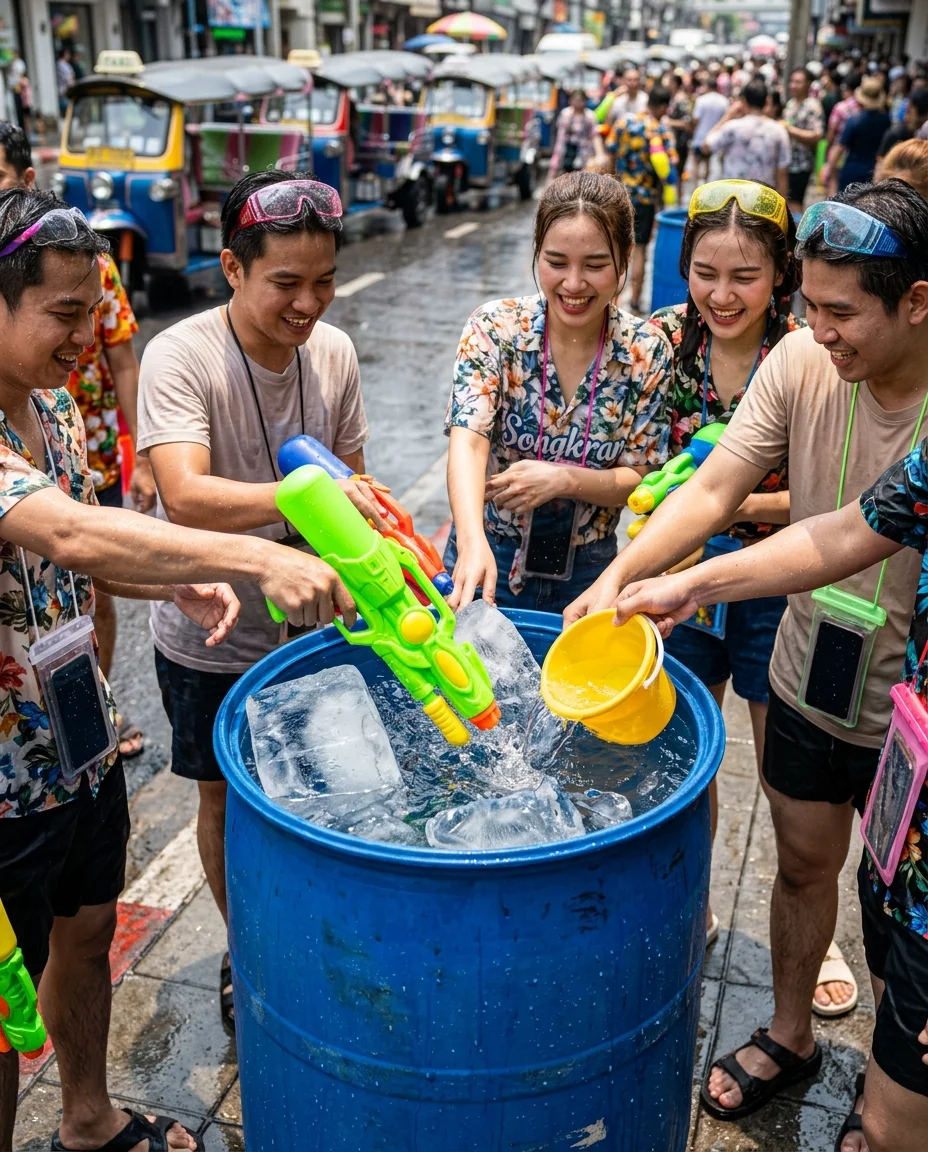
Preparation dictates your comfort level throughout the three-day holiday. The unofficial uniform of Songkran is the brightly coloured, Hawaiian-style floral shirt, available on every street corner for around 150 THB (3.50 GBP). You must secure all electronics, cash, and passports in high-quality, transparent waterproof pouches worn securely around the neck. Standard backpacks will not survive the volume of water on Silom or Khao San Road; you need a proper PVC dry bag, similar to those used for kayaking, to carry any larger items safely. Footwear requires careful consideration, as you will be walking on slick, wet concrete mixed with talcum powder for hours at a time. Flip-flops easily break in the dense crowds or slip off your feet, making strapped waterproof sandals or old trainers the most practical choice. Protective eyewear, such as clear safety goggles or wraparound sunglasses, prevents high-pressure water jets and menthol paste from irritating your eyes.
Food and Dining During the Festival
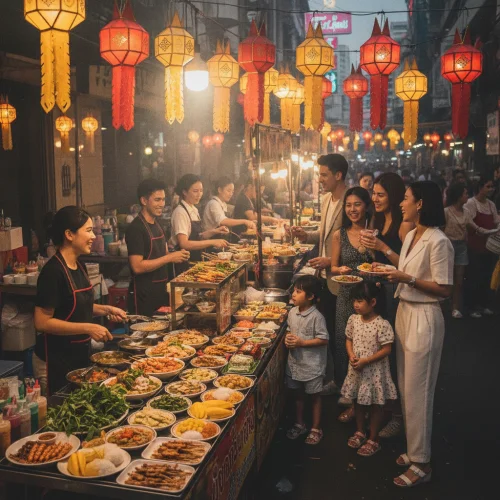
While many independent street food carts disappear as vendors return to their home provinces for the holiday, Bangkok's culinary scene adapts rather than shuts down entirely. The major shopping centres like Siam Paragon and EmQuartier expand their ground-floor food halls, bringing popular street food vendors indoors to operate in air-conditioned, dry environments. Here you can find classic dishes like pad krapow (holy basil stir-fry) and khao soi (northern curry noodles) without the risk of soggy rice. Along the edges of the major water fight zones, temporary pop-up stalls sell easily portable snacks including grilled pork skewers (moo ping) and sliced green mango with chilli salt. Convenience stores like 7-Eleven become vital supply lines, though their floors quickly turn into slip hazards from dripping customers. For evening meals, hotel restaurants remain fully operational and often host special buffet dinners featuring Khao Chae. This seasonal Thai dish consists of jasmine rice soaked in flower-scented iced water, served with sweetened shredded pork and stuffed shallots, specifically designed to combat the intense April heat. Plan to eat your main meals outside the peak water-throwing hours of 2 PM to 6 PM.
Location and Getting There
The festival spans the entire Bangkok metropolitan area, though the official events concentrate within the central Pathum Wan, Bang Rak, and Phra Nakhon districts. Getting into the city from Suvarnabhumi Airport (BKK) takes approximately 45 minutes via the Airport Rail Link, costing 45 THB (1 GBP). During the festival, the BTS Skytrain and MRT underground networks become the only reliable ways to cross the city. Traffic on the roads grinds to a halt around major zones like Silom and CentralWorld. Note that transport authorities strictly enforce a 'no wet clothes and no loaded water guns' policy inside train carriages and stations. You must empty your water pistols before passing the ticket barriers and attempt to dry off, or security will deny you entry. Taxis will often refuse passengers who are dripping wet to protect their interiors, making the rail networks your primary lifeline.
Costs and Booking
Participating in the street events costs nothing, but accommodation prices surge significantly during the April holiday window. Hotels in prime zones like Silom, Sathorn, and Sukhumvit often apply peak season surcharges, requiring bookings at least three months in advance. A standard room in a mid-range four-star hotel jumps from a typical 2,500 THB (55 GBP) to upwards of 4,000 THB (90 GBP) per night. Equipment costs remain low if purchased from street vendors rather than hotel gift shops. High-capacity water guns range from 300 to 800 THB (7 to 18 GBP) depending on size, while waterproof pouches cost around 60 THB (1.50 GBP). Street food and basic drinks retain their normal pricing, though bars along Khao San Road will increase alcohol prices and often charge entry fees for their private, cordoned-off party zones.
| Expense Category | Typical Cost (THB) | Cost (GBP approx) | Notes |
|---|---|---|---|
| Mid-Range Hotel (Silom area) | 3,500 - 5,000 per night | 80 - 110 | Requires booking months in advance |
| Large Water Gun | 400 - 800 | 9 - 18 | Buy at supermarkets for better quality |
| Waterproof Phone Pouch | 60 - 100 | 1.50 - 2.50 | Test the seal before inserting valuables |
| Floral Songkran Shirt | 150 - 250 | 3.50 - 6 | Available from street vendors everywhere |
Who It Suits Best
This festival is perfect for highly energetic travellers, groups of friends, and cultural enthusiasts who do not mind relinquishing personal space. It rewards visitors willing to embrace chaos, heat, and spontaneous physical interaction with strangers on the street. Conversely, it is entirely unsuitable for those seeking a quiet city break, travellers with mobility issues, or anyone highly protective of their personal boundaries. If you dislike getting wet, despise large crowds, or struggle with temperatures exceeding 35 degrees Celsius, you should avoid Bangkok during the mid-April holiday period.
What to Know Before You Book
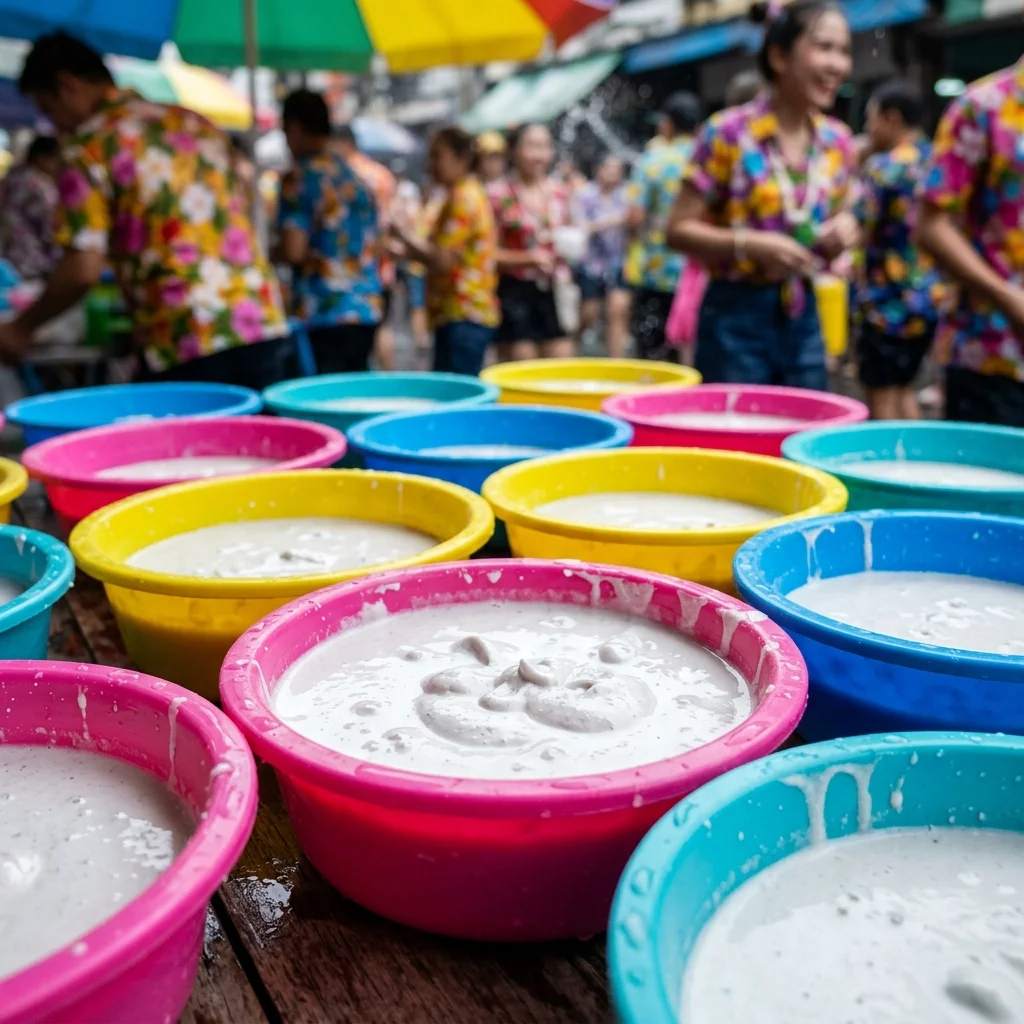
The heat in April represents the most extreme weather of the Thai calendar, often feeling like 40 degrees Celsius with high humidity. You must actively manage your hydration, as the constant water fights mask exactly how much you are sweating throughout the day.
Almost all independent businesses, small restaurants, and local markets close completely for the duration of the three-day holiday. You will need to rely heavily on shopping malls, hotel restaurants, and convenience stores for your meals and basic supplies.
The road toll during this period spikes dramatically due to drink-driving and wet road conditions across the country. You should absolutely avoid renting a scooter or motorcycle anywhere in Thailand during the festival week.
Consent for water throwing is assumed the moment you step out of your hotel doors into a public street. You cannot ask people to stop, and showing anger when splashed will cause severe loss of face and ruin the good-natured atmosphere.
Practical Tips
Leave your passport locked securely in your hotel safe and carry a physical photocopy inside your waterproof pouch. Police understand this precaution during the festival and will accept the paper copy for identification purposes.
Buy your water gun at a large supermarket like Big C or Lotus's rather than from a street vendor. The supermarket models are cheaper, better constructed, and far less likely to leak into your dry bag.
Expect the water hitting you to be freezing cold, as locals buy huge blocks of ice to chill their pavement water barrels. The sudden shock of ice water in 38-degree heat takes some getting used to.
Avoid wearing white clothing of any kind, as it becomes completely transparent within seconds of leaving your accommodation. Opt for dark colours or the thick, brightly patterned traditional shirts sold locally.
Keep small change in ten and twenty Baht coins easily accessible in a separate, sealed plastic bag. You will need these coins to pay for water refills from the large barrels operated by locals on the pavements.
Apply heavy-duty, sweat-proof sunscreen before you leave your room and reapply it frequently throughout the day. The cooling effect of the water masks the intensity of the sun, frequently leading to severe sunburns.
Wash your face and shower immediately upon returning to your hotel room at the end of the day. The water sourced from garden hoses and public pipes can irritate sensitive skin if left on for hours.
Quick Reference Table
| Item | Detail | Notes |
|---|---|---|
| Event Name | Songkran Festival Bangkok | Thai New Year |
| Location | City-wide, Bangkok, Thailand | Key zones: Silom, Khao San, Siam |
| Event Type | Cultural Festival and Public Holiday | Mix of religious and street parties |
| Dates | 13 to 15 April annually | Dates are fixed, not lunar |
| Entry Fee | Free for public street events | Malls and temples also free |
| Main Transport | BTS Skytrain and MRT | No wet clothes allowed on trains |
| Nearest Airport | Suvarnabhumi Airport (BKK) | 45 minutes to central Bangkok |
| Weather | Extremely hot (35C - 40C) | April is the hottest month of the year |
| Official Info | Tourism Authority of Thailand (TAT) | tatnews.org for official schedules |
| Accommodation | Advance booking essential | Expect peak season rates in April |