Khao Yai National Park
As Thailand's first national park and a UNESCO World Heritage site, Khao Yai National Park provides the highest probability of encountering wild Asian elephants in their natural habitat within a three-hour drive of the capital.
Managed by the Department of National Parks, Wildlife and Plant Conservation, this 2,168-square-kilometre reserve stands as Thailand's most accessible major wilderness. It bridges the gap between remote jungle expeditions and heavily curated tourist attractions, offering a genuine primary rainforest environment with established road access. The destination appeals directly to active UK travellers, dedicated wildlife watchers, and adventurous families who want authentic animal encounters without requiring internal flights to the borders. It operates as a working conservation area rather than an open-air zoo, meaning sightings require patience, precise timing, and often the sharp eyes of a professional guide.

Wildlife Encounters and Managing Expectations
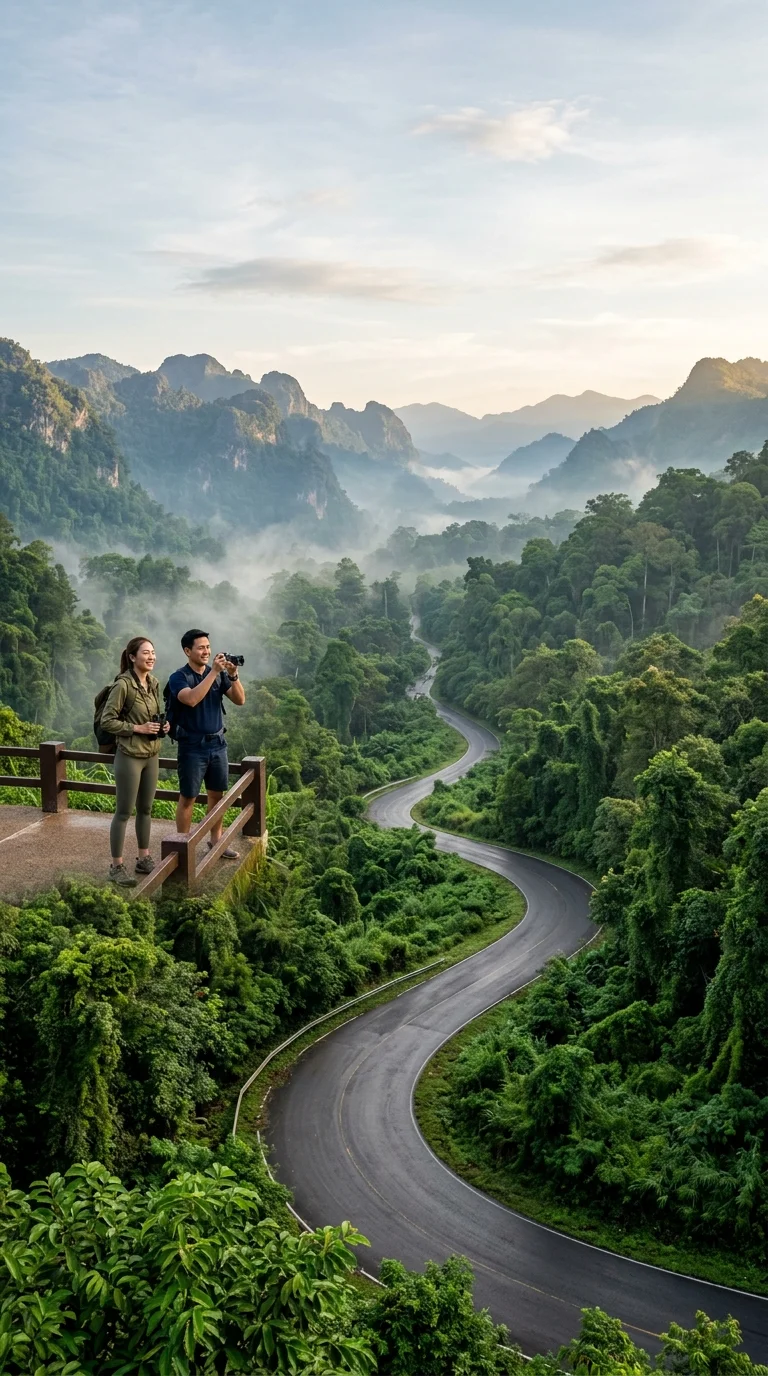
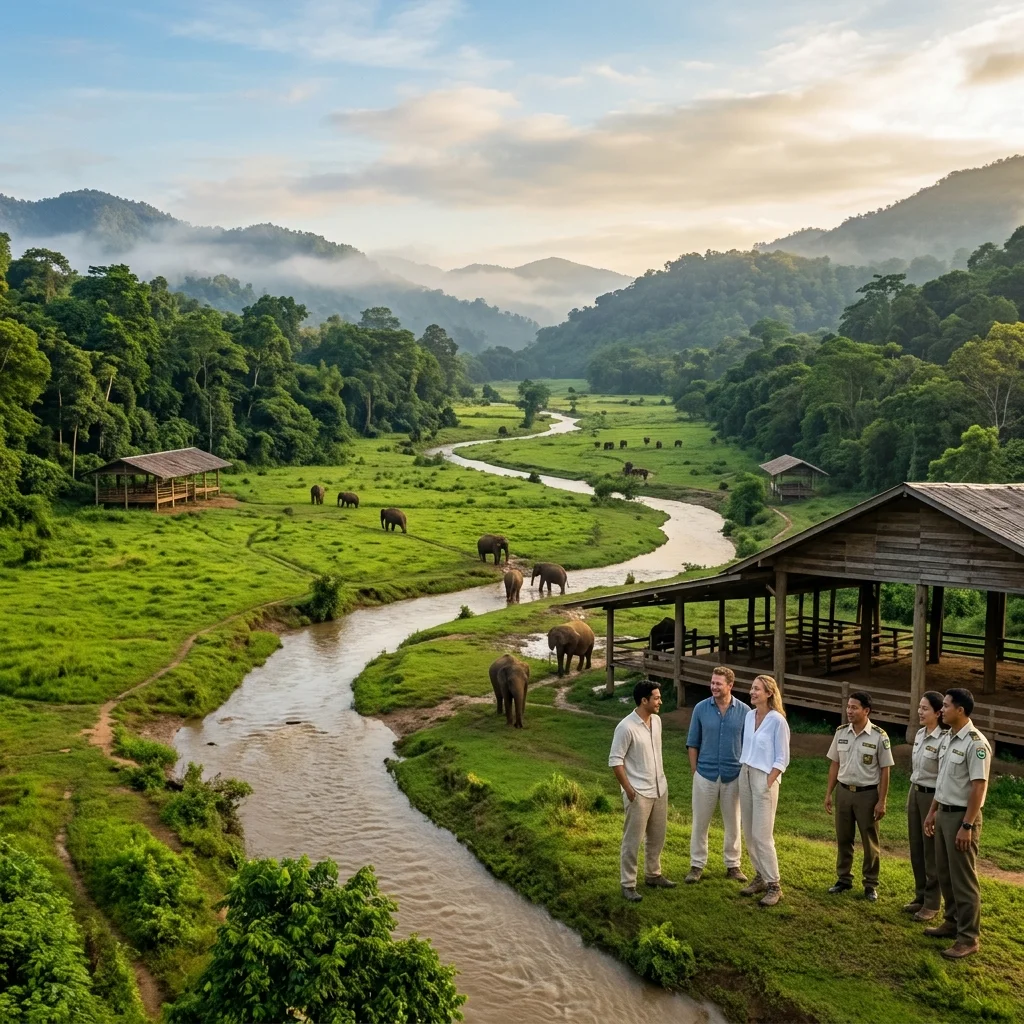
The primary draw of this vast reserve is the genuine possibility of observing endangered species operating freely in their natural environment. Wild Asian elephants frequently cross the main arterial roads at dusk, while great hornbills, wreathed hornbills, and pileated gibbons dominate the upper canopy surrounding the central visitor headquarters. Asiatic black bears, though confirmed residents, remain highly elusive and are typically only spotted by experienced rangers deep in the primary evergreen forest. You must approach a visit with realistic expectations regarding wildlife density and visibility. Animals here roam across vast territories of dense vegetation, making guaranteed sightings impossible on any given day. Success depends entirely on your timing, the current season, and your willingness to remain completely quiet. Early mornings and late afternoons yield the highest activity levels, particularly around the artificial salt licks constructed near the Nong Phak Chi observation tower. Hiring a local park ranger or joining a specialised wildlife tour drastically increases your chances of spotting well-camouflaged species like Vogel's pit vipers, pig-tailed macaques, and slow lorises. The reality of jungle wildlife watching involves long periods of patient waiting punctuated by brief, intense encounters.
Plan your trip to Railay Beach, Krabi. Detailed guide on boat transfers, the four beach zones, rock climbing, and the best resorts for a UK traveller.
Hiking Trails and Jungle Treks
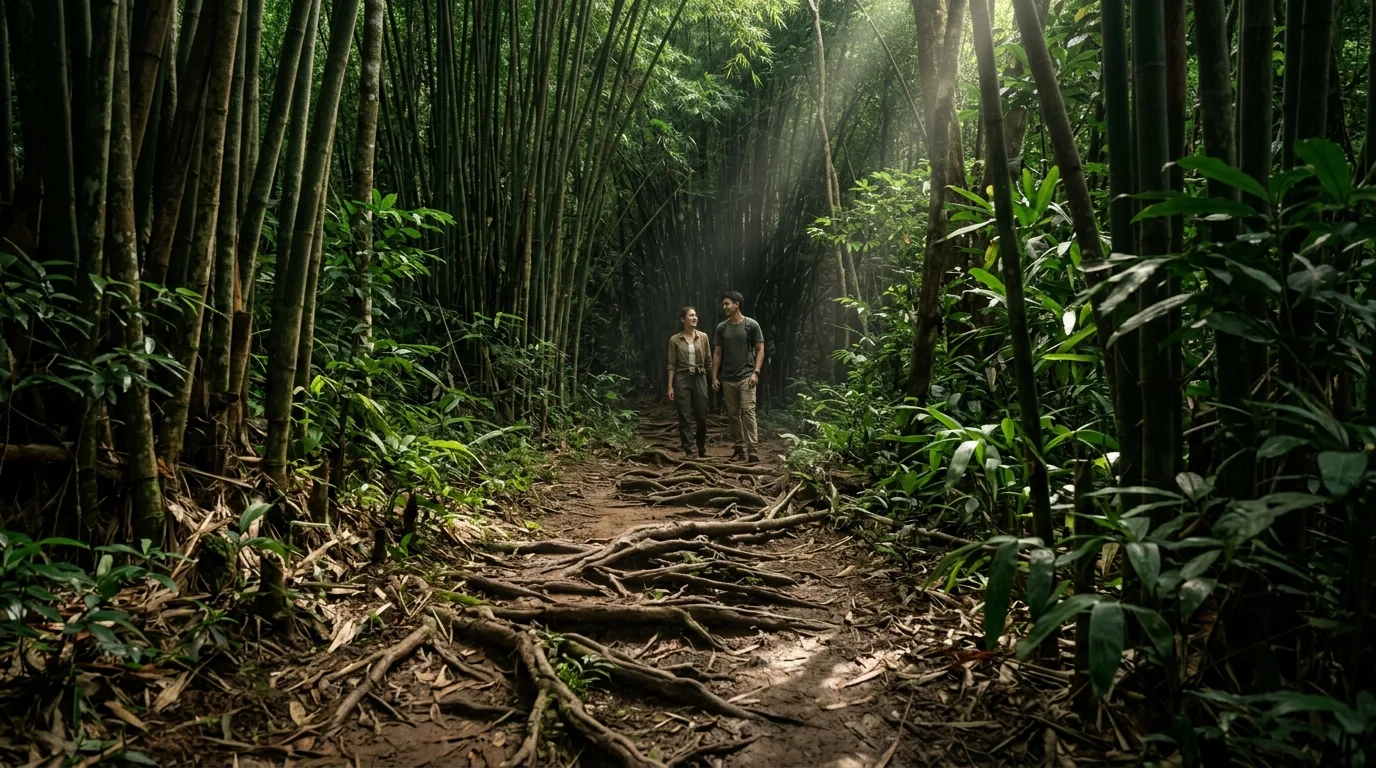
An extensive network of marked and unmarked trails allows visitors to explore the park's diverse ecosystems on foot, ranging from flat grasslands to dense bamboo forests. The most accessible route is the paved path to Haew Suwat waterfall, famous for its appearance in the film The Beach, where water plunges 20 metres into a circular plunge pool. For a more demanding physical challenge, the Haew Narok waterfall trail descends sharply down 200 steep concrete steps to a powerful three-tiered cascade that drops 150 metres into a deep, inaccessible ravine. Independent hiking is strictly limited to six designated short trails near the visitor centre to prevent tourists from getting lost in the dense undergrowth. To penetrate the deeper jungle, you must hire a park ranger for an overnight trek. These multi-day expeditions involve sleeping in basic hammocks under tarpaulins, drinking filtered river water, and navigating thick vegetation where leeches are highly prevalent during the wet months. The rangers use machetes to clear overgrown paths and possess an uncanny ability to spot fresh animal tracks in the mud. Hiring a guide for a full-day hike offers the best compromise between accessibility and deep forest immersion.
Guided Night Safaris
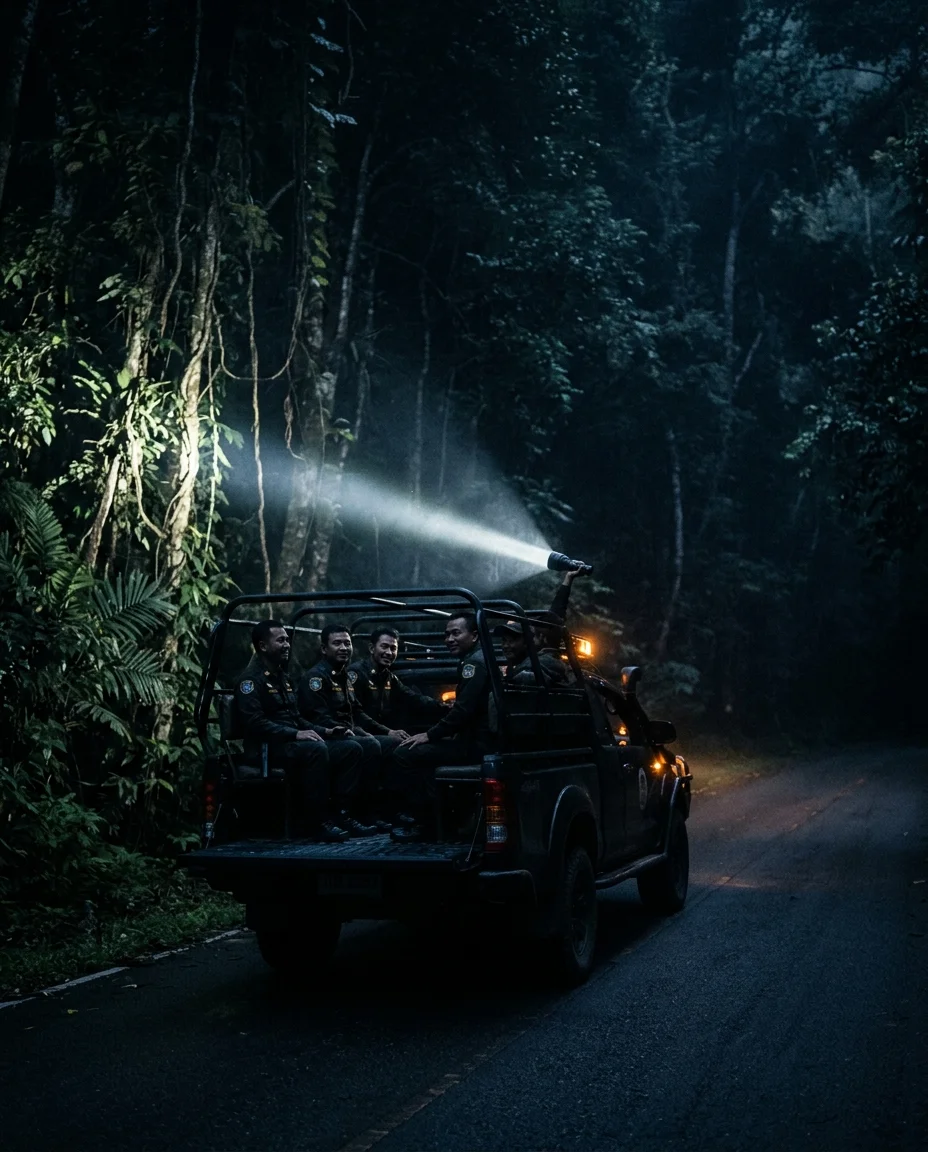
After dark, the park transforms completely as diurnal species bed down and nocturnal predators emerge into the cooler night air. The official park administration operates nightly spotlighting tours using modified pickup trucks equipped with powerful halogen lamps. These one-hour drives depart directly from the visitor centre car park at 19:00 and 20:00, navigating the main sealed roads while a spotter sweeps the forest edge for reflective eyes. Typical sightings include large sambar deer grazing on the grassy verges, Asian palm civets climbing in the lower branches, and Malayan porcupines foraging in the dense undergrowth. You will occasionally encounter wild elephants using the tarmac roads to move silently between feeding grounds under the cover of darkness. The experience relies heavily on the spotter's skill and the behaviour of other vehicles on the road. Passengers sit on bench seats in the open back of the truck, so warm clothing is essential during the cooler winter months when temperatures drop significantly at elevation. Booking these tours directly at the visitor centre upon your afternoon arrival is the most straightforward method.
Independent Visits versus Guided Tours
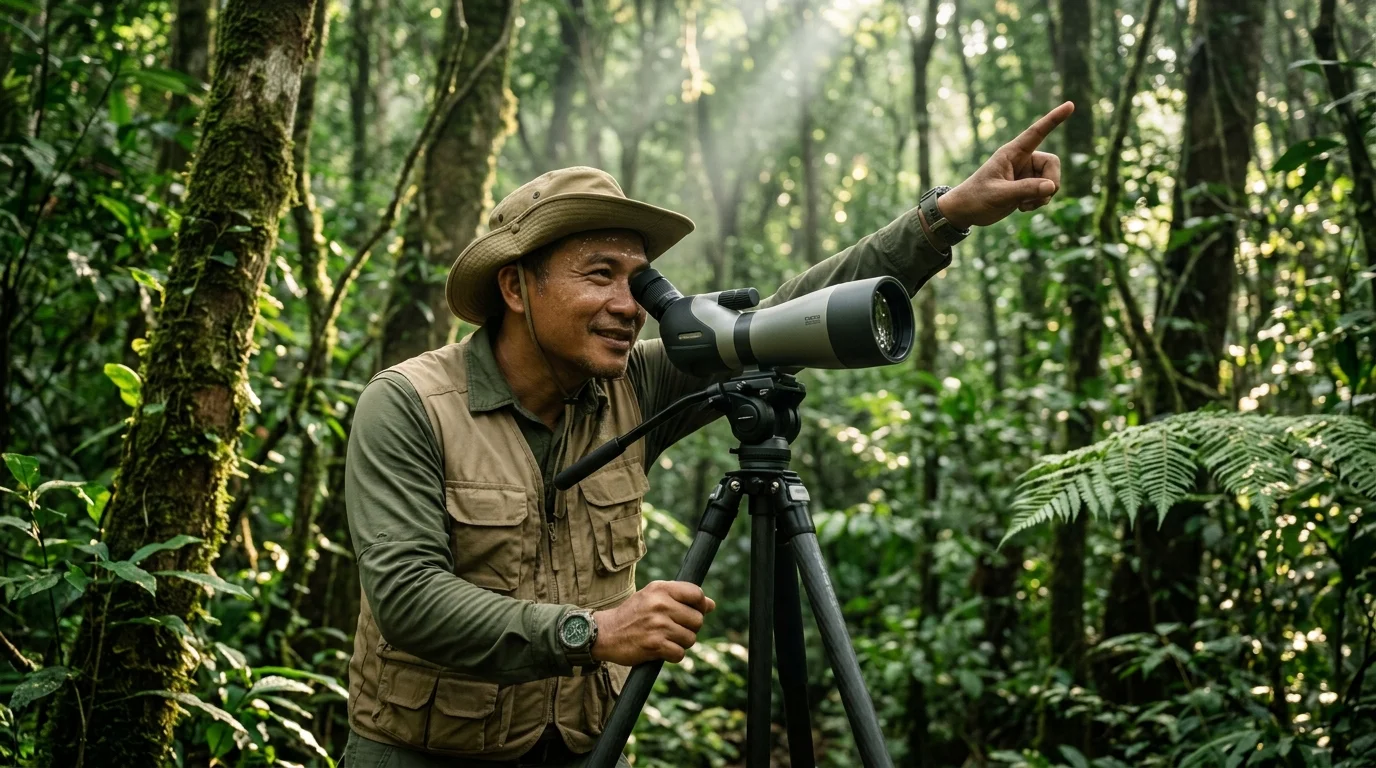
Deciding how to navigate this massive reserve fundamentally dictates the quality of your overall experience. Independent visitors renting a car or scooter in the nearby town of Pak Chong gain the freedom to explore at their own pace, stop at scenic viewpoints, and wait out the crowds at popular waterfalls. However, without a trained eye, self-guided visitors routinely drive straight past camouflaged wildlife and are restricted from entering the deeper, more productive trails. Booking a comprehensive guided tour from Bangkok or Pak Chong transfers the logistical burden entirely to professionals. Expert guides communicate with each other via two-way radio to share real-time locations of moving elephant herds or fruiting fig trees attracting rare birds. They provide high-powered spotting scopes, protective leech socks, and off-road transport, elevating a simple nature walk into an educational wildlife safari. While guided tours cost considerably more than the basic park entrance fee, the return on investment in terms of actual animal sightings makes them highly advisable for UK visitors operating on a limited timeframe.
Accommodation Inside and Outside the Park
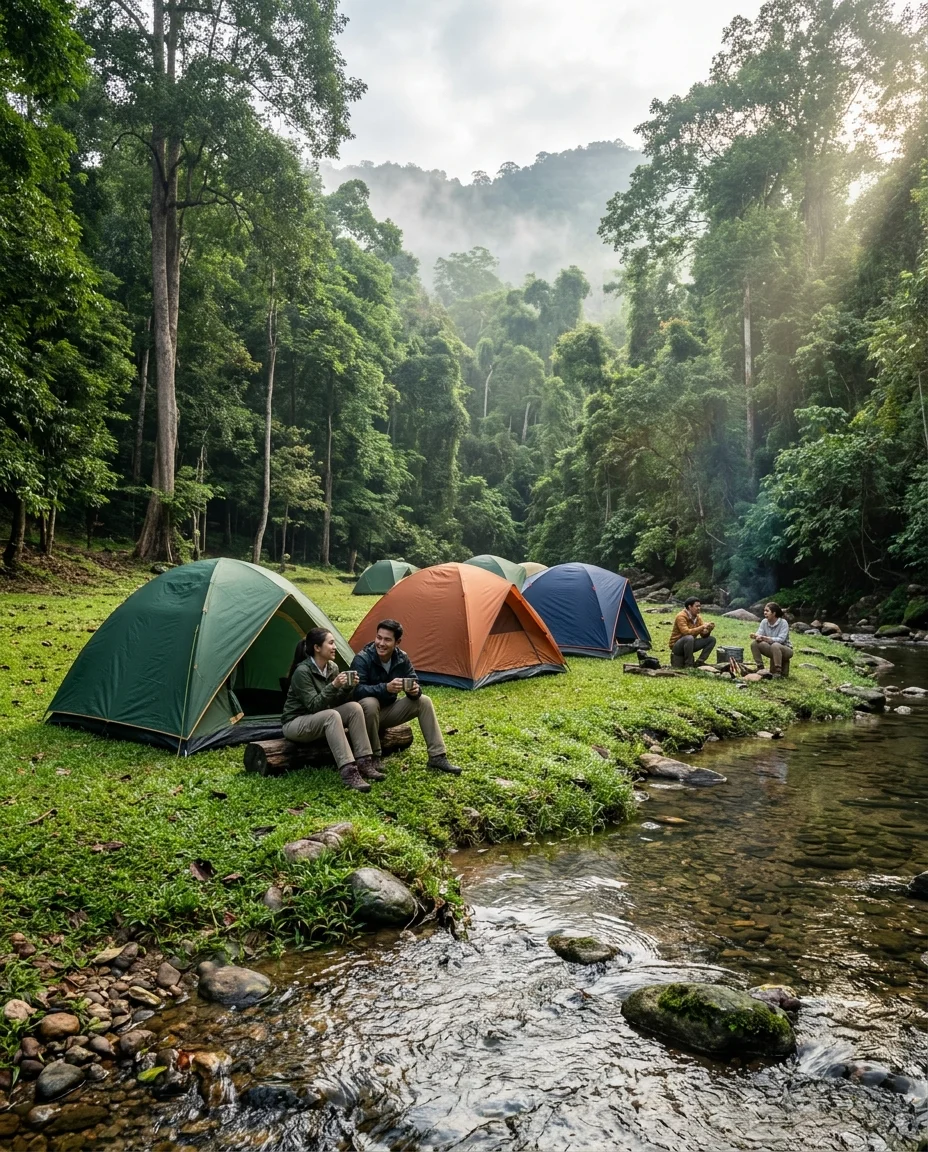
Where you sleep dictates your access to the park during the crucial early morning and late evening periods when wildlife is most active. Inside the park boundaries, the Department of National Parks operates basic concrete bungalows and two primary campsites: Lam Ta Khong and Pha Kluai Mai. These facilities are strictly utilitarian, offering cold showers, squat toilets, and no air conditioning, but they place you directly in the jungle where deer and macaques wander freely among the pitched tents. For those requiring modern comforts, the road leading to the park's northern entrance, Thanarat Road, is lined with private resorts, boutique hotels, and high-end glamping sites. These external properties situated in Mu Si village range from budget guesthouses to premium resorts featuring heated swimming pools, international restaurants, and dedicated spa facilities. Staying outside the park means you must factor in the daily commute to the entrance gate, which opens to the public at 06:00. Booking a resort just five or ten minutes from the gate provides the optimal balance of comfort and rapid access to the forest.
| Experience Type | Duration | Guide Requirement | Notes |
|---|---|---|---|
| Short Nature Trails | 1 to 2 hours | Independent | Paved or clear dirt paths near the visitor centre. |
| Haew Narok Waterfall | 2 hours | Independent | Steep descent via concrete stairs to the viewing platform. |
| Deep Jungle Trek | 4 to 8 hours | Ranger mandatory | Requires booking a park ranger; high chance of leeches. |
| Night Safari Drive | 1 hour | Park staff mandatory | Booked via visitor centre; conducted in open pickup trucks. |
LOCATION AND GETTING THERE
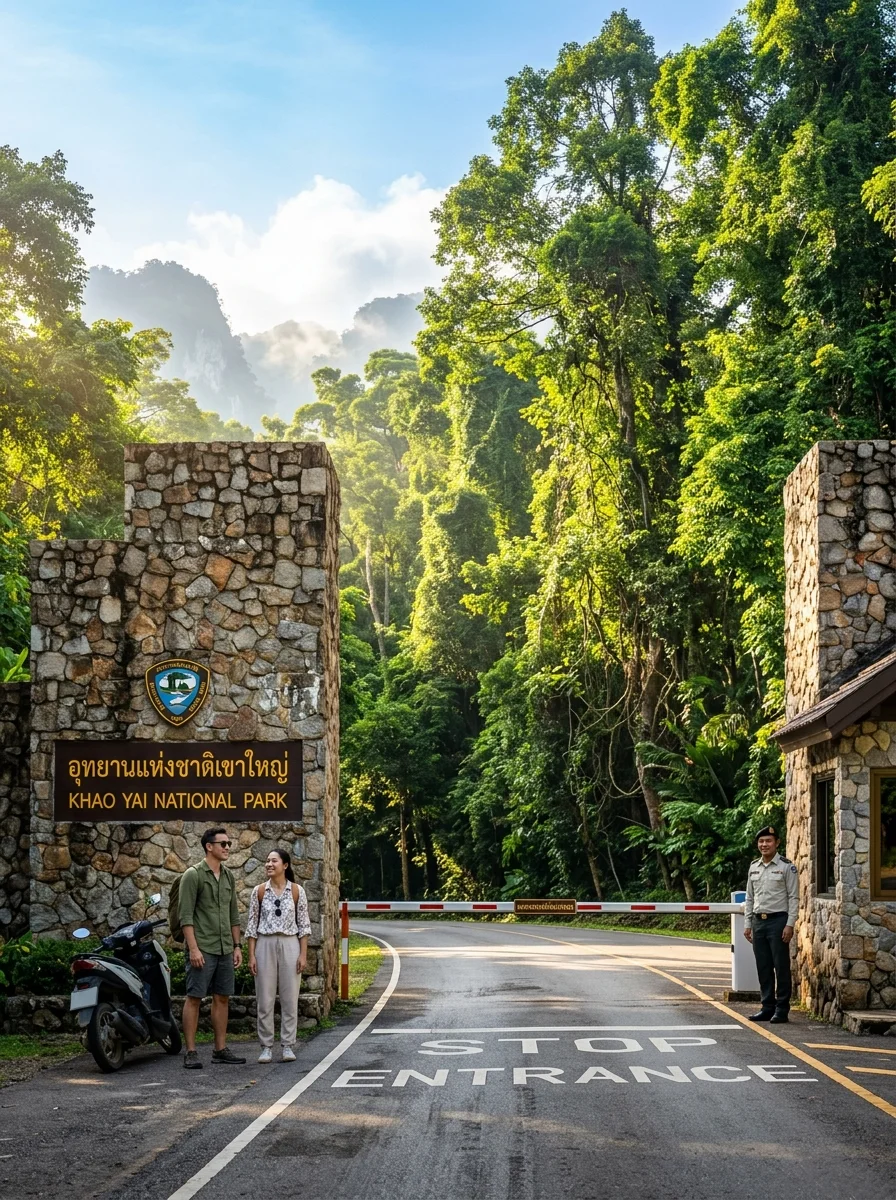
Khao Yai National Park sits primarily within Nakhon Ratchasima province, approximately 120 miles northeast of central Bangkok. The park spans four different provinces, but the main northern entrance is located near the town of Pak Chong just off Highway 2. For UK visitors, the most efficient route from Suvarnabhumi Airport or downtown Bangkok is hiring a private taxi or minivan, which takes roughly two and a half to three hours depending on the notoriously heavy traffic leaving the capital. This private transfer typically costs between 2,000 THB (£45) and 3,000 THB (£67) each way. Alternatively, budget-conscious travellers can take an air-conditioned minivan from Bangkok's Mochit New Van Terminal to Pak Chong for around 200 THB (£4.50), taking three hours. From Pak Chong, you must then hire a local songthaew (shared pickup truck) or rent a scooter to cover the final 15 miles down Thanarat Road to the park entrance. Once inside, the visitor centre and main trailheads are a further 10 miles up a winding mountain road.
COSTS AND BOOKING
Visiting this reserve involves several layered costs depending on your chosen level of comfort and professional guidance. The mandatory national park entrance fee for foreign adult visitors is 400 THB (£9), with children charged 200 THB (£4.50). If you bring a vehicle, there is an additional 30 THB (£0.70) charge for a car or scooter. Inside the park, renting a two-person tent with sleeping mats at the official campsites costs approximately 500 THB (£11) per night, while basic park bungalows start from 1,200 THB (£27). Peak season runs from November to February when the weather is cool and dry, leading to heavily booked accommodation both inside and outside the park. During the wet season from May to October, leeches are prolific, but waterfalls are at their most powerful and the forest is exceptionally green. Hiring a park ranger for a half-day trek costs 500 THB (£11), while full-day private wildlife tours departing from external resorts typically range from 1,500 THB (£33) to 3,000 THB (£67) per person.
| Option | Cost (THB) | Cost (GBP approx) | Notes |
|---|---|---|---|
| Park Entrance Fee (Adult) | 400 THB | £9 | Mandatory daily fee for all foreign nationals. |
| Official Park Campsite Tent | 500 THB | £11 | Includes tent, sleeping mats, and sleeping bags for two. |
| Ranger Guide (Half Day) | 500 THB | £11 | Mandatory for deep jungle trails; tip expected. |
| Private Full-Day Tour | 2,500 THB | £56 | Includes transport, expert guide, scope, and lunch. |
WHO IT SUITS BEST
Khao Yai caters specifically to active travellers, wildlife photography enthusiasts, and families seeking an authentic educational outdoor experience. It serves as an excellent introduction to tropical rainforest ecosystems without the extreme physical demands of deeper, more remote border reserves. The destination is entirely unsuitable for visitors expecting guaranteed, zoo-like animal encounters or those with severe mobility issues, as the best viewpoints and waterfalls require navigating steep, uneven terrain. Budget backpackers will find the lack of public transport inside the park challenging without renting their own vehicle or joining an organised tour group.
WHAT TO KNOW BEFORE YOU BOOK
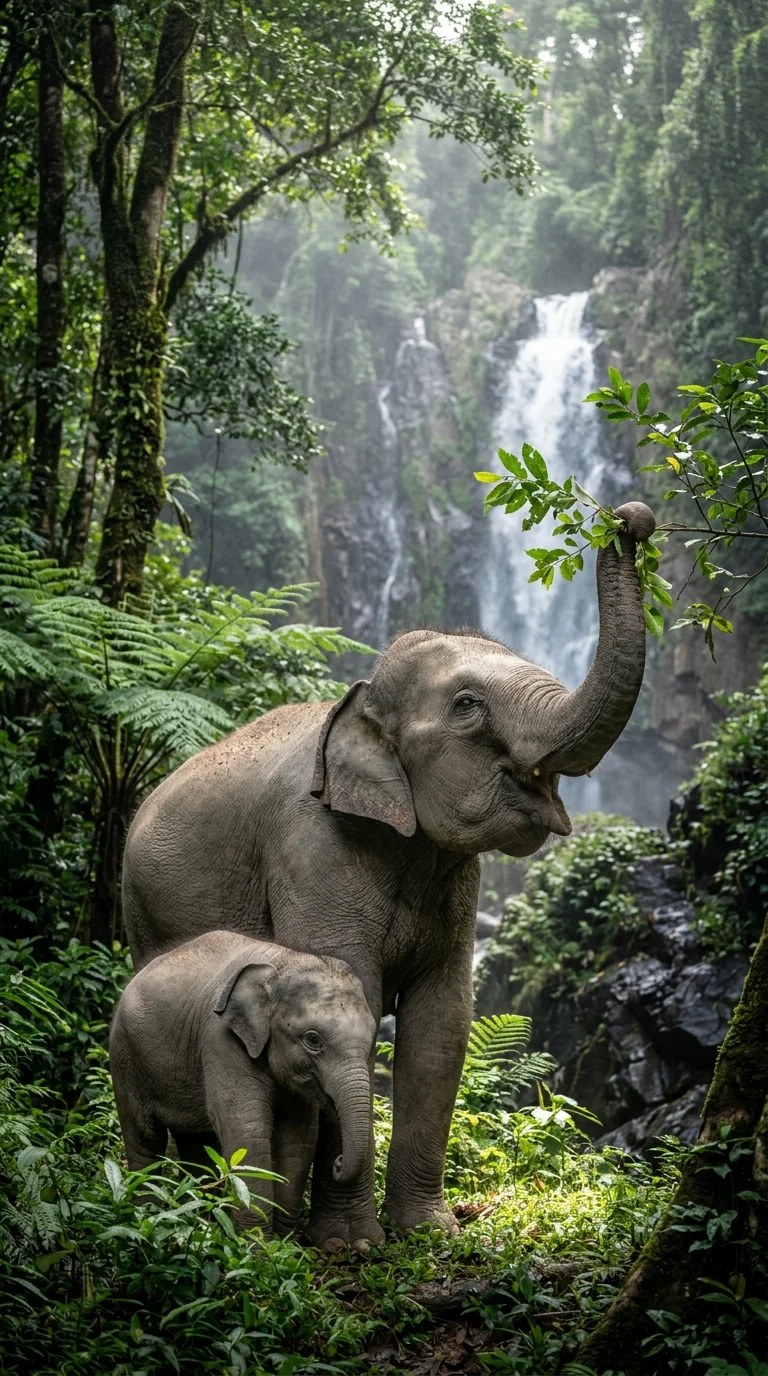
Weather dictates the experience entirely. Heavy rains between June and October turn the trails to thick mud and increase the leech population dramatically, though this is also when the waterfalls are most impressive.
Macaques possess a highly developed understanding of food packaging. These monkeys will aggressively target plastic bags, open backpacks, and unattended food on campsite tables, requiring constant vigilance.
The park closes to incoming traffic at 18:00 sharp. If you are staying at an external resort, you must exit the gates before this time or face being locked inside the reserve overnight.
Cash is the only accepted payment method within the park boundaries. The visitor centre, food stalls, and ranger stations do not accept credit cards or international digital payment systems.
PRACTICAL TIPS
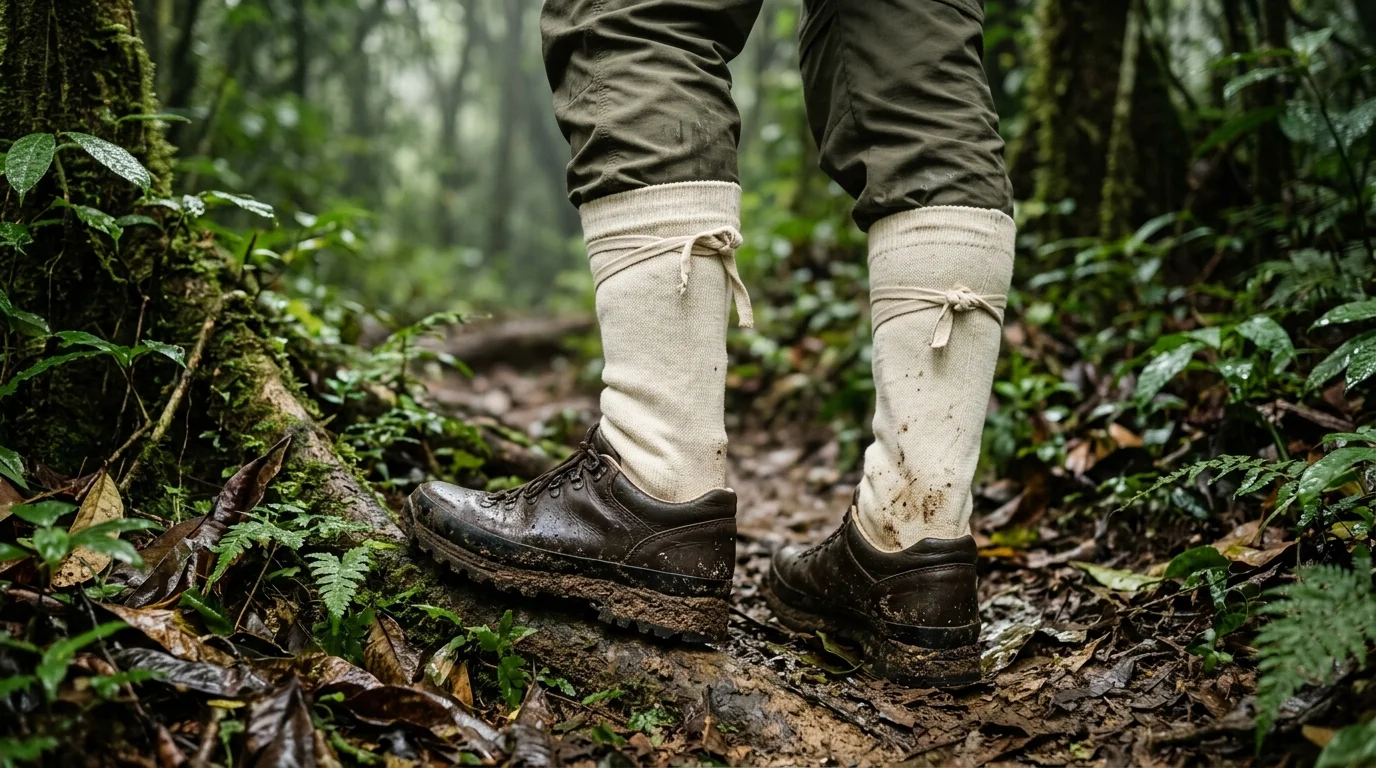
Purchase proper leech socks before attempting any trail during the wet season. Regular sports socks provide zero protection against these persistent parasites in the dense undergrowth.
Bring a powerful torch or headlamp if you plan to join the night safari. The park's spotlight operators can only illuminate one side of the road at a time.
Wear muted, dark clothing rather than bright colours when hiking. Neon outdoor gear makes you highly visible to wildlife and drastically reduces your chances of close encounters.
Rent a scooter in Pak Chong only if you are highly experienced on two wheels. The park roads feature steep gradients, sharp hairpin bends, and frequent encounters with wild elephants that require evasive action.
Pack a lightweight fleece or jacket for the evening. Temperatures in the park drop significantly after sunset, particularly from November to February, making open-air transport extremely cold.
Download offline maps to your smartphone before passing the entrance gate. Cellular reception drops to zero in most areas of the park, including the main hiking trails.
Do not use flash photography when encountering elephants on the road. Sudden bright lights can trigger aggressive behaviour from the herds, endangering you and other vehicles.
QUICK REFERENCE TABLE
| Item | Detail | Notes |
|---|---|---|
| Property Name | Khao Yai National Park | Thailand's oldest national park. |
| Location | Nakhon Ratchasima | 120 miles northeast of Bangkok. |
| Property Type | National Park and Wildlife Reserve | UNESCO World Heritage site. |
| Category | Protected Wilderness Area | Managed by the DNP. |
| Capacity | 2,168 square kilometres | Spans four different provinces. |
| Operating Hours | 06:00 to 18:00 daily | Night safaris operate until 21:00. |
| Nearest Airport | Suvarnabhumi Airport (BKK) | Approximately 2.5 hours by car. |
| Distance to City Centre | 15 miles to Pak Chong | Nearest major town for supplies. |
| Official Website | nps.dnp.go.th | DNP official portal. |
| Booking Platform | GetYourGuide / Agoda | For tours and external lodging. |