Mekong River Cruises - Thailand, Laos, Cambodia
A full Mekong river cruise itinerary covers over 2,700 miles of waterway, dropping passengers directly into the rural communities of Thailand, Laos, Cambodia, and Vietnam without a single hotel change. The voyage spans from the Golden Triangle down to the vast Mekong Delta, offering access to remote hill tribes and major archaeological sites from the deck of a premium boutique vessel.
Mekong River cruises represent a premium segment of Southeast Asian travel, operated by established lines like Scenic, Emerald Cruises, Avalon Waterways, and Aqua Expeditions. These voyages replace arduous overland bus journeys with floating boutique hotels, typically carrying between 30 and 70 passengers. The market caters primarily to affluent, culturally curious adults seeking structured exploration rather than independent backpacking. It suits UK visitors wanting high-end comfort alongside guided access to complex local ecosystems, difficult-to-reach villages, and major heritage sites across multiple international borders.
The Upper versus Lower Mekong Routes
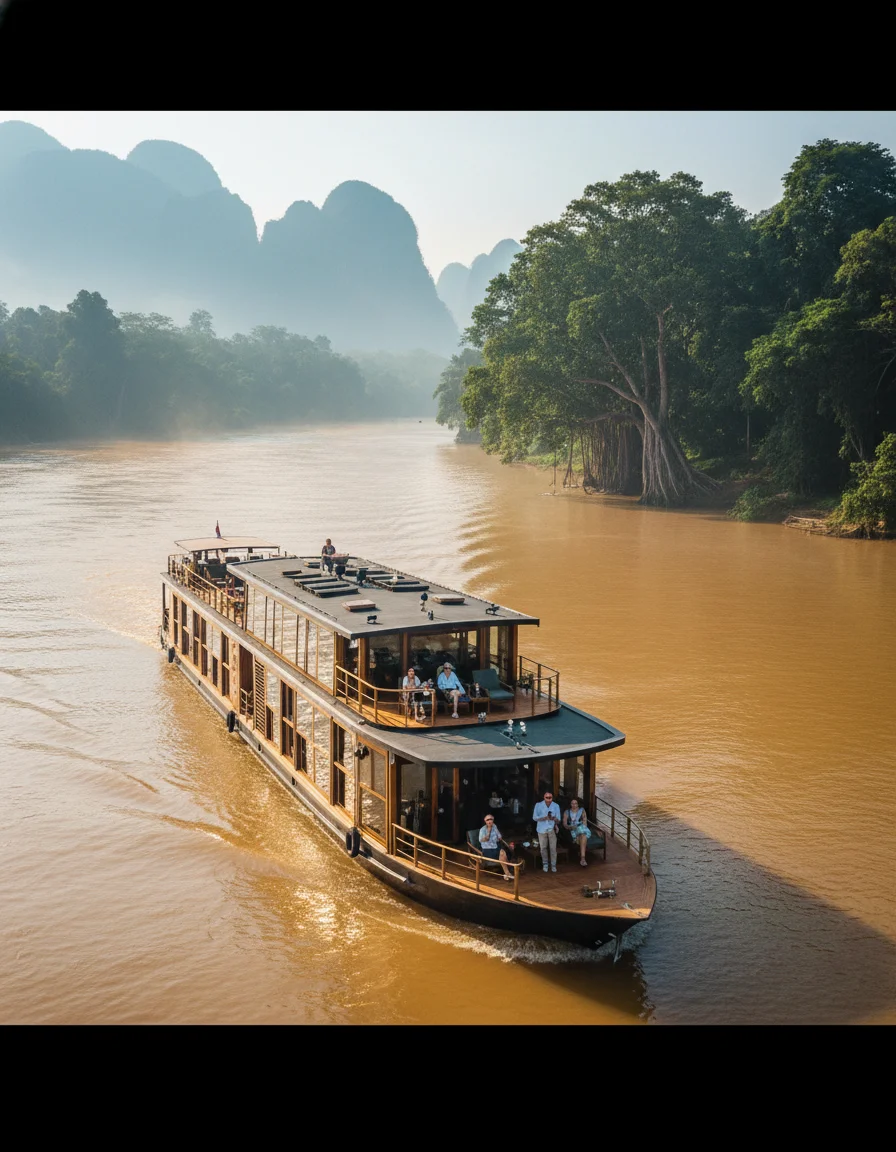
The Mekong is divided into two distinct cruising experiences, separated by the impassable Khone Phapheng Falls in southern Laos. Upper Mekong cruises operate between Chiang Rai in northern Thailand and the Laotian capital of Vientiane, often stopping at the ancient royal city of Luang Prabang. This stretch relies on much smaller, shallower vessels navigating narrow river bends through steep, densely forested mountains. The pace is exceptionally slow, focusing on isolated Buddhist caves like Pak Ou and remote weaving villages.
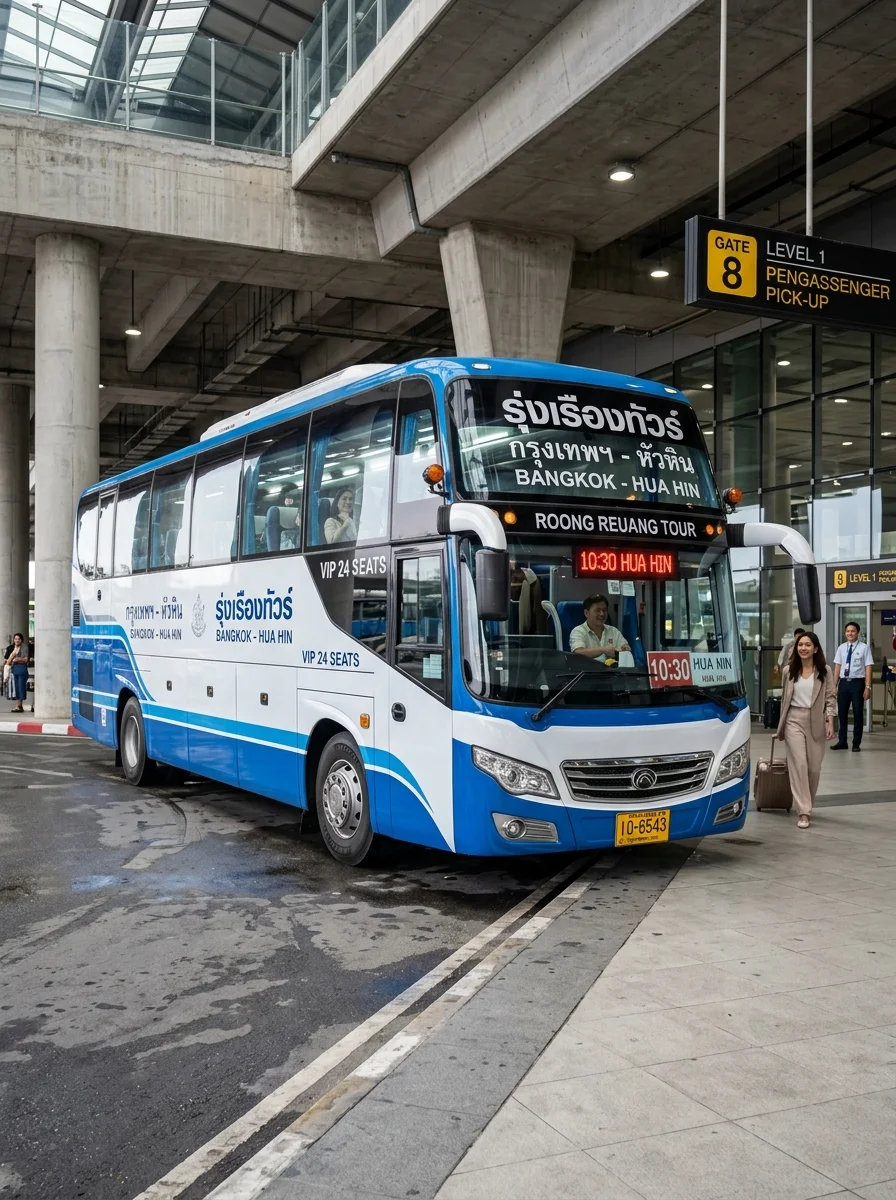
Compare VIP buses, the new dual-track trains, minivans, and private transfers from Bangkok to Hua Hin. Book the right route for your budget and schedule.
Conversely, the Lower Mekong route between Siem Reap in Cambodia and Ho Chi Minh City in Vietnam is the primary commercial artery. The river here is vast, brown, and heavily trafficked by cargo barges and fishing fleets. Ships on the lower route are larger, resembling floating luxury hotels with multiple decks. The itinerary focuses heavily on major historical landmarks, including the Angkor Wat temple complex, Phnom Penh's Royal Palace, and the sprawling agricultural grid of the Vietnamese Mekong Delta. Choosing between the two routes dictates whether you spend your days looking at untouched jungle or observing dense, working river communities.
Life Onboard and Ship Sizes
Sponsored
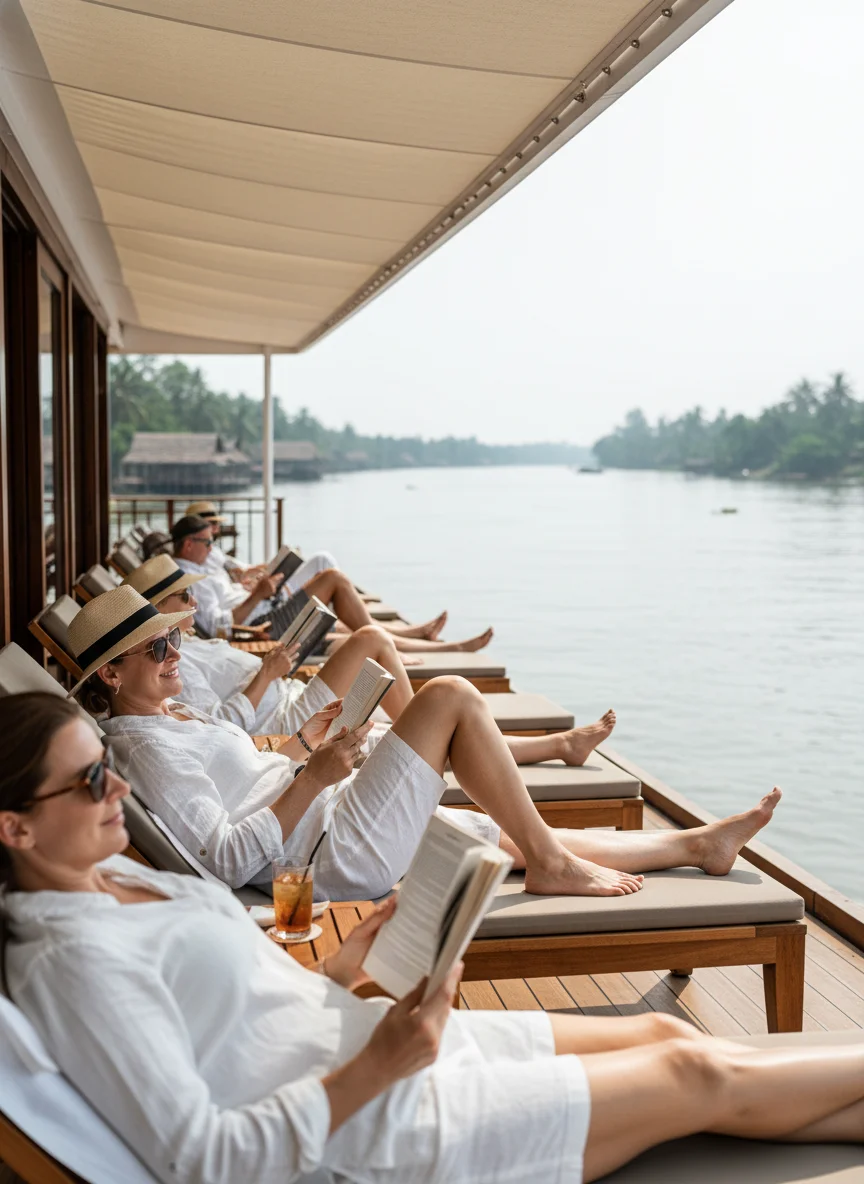
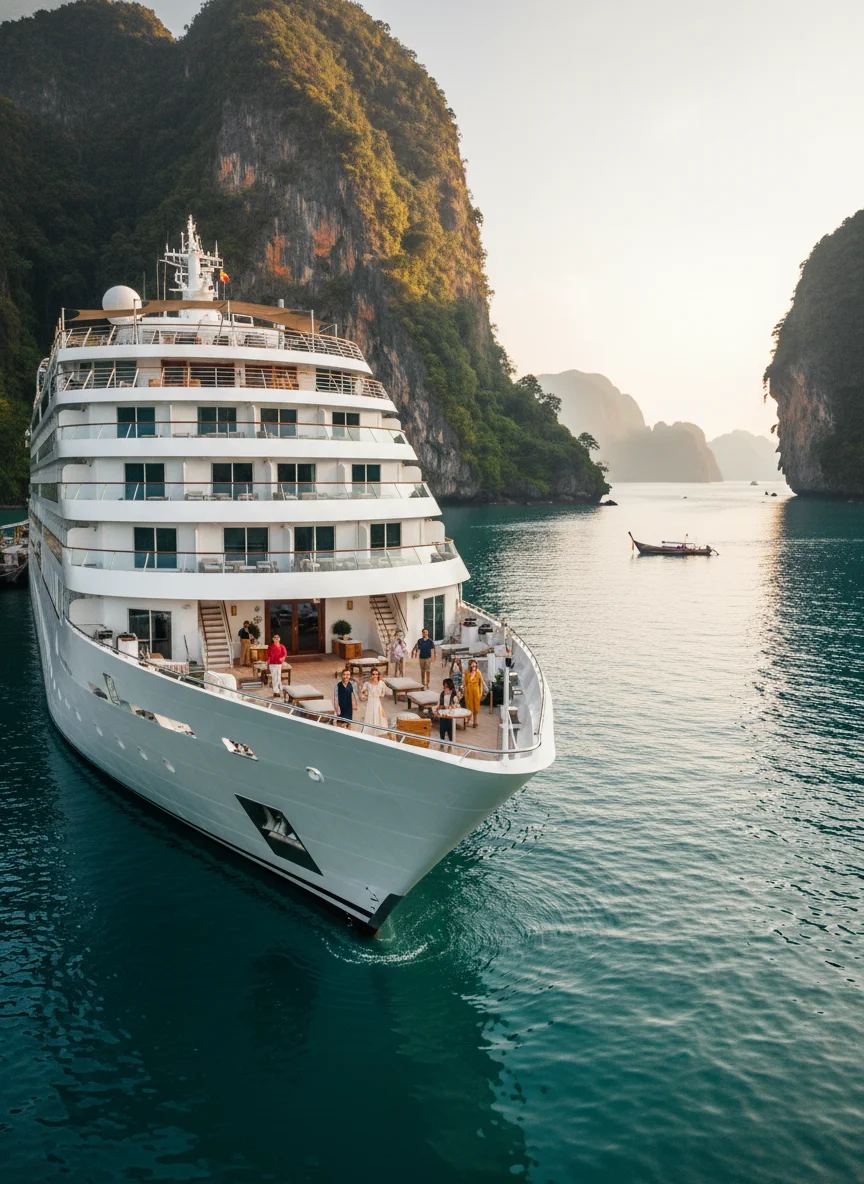
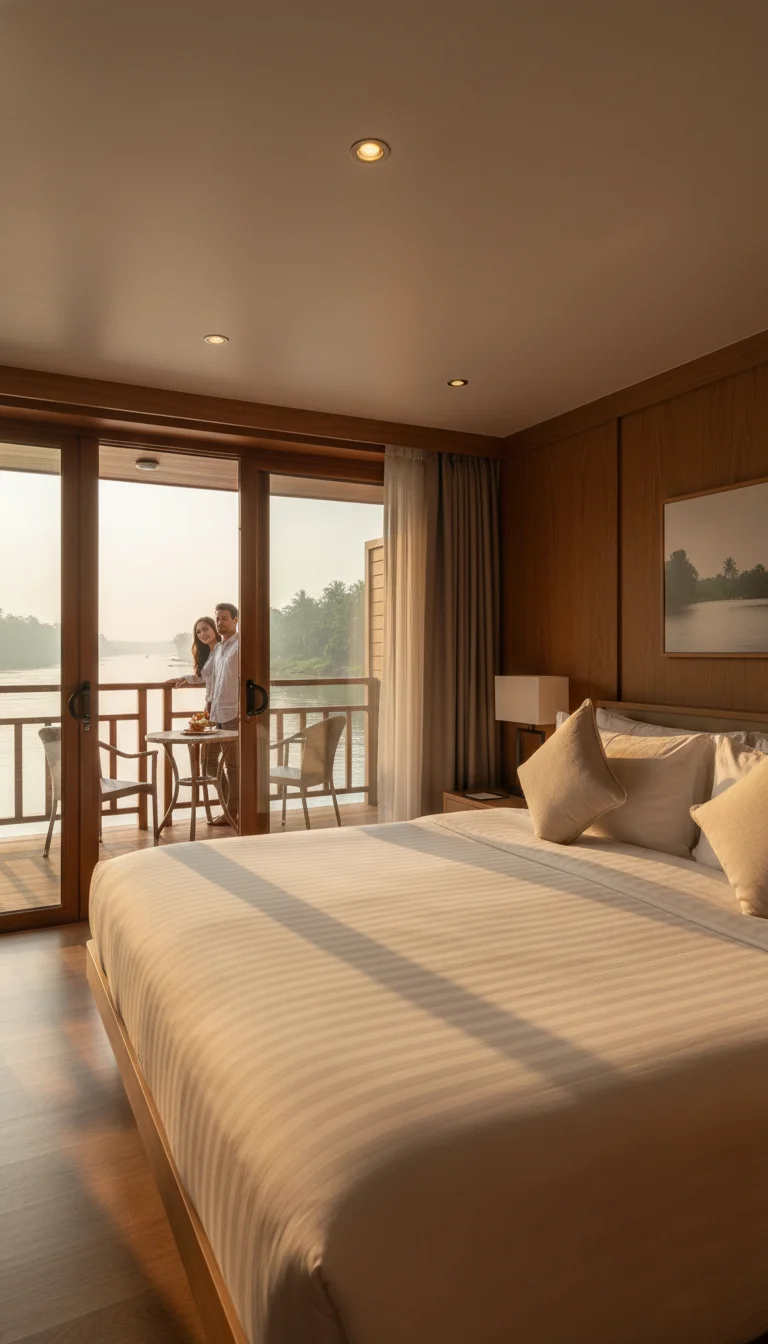
Mekong vessels are significantly smaller than ocean liners, operating as intimate floating boutique hotels with passenger capacities strictly limited by the river's dimensions. The Aqua Mekong, for example, carries just 40 passengers in 20 suite cabins, while the Scenic Spirit holds 68 guests across 34 balcony suites. Cabins are specifically designed to maximise the passing landscape, almost always featuring floor-to-ceiling glass doors that open either onto a private outdoor balcony or an indoor conservatory space.
Public areas are compact but highly specified. You will typically find a single open-seating dining room serving a mix of regional Asian dishes and Western standards, alongside a lounge bar where evening briefings take place. Most top-tier ships feature a small plunge pool or hydrotherapy spa on the sun deck, providing a crucial cooling-off spot after humid morning excursions. There are no casinos, no massive theatre productions, and no formal dress codes. Life onboard revolves heavily around reading on the sun deck, watching the river traffic, and socialising with a small cohort of fellow passengers over evening cocktails. Ensure you select a ship size that matches your tolerance for close-quarters socialising.
Shore Excursions and Cultural Reality
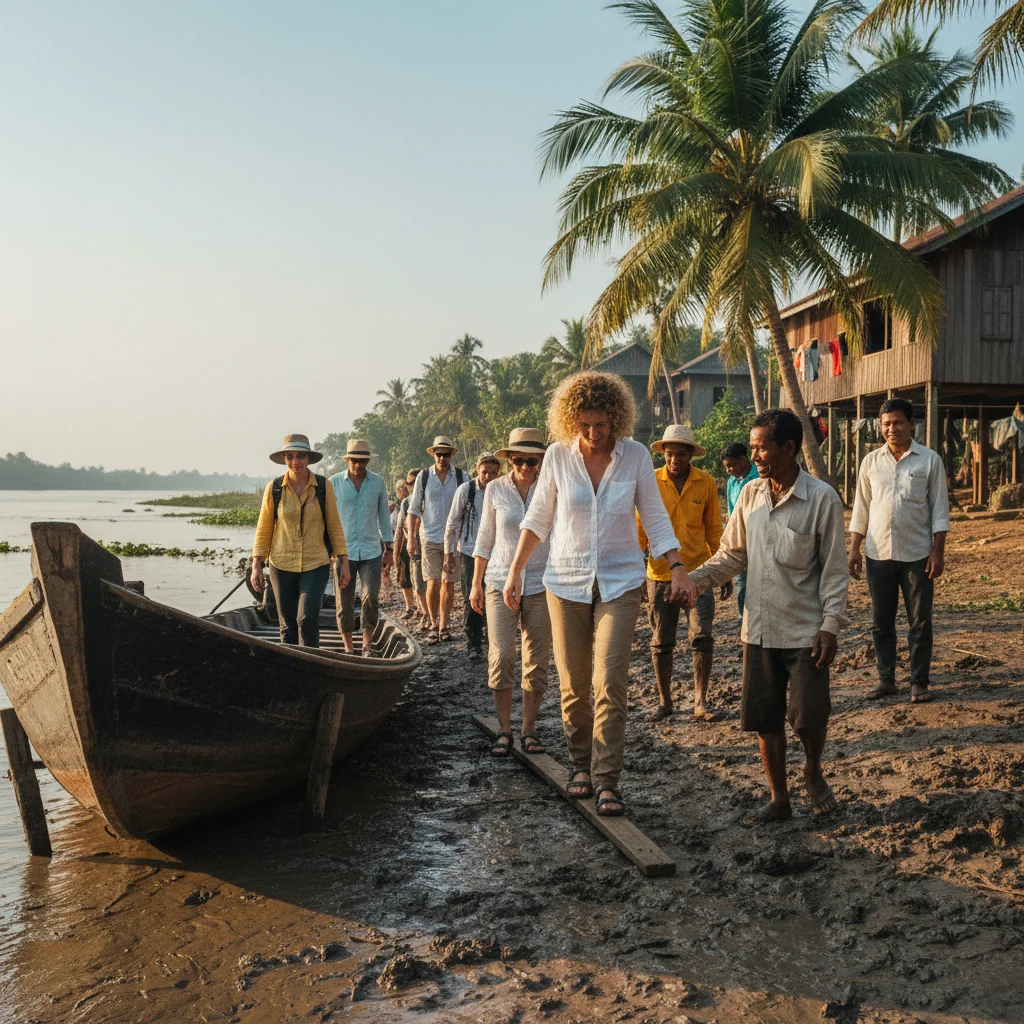
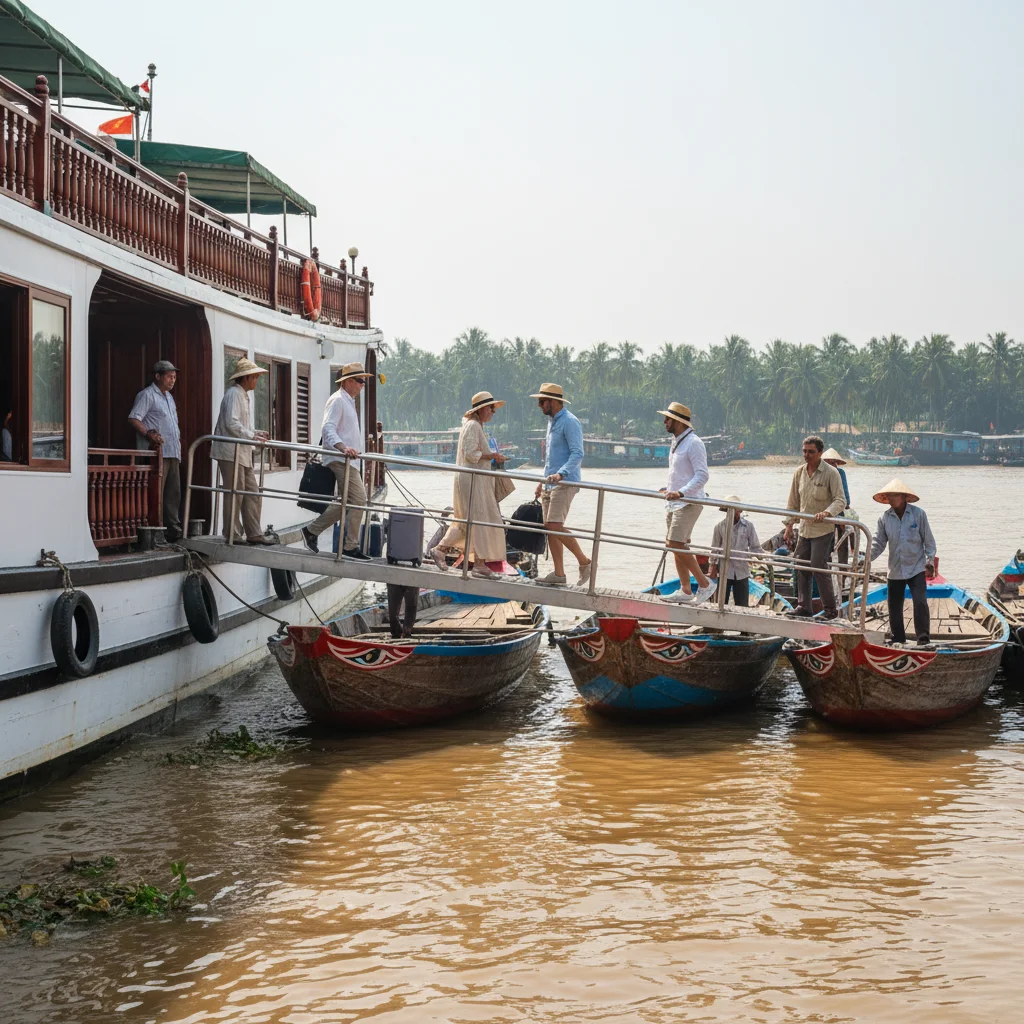
Daily excursions define the Mekong cruise experience, blending major archaeological landmarks with visits to highly specific riverside communities. A standard Lower Mekong itinerary includes guided walks through the vine-strangled ruins of Ta Prohm, harrowing but essential visits to the Tuol Sleng Genocide Museum in Phnom Penh, and rides on local sampans through the floating markets of Cai Be. You will frequently board small wooden tender boats to reach villages entirely inaccessible by road, where you might observe traditional silk weaving or receive a water blessing from resident monks at Oudong.
Cultural immersion on these cruises is genuine, but it is also highly curated. The cruise lines manage every logistical detail, ensuring you have an English-speaking guide, bottled water, and a cold towel waiting for you after every walk. You see real rural life, but the visits are scheduled and structured, ensuring safety and hygiene at the expense of spontaneous, unstructured interaction. You will not be haggling for your own transport or finding hidden street food stalls independently. If you value deep historical context and logistical ease over raw, unscripted backpacking, this structured approach is highly effective.
The Major Premium Operators
The river is serviced by a handful of premium operators, each offering distinct design aesthetics and inclusive packages. Scenic operates at the absolute top end of the market, providing all-balcony suites, personal butler service, and entirely all-inclusive pricing that covers premium spirits and all gratuities. Emerald Cruises, their sister company, offers a slightly younger, more contemporary design ethos with a focus on active excursions like cycling through delta villages, coming in at a slightly lower price point.
Avalon Waterways stands out for its cabin architecture. Their Panorama Suites feature beds that face the window rather than the wall, creating a massive indoor-outdoor living space when the wall-to-wall glass doors slide open. Aqua Expeditions takes a highly exclusive approach, utilising architect-designed vessels and menus crafted by Michelin-starred consulting chefs, appealing to design-conscious travellers. When comparing operators, look closely at the beverage inclusions and the exact square footage of the entry-level cabins, as these factors drive the significant price variations between lines.
Seasons, Weather, and Water Levels
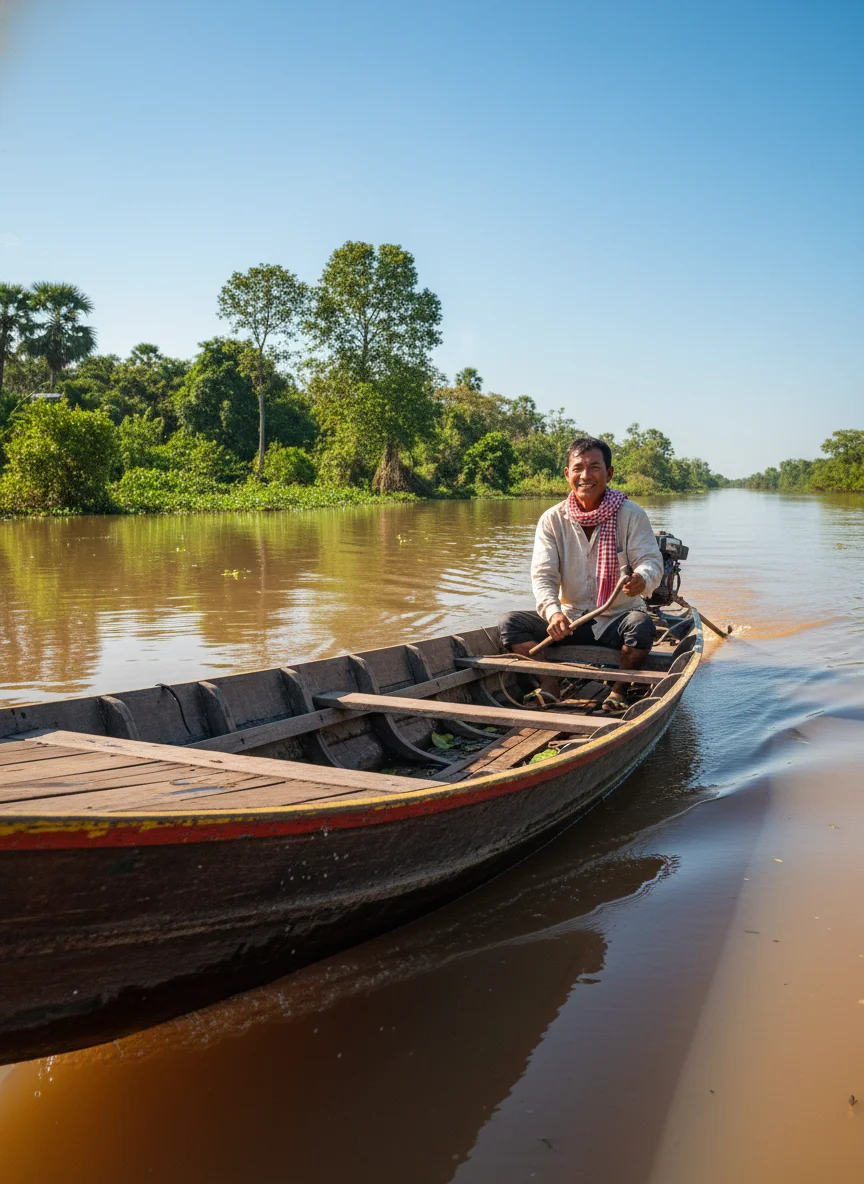
Your experience on the Mekong is entirely dictated by the seasonal monsoon cycle, which drastically alters the river's depth and navigability. High water season runs from mid-August through November. During this period, the massive Tonle Sap lake in Cambodia fills with floodwater, allowing larger ships to sail directly across the lake and dock just outside Siem Reap. The surrounding countryside is lush, green, and heavily flooded, providing excellent conditions for exploring the delta's narrow canals.
Low water season spans from December to April. The skies are significantly clearer and rainfall is rare, making temple visits much drier. However, the Tonle Sap lake dries up to a fraction of its size, becoming completely impassable for cruise ships. If you travel during these months, your ship will dock at Kampong Cham, and you will face a four-to-five-hour air-conditioned coach transfer to reach Siem Reap and Angkor Wat. Temperatures in April and May also become exceptionally oppressive, often exceeding 35°C with intense humidity. Book high water season for the most direct sailing route, or low water season if you prioritise dry weather over minor coach transfers.
Location and Getting There
The logistics of reaching your ship depend entirely on whether you are sailing the Upper or Lower Mekong. Upper Mekong cruises typically start near Chiang Rai (CEI) in northern Thailand, which is easily reached via a 90-minute domestic flight from Bangkok Suvarnabhumi (BKK). Lower Mekong cruises generally operate between Siem Reap (SAI) in Cambodia and Ho Chi Minh City (SGN) in Vietnam.
UK travellers will need to book multi-city flights, flying into one country and departing from another. A common route involves flying from London Heathrow (LHR) to Siem Reap via a connection in Bangkok or Singapore, and returning directly from Ho Chi Minh City. Multi-city flight costs range from 35,000 THB (£800) to 55,000 THB (£1,250) depending on the airline and season. Transfers from the arrival airport to the exact docking location are almost always handled by the cruise operator via private air-conditioned coaches. These transfers take anywhere from 90 minutes to four hours depending on current water levels and the designated port for that specific week.
Costs and Booking
River cruising is a high-ticket item, with rates reflecting the highly inclusive nature of the product. High season (November to February) commands peak pricing, while shoulder months (September, October, March) offer slight reductions. Fares generally cover your cabin accommodation, all onboard meals, daily guided shore excursions, entry fees to temples, port charges, and often wine or beer with lunch and dinner.
Top-tier operators include all beverages, airport transfers, and crew gratuities in the upfront cost, whereas others may charge a supplement for premium spirits or require end-of-cruise tipping. Visas for Cambodia and Vietnam are an additional cost. Operators usually facilitate the Cambodian border crossing paperwork on your behalf, but you will still need to pay the fee. Budget around 1,500 THB (£35) for a Cambodian e-visa and verify current UK waiver rules for Vietnam well in advance.
| Option | Cost (THB per night) | Cost (GBP approx) | Notes |
|---|---|---|---|
| Premium Entry-Level Cabin | 15,000 - 22,000 | 340 - 500 | Standard suite, full board, daily excursions |
| Luxury Balcony Suite | 25,000 - 35,000 | 570 - 800 | Larger footprint, private balcony, premium drinks |
| Owner's Suite / Top Tier | 40,000 - 55,000 | 900 - 1,250 | Forward-facing views, butler service, all-inclusive |
| Cambodian Tourist Visa | 1,500 (one-off) | 35 | Required for all Lower Mekong itineraries |
Who It Suits Best
This experience is squarely aimed at mature couples, retirees, and culturally curious travellers who value high-end comfort alongside their daily exploration. It suits those who want to see multiple Southeast Asian countries without the stress of packing and unpacking, negotiating local transport, or navigating complex border crossings independently. It is decidedly not right for young families, as ships lack children's facilities, interconnecting rooms, or kid-focused entertainment. Independent backpackers, budget travellers, or those seeking unstructured, spontaneous adventures will find the rigid daily schedules and highly curated shore excursions too restrictive for their tastes.
What to Know Before You Book

Itinerary changes are virtually guaranteed. Water levels fluctuate wildly, meaning your ship may not be able to cross the Tonle Sap lake, resulting in a lengthy coach transfer to Siem Reap instead.
The river is heavily industrialised in several places. You will pass pristine jungle and ancient temples, but you will also see heavy commercial barge traffic, sand dredging operations, and plastic pollution near major cities like Phnom Penh.
Internet access is highly unreliable. While ships offer satellite Wi-Fi, the signal drops out completely in remote stretches of Laos and Cambodia, making it entirely unsuitable for remote working or video calls.
Mobility is essential for shore excursions. Accessing the shore frequently requires stepping into small wooden tender boats that bob in the water, or walking up steep, muddy riverbanks without handrails.
Practical Tips
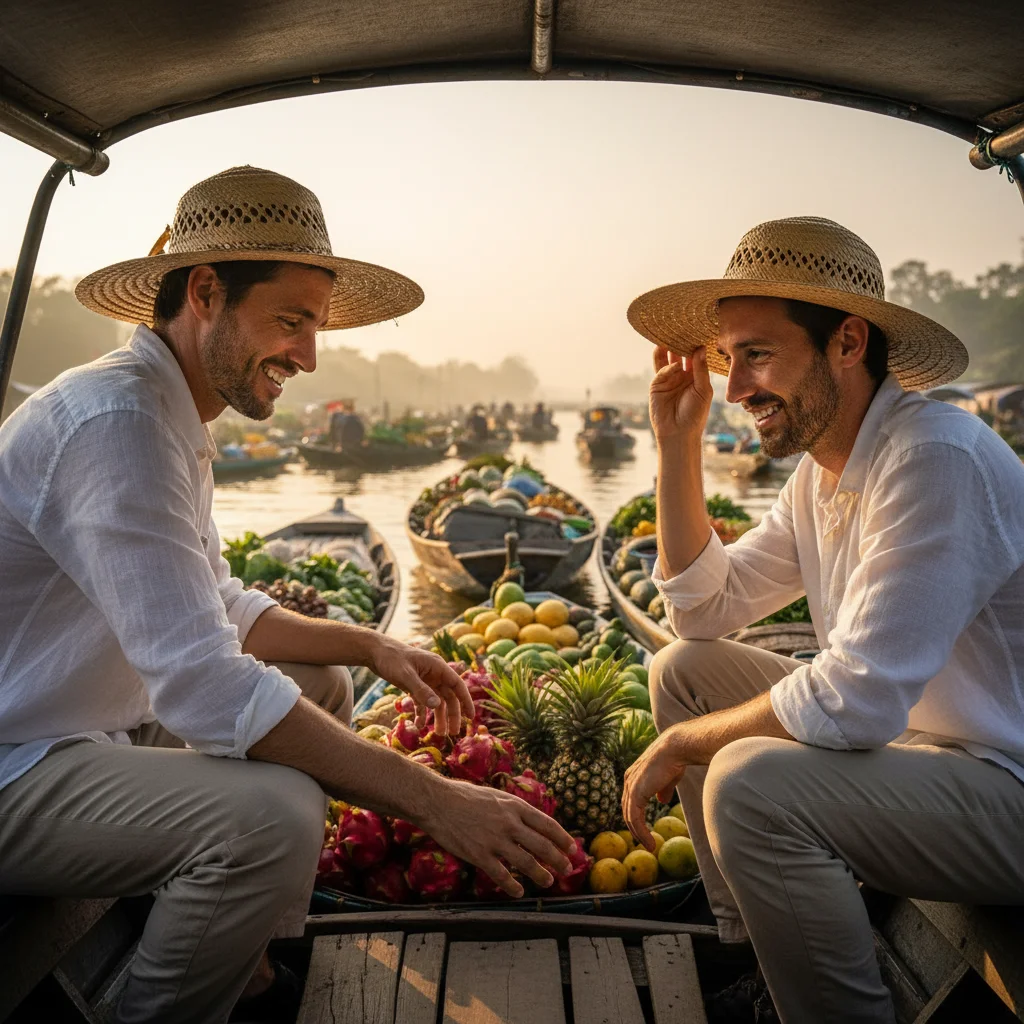
Pack lightweight, conservative clothing. You will visit numerous Buddhist temples where bare shoulders and knees are strictly forbidden for both men and women.
Bring high-quality, slip-resistant walking shoes. Riverbanks are notoriously muddy and the ancient stone steps at temples in Cambodia are exceptionally steep and uneven.
Prepare for extreme humidity. Even in the cooler months, the air moisture is intense, so breathable fabrics like linen or merino wool are essential for daily excursions.
Carry crisp, unmarked US dollars. This remains the de facto currency in Cambodia and is widely accepted for tips, small purchases, and market haggling along the river.
Pre-arrange your Vietnamese visa before departure. While UK citizens currently receive a visa exemption, arriving by river requires specific entry port documentation that your cruise line will need to verify.
Pack strong insect repellent. Mosquitoes are highly prevalent during evening sailing and shore excursions into the jungle or the damp delta regions.
Take motion sickness medication if you are highly sensitive. The main river is generally extremely flat, but the small tender boats used for excursions can bounce heavily in the wake of larger commercial barges.
Quick Reference Table
| Item | Detail | Notes |
|---|---|---|
| Property Name | Mekong River Cruises | Multiple operators (Scenic, Emerald, Avalon, Aqua) |
| Location | Thailand, Laos, Cambodia, Vietnam | Routes vary by Upper or Lower Mekong |
| Property Type | River Cruise and Voyage Experience | Floating boutique hotels |
| Star Rating | 4 to 5 Star Equivalent | Varies by specific cruise operator |
| Capacity | 30 to 70 passengers | Highly intimate, small-scale vessels |
| Check-in/Out | Dependent on itinerary | Usually midday embarkation |
| Pool | Yes | Small plunge pools on top decks |
| Restaurant | Yes | Open-seating, regional and Western menus |
| Spa | Yes | Small treatment rooms for massage |
| Nearest Airport | CEI (Thailand), SAI (Cambodia), SGN (Vietnam) | Requires multi-city flight bookings |
| Distance to City | Docks directly in major ports | Coach transfers required for low water levels |
| Booking Platform | TourRadar, Cruise Critic, Direct | Compare lines for exact inclusions |