Arriving in BKK
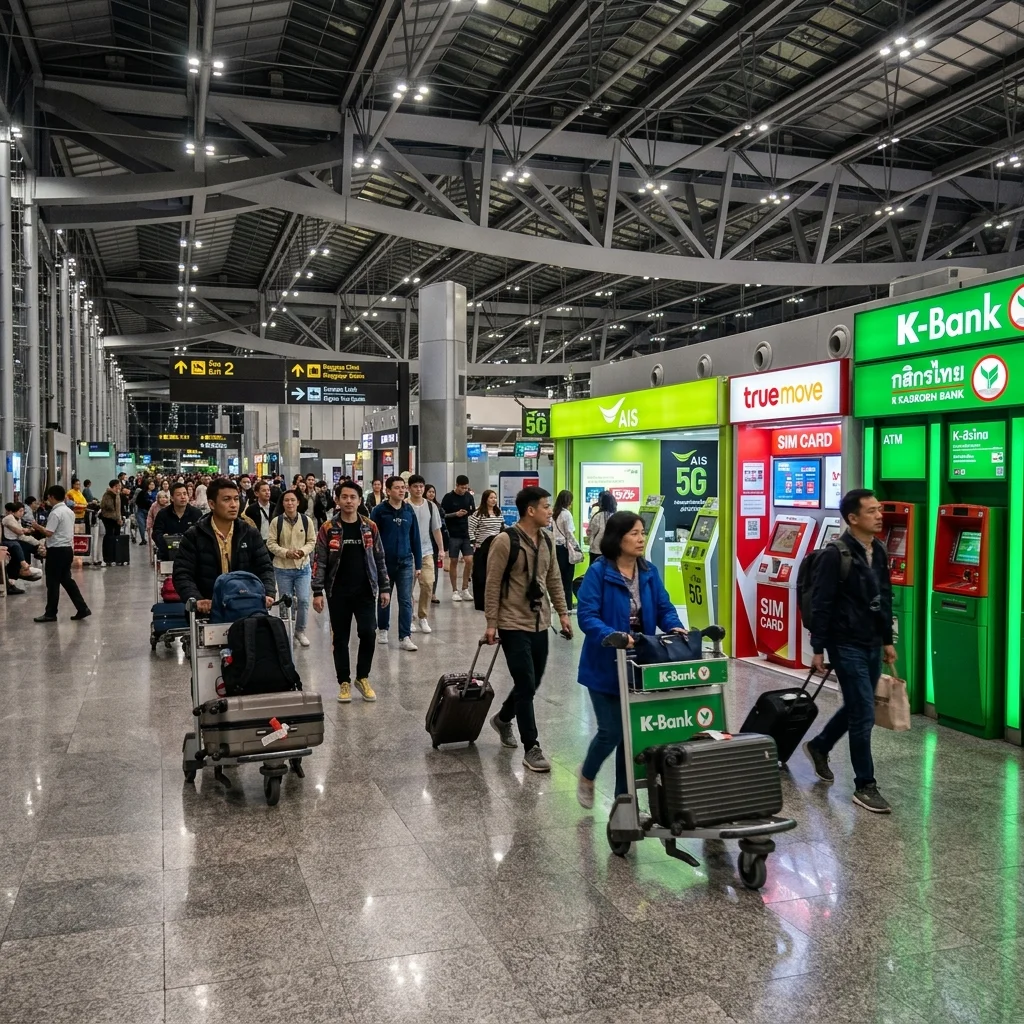
Stepping off a twelve-hour flight from Heathrow into Suvarnabhumi Airport means navigating a cavernous terminal where the walk to immigration alone can take twenty minutes. Knowing exactly where to find the official taxi ranks, ATM machines, and rail links saves you from exhausted mistakes before you even reach your hotel.
This guide covers the complete arrival process at Bangkok’s Suvarnabhumi and Don Mueang airports. It explains exactly what happens after you step off the plane. We detail how to handle immigration, baggage claim, and local SIM cards before you leave the terminal. You will also find strict breakdowns of currency exchange rates and ground transport options, helping you make cost-effective decisions regarding your onward journey into the capital.

Immigration and Passport Control
Clearing Thai immigration requires patience and having your arrival documents ready before you reach the desk. At Suvarnabhumi (BKK), UK passport holders arrive under the visa exemption scheme, granting a 60-day stay. The walk from your arrival gate to the immigration halls in Zone 1 or Zone 2 often spans up to 800 metres. Once there, queue times vary wildly from fifteen minutes to over an hour depending on how many long-haul flights have landed simultaneously. Don Mueang (DMK) processes fewer intercontinental routes. However, its smaller immigration hall gets heavily congested when several regional flights land together. You must present a passport with at least six months of validity, alongside your boarding pass. Officers occasionally ask for proof of onward travel or a confirmed hotel booking, so have these ready. Fingerprints and a digital photograph are taken at the desk. Fast Track lanes exist at BKK. Unless you are flying Business Class or have pre-purchased a VIP arrival service for around 1,200 THB (£26), you will use the standard foreign passport queues. Use the bathroom before joining the immigration queue, as there are no facilities once you enter the roped-off waiting area.
Compare direct flights and layover routes from the UK to Thailand. Find practical advice on airlines, transit hubs, and navigating Thai arrivals. Book smart.
Baggage Reclaim and Customs
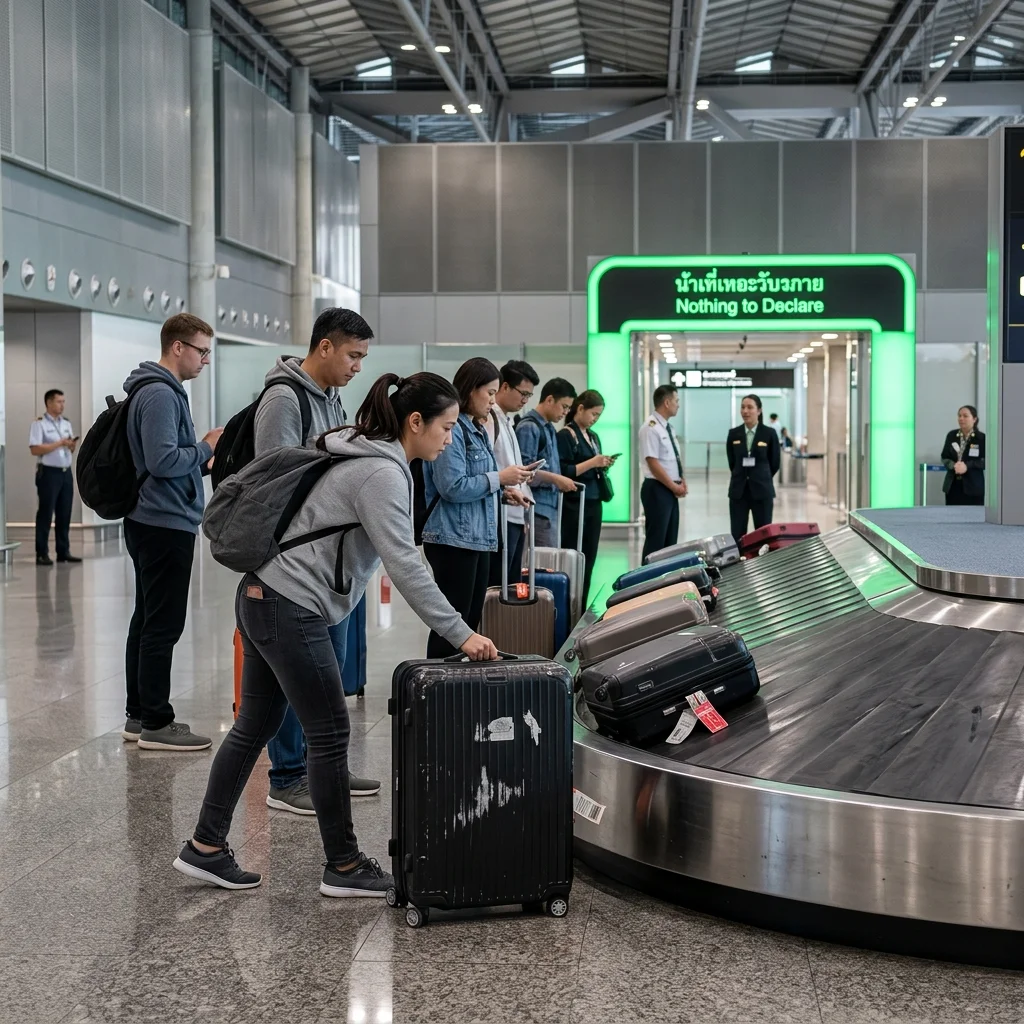
Luggage delivery at Bangkok airports is generally efficient, but customs checks operate on a strict spot-check basis. After clearing immigration at Suvarnabhumi, you descend an escalator to the cavernous baggage reclaim hall containing twenty-two separate carousels. Large digital screens at the bottom of the escalators display your flight number and the corresponding belt. Trolleys are free and plentiful. At Don Mueang, the reclaim area is much smaller and easier to navigate. Once you have retrieved your bags, you must proceed through customs. Thailand operates a standard green channel for those with nothing to declare, and a red channel for goods requiring declaration. Most passengers walk straight through the green channel. Customs officers routinely pull people aside to X-ray their luggage, so do not assume you will pass unchecked. Be acutely aware that electronic cigarettes and vaping devices are strictly illegal in Thailand. Having them in your luggage can lead to heavy fines or confiscation on the spot. Your duty-free allowance is strictly limited to 200 cigarettes and one litre of alcohol per person. Keep your baggage tags handy, as airport staff occasionally verify them against your luggage before you exit through the sliding glass doors into the public arrivals hall.
Getting Connected with a Local SIM
Sponsored
Buying a tourist SIM card in the arrivals hall is the easiest way to get immediate mobile data, though it costs slightly more than buying one in the city. Both BKK and DMK feature official kiosks for Thailand’s major mobile networks, namely AIS, TrueMove, and dtac. These are located immediately after you exit customs, lined up along Level 2 at Suvarnabhumi. Staff at these counters will swap your SIM card, activate the package, and hand your phone back fully connected in under three minutes. A standard 8-day unlimited data tourist package costs 299 THB (£6.50). A longer 15-day package usually runs to 599 THB (£13). You must hand over your passport so the vendor can legally register the number to your name. While you can save a small amount of money by waiting to visit a convenience store later, having immediate access to maps and ride-hailing apps at the airport is highly recommended. E-SIMs are also widely available through international apps before you fly. However, the physical airport kiosks remain the most foolproof method for traditional SIM users. Ask the network staff to tape your UK SIM card securely to the back of the plastic packaging so you do not lose it.
Currency Exchange and ATMs
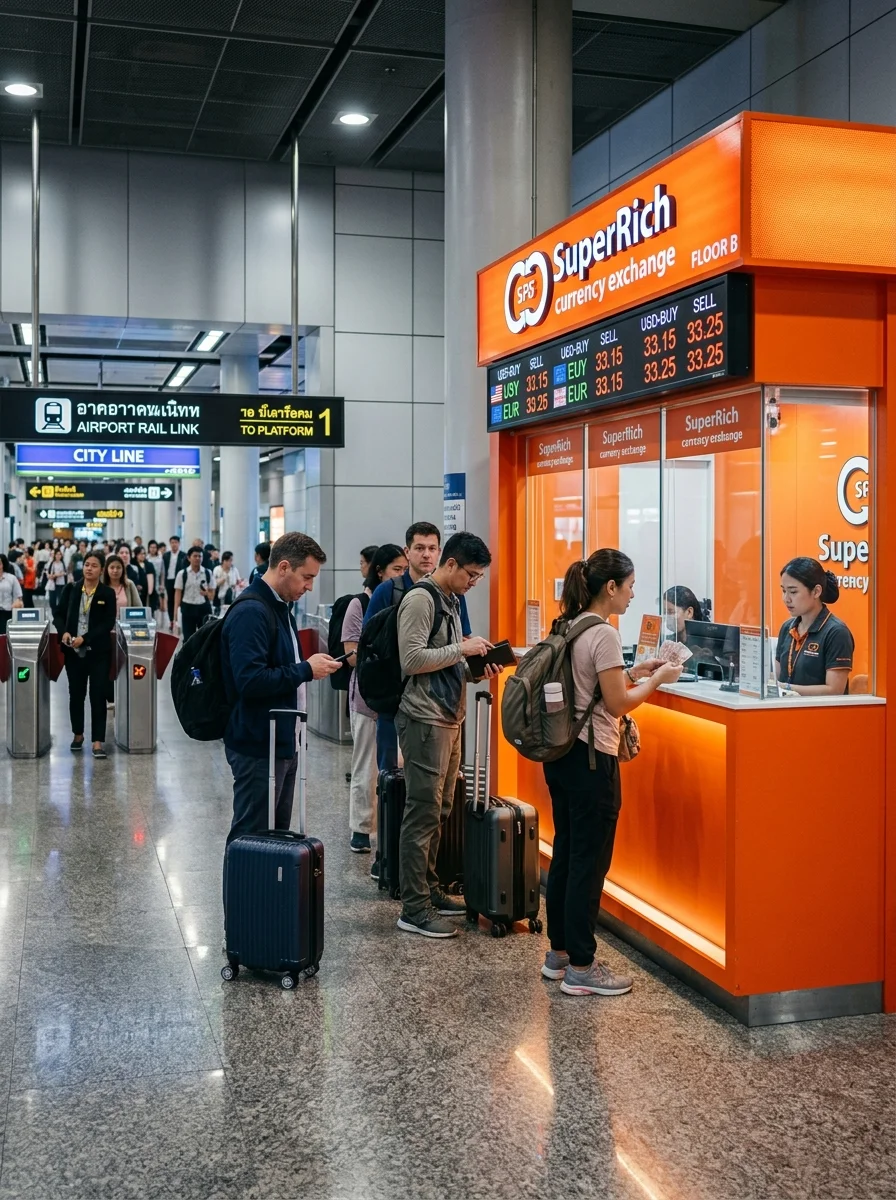
Airport exchange rates vary drastically depending on exactly where you stand in the terminal building. The bank booths located directly in the baggage hall and immediately outside customs at both airports offer exceptionally poor exchange rates. If you must change cash immediately upon landing, exchange only a small amount like £20 to cover immediate tips or small purchases. For much better rates at Suvarnabhumi, take the escalator down to the basement level (Level B), near the Airport Rail Link entrance. Here, independent money changers like SuperRich and HappyRich offer rates that closely match the mid-market rate. At Don Mueang, competitive exchange booths are harder to find. Withdrawing from an ATM is often the better choice at DMK. ATMs are ubiquitous at both airports, easily identifiable by their bright bank colours. Every Thai ATM charges a flat foreign card withdrawal fee of 220 THB (£4.80) per transaction, regardless of the amount. Always choose to be charged in the local currency (THB) without conversion if the machine prompts you. Withdraw the maximum amount allowed by the machine—usually 20,000 THB or 30,000 THB (£430 to £650)—to minimise the impact of the flat 220 THB withdrawal fee.
Ground Transport to the City
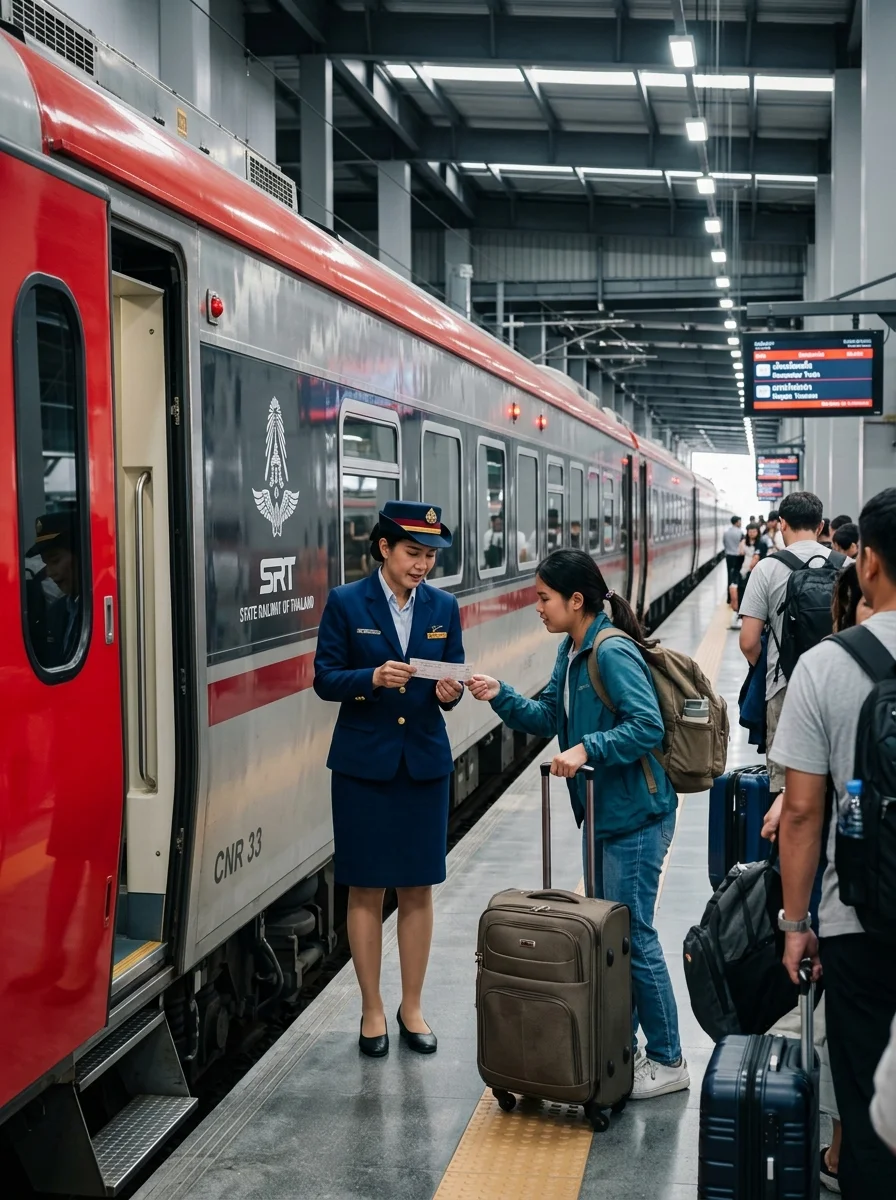
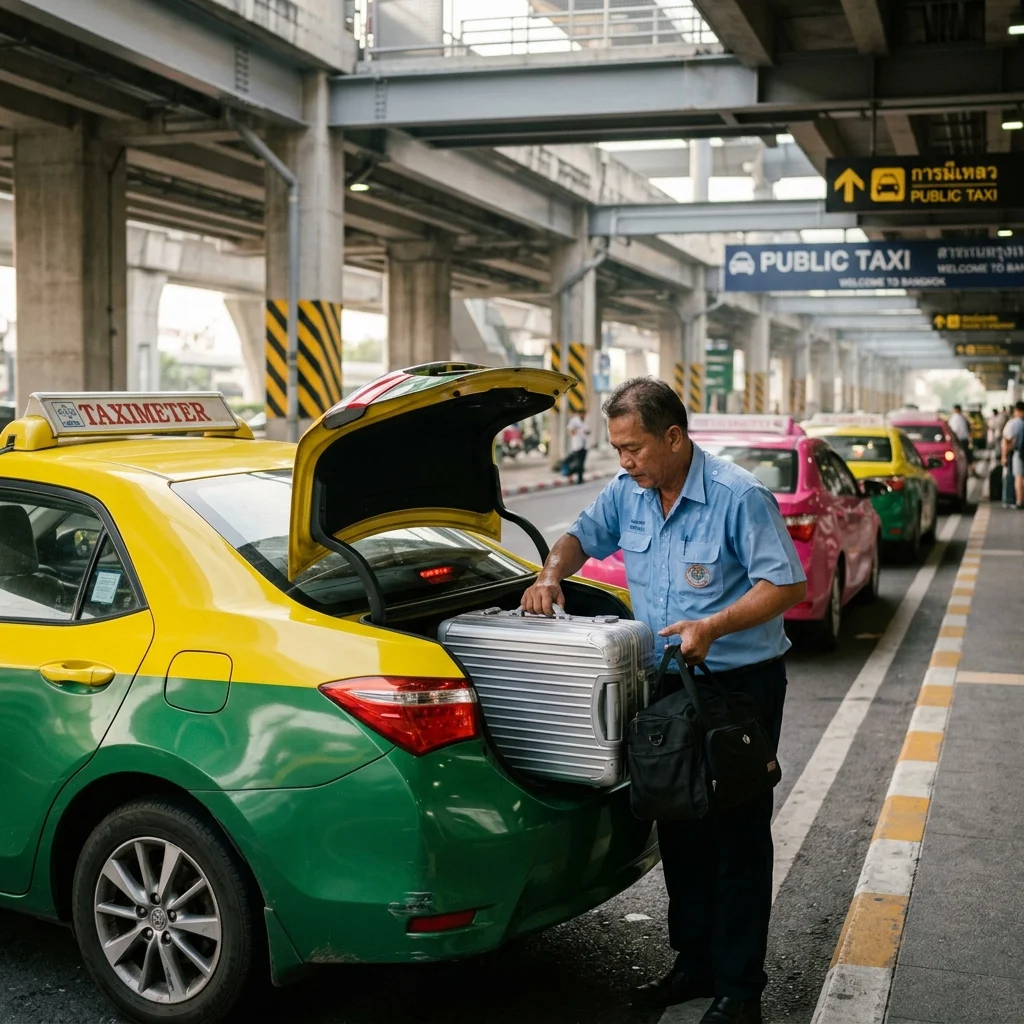
Your choice of transport from the airport depends entirely on your budget, the time of day, and the exact location of your hotel. From Suvarnabhumi, the Airport Rail Link (ARL) is the fastest way into central Bangkok during rush hour. It operates from 05:30 to midnight, departing from Level B. A ticket to Phaya Thai station costs 45 THB (£1) and takes 26 minutes, bypassing all road traffic. However, you will likely need a taxi for the final leg. If you prefer a direct route, official public taxis operate from Level 1. You must take a ticket from an automated kiosk, which assigns you a numbered bay. The meter starts at 35 THB, plus a 50 THB (£1.10) airport surcharge and highway tolls. A typical fare to Sukhumvit is 350 to 450 THB (£7.60 to £9.80). Ride-hailing apps like Grab are also legal and pick up from specific zones. They often cost slightly more than a metered taxi but offer fixed pricing. From Don Mueang, the SRT Red Line train connects to Bang Sue Grand Station. Alternatively, you can use the A1 and A2 airport buses for 30 THB to reach Mo Chit BTS station. Never accept a ride from touts approaching you inside the arrivals hall, as they charge highly inflated flat rates.
| Transport Option | Speed to City Centre | Cost (THB) | Suitability |
|---|---|---|---|
| Airport Rail Link (BKK) | 26 minutes | 45 | Best for solo travellers during rush hour |
| Public Metered Taxi | 45 to 90 minutes | 350 - 450 | Best for couples or families with heavy luggage |
| Grab / Ride-Hailing | 45 to 90 minutes | 400 - 600 | Best for fixed pricing and avoiding language barriers |
| Airport Bus (DMK) | 30 to 45 minutes | 30 | Best for budget travellers connecting to the BTS network |
Costs and Budgeting
Arriving in Bangkok involves a few immediate expenses that you should budget for before you even reach your hotel. If you are travelling on a tight budget, you can navigate the arrival process for under 400 THB (£8.70). This covers purchasing a basic data package and taking the Airport Rail Link or an airport bus. Mid-range arrivals will cost between 900 THB and 1,200 THB (£19.50 to £26). This includes a 15-day tourist SIM card, a metered taxi ride into central Bangkok, and the necessary highway tolls. For a premium experience, pre-booking a VIP fast-track immigration service alongside a private limousine transfer will elevate your arrival costs significantly. This top-tier approach allows you to bypass the queues and relax immediately after a long flight. You should expect to spend upwards of 2,500 THB (£54) for this level of convenience.
| Option | Cost (THB) | Cost (GBP approx) | Notes |
|---|---|---|---|
| Budget Arrival | 300 - 400 | 6.50 - 8.70 | Basic SIM card and public rail or bus transport |
| Mid-Range Arrival | 900 - 1,200 | 19.50 - 26.00 | 15-day SIM card, public metered taxi, and highway tolls |
| Premium Arrival | 2,500+ | 54.00+ | VIP fast-track immigration and private limousine transfer |
Common Mistakes and How to Avoid Them
Failing to have your hotel address written in Thai is a frequent error. Drivers often cannot read English addresses, leaving you stranded at the taxi rank trying to explain your destination. Print your hotel booking confirmation showing the full address in Thai script before you fly.
Exchanging large amounts of cash in the baggage hall is a costly oversight. You will lose heavily on the exchange rate compared to rates offered in the city or the airport basement level. Only exchange enough to pay for your transport, and change the rest later.
Assuming the Airport Rail Link goes directly to your hotel leads to frustrating onward journeys. Dragging heavy suitcases through busy interchange stations like Phaya Thai is exhausting in the tropical heat. Check if your hotel is within a short walk of a station; otherwise, take a taxi directly from the airport.
Forgetting the flat ATM fee catches many travellers off guard. Withdrawing small amounts repeatedly incurs a 220 THB (£4.80) charge every single time. Withdraw the maximum limit of 20,000 THB to 30,000 THB to make the fee worthwhile.
Practical Tips
Keep a pen in your hand luggage for the flight. You may need to fill out arrival or customs forms before reaching the immigration desks, and airline staff rarely have spares.
Screenshot your hotel booking and return flight details while you still have Wi-Fi at home. Immigration officers occasionally ask for proof of onward travel, and you may not have an active data connection to load your emails at the desk.
Look out for the free public Wi-Fi network once you land. It requires a quick registration with your name and passport number, but provides reliable internet while you wait in the immigration queue.
Carry a small bottle of hand sanitiser and a pack of tissues in your day bag. While airport bathrooms are generally well maintained, soap dispensers frequently run empty during peak arrival times.
Take a photograph of your metered taxi’s registration plate and the driver’s ID displayed on the dashboard. If you accidentally leave an item in the car, having this information is the only way to track the vehicle down.
Dress in lightweight layers for your arrival. The terminal air conditioning is notoriously fierce, but the moment you step outside to the taxi rank, the tropical heat and humidity will hit you instantly.
Refuse firmly if a taxi driver attempts to negotiate a flat fare instead of using the meter. By law, airport taxis must use the meter, and flat fares are invariably much higher than the legitimate metered cost.
Protect your trip with comprehensive medical cover designed for Southeast Asia.
Quick Reference Table
| Item | Detail | Notes |
|---|---|---|
| BKK Transport | Airport Rail Link (Level B) | 45 THB to Phaya Thai station. |
| DMK Transport | SRT Red Line or A1/A2 Bus | Connects to Bang Sue or Mo Chit. |
| ATM Fee | 220 THB per transaction | Always decline dynamic currency conversion. |
| SIM Cards | AIS, TrueMove, dtac | Kiosks located in the arrivals hall. |
| Customs | 200 cigarettes, 1L alcohol | E-cigarettes are strictly illegal. |
| Taxi Surcharge | 50 THB added to meter | Passenger also pays highway tolls. |
| Duty Free Limit | 200 cigarettes, 1 litre alcohol | Strictly enforced with heavy fines. |