Thai Money & Currency
Withdrawing cash from a Thai ATM costs a flat fee of 220 THB (£4.80) per transaction, regardless of the amount. You cannot dodge this charge using a standard UK bank card, meaning your strategy for accessing travel funds must be planned before departure.
This page details exactly how to manage your travel budget when visiting Thailand, from navigating the cash-centric local economy to using fee-free debit cards like Starling and Wise. You will learn how to minimise standard ATM withdrawal fees, where to find the most competitive exchange rates in Bangkok, and how to pay for hotels, street food, and transport. Armed with these facts, you can ensure you never pay unnecessary bank charges or fall victim to poor currency conversions.
Compare Thailand's four main arrival airports — Bangkok Suvarnabhumi (BKK), Don Mueang (DMK), Phuket (HKT), and Chiang Mai (CNX) — plus UK stopover options via…

The Thai Baht and How Much Cash to Carry
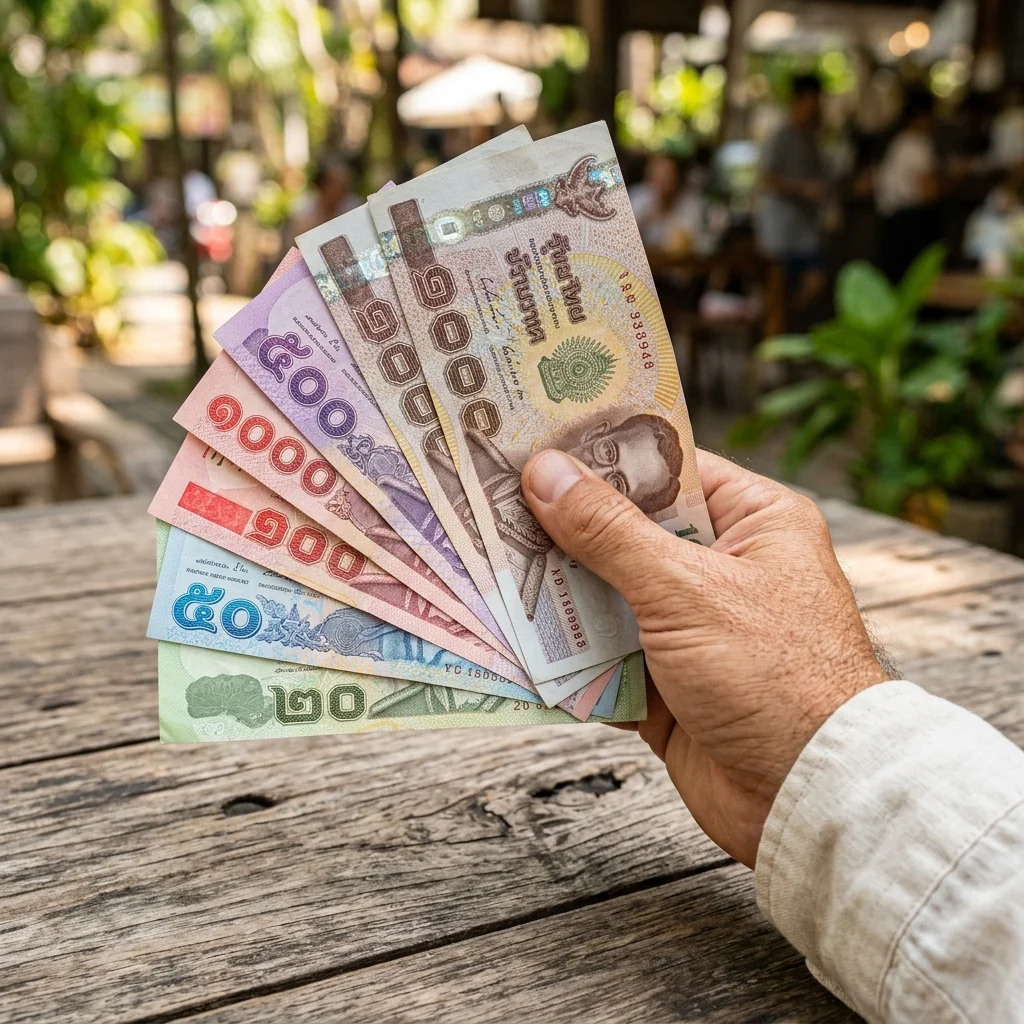
Cash remains the dominant method of payment across Thailand, particularly for daily expenses like street food, local transport, and market purchases. The currency is the Thai Baht (THB). It is issued in notes ranging from the green 20 THB to the grey 1,000 THB bill, alongside coins for smaller denominations. Arriving with a baseline amount of Baht is highly recommended. This allows you to immediately pay for taxis or train tickets from Suvarnabhumi Airport. Bringing around £100 to £200 in physical GBP to exchange upon arrival is a solid strategy. However, do not exchange it at the first airport booth you see. Instead, head to the basement level of the airport near the Airport Rail Link. Here, specific exchange kiosks offer rates almost identical to central Bangkok. For your daily walking-around money, carrying between 1,500 THB and 3,000 THB (£32 to £65) is usually sufficient. This covers meals, drinks, and local travel without making you a target for pickpockets. Breaking large 1,000 THB notes at a convenience store by buying a cheap bottle of water is a necessary habit. Small vendors rarely have enough change for large bills.
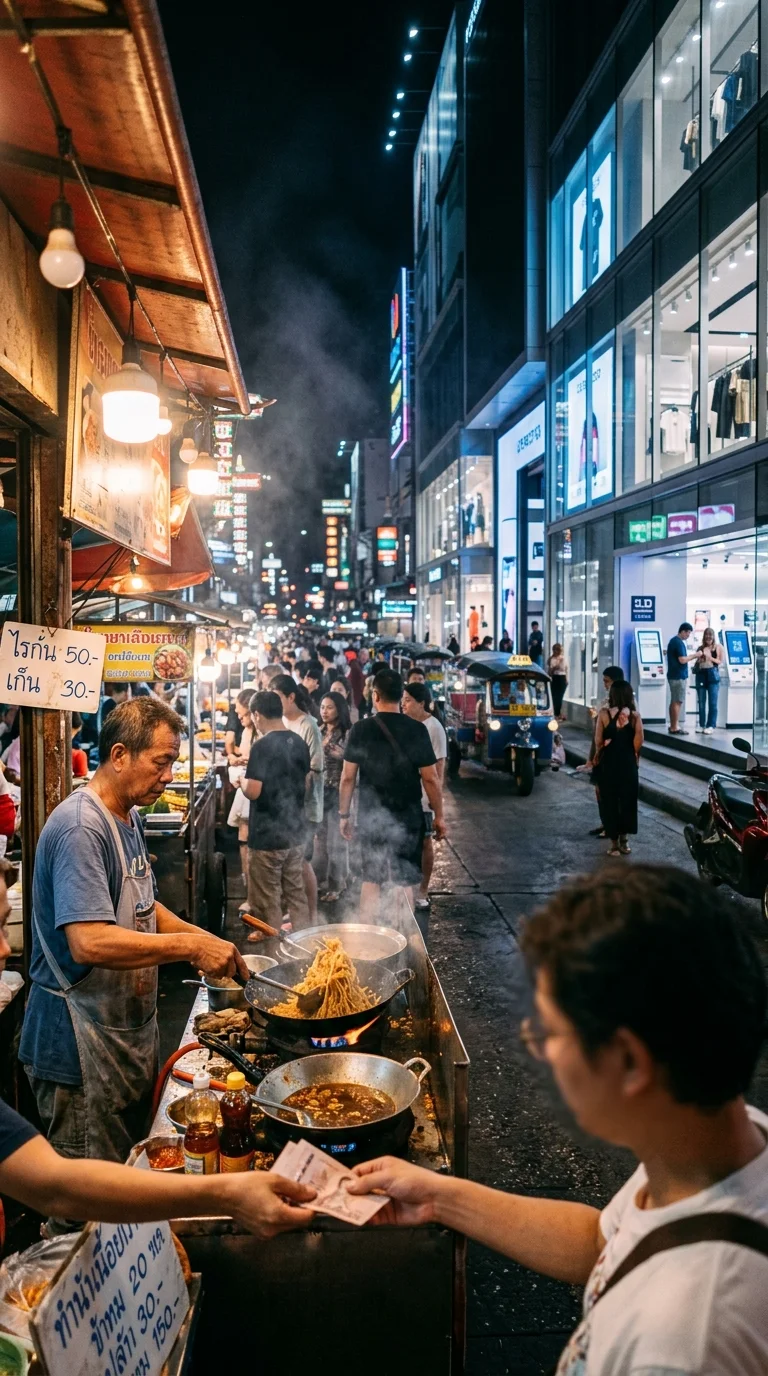
Always carry a mix of smaller 20, 50, and 100 THB notes for street purchases, as handing a 1,000 THB note to a food cart vendor will usually result in polite refusal.
Using UK Travel Cards and Navigating ATM Fees
Sponsored
Every single Thai bank ATM charges a mandatory 220 THB (£4.80) fee for withdrawals using a foreign card. This fee is unavoidable unless you hold a Thai bank account. Because this charge applies per transaction, withdrawing small amounts frequently will quickly drain your budget. The maximum withdrawal limit at most machines is 20,000 THB (£435). Fortunately, Krungsri (yellow ATMs) and Bangkok Bank (blue ATMs) allow up to 30,000 THB (£650) in a single transaction. To minimise the impact of the 220 THB charge, you should withdraw the maximum amount your UK bank allows in one go. Using a specialist travel card like Starling, Monzo, or Wise is critical. High street UK banks will often add their own 2.99% non-sterling transaction fee alongside a cash withdrawal fee on top of the Thai charge. When the ATM asks if you want to use its conversion rate or proceed without conversion, always select the latter. Allowing the Thai machine to do the currency conversion results in a markup of up to 5%.
Withdraw large amounts of cash at the 30,000 THB limit using a fee-free UK travel card, and always decline the ATM’s dynamic currency conversion.
| UK Card Provider | Foreign Transaction Fee | ATM Withdrawal Limit (Fee-Free) | Notes |
|---|---|---|---|
| Starling Bank | 0% | £300 daily (no monthly limit) | Best overall for high-value Thai ATM withdrawals. |
| Monzo | 0% | £200 per rolling 30 days | 3% fee applies after the £200 monthly limit is exceeded. |
| Wise | 0% | £200 per month (up to 2 withdrawals) | Excellent exchange rates, but low withdrawal threshold. |
| Standard UK Banks | 2.75% - 2.99% | Varies by bank | Often add a flat £1.50 - £3.00 fee per withdrawal. |
Where to Exchange Cash in Thailand
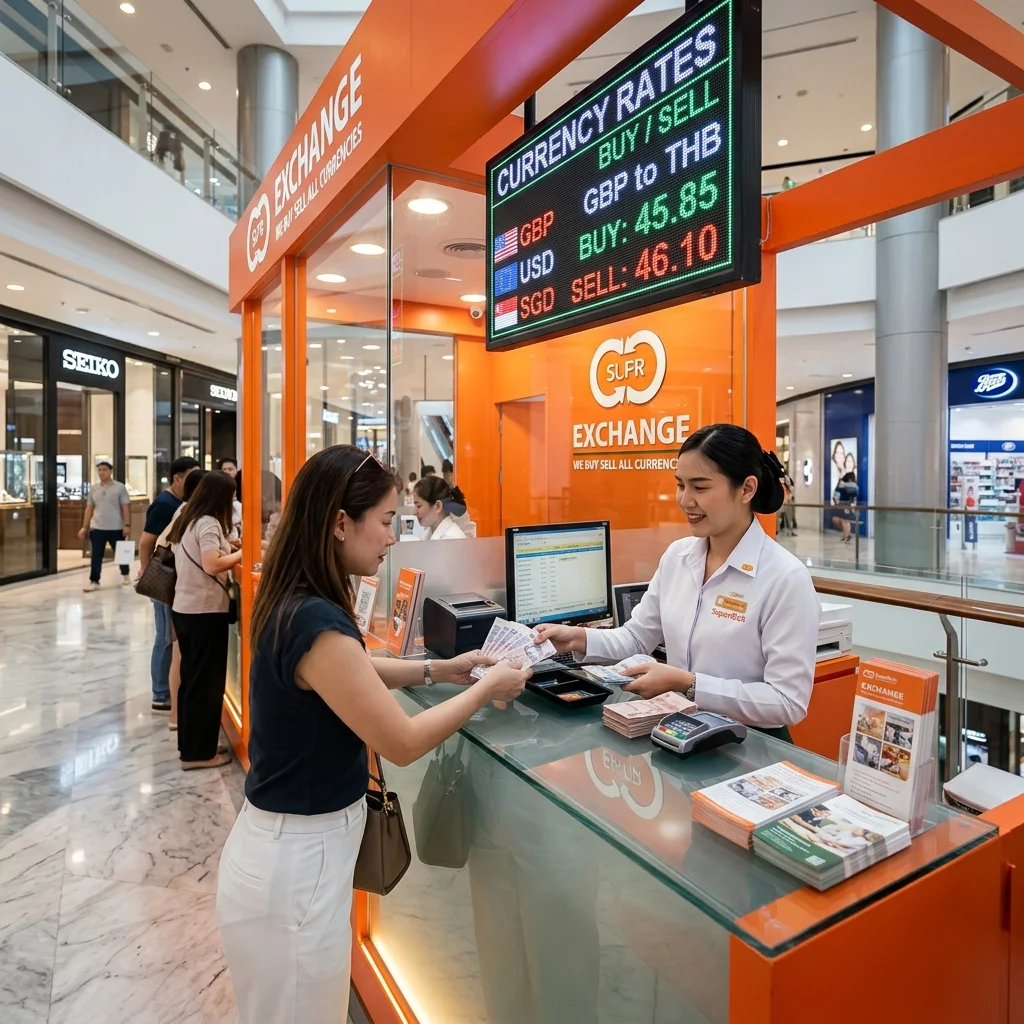
Bringing physical British Pounds to exchange locally is a highly effective way to bypass the 220 THB ATM fee entirely. However, where you choose to swap your cash makes a substantial difference to the value you receive. High street bank booths, which are often purple, green, or blue, offer noticeably poor rates for foreign currency. The most competitive exchange rates in Thailand are consistently found at independent currency exchange chains. SuperRich is the most prominent and reliable option. They operate two distinct companies—SuperRich Thailand with a green logo, and SuperRich 1965 with an orange logo. Both offer rates that closely mirror the mid-market Google rate. You will find their kiosks at Suvarnabhumi Airport on the basement level. They also have branches in major shopping centres like CentralWorld and at key BTS Skytrain stations such as Asok. To exchange money legally in Thailand, you are required to hand over your physical passport. A photocopy or a picture on your phone will be rejected. Your UK banknotes must also be in pristine condition. Thai exchange clerks will scrutinise every note. They will outright refuse any £20 or £50 notes that are damaged or marked with pen.
Bring crisp, unmarked £50 notes and exchange them at a green or orange SuperRich kiosk, always remembering to carry your physical passport.
Card Acceptance for Hotels, Food, and Transport
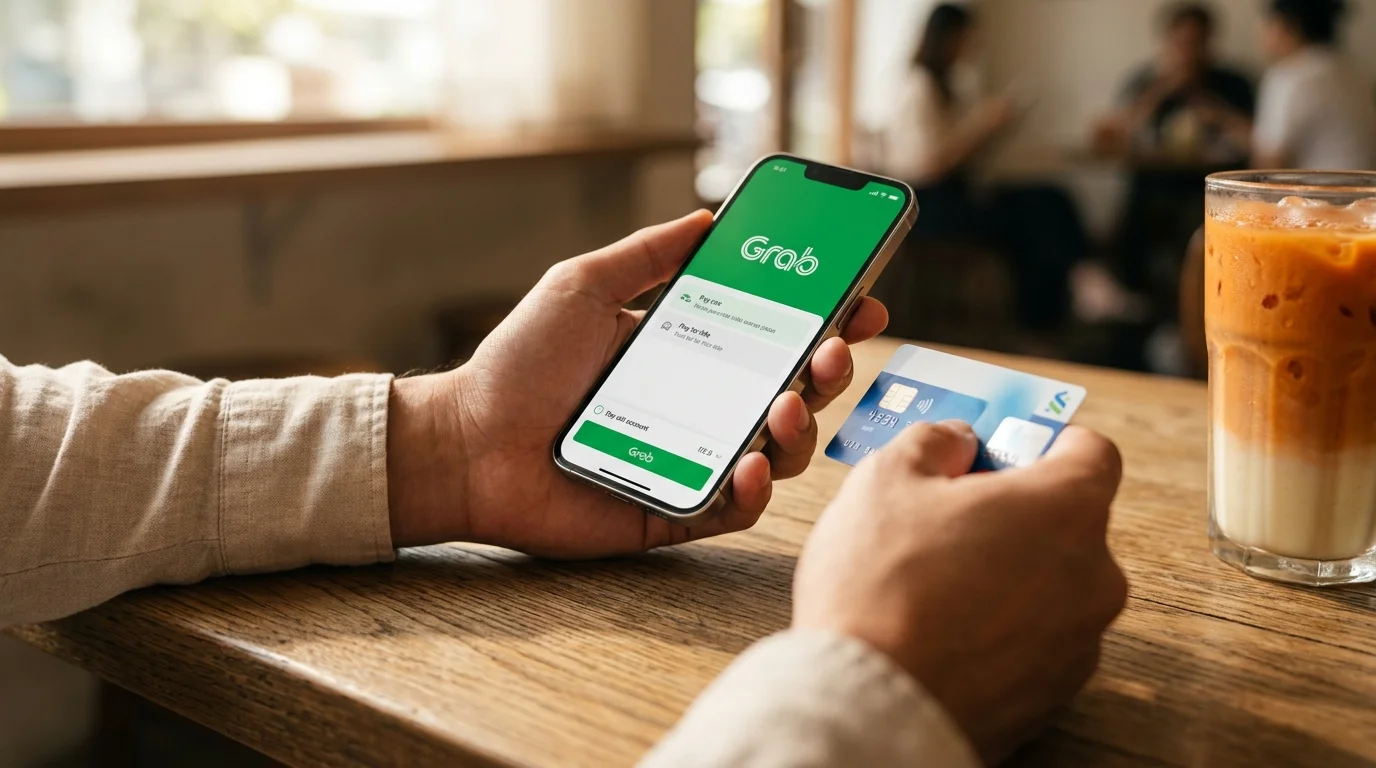
While cash rules the streets, debit and credit cards are widely accepted in Thailand’s modern commercial sectors. You can confidently use your Visa or Mastercard to pay for mid-range accommodation, shopping mall retail purchases, and meals at established restaurants. Do not expect to tap your card for minor purchases. Small vendors, independent guesthouses, and local transport operators do not have card terminals. Furthermore, many medium-sized businesses that do accept cards will impose a 3% surcharge to cover the merchant fee. Always ask if there is a card charge before you agree to pay via chip and pin. Contactless payment is becoming more common in major retail chains like 7-Eleven. However, mobile payment options like Apple Pay and Google Pay remain highly temperamental and frequently fail on Thai terminals. The Grab and Bolt ride-hailing apps are the major exception to the cash rule for transport. You can link your UK Starling or Wise card directly to these apps. This allows you to pay for your taxis digitally without handling physical Baht or worrying about drivers lacking change.
Link a fee-free UK travel card to your Grab app for easy taxi payments, but expect to pay a 3% surcharge if using a card at independent hotels.
Tipping Culture and Managing Small Change
Tipping is not a traditional part of Thai culture. It has, however, become expected in certain tourist-facing industries over recent years. You are not required to tip street food vendors, taxi drivers, or staff at local noodle shops. When using taxis, it is customary simply to round up the fare to the nearest 10 THB. If the meter reads 83 THB, you hand over 100 THB and let the driver keep the 17 THB change. In mid-range and upscale restaurants, a 10% service charge is usually added to your bill automatically. If this service charge is present, no further tip is necessary. If it is absent, leaving 40 THB to 100 THB (£0.85 to £2.15) on the table is appreciated but entirely voluntary. Hotel porters who carry your bags to your room typically expect a small gratuity of 20 THB to 50 THB. Managing your coins and small notes is crucial for these moments. The 10 THB coins and 20 THB notes accumulate quickly. They are incredibly useful for paying motorcycle taxis, buying snacks, or leaving small tips.
Check your restaurant receipt for a 10% service charge before leaving a tip, and hoard your 20 THB notes for hotel porters.
Costs and Budgeting
Thailand accommodates a massive spectrum of spending habits, from strict backpacker budgets to luxury resort holidays. Understanding the baseline costs will help you decide how much money to transfer to your travel card. A budget traveller eating street food and staying in basic fan-cooled guesthouses can comfortably survive on 1,000 THB to 1,500 THB (£21 to £32) per day. Mid-range visitors should budget between 3,000 THB and 5,000 THB (£65 to £108) daily. This covers air-conditioned hotels, domestic flights, and meals at established restaurants. Premium travel pushes daily costs well beyond 8,000 THB (£172). Regional variations matter heavily. Prices in central Bangkok, Phuket, and Koh Samui are consistently higher than in northern cities like Chiang Mai.
| Option | Cost (THB) | Cost (GBP approx) | Notes |
|---|---|---|---|
| Street food meal (Pad Thai) | 50 - 80 THB | £1.10 - £1.70 | Often cash only; larger notes will be rejected. |
| Mid-range restaurant meal | 300 - 600 THB | £6.50 - £13.00 | 10% service charge may be added to the bill. |
| Short taxi ride (metered) | 80 - 150 THB | £1.70 - £3.20 | Round up to the nearest 10 THB for convenience. |
| Singha beer in a bar | 100 - 160 THB | £2.15 - £3.45 | Prices double in upscale rooftop bars or nightclubs. |
Common Mistakes and How to Avoid Them
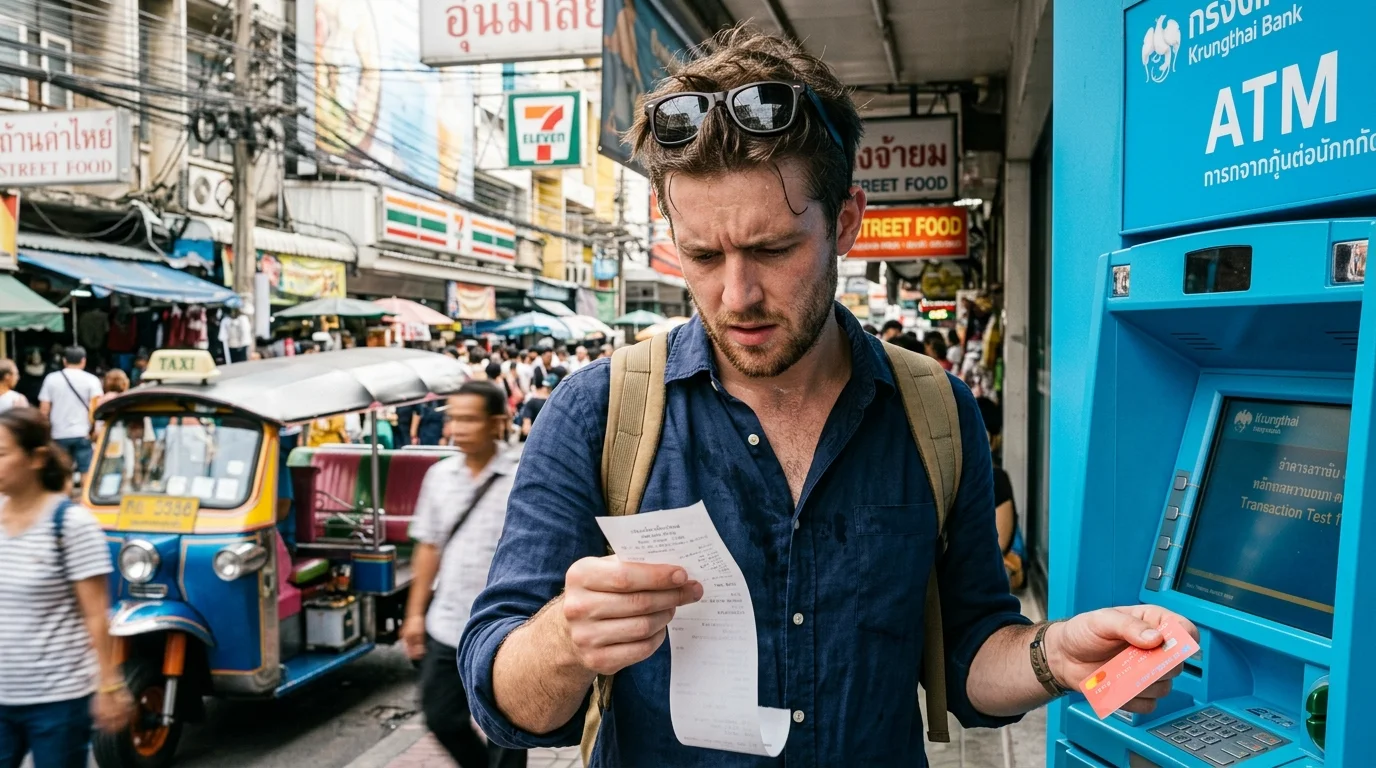
Accepting dynamic currency conversion at ATMs. Letting the Thai ATM convert the withdrawal into British Pounds results in a poor exchange rate, costing you up to 5% extra. Always press "Continue Without Conversion" when prompted on the screen.
Bringing damaged British banknotes. Travellers often bring creased £20 notes, assuming they will be accepted. Thai exchange booths will outright reject any foreign notes that are not pristine. Ask your bank for crisp bills before leaving the UK.
Paying for small items with 1,000 THB notes. Handing a 1,000 THB note to a street vendor for a 40 THB snack halts their business because they lack float. You will be turned away while they refuse the sale. Break your large notes at a convenience store first.
Assuming all hotels accept cards. Visitors arrive at independent guesthouses expecting to pay with Visa. Many operators work strictly in cash, forcing you to scramble for an ATM. Confirm payment methods via email beforehand.
Practical Tips
Carry your physical passport when exchanging money. Thai law mandates that exchange kiosks verify your identity, and a digital photo on your phone will not be accepted.
Keep emergency GBP hidden in your luggage. Having £100 stashed away ensures you can buy Baht immediately if you lose your bank card or an ATM swallows it.
Link your travel card to the Grab app before arriving. Setting up your payment methods in the UK prevents the app from triggering security blocks when you try to add a card from a Thai IP address.
Use a cross-body bag for your daily cash. Carrying 3,000 THB in a loose pocket makes you an easy target for opportunistic pickpockets in crowded markets.
Ask about the 3% card surcharge. Before handing over your debit card at a dive shop or tour agency, check if they pass the merchant fee onto the customer.
Do not fold your Thai Baht notes aggressively. The King's image is printed on all local currency, and disrespecting the monarchy by stepping on a note is a criminal offence.
Look for yellow Krungsri or blue Bangkok Bank ATMs. These specific machines allow maximum withdrawals of 30,000 THB, diluting the impact of the mandatory 220 THB withdrawal fee better than others.
Quick Reference Table
| Item | Detail | Notes |
|---|---|---|
| Local Currency | Thai Baht (THB) | Notes range from 20 to 1,000 THB. |
| Standard ATM Fee | 220 THB (£4.80) | Applies per withdrawal to all foreign cards. |
| Max ATM Withdrawal | 20,000 - 30,000 THB | Krungsri and Bangkok Bank offer the 30k limit. |
| Best Exchange Kiosks | SuperRich (Green/Orange) | Found at airports and major BTS stations. |
| Best Travel Cards | Starling, Monzo, Wise | Essential for avoiding UK bank foreign transaction fees. |
| Tipping | Not mandatory | 10% service charge often added in nice restaurants. |
| Card Acceptance | Malls, hotels, nice restaurants | Small vendors and local transport are cash only. |
| Transport Apps | Grab, Bolt | Link your UK card to avoid handling cash for taxis. |