MRT Blue Line
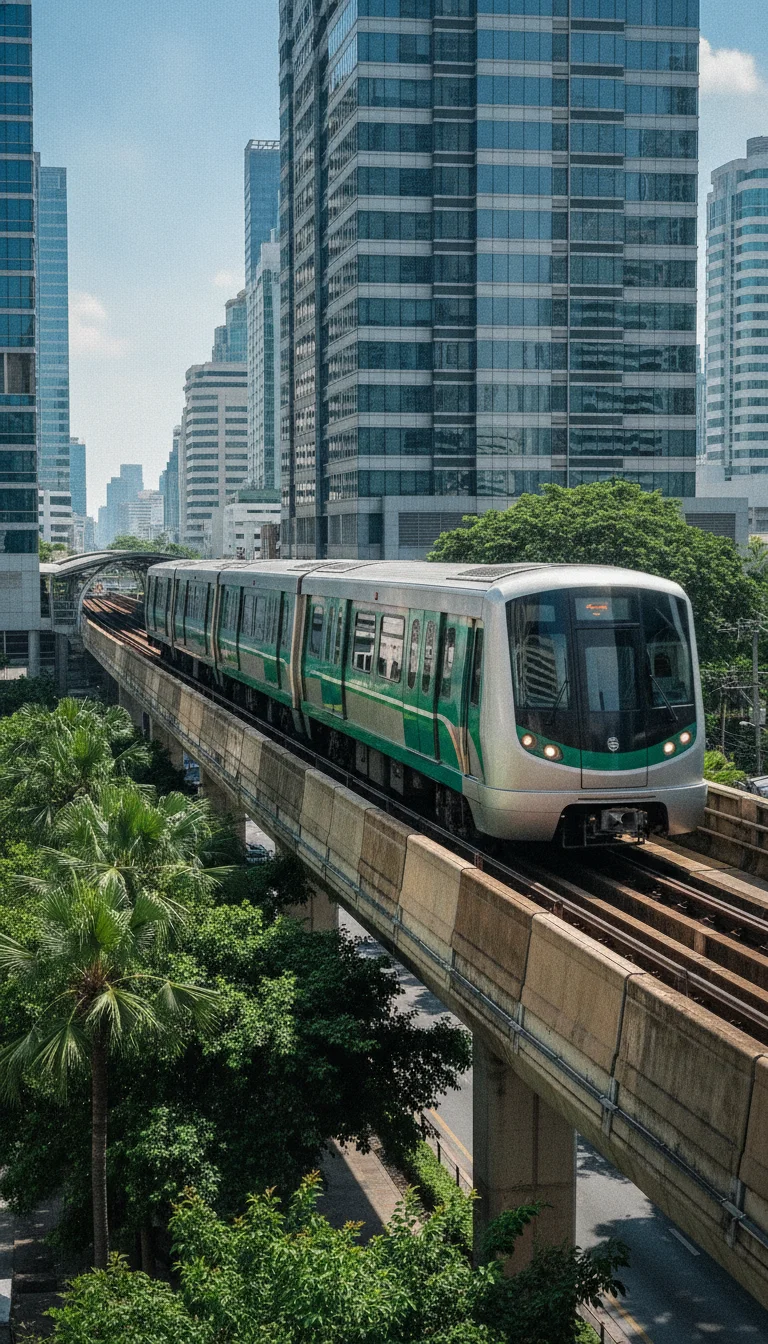
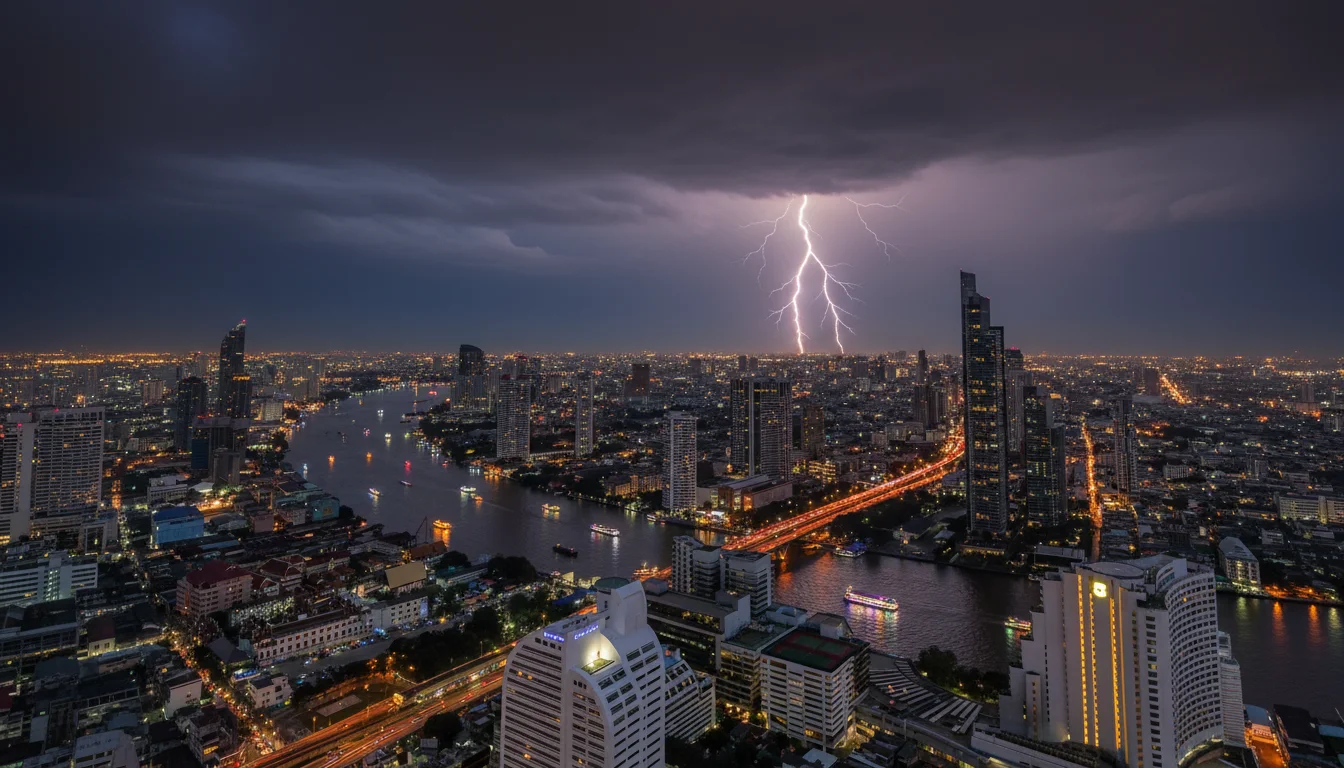
The MRT Blue Line is Bangkok's only circular rapid transit system, carrying over 400,000 passengers daily across a 48-kilometre loop that links the city's historic old town with its modern commercial districts. Operating entirely underground for the majority of its route, this network provides a climate-controlled alternative to the notorious surface gridlock of the Thai capital.
Owned by the Mass Rapid Transit Authority of Thailand (MRTA) and operated by Bangkok Expressway and Metro (BEM), the MRT Blue Line serves as the backbone of Bangkok's underground transport infrastructure. This heavy rail system targets urban commuters, business travellers, and international tourists who require reliable, timed transits across the city. Spanning 38 strategically positioned stations, the line forms a loop around the metropolitan core. It bridges the gap between traditional tourist hotspots in Rattanakosin and the towering financial hubs of Sukhumvit and Silom, offering a highly efficient transport solution.

Route Coverage and Station Network
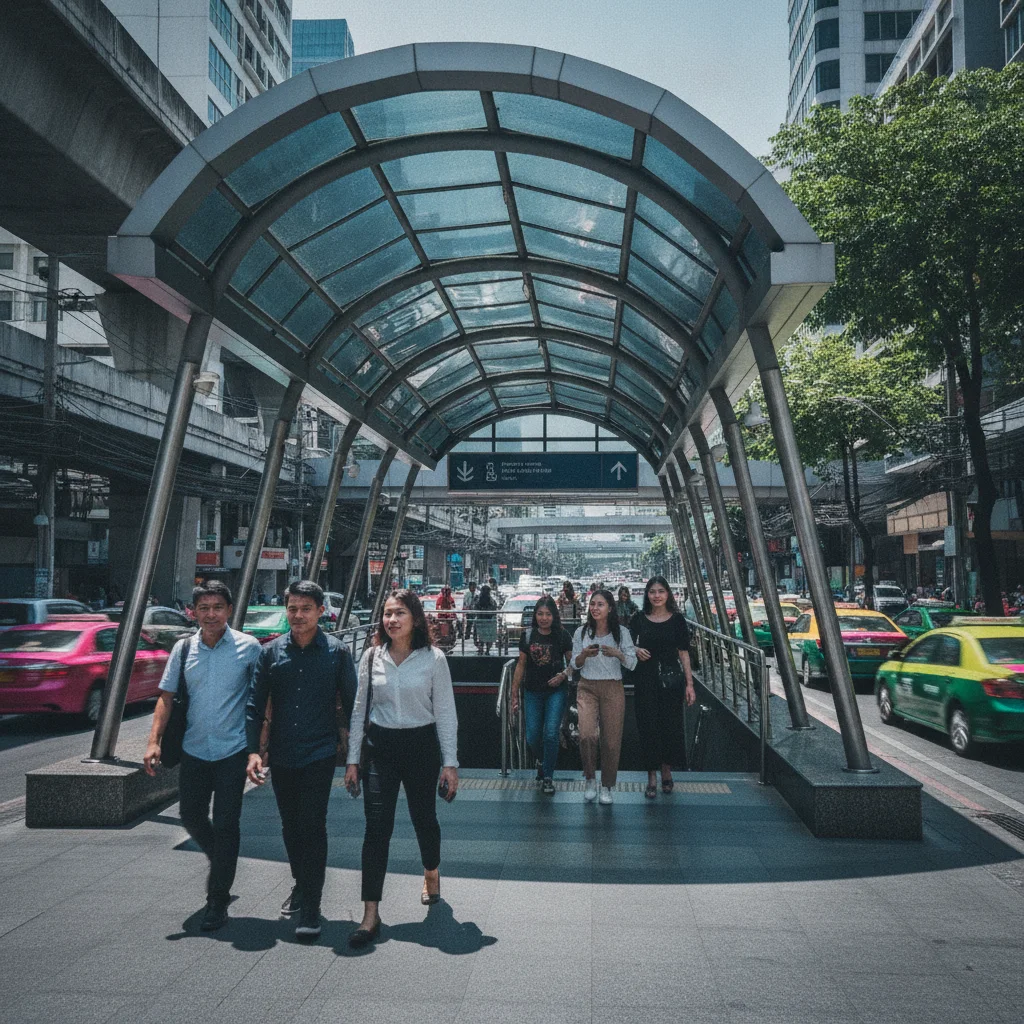
The MRT Blue Line runs in a vast, continuous loop that directly connects Bangkok's residential suburbs with the primary commercial and historical districts. Spanning a total distance of 48 kilometres, this heavy rail transit system starts at Tao Poon Station in the northern district of Bang Sue, sweeps eastward through the commercial corridor of Ratchadaphisek, turns south through Sukhumvit and Silom, and then bends westward to tunnel underneath the Chao Phraya River into the historic Thonburi side of the city. Since the completion of its major loop extension in 2019, the line has transformed urban transit by providing direct access to the older cultural quarters of Bangkok. These areas were previously only reachable via slow-moving canal boats, local buses, or road taxis. Trains operate at high-frequency intervals, arriving every three to four minutes during peak morning and evening periods, and lengthening to six to eight minutes during off-peak daytime hours and weekends. This dependable scheduling allows you to navigate the sprawling metropolis without the stress of unpredictable traffic delays.
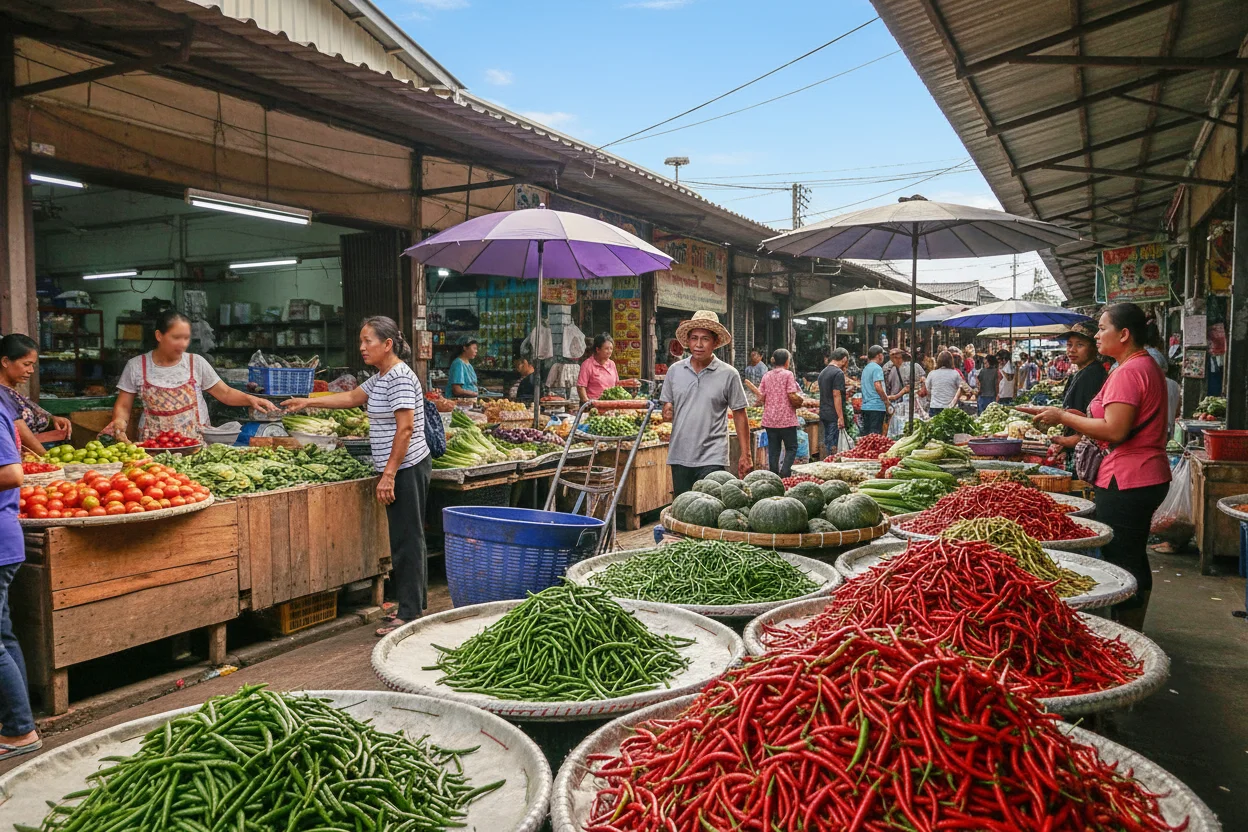
Master Bangkok transport with our guide. Learn why the 12 THB canal boat beats a taxi and how to avoid the 220 THB ATM fee while exploring the city.
Practical takeaway: You can travel from the commercial high-rises of Sukhumvit to the historic street food stalls of Chinatown in less than twenty minutes.
Key Interchange Hubs and Connections
Sponsored
Mastering the layout of the MRT Blue Line requires understanding how it interfaces with Bangkok's other primary rail networks at key interchange stations. Sukhumvit Station serves as the busiest node on the network, featuring a direct, escalator-linked elevated skywalk that connects passengers to Asok BTS Station on the Sukhumvit Line. Further south, Silom Station connects to Sala Daeng BTS Station via a covered overhead pedestrian bridge, allowing for quick transfers to the Silom BTS Line. To the north, Tao Poon Station acts as the dual-level terminal where the Blue Line meets the elevated Purple Line, which services the northern suburbs of Nonthaburi. Additionally, Phetchaburi Station provides an essential link to the Airport Rail Link at Makkasan Station, which is the fastest route to Suvarnabhumi International Airport. Bang Sue Station connects directly to Krung Thep Aphiwat Central Terminal, the national railway hub that operates long-distance trains to Chiang Mai, Nong Khai, and southern Thailand.
Practical takeaway: Always pay close attention to the colour-coded overhead directional signage at transfer stations to avoid accidentally exiting the ticket gates during a line transfer.
Fares, Cards, and Ticket Kiosks
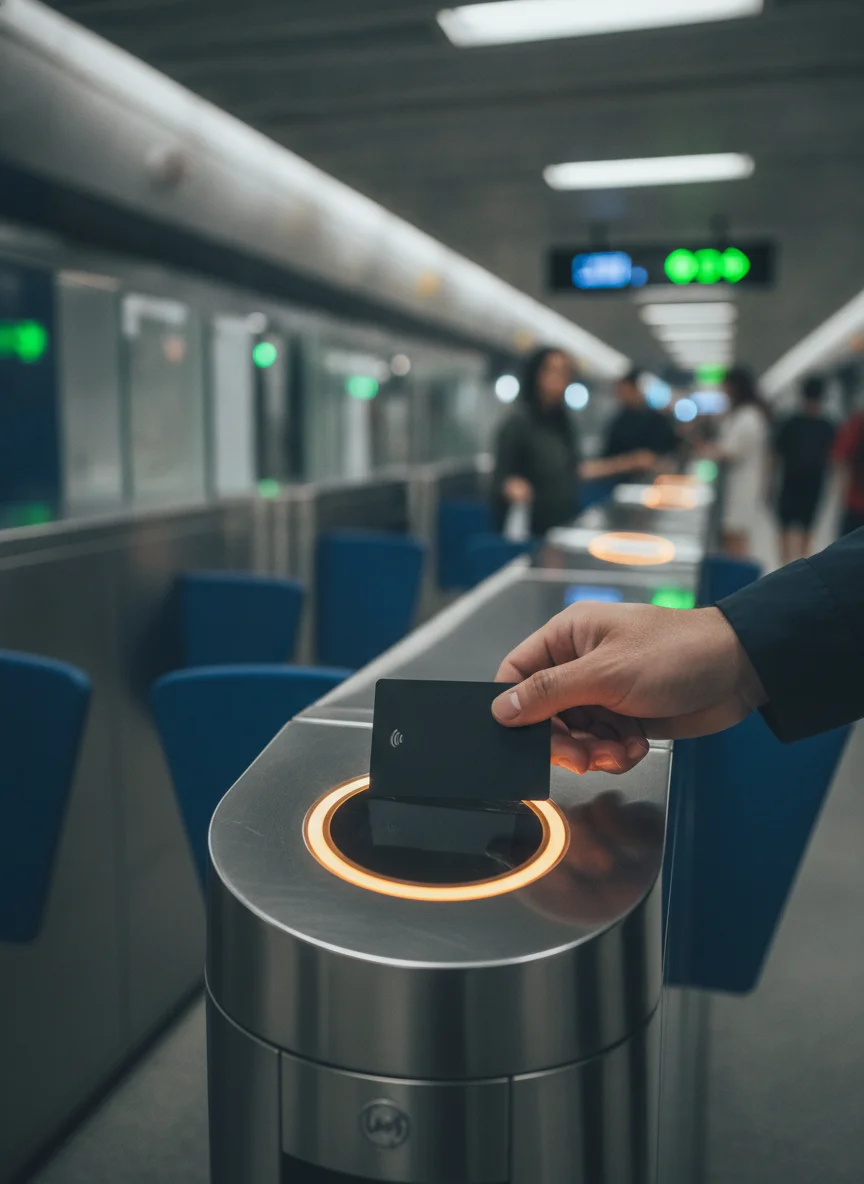
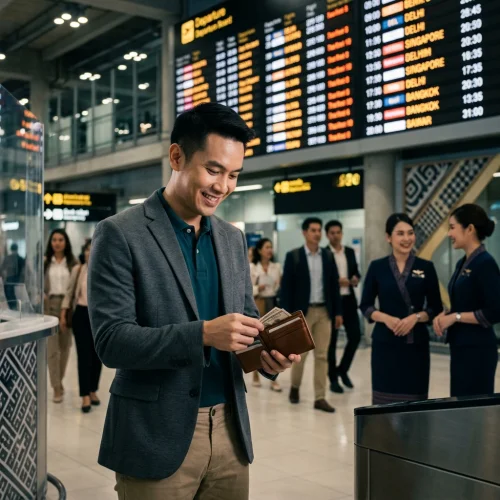
The fare structure of the MRT Blue Line is based entirely on the distance travelled, calculated by the number of stations between your entry and exit points. Single-journey fares begin at an affordable base rate of 17 THB (£0.39) for one station and cap out at 43 THB (£0.99) for trips extending across twelve or more stations. To enter the platforms, you can purchase a single-use black plastic RFID token from the touchscreen ticketing kiosks located in every station concourse. These machines feature an English-language interface and accept 1, 5, and 10 THB coins, alongside 20, 50, and 100 THB banknotes. If you prefer to bypass cash transactions entirely, you can tap your standard UK contactless credit or debit card directly at the fare gates. Regular travellers can purchase a reloadable MRT Smart Card at any station ticketing counter for an initial price of 180 THB (£4.14). This purchase includes a refundable 50 THB (£1.15) deposit, a 30 THB (£0.69) card processing fee, and 100 THB (£2.30) of pre-loaded travel credit.
Practical takeaway: Using a contactless UK bank card at the turnstiles is the most efficient payment method for short-term holidaymakers as it requires no prior ticket registration.
| Feature | MRT Blue Line | BTS Skytrain | Road-Based Taxis |
|---|---|---|---|
| Transit Environment | Subterranean (underground) | Elevated (monorail/heavy rail) | Surface streets and tollways |
| Base Fare Range | 17 to 43 THB (£0.39 - £0.99) | 17 to 62 THB (£0.39 - £1.43) | 35 THB (£0.80) starting flag fall |
| Traffic Delay Risk | Zero (fully segregated track) | Zero (fully segregated track) | Extremely high (severe congestion) |
| Payment Methods | Cash, MRT Card, EMV Contactless | Cash, Rabbit Card, Rabbit LINE Pay | Cash, local QR code bank transfer |
| Primary Coverage | Loop connecting old town and CBD | Major avenues (Sukhumvit, Silom) | Door-to-door citywide coverage |
Passenger Facilities and Accessibility
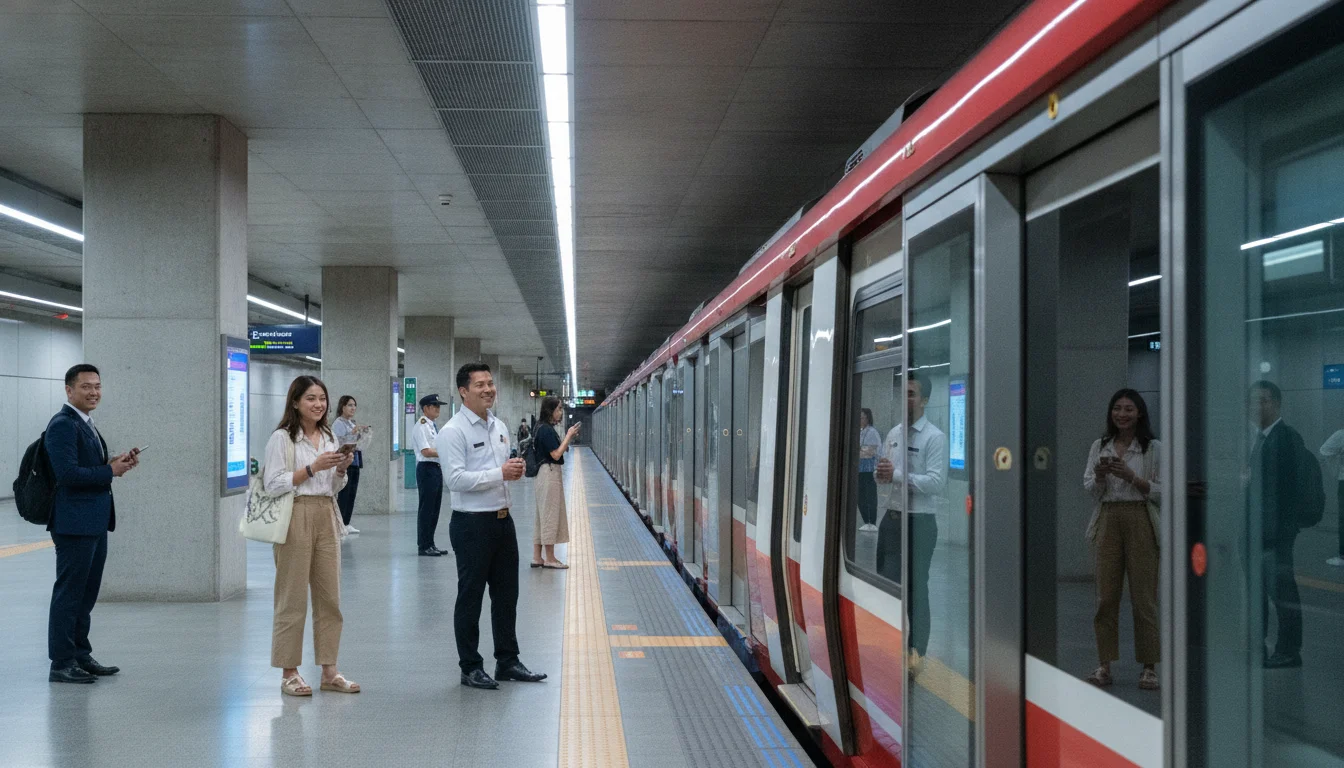
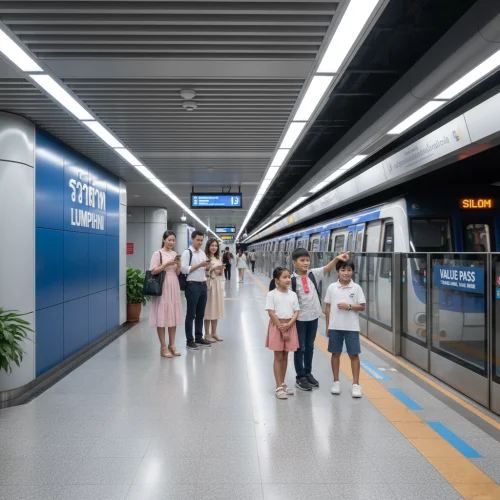
The stations and trains of the MRT Blue Line are constructed to meet high international standards of safety, comfort, and physical accessibility. Every underground platform is sealed behind full-height glass screen doors that only open when a train has come to a complete halt, eliminating any risk of track falls. Powerful industrial-grade air conditioning units keep the station concourses and train interiors consistently cool, providing a welcoming escape from the external tropical heat of Bangkok. For passengers with limited mobility, every station features street-level lifts, escalator access, wide ticket gates, and tactile paving running along the floors. Security personnel are stationed at every entrance to perform brief luggage checks, while CCTV cameras monitor all public areas of the stations and carriages. Inside the modern train cars, you will find overhead digital screens displaying upcoming station stops in both English and Thai, alongside clear audio announcements.
Practical takeaway: If you require assistance, approach the glass-fronted station control centre located near the ticket barriers where staff speak functional English.
Underground Art and Station Architecture
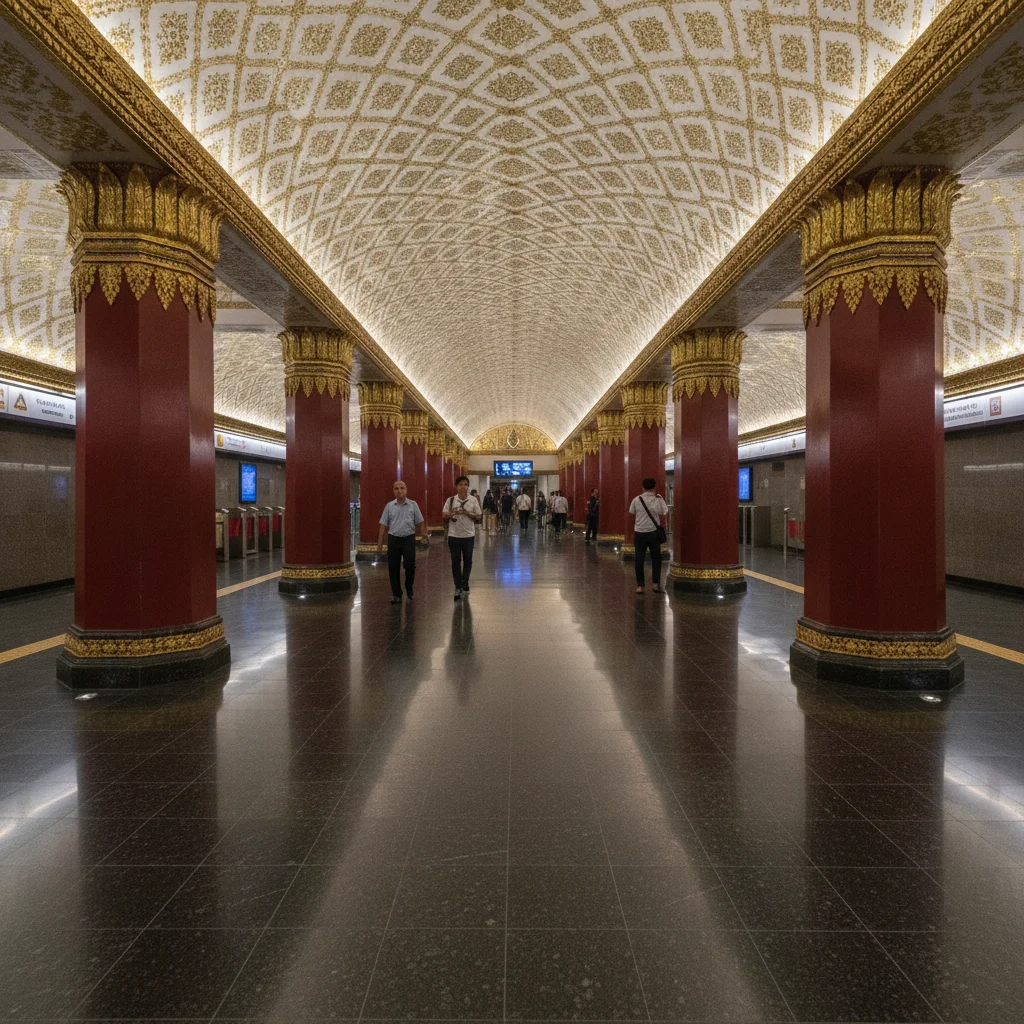
A unique aspect of the MRT Blue Line extension is the deliberate design of several heritage-themed stations that reflect the cultural character of their historic surroundings. Sanam Chai Station, situated near the Grand Palace, is designed to resemble an early Bangkok period state room, complete with red pillars, gold detailing, and coffered ceilings. Wat Mangkon Station, located in the centre of Chinatown, features a striking red and gold colour scheme adorned with dragon motifs and traditional Chinese patterns. Sam Yot Station integrates vintage colonial-style architecture with black-and-white historical photographs, matching the conservation area of the old city above it. Itsaraphap Station, located on the Thonburi side of the river, features golden swan decorations that pay homage to the nearby historic temple of Wat Arun. These beautifully decorated stations serve as tourist attractions in their own right, combining essential municipal transit with impressive public art installations.
Practical takeaway: Take some extra time to exit at Sanam Chai or Wat Mangkon to photograph the station interiors before passing through the ticket barriers.
Location and Getting There
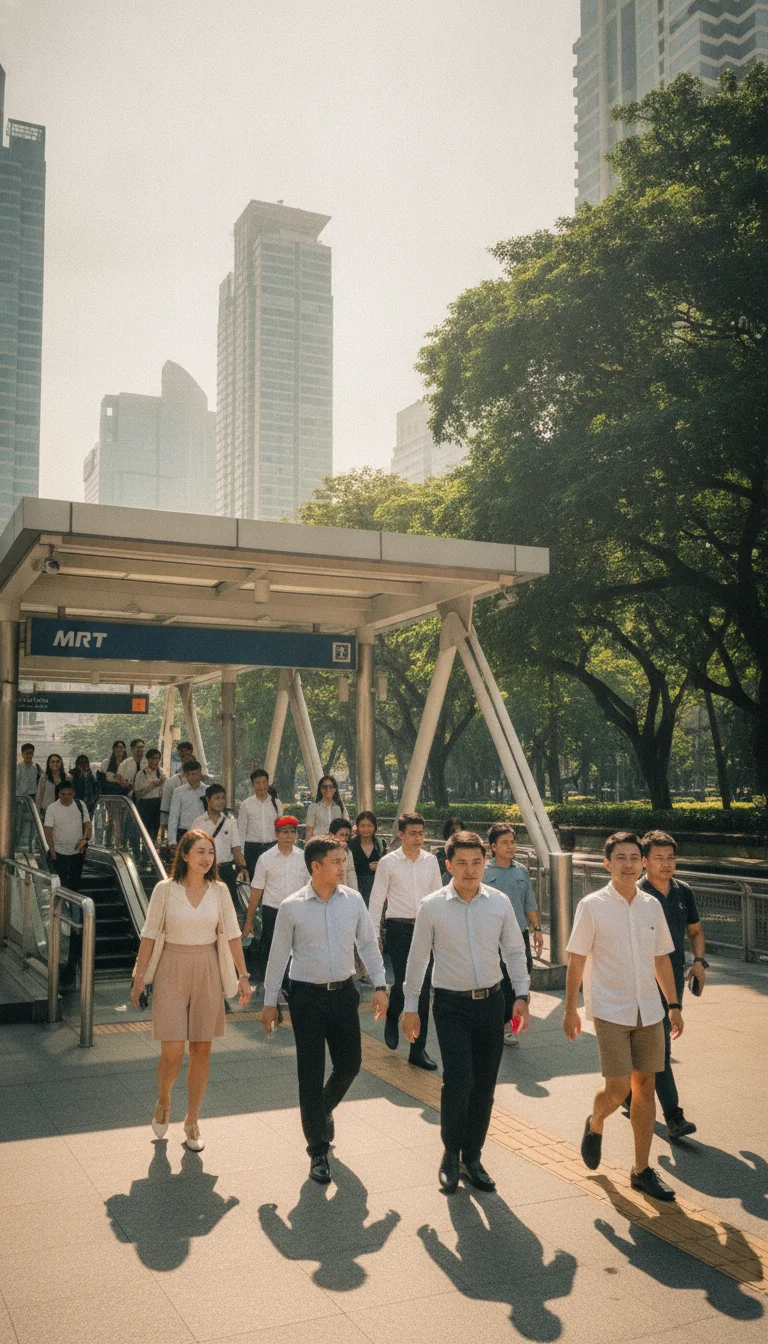
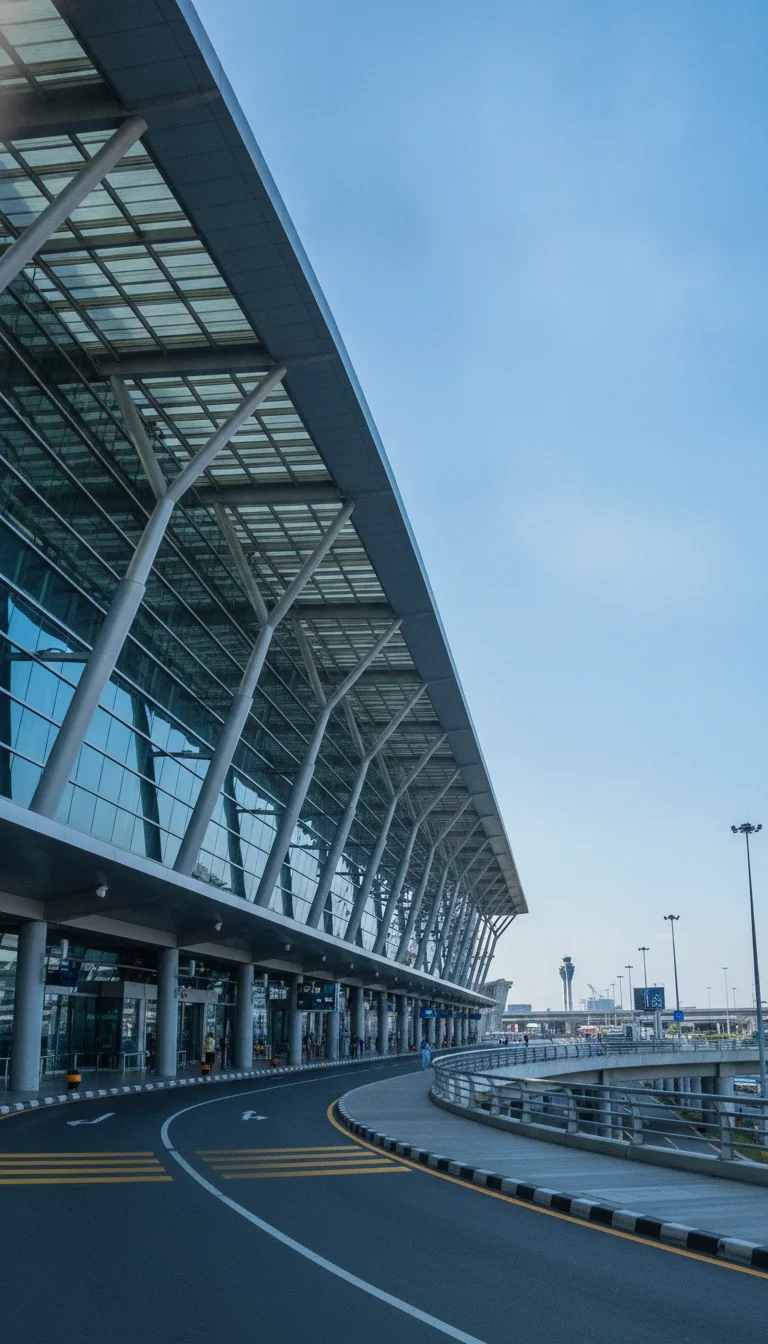
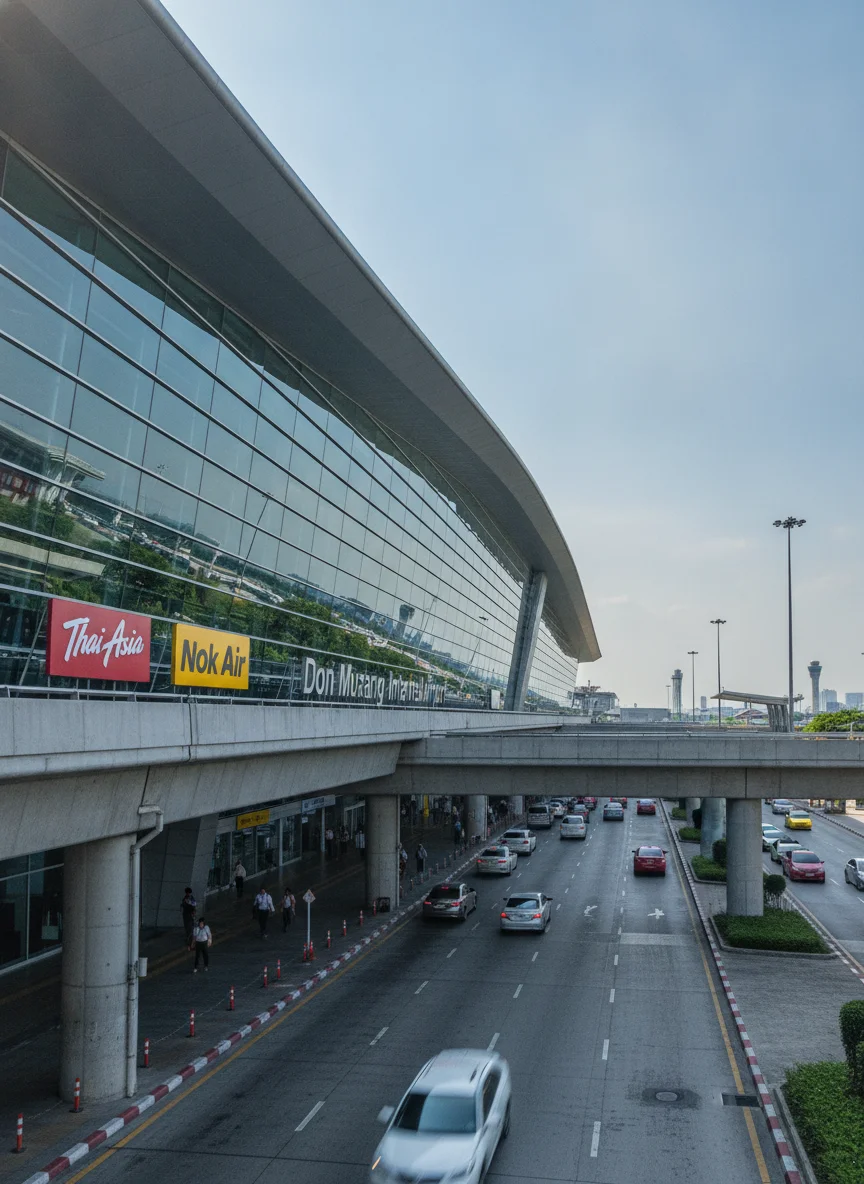
The MRT Blue Line runs directly underneath the central urban core of Bangkok, making it highly accessible from almost any major tourist district. For UK travellers arriving at Suvarnabhumi Airport (BKK), the easiest route is to board the Airport Rail Link to Makkasan Station, which connects directly to Phetchaburi MRT Station via an elevated covered walkway. This airport rail journey takes roughly 35 minutes and costs 45 THB (£1.03) per person. If you land at Don Mueang Airport (DMK), you can take the SRT Red Line suburban train to Krung Thep Aphiwat Central Terminal, which connects immediately to Bang Sue MRT Station for 33 THB (£0.76). Alternatively, a direct metered public taxi from Suvarnabhumi Airport to central Blue Line stations like Sukhumvit or Silom will take 45 to 60 minutes and cost approximately 350 to 500 THB (£8.05 to £11.50), inclusive of airport surcharges and highway toll fees.
Cost Structure and Ticket Options
Standard fares on the MRT Blue Line are determined by distance, offering an exceptionally cheap way to travel across the capital. Single-journey fares range from a minimum of 17 THB (£0.39) for one stop to a maximum of 43 THB (£0.99) for travel across twelve or more stations on the network. There are no peak-hour ticket surcharges, meaning the pricing remains consistent regardless of the time of day you choose to travel. For tourists planning multiple journeys in a single day, an unlimited One-Day Pass is available for purchase at the station ticket windows for 120 THB (£2.76). Frequent travellers can opt for the reloadable MRT Smart Card, which costs 180 THB (£4.14) to purchase, including a 100 THB (£2.30) starting travel balance. Children under the age of 12 and under 120 centimetres tall are eligible for a 50% discount on all fares.
| Option | Cost (THB per journey) | Cost (GBP approx) | Notes |
|---|---|---|---|
| Single-Journey Token | 17 to 43 THB | £0.39 to £0.99 | Cash purchase at touchscreen kiosks; valid on day of issue |
| Contactless EMV Card | 17 to 43 THB | £0.39 to £0.99 | Tap standard UK Visa or Mastercard directly at fare gates |
| MRT Smart Card (Initial) | 180 THB | £4.14 | Includes 100 THB credit, 50 THB deposit, 30 THB fee |
| MRT Smart Card (Top-up) | 100 to 1,000 THB | £2.30 to £23.00 | Can be topped up with cash at any station ticket counter |
| Unlimited One-Day Pass | 120 THB | £2.76 | Unlimited travel within one operating day; non-refundable |
Who the MRT Blue Line Suits Best
The MRT Blue Line is perfectly suited for independent holidaymakers, business travellers, and city commuters who want to travel across Bangkok without wasting time in traffic jams. It is highly convenient for those staying in the Sukhumvit, Silom, or Ratchada districts who want cheap, air-conditioned transit to the historic temples of the old town. However, it is not ideal for travellers with massive suitcases during the weekday rush hours of 07:30 to 09:00 and 17:00 to 19:30, when carriages are packed to absolute capacity.
What to Know Before You Travel
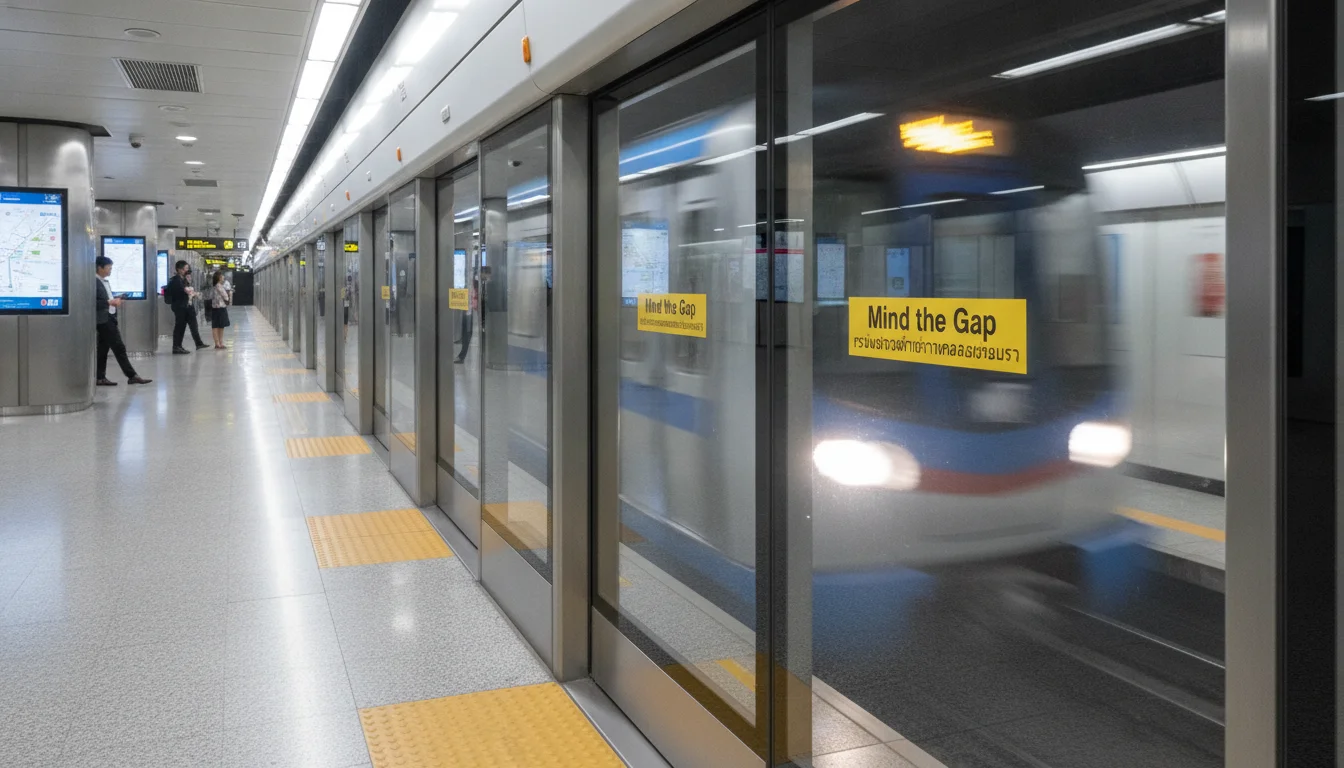
There are several operational facts you should understand before using the underground network. First, the MRT Blue Line and the elevated BTS Skytrain operate on completely separate ticketing systems. You cannot use a BTS Rabbit Card on the MRT, which means you must purchase separate tickets unless you choose to tap a contactless UK bank card on the MRT gates. Second, security officers conduct mandatory bag inspections at every single station entrance. Be prepared to open your bags or backpacks for a quick visual check before passing through the metal detector. Third, eating and drinking are strictly banned inside the station ticketed areas and onboard the trains. Security staff will actively enforce this rule, so make sure all beverages are consumed beforehand. Lastly, train platforms become incredibly crowded during the evening commuter rush. Allow extra travel time if you are heading to a scheduled dinner or flight.
Practical Tips for Riding the MRT Blue Line
Prepare your payment method before reaching the gates
Having your contactless bank card or smart card ready in your hand prevents frustrating bottlenecks at the busy turnstiles. This simple action helps maintain the flow of foot traffic behind you during peak commuter times.
Keep cash on hand for the touchscreen ticketing kiosks
Most older ticket machines in the stations only accept Thai coins and small banknotes, rejecting 500 and 1,000 THB notes. Carrying 20 and 50 THB notes ensures you can always use the automated machines without queuing at the counter.
Utilise the underground walkways to cross major streets
Many MRT station exits are designed to act as safe pedestrian underpasses beneath Bangkok's heavily congested multi-lane avenues. You can use these air-conditioned concourses to cross roads without needing to purchase a train ticket.
Check your train direction before boarding the platform
Because the Blue Line operates as a large loop, trains run in both clockwise and counter-clockwise directions from the same stations. Look at the overhead digital displays to confirm the final destination of the incoming train before stepping inside.
Avoid traveling with oversized luggage during the morning rush
Train carriages become packed to maximum capacity between 07:30 and 09:00 on weekdays, making transport with bulky suitcases extremely stressful. Schedule your airport transfers outside these peak hours to guarantee a much more comfortable journey.
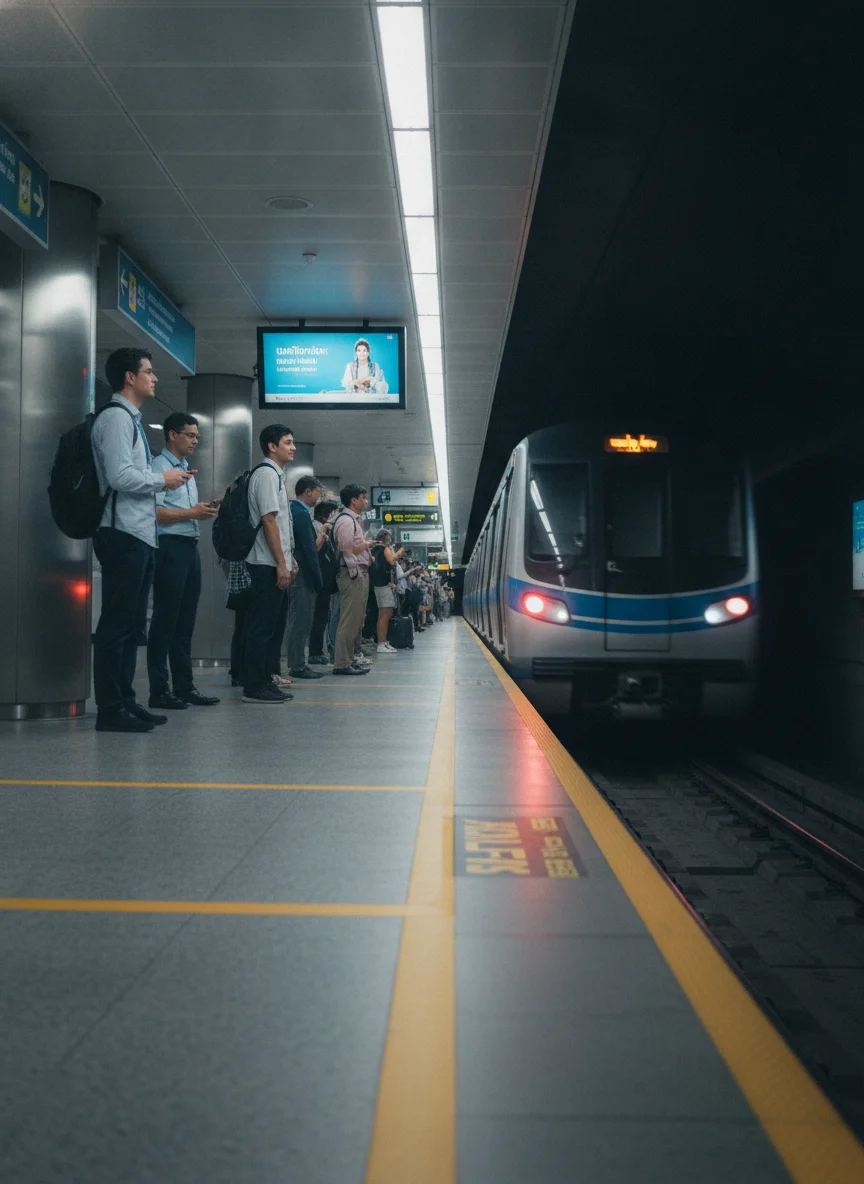
Stand behind the yellow safety lines on the platform
Automated platform screen doors are installed at all underground stations, but you must still wait behind the painted yellow floor markers. This ensures departing passengers can exit the train carriage safely before you attempt to board.
Download a digital Bangkok transit map app to your phone
Apps like Bangkok MRT or Google Maps provide real-time route planning, station exit listings, and approximate travel times. Having this information readily available prevents you from missing key interchanges or taking the wrong exit.
[AFFILLIATE_CTA: relevant booking platform — Secure your discount transit cards and local SIM cards on Klook to stay connected and move effortlessly across Bangkok's transport networks from the moment you land.]
Quick Reference Guide
| Item | Detail | Notes |
|---|---|---|
| Transit Line Name | MRT Blue Line (Chaloem Ratchamongkhon Line) | Bangkok's primary underground heavy rail network |
| Network Operator | Bangkok Expressway and Metro (BEM) | Operates under concession from the MRTA |
| Total Stations | 38 stations | Formed as a large loop around the metropolitan core |
| Route Distance | 48 kilometres | Covers both sides of the Chao Phraya River |
| Key Interchanges | Sukhumvit (BTS), Silom (BTS), Tao Poon (MRT Purple) | Connects underground, elevated, and airport rail systems |
| Operating Hours | 06:00 to 24:00 daily | Trains run every 3 to 8 minutes depending on time |
| Ticket Pricing | 17 to 43 THB (£0.39 to £0.99) | Distance-based fare calculation with zero peak surcharges |
| Payment Methods | Contactless EMV (Visa/Mastercard), RFID Tokens, Smart Cards | Tap directly at automated turnstiles |
| Air Conditioning | Fully air-conditioned | Available inside all stations and train carriages |
| Airport Connections | Suvarnabhumi (BKK) via Phetchaburi, Don Mueang (DMK) via Bang Sue | Accessible via Airport Rail Link and SRT Red Line |
| Official Website | bem.bemplc.co.th | Check for official transit updates and schedule changes |