A Guide to Moving to Thailand
Retiring in Thailand requires a minimum bank balance of 800,000 THB (£17,700), while digital nomads can now secure a five-year Destination Thailand Visa with a 500,000 THB (£11,000) deposit. Understanding which legal route applies to your circumstances dictates every other aspect of your relocation timeline.
This guide maps out the complete relocation process for UK nationals planning a permanent or long-term move to Thailand. It covers the sequential steps of securing legal residency, budgeting for local living costs, securing long-term accommodation, and setting up essential services like banking and healthcare. This overview is designed for serious planners who need to understand the full scope of an international move before diving into the detailed mechanics of specific visa or property applications.

Securing Your Legal Residency and Visa
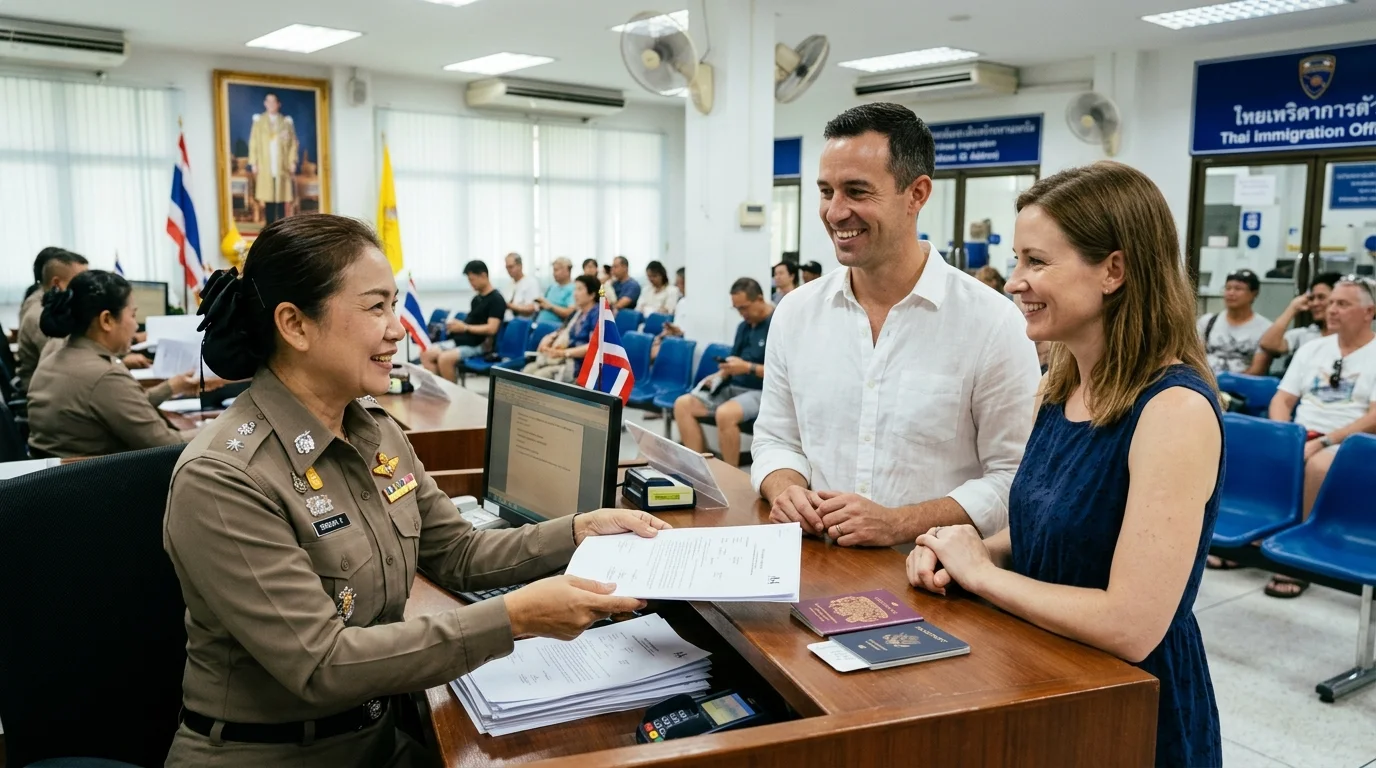
Your legal right to remain in the country dictates your ability to rent property, open bank accounts, and access public services. The Thai immigration system operates strictly on purpose-specific categories, meaning you cannot easily switch from a tourist entry to a long-term residency permit without leaving the country. Retirees over 50 typically apply for the Non-Immigrant O-A visa, which requires 800,000 THB (£17,700) in a Thai bank account or a monthly income of 65,000 THB (£1,440). Working professionals generally need a Non-Immigrant B visa sponsored by a Thai employer, who must also secure a separate work permit on your behalf before you commence employment. Remote workers and freelancers now have the option of the Destination Thailand Visa (DTV), granting a five-year validity with multiple 180-day entries, provided they hold 500,000 THB (£11,000) in savings. Wealthy investors or highly skilled professionals might consider the Long-Term Resident (LTR) visa or the Thailand Privilege programme, though these require significantly higher capital outlays starting from 900,000 THB (£20,000). Processing times at the Royal Thai Embassy in London vary, so initiate your application at least six weeks prior to departure. Identify your primary eligibility route before making any financial commitments, as visa rejections often stem from applying for the wrong category.
Discover the best places to retire in Thailand as a UK national. Compare living costs, healthcare, and lifestyle in Chiang Mai, Hua Hin, Phuket, and more.
| Visa Category | Primary Requirement | Validity Period | Target Applicant |
|---|---|---|---|
| Non-Immigrant O-A | 800,000 THB bank deposit or 65,000 THB monthly income | 1 Year (Renewable) | Retirees aged 50 and over |
| Non-Immigrant B | Corporate sponsorship and work permit | 1 Year (Renewable) | Locally employed professionals |
| Destination Thailand Visa (DTV) | 500,000 THB proof of funds and remote work portfolio | 5 Years (180 days per entry) | Remote workers and freelancers |
| Long-Term Resident (LTR) | $1 million USD assets or $80,000 USD annual income | 10 Years | High-net-worth individuals and specialists |
Managing Finances and Tax Obligations
Sponsored
Establishing a local financial footprint is crucial for handling daily transactions and meeting ongoing visa renewal requirements. Opening a Thai bank account as a UK national requires a long-term visa, a valid passport, and often a residency certificate from your local immigration office or the British Embassy. The main high street banks, such as Bangkok Bank, Kasikornbank, and Siam Commercial Bank, have differing internal policies depending on the branch manager, so expect some variation in required paperwork. You will need to transfer your initial funds using an international currency specialist rather than a standard high street bank to avoid poor exchange rates and high transfer fees. Additionally, Thailand recently changed its tax rules regarding foreign-sourced income. As of 2024, if you spend more than 180 days in the country within a calendar year, any foreign income remitted into Thailand is subject to personal income tax, regardless of the year it was earned. You must apply for a Tax Identification Number (TIN) at your local Revenue Department office once you establish tax residency. Understanding these tax implications early allows you to structure your UK pensions, investments, and savings efficiently. Always seek independent tax advice to ensure compliance with both HM Revenue & Customs and the Thai Revenue Department.
| Bank Name | Expat Accessibility | Minimum Opening Deposit | Mobile App Quality |
|---|---|---|---|
| Bangkok Bank | High (standard choice for expats) | 500 THB | Good English interface |
| Kasikornbank (KBank) | Medium (branch dependent) | 500 THB | Excellent English interface |
| Siam Commercial Bank (SCB) | Medium (strict on work permits) | 500 THB | Good English interface |
| Krungsri | High (partners with foreign banks) | 500 THB | Average English interface |
Finding Long-Term Accommodation

Securing a stable home base requires understanding local rental market dynamics, which differ significantly from the UK system. Most expats rent rather than buy, primarily because foreign nationals cannot own land in Thailand outright, though they can legally own apartment units freehold. The rental market moves rapidly, and estate agents expect you to view properties and sign a lease within a few days of your target move-in date. A standard residential lease runs for 12 months, requiring a two-month security deposit and the first month's rent upfront. For a modern one-bedroom apartment in central Bangkok areas like Sukhumvit or Silom, expect to pay between 20,000 THB (£440) and 45,000 THB (£1,000) per month. If you prefer a house or villa in regional areas like Chiang Mai or Hua Hin, monthly rents drop to between 15,000 THB (£330) and 30,000 THB (£660). Always insist on a contract with an inventory list in English and ensure utility bills are charged at the official government rate rather than marked up by the landlord. Apartments also carry common area maintenance (CAM) fees, which the landlord usually covers, but you must verify this in the contract. Renting a serviced apartment for your first month provides a low-risk landing pad while you scout permanent neighbourhoods in person.
| Accommodation Type | Average Monthly Rent (Bangkok) | Lease Flexibility | Best Suited For |
|---|---|---|---|
| Serviced Apartment | 35,000 THB - 70,000 THB | High (1-3 months) | First month landing pad |
| Modern Apartment | 20,000 THB - 45,000 THB | Low (12 months) | Single professionals and couples |
| Detached House/Villa | 50,000 THB - 120,000 THB | Low (12-24 months) | Families needing space |
| Townhouse | 30,000 THB - 60,000 THB | Low (12 months) | Long-term budget-conscious renters |
Setting Up Healthcare and Insurance
Securing reliable medical coverage is a non-negotiable step, as foreign nationals do not receive free healthcare in Thai state facilities. Thailand possesses an excellent private healthcare sector, particularly in Bangkok, Phuket, and Chiang Mai, where international hospitals rival those in the UK. A routine consultation with an English-speaking specialist typically costs between 1,500 THB (£33) and 3,000 THB (£66), but surgical procedures or emergency admissions run into hundreds of thousands of baht. Comprehensive international health insurance is therefore essential, and for certain visas, like the Non-Immigrant O-A retirement visa, it is a strict legal requirement. Policies vary widely based on age, pre-existing conditions, and coverage limits, with a healthy 50-year-old expecting to pay roughly 50,000 THB (£1,100) to 80,000 THB (£1,770) annually for inpatient cover. If you are employed locally on a Non-Immigrant B visa, you will be enrolled in the Thai Social Security system, which provides basic cover at designated public hospitals. However, most professionals still opt for private top-up insurance to access faster care and private hospital facilities without long waiting times. Do not enter the country without at least interim travel medical insurance to cover your initial transition period.
| Healthcare Option | Typical Cost | Coverage Scope | Target User |
|---|---|---|---|
| Premium International Insurance | 80,000 THB+ annually | Full inpatient and outpatient | Retirees and self-funded expats |
| Local Private Health Insurance | 35,000 THB - 60,000 THB annually | Primarily inpatient cover | Budget-conscious expats |
| Thai Social Security | 750 THB monthly (deducted from salary) | Basic care at assigned state hospital | Locally employed expats only |
| Out-of-Pocket Payment | 1,500 THB+ per visit | Pay as you go | Minor ailments and pharmacy visits |
Establishing Daily Life and Practical Services
Transitioning from a visitor to a resident involves configuring the utilities and digital services that make daily life function. Setting up a mobile phone is immediate; you can purchase a 5G tourist SIM at the airport and convert it to a cheaper post-paid monthly contract once you have your long-term visa and a local bank account. Major providers like AIS, TrueMove, and DTAC offer unlimited data packages for around 600 THB (£13) to 1,000 THB (£22) per month. Home internet is exceptionally fast and cheap compared to the UK, with gigabit fibre connections costing roughly 700 THB (£15) monthly. To register for home broadband, you must present your passport, visa, and a signed lease agreement at the provider's retail shop. Navigating transport requires downloading essential local applications; Grab and Bolt replace Uber for ride-hailing, while Foodpanda and Lineman handle food and grocery deliveries. Finally, you must familiarise yourself with the 90-day reporting rule, which requires all foreign residents to notify immigration of their current address every 90 days. Keep digital copies of your lease, passport bio page, and visa stamp on your phone, as you will need them repeatedly during your first month.
| Service Category | Primary Providers | Estimated Monthly Cost | Setup Requirements |
|---|---|---|---|
| Mobile Network | AIS, TrueMove, DTAC | 600 THB - 1,000 THB | Passport and visa |
| Home Broadband | 3BB, AIS Fibre, True | 600 THB - 900 THB | Passport, visa, and property lease |
| Ride-Hailing | Grab, Bolt, InDrive | Pay per journey | Download app and link bank card |
| Food Delivery | Foodpanda, Lineman, GrabFood | Pay per order | Download app and link bank card |
Managing Your Physical Relocation and Shipping
Moving your physical possessions across the world requires careful logistical planning and an understanding of Thai customs regulations. Shipping a full container of household goods from the UK takes approximately six to eight weeks by sea, while air freight takes around ten days but costs significantly more. Under Thai customs law, you can import used household goods tax-free only if you hold a one-year Non-Immigrant visa and a valid work permit, or a retirement visa. Without these specific documents, your shipment will incur heavy import duties based on the assessed value of the items. Electrical appliances from the UK will work on the Thai 220V grid, but the hot and humid climate can degrade certain electronics and wooden furniture over time. If you plan to bring pets, you must obtain an import permit from the Department of Livestock Development prior to travel and ensure all rabies vaccinations are strictly up to date. Many expats find it more economical to sell large furniture in the UK and buy replacements locally, as fully furnished rental properties are the standard across Thailand. Use a registered international removal company that offers door-to-door service and handles the complex customs clearance process on your behalf.
| Shipping Method | Transit Time | Cost Level | Best Suited For |
|---|---|---|---|
| Sea Freight (Full Container) | 6 to 8 weeks | High | Families moving complete households |
| Sea Freight (Part Load) | 8 to 12 weeks | Medium | Couples shipping boxes and small items |
| Air Freight | 7 to 14 days | Very High | Urgent essentials and documents |
| Excess Baggage | Immediate | Medium | Minimalist movers and digital nomads |
Costs and Budgeting
Calculating an accurate monthly budget prevents financial stress during your first year of residency. The cost of living varies drastically depending on your chosen location and lifestyle choices. A single professional living in a central Bangkok apartment, eating a mix of local street food and Western meals, and using the BTS Skytrain can live comfortably on 65,000 THB (£1,440) per month. In contrast, retiring to a regional city like Chiang Mai or Udon Thani drops the required baseline significantly, allowing a comfortable lifestyle for around 45,000 THB (£1,000) monthly. Your largest variable expense will be imported groceries and alcohol, which carry heavy import taxes. A block of imported cheddar cheese costs upwards of 300 THB (£6.60), and a bottle of imported wine costs upwards of 600 THB (£13), while local produce remains exceptionally cheap. Utilities run higher than many expect due to continuous air conditioning use, averaging 2,500 THB (£55) monthly. Remember to factor in annual costs like health insurance premiums and visa renewal fees, which are not reflected in your daily grocery receipts.
| Item | Monthly Cost (THB) | Monthly Cost (GBP approx) | Notes |
|---|---|---|---|
| Rent (1-bed apartment Bangkok) | 25,000 | 550 | Drops significantly outside the capital |
| Utilities (Electricity/Water) | 2,500 | 55 | Heavily dependent on air conditioning usage |
| Food and Groceries | 15,000 | 330 | Assumes a mix of local and imported goods |
| Transport (BTS/MRT/Taxis) | 3,000 | 66 | Lower if living close to your workplace |
| Mobile and Internet | 1,500 | 33 | Combined cost for fibre home broadband and 5G mobile |
Common Mistakes and How to Avoid Them
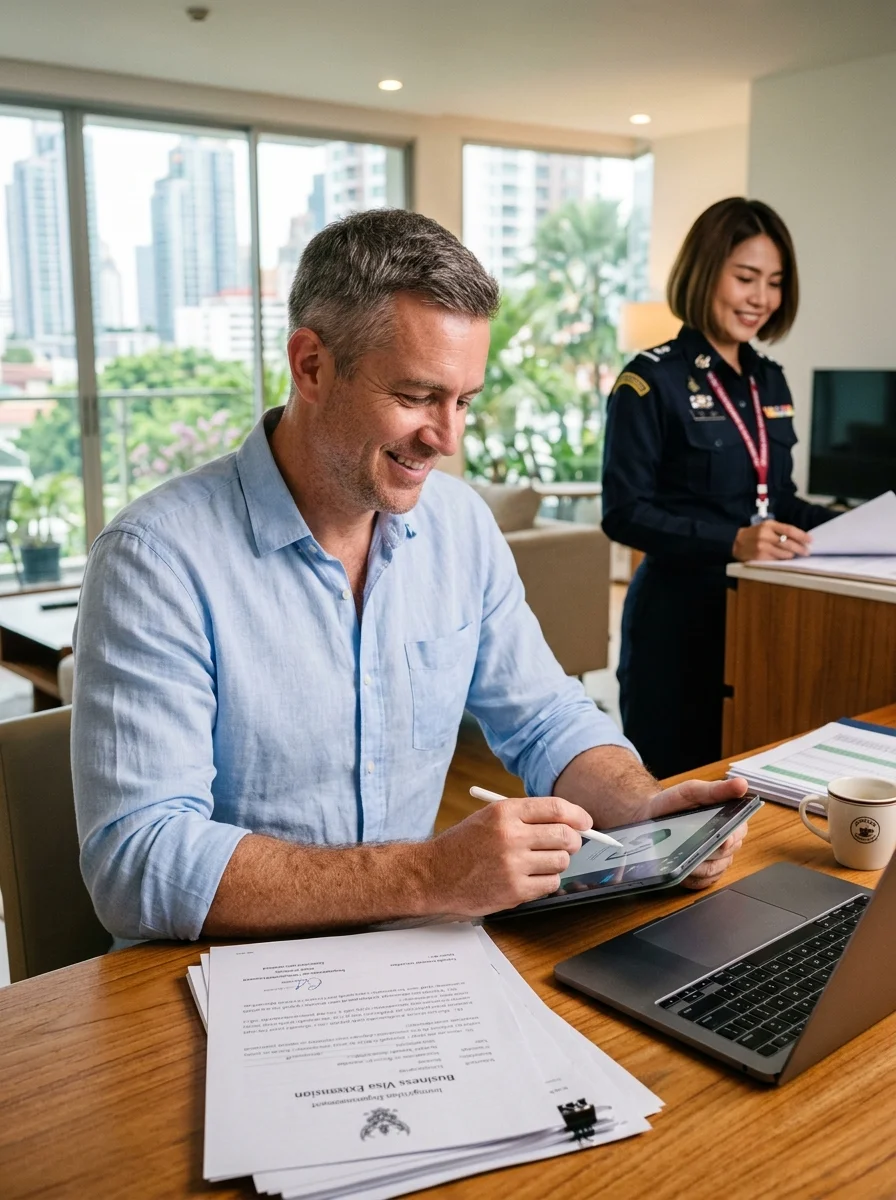
Arriving on a tourist exemption intending to switch to a work visa internally. This forces you to leave the country to apply abroad, wasting money on unexpected flights. Secure the correct Non-Immigrant visa in London before booking your ticket.
Signing a 12-month lease without viewing the neighbourhood at night. You might discover a noisy open-air bar directly outside your bedroom window. Rent a short-term serviced apartment initially to thoroughly scout potential permanent locations.
Relying entirely on high street bank transfers to move savings from the UK. You will lose significant money to poor exchange rates and hidden intermediary fees. Register with a dedicated foreign exchange broker to transfer funds efficiently.
Failing to file your mandatory 90-day address report with immigration. You face a fine of 2,000 THB and a mark on your file, complicating renewals. Set a calendar alert two weeks before your deadline to ensure compliance.
Practical Tips

Bring physical copies of your UK degree certificates and police clearance reports. Thai immigration and employers require original documents, and replacing them from abroad is a lengthy process.
Join local expat community groups on Facebook for your specific city before you arrive. These groups provide the most current, hyper-local advice on which immigration offices are currently processing applications fastest.
Download the Line messaging application immediately upon arrival. This app is the primary communication method for landlords, estate agents, and local businesses across the country.
Carry physical passport photos and photocopies of your visa stamp at all times during your first month. You need these repeatedly when setting up bank accounts, internet contracts, and registering your address.
Apply for a Thai driving licence as soon as you have a residency certificate. Using an International Driving Permit is only a temporary legal solution and complicates local insurance claims.
Purchase a quality water filter for your kitchen sink or use bottled water for drinking. Tap water in Thailand is generally not safe for consumption and can cause severe stomach upsets.
Keep your UK bank account open and maintain a UK postal address through a trusted family member. Many UK financial institutions will close your accounts if you officially declare a permanent move outside the country.
Quick Reference Table
| Item | Detail | Notes |
|---|---|---|
| Primary Visa Routes | Non-Immigrant O-A (Retirement), B (Work), DTV (Remote) | Never arrive on a tourist stamp if moving permanently |
| Minimum Income/Savings | 800k THB savings or 65k THB income (Retirement) | Funds must season in a Thai bank account before application |
| Average Monthly Cost | 45,000 THB - 85,000 THB (£1,000 - £1,880) | Highly dependent on location and alcohol consumption |
| Typical Lease Terms | 12 months minimum | Requires 2 months deposit and 1 month rent upfront |
| Healthcare Options | Private international insurance | Mandatory for O-A visa holders; recommended for all |
| Best Expats Areas | Bangkok, Chiang Mai, Phuket, Hua Hin | Bangkok offers the most employment opportunities |
| Primary Language App | Line | Essential for communicating with landlords and businesses |