Buying Property in Koh Samui

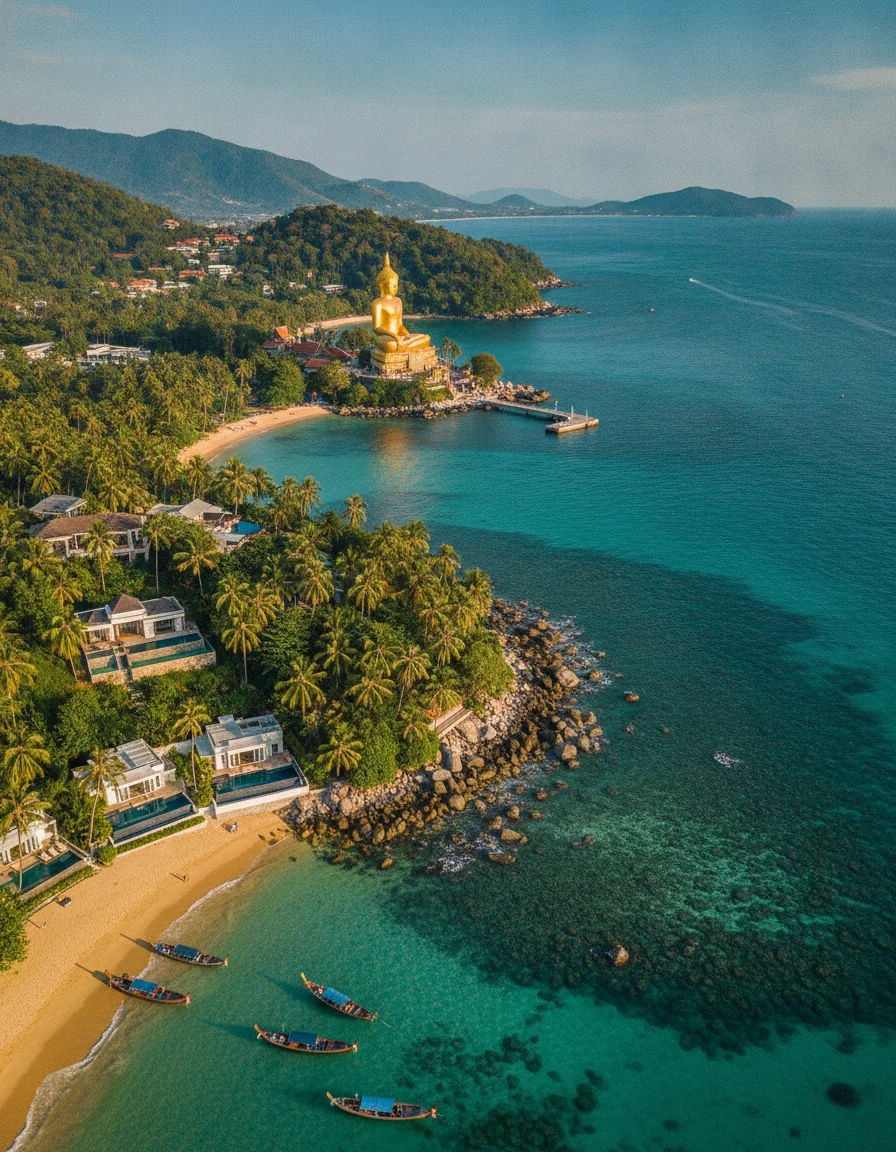
Foreign buyers cannot legally own land outright in Koh Samui, forcing UK investors to rely on 30-year leasehold structures or Thai corporate ownership to acquire the island's high-yielding luxury villas. The historically high incidence of title deed irregularities and strict hillside building regulations on the island mean standard legal checks are rarely sufficient to protect your capital.
This guide explains the legal frameworks, geographical markets, and financial realities of buying and investing in Koh Samui property as a UK national. It covers leasehold agreements, corporate land ownership structures, realistic villa yields, and the specific infrastructure challenges affecting the island. This page is for serious buyers looking to acquire holiday villas or long-term investments. It will help you navigate the highly unregulated local market and avoid costly encroachment disputes.

Ownership Structures for Villas and Land
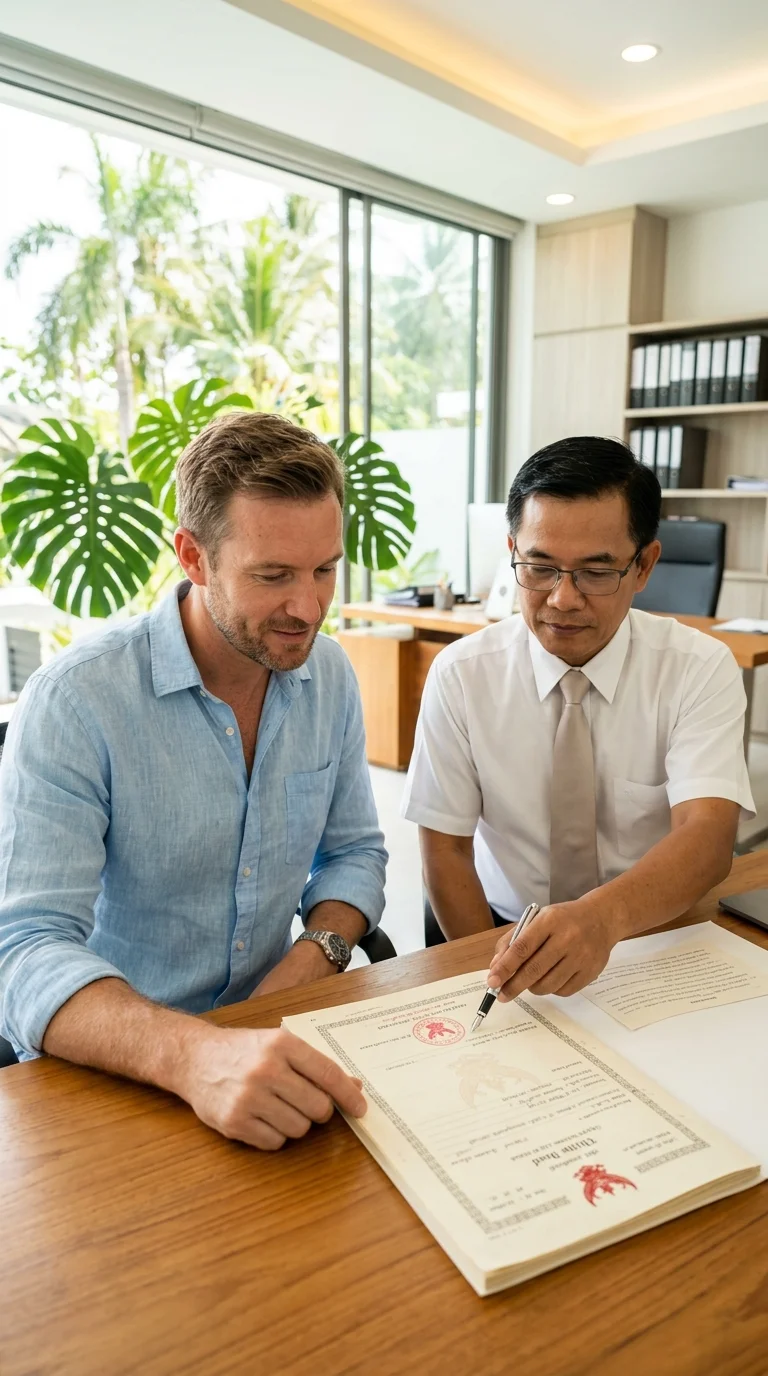
You must navigate strict foreign ownership laws to acquire a villa in Koh Samui, as direct freehold ownership of land is illegal for non-Thais. Most UK buyers opt for a 30-year registered leasehold, which provides the most legally secure right to occupy the land while owning the physical building outright. The Land Department registers this lease directly on the Chanote title deed, granting you statutory protection for the duration of the term. A more complex alternative involves setting up a Thai Limited Company to hold the freehold land title. This route requires at least 51% of the shares to be held by Thai nationals, meaning you must carefully structure shareholder agreements and voting rights to maintain control over the asset. The Thai government heavily scrutinises the use of 'nominee' shareholders, making it critical to establish a legitimate trading company rather than a shell corporation. Choosing the wrong corporate structure exposes you to forced liquidation and the loss of your investment. Always secure independent legal counsel to structure your ownership legally and safely.
Discover the realistic rental yields and capital appreciation rates for Thai property. Learn how to calculate net returns, taxes, and avoid developer traps.
| Ownership Route | Legal Security | Setup Complexity | Key Limitation |
|---|---|---|---|
| 30-Year Leasehold | High (registered at Land Office) | Low | Expires after 30 years |
| Thai Limited Company | Medium (subject to government scrutiny) | High | Requires legitimate Thai shareholders |
| Direct Freehold | None | N/A | Illegal for foreign nationals |
| Usufruct | Medium | Low | Often difficult to secure for commercial investments |
Key Investment Locations Across Koh Samui
The location of your Koh Samui property dictates both your target tenant demographic and your capital appreciation potential. Chaweng and Bophut dominate the high-end holiday rental market, offering immediate access to the island's primary amenities and the airport. Properties here command premium prices, but the density of development means new plots with unobstructed sea views are increasingly rare. Maenam appeals to the growing long-stay expat community and retirees who prefer a quieter environment while remaining within a short drive of international schools and hospitals. Lamai serves as a middle-ground market, balancing tourist appeal with slightly lower entry prices than Chaweng. The southern tip around Ban Tai and Taling Ngam remains relatively undeveloped, attracting investors looking for large plots and absolute privacy. You will pay a premium for infrastructure in these remote southern areas, as connecting water and electricity to isolated hillside plots requires significant capital. Evaluate the target market carefully before committing to a specific geographical zone.
| Location | Primary Market | Investment Profile | Entry Price for 3-Bed Villa |
|---|---|---|---|
| Bophut / Chaweng Noi | Short-term holiday rentals | High yield, high capital cost | 18,000,000 THB (£391,000) |
| Maenam | Long-stay expats & retirees | Steady yield, medium capital cost | 12,000,000 THB (£260,000) |
| Lamai | Mixed short and long-term | Moderate yield, lower entry cost | 10,000,000 THB (£217,000) |
| Ban Tai / South Coast | Luxury private retreats | Capital appreciation, low yield | 25,000,000 THB (£543,000) |
Purchase Prices and Rental Yields

Rental yields on Koh Samui vary dramatically based on the property tier and the severe seasonal fluctuations of the local tourism market. A standard three-bedroom pool villa in a managed estate typically costs between 12,000,000 THB (£260,000) and 18,000,000 THB (£391,000), generating gross annual yields of 6% to 8%. High-end luxury villas with panoramic sea views command prices upwards of 40,000,000 THB (£869,000) and cater exclusively to the short-term holiday market. These premium properties can generate substantial daily rates during the peak seasons from December to February and July to August. However, you must account for the monsoon season in October and November, where occupancy rates frequently drop to zero. The growing community of digital nomads and long-stay expats provides an alternative strategy for investors seeking stable, year-round income rather than high-season spikes. Long-term rentals lower your marketing and management costs but generally cap your gross yield at around 5%. Model your cash flow assuming a conservative 50% annual occupancy rate to avoid financial shortfalls during the rainy season.
| Property Tier | Typical Purchase Price | Target Tenant | Expected Gross Yield |
|---|---|---|---|
| Mid-Market Pool Villa | 12m - 18m THB (£260k - £391k) | Long-stay expats / families | 5% - 7% |
| Premium Sea View Villa | 25m - 40m THB (£543k - £869k) | High-end holidaymakers | 7% - 10% |
| Ultra-Luxury Estate | 60m+ THB (£1.3m+) | Ultra-high-net-worth tourists | Variable (highly seasonal) |
| Off-Plan Estate Villa | 10m - 15m THB (£217k - £326k) | Mixed short/long-term | 6% - 8% |
Infrastructure Limits and the Airline Monopoly

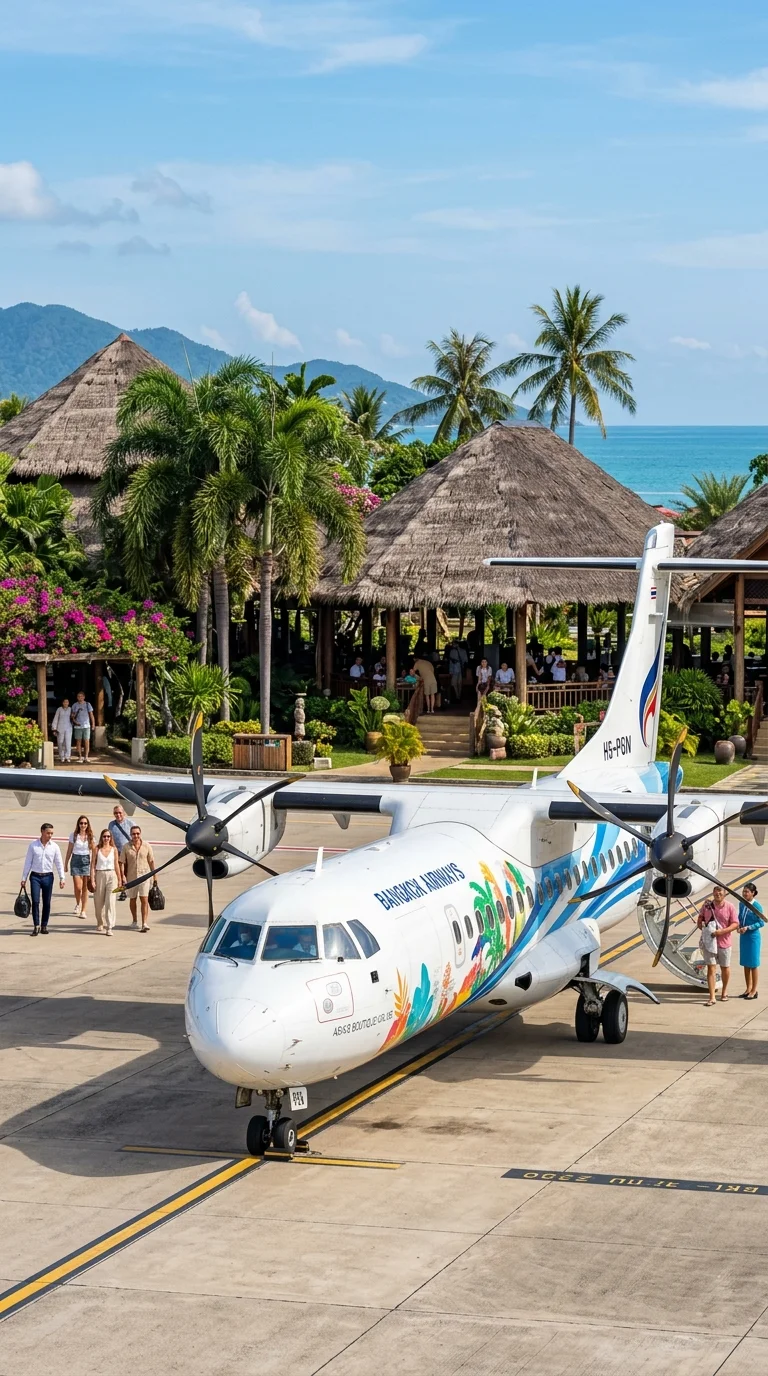
Koh Samui's distinct infrastructure heavily influences both property values and the long-term viability of your investment. Bangkok Airways privately owns the island's airport, effectively operating a monopoly that keeps flight prices significantly higher than those to Phuket or mainland destinations. This restricts mass tourism and limits overall arrival numbers, which protects the island's high-end appeal but caps the total pool of potential rental tenants. You must also evaluate the island's limited municipal infrastructure before purchasing a villa. Many hillside developments do not connect to the government water grid, forcing owners to rely on deep wells or expensive private water deliveries during the dry season. Electricity supply in remote areas frequently suffers from voltage drops and outages, necessitating the installation of private generators. Properties with reliable, direct connections to government water and the Provincial Electricity Authority (PEA) grid command higher resale values and suffer fewer tenant complaints. Always verify the utility sources and exact billing rates before signing a purchase agreement.
| Infrastructure Element | Market Impact | Risk Factor | Mitigation Strategy |
|---|---|---|---|
| Airport Monopoly | Keeps tenant demographic high-end | Limits total tourist volume | Focus on luxury or long-stay markets |
| Water Supply | Dictates running costs | Dry season shortages | Verify deep well access or large storage tanks |
| Electricity Grid | Affects tenant satisfaction | Frequent outages in remote areas | Install backup generators or solar systems |
| Hillside Roads | Determines accessibility | Steep roads deter long-term tenants | Ensure access roads are concrete and graded |
Due Diligence and Title Deed Risks
The historically high incidence of title deed irregularities on Koh Samui makes rigorous due diligence the most critical phase of your acquisition. You must verify that the land holds a full Chanote title deed, which is the only document providing accurately surveyed GPS boundaries. Some rural plots still use Nor Sor 3 Gor titles, which lack exact boundary markers and frequently lead to encroachment disputes with neighbours or the forestry department. Koh Samui also enforces strict environmental and zoning regulations based on the elevation and slope of the land. Building regulations severely restrict the height, size, and design of structures located more than 80 metres above sea level or on slopes exceeding a 35-degree gradient. Developers sometimes sell off-plan hillside plots that cannot legally support the promised villa design. A lawyer must conduct a physical topographical survey and cross-reference it with the local municipal office to ensure the land is legally buildable. Never hand over a reservation fee until your legal representative confirms the title is clean and the zoning permits your intended use.
| Title / Regulation | Definition | Investment Risk | Required Action |
|---|---|---|---|
| Chanote | Full freehold title deed | Low | Verify name and encumbrances at Land Office |
| Nor Sor 3 Gor | Certificate of use (un-surveyed) | High (boundary disputes) | Upgrade to Chanote before purchase |
| Slope Regulations | Building limits based on gradient | High (cannot build legally) | Commission a topographical survey |
| Elevation Zones | Restrictions above 80m and 140m | High (design restrictions) | Cross-check architectural plans with zoning laws |
Transaction Costs and Ongoing Fees
You must budget for several transaction costs and ongoing taxes when acquiring property in Koh Samui. The Land Department levies a transfer fee of 2% on the appraised value of the property, which buyers and sellers typically split equally. If the seller has owned the property for less than five years, a Specific Business Tax of 3.3% applies; otherwise, a Stamp Duty of 0.5% is charged. The seller usually absorbs these specific taxes, but aggressive developers may try to pass them onto the buyer. Legal fees for title searches, contract review, and representation at the Land Office generally range from 50,000 THB (£1,080) to 100,000 THB (£2,170). Property agents receive their commission, usually between 3% and 5%, directly from the seller. Once you own the villa, you must pay an annual land and building tax, which maxes out at 0.3% of the appraised value for residential properties. Factor these costs into your initial budget to ensure you have sufficient capital to complete the transaction safely.
| Cost Item | Rate or Amount | Paid By | Notes |
|---|---|---|---|
| Transfer Fee | 2% of appraised value | Usually split 50/50 | Paid at the Land Department |
| Specific Business Tax | 3.3% of registered value | Seller | Applies if owned for less than 5 years |
| Stamp Duty | 0.5% of registered value | Seller | Applies if Specific Business Tax does not |
| Legal Fees | 50,000 - 100,000 THB | Buyer | Varies based on transaction complexity |
| Agent Commission | 3% - 5% of sale price | Seller | Built into the asking price |
| Annual Property Tax | Up to 0.3% of appraised value | Buyer | Paid annually to the local municipality |
Common Mistakes and How to Avoid Them

Ignoring slope and elevation regulations is a frequent error. Buyers purchase cheap hillside land only to discover municipal laws prohibit building a villa on a gradient exceeding 35 degrees. You must hire an independent surveyor to conduct a topographical assessment before signing any land purchase contract.
Using illegal nominee shareholder structures exposes your entire capital to seizure. Setting up a Thai company with local staff who have no actual financial involvement violates the Foreign Business Act. You must structure corporate ownership using legitimate Thai business partners and compliant shareholder agreements.
Accepting developer-drafted lease agreements without review heavily favours the seller. These contracts often lack succession clauses, meaning your 30-year lease could terminate immediately if you pass away. Ensure your lawyer inserts explicit clauses guaranteeing the lease transfers to your heirs.
Skipping infrastructure due diligence leads to crippling operational costs. Buyers assume a villa has government water and electricity, only to face exorbitant monthly bills from private providers. Always demand copies of recent utility bills to verify the exact source and tariff rate.
Practical Tips for Koh Samui Buyers
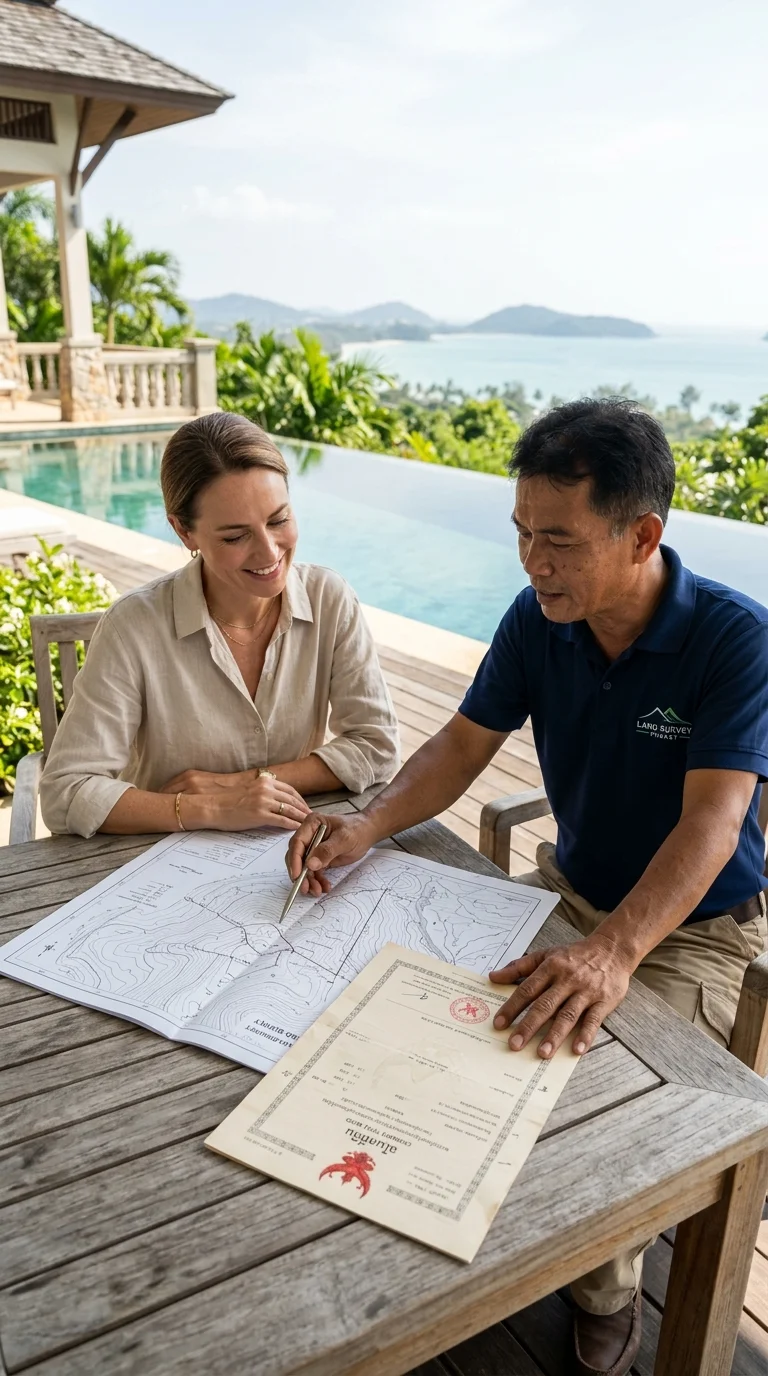
Transfer your funds from the UK into Thailand as foreign currency. The receiving Thai bank must execute the conversion to generate the Foreign Exchange Transaction Form (FETF) required for property registration.
Verify the access road status on the title deed. Many hillside villas use private roads owned by third parties, which can lead to unexpected toll fees or blocked access if disputes arise.
Request the environmental impact assessment for large off-plan estates. Koh Samui developers building more than 79 units must secure this approval before construction, and failing to check this delays your completion date indefinitely.
Audit the management company of any resort-style villa. Poor estate management rapidly degrades communal areas, which destroys your rental yields and makes the property impossible to sell.
Check the water storage capacity of the villa. A property must hold at least a two-week supply in underground tanks to survive the dry season without forcing you to buy expensive trucked water.
Insist on a snagging inspection before making the final payment. The humid, tropical climate of Koh Samui quickly exposes poor waterproofing and foundational settling that you must force the developer to fix.
Quick Reference Table
| Item | Detail | Notes |
|---|---|---|
| Foreign Ownership Route | 30-year leasehold or Thai Company | Direct freehold land ownership is illegal |
| Foreign Quota | N/A for villas | Applies only to apartments (rare in Samui) |
| Accepted Title Deeds | Chanote (preferred) | Avoid Nor Sor 3 Gor without upgrading |
| Typical Purchase Costs | 1% - 2% of price | Excludes legal fees and optional surveys |
| Fund Transfer Requirement | FETF document required | Funds must enter Thailand in foreign currency |
| Legal Representation | Highly recommended | Essential for complex local due diligence |
| Typical Timescale | 4 to 8 weeks | Extends significantly for off-plan builds |