Koh Samui
Despite its current status as Thailand’s second-largest island, Koh Samui was so isolated until the late 20th century that there were no roads, meaning a simple crossing of its mountainous interior required a full day's trek through dense coconut groves. Today, those same groves are intersected by a modern ring road linking upmarket international resorts with centuries-old Buddhist temples.
Situated in the Gulf of Thailand within Surat Thani Province, Koh Samui is a highly developed island destination that balances high-end tourism with coastal scenery. Spanning 228 square kilometres, it attracts travellers seeking comfort, reliable infrastructure, and direct air access. The island caters heavily to families, couples, and luxury holidaymakers who want to avoid roughing it, offering everything from international hospitals to fine dining. While parts of the coastline are heavily commercialised, the forested interior and quieter northern shores retain a slower, more traditional rhythm.

The Character and Setting of Koh Samui
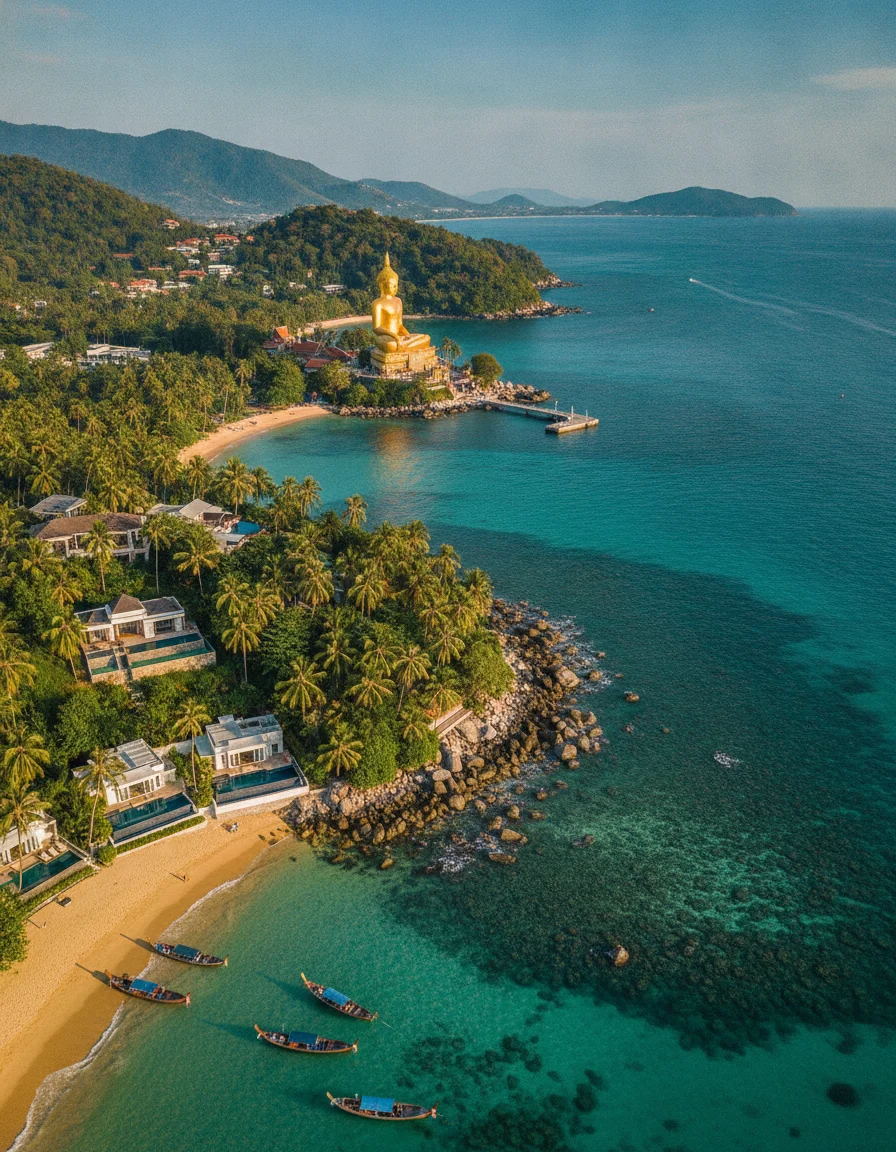
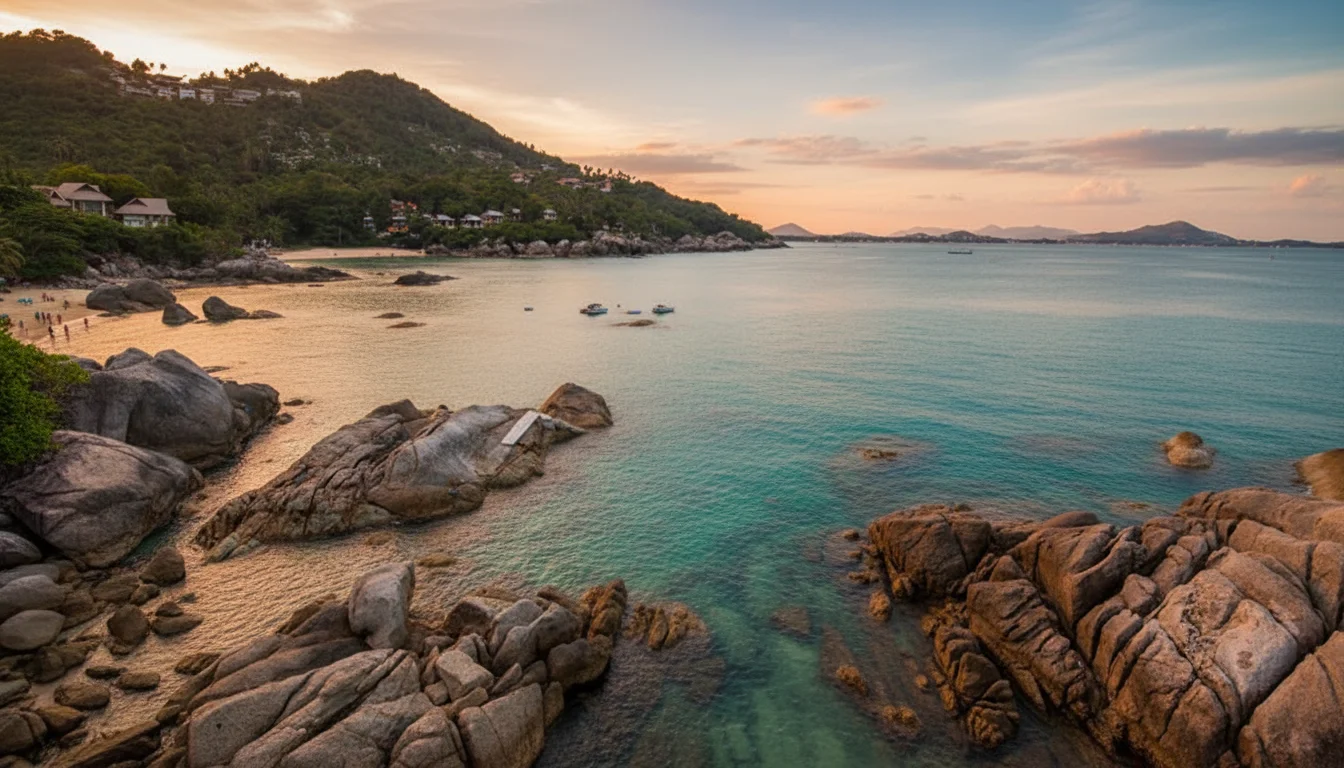
Koh Samui's landscape is defined by its mountainous, jungle-clad interior that slopes down to meet a fringe of sandy bays and coconut plantations. The 51-kilometre-long Route 4169 ring road circles the island, connecting the busy eastern tourism hubs of Chaweng and Lamai to the quieter, village-like northern shores of Maenam and Bophut. This geography means you can transition from highly developed, westernised shopping zones to traditional fishing communities within a twenty-minute drive. Along the coast, massive granite boulders break up the shoreline, while the interior peaks reach altitudes of over 600 metres, shielding small-scale durian and rubber farms. Development has been rapid since the international airport opened in 1989, turning what was once a backpacker haven into a highly structured holiday environment. You will find that while the east coast is dominated by neon signs and multi-storey retail complexes, the south remains comparatively untouched, characterised by mangroves and quiet mudflats. For those who want to experience the island’s original geography, a drive through the central hills offers a glimpse of the old agricultural trade.
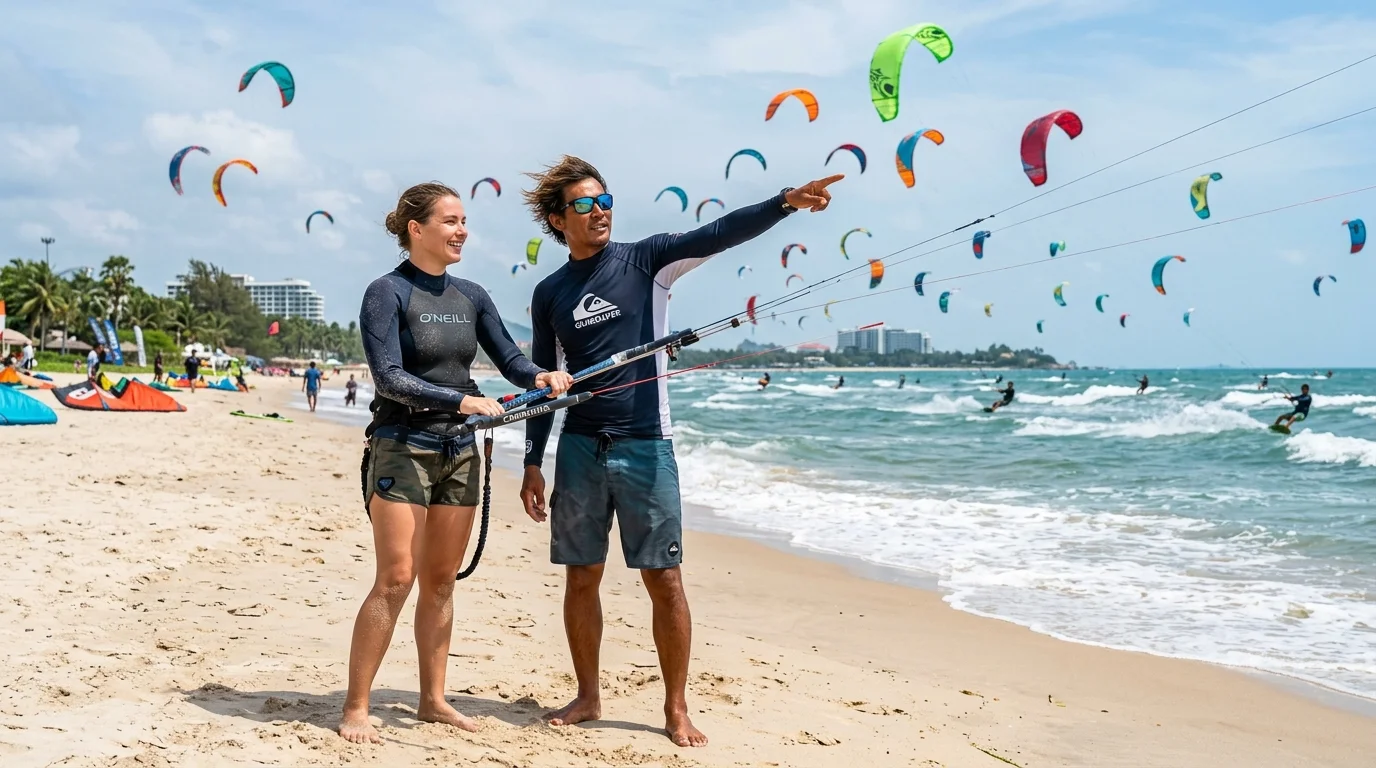
Plan your Thailand water sports adventure. Discover the best spots for kitesurfing, kayaking, and rafting, plus essential safety, costs, and seasonal tips.
Key Landmarks and Coastal Icons
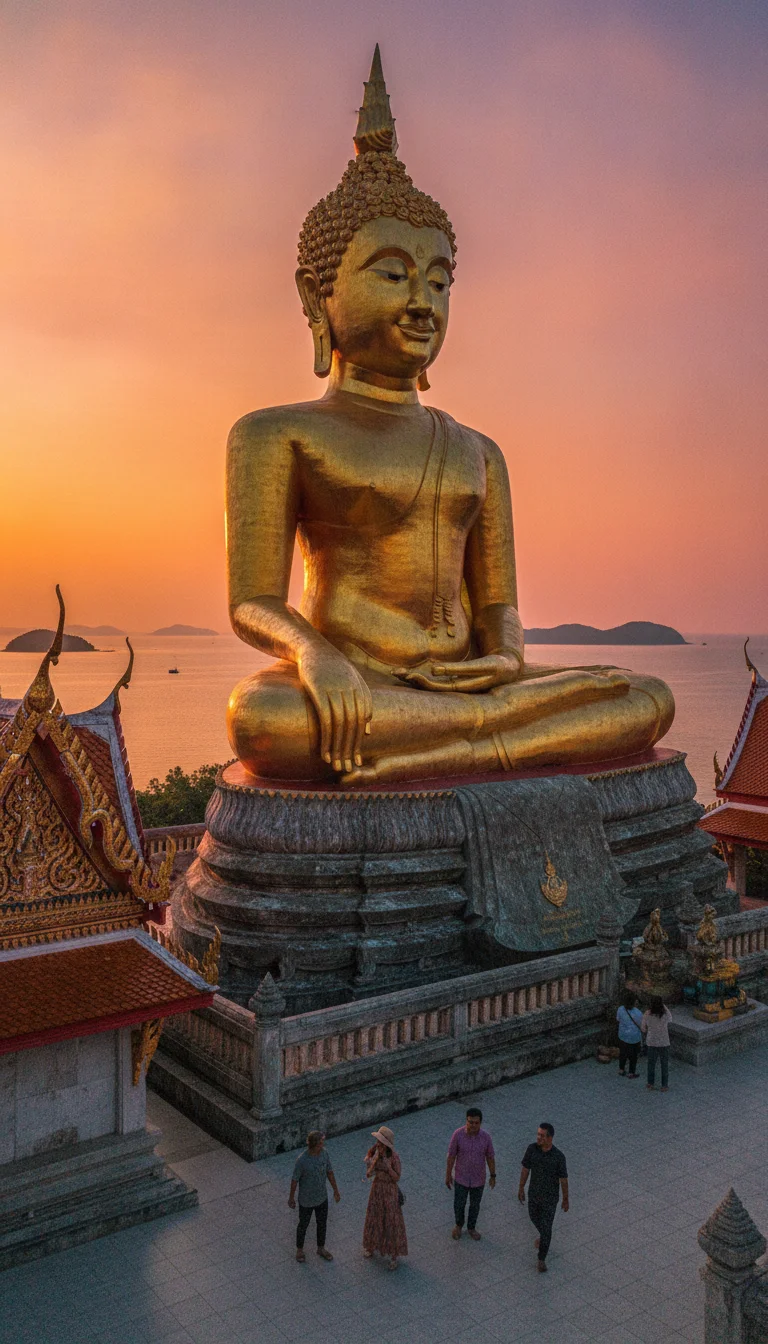
The cultural and physical identity of Koh Samui is anchored by giant seaside shrines and unusual geological formations along its popular east coast. The most recognisable landmark is Wat Phra Yai, or the Big Buddha Temple, which features a golden 12-metre-tall statue sitting on a small rocky island connected to the main coast by a causeway. Located off Route 4171, this temple is free to enter, though donations are appreciated, and it requires respectful attire covering shoulders and knees. Further south, past the busy sands of Chaweng Beach, lie the Hin Ta and Hin Yai rock formations, which are natural granite structures resembling male and female genitalia. These rocks attract crowds of visitors daily, and the path leading to them is lined with stalls selling sweet treats and local souvenirs. Chaweng Beach itself remains the primary coastal draw, offering a seven-kilometre stretch of soft white sand bordered by shallow, warm water. It is the busiest beach on the island, meaning you will encounter jet-ski operators, beach vendors, and sunbed rentals throughout the day. Arrive at Wat Phra Yai before 09:00 to avoid the midday heat and the tour buses that arrive from the larger resorts.
Island Gastronomy and Southern Flavours
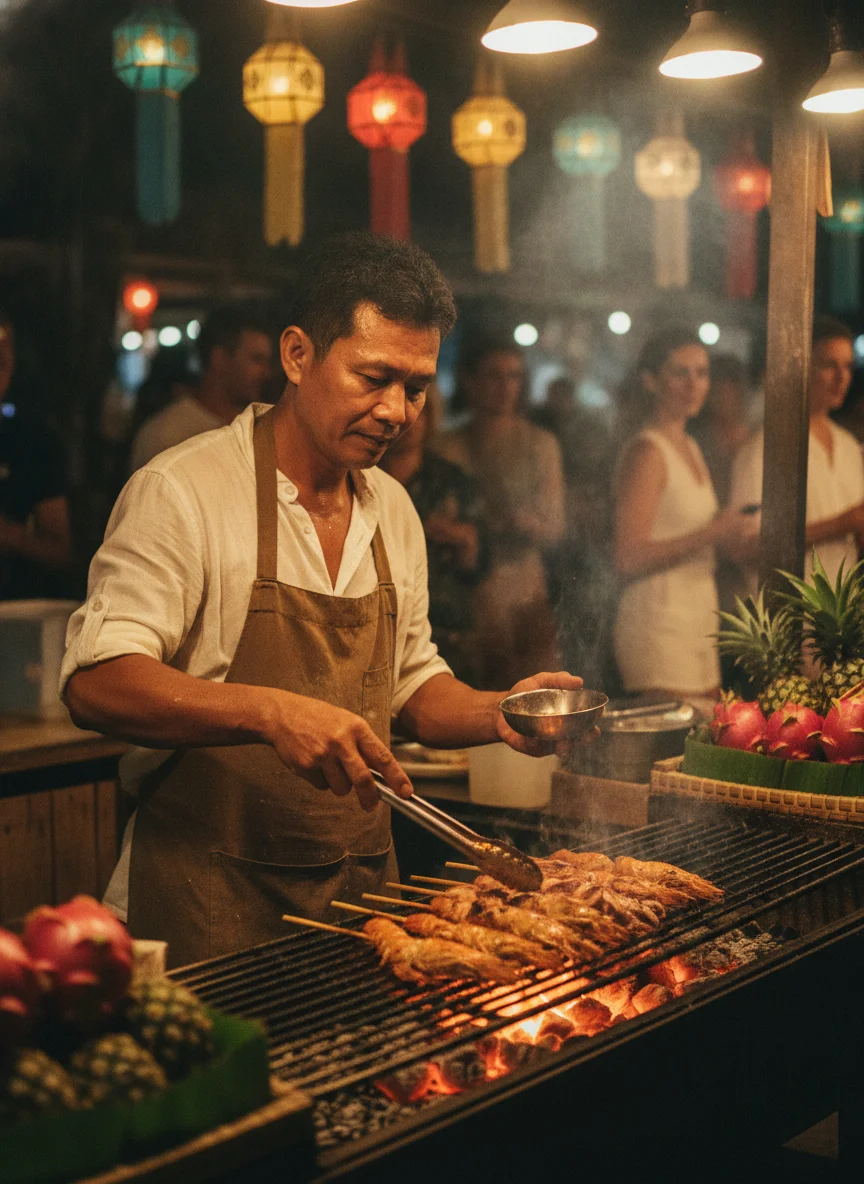
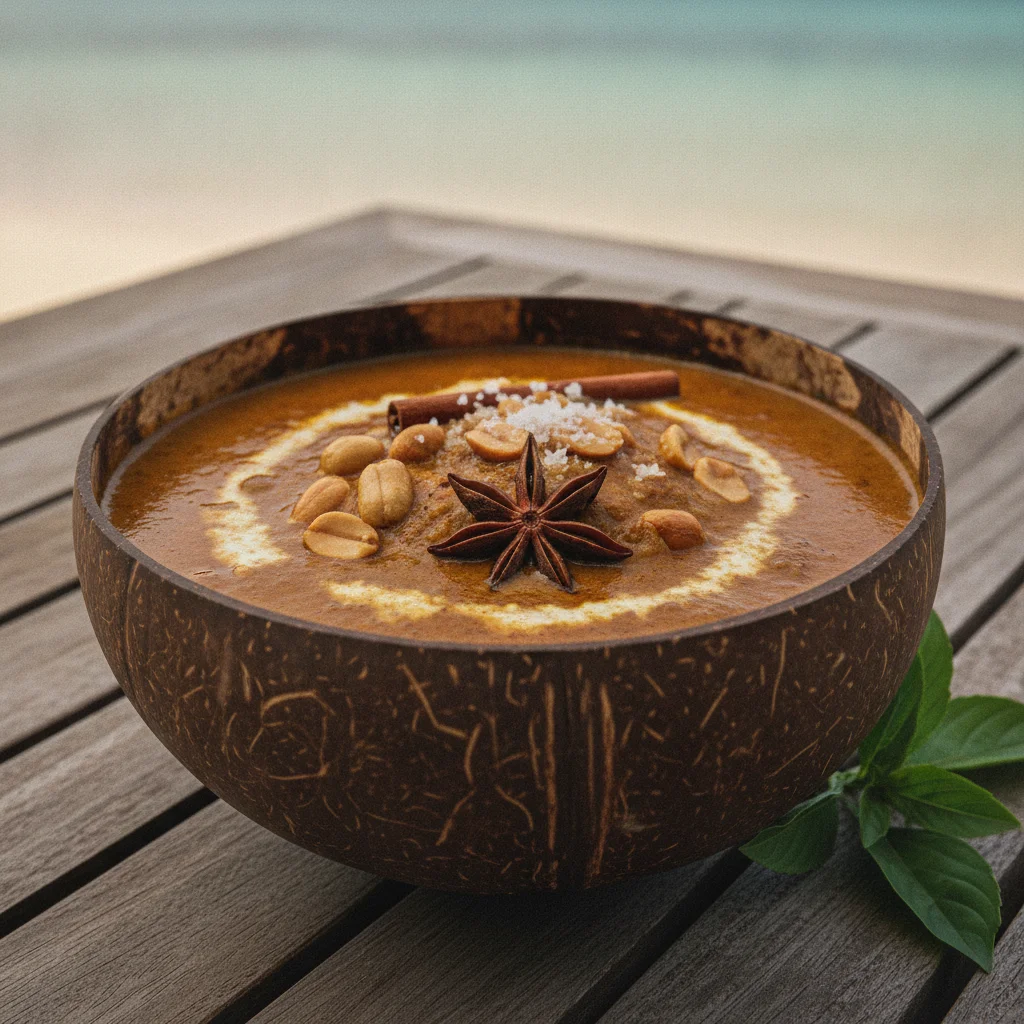
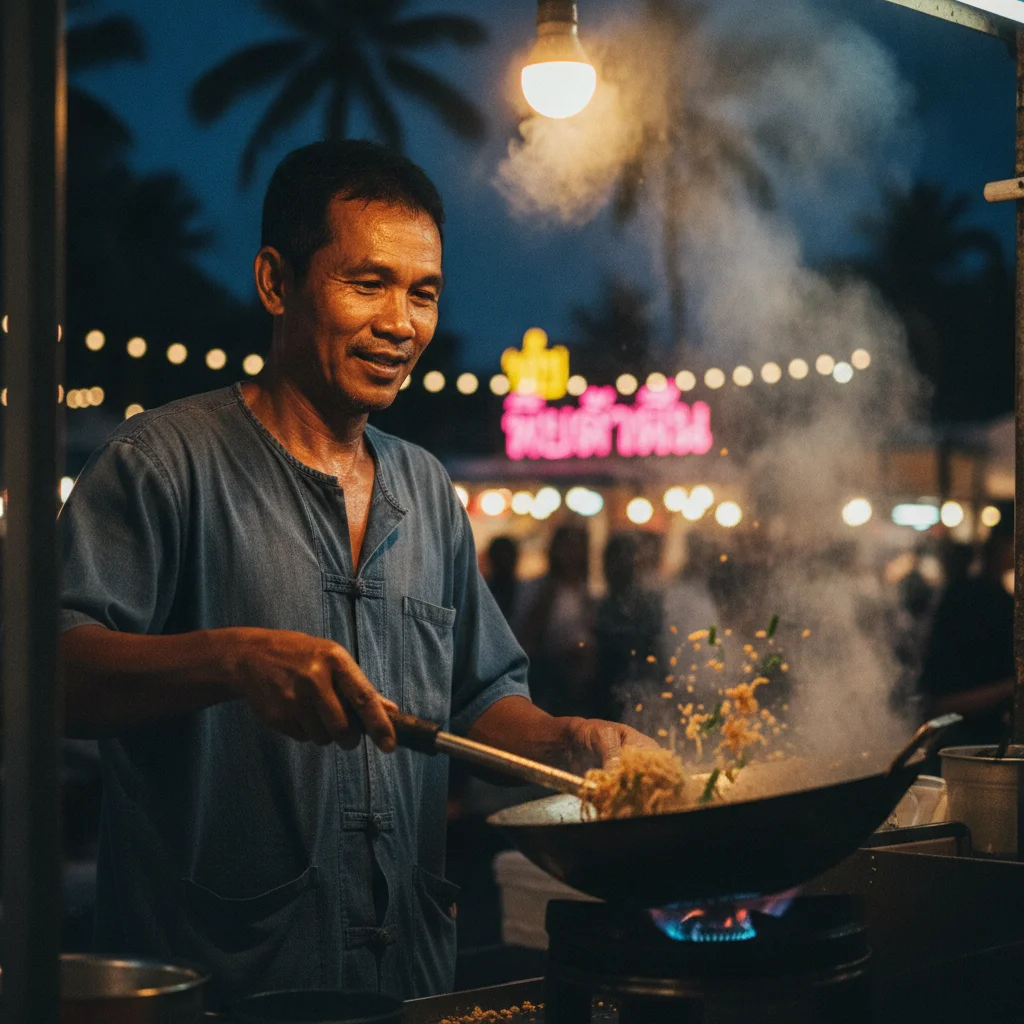
Dining on Koh Samui spans everything from basic night market stalls serving southern Thai curries to cliffside international restaurants. The local cuisine is heavily influenced by southern Thai spices, featuring coconut-heavy dishes and fresh seafood caught by local fishermen. You can sample traditional kalamae, a sweet, sticky candy made from coconut milk, palm sugar, and glutinous rice, which is sold in paper-wrapped pyramids near Hin Ta Hin Yai for roughly 50 THB (£1.10) per bag. For a more elevated dining experience, the Jungle Club, set high on the hills overlooking Chaweng Bay, serves a highly rated massaman beef curry for around 350 THB (£7.80). If you want to experience authentic local life, the Bophut Fisherman's Village Friday Night Market offers stalls selling spicy papaya salad, grilled squid skewers, and pad Thai starting from 60 THB (£1.30). Southern Thai food is notoriously spicy, so remember to specify your spice tolerance when ordering local specialities like khua kling (dry fried minced pork) or gaeng som (sour orange curry). To secure a coveted edge-of-the-deck table overlooking the bay at the Jungle Club, you must book at least three days in advance.
Where to Stay from Budget to Luxury
Accommodation on Koh Samui is highly segmented by budget and beach location, ranging from basic wooden bungalows to ultra-luxury villas. For budget travellers, Maenam Beach on the northern shore remains one of the last bastions of affordable accommodation, where traditional fan-cooled beach bungalows can still be rented for 600 THB (£13.30) per night. Mid-range travellers and families are best served by Chaweng or Choeng Mon, where resorts like the OZO Chaweng Samui offer modern amenities and swimming pools for around 3,500 THB (£77.80) per night. At the ultra-luxury end of the spectrum, international properties dominate the secluded headlands, with the W Koh Samui in Mae Nam charging upwards of 25,000 THB (£555) per night for its private pool villas. It is essential to choose your area wisely, as staying in the quiet south means high taxi fares if you want to visit the restaurants of the north. Look for accommodation on the northern beaches if you want to avoid the late-night music and foot traffic associated with Chaweng's nightlife district.
| Accommodation Tier | Typical Cost per Night (THB / GBP) | Recommended Location | Key Features |
|---|---|---|---|
| Budget Bungalow | 600 THB - 1,200 THB (£13.30 - £26.70) | Maenam Beach | Fan or basic AC, beachside access, rustic wooden build |
| Mid-Range Family Resort | 3,500 THB - 6,000 THB (£77.80 - £133.30) | Chaweng or Choeng Mon | Swimming pools, kids' clubs, western breakfast, beachfront |
| Upscale / Luxury Resort | 15,000 THB - 35,000 THB (£333.30 - £777.80) | Mae Nam or Taling Ngam | Private plunge pools, cliffside views, wellness spas, fine dining |
Marine Adventures and the Forested Interior
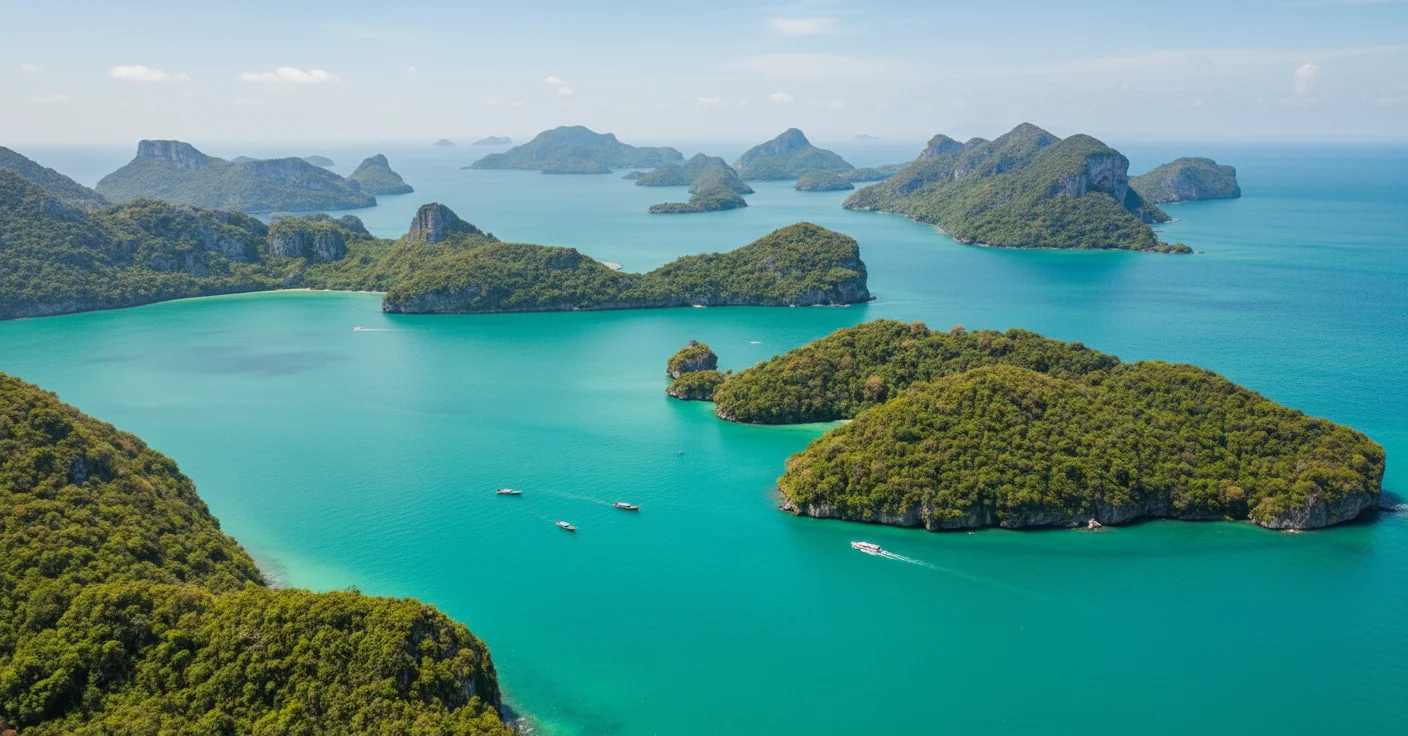
Koh Samui serves as the primary base for exploring the dramatic limestone archipelagos of the western Gulf of Thailand. The premier activity is a day trip to Ang Thong National Marine Park, a pristine cluster of 42 islands featuring towering limestone cliffs, hidden lagoons, and dense rainforest. Speedboat tours depart daily from Nathon Pier on the west coast, costing around 2,000 THB to 2,500 THB (£44.40 to £55.60) per person, which usually includes snorkelling gear, lunch, and sea kayaking. Back on the main island, the forested interior offers hiking trails to cascades like the Na Muang Waterfalls, where Na Muang 1 is easily accessible by foot, while Na Muang 2 requires a steeper, more challenging climb. Be aware that the natural pools at these waterfalls can dry up significantly during the dry season from March to May, making them less impressive to visit. Always wear sturdy water shoes for the Ang Thong day trips, as climbing the steep wooden stairs to the Koh Mae Koh viewpoint is slippery and unsafe in flip-flops.
Getting There and Getting Around
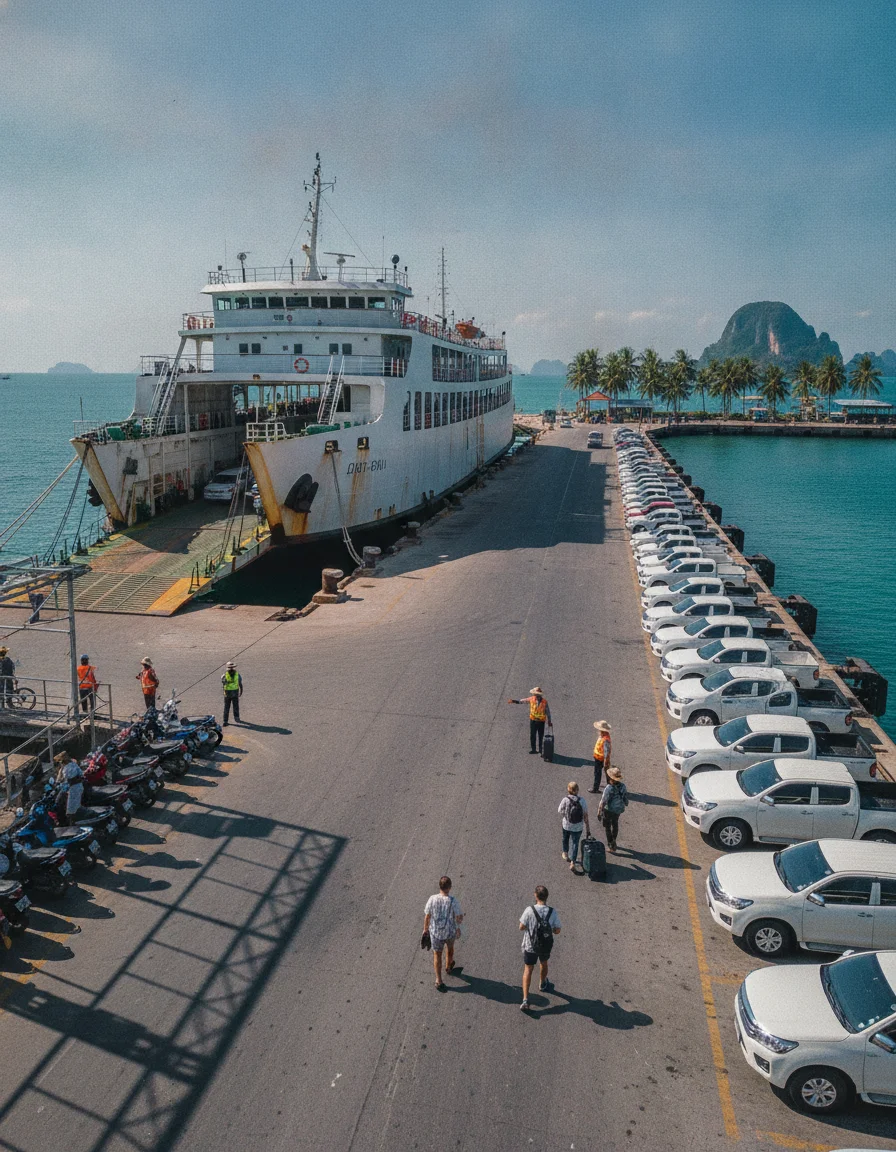
Reaching Koh Samui from Bangkok is straightforward, with the fastest option being a direct flight operated by Bangkok Airways into Samui International Airport (USM). These flights take approximately one hour and fifteen minutes, with prices typically starting around 3,000 THB (£66.70) one way. Budget travellers can opt for a multi-modal journey, taking an overnight train from Bangkok's Krung Thep Aphiwat Central Terminal to Surat Thani, followed by a shuttle bus and a ferry crossing from Donsak Pier to Nathon Pier for about 450 THB (£10.00) in total. Once on the island, the most common way to travel is via the local songthaews (converted pickup passenger trucks) that run along the main ring road. A ride on these public trucks costs between 50 THB (£1.10) and 150 THB (£3.30) depending on the distance. Alternatively, scooter rentals cost around 250 THB (£5.60) per day, but you must have an International Driving Permit and proper insurance to ride legally. App-based taxi services like Grab and Bolt operate widely on the island, although their rates are significantly higher than in Bangkok.
Costs and Budgeting
Koh Samui is one of the more expensive island destinations in Thailand, primarily due to the airport monopoly and high local taxi prices. A budget traveller should plan to spend at least 1,500 THB (£33.30) per day, which covers a hostel bed or basic fan room, street food meals, and songthaew transport. A mid-range budget of 4,000 THB (£88.90) per day allows for a comfortable air-conditioned resort room, meals at casual sit-down restaurants, scooter rental, and occasional guided excursions. For luxury holidaymakers, daily costs easily exceed 10,000 THB (£222), enabling stays at premium beach resorts, fine dining, private boat charters, and spa treatments. While still offering excellent value compared to European beach destinations, you will find your money does not go quite as far here as it would in northern Thailand or on lesser-known islands like Koh Lanta.
| Item | Budget (THB) | Mid-Range (THB) | Notes |
|---|---|---|---|
| Beach Bungalow / Hotel Room | 600 THB | 3,500 THB | Budget is fan-only; mid-range includes AC and pool |
| Local Meal | 80 THB | 300 THB | Budget is night market; mid-range is beachfront restaurant |
| Daily Transport | 100 THB | 250 THB | Budget is shared songthaew; mid-range is scooter rental |
| Island Day Trip | 500 THB | 2,200 THB | Budget is temple visits; mid-range is Ang Thong speedboat tour |
Who It Suits
Koh Samui is ideal for families, couples, and luxury holidaymakers who value comfort, reliable infrastructure, and direct flight access over rustic isolation. The abundance of international schools, high-quality medical facilities, and familiar western amenities make it incredibly easy to navigate. However, it is not suited for budget backpackers seeking an untouched island experience or those who dislike heavily commercialised beachfronts. If you want empty stretches of sand completely devoid of restaurants, jet-skis, and high-rise developments, you should consider smaller islands in the Andaman Sea instead.
What to Know Before You Go
First, understand that the island has a distinct weather pattern that differs from the Andaman coast. While Phuket experiences its wet season from May to October, Koh Samui’s heaviest rainfall occurs from October to December, meaning an autumn holiday here can be exceptionally wet. Second, local taxi prices are notoriously fixed and highly inflated compared to mainland Thailand. Because drivers rarely agree to use the meter, you must negotiate the fare beforehand or rely on the Bolt app to avoid being overcharged. Third, the surrounding sea can develop strong undercurrents and box jellyfish populations, particularly during the monsoon months. Pay close attention to red flags on Chaweng Beach, as they indicate dangerous swimming conditions. Fourth, scooter accidents are extremely common on the steep, winding interior roads. Unless you have significant riding experience and an international licence, you risk medical bills that your UK travel insurance will refuse to cover.
Practical Tips
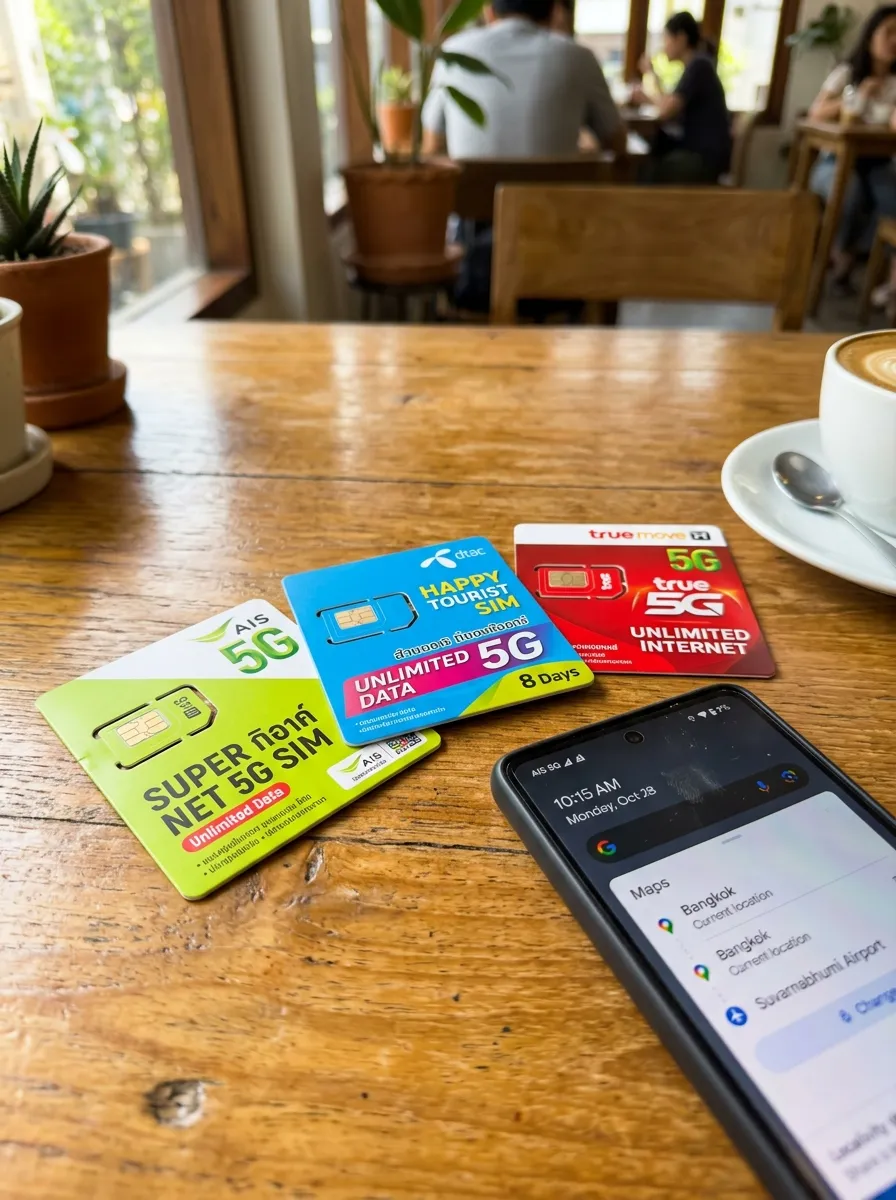
Buy a local SIM card at the airport
Having immediate data access allows you to book rides through Bolt or Grab without relying on expensive resort Wi-Fi. It also ensures you can use GPS maps when navigating the island's winding backroads.
Carry small denominations of cash
Many local songthaew drivers and street food vendors cannot easily change large 1,000 THB notes. Keeping 20, 50, and 100 THB notes handy makes paying for short trips and snacks much quicker.
Wear cover-ups when leaving the beach
While swimwear is standard on the sand, walking through Bophut town or entering shops in bikini tops is considered highly disrespectful to locals. Keeping a light sarong or t-shirt with you shows respect for the local culture.
Book ferries in advance during peak season
The boats running between Donsak Pier, Koh Samui, and Koh Phangan can fill up completely during the Full Moon Party period. Securing your tickets online early avoids being stranded at the mainland pier.
Visit viewpoints early in the morning
The popular lookout spots like the Lad Koh Viewpoint get highly crowded with tour buses by mid-morning. Arriving at sunrise ensures a peaceful experience and much better lighting for photography.
Avoid swimming near the estuaries
The water quality near the outlet canals in heavy-density areas like Chaweng can decline after heavy rainstorms. Choosing cleaner stretches away from these canals reduces your risk of skin irritation or ear infections.
Always ask for the price of seafood first
Many beachfront dining spots sell the daily catch by weight rather than a flat menu price. Confirming the total cost before the chef prepares your meal prevents an unexpectedly high bill at the end of the night.
Secure your activities and tours around Surat Thani ahead of time to ensure you do not miss out on the best island excursions.
Quick Reference Guide
| Item | Detail | Notes |
|---|---|---|
| Location Name | Koh Samui | Second-largest island in Thailand |
| Province | Surat Thani | Located in the Gulf of Thailand |
| Region | Southern Thailand | Part of the Samui Archipelago |
| Nearest Major City | Surat Thani City | Located on the mainland |
| Nearest Airport | Samui International Airport (USM) | Direct flights from Bangkok, Phuket, and Singapore |
| Distance from Bangkok | 700 km (435 miles) | Requires flight or train/bus/ferry combination |
| Typical Visit Duration | 5 to 7 days | Ideal to explore the island and surrounding marine parks |
| Best Time to Visit | December to February | Dry season with cooler temperatures and calm seas |
| Average Daily Budget | 4,000 THB (£88.90) | Mid-range estimation for a comfortable resort stay |
| Currency Accepted | Thai Baht (THB) | ATMs widely available across all tourist beaches |
| Primary Transport | Songthaews and scooters | Rental cars and taxi apps are also available |
| Notable Landmarks | Wat Phra Yai & Hin Ta Hin Yai | Big Buddha Temple and the famous grandfather/grandmother rocks |