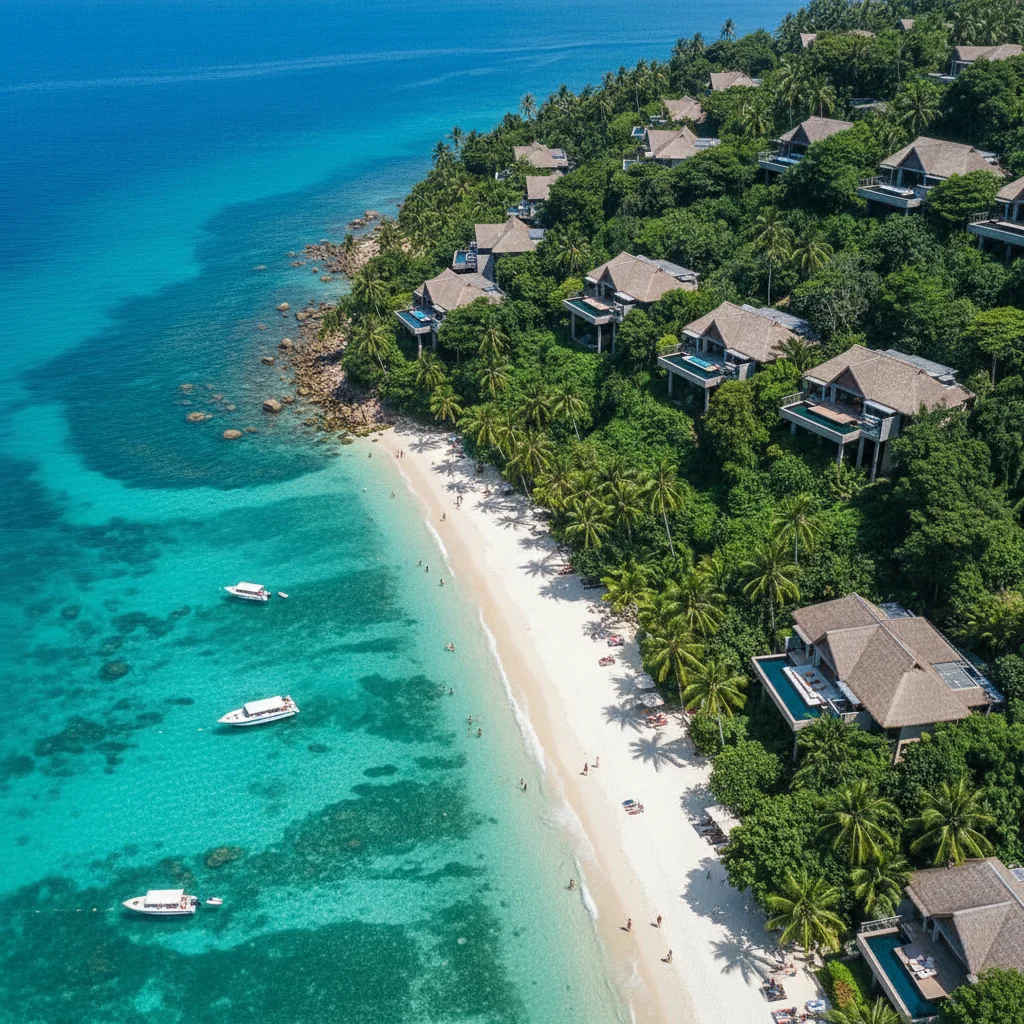
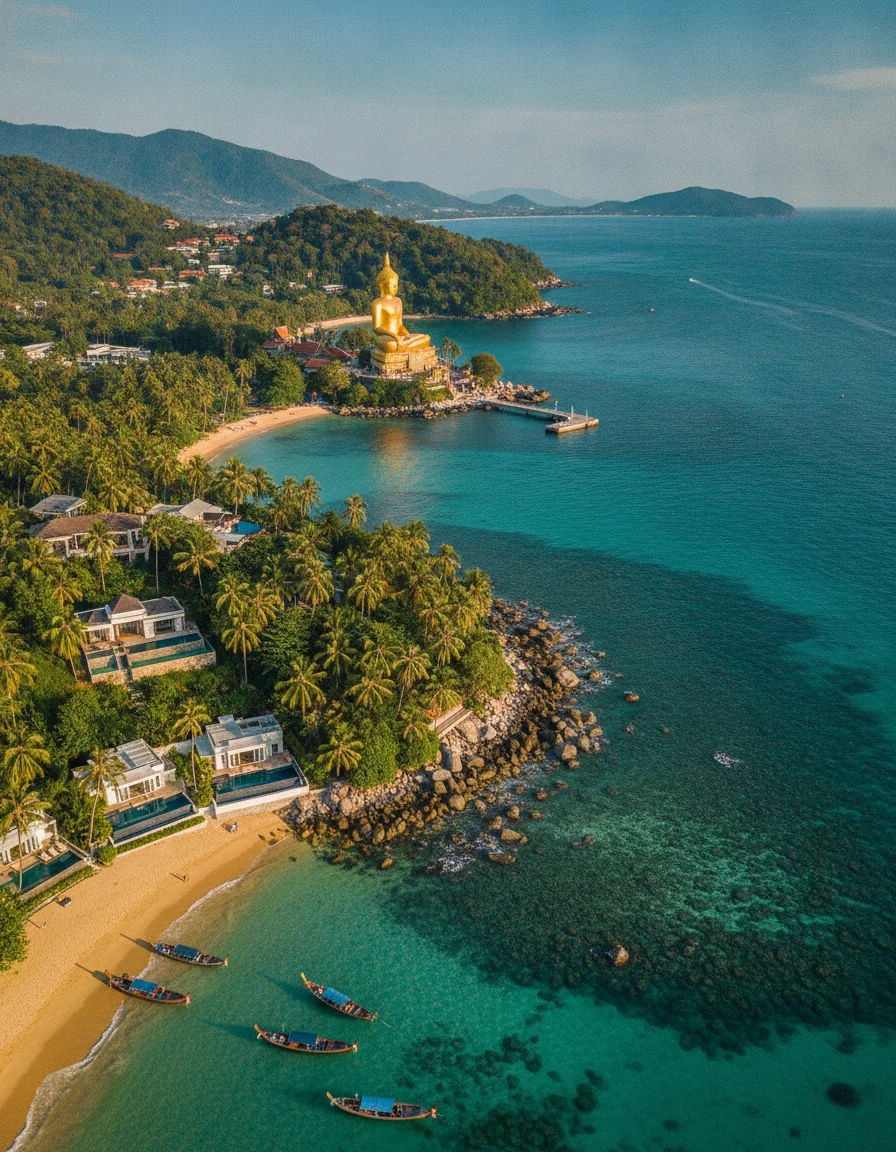
Dropping out of the sky over the Gulf of Thailand, the sheer gravitational pull of this circular landmass is obvious, defined by a dramatic granite core plunging straight into the sea.
The central ridge acts as a massive sponge during the monsoon, sending sudden sheets of water down the coastal roads, but this same rapid drainage feeds highly swimmable jungle waterfalls just a short hike inland. You come here because it delivers raw, untamed jungle elevation right to the edge of five-star civilisation, where a welcome cocktail might cost 450 THB (£10.20) but the sweeping topographical views are entirely free.
Covering 228.7 square kilometres, this island is a colossal dome of granite thrust upward from the ocean floor. The terrain forms a rough circle, dominated by the Khao Pom mountain range ripping right through the centre. Because the interior is an impenetrable wall of steep, forested rock, almost all human habitation is forced into a narrow 500-metre coastal plain ringing the perimeter. This distinct geological ring-fencing means the coastal roads are heavily populated while the interior remains wildly untouched. If you want to grasp the scale of this divide, hiring a private taxi to cut straight across the 15-kilometre width from Nathon on the west coast to Lamai on the east takes about 30 minutes. Expect this cross-island dash to cost 600 THB (£13.50), taking you through winding, elevation-heavy switchbacks before dropping you back down into the coastal development zone.
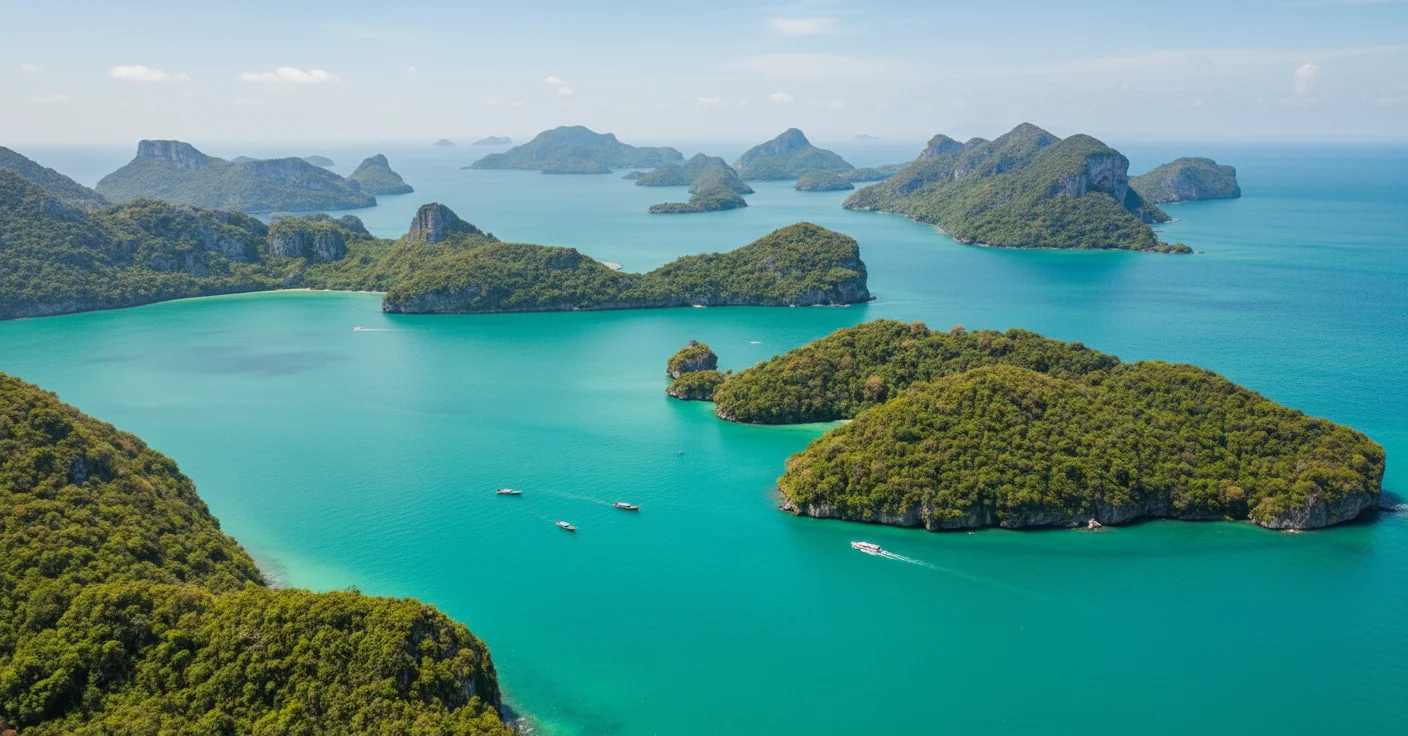
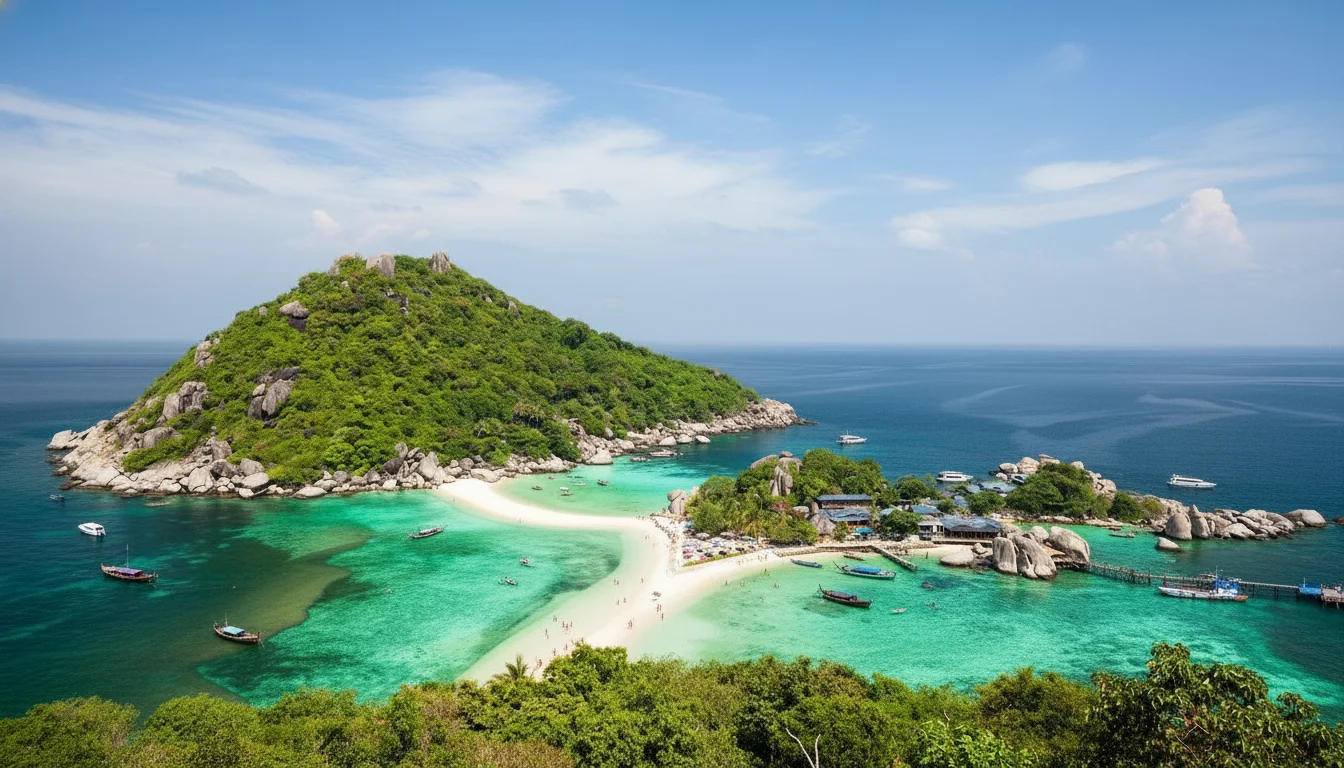
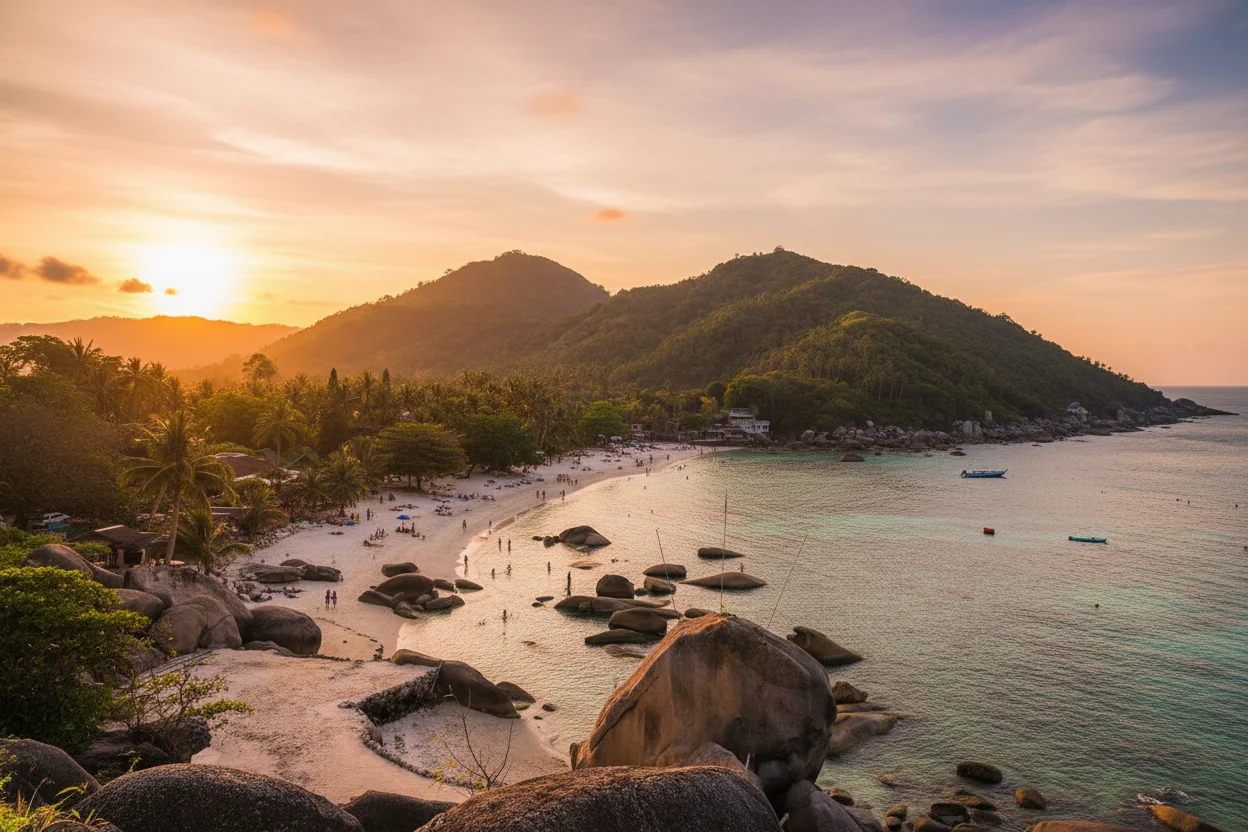
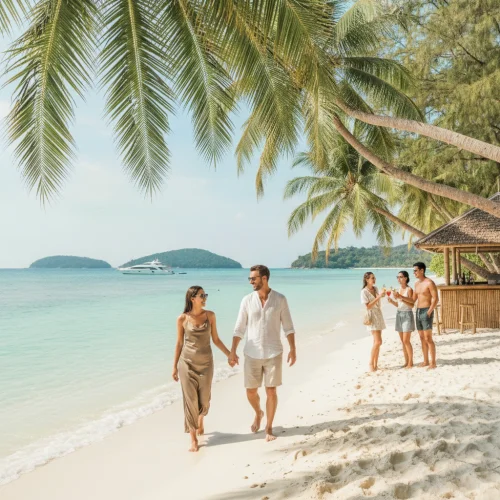
The perimeter is a study in stark contrasts, shifting dramatically depending on which compass point you face. Along the eastern edge at Chaweng and Lamai, the shoreline features powdery silica sand sloping gently into a shallow sea shelf, allowing you to walk out almost 50 metres before the water breaches your waist. Conversely, the southern and western coasts are defined by rocky outcrops, coarse amber sand, and sudden drop-offs where the ocean floor plummets just steps from the beach. Renting a traditional wooden long-tail boat to navigate from the northern tip of Mae Nam down to the remote south-western corner of Taling Ngam will set you back around 2,500 THB (£56.80) for the afternoon. While the island itself is not a marine park, it acts as the primary launchpad for the Mu Ko Ang Thong National Marine Park, an archipelago of 42 jagged limestone islands just 28 kilometres west. Stepping onto these protected shores requires a strict foreign visitor entry fee of 300 THB (£6.80), granting access to hidden emerald lagoons and sheer karst cliffs towering over the water.
CONCRETE VS CANOPY
The battle between concrete and canopy sits at an uneasy 30 to 70 split. Down at sea level, rapid villa development steadily eats into the old coconut plantations, but look up and the picture changes entirely. The upper elevations are choked with dense dipterocarp monsoon forest and thick swathes of bamboo, protected largely by the sheer impracticality of building on 40-degree inclines. This means the green lung remains heavily intact, filtering the coastal heat and providing a haven for macaques and monitor lizards. To properly understand the local flora without hacking your way through unmapped undergrowth, visit the Tarnim Magic Garden hidden high in the interior hills. The entry fee to this surreal botanical sanctuary is a modest 80 THB (£1.80), giving you access to a cool, shaded ravine where the ancient jungle reclaims the stone sculptures at its own creeping pace.
Anchored in the lower Gulf of Thailand, this landmass belongs to Surat Thani province, sitting 35 kilometres off the mainland coast. Taking a standard car ferry across this expanse costs 170 THB (£3.80) for a foot passenger. It acts as the heavyweight sibling to Koh Pha Ngan, which lies just 15 kilometres north across the choppy strait. To the west, the marine horizon is dominated by the mainland's Tapee River estuary, located 70 kilometres away, pumping nutrient-rich waters into the surrounding ecosystem.
VERTICAL LIMITS & VIEWPOINTS
Khao Pom dominates the skyline, peaking sharply at 635 metres above sea level. The terrain here doesn't roll; it spikes. These severe gradients have triggered strict zoning laws, prohibiting construction above 140 metres or on slopes steeper than 50 percent, which happily keeps the ridgelines free of high-rise concrete. Reaching the summit ridge rewards you with an uninterrupted panorama of the entire Gulf. Hiring a rugged 4x4 songthaew truck to haul you up the punishing concrete access roads to the Teepangkorn Temple viewpoint at the peak costs roughly 1,200 THB (£27.20) for a private round trip.
HYDROLOGY & WATERWAYS
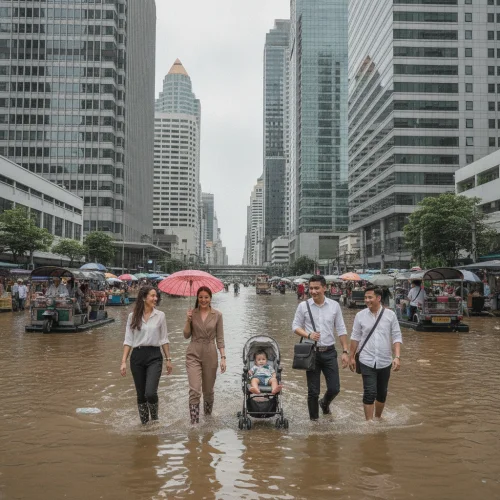
Unlike the mainland, there are no major rivers here, only seasonal khlongs that swell violently during the November monsoon. The island relies heavily on the Phru Chaweng reservoir, a massive shallow lake that often breaches its banks during heavy downpours, briefly turning the surrounding ring road into a muddy canal. Tap water is strictly non-potable, but a one-litre bottle of crystal-clear drinking water from any local 7-11 costs just 15 THB (£0.34).
The interior topography is brutal on brake pads and fuel tanks. Attempting the cross-island shortcuts in October turns into a mud-slicked gamble, as the unpaved laterite tracks frequently wash out entirely. If you plan to explore beyond the flat coastal ring road, you absolutely must upgrade your transport. A standard 125cc runabout struggles on the 30-degree inclines, costing around 250 THB (£5.60) a day. Instead, shell out for a mountain-rated 155cc scooter, usually priced at 400 THB (£9.00) daily, which provides the essential torque needed to safely conquer the interior ridges without burning out the clutch.