Thailand - Tourist Visas
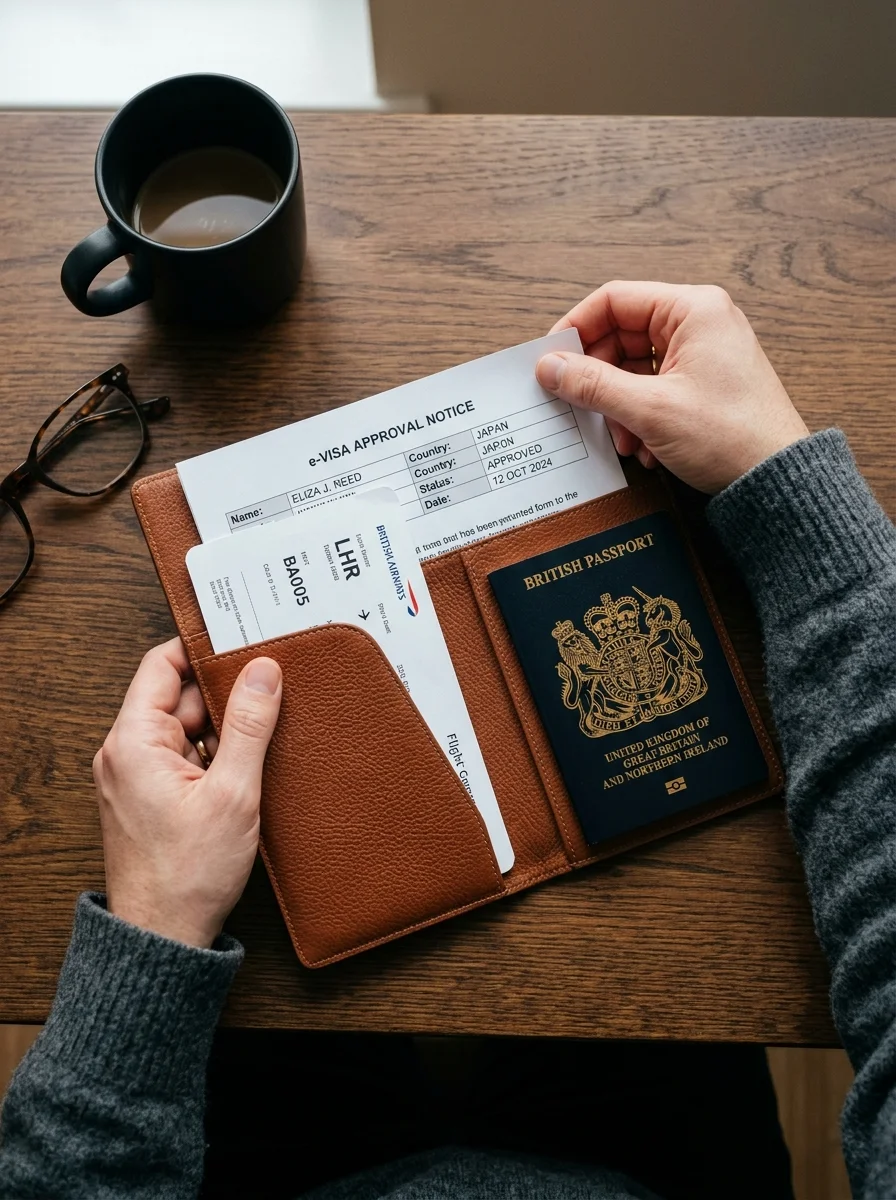
UK passport holders currently receive a 30-day visa exemption when entering Thailand for tourism, following the revision from the previous 60-day scheme for entries made on or after 15 September 2026. This allows British holidaymakers to arrive without submitting a visa application in advance. However, if you intend to remain in Thailand longer than 30 days without relying on an in-country extension, or if you require multiple entries over a six-month period, securing a formal Tourist Visa prior to departure is the standard route.
All tourist visa applications submitted from the UK are now handled entirely online through the official electronic visa portal. Physical paperwork is no longer lodged by post or at the consular counter, meaning you keep your passport throughout the review period.
This guide provides a comprehensive overview of the Thai tourist visa system for UK nationals. It covers entry permissions under the exemption scheme, the differences between Single-Entry and Multiple-Entry Tourist Visas, and the documentation accepted by the Royal Thai Embassy in London. You will also find practical guidance on navigating the online application, clearing Thai border control, and securing local extensions. These rules apply strictly to leisure travel, not to employment, business, volunteering, or retirement.

Visa Exemption Versus the Tourist Visa
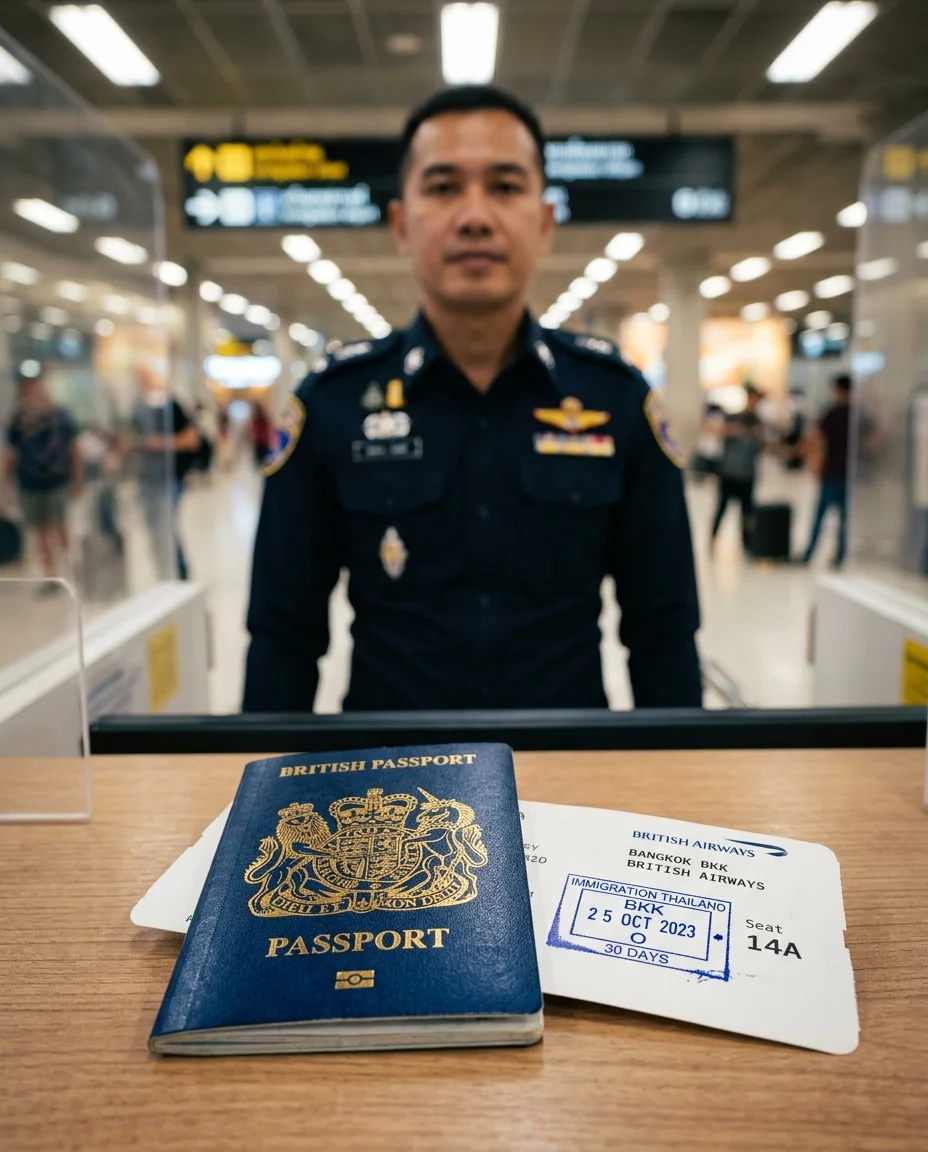
Choosing between entering Thailand on a visa exemption or securing an advance Tourist Visa depends on the duration of your trip, whether you plan to visit neighboring countries, and your preference for border certainty. British citizen passport holders travelling for tourism qualify for visa exemption upon arrival, providing a practical route for shorter visits. Travellers planning trips beyond one month or multiple regional border crossings benefit from arranging a formal Tourist Visa before departure.
Under Thailand's visa exemption framework published in the Royal Gazette on 31 August 2026 and effective from 15 September 2026, UK passport holders receive an entry stamp permitting a stay of up to 30 days without an upfront visa fee. This scheme applies strictly to tourism; business engagements, employment, and volunteering are excluded. To enter visa-exempt, you must hold a British citizen passport valid for at least six months from arrival, carry evidence of onward transport departing Thailand within that 30-day window, and complete the digital arrival card prior to travel. Airlines verify onward travel before departure from the UK and can refuse boarding without a confirmed exit booking inside the 30-day window. While in Thailand, you can apply once at a local immigration office to extend your stay by up to 30 days for a statutory fee of 1,900 THB, giving a maximum continuous stay of 60 days.
A formal Tourist Visa obtained through the official electronic visa portal provides greater scheduling flexibility and immigration certainty. A Single-Entry Tourist Visa grants an initial stay of up to 60 days and can be extended locally once by 30 days, enabling a continuous visit of up to 90 days. For regional journeys across Southeast Asia, a Multiple-Entry Tourist Visa permits multiple 60-day entries across a six-month validity period, with each stay extendable by 30 days. Holding a Single-Entry Tourist Visa also allows your scheduled departure from Thailand to fall within the 60-day window, preventing airline boarding issues on longer itineraries. Departing Thailand on a Single-Entry Tourist Visa cancels any remaining days unless you obtain an official re-entry permit before leaving.
Relying on repeated visa exemptions through rapid departures and re-entries—commonly called border runs—attracts strict scrutiny from Thai border officials. Statutory regulations cap visa-exempt entries across land borders at two per calendar year. While international air arrivals lack an explicit annual numerical limit, border officers hold legal discretion to refuse entry to anyone suspected of using tourist privileges for de facto residency. Securing an advance Tourist Visa demonstrates documented tourist intent, eliminates questions over return ticket dates, and minimises friction at passport control.
| Feature | Visa Exemption | Single-Entry TR Visa | Multiple-Entry TR Visa |
|---|---|---|---|
| Official Cost | Free | £30 | £150 |
| Initial Stay Permitted | 30 days | 60 days | 60 days per entry |
| Application Required | No, granted on arrival | Yes, online in advance | Yes, online in advance |
| Extension Possible | Yes, up to 30 days | Yes, up to 30 days | Yes, up to 30 days per entry |
Single-Entry and Multiple-Entry Tourist Visa Options
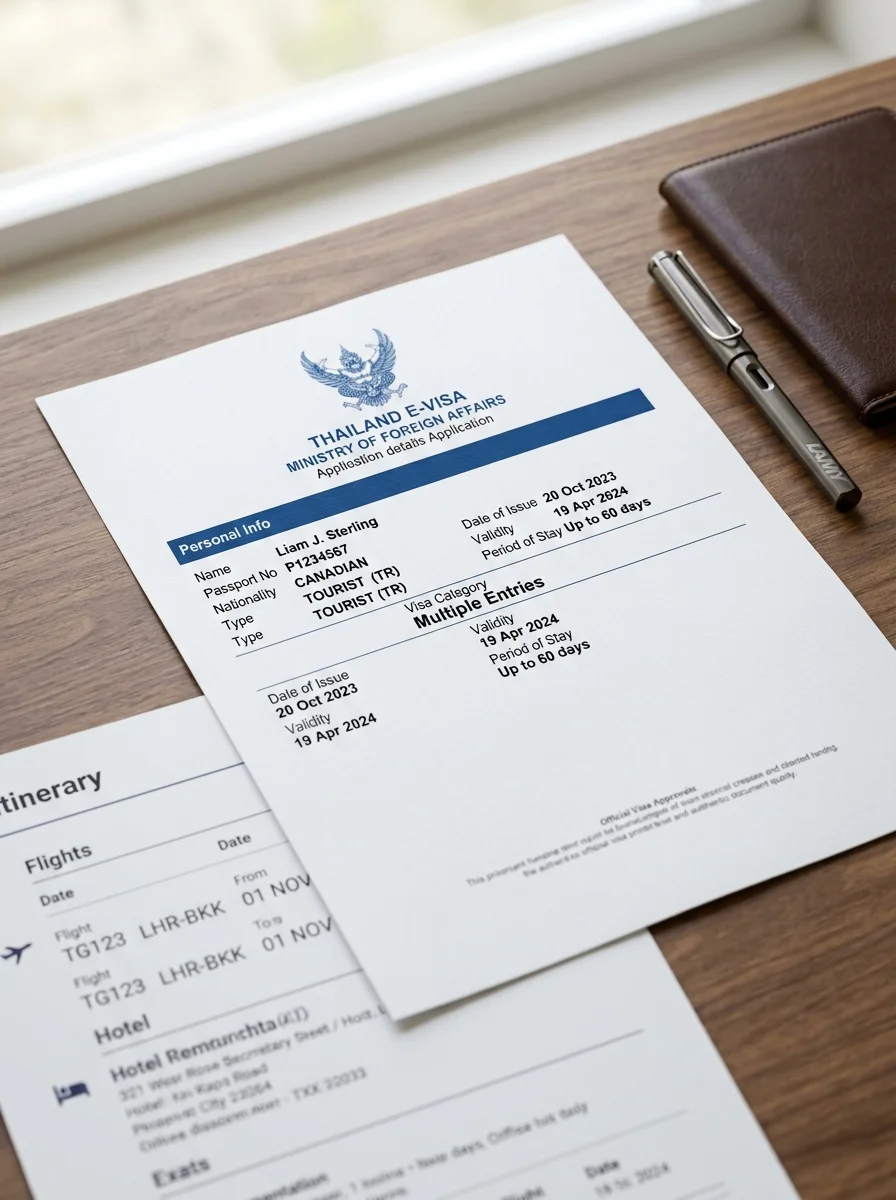
When applying through the official Thai e-Visa system, UK passport holders intending to travel under a formal tourist visa can select between two distinct routes: the Single-Entry Tourist Visa and the Multiple-Entry Tourist Visa. While both options grant a baseline stay of up to 60 days per arrival, they differ substantially in their validity windows, entry allowances, and financial qualification thresholds. Formal tourist visas remain subject to their own established consular regulations, operating entirely separately from bilateral visa exemption rules.
The Single-Entry Tourist Visa is tailored for travellers planning an unbroken visit or a single holiday. Once issued, the visa remains valid for entry for three months. Consular officers calculate this window from the exact date of approval rather than your intended departure date, meaning you must enter Thailand before the visa validity expires. Upon arrival, immigration officials grant a stay of up to 60 days. Because the visa permits only one entry, crossing the border out of Thailand immediately cancels any unused days unless you obtain a re-entry permit before leaving. Like most tourist entries, this 60-day stamp can be extended once for an additional 30 days inside the country, allowing a maximum continuous stay of 90 days.
The Multiple-Entry Tourist Visa caters to travellers who intend to use Thailand as a base for exploring Southeast Asia or who make repeated visits across several months. The visa carries a six-month validity from the date of issue and allows unlimited border entries during that period. Each entry provides an initial 60-day permission to stay, which is also eligible for a 30-day extension. The Royal Thai Embassy in London requires holders to make their first entry into Thailand within the first three months of the visa being issued. To activate a fresh 60-day stay, you simply exit the country and re-enter before the six-month visa validity window elapses.
The most significant hurdle between the two categories lies in the financial evidence required. For a single-entry visa, applicants must demonstrate sufficient available funds, currently set at a minimum bank balance of £600 (or the 20,000 THB equivalent). In contrast, the multiple-entry route demands rigorous proof of sustained financial stability. The London embassy requires applicants to submit bank statements demonstrating a continuous closing balance of at least £5,000 (200,000 THB) maintained across the preceding six months without dipping below the threshold, alongside formal proof of UK employment or self-employed business registration.
Complete UK guide to the 5-year Destination Thailand Visa (DTV). Learn financial criteria, e-visa application steps, stay rules, and extension procedures.
Required Documents for UK Applicants
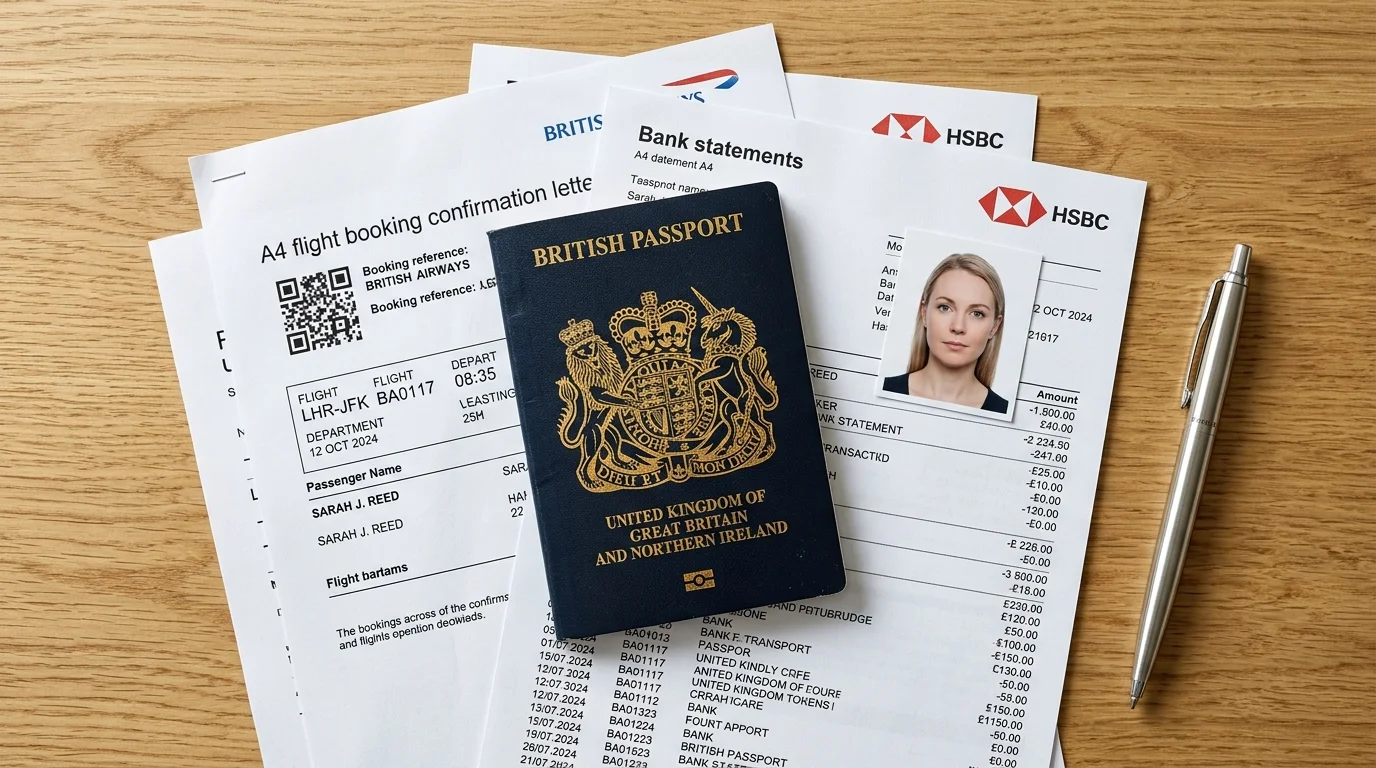
All tourist visa applications submitted from the United Kingdom are handled electronically through the official Thai immigration system. Consular staff do not accept physical paperwork by post or in person at the embassy in London. Every supporting document must be uploaded as a digital file in either JPEG or PDF format, with each individual file capped at a maximum size of 3MB. All files must be sharp, fully legible, and free of glare or cropped borders. Any paperwork not originally issued in English or Thai requires a certified English translation.
Your British passport must have at least six months of remaining validity from your scheduled date of entry into Thailand, alongside a minimum of two completely blank pages for border stamps. You must upload a clear colour scan of the passport biodata page, ensuring the machine-readable lines at the bottom are fully visible. Alongside your passport, you need a recent digital colour photograph taken against a plain white or light background within the preceding six months, matching your current appearance without sunglasses or head coverings.
To confirm you are applying from within consular jurisdiction, you must supply proof of your current UK residential address. Acceptable records include a recent domestic utility bill, council tax statement, broadband bill, or formal tenancy agreement showing your full name and current address.
Travel arrangements require a complete flight itinerary confirming travel from the United Kingdom to Thailand, along with a confirmed outbound flight leaving Thailand within the permitted period of stay. You must also supply evidence of lodging covering the early phase of your stay, which can take the form of confirmed hotel bookings, serviced apartment reservations, or a signed invitation letter from a resident host accompanied by a copy of their Thai identity card or passport.
Financial proof must establish that you have adequate resources to support your travels. Single-entry tourist visa submissions require recent bank statements displaying available funds of at least 20,000 THB (approximately £450 to £500). Multiple-entry tourist visa applications face considerably stricter checks: you must provide bank statements covering the previous six consecutive months showing a maintained minimum balance of at least £5,000 (equivalent to 200,000 THB), as well as a letter of employment from your UK employer or proof of company registration and tax records if self-employed. Mobile banking app screenshots are routinely rejected; you must supply official bank statements displaying your full name, account number, and residential address.
How to Apply Through the Thai E-Visa System
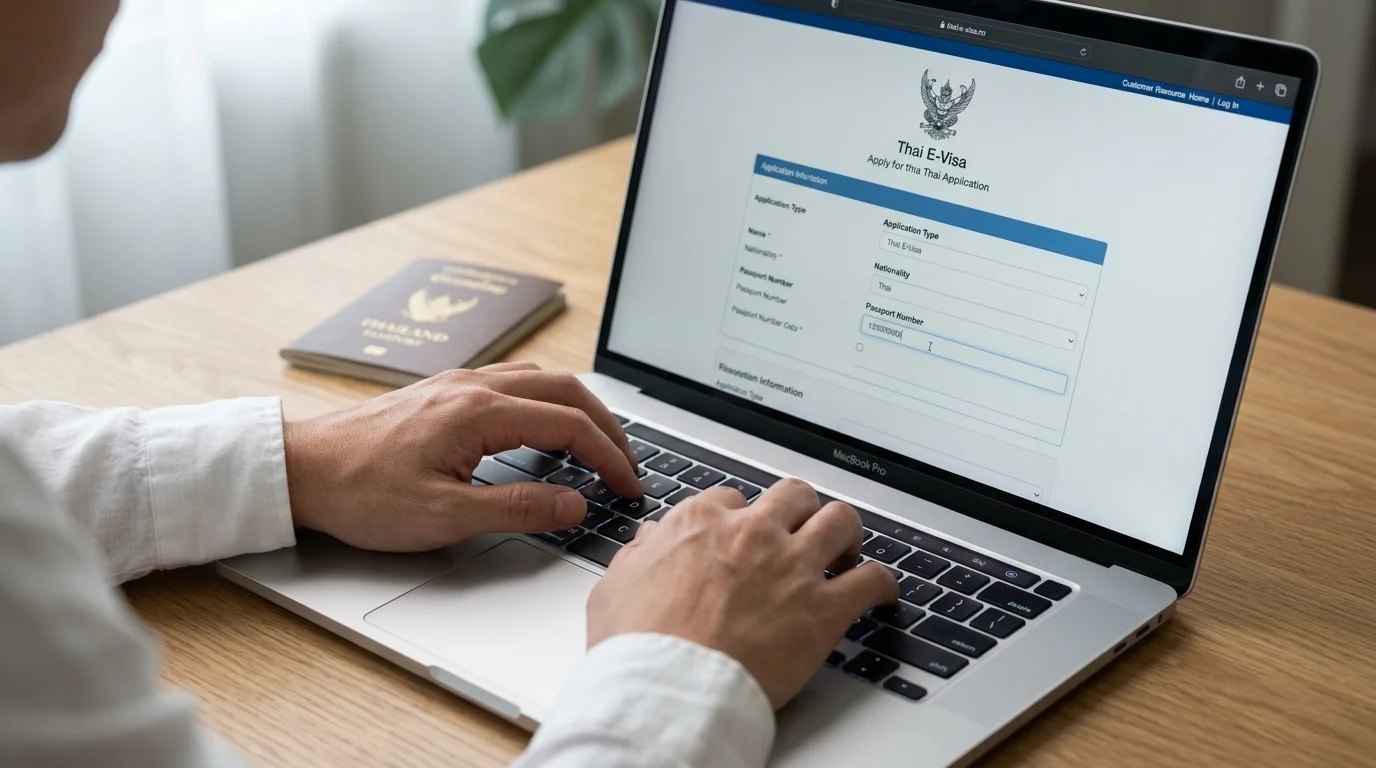
UK nationals and legal residents seeking a Thai Tourist Visa submit their applications entirely online through the official Thai electronic visa portal. In-person appointments and postal passport deliveries to the Royal Thai Embassy in London have been phased out completely. The consular section issues a digital visa confirmation rather than placing a physical sticker in your passport, meaning you retain physical possession of your passport throughout the entire review.
You must be physically located in the United Kingdom, Ireland, or British Crown Dependencies when submitting your application and remain there until consular processing finishes. The London embassy strictly enforces this geographic boundary; departing the UK before consular officers finalise a decision can result in immediate cancellation of the application, and any fees paid are forfeited.
To start, create an individual account on the portal and select the visa category that matches your travel plans. During the initial questionnaire, you must designate the Royal Thai Embassy in London as your processing mission and confirm UK residency. You will then complete personal background forms and upload digital scans of required items, such as your passport biodata page, a recent passport photograph, accommodation bookings, and travel arrangements. All files must be submitted in clear PDF or JPEG formats that comply with portal size and legibility thresholds to prevent processing halts.
After completing all data fields and verifying that names match your passport precisely, you submit the application and pay the consular fee through an integrated card gateway. Consular charges are strictly non-refundable, and embassy staff cannot amend details once payment is confirmed.
Standard processing at the London embassy currently requires between 5 and 15 working days from successful fee payment. This timeframe excludes UK bank holidays, Thai public holidays, and weekends. During busy travel windows, particularly from November to February, wait times routinely reach the upper threshold. Consular staff may email you through the system to request clearer uploads or supplementary verification. If an information request arrives, submit the files through your account dashboard promptly, noting that your review timeline typically pauses or restarts from that submission date. The embassy provides no priority queue or expedited service.
Once approved, your electronic visa document arrives by email. You must print a physical paper copy of this approval document before travelling. Airline ground staff at UK airports inspect this paper printout at check-in, and Thai immigration officials require it alongside your physical passport at border control.
| Stage | Key Actions | Estimated Timeframe |
|---|---|---|
| Preparation | Gather required digital scans and travel bookings | 1 to 3 days |
| Submission | Complete online form, upload files, and pay fee | 30 to 45 minutes |
| Processing | Consular review by the London embassy | 5 to 15 working days |
| Approval | Download and print electronic visa confirmation | Immediate upon receipt |
Arriving in Thailand and Border Realities
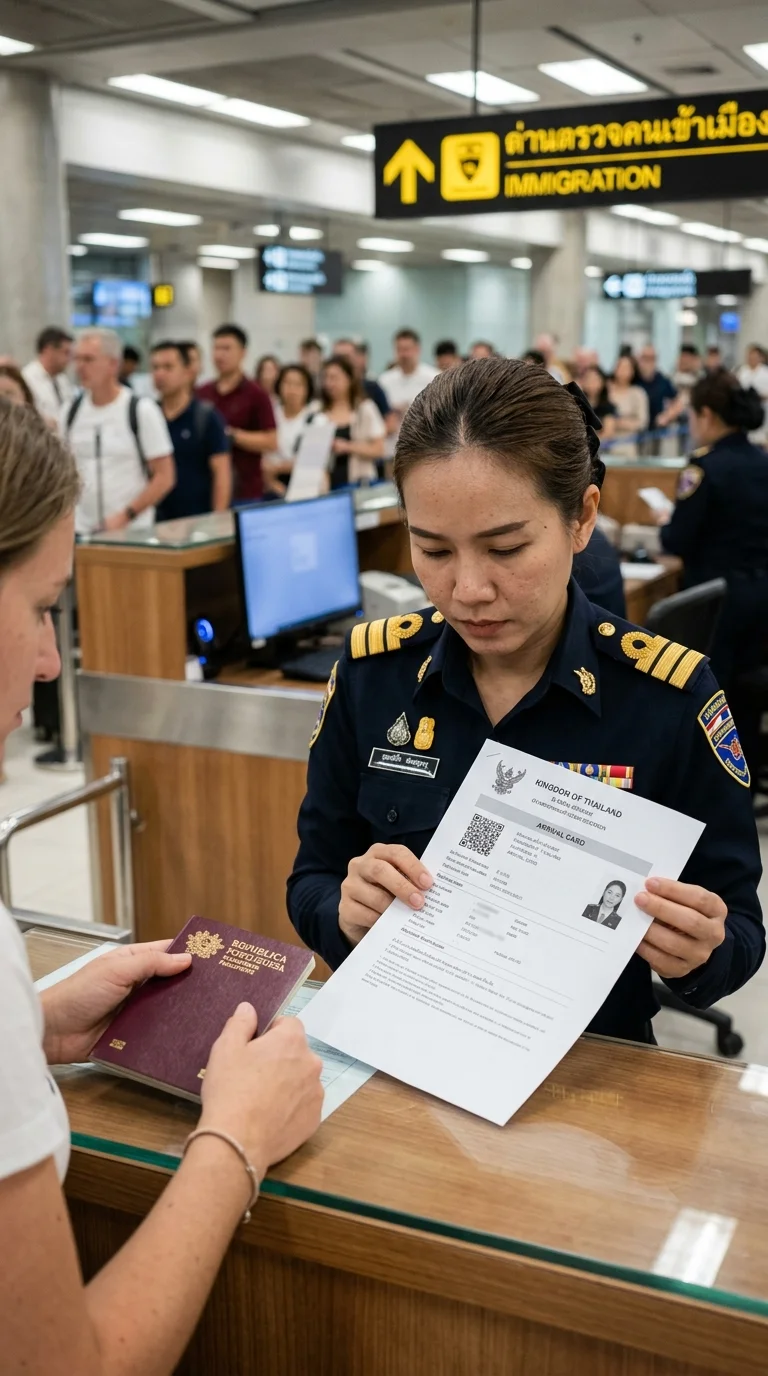
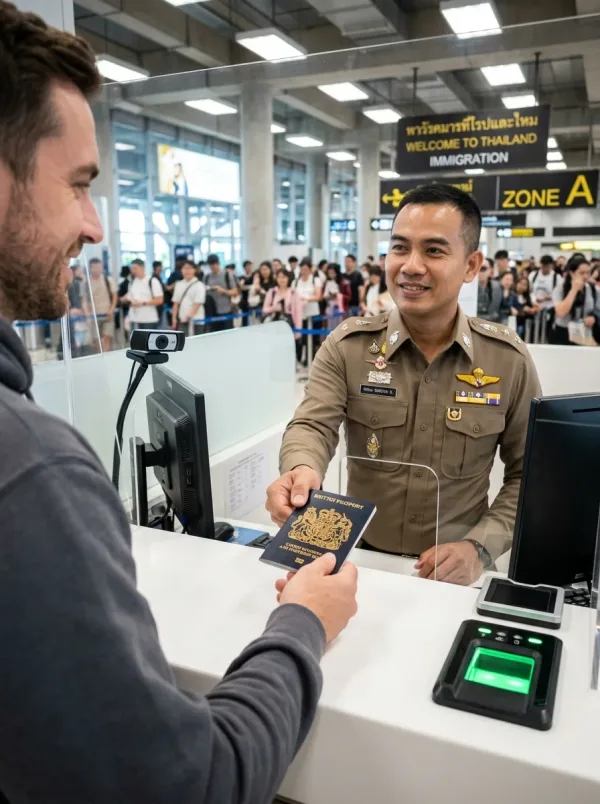
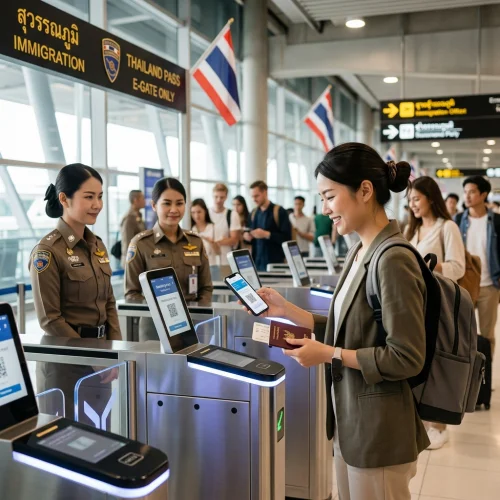
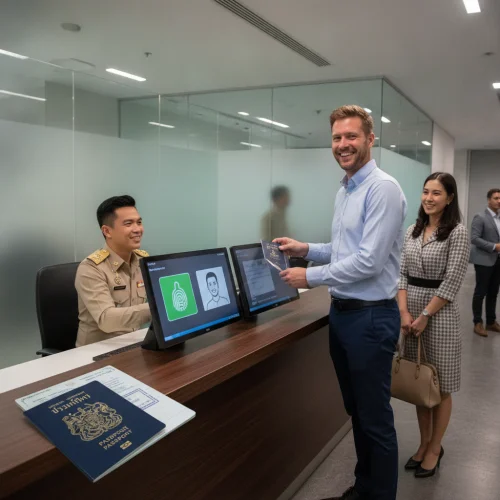
Reaching immigration control in Thailand requires careful preparation to avoid unexpected entry delays. Whether arriving under the 30-day visa exemption scheme or presenting an approved electronic tourist visa, travellers must satisfy the border control officer at passport control. Under Thai immigration law, officers hold full legal authority to examine supporting documents and refuse admission, even if an electronic visa has already been issued. Passports must have at least six months of remaining validity from the arrival date and contain at least one blank page for entry and exit stamps.
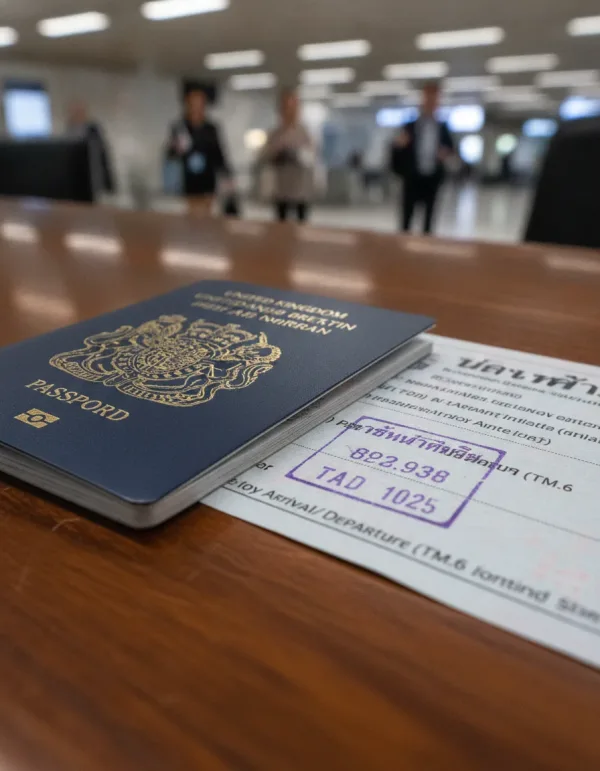
All foreign nationals entering Thailand by air, land, or sea must complete the official digital arrival card online within three days before arrival. This mandatory electronic submission replaces the former paper arrival cards and is free of charge. The system gathers personal passport details, flight or vessel numbers, accommodation arrangements within Thailand, and any required health declarations. Once submitted, save or print the resulting digital confirmation and QR code to display if requested at the checkpoint.
Demonstrating adequate financial resources is a standard legal condition of entry. For single-entry tourist visas and visa-exempt entries, official regulations establish a minimum threshold of 20,000 THB per person, or 40,000 THB for families travelling together, roughly equivalent to £450. While officers carry out spot checks rather than questioning every incoming passenger, holding this sum in cash or equivalent major foreign currency provides immediate proof. Electronic banking applications or mobile account screenshots are routinely rejected at border desks if an officer demands physical evidence of funds.
Border officials also assess whether arrivals intend to stay genuinely as temporary tourists. Travellers arriving with multiple consecutive entry stamps, or those attempting repeated overland visa runs, face heightened scrutiny. Land-border entries under the visa exemption scheme are restricted to a maximum of two visits per calendar year, while air arrivals with extensive recent travel history in Thailand may be questioned about their living arrangements and funding. Holding an approved electronic tourist visa helps demonstrate legitimate tourism intent, though admission remains at the attending officer's discretion.
Carry all supporting paperwork in hand luggage rather than stowing it in the hold. Officers may ask to inspect a printed electronic visa confirmation, proof of confirmed return or onward travel out of Thailand within the permitted stay, hotel or accommodation bookings, and physical financial proof. Having printed paperwork immediately accessible prevents delays and helps ensure border clearance proceeds smoothly.
Extending Your Tourist Visa in Thailand
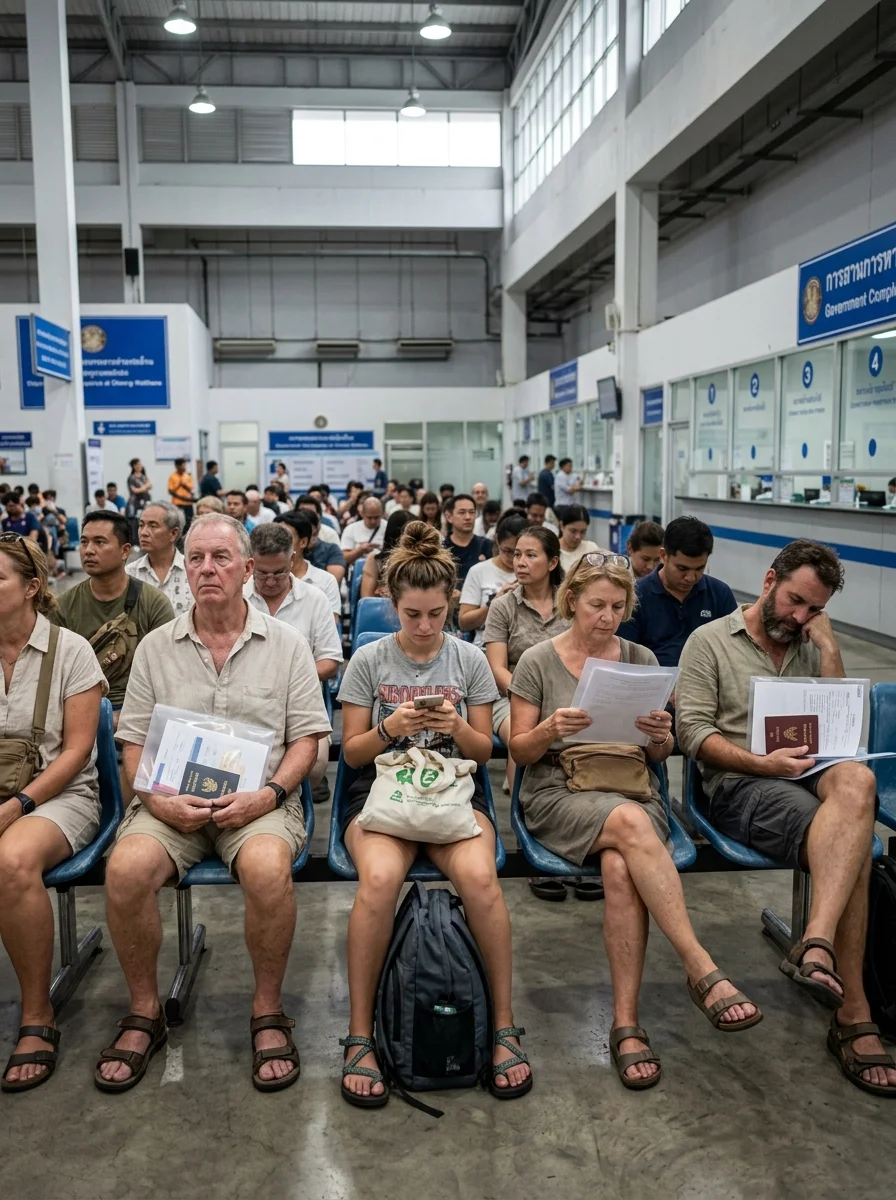
UK passport holders who want to prolong their visit in Thailand can extend their permission to stay onshore without leaving the country. Both entries under the visa exemption scheme and visits on a standard 60-day Tourist Visa qualify for a single 30-day extension per entry. This extension must be submitted in person at a Thai immigration office before your current permitted stay expires. Submitting your paperwork between three and seven days before your permission lapses is recommended. Thai immigration adds the 30 additional days consecutively to the end date of your existing stamp, meaning an early application does not forfeit any days from your initial allowance.
You must lodge your application at the immigration office responsible for the province where you are currently residing. In Bangkok, tourist extensions are handled through designated immigration facilities, including the Government Complex at Chaeng Watthana and the satellite branch at IT Square Laksi. Visitors residing in other areas must attend their local provincial office, with branches situated in major destinations such as Chiang Mai, Phuket, and Koh Samui. Most immigration offices open at 08:30 on weekdays and close between 12:00 and 13:00 for lunch. Arriving near opening time helps secure an early queue ticket, as tourist counters experience heavy applicant volumes. Commercial kiosks operating within the office concourses provide photocopying and passport photograph services for a small cash fee.
To apply, you must submit a completed Application for Extension of Temporary Stay (Form TM7), signed and dated, alongside your physical passport. You must provide one passport photograph (4x6 cm) taken within the last six months, and signed photocopies of your passport identification page, current entry stamp, and electronic tourist visa approval notice or visa sticker where applicable. Officers also routinely require proof of local accommodation, such as a formal hotel booking receipt or a residence notification confirmation confirming your Thai address.
The official application fee is 1,900 THB (roughly £42 to £45 depending on prevailing exchange rates), payable strictly in cash at the counter. Credit cards are not accepted for this administrative charge. Once your paperwork is approved, an immigration officer stamps a revised departure date into your passport, usually on the same day. Remaining in Thailand after this revised date constitutes an unlawful overstay, incurring daily fines and risking formal enforcement action.
| Extension Item | Requirement | Notes |
|---|---|---|
| Application Form | Form TM7 | Available on site at immigration offices |
| Official Fee | 1,900 THB | Payable in cash at the counter |
| Supporting Copies | Passport photo page, visa, and entry stamp | Photocopy and photo facilities available on site |
| Duration Granted | 30 additional days | Added to the end of your original permission |
Costs and Budgeting
Applying for a Thai Tourist Visa from the UK involves direct embassy fees alongside ancillary preparation and travel expenses. At the time of research, the Royal Thai Embassy in London charges £30 for a Single-Entry Tourist Visa and £150 for a Multiple-Entry Tourist Visa. Both fees must be settled online in British pounds using a debit or credit card through the official visa platform. These application charges are non-refundable, even if an application is rejected, withdrawn, or cancelled.
Pre-departure document preparation carries a few modest costs. Applicants need a compliant digital passport photograph suitable for online upload, which generally costs around £10 from high street photo booths or professional services. Digital bank statements downloaded directly from UK online banking are accepted without cost, though requesting certified hard copies from a branch may occasionally incur a small administrative fee. Medical travel insurance is not a mandatory prerequisite for standard tourist visas, but holding comprehensive cover is recommended because private medical treatment in Thailand requires upfront payment or written confirmation from an insurer.
Travellers planning longer itineraries must budget for local administrative costs inside Thailand. Extending your stay by a further 30 days incurs an Immigration Bureau fee of 1,900 THB (approximately £44). Local immigration offices accept this fee in cash in Thai baht; payment cards are not taken at the counter. Applicants should also allow a small cash amount, typically 100 to 200 THB, for on-site photocopying and replacement passport photos provided by vendors located at major immigration offices.
Thai border regulations also establish mandatory maintenance funds. Under the Immigration Act, arriving tourist visa holders must be able to demonstrate adequate living expenses if requested by immigration officials during entry checks. This threshold requires at least 20,000 THB per person, or 40,000 THB per family, held in cash or equivalent foreign currency such as British pound sterling.
| Item | Cost (THB) | Cost (GBP approx) | Notes |
|---|---|---|---|
| Single-Entry Tourist Visa | £30 | Online card payment | Non-refundable embassy application fee |
| Multiple-Entry Tourist Visa | £150 | Online card payment | Non-refundable embassy application fee |
| 30-Day In-Country Extension | 1,900 THB (approx. £44) | Cash in Thai baht | Paid at local immigration office |
| Digital Passport Photo | Approx. £10 | Direct to vendor | Required for online application upload |
| On-Arrival Proof of Funds | 20,000 THB (approx. £450) | Cash or currency equivalent | Shown upon request at immigration control |
Common Mistakes and How to Avoid Them

Applying too close to your travel date is one of the most frequent pitfalls for UK applicants. While electronic visa processing often concludes within several working days, seasonal demand surges or requests for supplementary documents can create delays. Submitting your application three to four weeks before departure provides a comfortable safety margin to address any queries without jeopardising your flights.
Uploading mobile banking screenshots or unformatted transaction lists is another common error. The Royal Thai Embassy in London requires official bank statements in standard PDF format. These documents must clearly display the account holder's full name, the account number, and the closing balance. Download official monthly PDF statements directly from your online banking platform rather than taking screen captures on a mobile phone.
Providing an onward flight confirmation that departs after your permitted initial stay causes immediate application complications. For a standard single-entry tourist visa granting a 60-day stay, consular officers expect your booked exit flight to fall within that initial 60-day window. Even if you plan to extend your stay locally inside Thailand, your initial visa application must show travel arrangements that comply with the standard entry allowance. The same principle applies to visa-exempt entry: your outbound ticket must fall within the initial permitted period.
Applying for a multiple-entry tourist visa without maintaining the required six-month financial history leads to costly refusals. This route requires proof of a balance of at least £5,000 (or the local currency equivalent) maintained across six consecutive months. Submitting an application with a shorter banking history or unseasoned lump-sum deposits can result in refusal or a downgrade to a single-entry visa, and official application fees are non-refundable.
Submitting substandard digital passport photographs regularly stalls processing. Your photograph must be taken against a plain white background, show your full face clearly without shadows, and remain free from software filters or digital modifications. Cropped copies of existing passport pages or low-resolution smartphone portraits will trigger document re-requests from consular staff.
Before travelling, print multiple physical copies of your approved electronic visa confirmation. Airlines frequently inspect a hard copy during check-in or at the boarding gate, and border control officers in Thailand can ask to see a printed document alongside your passport.
Ensure you complete the mandatory digital arrival card before departure. Thailand requires foreign visitors across all ports of entry to submit their digital arrival registration online within three days prior to arrival. Completing this step before travelling prevents avoidable delays at border control.
If border control officers ask you to demonstrate sufficient financial means upon arrival, presenting the required amount in cash as British Pounds or other major foreign currencies satisfies inspection rules without needing to exchange currency beforehand.
Never allow your permitted stay to lapse. Overstaying in Thailand incurs a statutory fine of 500 THB per day, up to a maximum penalty of 20,000 THB, alongside risks of detention and future entry bans for serious violations. If your travel schedule changes once you are in Thailand, apply for an official 30-day extension at a local immigration office for 1,900 THB before your existing permission expires.
DISCLAIMER: Visa rules and fees are subject to change. Always verify current requirements with the official Thai Immigration Bureau at immigration.go.th or the Royal Thai Embassy before applying.
Quick Reference Table
| Item | Detail | Notes |
|---|---|---|
| Visa Exemption | 30 days entry permission | Free on arrival for UK passport holders; extendable once by 30 days (1,900 THB) |
| Single-Entry Tourist Visa (SETV) | 60 days stay per entry | £30 embassy fee; valid for entry within 3 months of issue; extendable once by 30 days |
| Multiple-Entry Tourist Visa (METV) | 60 days stay per entry | £150 embassy fee; valid for 6 months with unlimited entries; extendable by 30 days per entry |
| In-Country Extension | 30 additional days | 1,900 THB statutory fee; payable in cash with Form TM7 at local Thai immigration offices |
| E-Visa Processing Time | 5 to 15 working days | Applied online via official portal; apply 3 to 4 weeks before departure |
| Passport Requirement | 6 months minimum validity | Minimum 2 blank pages required for visa applications and border stamps |
| Financial Requirements (SETV) | Minimum £600 (20,000 THB) | Demonstrated via official monthly bank statement PDFs |
| Financial Requirements (METV) | Minimum £5,000 (200,000 THB) | Continuous minimum balance maintained over the preceding 6 months plus UK employment proof |
| Digital Arrival Card | Mandatory electronic submission | Must be completed online within 3 days prior to arrival |
| On-Arrival Cash Requirement | 20,000 THB per person / 40,000 THB per family | Spot-checked at border control; cash in GBP or major currency accepted |
| Land Border Exemption Cap | Maximum 2 entries per calendar year | Applies to visa-exempt entries across overland borders |
| Overstay Fine | 500 THB per day | Capped at a maximum statutory fine of 20,000 THB; risks detention and bans |
| Official Source (E-Visa) | Thai E-Visa Official Portal | thaievisa.go.th |
| Official Source (Embassy) | Royal Thai Embassy London | london.thaiembassy.org |
| Official Source (Immigration) | Thai Immigration Bureau | immigration.go.th |
FAQ: Thailand Tourist Visa Guide for UK Nationals
Do UK nationals need a visa to visit Thailand for tourism?
Can I use a tourist visa for work or other purposes in Thailand?
How do I choose between a visa exemption and a formal Tourist Visa for Thailand?
What are the requirements for entering Thailand under the visa exemption scheme?
Is it advisable to do frequent border runs to extend my stay in Thailand?
What is the difference in financial requirements for Single-Entry and Multiple-Entry Tourist Visas for Thailand?
What type of bank statements are accepted for a Thai Tourist Visa application?
How do UK nationals apply for a Thai Tourist Visa?
When should I apply for a Thai Tourist Visa?
What are the consequences of overstaying a visa in Thailand?
Reviewed by the Thailand Guide Editorial Team • Last reviewed: 20 October 2026
This page provides general information only and is not financial, legal, or immigration advice. Always verify current rules with official Thai government sources or a qualified professional before making decisions.