Schooling and Education in Thailand
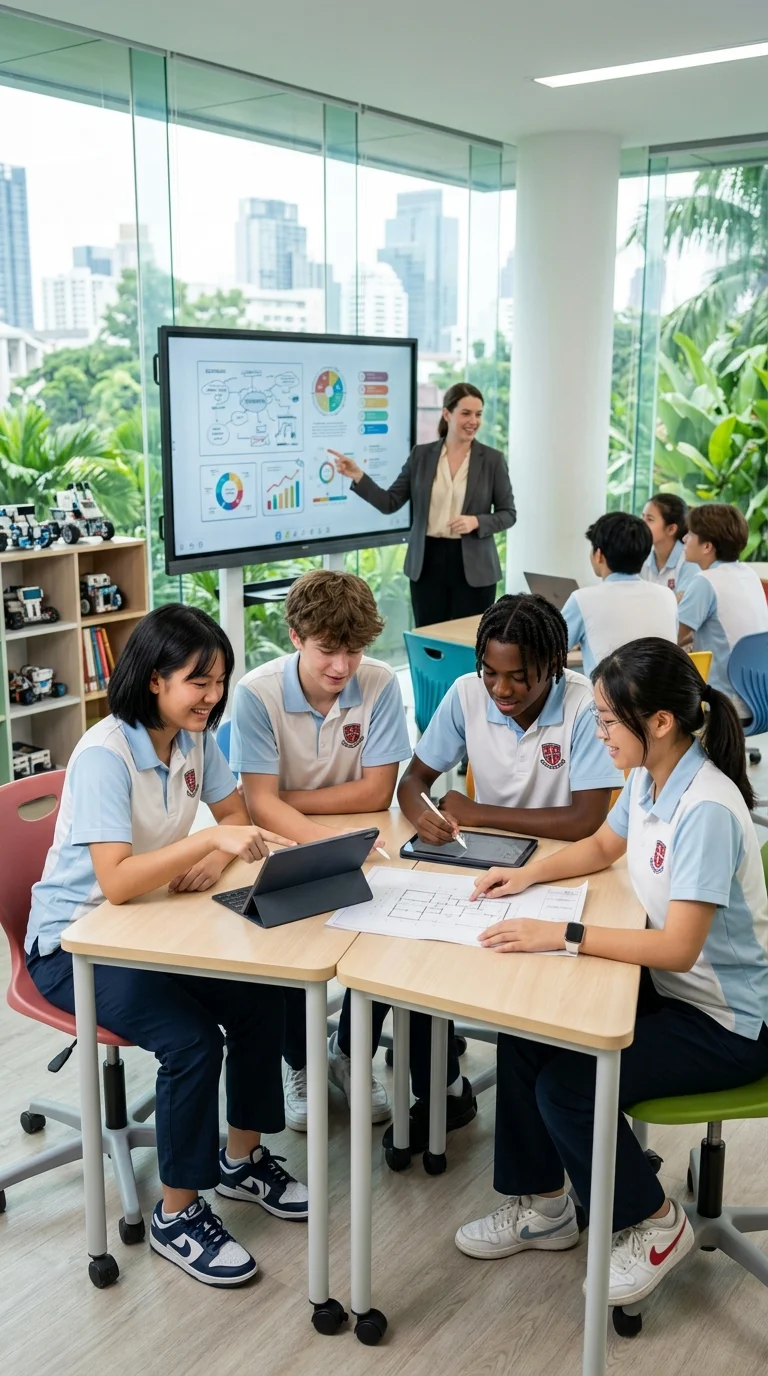
Top-tier international schools in Thailand charge upwards of 900,000 THB (£20,000) annually, making education the single largest expense for expatriate families relocating from the UK. Securing a place at highly desirable institutions often requires applying 12 to 18 months before your intended arrival date.
This guide provides a comprehensive breakdown of international education in Thailand to help you select the right curriculum, understand fee structures, and manage the admissions process before leaving the UK. It is designed for families planning a medium to long-term relocation who need to secure schooling alongside their visas and housing. This is not for short-term digital nomads or those considering placing non-Thai speaking children into the local Thai public school system.

Understanding International Curricula in Thailand
Choosing the right curriculum is the foundational decision for any UK family relocating to Thailand. The British curriculum is the most prevalent, followed closely by the American, International Baccalaureate (IB), and Australian systems. British schools follow the standard Key Stages, culminating in IGCSEs and A-Levels. This provides immediate continuity for children transferring directly from UK state or private schools. American schools offer a broader, less specialised high school diploma, which is often enriched by Advanced Placement (AP) courses for university preparation. The IB is increasingly popular among expatriates due to its global transferability, focusing on holistic, inquiry-based learning through the Primary Years Programme (PYP) up to the rigorous IB Diploma. Australian schools follow the New South Wales curriculum, which primarily suits families anticipating a future move to Australasia. Opting for a British school minimises disruption to your child's educational timeline, but IB schools often cultivate a more internationally minded student body. You must weigh whether your long-term goal is returning to the UK university system or maintaining global mobility.
Learn how UK digital nomads can open a Thai bank account on a DTV visa, manage GBP to THB currency transfers, and avoid high ATM fees while living abroad.
| Curriculum Type | Qualification | Best Suited For |
|---|---|---|
| British | IGCSE & A-Level | Families returning to the UK or seeking UK universities |
| American | High School Diploma & AP | Broad education seekers and US university applicants |
| IB | IB Diploma | Highly mobile expatriates needing global transferability |
| Australian | Higher School Certificate (HSC) | Families planning to relocate to Australia or New Zealand |
Top International Schools by Location
Sponsored
Education options vary drastically depending on where you choose to settle in Thailand. Bangkok holds the highest concentration of elite international schools, including Bangkok Patana, NIST, and Harrow International. These campuses offer extensive facilities that easily rival top UK independent schools. Chiang Mai provides a calmer environment with highly regarded but less expensive options like Prem Tinsulanonda International School and Lanna International School. Phuket caters heavily to the expatriate community with institutions such as British International School Phuket (BISP) and UWC Thailand, which frequently integrate outdoor and marine education into their academic programmes. Pattaya offers strong choices like Rugby School Thailand, replicating the British boarding school ethos on a massive, purpose-built campus. If your employment takes you to smaller towns like Hua Hin or Rayong, you will still find capable international schools, but the curriculum choices and extracurricular facilities will be noticeably narrower. Families moving outside the major expatriate hubs often rely on weekly boarding options in Bangkok or Pattaya to ensure their children receive a high standard of education.
| Location | Education Landscape | Typical Cost Tier |
|---|---|---|
| Bangkok | Highest concentration of elite, large-scale international campuses | Premium to Luxury |
| Chiang Mai | Community-focused schools with strong environmental programmes | Budget to Mid-Range |
| Phuket | Expat-heavy schools with excellent sporting and boarding facilities | Mid-Range to Premium |
| Pattaya / Chonburi | Large campus schools catering to industrial expat families | Mid-Range to Premium |
| Smaller Towns | Limited options, smaller student bodies, fewer facilities | Budget to Mid-Range |
Navigating the Admissions Process and Waiting Lists

Securing a place at a premier Thai international school requires early action and meticulous preparation. The admissions process typically begins with an online application and a non-refundable application fee ranging from 4,000 to 6,000 THB (£90 to £130). Schools demand up to two years of previous academic reports, a confidential reference from your child's current UK school, and copies of passports and birth certificates. Most institutions mandate an entrance assessment before offering a place. Younger children usually face a play-based observation, while older students sit formal cognitive ability tests (CAT4) and English proficiency exams. These assessments can often be invigilated remotely at their current UK school. Waiting lists at top-tier Bangkok and Phuket schools are notoriously long, particularly for early years and primary year groups. Families frequently apply to three or four schools simultaneously to guarantee a spot. Once offered a place, you must pay an enrolment fee, which can reach 150,000 THB (£3,330), alongside a refundable campus development deposit. Submitting your applications at least a year in advance is the most reliable way to avoid missing out on your preferred school.
Realities of School Fees and Hidden Costs

Evaluating the true cost of international schooling in Thailand requires looking far beyond the headline tuition fees. Base tuition for a mid-tier international school typically starts around 400,000 THB (£8,880) annually, while elite institutions in Bangkok demand upwards of 900,000 THB (£20,000) for senior school students. You must also budget for a series of mandatory supplementary charges that significantly inflate the final bill. Most schools require a one-off campus development fee or a refundable deposit, which can range from 100,000 to 400,000 THB (£2,220 to £8,880). Annual technology levies, uniform packages, and mandatory meal plans often add another 50,000 THB (£1,110) per child. Transport is rarely included, and school bus services can cost between 40,000 and 80,000 THB (£880 to £1,775) per year depending on your distance from the campus. Extracurricular activities, examination fees for IGCSEs or IB Diplomas, and compulsory residential school trips will further stretch your budget. Requesting a fully itemised fee schedule from prospective schools is essential to prevent severe financial surprises during your first term.
School Calendars and Social Adjustment for UK Children
Transitioning to an international school in Thailand involves adapting to new academic schedules and a highly transient social environment. British and IB schools generally align with the UK academic year, starting in mid-August and finishing in late June. American schools follow a similar August-to-June pattern. Their term breaks differ significantly from the UK's standard half-term structure, often featuring a longer winter break and a shorter spring break. Thai public holidays, such as Songkran in April and Loy Krathong in November, are integrated into the calendar. This results in occasional long weekends that you will not see in the UK. Socially, expatriate children must navigate a high-turnover environment where friends may relocate every two to three years due to parental work contracts. However, international schools are highly experienced at integrating new arrivals through buddy systems and extensive pastoral care networks. Preparing your child for the reality of a transient friendship group while encouraging participation in the vast array of after-school activities will significantly ease their cultural transition.
Comparing Thai International Education to UK Schooling
Understanding how Thai international schools stack up against the UK system helps manage expectations regarding academic performance and pastoral care. The quality of education at a top-tier international school in Thailand often exceeds that of an average UK state school. You will notice significant advantages regarding class sizes, sporting facilities, and specialist teaching staff. Many elite British international schools function essentially as overseas branches of UK private schools, maintaining identical academic standards and undergoing regular inspections by the Independent Schools Inspectorate (ISI). Lower-tier or budget international schools may struggle with staff retention and rely heavily on locally hired teachers who might lack UK teaching qualifications like a PGCE. The demographic makeup also differs considerably across institutions. While some schools have a genuinely diverse international student body, others are predominantly populated by affluent Thai nationals seeking English-medium education. You must carefully review a school's university matriculation destinations and faculty turnover rates rather than relying solely on their marketing materials. Choosing an accredited school ensures your child receives an education directly comparable to the UK independent sector.
Costs and Budgeting
Managing a family budget in Thailand requires factoring in the high cost of international education alongside standard living expenses. Everyday items like local food and domestic transport are highly affordable. Maintaining a Western expatriate lifestyle in a major city like Bangkok or Phuket quickly escalates costs. Renting a family-sized, three-bedroom apartment or house in an expatriate-heavy area will form your second largest expense after school fees. International school tuition varies wildly based on the tier and location of the institution. Comprehensive health insurance is non-negotiable for a family, as private hospitals charge high premiums for expatriate care. Visa extensions and 90-day reporting carry minimal administrative costs, but the financial requirements to secure a Non-Immigrant visa must be maintained. You will also need to budget for regular flights back to the UK, which fluctuate heavily depending on the season.
| Item | Monthly Cost (THB) | Monthly Cost (GBP approx) | Notes |
|---|---|---|---|
| 3-Bed Family Apartment (Bangkok Expat Area) | 60,000 - 120,000 | 1,330 - 2,660 | Varies heavily by proximity to BTS lines and top schools |
| International School Fees (Per Child) | 35,000 - 80,000 | 775 - 1,775 | Averaged monthly, excluding initial deposits and levies |
| Family Health Insurance | 15,000 - 30,000 | 330 - 665 | Essential for access to premium private hospitals |
| Groceries & Household Supplies | 25,000 - 40,000 | 555 - 885 | Assumes a mix of imported Western goods and local produce |
| Utilities (Electricity, Water, Internet) | 5,000 - 10,000 | 110 - 220 | Air conditioning usage heavily drives electricity costs |
| Transport (Car Lease & Fuel) | 20,000 - 35,000 | 440 - 775 | Necessary if living outside central public transit zones |
Common Mistakes and How to Avoid Them

Underestimating hidden school fees. Families budget only for tuition and are blindsided by capital levies, uniform costs, and mandatory meal plans. Request a comprehensive fee schedule from the admissions office that details every mandatory extra charge before signing the enrolment contract.
Applying too late for early years education. Parents arrive in Thailand expecting immediate placement and find their child waitlisted for over a year. Begin the application process at least twelve months prior to your arrival date, especially for nursery and primary year groups.
Choosing a school based entirely on brand name. Children are placed in highly competitive, academically aggressive environments that do not suit their individual learning style. Prioritise pastoral care, special educational needs provision, and curriculum fit over a school's perceived prestige.
Ignoring the reality of the daily school commute. Families rent a house across the city from the school, resulting in children spending up to three hours a day in heavy Bangkok traffic. Secure your child's school place first, then rent accommodation within a strict five-kilometre radius or close to a direct transit line.
Practical Tips

Secure schooling before housing. Your chosen school dictates which neighbourhoods are viable for a manageable daily commute.
Request a trial day. Many schools allow prospective students to spend a day on campus to evaluate the environment before you commit to enrolment fees.
Check teacher qualifications carefully. Ensure the majority of the faculty hold formal teaching degrees from their home countries rather than just basic TEFL certificates.
Ask about the student nationality mix. A balanced demographic prevents your child from feeling isolated if one nationality heavily dominates the classroom.
Verify university matriculation records. Request a list of the exact universities the previous year's graduating class actually attended to gauge academic standing.
Join expat parent groups on social media. These communities provide unfiltered feedback on school leadership changes, hidden fees, and bullying policies.
Factor in the cost of private tutoring. Many expatriate families supplement schooling with private language or subject tutors to maintain home country standards.
Negotiate corporate fee packages. If your employer is sponsoring your relocation, ask them to negotiate corporate discounts directly with the school admissions office.
Quick Reference Table
| Item | Detail | Notes |
|---|---|---|
| Primary Curriculum Options | British, American, IB, Australian | British is the most common for UK expats |
| Average Annual Tuition | 400,000 - 900,000 THB | Varies widely by age group and school tier |
| Application Timeline | 12 to 18 months prior to entry | Essential for top-tier schools in Bangkok and Phuket |
| Mandatory Extras | Deposits, transport, meals, uniforms | Can add 20% to the base tuition fee |
| Academic Year | Mid-August to Late June | Closely mirrors the UK academic calendar |
| Primary Visa Route | Non-Immigrant ED (Student) & Non-O (Parent) | Parents can secure dependent visas tied to the child's ED visa |
| Top Expat School Areas | Sukhumvit (Bangkok), Bang Tao (Phuket) | Housing costs are highest in these school-adjacent zones |