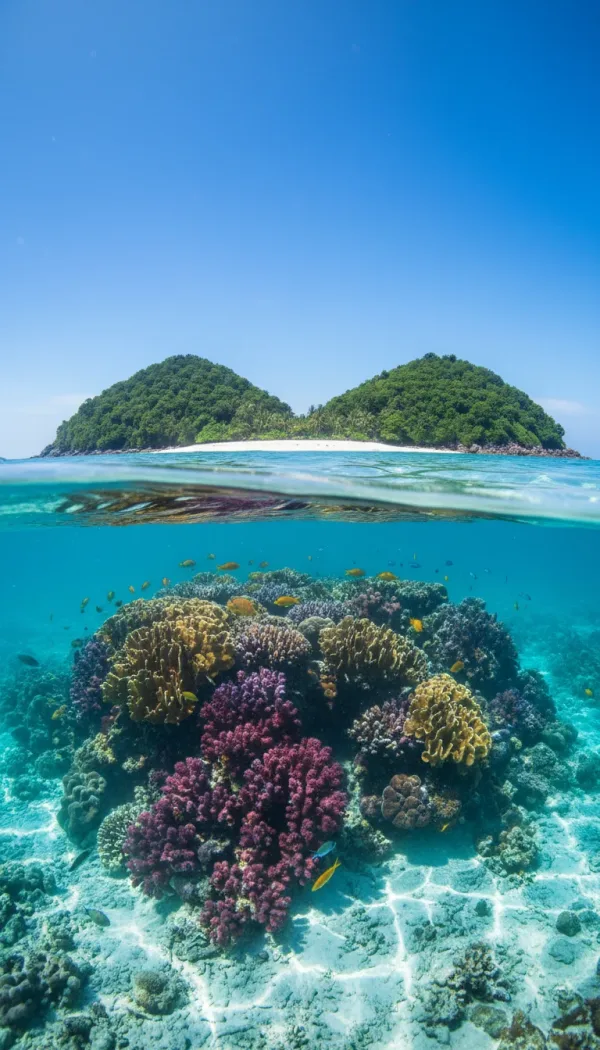
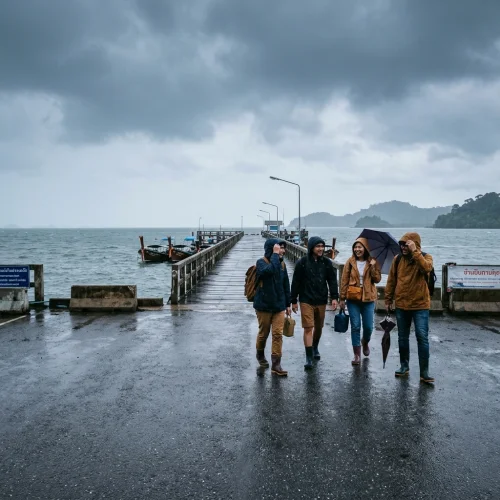
The defining rhythm of this tiny, granite-bouldered speck in the Gulf is dictated entirely by the tides and dive schedules, creating an unusual hybrid society where Thai islanders and transient ocean obsessives have forged a shared, slow-paced existence.
Most guides paint it merely as a backpacker factory, missing the deeply ingrained maritime culture that existed long before the scuba tanks arrived.
Faith here is inextricably tied to the sea. You will rarely see monks collecting alms on foot at dawn; instead, the local spiritual focus centres around the island’s spirit houses, heavily adorned with red Fanta and jasmine garlands to appease the capricious guardians of the ocean. The main spiritual hub is Wat Koh Tao, sitting quietly off the main road in Mae Haad. Entry is free, though a donation of 50 THB (£1.10) is politely expected. It lacks the golden grandeur of Bangkok’s royal wats, but offers a deeply authentic glimpse into local devotion. What often surprises visitors is the reverence paid to King Chulalongkorn. His initials are carved into a boulder at Jor Por Ror bay. Locals still leave offerings of cigars and brandy here. They treat a long-dead monarch as an active, protective spirit for fishermen and divers alike.
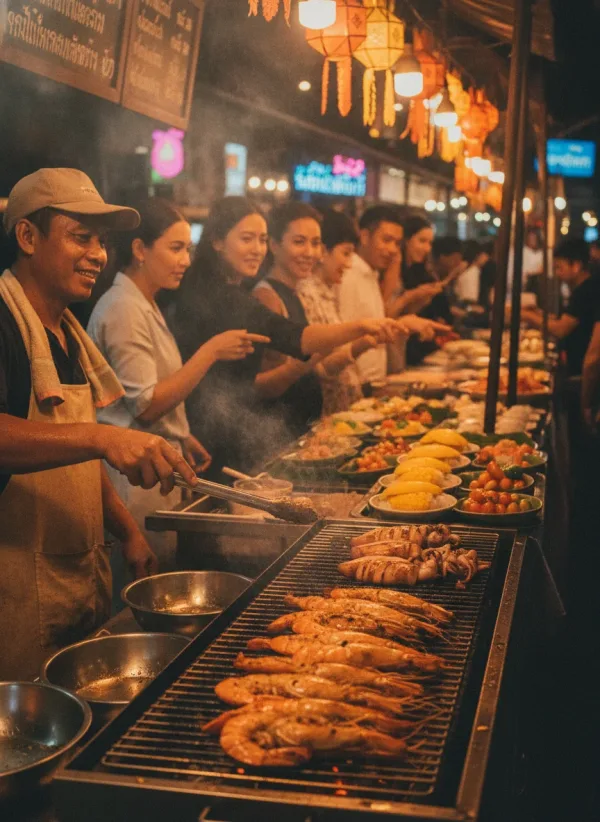
Songkran hits the island in mid-April with the expected water fights. The limited freshwater supply means the chaos is usually contained to a single, intense afternoon in Sairee rather than a week-long deluge. The actual highlight of the year arrives in June with the locally driven Koh Tao Festival. Originally started to promote marine conservation, it has morphed into a massive community celebration where Thai fishermen, Burmese migrant workers, and expat dive instructors mingle around beachfront stages. You will see traditional Thai music performances sharing billing with beach clean-up awards. The detail most itineraries skip is the festival's extraordinary food market. Here, Burmese families set up temporary stalls selling regional dishes you simply cannot find elsewhere in the Gulf. Loy Krathong in November takes on a distinctly oceanic flavour. Instead of floating banana-leaf boats down rivers, islanders wade into the gentle surf at Mae Haad to release their candlelit offerings into the sea. Expect ferry delays during both June and November as domestic tourists flood the piers.
TRADITIONS & CUSTOMS
Life revolves around the dive boat schedule, creating a hyper-casual social environment that frequently leads visitors astray. The most common mistake Westerners make is assuming that because locals wear board shorts and bikinis on the sand, this attire is acceptable in the pharmacy. It is not. Slipping on a t-shirt before leaving the immediate beach area is the fastest way to earn genuine smiles from shopkeepers. A highly specific local custom involves the ubiquitous dive shop motorbikes. When parking on the steep hills around Chalok Baan Kao, you must always leave your helmet balancing on the right mirror, never the left. It is a subtle superstition meant to prevent accidents on the notoriously tricky roads. Meals are communal affairs. Pointing with your feet remains deeply offensive, a rule easily forgotten when lounging on floor cushions at low-slung beach bars.
As a remote diving outpost, the island lacks the deep artisanal heritage of Chiang Mai. Instead, it has developed a thriving subculture of upcycled marine art. Local collectives transform discarded fishing nets and washed-up driftwood into striking sculptures and functional homeware. You can find authentic pieces at the small independent galleries tucked behind the main drag in Mae Haad. Prices range from 500 THB (£11) for small woven bowls to 3,000 THB (£65) for larger driftwood carvings. Be extremely wary of the polished coconut shell bowls sold heavily along Sairee walking street. Almost all are mass-produced in mainland factories and shipped over by the crateload.
The true culinary culture of the island lives within its substantial Burmese community, who power the hospitality and fishing sectors. The morning ritual of eating Mohinga, a deeply savoury fish and rice noodle soup, is entirely communal. Around 7:00 AM near the Mae Haad pier, Thai boat captains and Burmese deckhands sit shoulder-to-shoulder on plastic stools, sharing condiments and gossip over steaming bowls. Eating together in this context erases the usual social hierarchies of the mainland. Sharing a morning tea and a deep-fried samosa at these unmarked roadside stalls is how trust is established before anyone steps foot on a boat.
LANGUAGE & COMMUNICATION
English is universally spoken. Dropping a polite 'mai pen rai' when the power inevitably cuts out will instantly mark you as an understanding guest. The island operates on a distinct nod-and-smile greeting culture rather than the formal wai used elsewhere, a practical byproduct of constantly carrying heavy dive gear. A basic conversational Thai course at a local language school costs roughly 4,000 THB (£88) for ten hours of tuition.
Never touch or stand on the coral reefs. This act deeply offends the conservation-minded local community and will swiftly get you ostracised by dive operators. Wash the sand off your feet using the provided water jars before entering any guesthouse. Do not attempt to negotiate aggressively with the island's taxi drivers. Prices are fixed by a rigid local syndicate, and losing your temper over a 100 THB fare difference causes immense loss of face for everyone involved. Always step over the wooden threshold when entering a traditional Thai home or shopfront, never on it, to avoid angering protective spirits.