Floating in the Gulf of Thailand like a solitary granite turtle, this island is defined by a fierce central spine of jungle-draped rock that plunges directly into the sea, leaving almost no flat land for sprawling resorts.
The steep, unyielding topography keeps the interior wild and undeveloped, forcing life out to the sandy fringes where the world's best shallow-water coral reefs wait just offshore. It is a genuine topographical masterpiece for anyone who prefers their tropical escapes rugged, intimate, and accessible for a 600 THB (£13.60) ferry ticket from the mainland.
Measuring a mere 21 square kilometres, the island is essentially a single, elongated granite massif thrusting out of the ocean floor. The terrain is overwhelmingly vertical, shaped roughly like a kidney bean with a continuous central mountain ridge running from north to south. Flat land is practically non-existent. A narrow coastal alluvial plain on the western edge dictates human habitation, concentrating the vast majority of the population around Mae Haad and Sairee Beach. Everywhere else, enormous granite boulders the size of houses tumble down steep hillsides straight into the water, creating isolated bays accessible only by boat or punishingly steep dirt tracks. Crossing the main width of this compact but formidable rock from Mae Haad to Hin Wong Bay takes about 30 minutes in a 4x4 taxi, costing around 400 THB (£9). The sheer gradient makes every short journey an expedition, but the dramatic elevations provide phenomenal vantage points over the water.
The island's edges are a jagged masterclass in coastal erosion. On the western flank, the sea shelf drops off gently, offering long stretches of powdery, silica-rich sand at Sairee that slopes into shallow, bathtub-warm water ideal for wading. Conversely, the eastern and northern perimeters are savage and spectacular. Here, the sea shelf plunges abruptly into deep water, and the beaches are replaced by sheer cliffs and hidden coves choked with massive, wave-smoothed granite boulders. Hiring a local long-tail boat to navigate from the western piers to the furthest eastern edge at Mango Bay costs roughly 1,500 THB (£34) for the day, a necessary expense since the terrain defies coastal roads. The twin islets of Koh Nang Yuan sit just off the northwest coast, tethered together by a submerged sandbar that emerges at low tide. This specific offshore satellite is privately leased but falls under the jurisdiction of the Mu Ko Chumphon National Park regulations, meaning foreigners must pay a strict 250 THB (£5.70) entry fee to step onto the sand. The stark contrast between the forgiving western shallows and the deep, rocky eastern drop-offs creates a perimeter that rewards both lazy paddlers and serious freedivers.
CONCRETE VS CANOPY
The ratio of development to wilderness remains heavily weighted in nature's favour, with roughly 70 percent of the island still blanketed by dense, secondary monsoon forest and coastal scrubland. Because the central spine is too steep for heavy machinery, concrete is largely confined to the western coastal strip and a few southern bays. However, the relentless push for sea-view villas is slowly eating into the lower canopy, with construction creeping further up the hillsides each year. The upper elevations remain an untamed tangle of dipterocarp trees, strangler figs, and bamboo thickets that provide critical runoff protection during heavy rains. For those wanting to understand the local flora, a private guided nature walk through the jungle trails towards Fraggle Rock costs around 800 THB (£18). The canopy here is thick enough to block out the midday sun, offering a brilliant, sweaty retreat from the beach crowds below.
Marooned in the western Gulf of Thailand, this tiny outpost belongs to Surat Thani province but sits much closer to the Chumphon archipelago. It anchors the northernmost point of the Samui-Pha Ngan-Tao island chain. The mainland cape of Chumphon lies exactly 74 kilometres to the west across open water, a crossing that costs roughly 700 THB (£15.90) by high-speed catamaran. This splendid isolation ensures the surrounding sea remains exceptionally clear, far removed from muddy river mouths.
VERTICAL LIMITS & VIEWPOINTS
The topography peaks sharply at Khao Yen, reaching a formidable 346 metres above sea level. The gradients leading up to this summit frequently exceed 30 degrees, a geographical reality that severely restricts heavy building regulations and keeps the high ground wonderfully devoid of concrete towers. Reaching the island's celebrated John-Suwan Viewpoint in the south requires a punishing 20-minute scramble over sun-baked rocks, but the panoramic reward is absolute. Hiring a robust songthaew to haul you up the brutal concrete inclines to the Mango Viewpoint costs around 300 THB (£6.80) per person.
HYDROLOGY & WATERWAYS
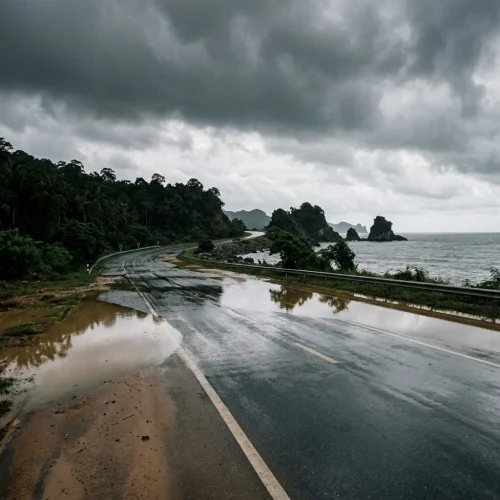
Lacking any major rivers or natural lakes, the island relies heavily on a few seasonal khlongs and a primary reservoir hidden in the central hills. The absence of river runoff guarantees spectacular offshore water clarity, often exceeding 20 metres. During the November monsoon, the steep terrain funnels rainwater aggressively into Sairee village, causing brief flash floods that clear up almost as quickly as they arrive. Consequently, tap water is scarce, and a one-litre bottle of drinking water from a 7-11 costs 15 THB (£0.35).
Moving around this island demands respect and a bit of cash. The savage inclines absolutely shred scooter fuel economy, and the unpaved dirt tracks leading to eastern bays turn into impassable clay traps after a heavy tropical downpour. The smart money skips the basic 110cc automatic bikes; you need torque to survive these hills. Upgrading to a mountain-rated 155cc scooter like a Yamaha NMAX costs about 300 THB (£6.80) per day, compared to 200 THB (£4.50) for a standard runabout. Pay the premium, lean forward on the ascents, and enjoy the rollercoaster terrain safely.