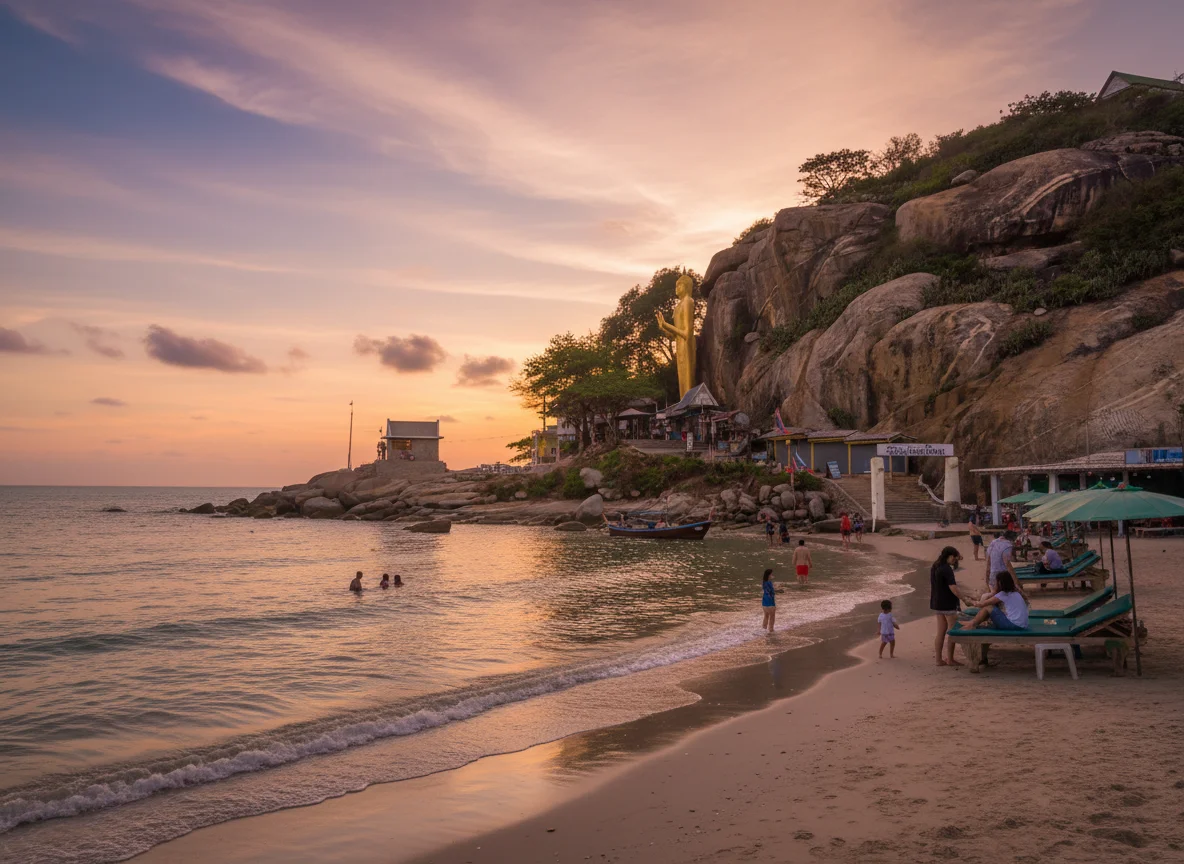
Kitesurfing Hua Hin and Pranburi
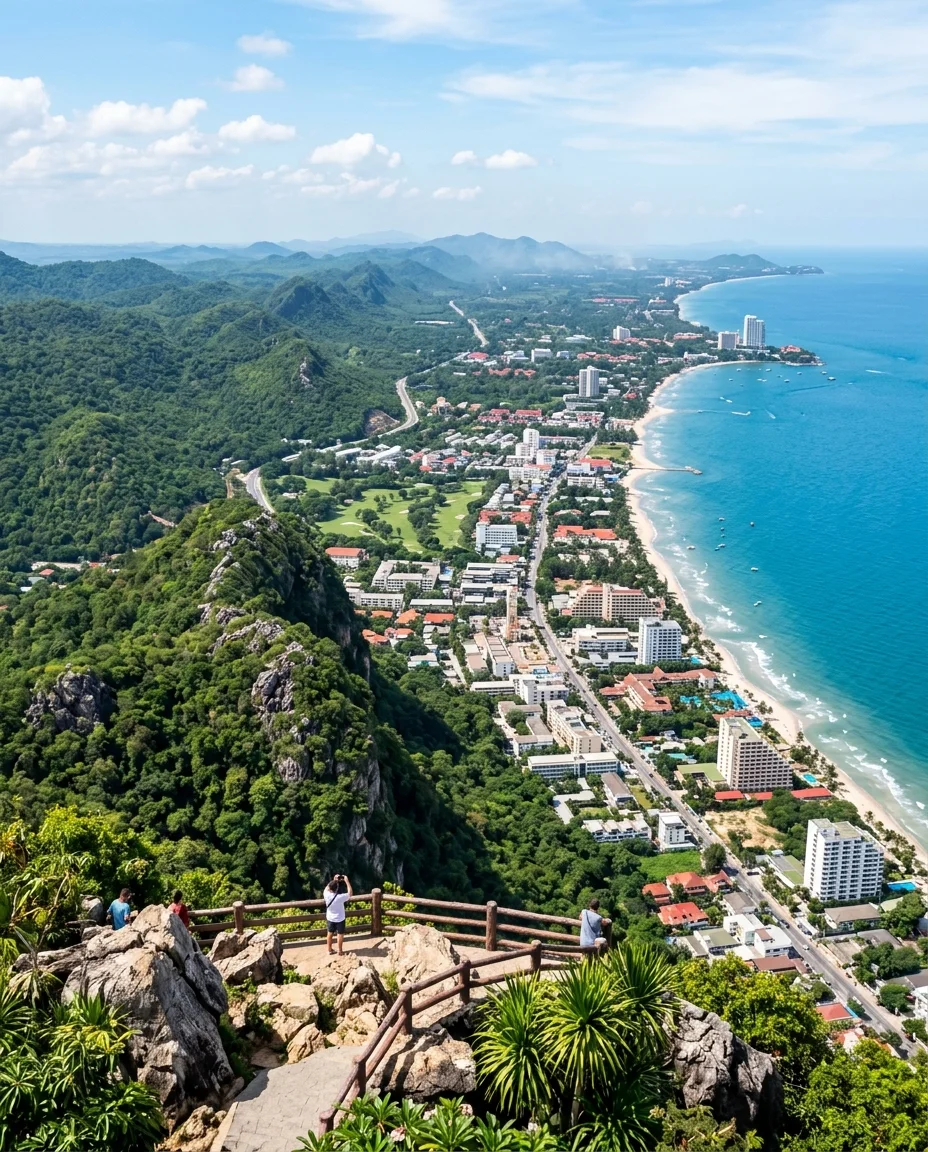
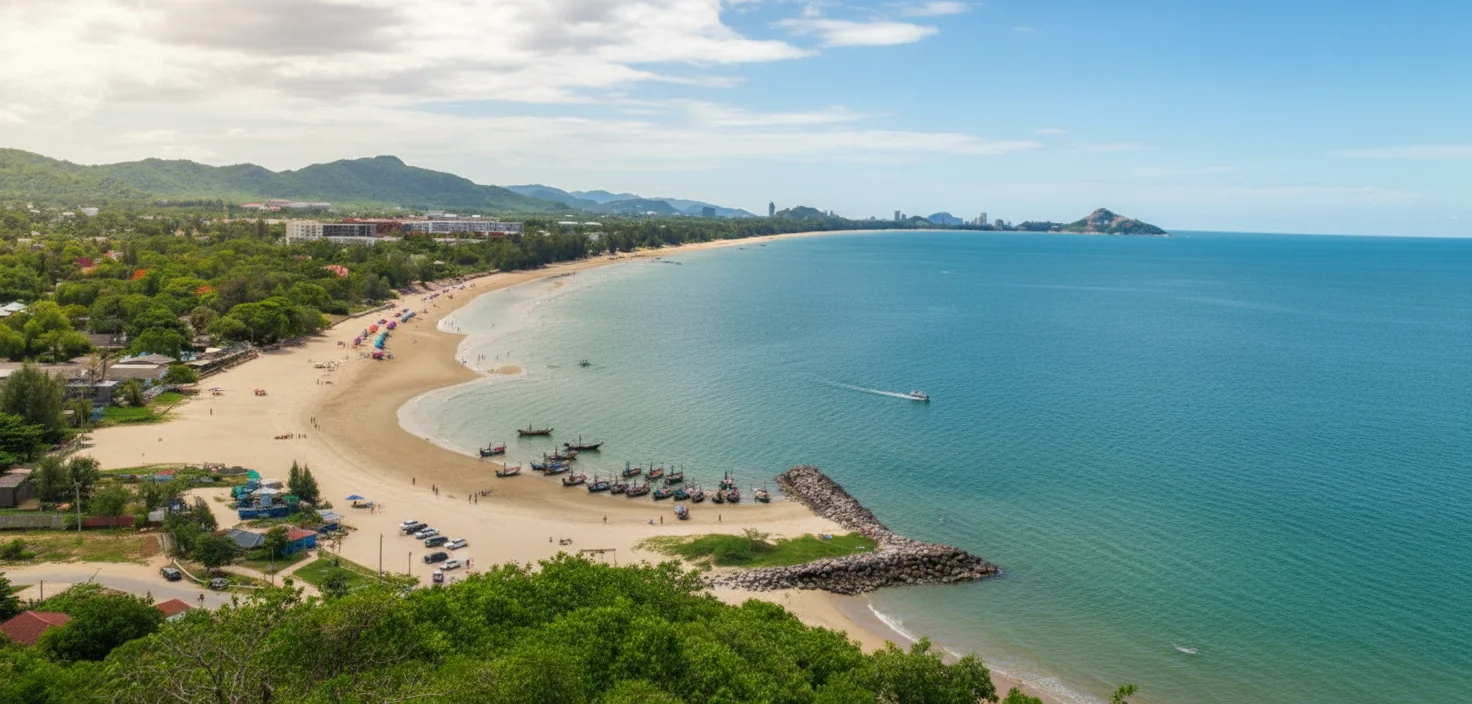
The six-kilometre stretch of coastline between Hua Hin and Pranburi delivers Thailand’s most consistent thermal winds, creating the country's premier kitesurfing hub. With shallow, warm waters and dedicated launch zones like Haad Nari, it provides optimal conditions for both complete beginners logging their first water starts and advanced riders seeking reliable winter trade winds.
Kitesurfing in the Hua Hin and Pranburi district operates across two distinct zones tailored to different riding levels. Hua Hin's main beach offers accessible open-water conditions backed by established kite schools, while Pranburi’s Pak Nam Pran provides dedicated kite zones and flat-water lagoons. The scene is supported by internationally certified IKO schools providing structured training, equipment hire, and rescue cover. This destination suits active travellers looking to learn a water sport in a forgiving tropical environment, as well as independent kiters chasing the reliable northeast monsoon from late autumn through winter.

Wind Conditions and the Kitesurfing Seasons
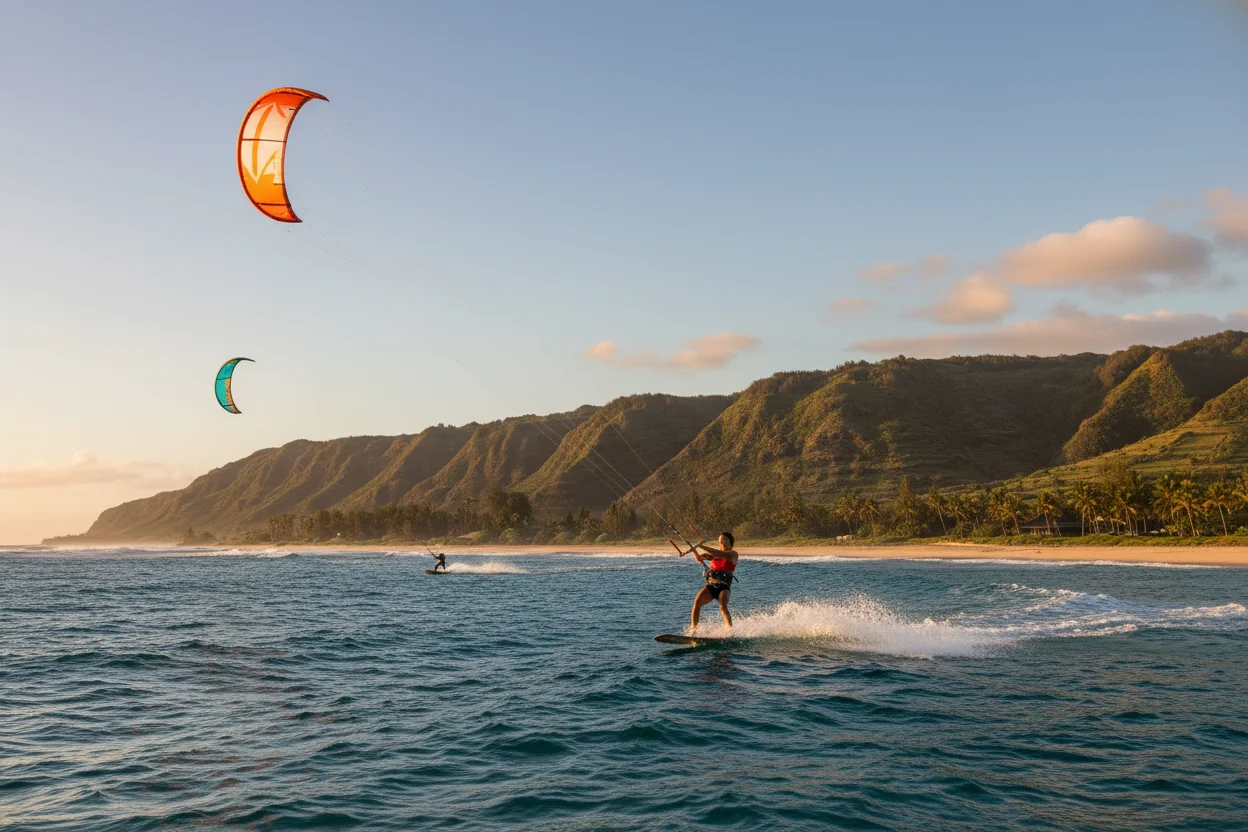
The Gulf of Thailand generates two distinct wind seasons, with the most reliable conditions occurring during the northeast monsoon. From November through to February, a steady thermal wind blows consistently between 12 and 20 knots, providing the ideal power band for learning and progression. This wind generally hits the coastline cross-onshore, which is the safest direction for kitesurfing because it naturally pushes riders back towards the beach rather than out to sea. The wind typically builds throughout the morning, peaking in the early afternoon around 14:00 before dropping off just before sunset. Water temperatures remain a constant 28°C during this period, meaning you only need a rash vest for sun protection rather than a wetsuit. A typical 80-kilogram rider will get the most use out of a 10-metre or 12-metre kite during these winter months. A secondary season occurs from mid-February to May, bringing southerly thermal winds that range from 10 to 18 knots. These spring winds are slightly less predictable but often deliver excellent afternoon sessions for those using larger 14-metre kites or hydrofoils. Between June and October, the monsoon shifts entirely, bringing onshore storms and unpredictable squalls that make kitesurfing unsafe and force most reputable schools to close their physical beach operations. Understanding these wind cycles ensures you time your visit for maximum time on the water.
Discover the real Hua Hin with our honest guide. From royal heritage to local seafood, learn the best areas to stay and how to avoid the tourist traps.
Plan your trip between November and February for the highest probability of consistent, daily wind.
Choosing Your Spot: Hua Hin vs Pranburi
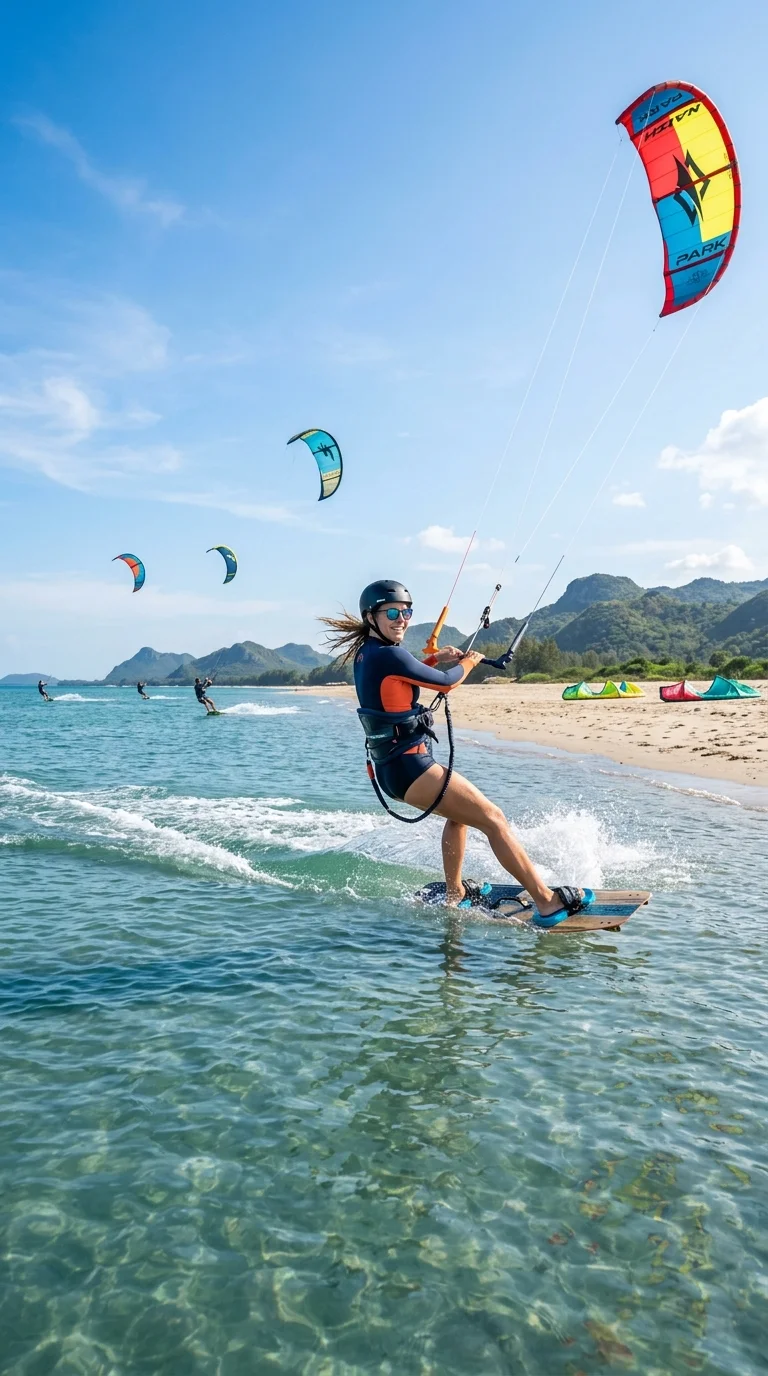
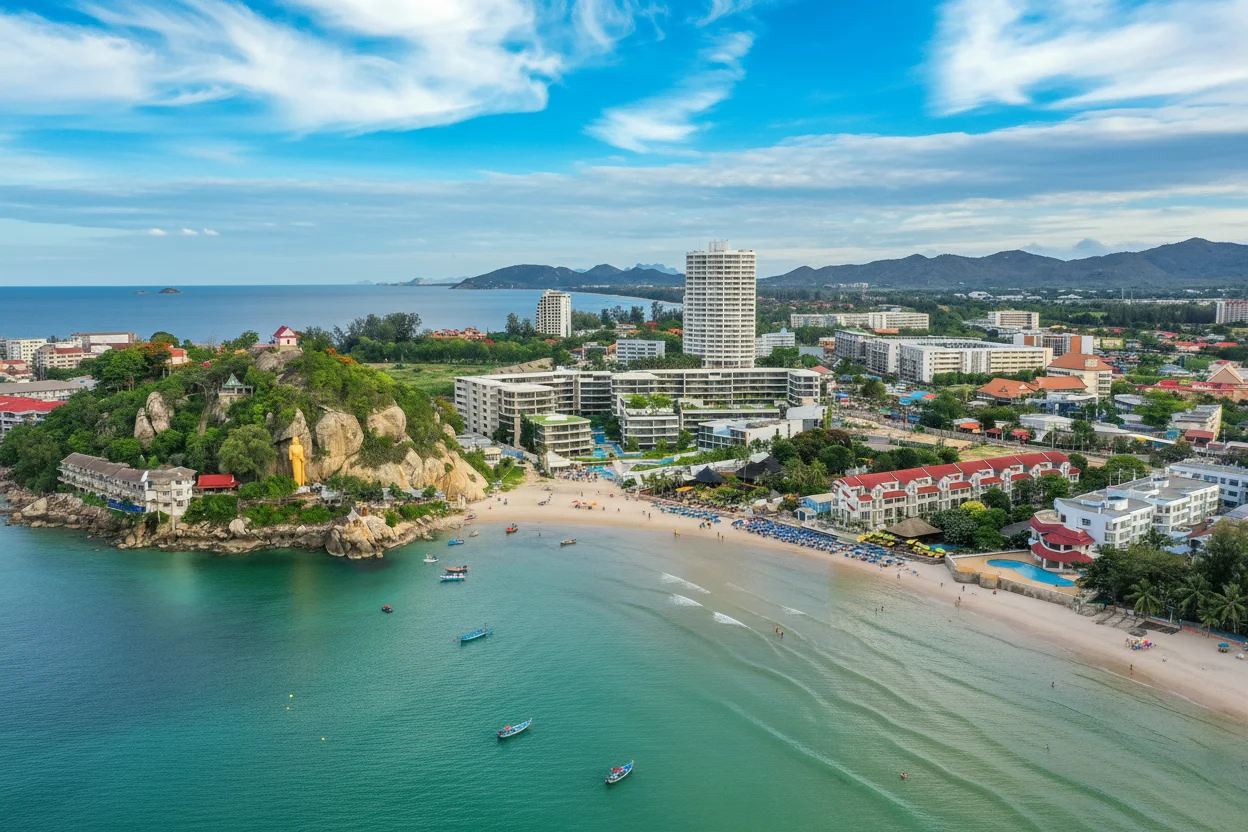
The riding experience changes significantly depending on whether you launch from central Hua Hin or travel south to Pranburi. Hua Hin beach, accessible directly from the town centre via alleys like Soi 75 and Soi 83, offers a long stretch of sand with shallow water extending far out into the Gulf. This open-water environment is highly convenient for those staying in central hotels, but the water gets busy with jet skis, banana boats, and general tourists. The surface chop can become pronounced when the wind exceeds 15 knots, which adds an extra physical challenge for beginners trying to master their board starts in rolling waves. Pranburi, located 30 kilometres south, provides a dedicated kite beach at Haad Nari. This area operates as a designated water sports zone, completely free from motorised watercraft and swimming crowds. Pak Nam Pran features a flat-water lagoon formed by a large sandbar at low tide, creating exceptionally smooth conditions that make learning much easier. The lack of chop allows riders to focus entirely on kite control and board balance without fighting the incoming waves. Advanced riders also heavily prefer Pranburi for freestyle tricks, taking advantage of the butter-flat water behind the sandbars to practice unhooked manoeuvres and high jumps.
Choose Hua Hin for convenience if staying in town, but travel to Pranburi for uncrowded, flat-water progression.
IKO Beginner Courses and The Learning Curve
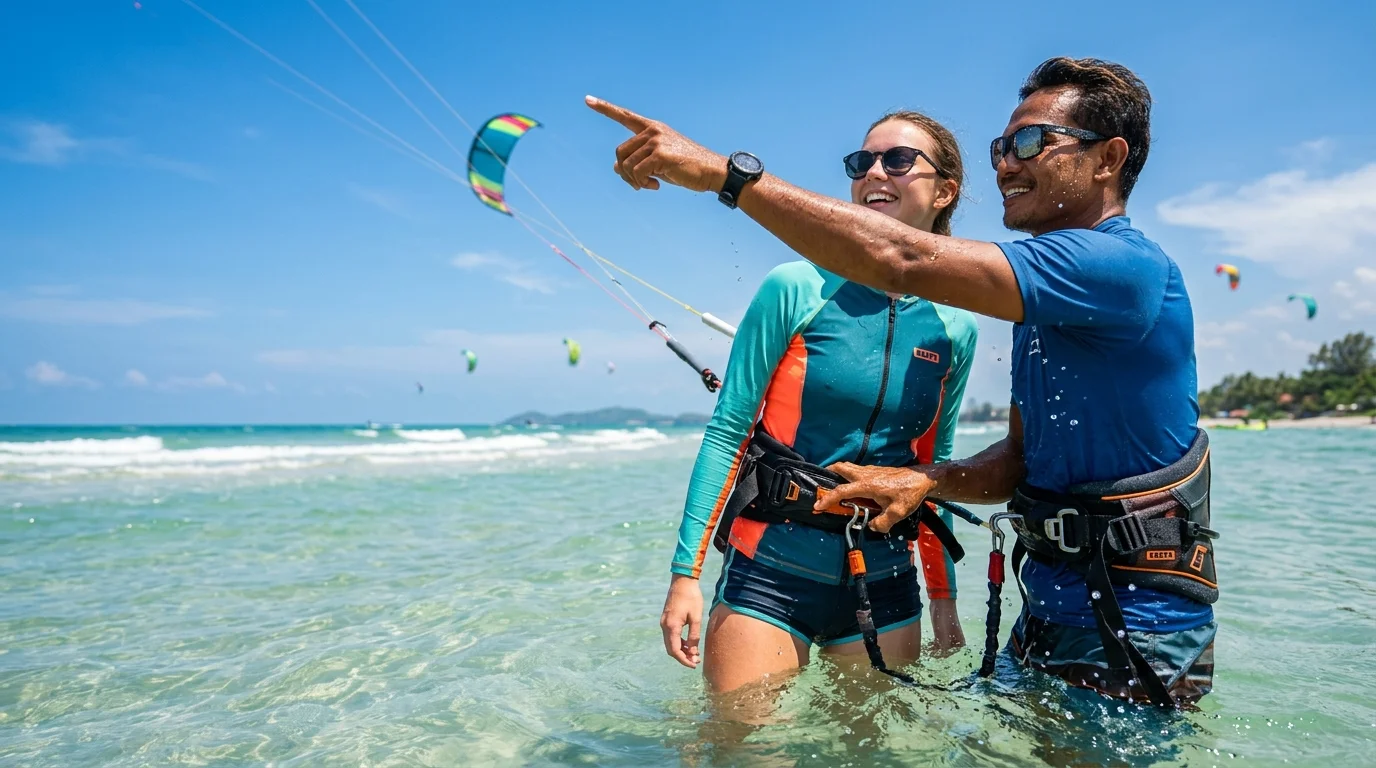
Legitimate operators in the region teach exclusively to International Kiteboarding Organisation (IKO) standards. A complete beginner course typically requires nine to ten hours of instruction, usually split across three consecutive days to prevent physical burnout. Day one focuses entirely on safety and kite control, starting on the beach with a small two-metre trainer kite to understand the wind window. You then progress into waist-deep water with a full-sized tube kite to learn body dragging—using the kite's power to pull you through the water without a board. Days two and three introduce the twin-tip board. You will learn how to position the board on your feet with one hand while flying the kite with the other, eventually attempting your first water starts. Premium schools in Hua Hin now use two-way radio helmets, allowing the instructor to give you real-time feedback while you are 50 metres away in the water. Kitesurfing demands more technical coordination than raw physical strength. Because you wear a waist harness that takes the entire pull of the kite, you do not need significant upper body power. However, you do need core stability and reasonable cardiovascular fitness to handle the constant walking back upwind along the beach during the learning phase. Expect to spend a lot of time drinking seawater before the mechanics finally click.
Commit to a full three-day, nine-hour course to reach a level where you can safely practice water starts independently.
| Course Type | Duration | Cost (THB) | Cost (GBP approx) | Notes |
|---|---|---|---|---|
| Discovery Lesson | 1 Day (3 hours) | 4,000 | 88 | Covers safety, setup, and basic body dragging. |
| Full IKO Beginner | 3 Days (9 hours) | 11,000 - 12,000 | 240 - 265 | Takes students to independent water starts. Includes certification. |
| Private Coaching | 1 Hour | 1,500 - 2,000 | 33 - 44 | One-on-one progression session for intermediate riders. |
| Refresher Course | 2 Hours | 3,000 | 66 | Ideal for those who have not ridden in six months. |
Equipment Hire and Independent Riding
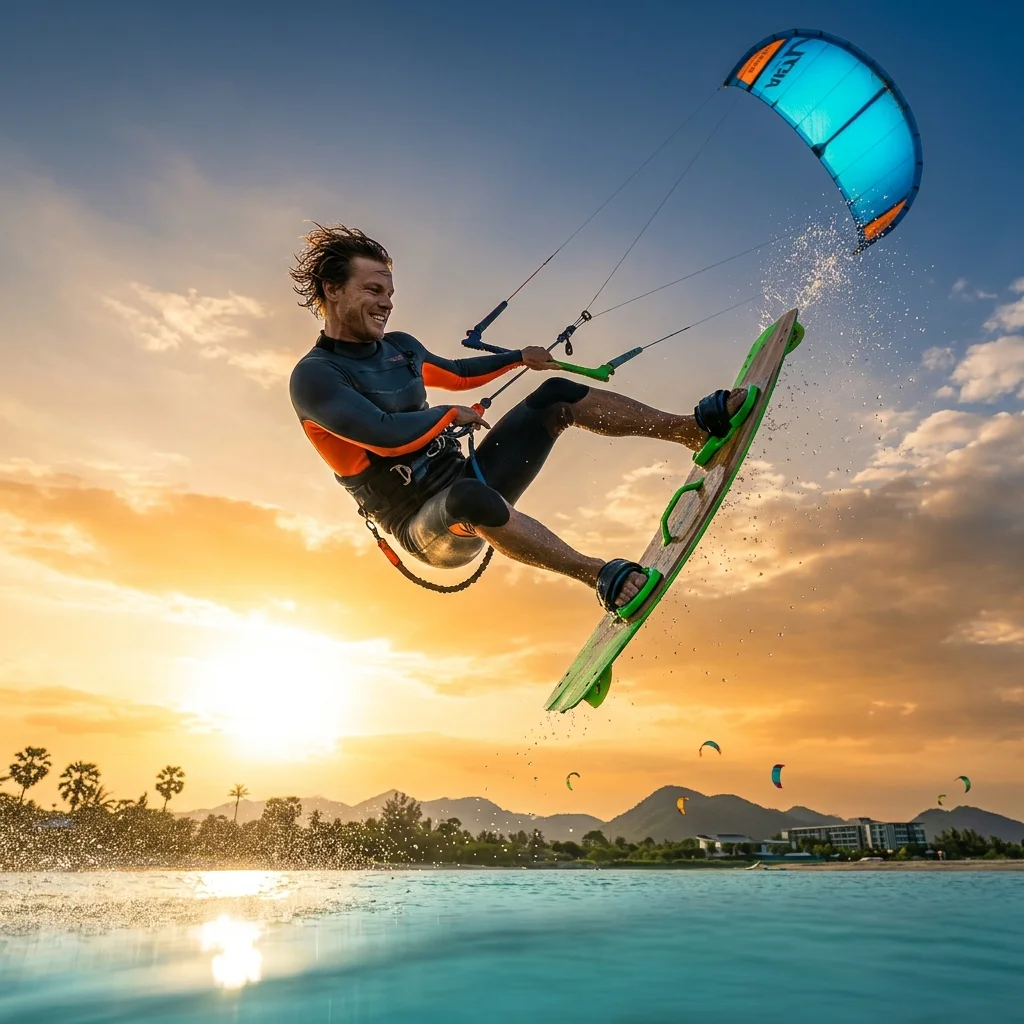
Experienced riders holding an IKO Level 3 certification card can hire equipment from the major schools along both Hua Hin and Pranburi beaches. Rental fleets generally feature current-year or one-year-old gear from leading brands like Cabrinha, Duotone, Core, and F-One. Schools provide a full setup including the kite, twin-tip board, harness, pump, and a mandatory short safety leash. You can swap kite sizes throughout the day as the wind fluctuates, ensuring you always ride with the correct power for the changing conditions. For lighter wind days, many schools now offer directional surfboards and hydrofoil setups for advanced riders looking to maximise their time on the water. Independent kiters who travel with their own equipment can pay a daily facility fee to use the school amenities. This typically covers compressor use for rapid inflation, beach boy assistance for safe launching and landing, fresh water showers, gear storage lockers, and crucial rescue boat cover. The rescue service provides essential peace of mind, especially during the spring season when offshore wind shifts occasionally occur. If the wind drops suddenly and you cannot relaunch your kite from the water, the school's jet ski or longtail boat will retrieve you and your equipment safely.
Bring your IKO certification card, as reputable schools will not rent equipment without proof of independent riding ability.
Safety Considerations and Insurance Coverage
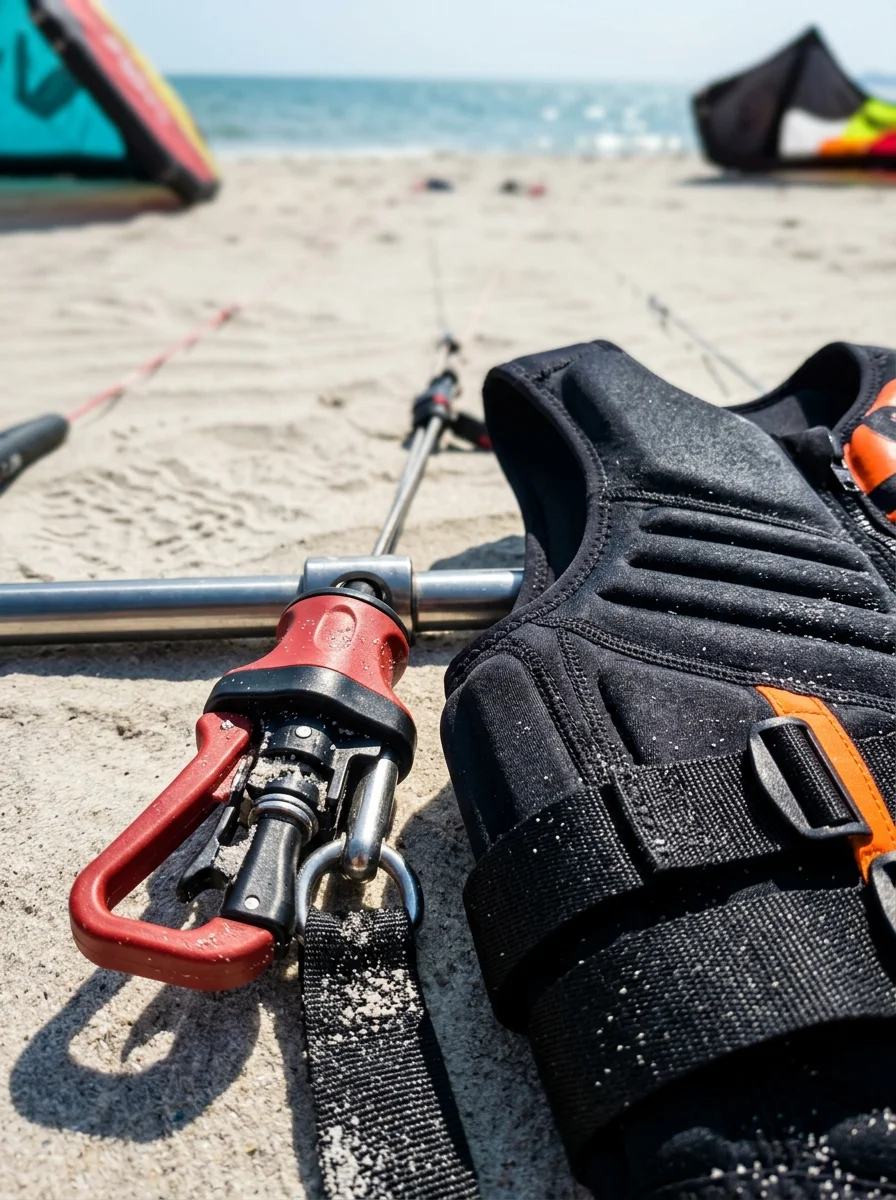
Kitesurfing carries inherent risks, making safety protocols a mandatory consideration for any visitor taking to the water. The primary hazard in central Hua Hin is the busy water traffic; riders must actively maintain a 50-metre distance from designated swimming zones and commercial jet ski operations. In Pranburi, the hazards are primarily environmental, including shallow sandbars at low tide that require careful navigation and occasional jellyfish blooms during the warmer transitional months. Schools provide high-visibility rash vests and impact helmets for all students, but packing a pair of neoprene reef booties will protect your feet from sharp shells during the extensive walking required in beginner lessons. Standard travel insurance rarely covers kitesurfing automatically. You must purchase a policy with specific extreme sports or water sports add-ons to ensure your medical bills are covered in the event of an accident. Check the fine print regarding personal liability, as kites can cause significant damage to other beach users or coastal property if control is lost during a launch. The IKO offers its own dedicated insurance policy for registered members, which covers third-party liability and accidental equipment damage, serving as an excellent supplement to your standard medical travel insurance policy.
Verify that your travel insurance explicitly lists kitesurfing under its covered activities and includes third-party liability.
Location and Getting There
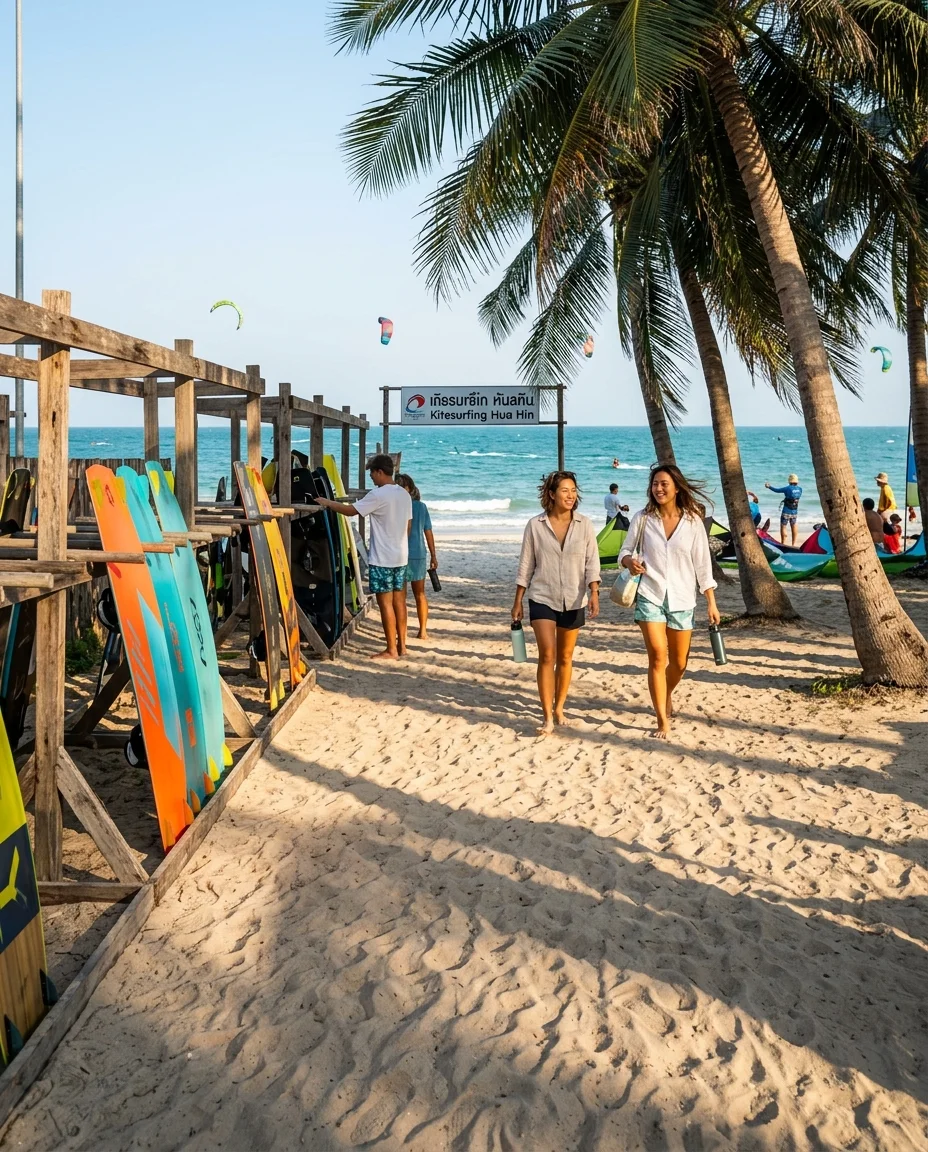
The kitesurfing action spans a 30-kilometre stretch of the Prachuap Khiri Khan coastline. Hua Hin beach sits centrally, roughly 200 kilometres south of Bangkok, while the dedicated kite zones of Pak Nam Pran and Haad Nari are located further south in the quiet Pranburi district. To reach Hua Hin from Bangkok Suvarnabhumi Airport (BKK), the most direct option is a private taxi taking three hours and costing around 2,000 THB (44 GBP). Alternatively, the Roong Reuang Coach operates a direct, comfortable VIP bus service from the airport arrivals level straight to the Hua Hin bus station for 325 THB (7 GBP). If you prefer rail travel, the new trains from Bangkok's Krung Thep Aphiwat Central Terminal take approximately four hours and cost 500 THB (11 GBP) for an air-conditioned seat. If your primary goal is kitesurfing at the flat-water spots in Pranburi, you will need secondary transport from your Hua Hin base. Local songthaews (shared pickup trucks) run the coastal route for 50 THB (1 GBP), but the journey takes a slow hour with multiple stops. Hiring a scooter for 250 THB (5 GBP) per day provides the essential flexibility to chase the wind between Hua Hin and Pranburi at your own pace.
Costs and Booking
Kitesurfing costs in Thailand remain highly competitive compared to established European or Caribbean destinations. Pricing fluctuates slightly between the high season (November to February) and low season, though core lesson rates generally stay fixed year-round. During the peak wind months, it is essential to book your instructor at least two weeks in advance, as experienced, English-speaking IKO-certified instructors are in extremely high demand. A standard full equipment rental package, which includes the kite, board, and harness, costs approximately 3,000 THB (66 GBP) per day. If you bring your own gear, expect to pay a daily facility fee of 300 THB (6 GBP) to use the school's compressor, fresh water showers, and rescue boat service. Many schools offer comprehensive week-long zero-to-hero packages that bundle a full beginner course with subsequent supervised rental days at a discounted rate. Always confirm whether rescue boat fees are included in your standard rental rate, as some independent operators charge a supplementary fee of 500 THB (11 GBP) per retrieval from the water. If you plan to stay for an extended period, many schools sell their ex-rental equipment at the end of the high season in March, offering a cost-effective way to purchase your first complete setup.
| Option | Cost (THB per day) | Cost (GBP approx) | Notes |
|---|---|---|---|
| Full Equipment Rental | 3,000 | 66 | Includes kite, twin-tip board, harness, and pump. |
| Board Only Rental | 1,000 | 22 | Ideal for travellers wanting to save airline baggage fees. |
| Kite Only Rental | 2,000 | 44 | Useful for changing kite sizes as wind conditions shift. |
| Facility and Rescue Fee | 300 | 6 | Mandatory daily fee for independent kiters using school amenities. |
Who It Suits Best
The Hua Hin and Pranburi kite zones cater brilliantly to active solo travellers, couples, and older teenagers wanting to learn a dynamic water sport in warm, forgiving conditions. The flat-water lagoon at Pranburi is particularly suited to nervous beginners and advanced freestyle riders wanting smooth landings. It is not suitable for young children under 12, who generally lack the weight and attention span required for the sport. Those expecting massive wave riding or heavy 30-knot storm conditions will find the Gulf of Thailand too calm.
What to Know Before You Book
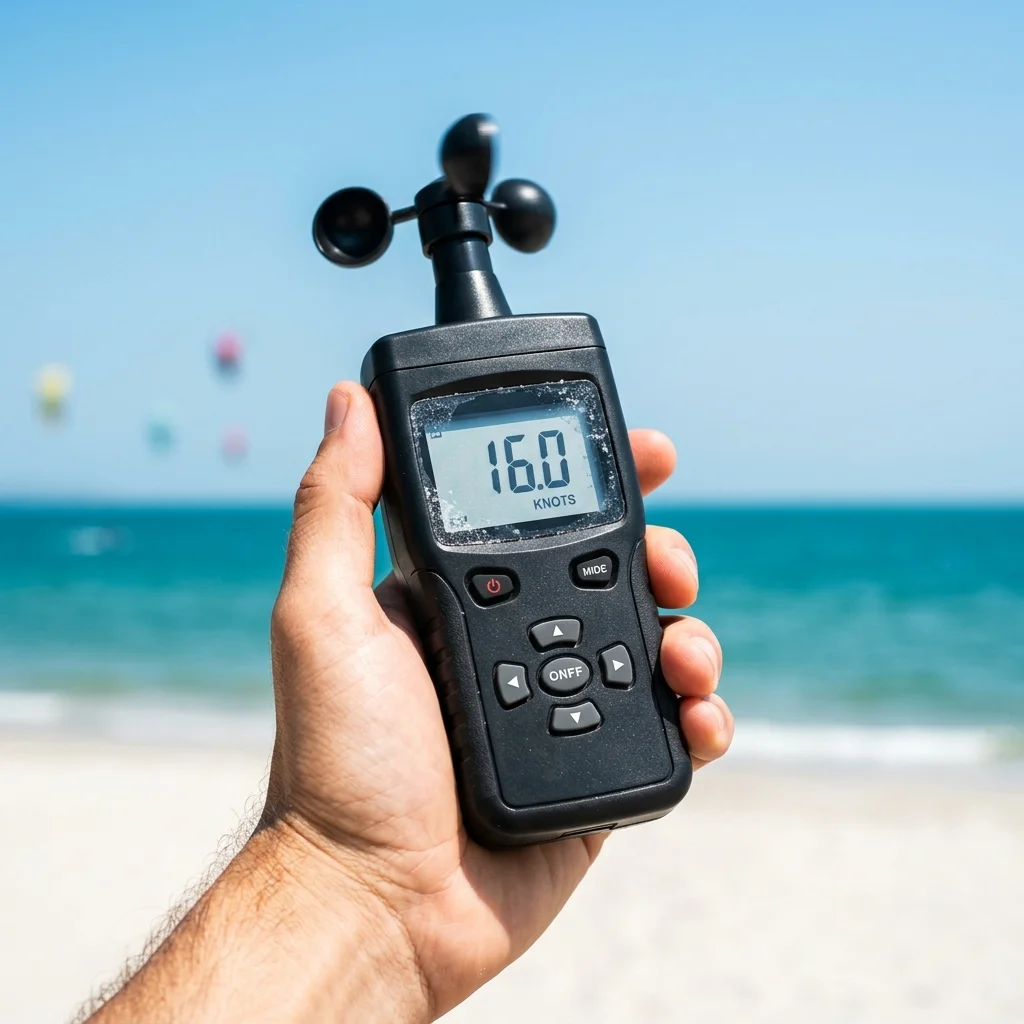
The wind strength dictates your daily schedule entirely. You must remain flexible and be prepared to drop other sightseeing plans when the thermal winds kick in during the early afternoon.
Physical exertion will leave you severely exhausted during the initial learning phase. Book accommodation with a good pool and massage facilities, as your core and leg muscles will require serious recovery time after three hours of body dragging.
The midday sun reflects aggressively off the surface of the water. Pack a high-factor, reef-safe zinc sunscreen and a long-sleeved UV rash vest, as standard liquid sun cream washes off immediately during repeated water starts.
Not all beaches remain suitable for swimming when the wind is blowing strong. If travelling with non-kiting partners, ensure your hotel has extensive pool facilities, as the kite zones become highly busy with fast-moving water traffic and sweeping kite lines.
Practical Tips
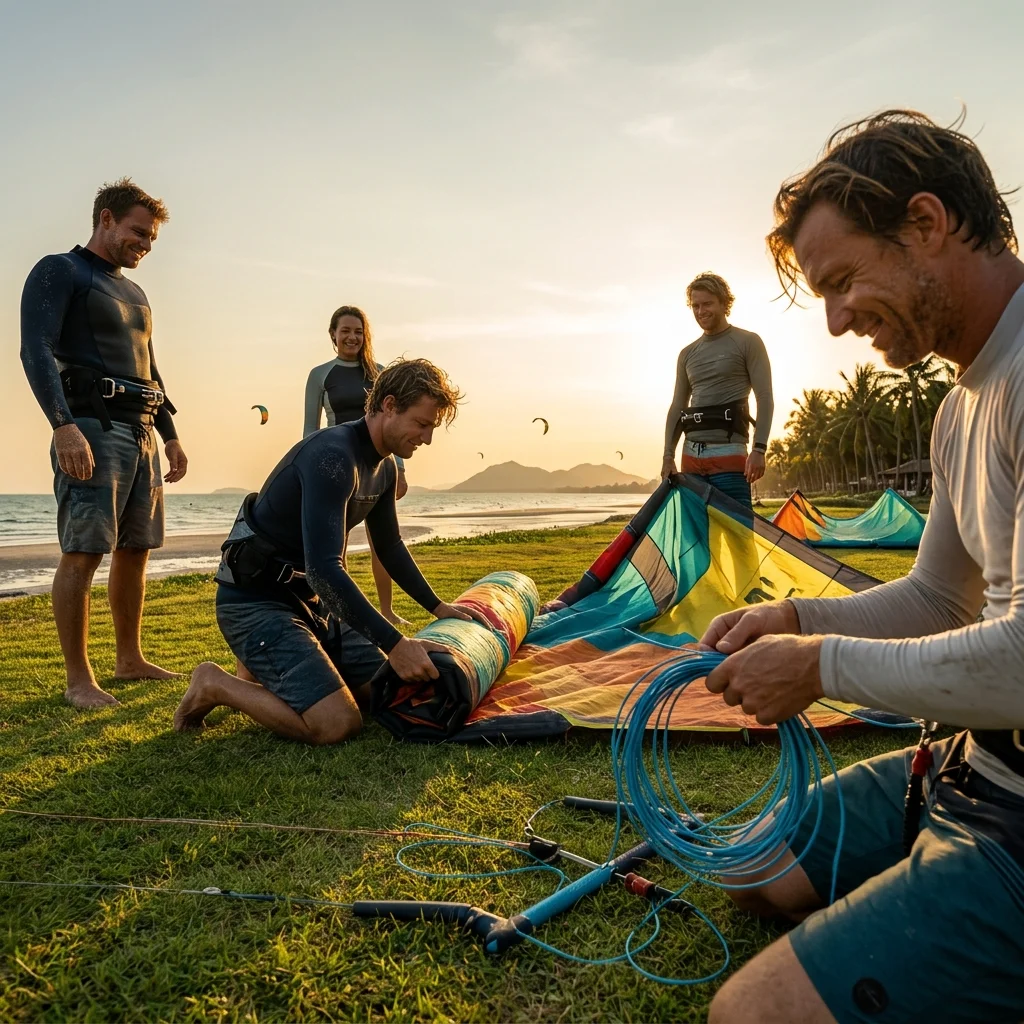
Check the local wind forecasts using the Windguru or Windy smartphone apps rather than standard weather websites. These specialised tools factor in the specific thermal wind effects unique to the Gulf of Thailand coastline.
Wear polarized sunglasses secured with a tight neoprene head strap during all your water sessions. This protects your eyes from intense surface glare and prevents you from losing your expensive glasses when you inevitably crash into the water.
Hydrate heavily with electrolytes before heading out onto the water for a long session. The combination of swallowing salt water, intense physical exertion, and tropical heat causes rapid dehydration that you may not notice while riding.
Wait until the tide is actively dropping before launching your kite at the Pranburi spots. The falling tide exposes the offshore sandbars, creating the butter-flat lagoon conditions that make learning and freestyle tricks significantly easier.
Bring your own well-fitting harness from home if you plan to rent the rest of your equipment. School harnesses are used daily by different body types and often lack the precise, comfortable fit required to prevent lower back pain during long sessions.
Ask your instructor about the specific right-of-way rules and exclusion zones for the exact beach you are riding on. Central Hua Hin has designated tourist swim zones marked by buoys that you must actively avoid, and crossing these lines can result in local fines.
Rinse all your personal equipment with fresh water at the school facilities before packing it away for the evening. The high salt content of the Gulf of Thailand will quickly corrode your harness buckles and kite pulleys if left untreated overnight.
Quick Reference Table
| Item | Detail | Notes |
|---|---|---|
| Property Name | Kitesurfing Hua Hin and Pranburi | Covers multiple IKO schools across the district. |
| Location | Hua Hin and Pranburi Coastline, Prachuap Khiri Khan | Pranburi is 30km south of central Hua Hin. |
| Property Type | Water Sport and Activity | Includes equipment hire, lessons, and rescue cover. |
| Star Rating / Category | IKO Certified Training Centres | Look for Level 2 or Level 3 certified instructors. |
| Capacity | Varies by school | Advance booking required during November to February. |
| Operating Hours | 09:00 to 18:00 daily | Wind typically peaks between 13:00 and 16:00. |
| Nearest Airport | Suvarnabhumi Airport (BKK) | 3-hour drive via private taxi or VIP bus. |
| Distance to Beach | Direct beach access | All schools operate directly on the sand. |