Pran Buri - Prachuap Khiri Khan
The coastal district of Pran Buri is home to a 200-hectare mangrove forest protected by royal decree since 1982, where raised wooden boardwalks wind directly to the Pran Buri River estuary. Unlike its commercialised neighbour Hua Hin just 30 kilometres north, this quiet district remains the premier source of sun-dried squid for Bangkok's finest seafood restaurants.
Pran Buri is a peaceful river town and coastal district situated in Prachuap Khiri Khan province, roughly 230 kilometres south of Bangkok on the Gulf of Thailand. Defined by the winding Pran Buri River and the low-key Pak Nam Pran beach coastline, this destination attracts travellers seeking an authentic Thai coastal environment far removed from package tourism. It is highly suited to couples, families, and expatriates who value quiet evenings, natural parks, and seafood over high-rise developments and nightlife. The district offers a slow-paced lifestyle where the river meets the sea, making it the perfect destination for extended stays.
Character and Coastal Geography
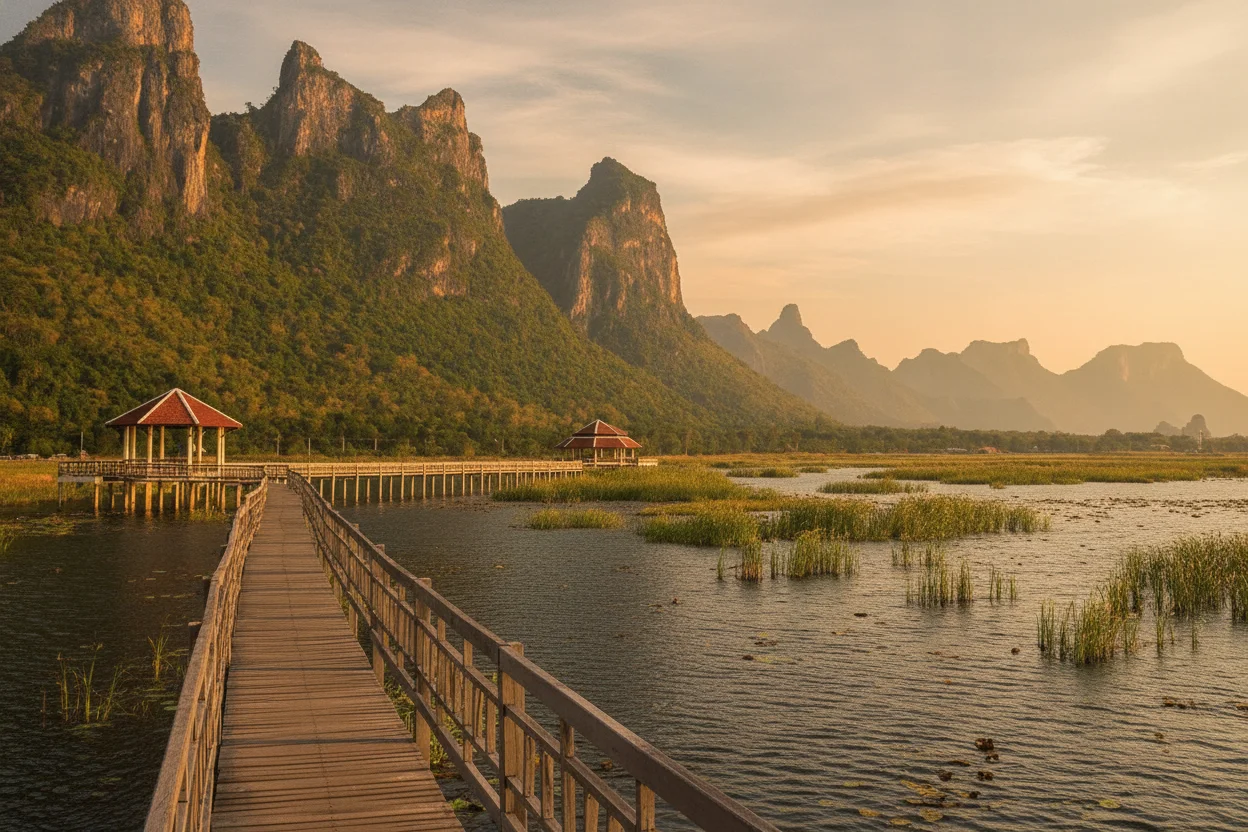
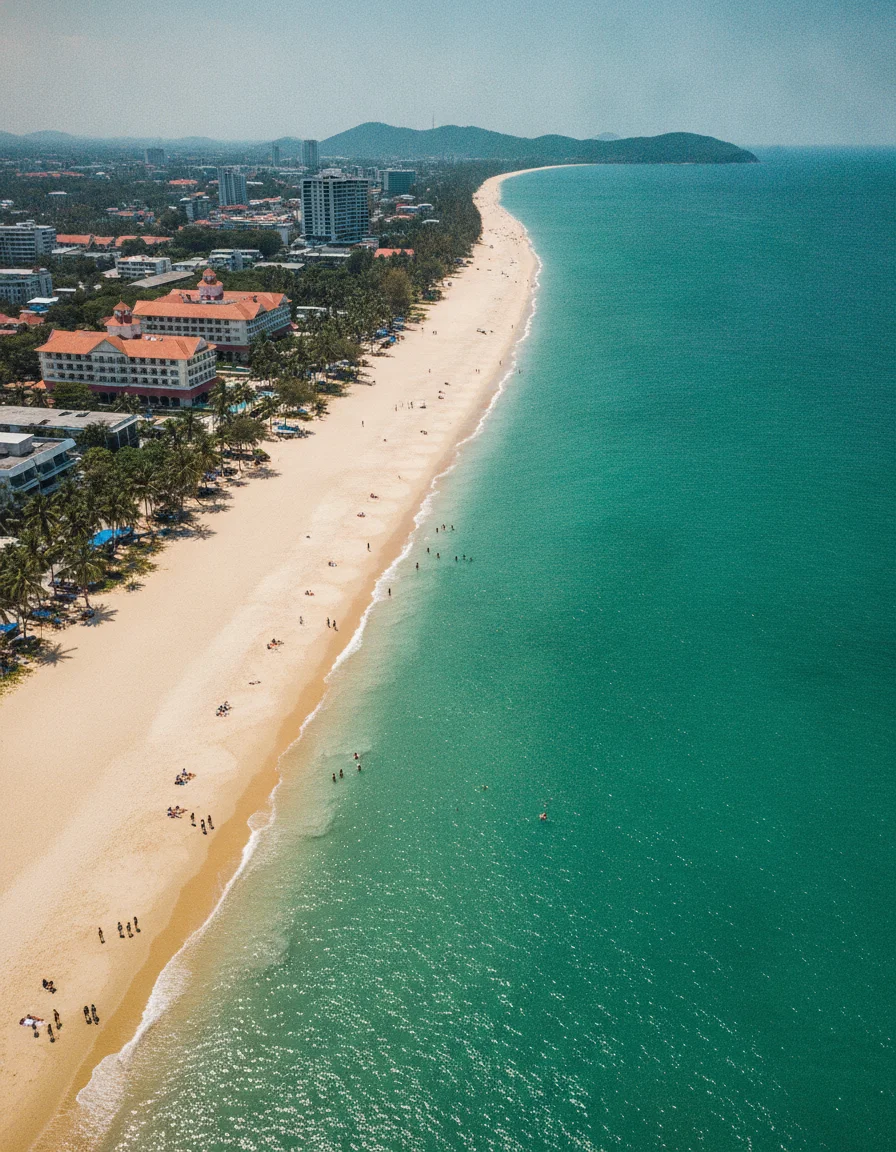
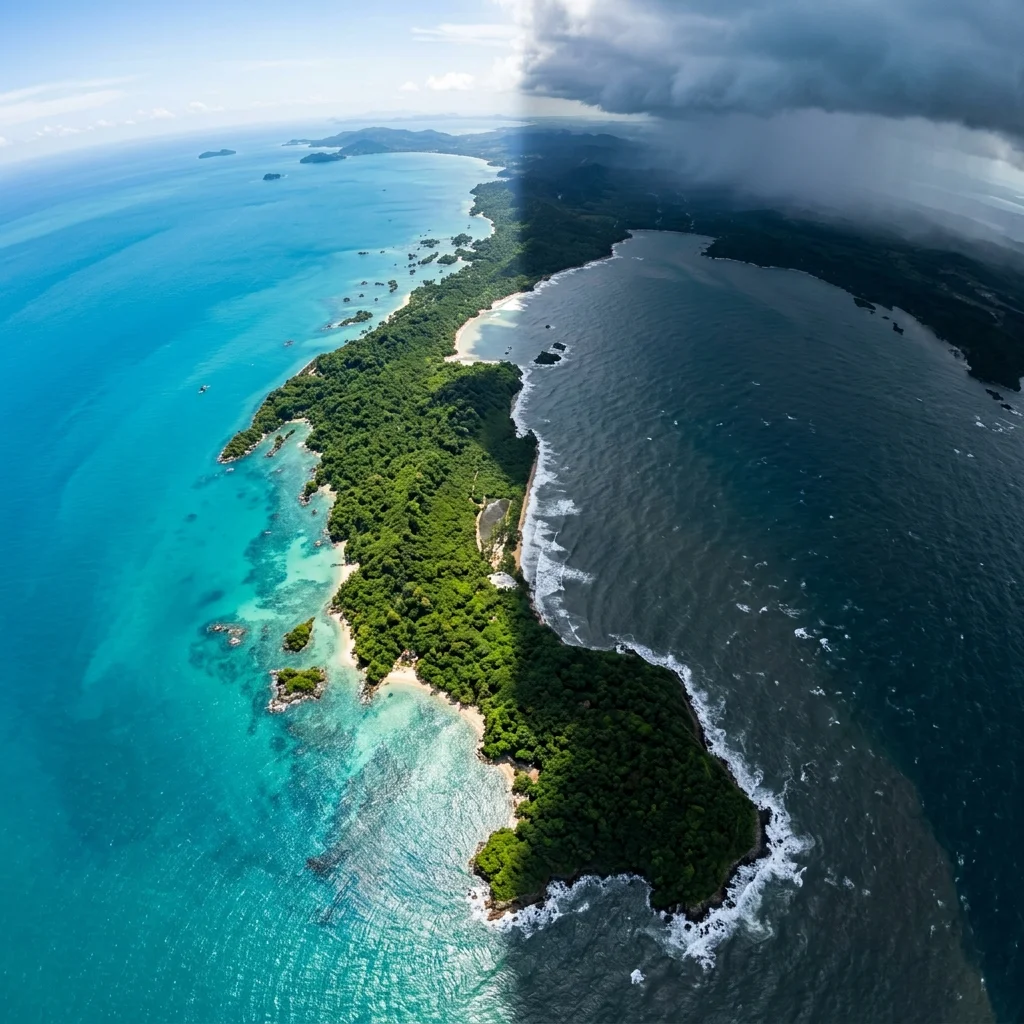
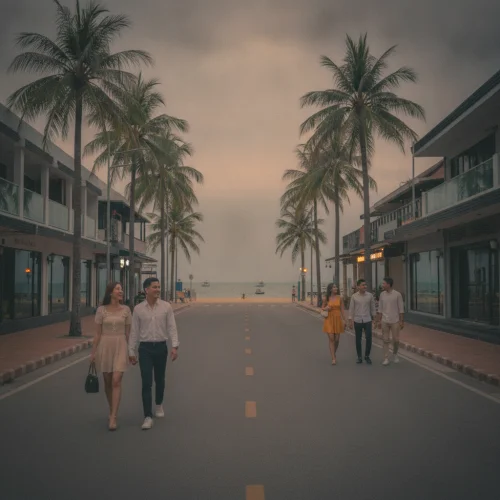
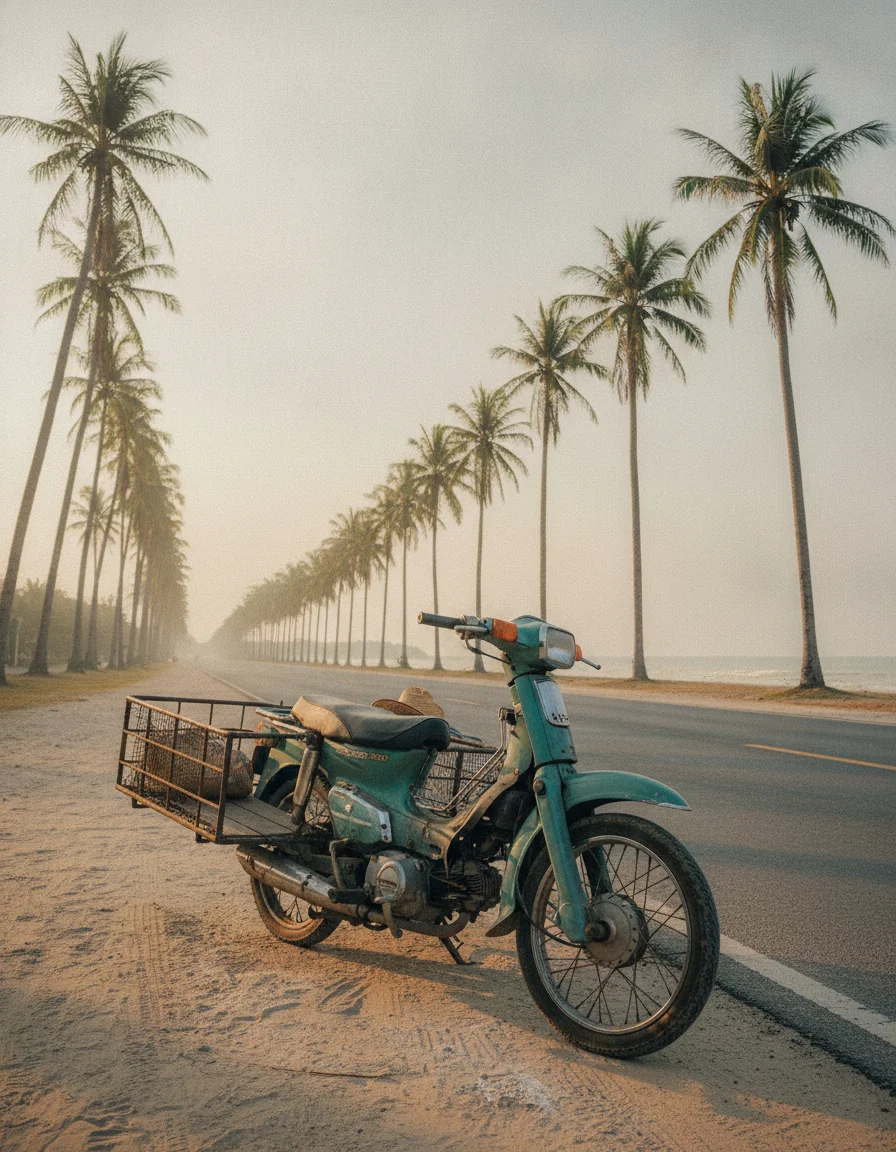
The geographic intersection of the winding Pran Buri River and the calm waters of the Gulf of Thailand shapes the entire physical character of this low-key coastal settlement. You will find that the district is divided into two distinct zones. These are the sleepy historic market town situated inland along the railway, and the coastal stretch of Pak Nam Pran about ten kilometres to the east. The coastline features a wide paved promenade backed by swaying pine trees and low-rise buildings. Your views of the ocean remain completely unobstructed by modern high-rise developments. Local fishermen dock their hand-painted wooden trawlers along the wide riverbanks, where the scent of drying salt-fish and marine air defines the sensory environment. Unlike nearby resort towns, there are no commercialised shopping malls or neon-lit entertainment zones to disrupt the quiet atmosphere of the area. Instead, you will see quiet residential streets, family-run coconut plantations, and small salt pans that reflect the sky. Navigating the flat, well-maintained coastal roads is a straightforward process, making this flat terrain ideal for relaxed exploration by bicycle or a low-powered scooter. The estuary itself serves as a vital nursery for local marine life, with extensive mudflats that appear during low tide to reveal thousands of tiny blue crabs. This natural rhythm dictates the daily routines of the local community, who have farmed and fished these waters for generations.
Discover Prachuap Khiri Khan Town. Read our detailed guide to the three scenic bays, friendly dusky langurs, and authentic seafood. Plan your trip now.
Takeaway: Renting a scooter is the most practical way to bridge the distance between the quiet riverside old town and the breezy beach strip.
Key Landmarks and Natural Wonders
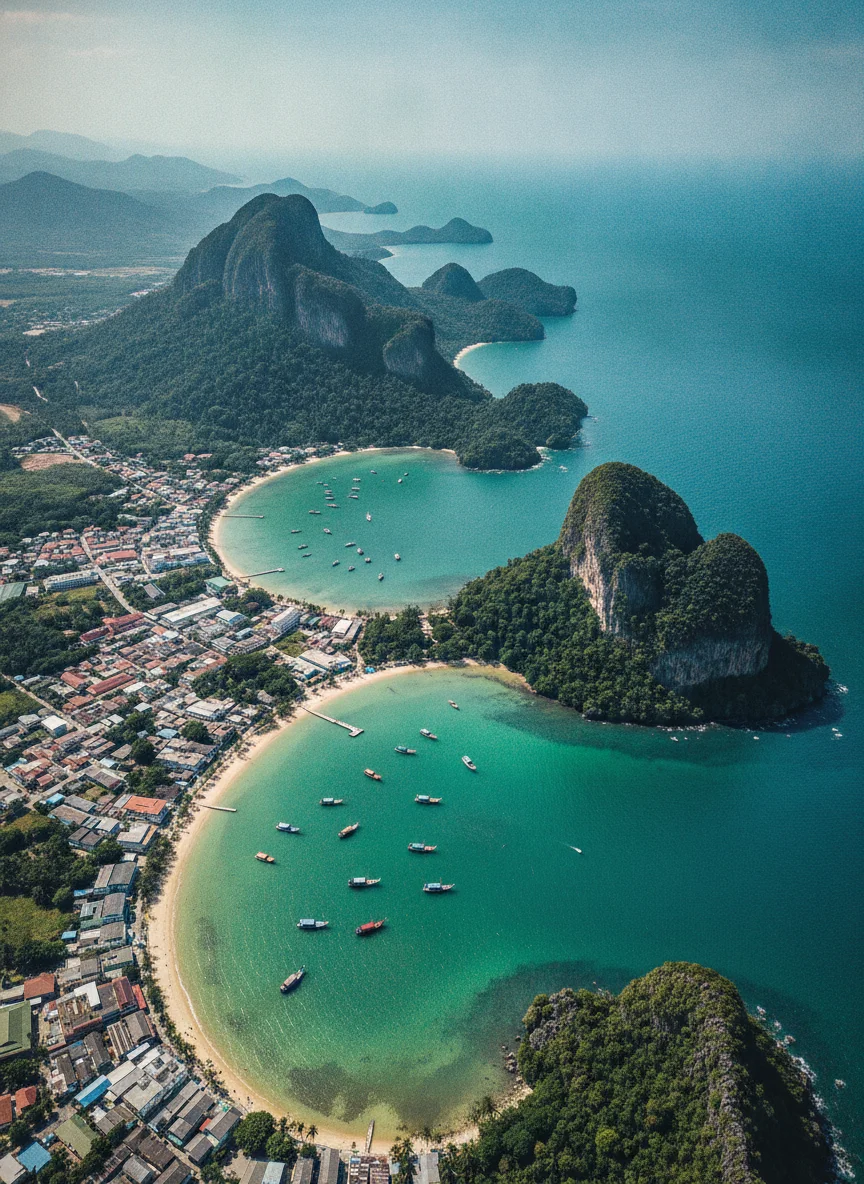
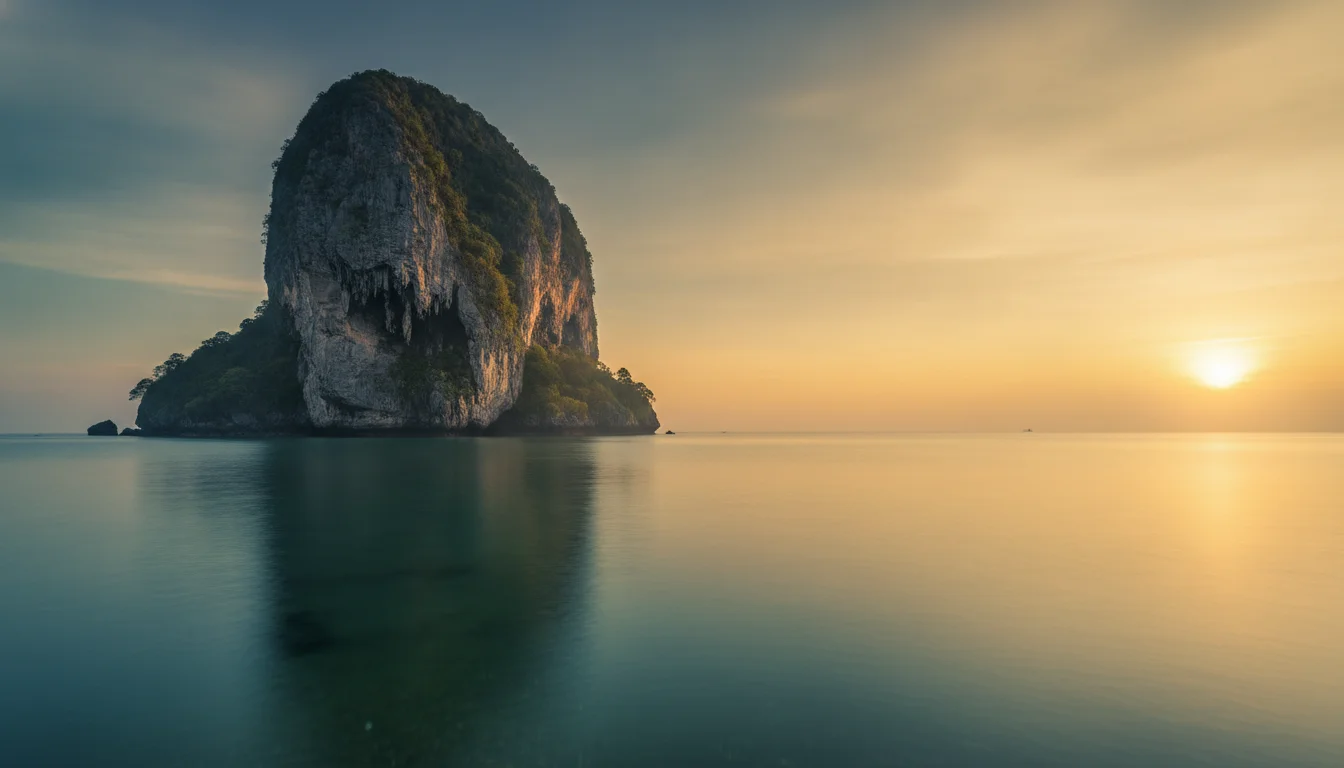
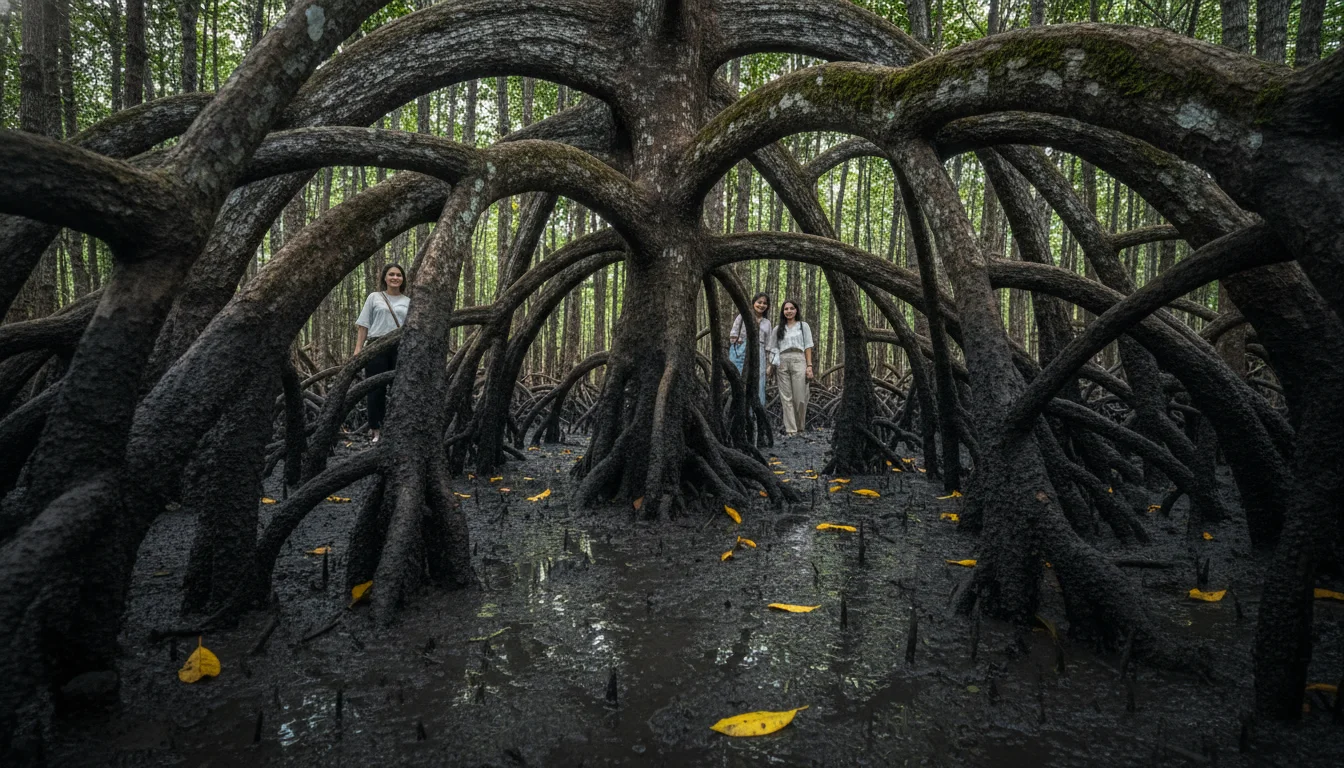
The preservation of local wetlands and dramatic limestone peaks has created a landscape dominated by protected ecosystems and dramatic viewpoints. Your main natural excursion should be the Pran Buri Forest Park. This reserve features a one-kilometre wooden boardwalk winding through a mature mangrove swamp where you can spot fiddler crabs and wild macaques. The park is completely free to enter. If you wish, you can hire a private longtail boat from the pier for 450 THB (£10.23) to cruise down the peaceful estuary. At the southern terminus of Pak Nam Pran beach stands Khao Kalok. This is a striking limestone headland whose rocky profile resembles a human skull jutting directly into the sea. You can scramble up the steep, root-assisted trail to the mountain viewpoint for 100 THB (£2.27). From the summit, panoramic views of the curving southern bay stretch out before you. This rocky peak acts as a physical barrier. It divides the main beach from the isolated coves of Sam Roi Yot further south. The contrast between the dark green mangrove forest and the stark grey limestone formations makes this district a visually distinct coastal escape. Visit the Forest Park boardwalk at 08:00 to avoid the intense midday heat and observe the local birds when they are most active. Beneath the cliffs of Khao Kalok lies a small, ornate shrine dedicated to the spirit of the mountain, where local fishermen make daily offerings of red Fanta and incense to ensure safe passage at sea.
Takeaway: Visit the Forest Park boardwalk at 08:00 to avoid the intense midday heat and observe the local birds when they are most active.
Culinary Scene and Local Markets
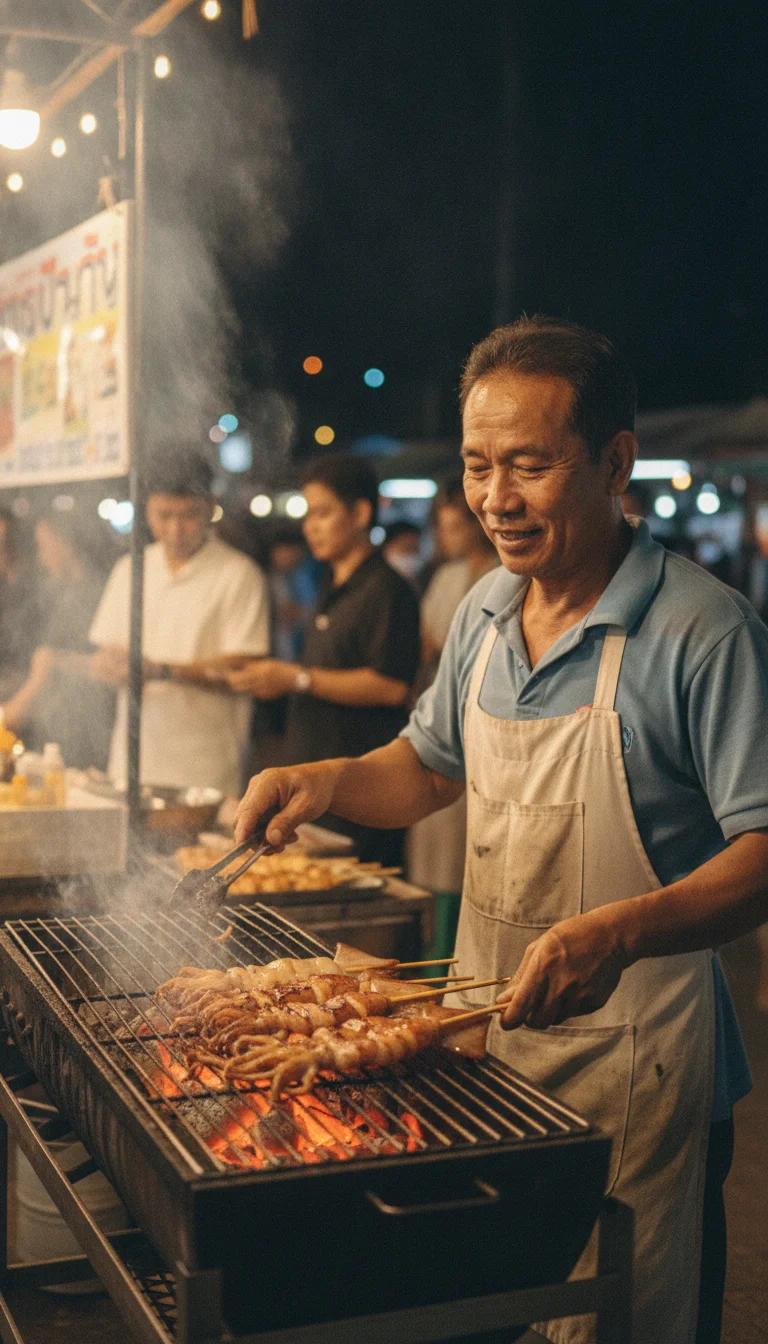
The local culinary culture revolves almost entirely around the daily harvest brought ashore by the active Pak Nam Pran fishing fleet. You cannot visit this area without sampling pla muek dad diew. This famous regional delicacy consists of squid that is lightly salted, dried on circular wire racks in the sun, and quickly deep-fried. A generous plate of this chewy, savoury dish at a local beachside restaurant like Tonson Seafood will cost you approximately 180 THB (£4.09). On Saturday evenings, the Pran Buri Old Market near the railway station comes alive. Century-old wooden shophouses open their doors to sell handmade crafts and traditional food. Here, you can sample sweet coconut pancakes (kanom krok) for 30 THB (£0.68) or enjoy a glass of sweetened Thai iced tea for 40 THB (£0.91). For your daily dining, the small night market near the Pak Nam Pran temple offers a reliable selection. You will find noodle soups, grilled pork skewers, and fresh mango sticky rice. The entire food scene remains unpretentious and highly affordable. It focuses entirely on traditional Thai flavours rather than catering to westernised tourist palates. Look for the circular wire racks set out in front yards along the river to locate the freshest home-dried squid. As the sun sets, local vendors also prepare fresh shellfish curries using sweet basil and green peppercorns harvested from nearby plantations, providing a fiery and aromatic taste of the southern central plains.
Takeaway: Look for the circular wire racks set out in front yards along the river to locate the freshest home-dried squid.
Accommodation Options from Rivers to Beaches
The accommodation landscape of the district is highly varied, offering everything from historic riverside homestays to high-end ecological beachfront resorts. If you prefer cultural immersion, you can book a traditional teakwood house like the Pran 26 Boutique House in the old town. A night here will cost you about 800 THB (£18.18). Along the quiet beachfront of Pak Nam Pran, the options shift dramatically toward luxurious sustainability. This eco-focused trend is best represented by boutique properties like the Aleenta Resort and Spa, where private pool villas cost upwards of 6,000 THB (£136.36) per night. These ecological resorts operate their own organic farms. They focus on low-impact tourism, avoiding single-use plastics and sourcing construction materials from local artisans. Mid-range travellers are well served by clean, modern hotels such as the Wyndhven Resort. This property offers comfortable rooms with direct pool access for 1,500 THB (£34.09) per night. This balance of accommodation means you can choose between a quiet, community-focused river stay or a private, luxurious beach holiday. Reserve a riverside homestay for local cultural immersion, or opt for a beachfront resort if you want immediate ocean access and complete privacy. Rates remain stable throughout the week. Many of the beachfront resorts also offer complimentary cruiser bicycles to guests, encouraging a slow and environmentally friendly way to explore the local coastline without the need for motor vehicles.
Takeaway: Reserve a riverside homestay for local cultural immersion, or opt for a beachfront resort if you want immediate ocean access and complete privacy.
Local Activities and Water Sports
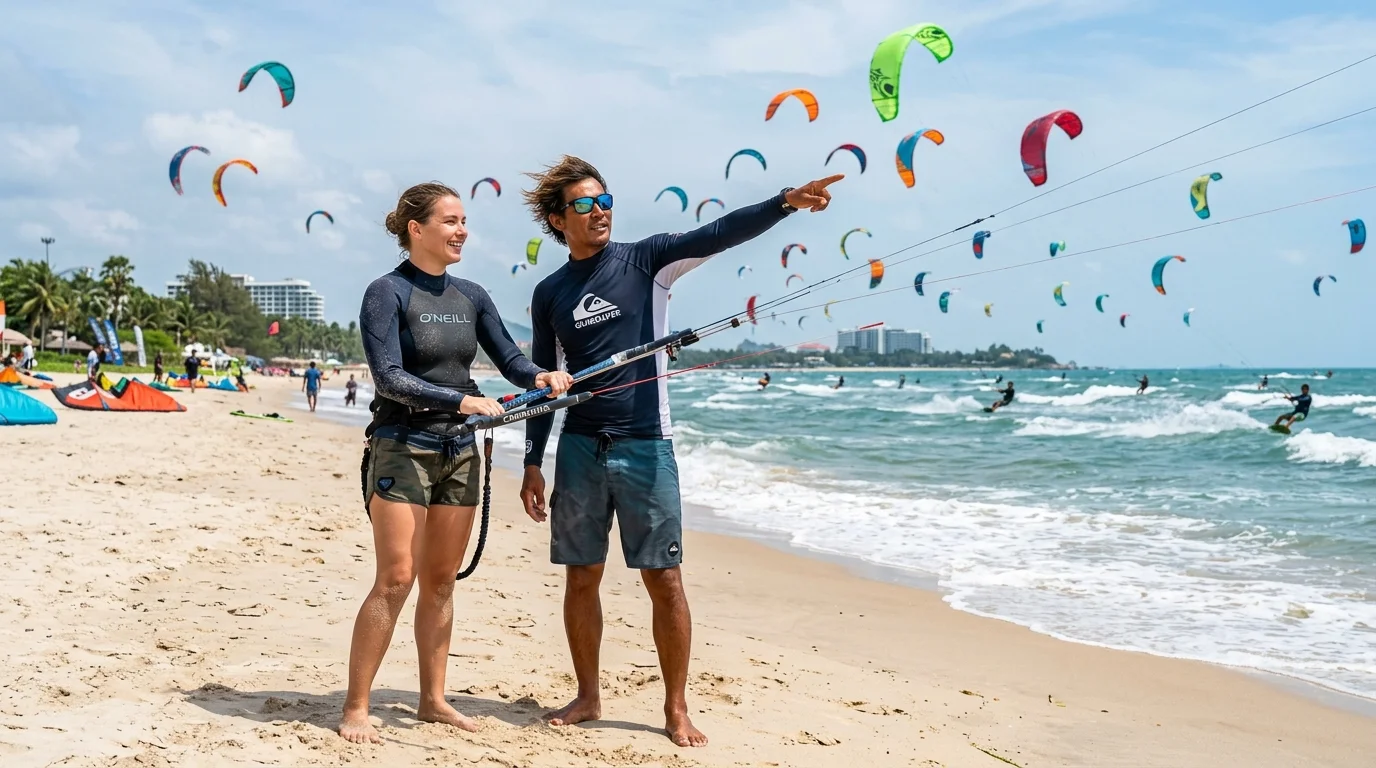
Consistent year-round coastal winds and calm flat waters have made this stretch of coast a premier destination for active water sports. Kiteboarding is highly popular at Pak Nam Pran beach. Professional schools like Kite Cable Thailand offer introductory lessons starting at 1,500 THB (£34.09) per hour. The wide, uncrowded beach provides an excellent launch zone for all skill levels. Steady thermal winds pick up most afternoons, creating ideal conditions. If you prefer a more tranquil experience, you can rent a kayak for 200 THB (£4.55) per hour to explore the quiet mangrove channels and watch local fishermen at work. Cycling is another excellent option. The local government has constructed a dedicated red-paved cycle path that runs parallel to the beach for several kilometres. You can rent a basic bicycle from most guesthouses for 100 THB (£2.27) per day to enjoy a breezy ride along the scenic coast. The path is completely flat, making it highly accessible for families with young children. Schedule your kiteboarding lessons for the afternoon, which is when the sea breezes consistently reach their maximum strength. For a distinctive inland experience, you can also join a guided stand-up paddleboarding tour along the river estuary at dusk, when the water turns to glass and reflects the silhouettes of the distant mountains.
Takeaway: Schedule your kiteboarding lessons for the afternoon, which is when the sea breezes consistently reach their maximum strength.
Day Trips and Surrounding National Parks
The strategic position of the district makes it an exceptional base for exploring the wild national parks and quiet bays of the wider Prachuap Khiri Khan province. Your primary day trip should be to Sam Roi Yot National Park, situated just 30 kilometres south. This park is home to the spectacular Phraya Nakhon Cave. A hired private taxi for the round trip will cost you approximately 1,200 THB (£27.27), while the national park entry fee is 200 THB (£4.55) per person. Inside the cave, a historic royal pavilion sits beneath a collapsed roof. This structure is illuminated by dramatic shafts of sunlight that break through the jungle canopy. For a different landscape, you can travel inland to the Pran Buri Dam. Here, you can rent a longtail boat to cruise across the reservoir against a backdrop of rolling green hills. Another excellent excursion is the Kui Buri National Park, located one hour south. This reserve is widely considered the best place in Thailand to view wild Asian elephants in their natural habitat. Leave for the Phraya Nakhon Cave by 08:30 to ensure you reach the inner chamber when the sun is directly overhead. The park rangers are highly knowledgeable. On your return journey from Sam Roi Yot, consider stopping at the quiet fishing village of Bang Pu, where you can enjoy a cold drink and watch the local fleet prepare for their nightly squid fishing trips.
Takeaway: Leave for the Phraya Nakhon Cave by 08:30 to ensure you reach the inner chamber when the sun is directly overhead.
| Accommodation / Activity Option | Average Cost in THB (GBP) | Best Suited For |
|---|---|---|
| Wooden Riverfront Homestays | 800 THB to 1,200 THB (£18.18 to £27.27) per night | Cultural travellers and budget backpackers |
| Mid-range Beachfront Resorts | 1,500 THB to 3,000 THB (£34.09 to £68.18) per night | Families and couples seeking comfort |
| Luxury Eco-Resorts (e.g., Aleenta) | 6,000 THB to 12,000 THB (£136.36 to £272.73) per night | Luxury seekers and honeymooners |
| Pran Buri Forest Park Boat Tour | 450 THB (£10.23) per private boat | Nature enthusiasts and photographers |
| Kiteboarding Lessons (Pak Nam Pran) | 1,500 THB (£34.09) per hour | Adventure sports enthusiasts |
Getting There and Getting Around
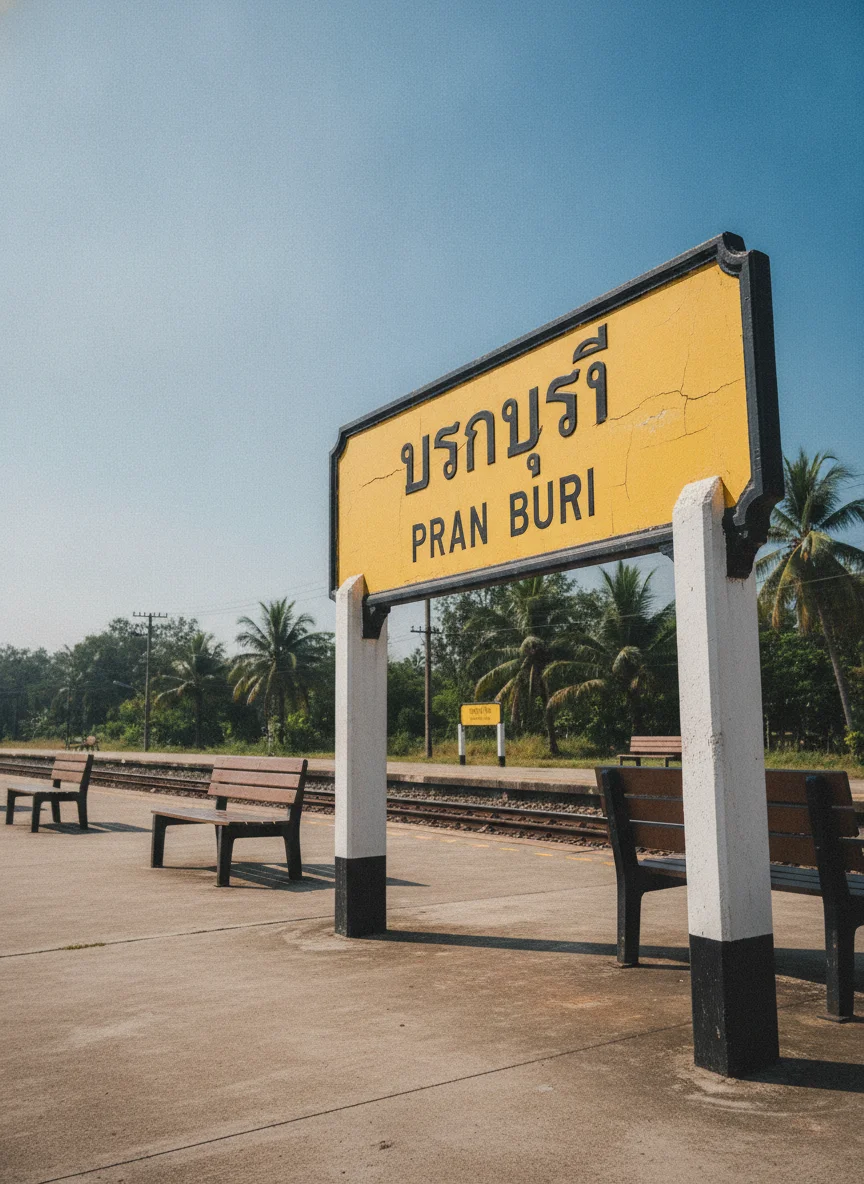
Reaching Pran Buri from Bangkok is straightforward and highly economical for UK travellers. You can board a direct minivan from the Mo Chit New Minivan Terminal or the Southern Bus Terminal (Sai Tai Mai) for approximately 220 THB (£5.00) per person. The journey takes roughly three and a half to four hours, depending heavily on the traffic exiting the capital. Alternatively, the State Railway of Thailand operates daily trains from Krung Thep Aphiwat Central Terminal to Pran Buri Station, costing around 150 THB (£3.41) for a third-class fan carriage. Once you arrive in town, local transport options are limited compared to major tourist hubs. Motorbike sidecar taxis, locally known as saleng, are the primary way to travel short distances and cost between 50 THB (£1.14) and 100 THB (£2.27) per trip. Scooters can be rented from local shops along Pak Nam Pran beach for 250 THB (£5.68) per day, which provides complete freedom of movement. Taxis are rare, but your hotel can easily arrange private drivers for daily excursions.
Costs and Budgeting
Pran Buri offers exceptional value for money, especially when compared to the inflated prices of nearby Hua Hin or the southern islands. A budget traveller can easily get by on 1,000 THB (£22.73) per day by staying in riverside homestays and dining at local night markets. A mid-range budget of 2,500 THB (£56.82) per day allows for a comfortable modern hotel room with a pool, beachside seafood dinners, and scooter rentals. For those seeking luxury, a budget of 7,000 THB (£159.09) per day covers high-end eco-resorts, private transfers, and fine dining. Credit cards are accepted at major resorts, but you must carry cash for local transport, street food, and national park entry fees. ATMs are widely available in the old town and near Pak Nam Pran temple. Prices remain highly stable throughout the year, with only minor increases during the peak European winter months.
| Item | Budget (THB) | Mid-Range (THB) | Notes |
|---|---|---|---|
| Double Room | 600 - 1,000 THB (£13.64 - £22.73) | 1,500 - 3,000 THB (£34.09 - £68.18) | Budget is inland; mid-range is beachfront |
| Local Seafood Meal | 100 - 180 THB (£2.27 - £4.09) | 250 - 500 THB (£5.68 - £11.36) | Local shacks vs. sit-down beach restaurants |
| Daily Transport | 100 THB (£2.27) | 250 THB (£5.68) | Saleng rides vs. full-day scooter rental |
| Activities | Free - 100 THB (£0.00 - £2.27) | 200 - 450 THB (£4.55 - £10.23) | Forest park walks vs. private boat tours |
Who Pran Buri Suits Best
Pran Buri is highly suited to couples, families, and retirees who want to experience the quiet side of coastal Thailand without the crowds. It is an ideal escape for digital nomads who prefer peaceful surroundings and expatriates looking for a weekend getaway from Bangkok. However, this destination is entirely unsuitable for solo travellers looking to socialise, backpackers seeking a vibrant party scene, or anyone expecting active nightlife. There are no clubs, very few western-style bars, and the streets empty out almost completely after 21:00. This is a place to slow down, disconnect, and enjoy nature.
What to Know Before You Go
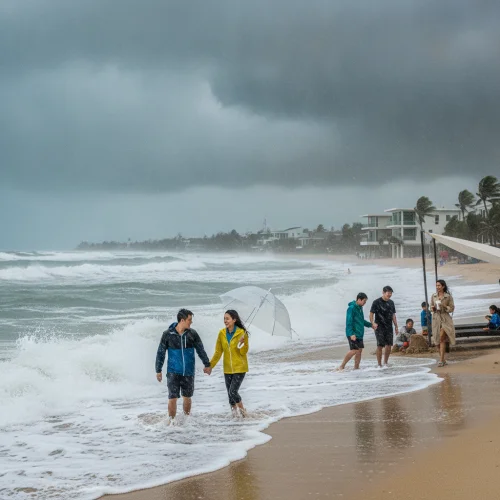
First, you must carry physical cash when exploring because many local seafood shacks and market stalls do not accept international credit cards. This ensures you do not get stuck when ordering fresh meals at the night markets. Second, the beaches in Pak Nam Pran are highly subject to seasonal jellyfish blooms, particularly during the transition between the monsoons in October. You should look for warning signs on the beach or ask resort staff before swimming. Third, English is not widely spoken outside the main resorts, as the area remains a primarily Thai domestic holiday destination. Downloading a translation app will help you communicate with local saleng drivers and market vendors. Lastly, public transport between the inland railway station and the beach is virtually non-existent. You will need to pre-arrange a transfer with your accommodation to avoid being stranded upon arrival. These simple preparations ensure a trouble-free trip.
Practical Tips for Your Visit
Get up early for the sunrise over Khao Kalok
The limestone headland faces directly east, offering spectacular panoramic views as the sun emerges from the Gulf of Thailand. This cool early morning hour is also the most pleasant time of day for walking along the empty beach promenade.
Buy your insect repellent locally
The nearby mangrove forests and riverbanks host active mosquito populations, especially during the humid wet season. Local Thai formulations containing high percentages of DEET are far more effective than the milder products typically brought from the UK.
Visit the Saturday old town market after five
The historic wooden shophouses open up their fronts to sell local crafts, but the street food stalls do not get fully set up until the heat of the afternoon breaks. Arriving too early means missing out on the best culinary vendors.
Rent a scooter from a reputable beach shop
Public transport is highly limited in this district, so having your own two-wheeled vehicle is absolutely necessary to explore both the coast and the inland town. Always wear a helmet to stay safe and comply with local traffic laws.
Dress respectfully when visiting Wat Khao Kalok
This historic temple is an active place of worship for the local Buddhist community, meaning you must cover your shoulders and knees. Removing your shoes before entering any of the main temple buildings is also strictly required.
Check the tide tables before planning a swim
The beach at Pak Nam Pran becomes exceptionally shallow during low tide, requiring you to walk a significant distance out to reach swimmable waters. High tide is much better for swimming, kayaking, or paddleboarding along the shore.
Book your weekend accommodation well in advance
Bangkok residents flock to this coast for quick weekend escapes, which quickly fills the best beachfront boutique resorts on Friday and Saturday nights. Midweek visits offer much better room availability and significantly lower nightly rates.
Carry small denomination Baht notes for transport
Local saleng motorbike taxi drivers rarely carry enough change for 1,000 THB notes, so keeping 20, 50, and 100 THB notes handy is highly practical. This simple step avoids unnecessary delays and awkward transaction issues.
Quick Reference Guide
| Item | Detail | Notes |
|---|---|---|
| Location | Pran Buri / Pak Nam Pran | Coastal district in Central-Southern Thailand |
| Province | Prachuap Khiri Khan | Bordering Myanmar to the west and the Gulf to the east |
| Region | Central Thailand | Located on the upper southern peninsula |
| Nearest Major City | Hua Hin | Approximately 30 kilometres (18 miles) north |
| Nearest Airport | Hua Hin Airport (HHQ) or Bangkok Suvarnabhumi (BKK) | Bangkok is the main entry point for international flights |
| Distance from Bangkok | 230 kilometres (143 miles) | Around 3.5 to 4 hours by road |
| Typical Visit Duration | 3 to 5 days | Ideal for a relaxed coastal extension of a Thai itinerary |
| Best Time to Visit | November to February | Cooler temperatures and lower humidity |
| Average Daily Budget | 1,500 - 2,500 THB (£34.09 - £56.82) | Covers comfortable lodging, food, and scooter rental |
| Currency Accepted | Thai Baht (THB) | Cash is essential; card accepted at large resorts |
| Language | Thai | Basic English spoken in resorts; limited elsewhere |
| Primary Transport | Motorbike Sidecar (Saleng) & Scooters | No formal taxi or Grab network exists locally |
| Notable Landmarks | Pran Buri Forest Park & Khao Kalok | Mangrove boardwalks and limestone viewpoints |