Prachuap Khiri Khan Town
Prachuap Khiri Khan Town is one of the few places in Thailand where you can watch wild, golden-faced dusky langurs feeding peacefully on an active military runway. Located along a dramatic stretch of the Gulf coast, this relaxed provincial capital is shaped by three distinct ocean bays and remains untouched by mass international tourism.
Prachuap Khiri Khan Town is a quiet provincial capital situated 290 kilometres south of Bangkok on a narrow coastal strip of land near the Myanmar border. This traditional fishing community curves around the waters of Ao Prachuap, Ao Noi, and Ao Manao, drawing visitors who value natural beauty and local heritage over commercial nightlife. It serves as an ideal destination for slow travellers, couples, and retirees seeking a working maritime town that preserves its historic low-rise architecture and slow daily rhythms. It is highly suited for those looking for an authentic and peaceful Thai coastal experience.

Coastal Geography of the Three Bays
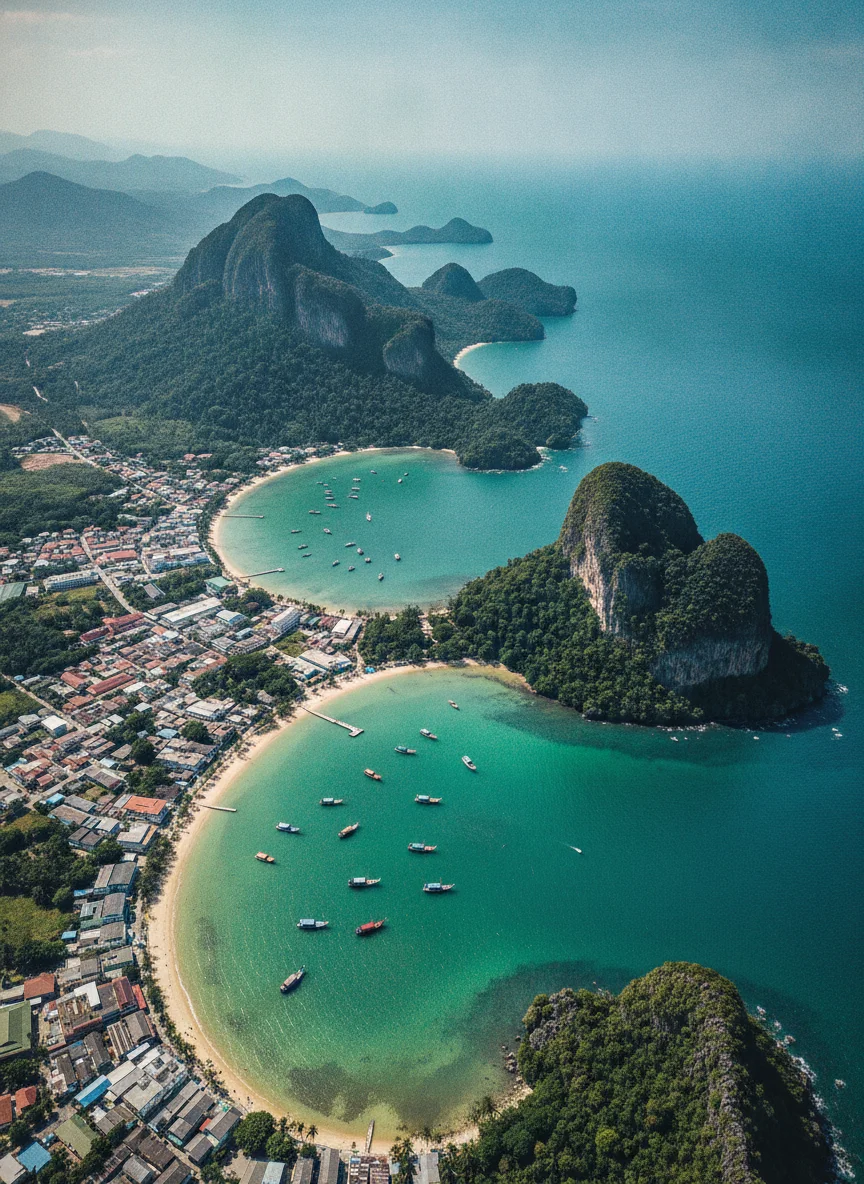
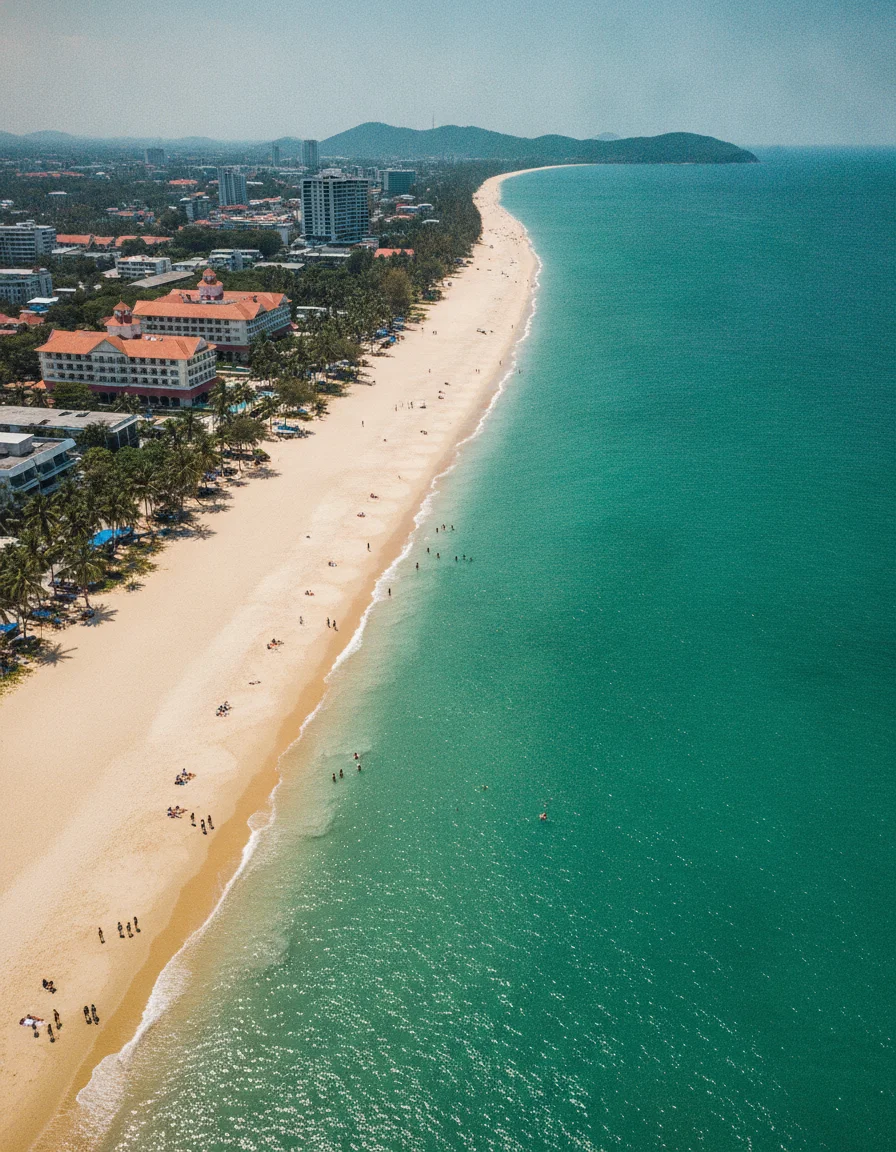
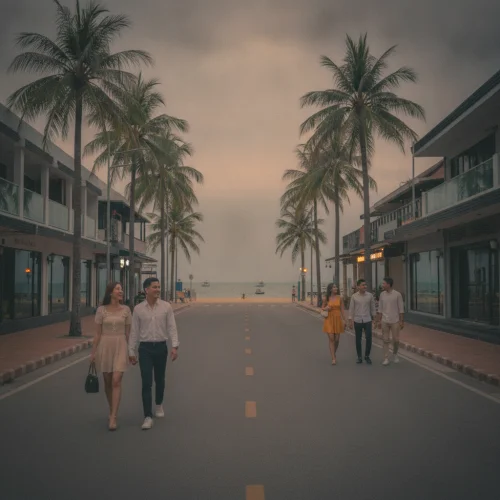
The physical identity of Prachuap Khiri Khan Town is defined by its geographical position across three distinct, crescent-shaped bays on the Gulf of Thailand. Ao Prachuap forms the central waterfront of the town, where a wide paved promenade runs for several kilometres alongside anchored wooden fishing vessels and low-profile seafood restaurants. To the north lies Ao Noi, a quieter bay bordered by a traditional wooden fishing village and a hillside temple featuring caves filled with reclining Buddha images. To the south, within the territory of the Wing 5 Royal Thai Air Force base, is Ao Manao, a sheltered bay known for its curved white sand beach and calm, shallow swimming waters. This distinctive layout means you can walk from the working port environment of the central bay to the pristine recreation areas of the southern bay in under thirty minutes. The lack of high-rise hotels along these coastlines preserves the open views of the limestone karsts that rise dramatically from the sea. Local fishing boats depart from the central piers each evening, their green lights illuminating the horizon as you walk along the sea wall. The town centre itself sits flatly between these bays, allowing cool sea breezes to circulate constantly through the grid of streets. Strolling the seaside promenade at dusk provides the perfect introduction to the town's geographic layout and maritime lifestyle.
Discover Hua Hin, Thailand's royal seaside resort. Guide covers the railway station, seafood dining, golf, and how to get there from Bangkok.
Wat Thammikaram and Khao Chong Krachok
Khao Chong Krachok, known locally as the Mirror Mountain, rises 150 metres directly behind the northern end of Ao Prachuap to dominate the town's flat skyline. To reach the top, you must ascend 396 concrete steps, which are home to a large and highly active population of semi-wild rhesus macaque monkeys. At the summit sits Wat Thammikaram, a Buddhist temple complex housing a relic of the Buddha and a mirror-topped stupa that reflects the intense tropical sunlight across the bay. The platform offers panoramic 360-degree views of the three sweeping bays, the distant Tenasserim hills marking the Myanmar border, and the neat grid layout of the town below. The monkeys along the staircase can be aggressive if they spot food or loose belongings, so you should secure your bags, sunglasses, and cameras before starting your climb. It is best to undertake this ascent in the early morning at 06:00 or late afternoon at 17:00 when temperatures are lower and the golden hour light illuminates the coast. There is no entrance fee to climb the mountain or enter the temple grounds, though donations for temple maintenance are appreciated. Locals often climb these stairs as part of their daily exercise routine, sharing the pathway with monks who maintain the shrines. Make sure to keep your belongings close to prevent the inquisitive macaques from grabbing them.
The Sanctuary of Wing Five and Ao Manao
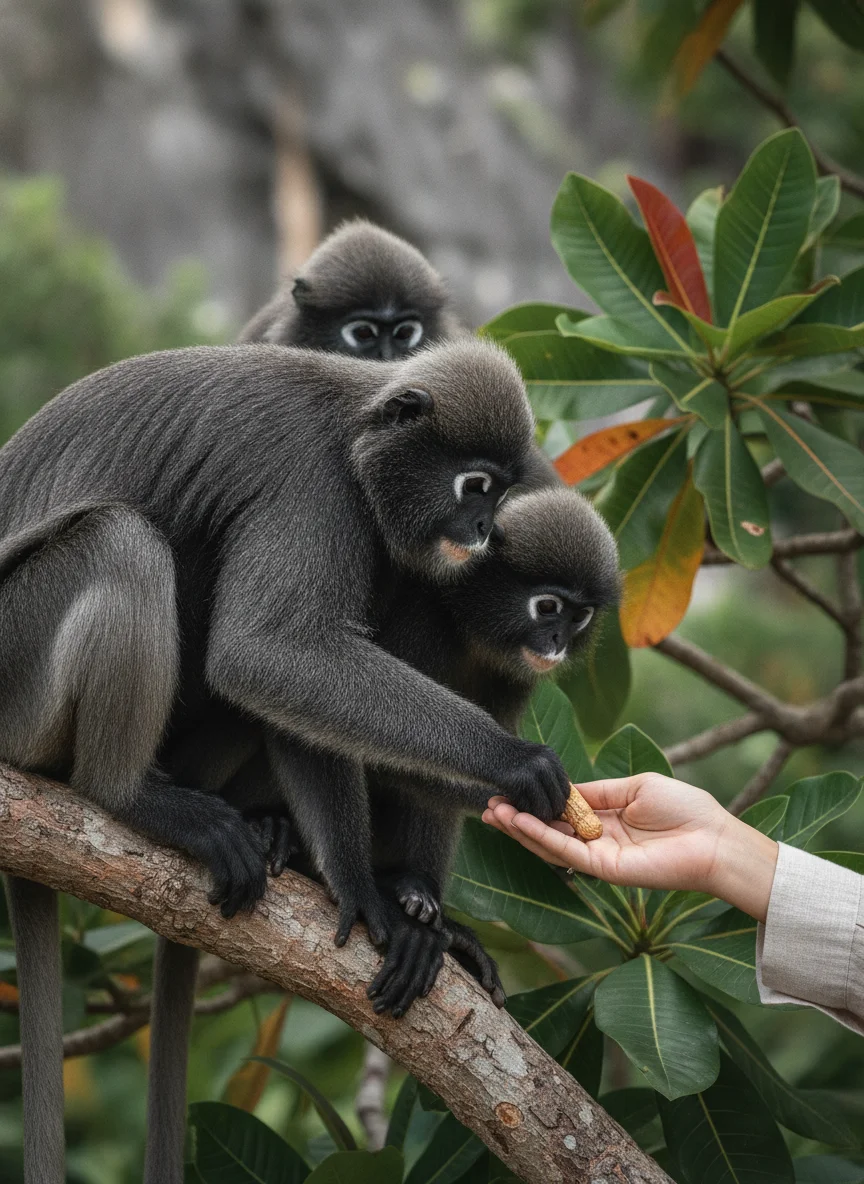
The southern end of the town transitions into Wing 5, an active Royal Thai Air Force base that welcomes civilian visitors to its beaches and wildlife sanctuaries. To enter the base, you must register at the military gate on Kong Kiat Road, where you will sign in before walking or cycling through the active runway area. Inside, the base contains Khao Lom Muak, a steep limestone peak that is home to a protected colony of dusky langurs, which are far gentler and more reserved than the temple macaques. Military staff monitor the interactions between visitors and these leaf-eating monkeys, ensuring that feeding is controlled using approved unsalted peanuts bought on-site for 10 THB (£0.22). Beyond the langur sanctuary lies Ao Manao, or Lime Bay, a crescent of fine sand shaded by tall pine trees and lined with low-cost deckchairs and military-run food stalls. A deckchair rental costs just 20 THB (£0.44) for the entire day, and local food vendors will serve iced coffee and freshly prepared papaya salad directly to your seat. The waters here are incredibly shallow and protected from strong ocean currents, making it the safest swimming spot in the province. The base also features a small historical museum dedicated to the brief battle fought here during World War Two. Visiting Wing 5 offers a rare chance to experience a beautifully preserved natural environment managed with military order and cleanliness.
Waterfront Dining and the Prachuap Night Market
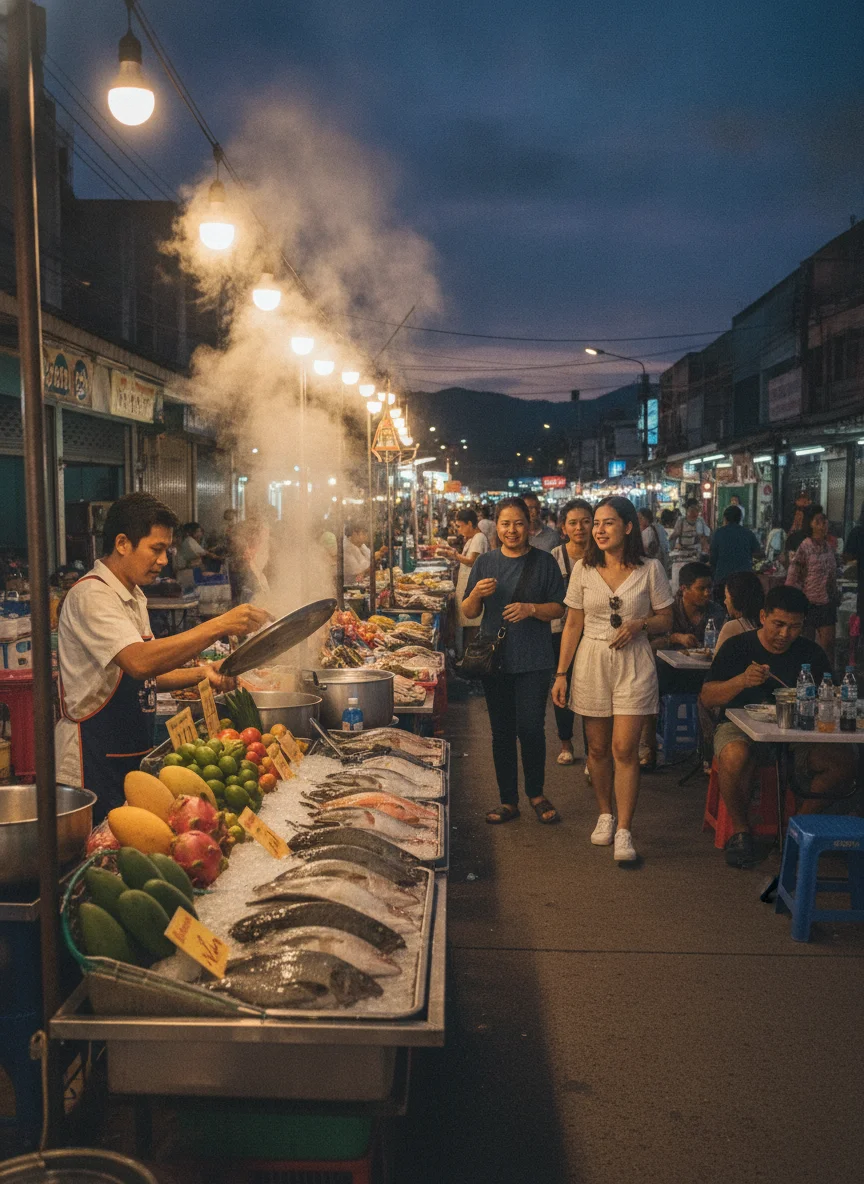
Food in Prachuap Khiri Khan Town revolves around fresh seafood harvested by the local fleet and served without the premium prices of larger tourist hubs. Along the beachfront Chai Thalay Road, open-air restaurants set up wooden tables each evening to serve local specialities like pla muek phat khai khem (stir-fried squid with salted egg yolk) for around 150 THB (£3.33). The primary culinary gathering point is the Prachuap Night Market, which sets up daily from 16:30 onwards along Kong Kiat Road and the waterfront. Here, you can sample freshly grilled sea bass in salt crusts for 200 THB (£4.44) or spicy seafood soups packed with local lemongrass and chillies. On Friday and Saturday evenings, the town hosts a larger walking street market that stretches along the old wooden shopfronts of Chai Thalay Road, where craft vendors sell handmade souvenirs alongside local snacks. Be sure to try the sweet deep-fried bananas and grilled coconut cakes prepared by vendors who have run their stalls for decades. The atmosphere is family-friendly, with locals dining at communal plastic tables while listening to acoustic musicians playing traditional Thai songs. You can also buy dried seafood snacks, such as seasoned anchovies and crispy squid, directly from the fishermen who process them on the northern piers. Dining along the water provides a direct connection to the town's maritime economy while keeping your food budget remarkably low.
Traditional Wooden Architecture and Heritage Streets
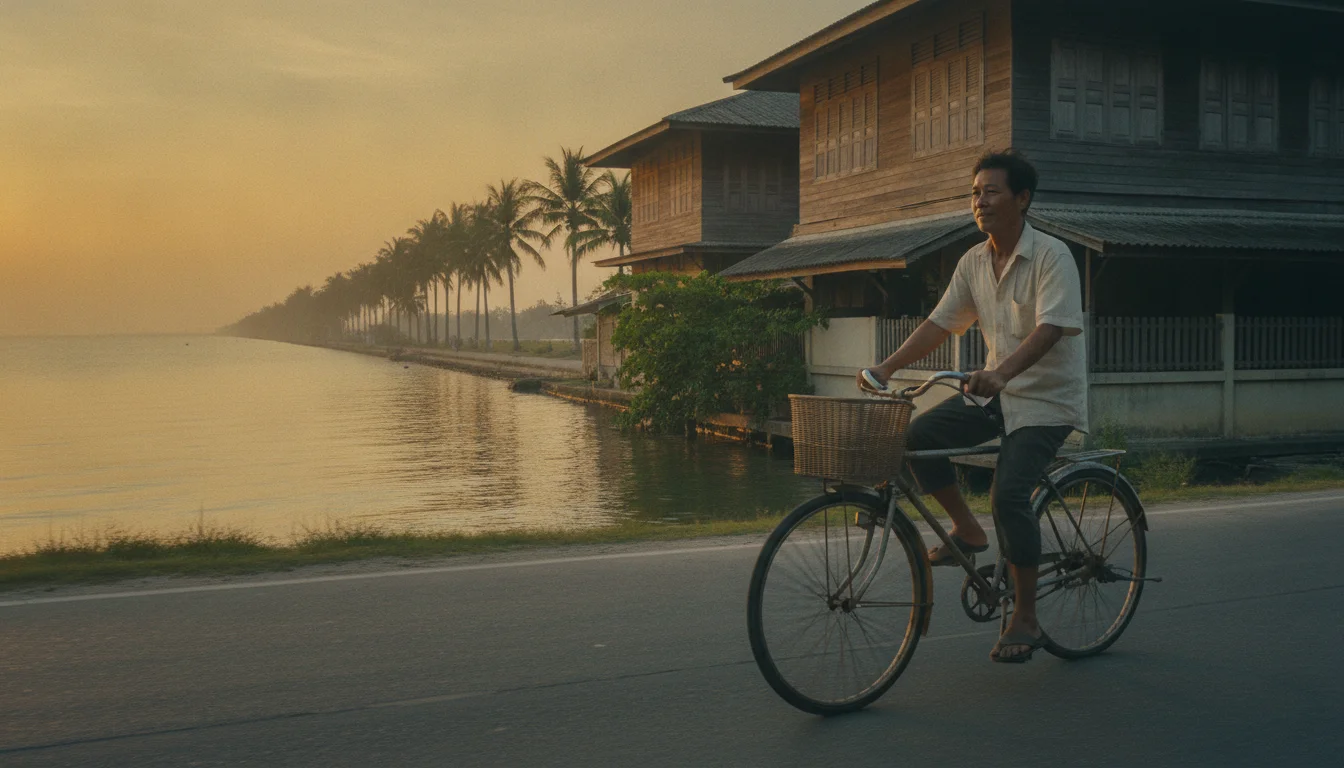
Away from the waterfront, the inner streets of the town preserve a collection of mid-century wooden shopfronts and traditional Southern Thai architecture. Walking along Suseuk Road, you will encounter two-storey teak houses with shuttered windows that have survived the rapid modernisation seen elsewhere in Thailand. Many of these structures still function as family-run hardware stores, barber shops, and small dry-goods merchants where life proceeds at a deliberate pace. The town council has actively preserved this aesthetic, encouraging property owners to maintain the historic timber facades rather than replacing them with concrete blocks. Some of these heritage buildings have been converted into small cafes where you can enjoy traditional Thai iced tea (cha yen) for 35 THB (£0.78) while viewing old black-and-white photographs of the town from the 1950s. This architectural conservation gives the town centre a nostalgic, quiet atmosphere that is particularly evocative during the late afternoon when the tropical heat begins to dissipate. It offers a stark contrast to the modern concrete development of northern resort towns, allowing you to experience the spatial layout of an authentic coastal trading post. Many of these properties have remained within the same family for over four generations, maintaining a deep link to the town's commercial past. Exploring these quiet side streets on foot reveals the architectural heritage that underpins the town's calm community character.
Accommodation Options from Guesthouses to Heritage Hotels
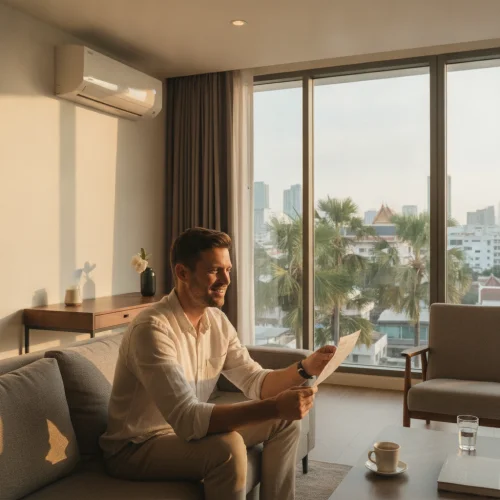
Accommodation in Prachuap Khiri Khan Town focuses on value and local hospitality, avoiding the luxury resort chains that dominate other Thai coastal destinations. Budget travellers will find family-run guesthouses along Kong Kiat Road and near the railway station offering basic air-conditioned rooms from 450 THB (£10.00) per night. For mid-range comfort, the long-standing Hadthong Hotel sits directly on the Ao Prachuap promenade, providing sea-facing rooms with private balconies and a swimming pool for approximately 1,200 THB (£26.67) per night. Newer boutique options have also emerged, converting old wooden structures into stylish, minimalist lodges that respect the local heritage while offering modern amenities. These properties usually include complimentary bicycle rentals, which are the most convenient way to explore the flat streets of the town. Because the town is not a major international tourist destination, room rates remain consistent throughout the year, with only minor increases during the peak European winter months. Booking in advance is highly recommended if you plan to stay during Thai public holidays, as the town is a popular weekend getaway for Bangkok families. You will find that staff at these accommodations are incredibly eager to share local recommendations and assist with onward transport bookings. Choosing a hotel along the central promenade guarantees beautiful morning sunrises over the fishing fleet anchored in the bay.
| Accommodation Tier | Typical Price per Night (THB / GBP) | Key Features | Recommended Areas |
|---|---|---|---|
| Budget Guesthouse | 400 - 600 THB (£8.89 - £13.33) | Fan or basic AC, shared or private bathroom, free Wi-Fi, bicycle hire | Kong Kiat Road, near Railway Station |
| Mid-Range Hotel | 1,000 - 1,500 THB (£22.22 - £33.33) | Swimming pool, sea views, air conditioning, en-suite bathroom, breakfast included | Chai Thalay Road (Waterfront) |
| Boutique Heritage Lodge | 1,600 - 2,500 THB (£35.56 - £55.56) | Restored wooden architecture, modern interior design, complimentary bicycles, premium service | Suseuk Road, Ao Prachuap Promenade |
| Serviced Apartment | 800 - 1,200 THB (£17.78 - £26.67) | Kitchenette, longer-stay discounts, quiet residential location, modern facilities | Near Wing 5 Gate, Town Centre |
Getting There and Getting Around
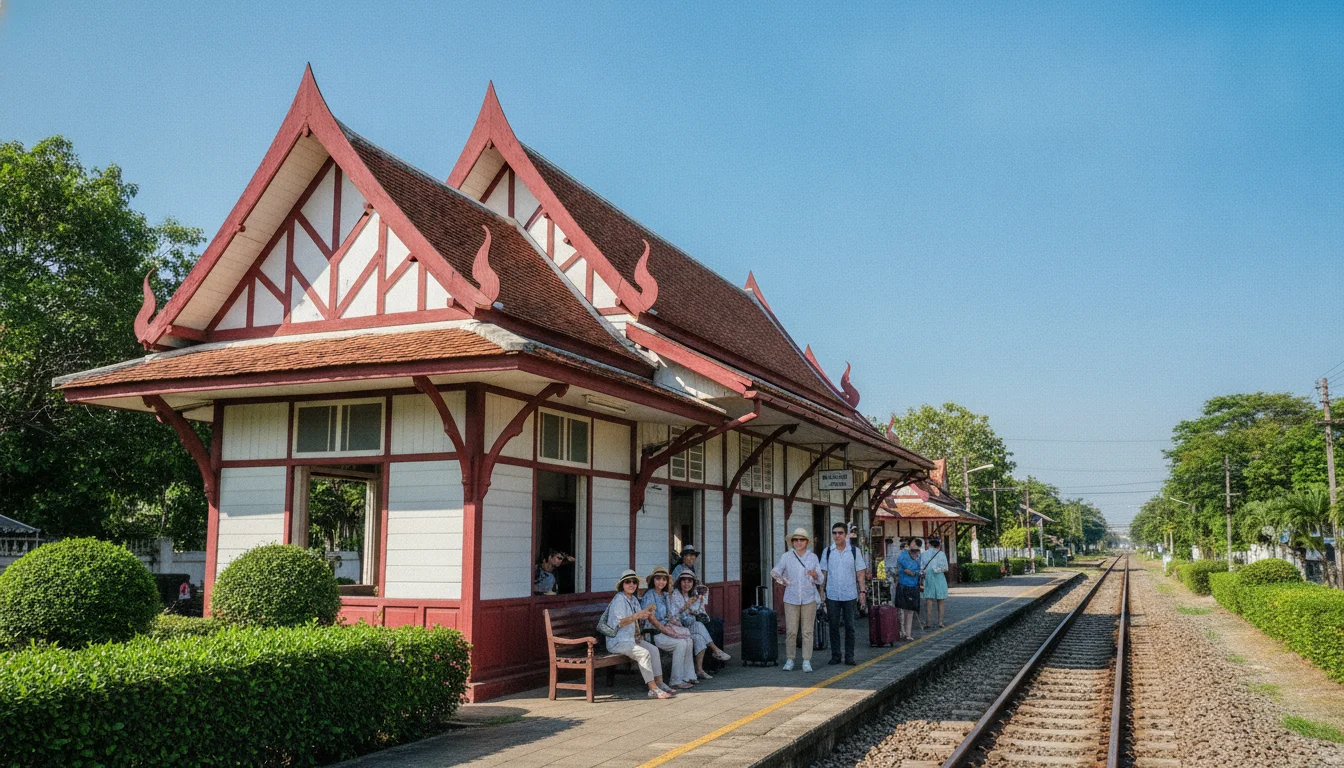
Reaching Prachuap Khiri Khan Town from Bangkok is a straightforward journey of approximately four to five hours by road or rail. Minivans and coaches depart regularly from Bangkok's Southern Bus Terminal (Sai Tai Mai), costing between 250 THB (£5.56) and 300 THB (£6.67) for a one-way ticket. Alternatively, the State Railway of Thailand operates daily trains from Krung Thep Aphiwat Central Terminal in Bangkok, offering a scenic journey that arrives at the historic, red-and-white Prachuap Khiri Khan railway station located right in the centre of town. Once you arrive, the town's flat geography makes getting around exceptionally easy. You can hire a lightweight scooter from local shops for 200 THB to 250 THB (£4.44 to £5.56) per day, or simply rent a bicycle for 50 THB (£1.11) to navigate the quiet streets. For longer local trips, motorbike sidecars (samlors) are readily available near the markets and will carry you across town for a flat rate of 50 THB to 80 THB (£1.11 to £1.78).
Costs and Budgeting
Prachuap Khiri Khan Town remains incredibly affordable. Prices reflect local living costs rather than inflated tourist rates. A daily budget of 800 THB (£17.78) is highly realistic for budget travellers, covering a basic guesthouse room, three meals at local markets, and bicycle hire. Mid-range travellers can live very comfortably on 1,800 THB (£40.00) per day. This budget allows for an air-conditioned hotel with a pool, fresh seafood dinners along the waterfront, scooter hire, and entry to local national parks. For those seeking maximum comfort, a budget of 3,500 THB (£77.78) covers boutique heritage lodging, private taxi transfers, and premium dining. Compared to tourist-heavy locations like Phuket or nearby Hua Hin, your money will go at least twice as far here, particularly when it comes to dining and accommodation.
| Item | Budget (THB) | Mid-Range (THB) | Notes |
|---|---|---|---|
| Double Room | 450 THB (£10.00) | 1,200 THB (£26.67) | Budget is basic fan/AC room; mid-range includes pool and sea views. |
| Street Market Meal | 50 THB (£1.11) | 120 THB (£2.67) | Budget is single dish; mid-range includes multiple side dishes and drinks. |
| Waterfront Seafood Dinner | 180 THB (£4.00) | 450 THB (£10.00) | Mid-range covers a whole fresh fish or squid dish with rice. |
| Scooter Rental (per day) | 200 THB (£4.44) | 250 THB (£5.56) | Prices are consistent year-round; fuel costs around 40 THB (£0.89) per litre. |
| Bicycle Rental (per day) | 50 THB (£1.11) | 50 THB (£1.11) | Often provided free of charge by boutique hotels and guesthouses. |
| Local Transport (Samlor ride) | 50 THB (£1.11) | 80 THB (£1.78) | Flat rates apply within the town limits and down to Wing 5. |
Who It Suits
This destination is perfectly suited for slow travellers, retired couples, and digital nomads who appreciate peaceful surroundings, authentic local culture, and low living costs. It is highly recommended for repeat visitors to Thailand. It allows you to escape the highly commercialised resort areas entirely. However, it is not suitable for those seeking active nightlife, beach clubs, western shopping malls, or extensive English-speaking tourist infrastructure. If you require late-night bars, jet-ski rentals, or high-end international dining, you will find this working fishing town far too quiet.
What to Know Before You Go
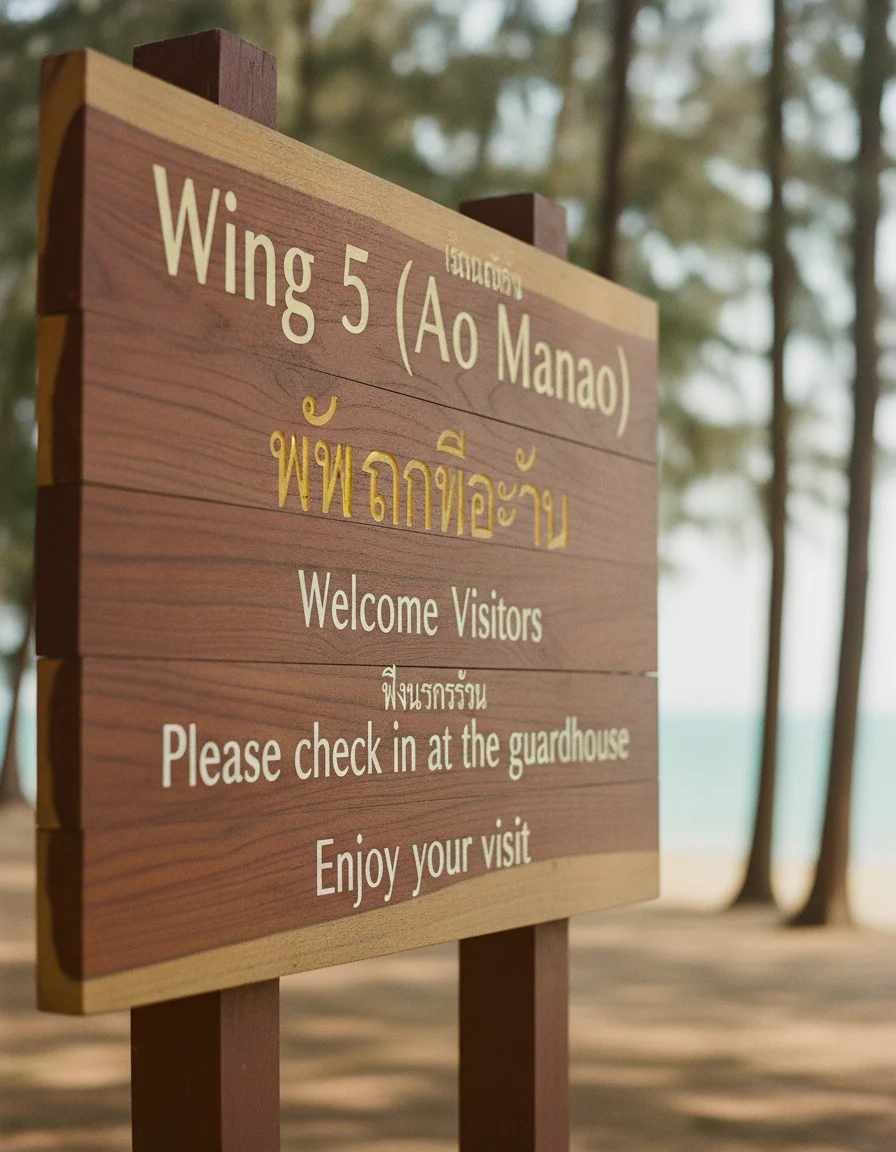
First, you must bring your physical passport when visiting the Wing 5 military base. This is an active air force installation, and military police require identification to allow civilian entry. Second, the town has very few western-style international restaurants. You should prepare to eat primarily traditional Thai cuisine and fresh seafood, as local vendors cater almost exclusively to domestic tastes. Third, English is not widely spoken outside the main hotels. Learning a few basic Thai phrases will greatly assist you when ordering food at the night markets or negotiating transport. Fourth, the peak rainy season occurs later here than in northern Thailand. Heavy monsoon downpours are common during October and November, making the winter months of December to February the ideal window for dry, cooler weather.
Practical Tips
Carry cash at all times
Make sure to withdraw sufficient Thai Baht from ATMs in town before heading to markets or beach stalls. Most local seafood vendors and transport operators do not accept credit cards or international mobile payments.
Respect the military rules at Wing 5
Always follow the designated pathways and speed limits when cycling through the active military base. The air force personnel are highly welcoming but expect visitors to respect their security guidelines and operational areas.
Avoid feeding the Khao Chong Krachok macaques
Do not carry visible food or plastic bags when climbing the temple stairs to avoid attracting the aggressive monkeys. Unlike the friendly dusky langurs, these macaques will actively grab loose items from your hands or pockets.
Rent a bicycle for town exploration
Secure a bicycle from your guesthouse to navigate the flat, quiet streets of the town centre easily. This eco-friendly transport option allows you to move between the three bays at a relaxed and enjoyable pace.
Time your mountain climbs carefully
Ascend Khao Chong Krachok either early in the morning or late in the afternoon. This timing avoids the intense midday heat and rewards you with the best photographic light over the bays.
Visit the Friday walking street
Plan your stay to include a Friday or Saturday night to experience the atmospheric market along the waterfront. This weekly event brings together the entire community and offers the widest variety of local street food.
Cover your shoulders at Wat Thammikaram
Dress modestly with your shoulders and knees covered when visiting the hilltop temple or any religious sites in town. This shows respect for local Buddhist traditions and ensures you will be welcomed by the resident monks.
Check the tide tables for swimming
Inquire about the tide schedule before walking down to Ao Manao for a morning swim. At low tide, the water recedes exceptionally far, which requires a long walk out to reach waist-deep water.
Quick Reference Table
| Item | Detail | Notes |
|---|---|---|
| Location Name | Prachuap Khiri Khan Town | Capital of the Prachuap Khiri Khan Province. |
| Province | Prachuap Khiri Khan | Located in the upper southern region of Thailand. |
| Region | Southern Thailand | Positioned on the narrowest strip of the Thai peninsula. |
| Nearest Major City | Hua Hin | Located 90 kilometres north of the town. |
| Nearest Airport | Hua Hin Airport (HHQ) or Bangkok Suvarnabhumi (BKK) | Most visitors arrive via Bangkok airports and travel by road. |
| Distance from Bangkok | 290 kilometres south | Approximately 4 hours by road or 5 hours by train. |
| Typical Visit Duration | 3 to 5 days | Ideal for slow travel and exploring the surrounding national parks. |
| Best Time to Visit | November to February | Cooler temperatures and dry days make this the peak season. |
| Average Daily Budget | 1,500 THB (£33.33) | Extremely good value compared to major tourist resorts. |
| Currency Accepted | Thai Baht (THB) | Cash is highly preferred; card acceptance is limited to larger hotels. |
| Primary Transport | Bicycles, Scooters, Motorbike Samlors | Highly walkable flat streets with very low traffic volumes. |
| Notable Landmarks | Khao Chong Krachok, Wing 5, Ao Manao | Famous for mirror temple, dusky langurs, and scenic bays. |