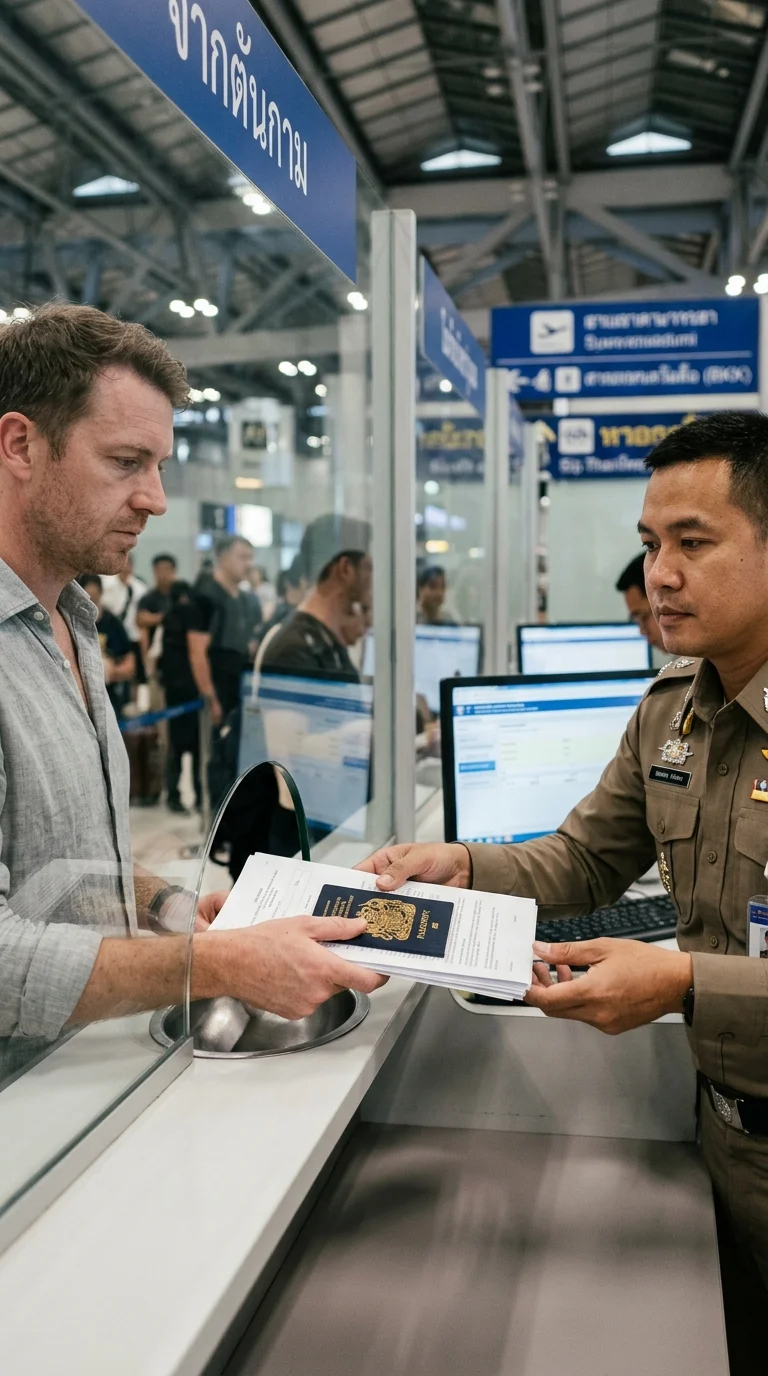
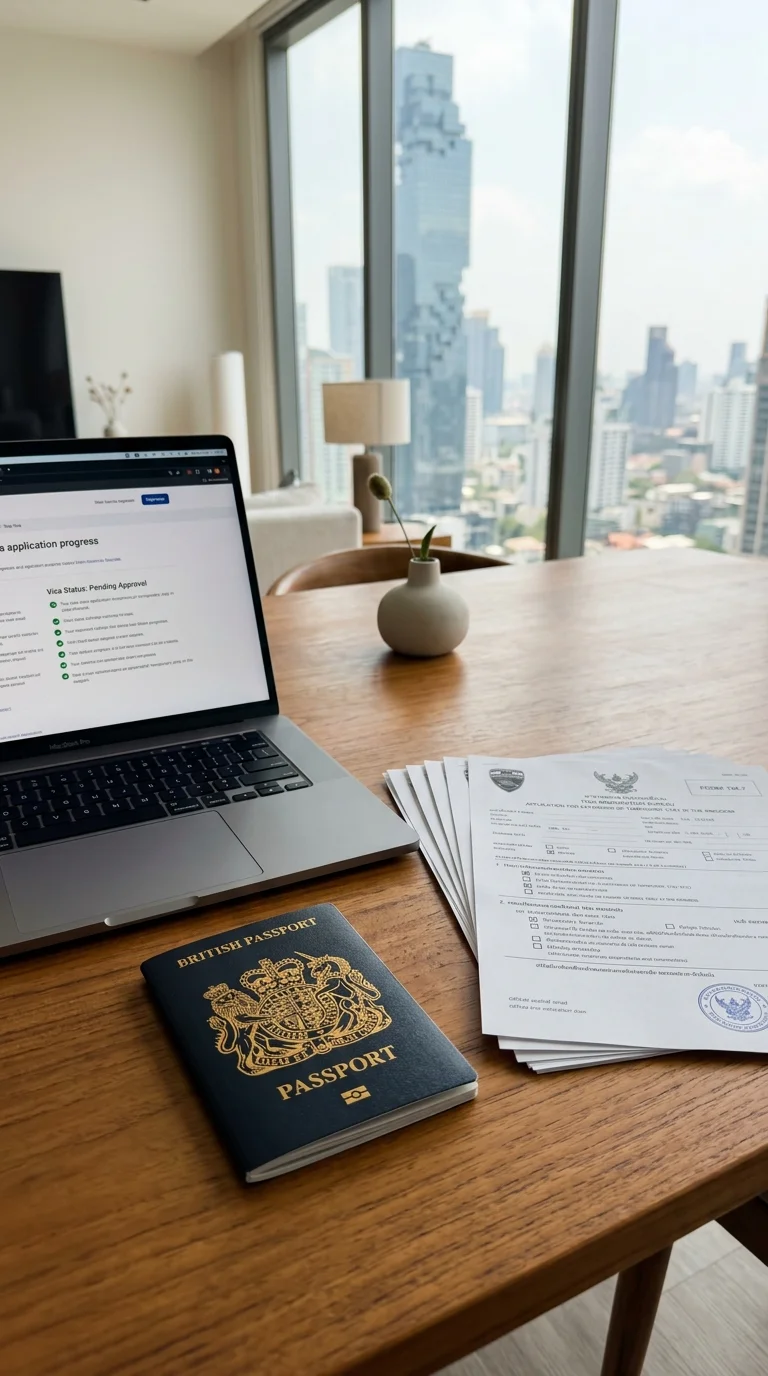
Thailand Visa Overview
Thailand has announced a reduction in visa-free entry for UK nationals from 60 days to 30 days, reversing the temporary 60-day allowance introduced in 2024. This change has not yet been enacted into law — this page will be updated with full details, including the confirmed implementation date, as soon as the legislation is passed.
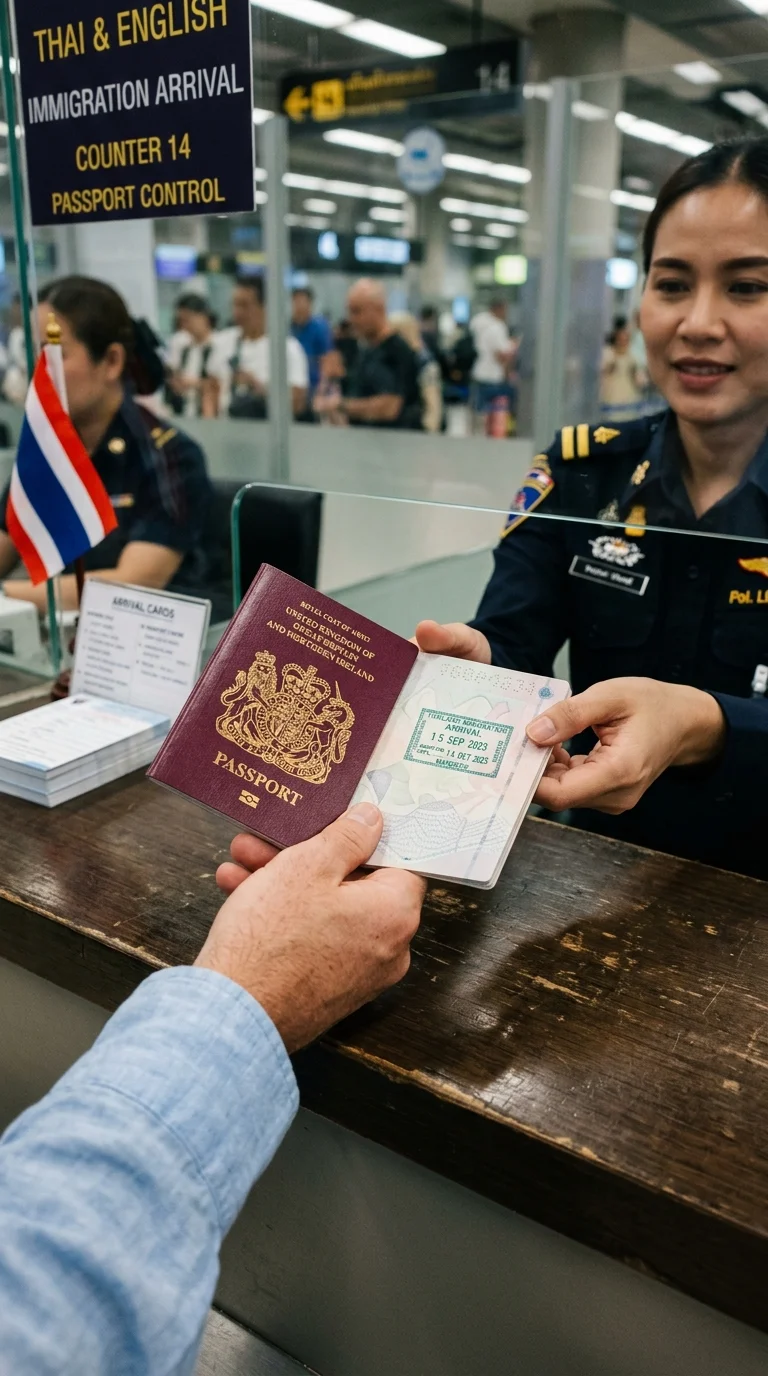
UK passport holders can enter Thailand without a visa for up to 60 days for tourism, but staying longer or working locally requires a specific pre-approved entry permit. Choosing the wrong visa category before arrival often results in costly border runs or being forced to leave the country to apply for the correct paperwork at an overseas embassy.
This guide breaks down every primary Thailand visa route available to UK nationals to help you identify the exact category required for your trip. It details the specific eligibility criteria, maximum stay limits, and official costs for tourist exemptions, long-term residency, digital nomad options, and retirement visas. This page is for anyone planning a visit ranging from a two-week holiday to a permanent relocation. It is not for individuals seeking asylum or diplomatic clearance.

Short Stays and Tourism
UK nationals visiting for holidays or brief business meetings can enter under the visa exemption scheme or apply for a standard Tourist Visa (TR) for extended travel. Under the visa exemption scheme, UK passport holders receive a 60-day stay automatically at the border without paying any fees. You can extend this initial period once at a local Thai Immigration office. This extension adds an additional 30 days and costs 1,900 THB (£42). If your planned trip exceeds 90 days, you must apply for a Single Entry Tourist Visa (TR) via the official Thai E-Visa portal before leaving the UK. The TR visa costs £30 and grants a 60-day stay, which can also be extended by 30 days. Multiple Entry Tourist Visas (METV) are available for £150, allowing unlimited 60-day entries over a six-month period. To qualify for the METV, you must show a bank balance of at least £5,000 maintained consistently for six months. A common issue arises when travellers attempt back-to-back visa exemptions to live in the country informally. Immigration officers often reject entry if they suspect you are residing in Thailand without the correct long-term permit. Always carry proof of onward travel within your initial 60-day window. Airlines frequently deny boarding at UK airports without it. Secure a Tourist Visa in advance if you plan to stay beyond 60 days or intend to leave and re-enter Thailand multiple times.
Discover exactly how UK nationals can secure a Thailand Education Visa. Learn about qualifying schools, costs, extensions, and how to apply successfully.
| Route | Max Initial Stay | Official Fee | Extension Limit |
|---|---|---|---|
| Visa Exemption | 60 days | Free | 30 days |
| Single Entry TR | 60 days | £30 | 30 days |
| Multiple Entry TR | 60 days per entry | £150 | 30 days per entry |
Remote Work and Digital Nomads
Sponsored

The Destination Thailand Visa (DTV) allows remote workers, freelancers, and digital nomads to live in Thailand for up to five years while working for foreign clients. Launched to attract global talent, the DTV requires applicants to prove they are employed by a company outside Thailand or hold an active freelance portfolio. You must demonstrate a minimum bank balance of 500,000 THB (£11,100) at the time of application to prove financial stability. The official application fee is 10,000 THB (£222) when applying locally. Alternatively, it costs £300 if processed through the Royal Thai Embassy in London. This visa grants multiple entries over a five-year validity period, with each entry permitting a continuous stay of up to 180 days. You can extend this 180-day stay once per entry for another 180 days at a local immigration office for a fee of 1,900 THB (£42). Crucially, the DTV does not allow you to work for Thai employers or local clients in any capacity. Doing so requires a standard Non-Immigrant B visa and a formal work permit. Processing times for the DTV currently range from four to six weeks via the London embassy portal, so you must plan ahead. Ensure your employment contracts explicitly state your company is based outside Thailand to avoid your DTV application being rejected.
| Feature | Destination Thailand Visa | Tourist Visa TR | Notes |
|---|---|---|---|
| Primary Purpose | Remote work and digital nomads | Tourism and leisure | DTV forbids local employment |
| Maximum Stay | 180 days per entry | 60 days per entry | Both can be extended once |
| Financial Proof | 500,000 THB (£11,100) | Standard living funds | DTV requires higher balance |
Retirement Visas
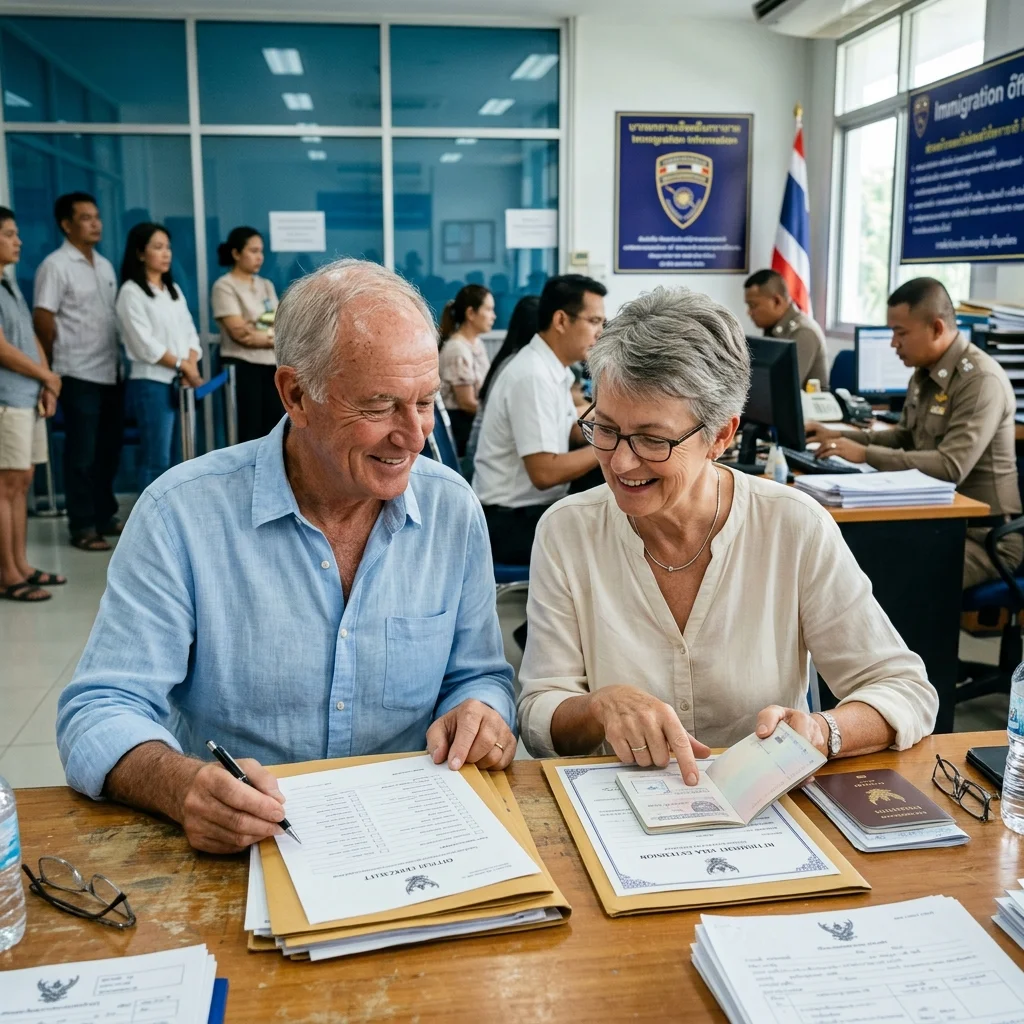
UK nationals aged 50 and over can apply for a Non-Immigrant O or OA retirement visa, provided they meet strict financial and health insurance thresholds. The primary route for UK retirees is the Non-Immigrant O (Retirement) visa. This category requires you to show either a Thai bank account balance of 800,000 THB (£17,700) held for two months prior to application, or a proven monthly pension income of 65,000 THB (£1,440). This visa grants an initial 90-day stay. You then convert this into a one-year extension at a Thai immigration office. Alternatively, the Non-Immigrant OA visa is applied for entirely from the UK and grants a full year upon arrival. However, the OA visa mandates comprehensive health insurance covering at least 3,000,000 THB (£66,600) for inpatient care. The standard Non-O route currently does not enforce this strict insurance requirement at the federal level, making it preferable for many expats. Both visas prohibit any form of employment, including unpaid volunteer work. The application fee for a single-entry Non-O is £60. The multiple-entry OA costs £150. You must also report your residential address to immigration every 90 days. Choose the standard Non-O visa over the OA if you wish to avoid the mandatory high-coverage Thai health insurance requirement.
| Requirement | Non-Immigrant O | Non-Immigrant OA | Key Difference |
|---|---|---|---|
| Application Origin | UK or Thailand | UK only | Non-O offers more flexibility |
| Mandatory Insurance | Not federally mandated | 3,000,000 THB cover required | OA demands high-coverage policies |
| Financial Threshold | 800,000 THB in Thai bank | 800,000 THB in UK or Thai bank | OA accepts foreign bank funds |
Relocation and Family Visas
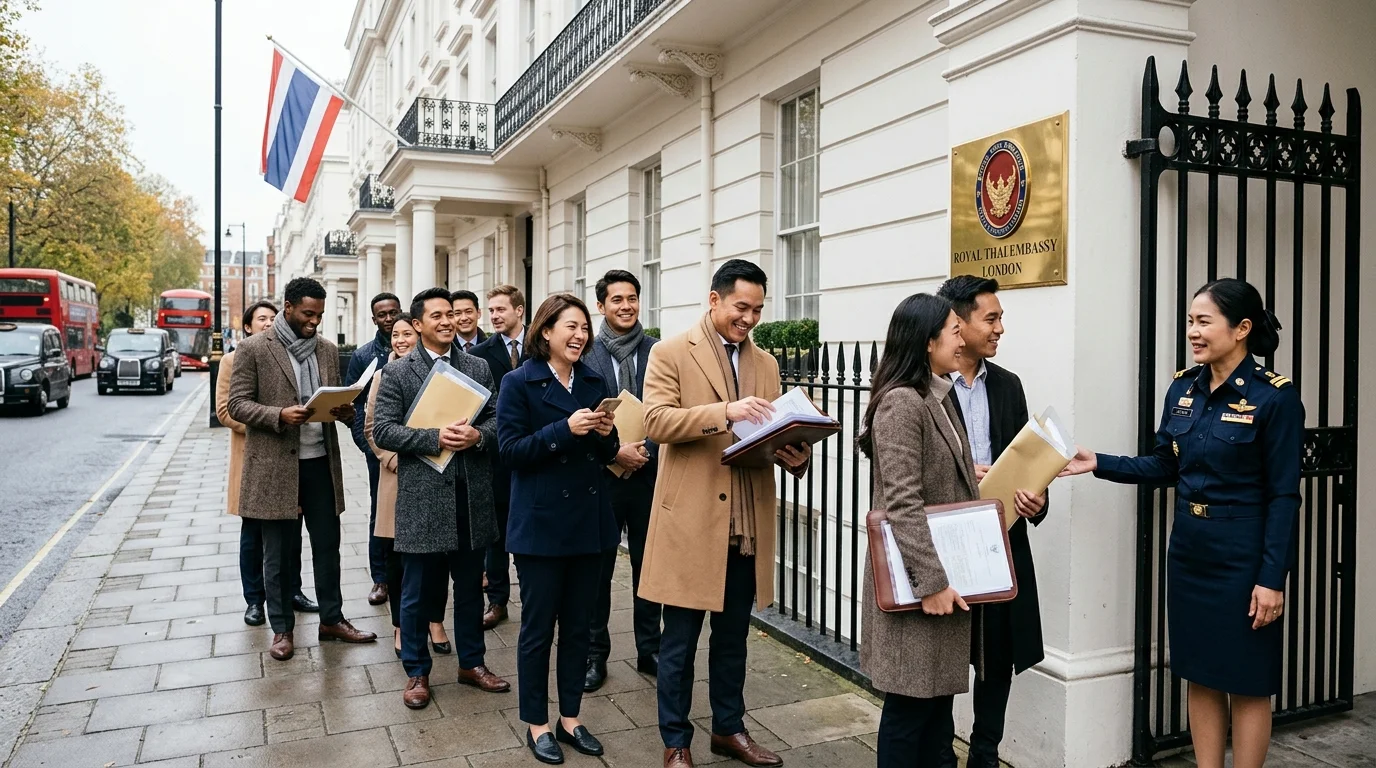
Moving to Thailand for employment, marriage, or premium residency requires a specific Non-Immigrant visa or an investment in the Thailand Privilege programme. If you secure a job with a Thai company, you need a Non-Immigrant B visa to enter the country legally. The employer must provide extensive corporate paperwork. You must also obtain a Work Permit from the Ministry of Labour before beginning your duties. The initial visa costs £60 and lasts 90 days, followed by a one-year extension tied directly to your employment contract. For UK nationals married to a Thai citizen, the Non-Immigrant O (Marriage) visa allows a one-year renewable stay. You must prove a joint bank balance of 400,000 THB (£8,800) or a monthly income of 40,000 THB (£880) to qualify. This route also permits you to obtain a work permit later if you find employment. Alternatively, the Thailand Privilege Visa offers guaranteed long-term residency for those who do not qualify for marriage or retirement routes. Membership starts at 900,000 THB (£20,000) for five years of multiple-entry access, bypassing the need for financial proofs or complex embassy paperwork. The Privilege visa strictly forbids local employment but is ideal for high-net-worth individuals or frequent travellers. Align your visa choice with your primary activity, as holding a marriage or Privilege visa does not automatically grant the right to work.
| Visa Type | Primary Requirement | Cost Tier | Work Permitted |
|---|---|---|---|
| Non-Immigrant B | Thai employment contract | £60 initial fee | Yes, with a work permit |
| Non-Immigrant O | Married to a Thai citizen | £60 initial fee | Yes, with a work permit |
| Thailand Privilege | Membership investment | 900,000 THB minimum | No, strictly forbidden |
Mandatory Arrival Requirements
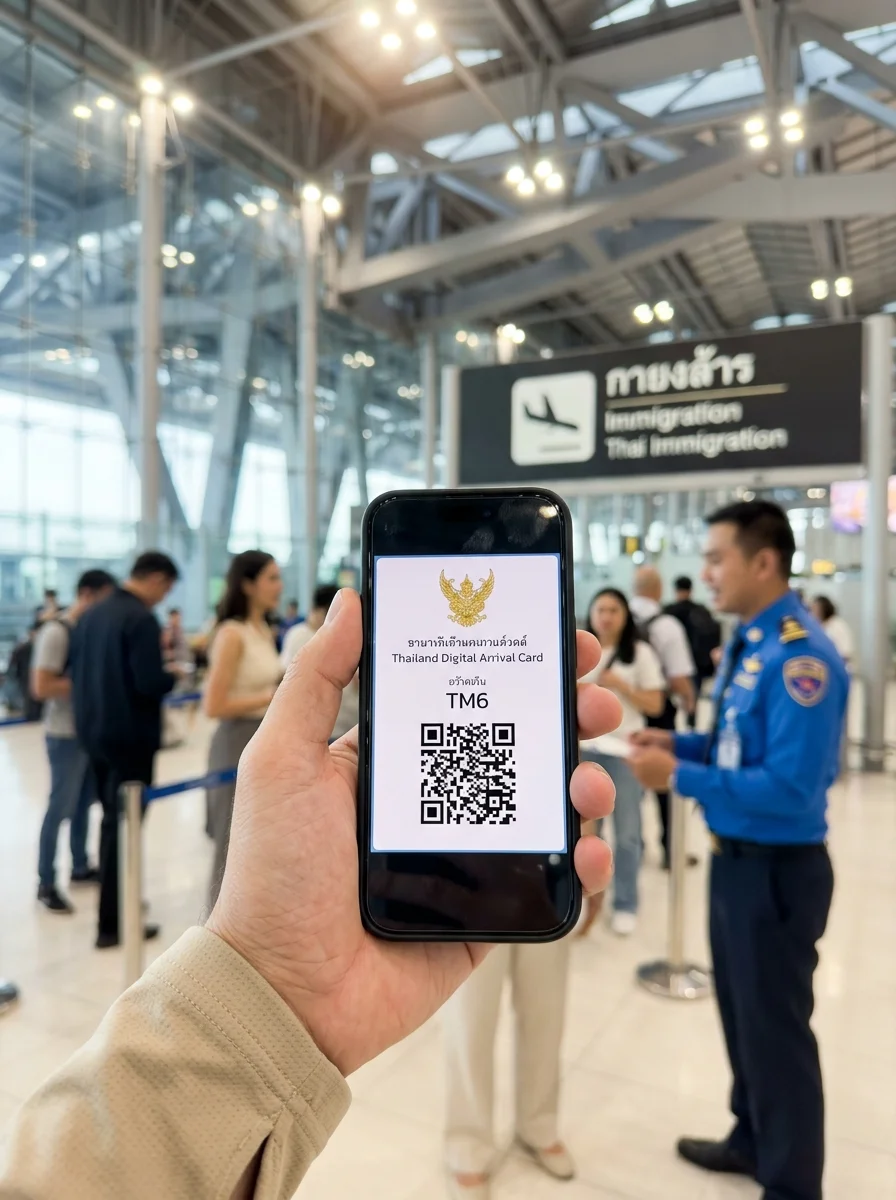
Regardless of the visa category you hold, all UK nationals must complete the Thailand Digital Arrival Card (TDAC) before passing through immigration. The Thai government has replaced the traditional paper TM6 arrival card with a mandatory digital system. You must submit your travel details, accommodation address, and flight information via the official portal or mobile application. This must be done within 72 hours of your scheduled arrival. Failing to complete this step before landing will force you to step out of the immigration queue to fill it out, adding significant delays to your entry process. The system generates a personalised QR code upon completion. You must present this code to the immigration officer alongside your passport and any physical visa documents. While the TDAC is a separate requirement from the visa itself, officers use it to verify that your stated purpose of visit matches your visa category. For example, if you enter on a visa exemption but list a corporate office as your accommodation, you will face intense questioning. Keep a screenshot of your TDAC QR code saved on your phone. Airport Wi-Fi can be highly unreliable in the arrival halls. Complete the TDAC form online 48 hours before your flight departs to ensure a rapid transit through passport control.
Costs and Budgeting
Budgeting for a Thai visa involves much more than just the embassy fee. While the visa exemption is free, applying for a standard Tourist Visa costs £30, and long-term Non-Immigrant visas range from £60 to £150. You must also account for supporting documents. Bank statements often require formal certification, and retirement visas demand medical certificates and police background checks, which typically cost around £45 to £80 in the UK. If you use a visa agent to handle a complex application like the Destination Thailand Visa or a Marriage Visa, expect their service fees to range from 15,000 THB to 40,000 THB (£330 to £880) on top of official charges. Furthermore, applicants for the Non-OA visa must purchase approved health insurance, which can cost upwards of 40,000 THB (£880) annually depending on age and health status. Always factor in the cost of mandatory 90-day reporting travel if you live far from an immigration office.
| Item | Cost (THB) | Cost (GBP approx) | Notes |
|---|---|---|---|
| Single Entry Tourist Visa | N/A | £30 | Paid via E-Visa portal |
| Non-Immigrant Visa (Single) | N/A | £60 | Applies to O and B categories |
| 30-Day Visa Extension | 1,900 THB | £42 | Paid locally in cash |
| Medical Certificate & Police Check | N/A | £45 - £80 | Sourced in the UK |
| Visa Agent Service Fees | 15,000 - 40,000 THB | £330 - £880 | Optional for complex routes |
Common Mistakes and How to Avoid Them
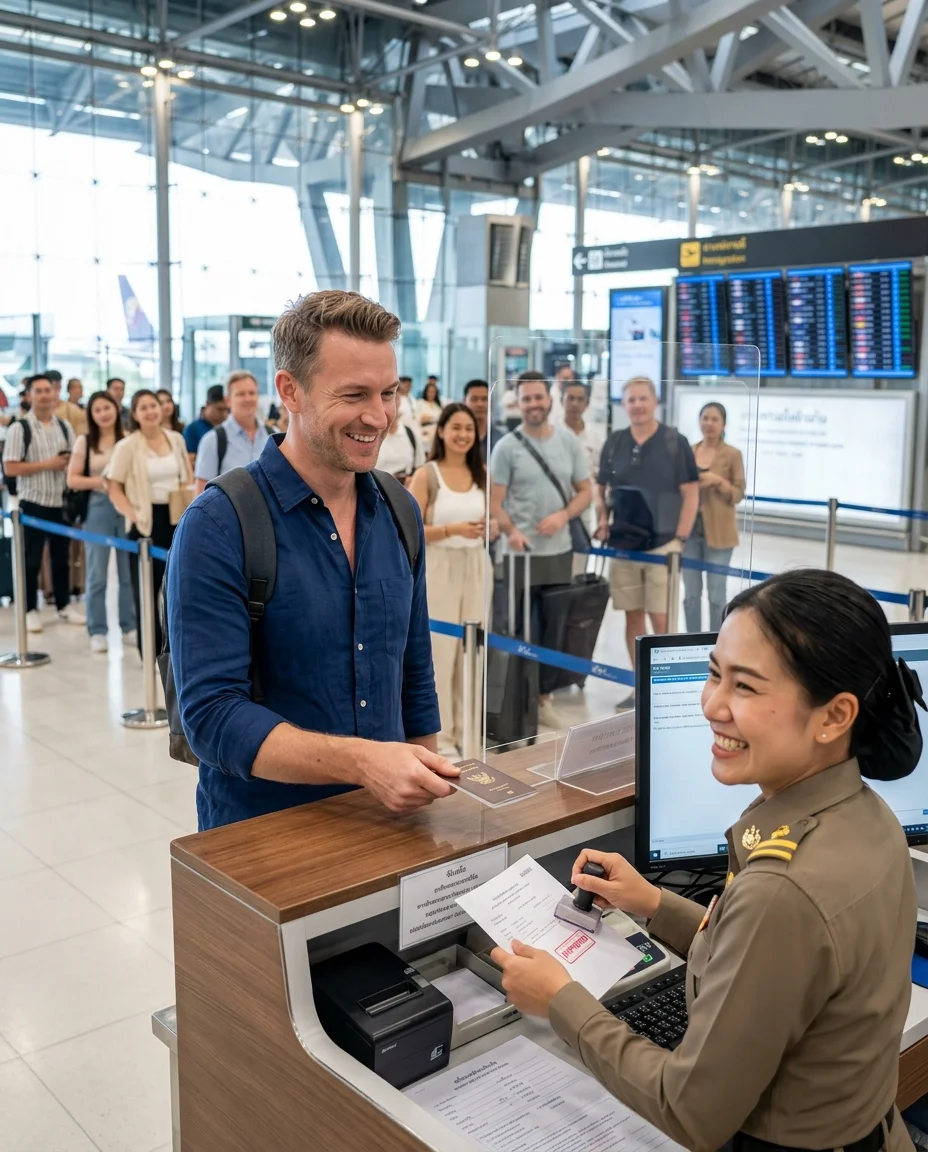
Many UK nationals arrive on a visa exemption intending to work remotely, mistakenly believing it covers digital nomad activity. This exposes you to deportation if immigration officials inspect your laptop or question your extended stay. Apply for the Destination Thailand Visa (DTV) before travelling if you plan to work online.
Applicants frequently submit uncertified internet banking printouts to prove their financial eligibility for retirement or tourist visas. The embassy rejects these applications immediately, causing you to lose your non-refundable visa fee. Ensure all financial statements are stamped and physically signed by your UK bank branch before submission.
Travellers often book one-way flights when planning to enter Thailand on a 60-day visa exemption. Airlines will deny you boarding at Heathrow or Gatwick because they are heavily fined if you arrive without an onward ticket. Purchase a fully refundable onward flight within the 60-day window before checking in at the airport.
Expats regularly forget to file their 90-day address report when holding a long-term Non-Immigrant visa. You will face a fine of 2,000 THB and a negative mark on your immigration record, complicating future extensions. Set a digital calendar reminder 14 days before your reporting date to file it online or in person.
Practical Tips

Create an account on the Thai E-Visa portal well in advance of your travel dates. The system frequently experiences downtime, and last-minute applications risk missing your departure window.
Always carry physical copies of your accommodation bookings and onward flights when passing through Thai immigration. Officers routinely ask for hard copies, and relying on your phone battery after a 12-hour flight from London is risky.
Double-check the exact dimensions required for your passport photos before uploading them to the E-Visa system. The portal employs strict automated cropping tools that will reject standard UK passport photo dimensions if they do not match the Thai specifications.
Notify your UK bank that you need original, wet-ink signatures on your statements for a Thai visa application. Standard statements sent by post often lack the specific branch stamp required by the Royal Thai Embassy in London.
Apply for your police clearance certificate early if you are pursuing a Non-OA retirement visa. The UK ACRO system can take up to four weeks to process background checks during peak periods.
Keep your UK driving licence and an International Driving Permit (IDP) in your document folder. While not required for the visa itself, Thai immigration officers sometimes request secondary ID if your passport is newly issued.
Use a dedicated travel money card to pay the E-Visa fees online. The portal processes payments in GBP, but some UK high street banks flag the transaction as suspicious and block it if you do not pre-approve the payment.
[DISCLAIMER: Visa rules and fees are subject to change. Always verify current requirements with the official Thai Immigration Bureau at immigration.go.th or the Royal Thai Embassy before applying.]
Quick Reference Table
| Visa Category | Eligibility Focus | Maximum Initial Stay | Official Fee | Extension Options | Work Permitted |
|---|---|---|---|---|---|
| Visa Exemption | UK Passport Holders | 60 days | Free | 30 days | No |
| Tourist Visa (TR) | General Tourists | 60 days | £30 | 30 days | No |
| Destination Thailand (DTV) | Remote Workers | 180 days | £300 | 180 days | Foreign clients only |
| Non-Immigrant O (Retirement) | Over 50s | 90 days | £60 | 1 year | No |
| Non-Immigrant OA | Over 50s with Insurance | 1 year | £150 | 1 year | No |
| Non-Immigrant B | Thai Company Employees | 90 days | £60 | 1 year | Yes |
| Non-Immigrant O (Marriage) | Spouses of Thai Nationals | 90 days | £60 | 1 year | Yes |
| Thailand Privilege | Investors & HNWIs | 5 years | 900,000 THB | 1 year per entry | No |