Wat Pho Temple Bangkok
Wat Pho houses the 46-metre-long gold-leaf Reclining Buddha, the largest of its kind in Bangkok and a masterpiece of 19th-century craftsmanship. This site serves as the national headquarters for the teaching and preservation of traditional Thai medicine, earning it a prestigious spot on the UNESCO Memory of the World Register.
Wat Pho, officially titled Wat Phra Chetuphon Wimon Mangkhalaram Rajwaramahawihan, is a first-class royal monastery situated in the Phra Nakhon District. As the oldest temple complex in the capital, it predates the founding of Bangkok and underwent a major reconstruction under King Rama I when the capital moved across the river. The site functions as both a place of active worship for the resident monkhood and a public university for traditional arts and sciences. It attracts international travellers seeking architectural precision and those specifically interested in the authentic roots of Thai wellness culture and Buddhist philosophy.
The Vihara of the Reclining Buddha
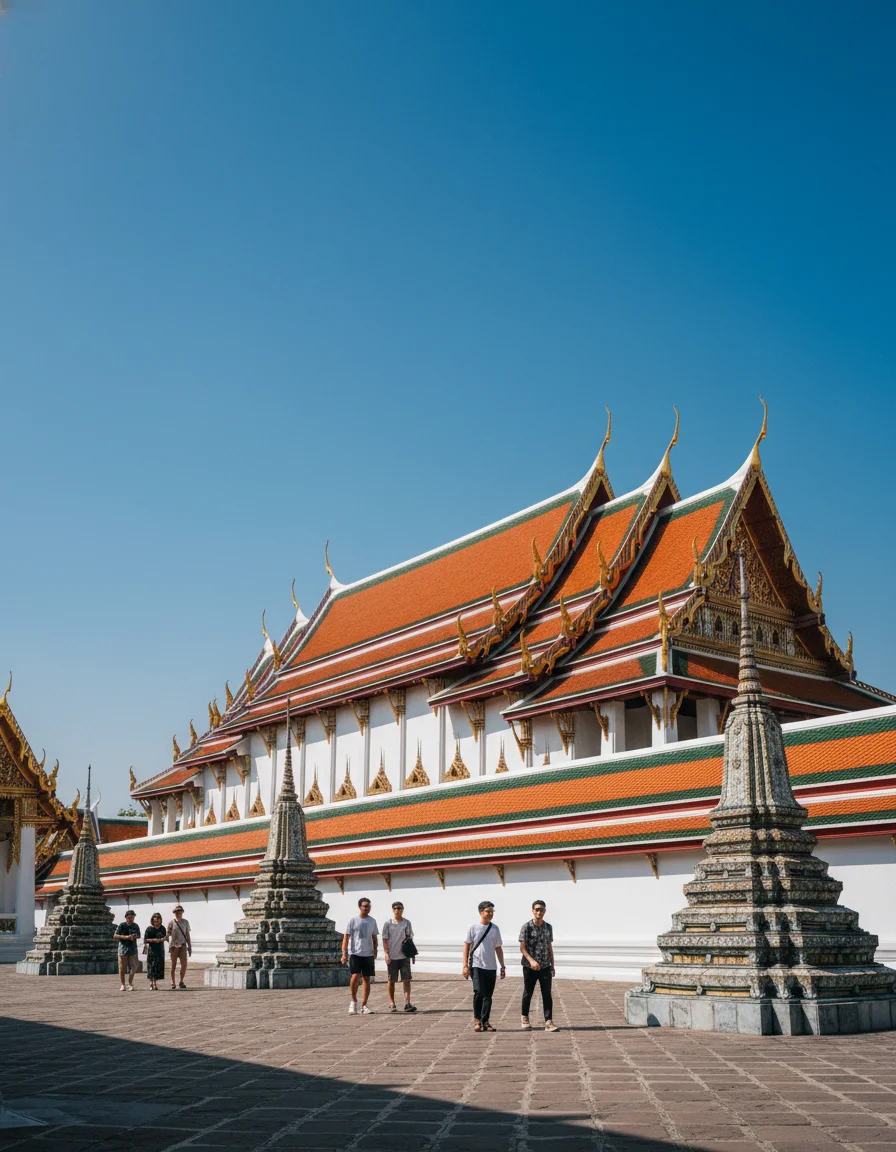
The centrepiece of the entire complex is the Vihara of the Reclining Buddha, a building specifically constructed to house an image of such immense proportions that it nearly touches the ceiling and walls. This gilded brick and plaster figure measures 46 metres in length and 15 metres in height, representing the Buddha in his final illness before entering Parinirvana. You should pay particular attention to the soles of the feet, which are three metres high and five metres long, intricately decorated with mother-of-pearl inlay. These inlays depict the 108 auspicious characteristics (laksanas) of the Buddha, including flowers, dancers, and white elephants. Along the back of the statue, a series of 108 bronze bowls line the corridor; visitors purchase a bowl of small coins for 20 THB (£0.45) to drop into each one for good luck and to support the temple's maintenance. The sound of clinking coins provides a rhythmic backdrop to the visual spectacle of the gold-leaf surface reflecting the light from the narrow windows. While the Vihara is often crowded, the sheer scale of the statue ensures that the experience remains impactful regardless of the number of people present.
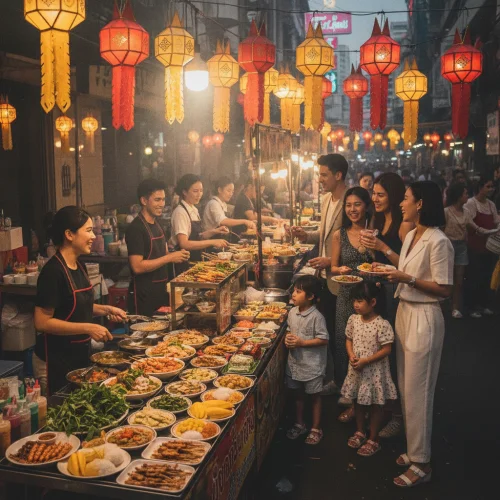
Bangkok’s food culture marries royal tradition with street-side energy. Find locals stacking ten small 15 THB Boat Noodle bowls high in the dedicated alley near Victory Monument.
| Feature | Dimension/Detail | Significance |
|---|---|---|
| Statue Length | 46 Metres | Largest reclining Buddha in Bangkok |
| Statue Height | 15 Metres | Represents the passing into Parinirvana |
| Foot Inlays | Mother-of-Pearl | Displays 108 auspicious symbols |
| Merit Bowls | 108 Bronze Vessels | Represents the 108 characters of Buddha |
The Phra Ubosot and the Four Great Chedis
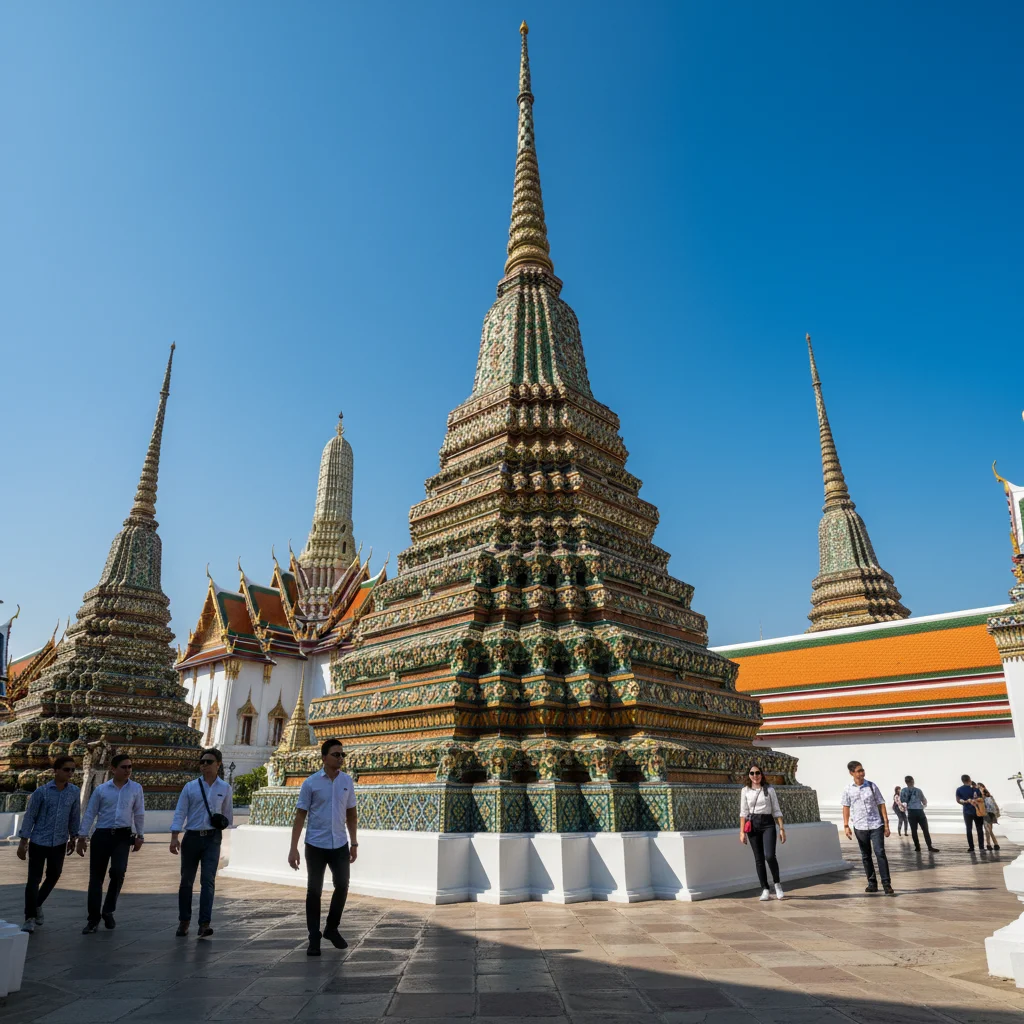
The Phra Ubosot serves as the primary ordination hall and the spiritual heart of the complex where monks perform daily rituals and ceremonies. Inside, you will find the Phra Buddha Deva Patimakorn, a seated Buddha image in the Ayutthaya style containing some of the ashes of King Rama I within its pedestal. Surrounding this central hall are the Phra Maha Chedi Si Rajakarn, a group of four 42-metre-high stupas that are visually distinct from any others in Thailand. Each chedi is dedicated to one of the first four kings of the Chakri Dynasty, clad in vibrant ceramic tiles and intricate floral porcelain patterns. The green chedi represents Rama I, the white Rama II, the yellow Rama III, and the blue Rama IV. These structures are not merely decorative but serve as reliquaries and monuments to the royal lineage that shaped modern Thailand. Walking between these towers allows you to appreciate the transition from the older, more austere architectural styles to the highly decorative ceramic influences of the later reigns.
The Birthplace of Traditional Thai Massage
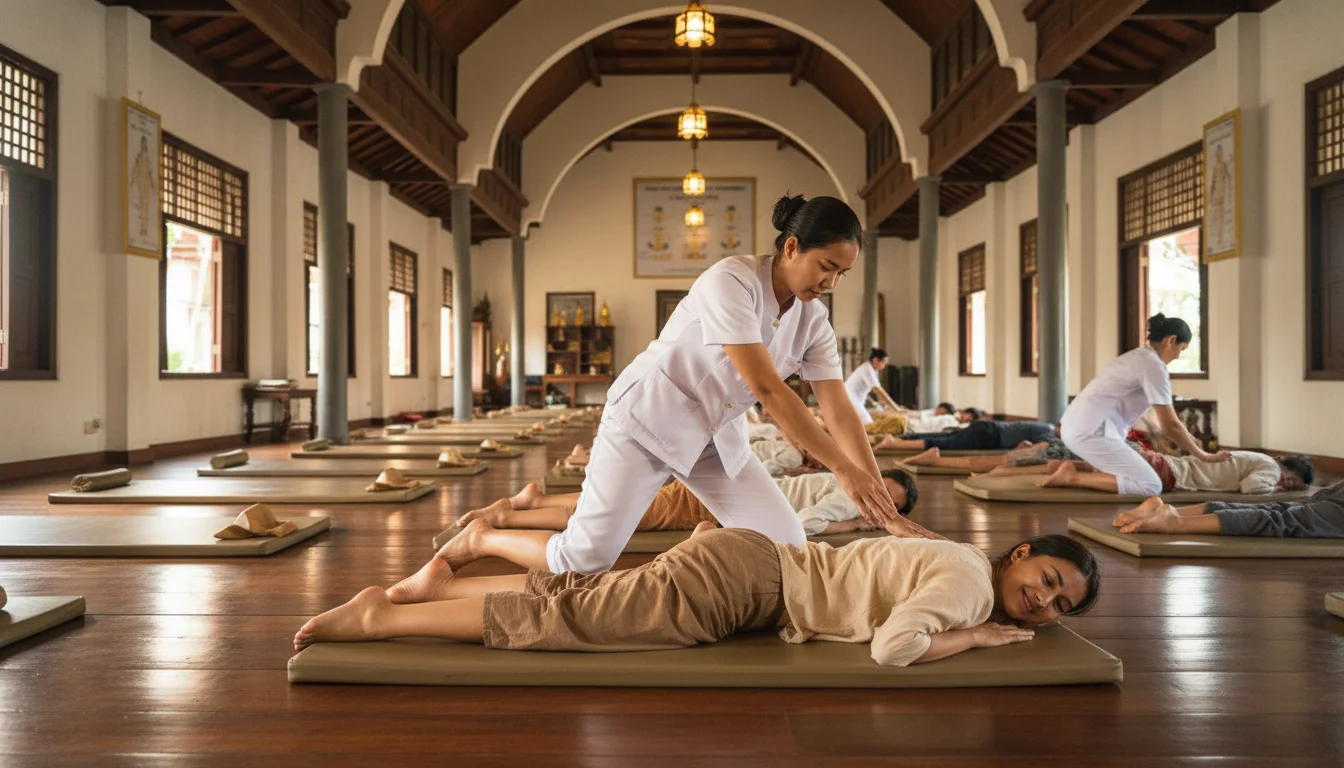
Wat Pho is globally recognised as the official home of traditional Thai massage and was the first public university in the kingdom, teaching medicine, pharmacy, and massage. Scattered throughout the grounds are the massage pavilions where you can receive a treatment from practitioners trained at the onsite school. The walls of these pavilions are decorated with 1,360 marble inscriptions and anatomical drawings that serve as the foundational textbooks for Thai medical knowledge. This collection of knowledge was inscribed during the reign of King Rama III to ensure the survival of traditional wisdom, eventually leading to its UNESCO recognition. You can book 30-minute or 60-minute sessions for traditional Thai massage or foot massage, which are performed in a communal but disciplined environment. Unlike the tourist-oriented spas found in the city centre, the massage here is firm, therapeutic, and focused on sen (energy) lines. The school also offers formal certification courses for those wishing to learn the art, ranging from five-day introductory modules to professional therapeutic licences.
The Cloisters and Stone Guardians
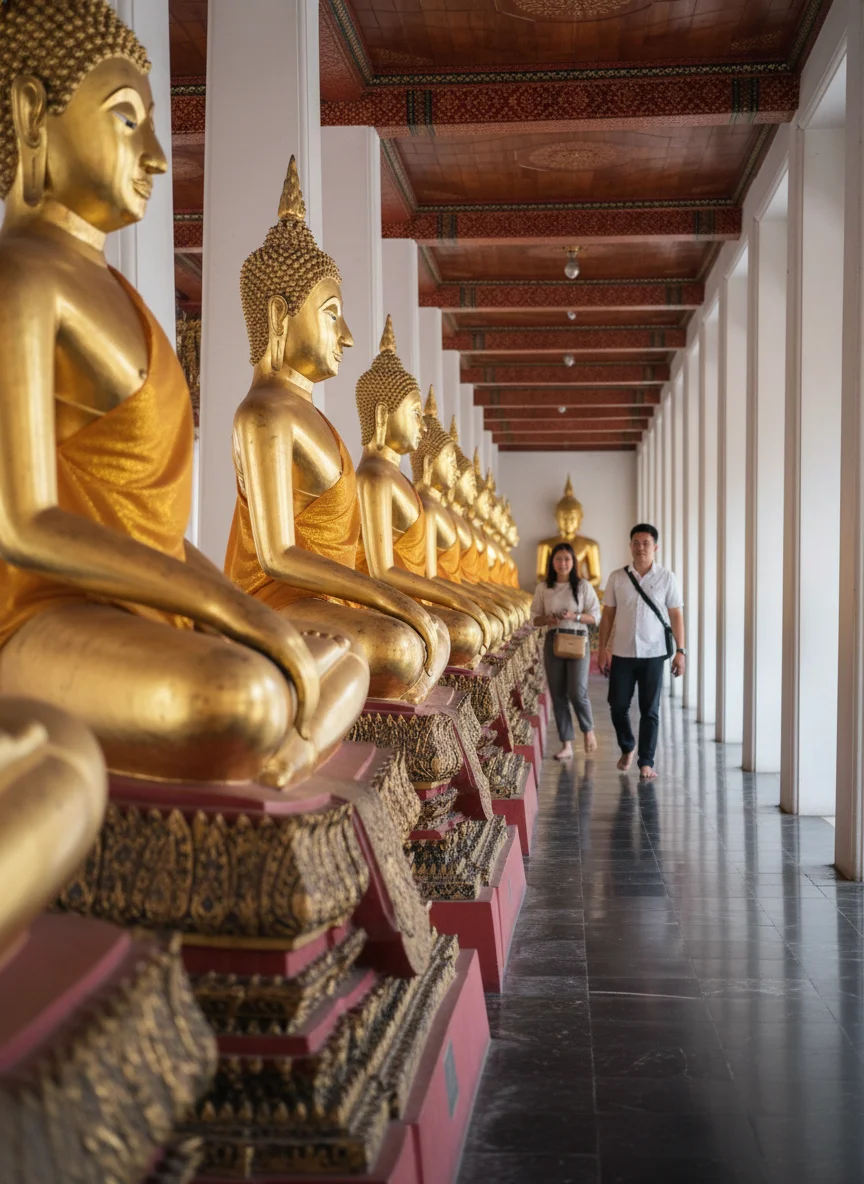
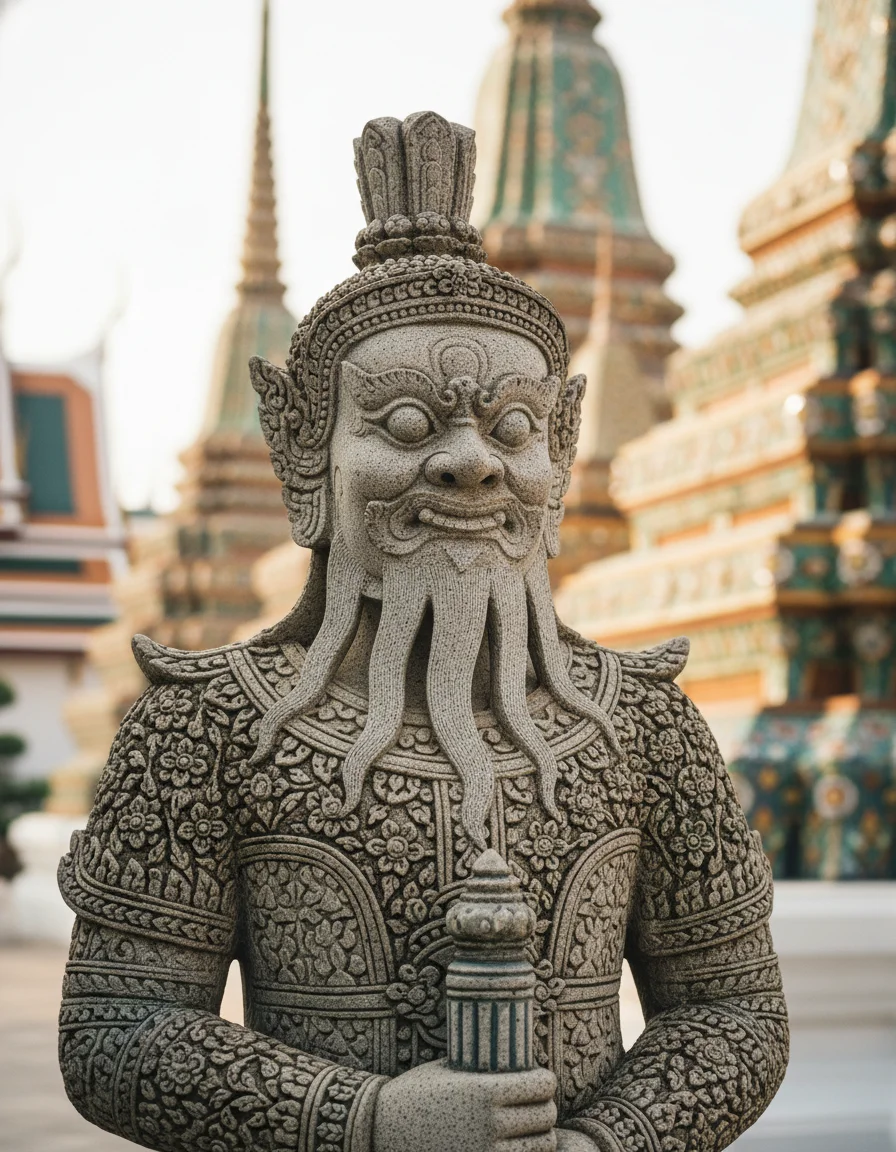
The outer and inner cloisters, known as Phra Rabiang, house nearly 400 gilded Buddha images salvaged from the ruins of Ayutthaya and Sukhothai. These galleries offer a more peaceful environment than the Reclining Buddha hall and allow you to see the evolution of Thai religious art across different eras. As you move through the courtyards, you will encounter the "Ballast Giants," large stone statues that were originally used as ballast on Chinese merchant ships trading with Thailand. These figures represent various characters, including Chinese warriors, noblemen, and even European explorers with top hats. Another specific feature is the Ruesi Dat Ton, or the contorted hermit statues, located in a small rock garden. These figures demonstrate various yoga-like stretching poses designed to improve blood circulation and flexibility, further cementing the temple’s role as a centre for physical health. These gardens provide shaded areas where you can observe the intricate detail of the limestone carvings and the heavy Chinese influence that permeated the Third Reign.
Managing the Crowds and Prioritisation
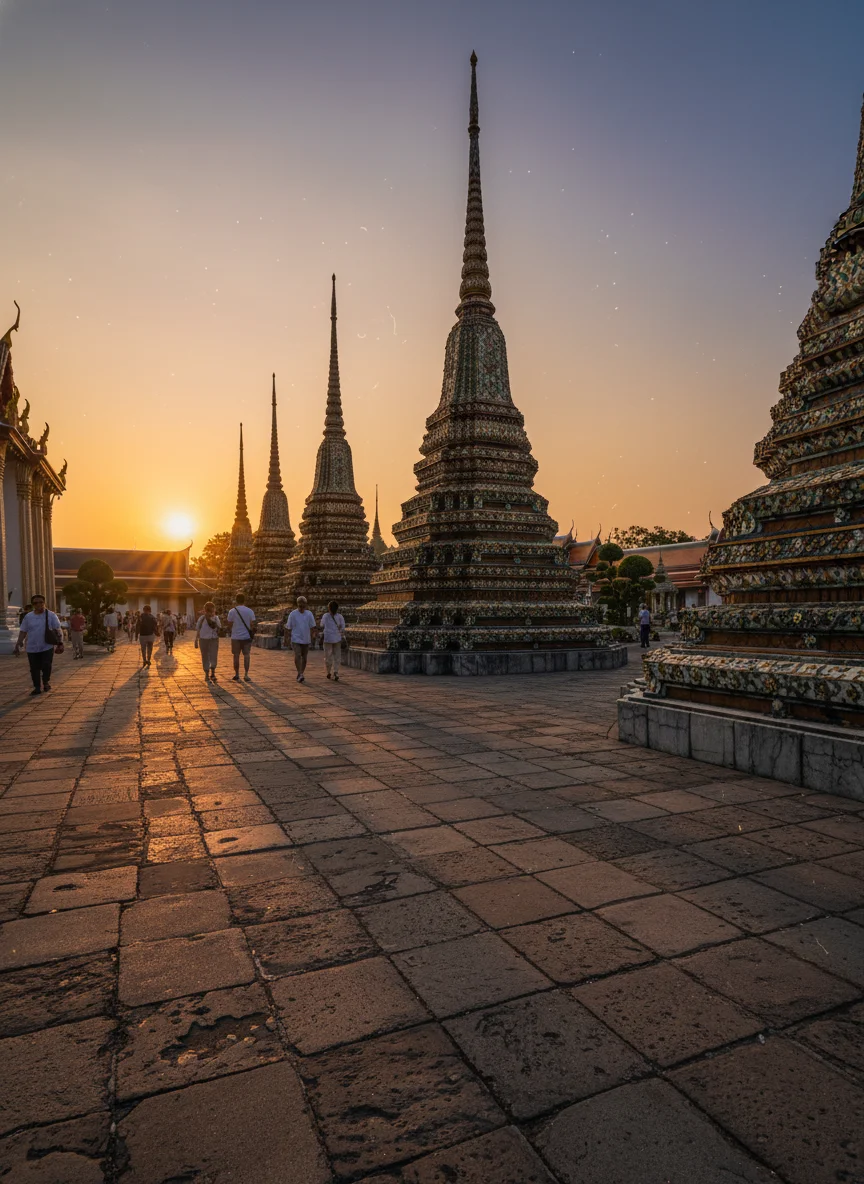
To experience Wat Pho without the overwhelming pressure of tour groups, you should aim to arrive exactly at 8:00 AM or wait until after 4:30 PM. Most visitors cluster around the Vihara of the Reclining Buddha, meaning the southern half of the complex—where the massage school and the Phra Ubosot are located—remains significantly quieter. If your time is limited to one hour, prioritise the Reclining Buddha first, followed by the four Great Chedis, and finally a quick walk through the Ruesi Dat Ton garden. You should avoid the midday heat when the stone courtyards reflect the sun, making the walk between buildings physically taxing. If the queue for a massage is longer than 45 minutes, it is better to explore the Phra Rabiang cloisters and return later, as the massage school operates on a first-come, first-served basis with no advance telephone bookings for same-day visitors. By focusing on the architectural details of the chedis and the inscriptions on the walls, you gain a deeper understanding of the site's role as a "university in stone" rather than just a photo opportunity.
Location and Getting There
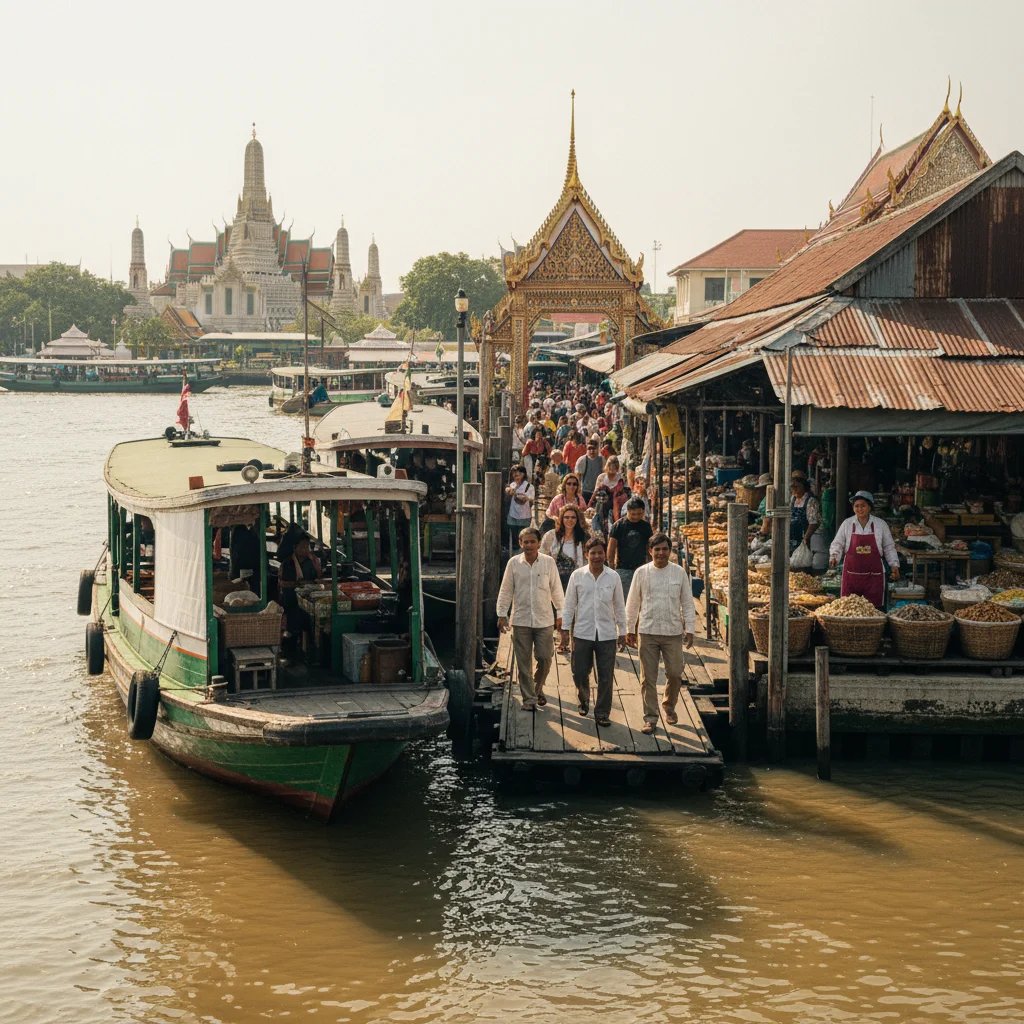
Wat Pho is located on Sanam Chai Road, directly south of the Grand Palace complex in the historic Rattanakosin district. For visitors coming from central Bangkok (Sukhumvit or Silom), the most efficient route is taking the BTS Skytrain to Saphan Taksin station and walking to the adjacent Sathorn Pier. From here, board the Chao Phraya Express Boat (Orange Flag) for 16 THB (£0.35) or the Blue Flag Tourist Boat for 30 THB (£0.65) to Tha Tien Pier (N8). The journey takes approximately 20 minutes and offers excellent views of the riverfront. Alternatively, the MRT Blue Line now serves the Old City via Sanam Chai Station, which is a five-minute walk from the temple entrance. A Tuk-Tuk from the Siam Square area will cost between 150 THB (£3.40) and 250 THB (£5.65) depending on your negotiation skills and the time of day. If you are already at the Grand Palace, the walk to Wat Pho takes less than ten minutes along the palace walls.
Costs and Booking
Entrance to Wat Pho currently costs 300 THB (£6.80) per person for international visitors, which includes a complimentary bottle of drinking water available at several kiosks inside. There is no need to book tickets in advance as the ticket booths at the main entrances on Thai Wang Road and Chetuphon Road are efficient. Traditional Thai massages at the school are priced at 260 THB (£5.90) for 30 minutes and 420 THB (£9.50) for one hour, while foot massages are slightly higher at 420 THB (£9.50) per hour. Prices remain consistent throughout the year, though you should expect longer wait times for massages during the peak season from November to February. Note that the entrance fee only covers the temple grounds; massage treatments are a separate expense paid directly at the massage pavilion.
| Service | Cost (THB) | Cost (GBP approx) | Notes |
|---|---|---|---|
| General Entrance | 300 THB | £6.80 | Includes free water |
| Thai Massage (1 hour) | 420 THB | £9.50 | Communal pavilion |
| Foot Massage (1 hour) | 420 THB | £9.50 | Highly recommended for tired feet |
| 108 Merit Coins | 20 THB | £0.45 | Used in the Reclining Buddha hall |
Who It Suits Best
Wat Pho is an essential stop for cultural enthusiasts, history students, and photography fans who appreciate intricate religious architecture. It is particularly well-suited to those who prefer a slightly more relaxed pace compared to the neighbouring Grand Palace, as the grounds are more spacious and shaded. It is not ideal for travellers who struggle with heat or those unwilling to adhere to the strict Buddhist dress code. Families with very young children may find the crowds and the "no shoes" policy in every building a logistical challenge during the peak afternoon hours.
What to Know Before You Go
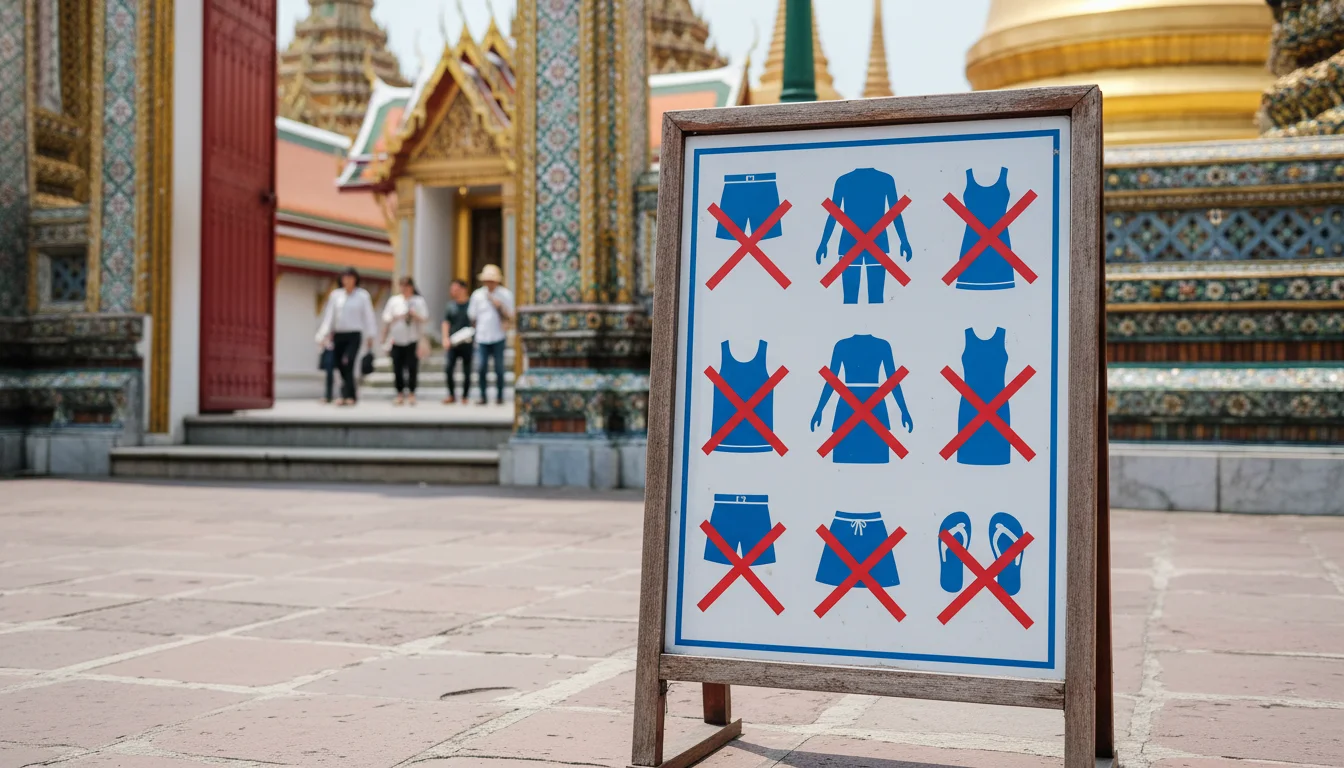
You must adhere to a strict dress code that requires shoulders and knees to be covered for all genders. If you arrive in shorts or a tank top, you will be required to rent or purchase a sarong at the entrance, which can be an unnecessary delay. You will be required to remove your shoes before entering any of the temple buildings, so wearing slip-on footwear is highly practical. Carrying a small bag for your shoes is often easier than leaving them on the communal racks during busy periods. Beware of "friendly" locals outside the gates claiming the temple is closed for a "monk holiday" or cleaning; this is a common scam designed to divert you to a jewellery shop or a private Tuk-Tuk tour. The temple is open daily from 8:00 AM to 6:30 PM, and it never closes for private ceremonies during these public hours.
Practical Tips
Carry a pair of socks in your day bag if you visit during the middle of the day. The stone floors in the open courtyards can become painfully hot under the sun, and socks are permitted inside the temple buildings.
Visit the massage pavilion as soon as you arrive to check the waitlist. You can put your name down and then explore the nearby chedis while waiting for your time slot to arrive.
Bring a portable fan and plenty of sunscreen. While there are shaded cloisters, much of the transition between the major monuments involves walking through unshaded stone plazas.
Use the MRT Sanam Chai station for a quick exit. The station itself is beautifully designed to match the royal district and provides a cool, air-conditioned escape from the humidity.
Combine your visit with a trip to Wat Arun across the river. A small cross-river ferry operates from Tha Tien pier for just 5 THB (£0.11), taking you directly to the Temple of Dawn.
Look for the "stone hermits" near the massage school. These small statues are often missed by tourists but provide the best insight into the physical yoga traditions of Thailand.
Check the back of your ticket for the water voucher. Many visitors throw their ticket away before realising it entitles them to a cold bottle of water at the designated stations.
Quick Reference Table
| Item | Detail | Notes |
|---|---|---|
| Property Name | Wat Pho (Wat Phra Chetuphon) | Known as the Temple of the Reclining Buddha |
| Location | Phra Nakhon, Bangkok | Near the Grand Palace |
| Property Type | Buddhist Temple / Cultural Attraction | First-class Royal Monastery |
| Category | UNESCO Memory of the World | Birthplace of Thai Massage |
| Capacity | Several thousand visitors daily | Large complex with multiple halls |
| Opening Hours | 08:00 - 18:30 | Open daily |
| Massage School | Yes | Onsite treatments and courses |
| Restaurant | Small cafes nearby | No major dining inside grounds |
| Nearest Transport | MRT Sanam Chai / Tha Tien Pier | Very accessible by river or rail |
| Distance to City Centre | 5-7 km to Siam Square | 20-30 mins by taxi or MRT |
| Official Website | watpho.com | Check for special ceremony dates |
| Booking Platform | Klook / GetYourGuide | Best for guided tours |