BTS Skytrain
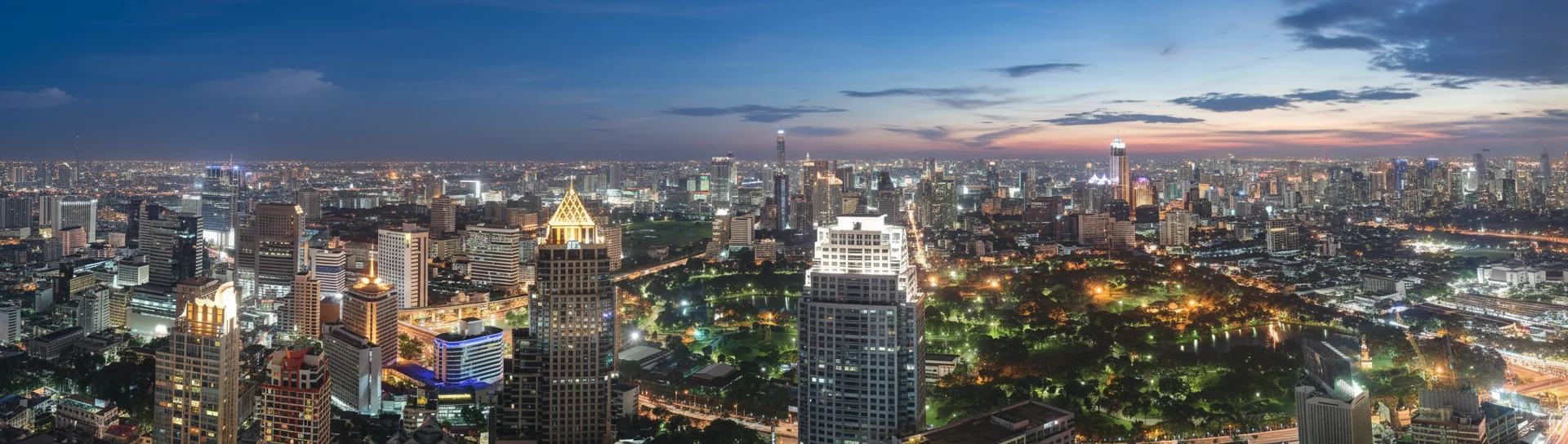
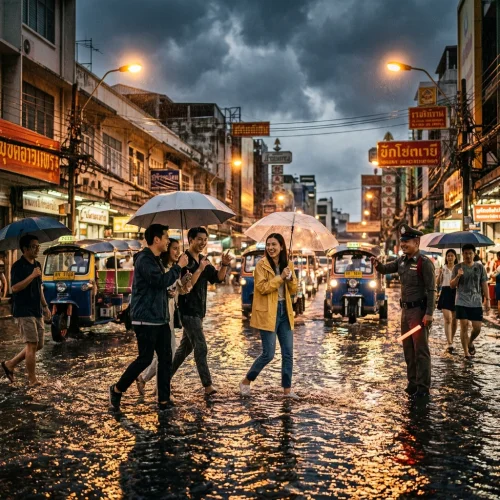
Bypassing Bangkok's legendary street-level traffic congestion entirely, the BTS Skytrain carries more than one million passengers daily along an elevated concrete viaduct high above the city's main avenues. It transforms hours of frustrating road delays into a swift, air-conditioned journey of just minutes across the capital.
The BTS Skytrain is Bangkok's premier elevated rapid transit system, operated by the Bangkok Mass Transit System Public Company Limited. Positioned as the backbone of the capital's public transport network, this high-frequency heavy rail system services the primary commercial, shopping, and residential districts. It offers a reliable, climate-controlled escape from the city’s infamous street-level traffic jams. This transit network is ideally suited for independent UK holidaymakers, business travellers, and urban explorers who require predictable travel times between major attractions, shopping complexes, and central hotel districts.

The Sukhumvit Line and Key Station Termini
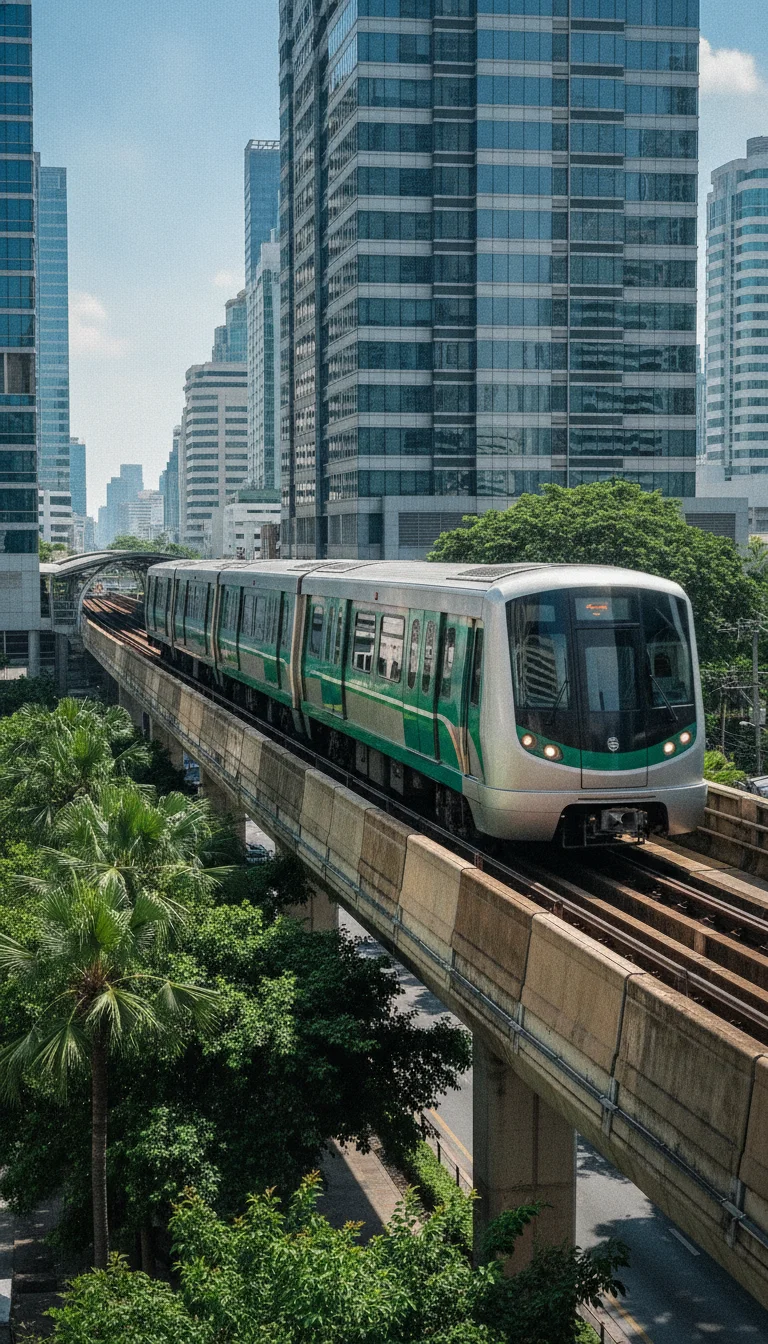
The Sukhumvit Line serves as the longest and most critical transit corridor in Bangkok, stretching from the northern suburb of Khu Khot down to Kheha in Samut Prakan province. This line traces the entire length of Sukhumvit Road, which acts as the city's primary commercial artery. It connects vital districts such as Phaya Thai, Victory Monument, Ari, Phrom Phong, Thong Lor, and Ekkamai. For UK travellers, this route is the primary link to major retail zones, nightlife hubs, and numerous international hotels. Key termini such as Mo Chit in the north provide direct access to the famous Chatuchak Weekend Market, while the eastern extension allows passengers to reach outer residential areas and industrial zones without facing any road traffic. Trains run with high frequency, often arriving every three to six minutes during peak commuting windows to handle the massive passenger load. By utilising this elevated corridor, you can travel from the outer suburbs to the absolute centre of the metropolitan area in less than forty minutes. Selecting a hotel along this line ensures you remain connected to the most active parts of the city.
Plan your Bangkok trip with our guide to navigating the city's districts, transport, food, and accommodation. Discover the real Bangkok beyond the chaos.
The Silom Line and Riverside Connections
Sponsored
The southern and western quadrants of Bangkok are handled primarily by the Silom Line, which runs from National Stadium to Bang Wa. This line branches off from the central hub and cuts directly through the financial powerhouse of Silom and Sathon, making it popular with business travellers and morning commuters. It provides a crucial link to the Chao Phraya River at Saphan Taksin station, where passengers can transfer directly to public express boats and hotel shuttle barges. This river connection is the gateway to historic riverside attractions, including the Grand Palace, Wat Pho, and the Asiatique night market. The line also services the retail district of National Stadium, situated close to MBK Center and the Bangkok Art and Culture Centre. Trains on this line operate with a slightly different scheduling window than the Sukhumvit Line, but they maintain the same high standards of cleanliness, security, and powerful air conditioning. Using this route allows you to transition from the modern corporate skyline of Sathon to a traditional wooden riverboat in a matter of minutes.
Siam Station as the Core Interchange Hub
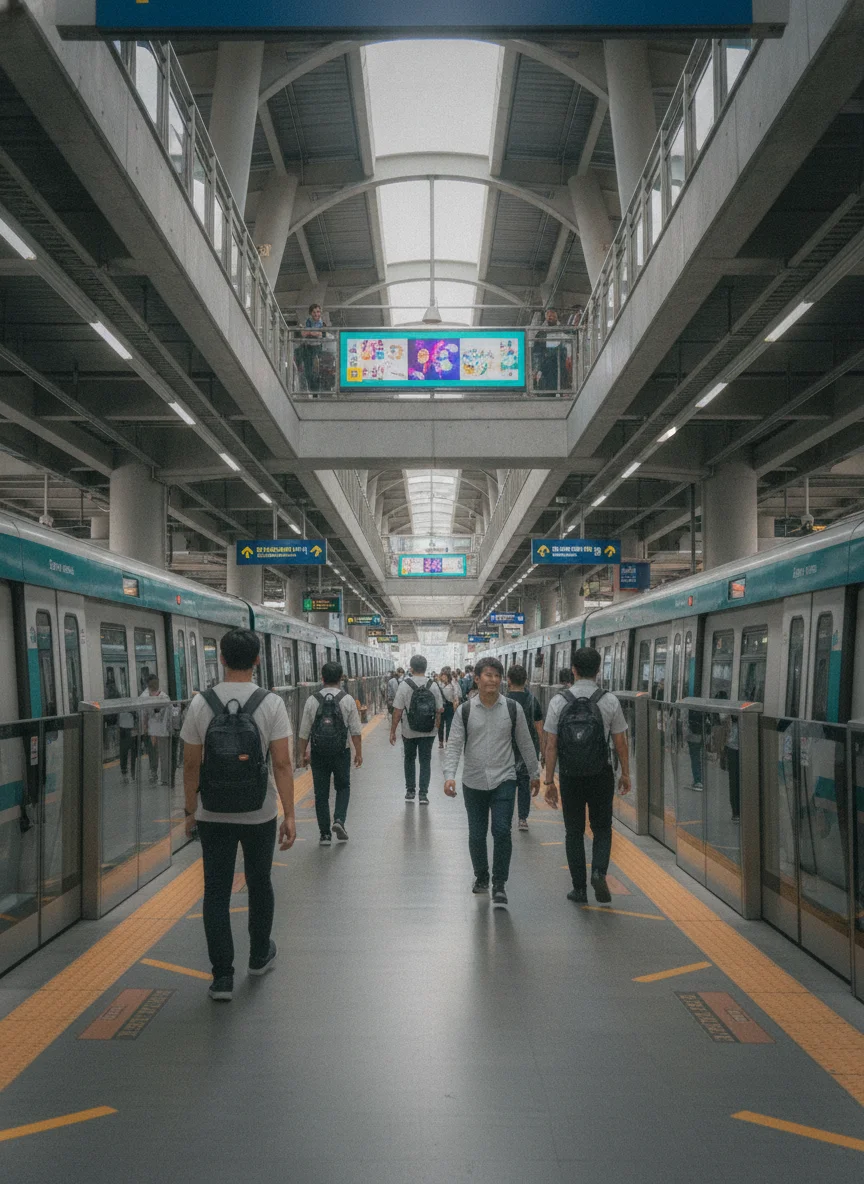
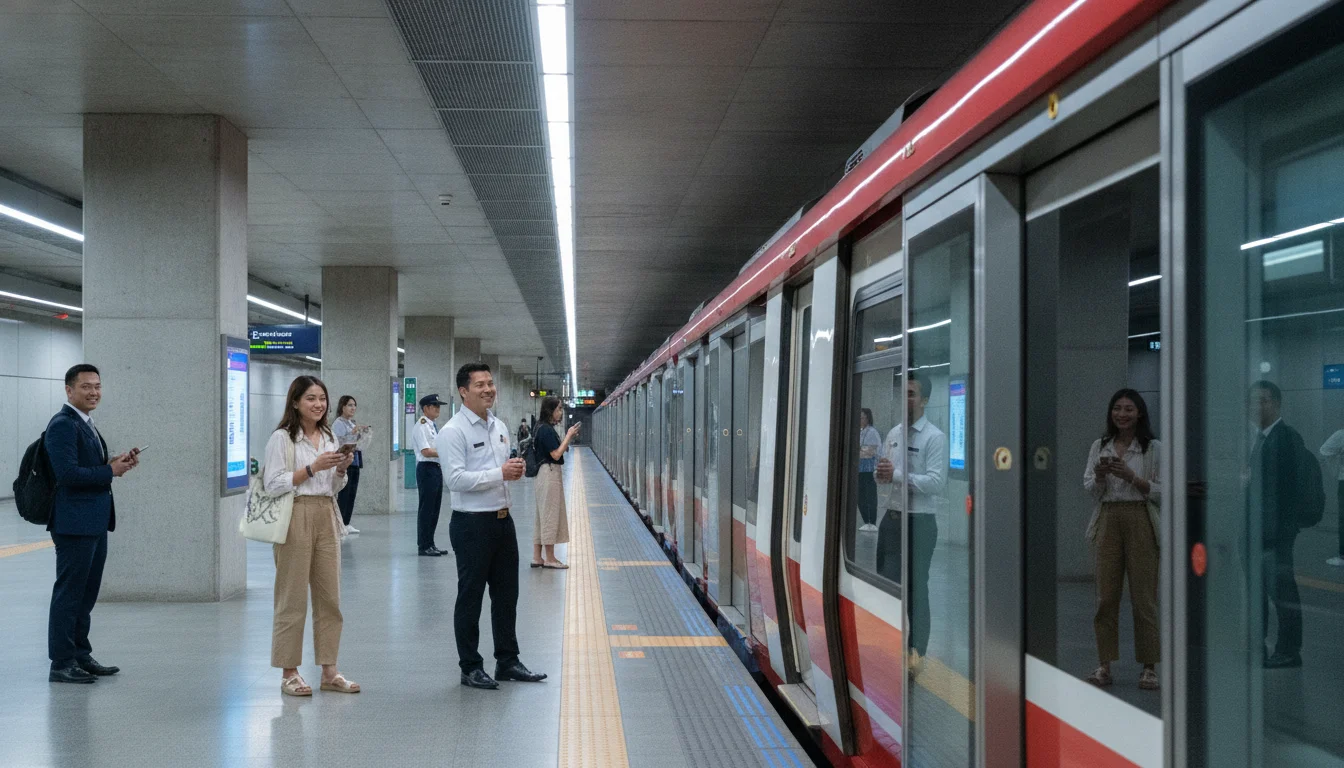
Siam Station acts as the physical and operational heart of the entire BTS Skytrain network, where the Sukhumvit and Silom lines meet across a dual-level island platform. This design allows passengers to change lines by simply walking across the platform rather than navigating stairs or different ticket barriers, provided they are travelling in compatible directions. The upper level handles trains heading towards Kheha and Bang Wa, while the lower level services carriages bound for Khu Khot and National Stadium. Located directly outside Siam Paragon, Siam Center, and Siam Square, this station is consistently the busiest point on the network, demanding careful attention to directional signage during rush hours. The station concourse is expansive, housing customer service desks, automated ticketing machines, and small retail outlets selling drinks and snacks. Navigating this hub requires an understanding of the overhead colour-coded maps, which clearly distinguish the light green Sukhumvit Line from the dark green Silom Line. Entering or exiting at Siam positions you immediately in the middle of Bangkok's largest shopping and entertainment district.
Ticketing Options and the Rabbit Card System
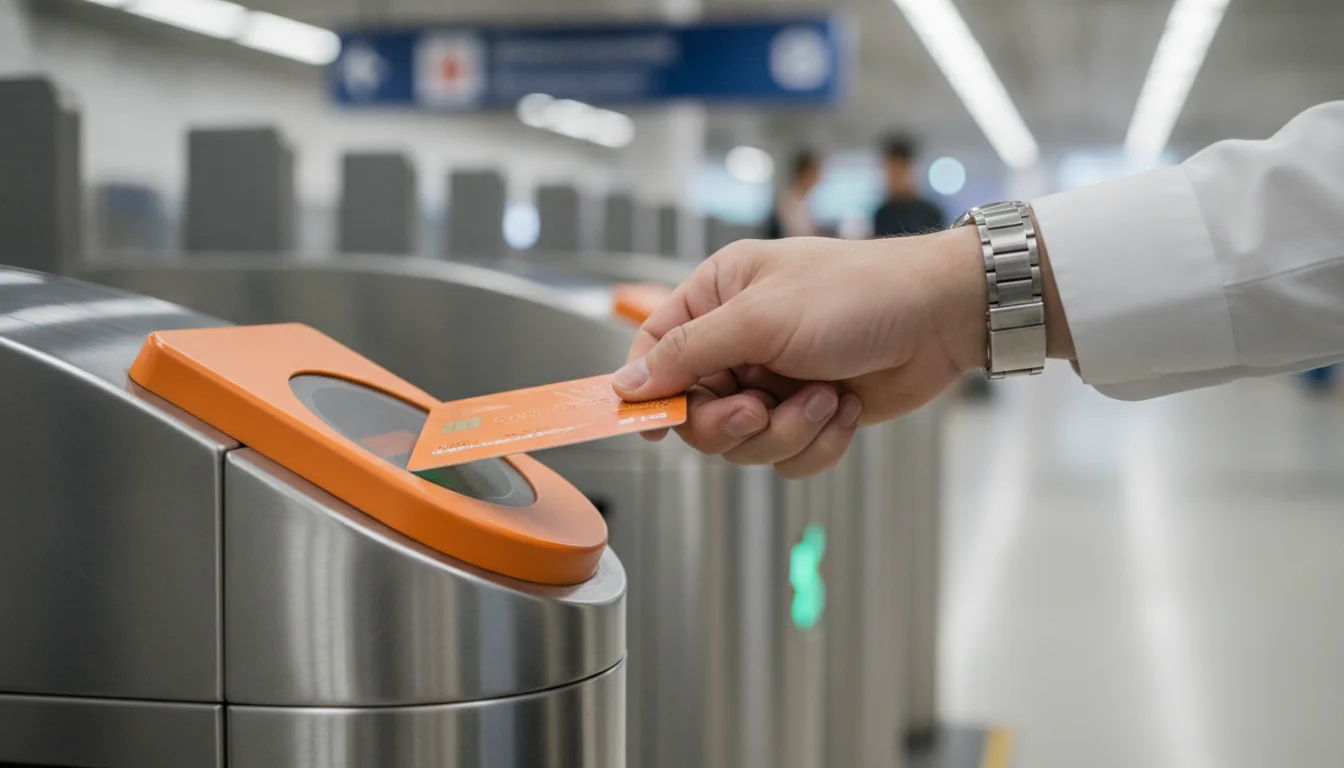
Navigating the ticketing system requires a choice between single-journey tokens, one-day unlimited passes, or the reloadable Rabbit Card. Single-journey tickets are thin plastic cards purchased from touchscreen machines at each station, with prices determined by the number of stations you travel through. For visitors planning extensive sightseeing, the One-Day Pass offers unlimited travel on the date of purchase until midnight, providing exceptional value if you plan to make more than four journeys. The most convenient option for longer stays is the Rabbit Card, a smart card that you can pre-load with cash balance to tap through the barriers instantly. The Rabbit Card carries an initial issuance fee of 100 THB (£2.30), plus a minimum initial top-up of 100 THB (£2.30), but it eliminates the need to stand in coin-purchasing queues during busy periods. It can also be used to pay at participating convenience stores, coffee shops, and fast-food outlets across the city, making it a highly versatile digital wallet. Keeping a small balance on a smart card ensures you can navigate the transit gates without delay.
Comparing Skytrain Transit to MRT and Road Taxis
Understanding how the BTS Skytrain compares to Bangkok’s other transport systems is key to mastering city travel. Unlike the underground MRT (Metropolitan Rapid Transit) system, which operates on a separate ticketing network, the Skytrain is fully elevated, offering scenic views of the city's changing urban landscapes. While the two systems do not share a unified ticket, they do connect at several key interchange points, such as Asok (BTS) matching with Sukhumvit (MRT), and Sala Daeng (BTS) linking with Si Lom (MRT). Road taxis and tuk-tuks, though offering door-to-door convenience, are at the mercy of Bangkok's unpredictable and often severe traffic jams. A journey that takes twelve minutes on the Skytrain can easily take upwards of an hour in a traditional taxi during monsoon rain or peak evening hours. While taxis are cheaper for groups of three or four travelling short distances, the Skytrain provides unmatched speed and predictability for individual travellers. Combining these systems by using the Skytrain to bypass major bottlenecks before taking a short taxi ride to your final destination is the most efficient transit strategy.
| Transport Mode | Speed and Reliability | Average Cost Range | Best Used For |
|---|---|---|---|
| BTS Skytrain | Excellent; completely bypasses road traffic on elevated tracks | 17 to 62 THB (£0.40 to £1.45) per single trip | Traversing Sukhumvit, Silom, and Siam shopping districts quickly |
| MRT Underground | High; reliable underground network with frequent train services | 17 to 43 THB (£0.40 to £1.00) per single trip | Accessing Chinatown, Ratchada, and connecting to Hua Lamphong |
| Traditional Taxi | Poor during peak hours; highly vulnerable to severe traffic congestion | 50 to 150 THB (£1.15 to £3.45) for short city centre rides | Door-to-door travel with heavy luggage or during late-night hours |
| Chao Phraya Express | Moderate; scenic river travel unaffected by road traffic | 15 to 30 THB (£0.35 to £0.70) per journey | Reaching historic temples, the Grand Palace, and riverside hotels |
Location and Getting There
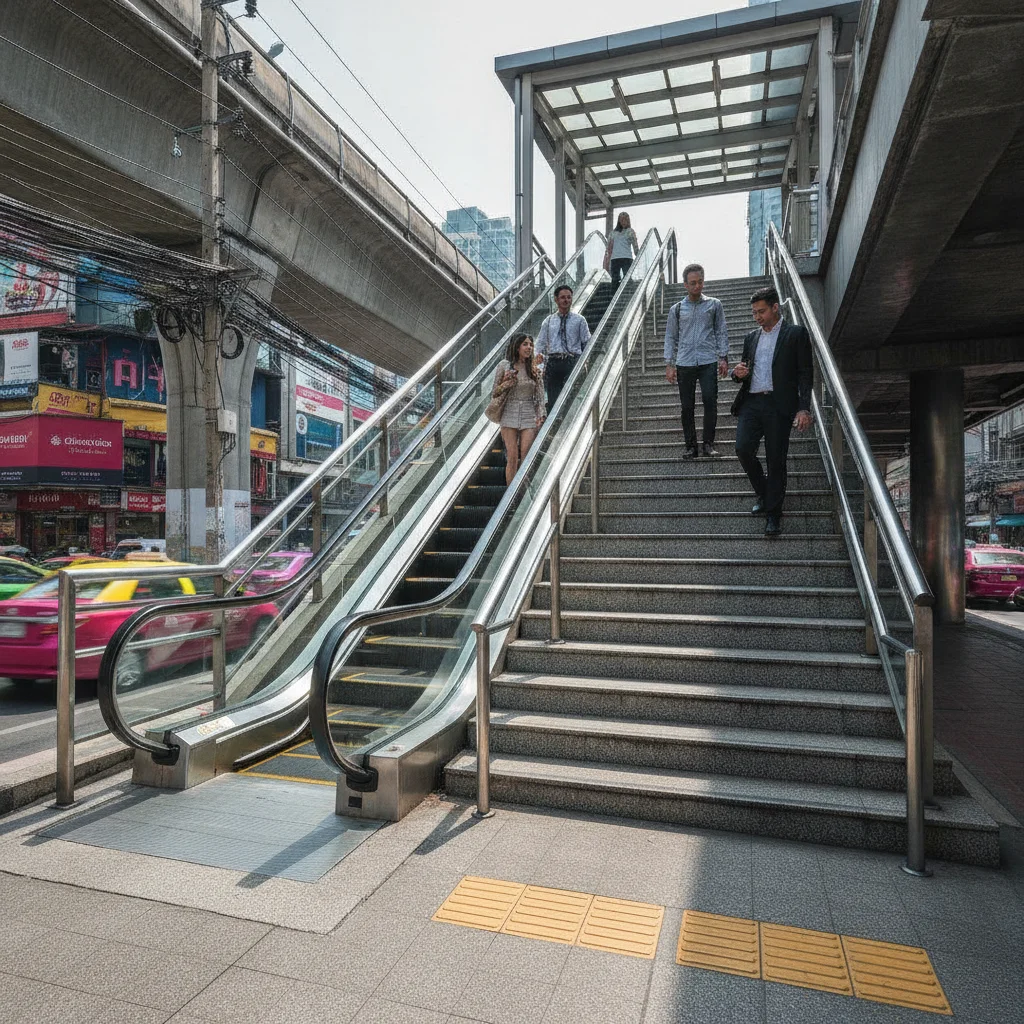
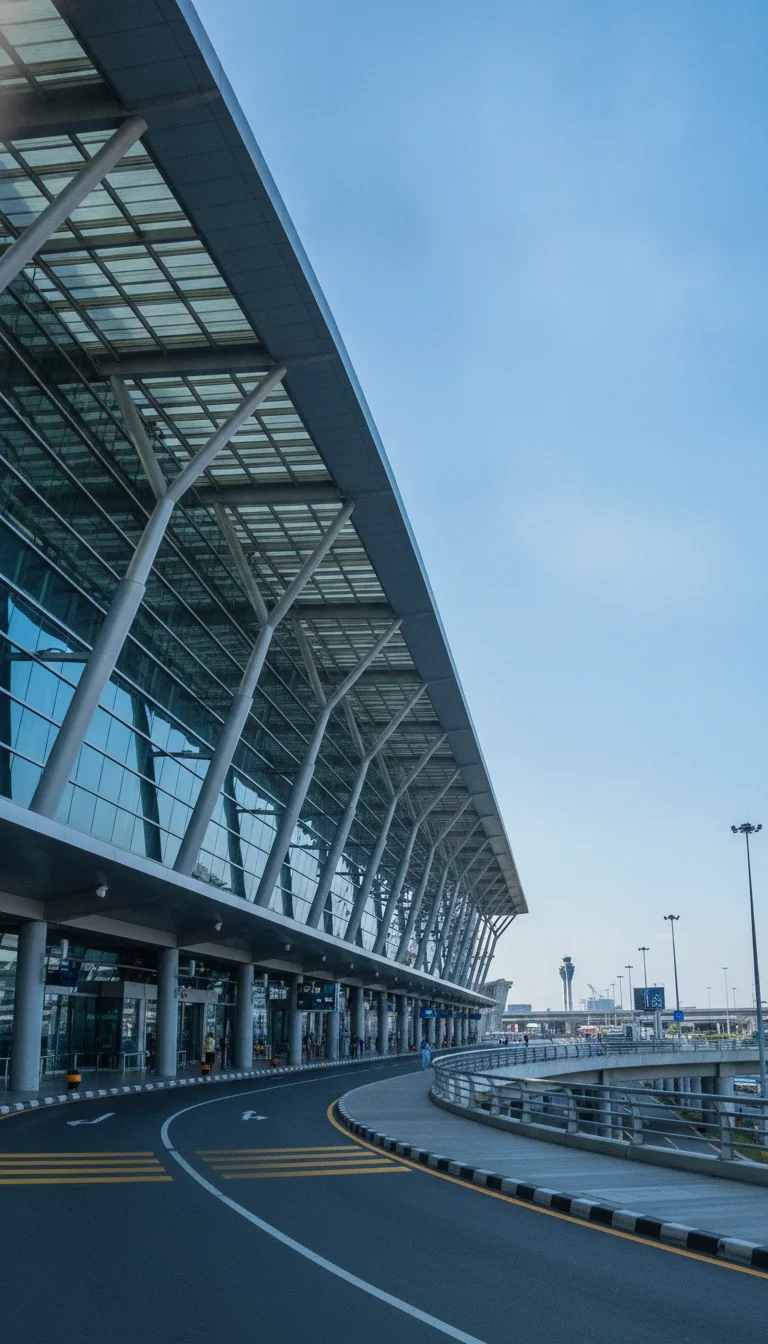
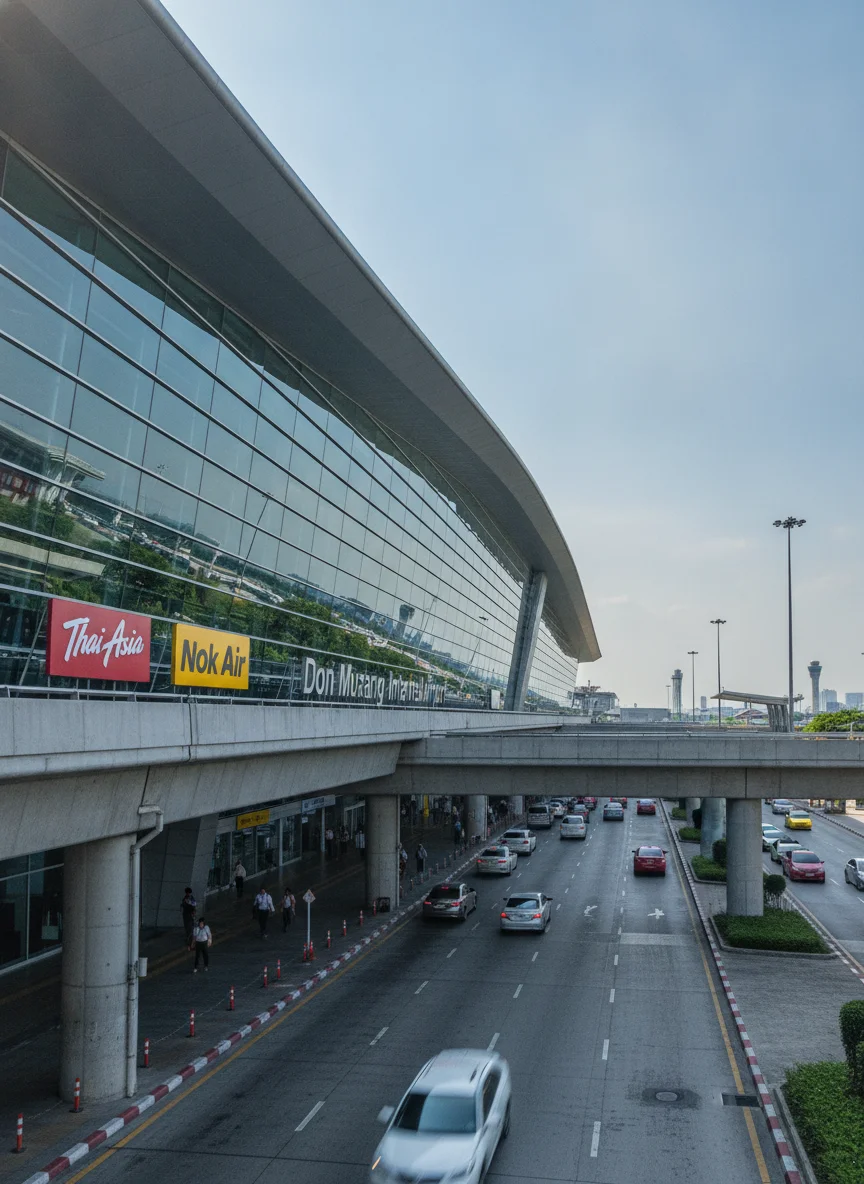
The BTS Skytrain network spans the central commercial districts of Bangkok, stretching far into the surrounding provinces of Samut Prakan and Pathum Thani. For UK visitors arriving at Suvarnabhumi Airport, the most efficient route is to take the Airport Rail Link directly to Phaya Thai station, a journey of approximately 30 minutes costing 45 THB (£1.05). From Phaya Thai, you can directly transfer to the BTS Sukhumvit Line to reach your hotel. If you land at Don Mueang International Airport, you can take the SRT Red Line to Bang Sue Grand Station, or catch the A1 express bus to Mo Chit BTS Station for 30 THB (£0.70), taking about 25 minutes depending on traffic. Taxis from Suvarnabhumi to central Sukhumvit hotels typically cost between 300 and 450 THB (£7.00 to £10.50), but this route is highly vulnerable to delays, making the rail connection far more predictable.
Costs and Booking
Riding the BTS Skytrain is highly affordable, with single-journey fares calculated by distance and ranging from 17 THB (£0.40) for a single stop up to 62 THB (£1.45) for travel across the entire central network. If you plan to explore intensively, the One-Day Pass costs 150 THB (£3.45) and is valid for unlimited rides on the day of purchase. Frequent travellers should invest in a Rabbit Card, which requires a 100 THB (£2.30) non-refundable card issuance fee, but allows you to load funds and pay exact fare amounts per ride without queuing at machines. There are no seasonal price fluctuations or tourist surcharges on the Skytrain, ensuring prices remain consistent throughout the year. Children under 90 centimetres in height travel completely free of charge, while those taller must pay standard adult fares.
| Ticket Option | Cost in THB | Cost in GBP (approx) | Validity and Key Notes |
|---|---|---|---|
| Single Journey Ticket | 17 to 62 THB | £0.40 to £1.45 | Valid only on the date of purchase for a single trip up to 120 minutes |
| One-Day Pass | 150 THB | £3.45 | Unlimited travel on all BTS lines until midnight on the day of purchase |
| Rabbit Card (New) | 200 THB | £4.60 | Includes 100 THB non-refundable card fee and 100 THB initial travel credit |
| Rabbit Card Top-Up | 100 to 4,000 THB | £2.30 to £92.00 | Added value remains valid for up to two years from the last transaction |
Who It Suits Best
The BTS Skytrain is best suited for independent urban travellers, couples, and fast-paced tourists who want to maximise their time in Bangkok by avoiding road delays. It is also excellent for digital nomads and shoppers visiting major malls. However, it is less ideal for travellers carrying heavy luggage, as escalators are not available at every single exit. Families with very young children in strollers or travellers with severe mobility challenges may find some older stations difficult to navigate due to the presence of multiple stair flights and a lack of street-level lifts.
Key Operational Rules and Guidelines
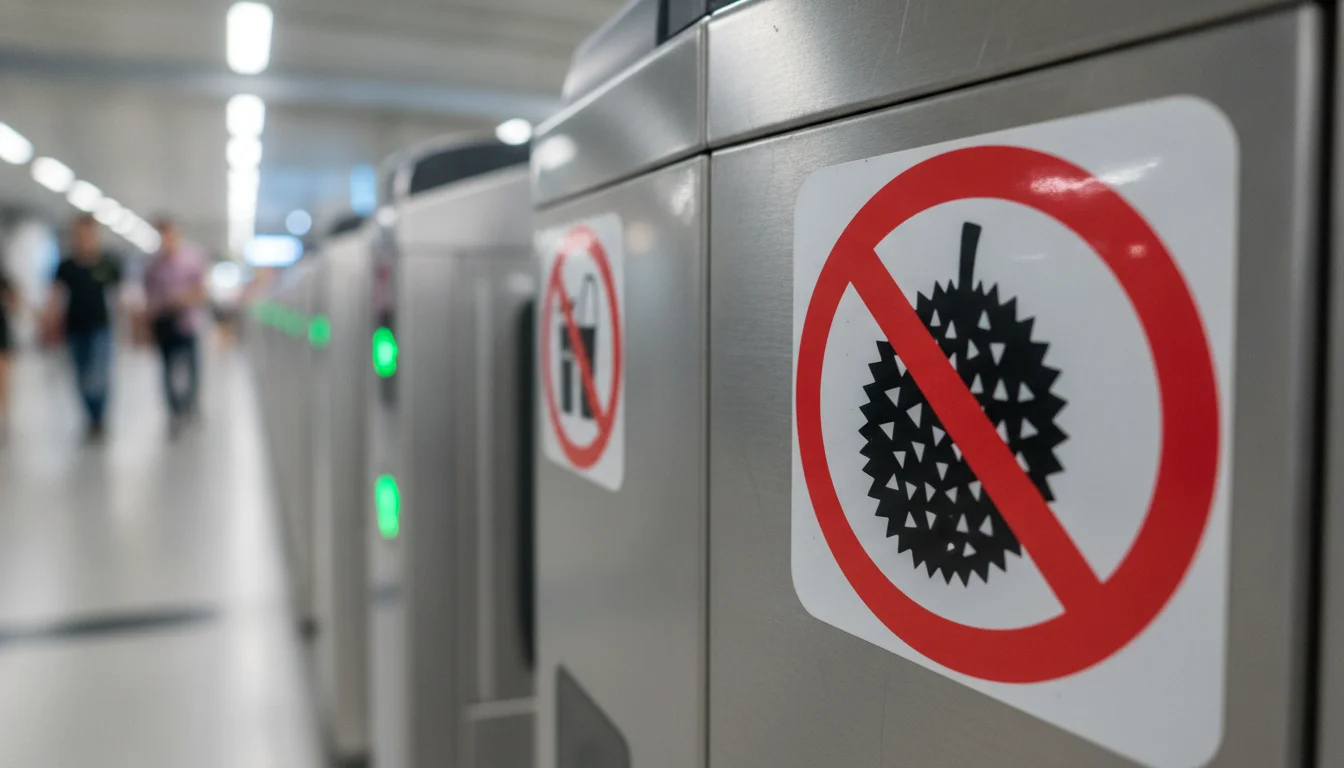
Eating and drinking are strictly prohibited anywhere inside the paid areas of Skytrain stations, including on the platforms and inside the carriages. Security guards enforce this rule diligently to maintain clean, pest-free environments, so ensure you finish your drinks before passing through the electronic barriers. Keep your ticket safe throughout your journey, as you must insert it or tap it again to exit the station at your destination. If you lose your single-journey ticket, you will be required to pay the maximum fare penalty at the customer service desk to exit. Be aware that the BTS and MRT underground are entirely separate systems with different ticketing structures. You cannot use a Rabbit Card on the MRT, which requires a separate card or a contactless credit card.
Practical Tips for Riding the Skytrain
Avoid Peak Commuting Hours
Try to plan your journeys outside the busiest windows of 07:30 to 09:30 and 17:00 to 19:30. During these rush hours, carriages become exceptionally crowded and queues at ticketing machines can stretch across the station concourses.
Carry Coins for Older Machines
Keep a small selection of 5 and 10 THB coins handy in your wallet. While newer touchscreen machines accept bank notes and QR codes, some older ticket dispensers only accept coins and will require you to queue at the counter for change.
Utilise the Pedestrian Skywalks
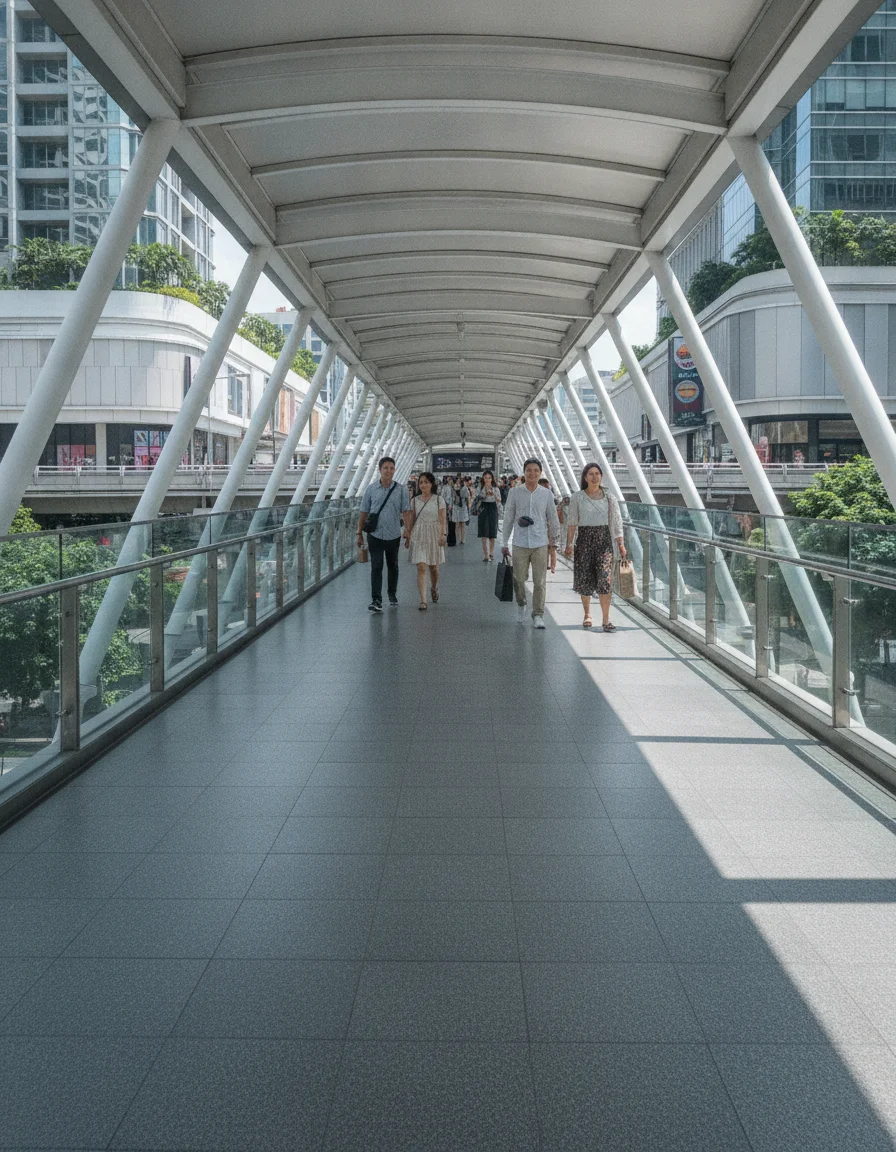
Use the extensive network of elevated concrete skywalks to walk between central stations like Siam, Chit Lom, and Ploen Chit. This allows you to walk safely above the busy roads in the shade while avoiding the heat and vehicle exhaust.
Prepare for Intense Air Conditioning
Carry a light scarf or a thin long-sleeved shirt in your day bag. The temperature inside the train carriages is kept extremely low to combat the outdoor heat, creating a dramatic temperature drop that can feel quite chilly.
Stand Behind the Yellow Safety Lines
Always wait behind the painted yellow lines on the platforms until the train comes to a complete stop. Station security staff will blow whistles loudly to warn passengers who step too close to the tracks before the doors open.
Look for the Correct Station Exit
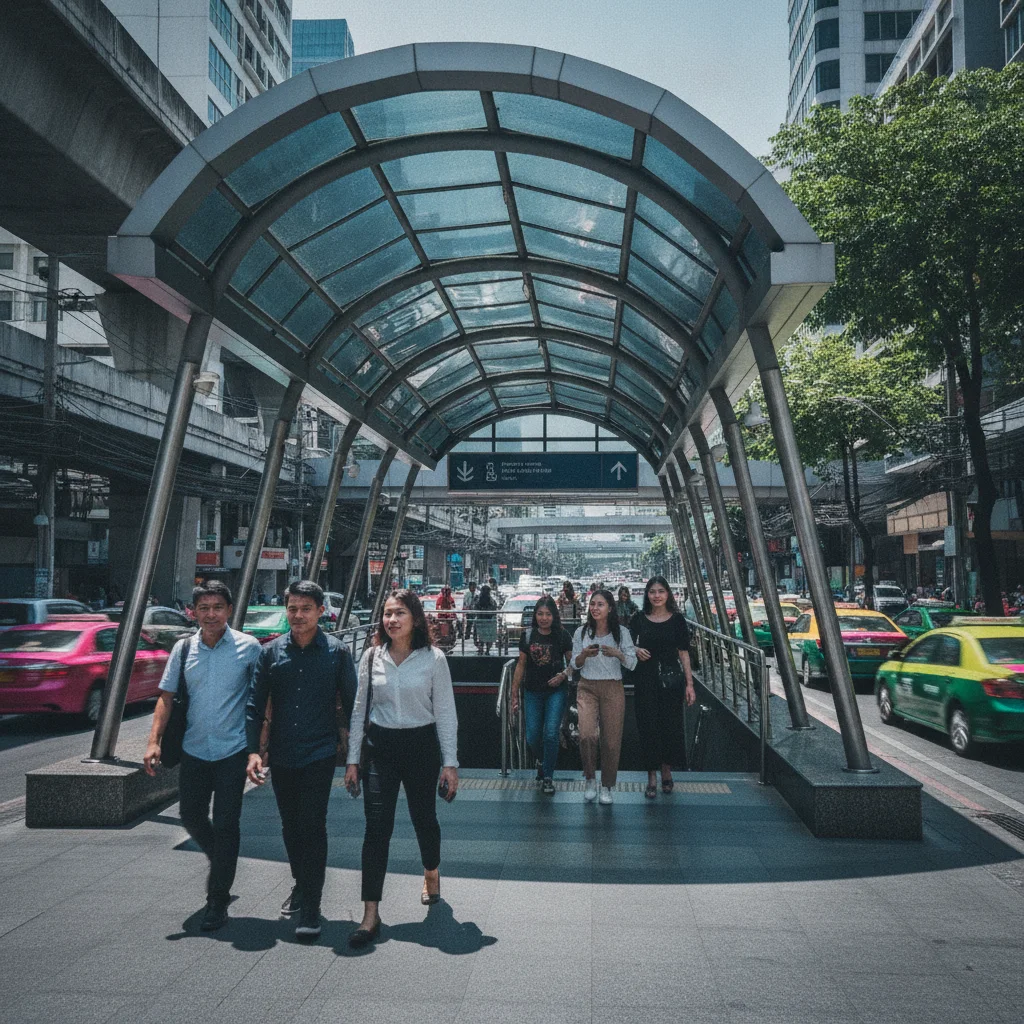
Check the large locality maps near the exit barriers before you tap your ticket to leave. Choosing the wrong exit can leave you on the opposite side of a wide, busy highway with no easy pedestrian crossing options.
Keep Your Rabbit Card Registered
Register your Rabbit Card using your passport at a customer service desk immediately after purchasing it. This step is a legal requirement in Thailand and ensures you can recover your balance if the card is ever lost or damaged.
Download the Official Transit App
Install the BTS SkyTrain app on your smartphone before starting your daily excursions. It provides real-time route calculations, fare estimates, and active service delay alerts directly in English.
Skytrain System Quick Reference
| Item | Detail | Notes |
|---|---|---|
| System Name | BTS Skytrain | Elevated rapid transit rail system |
| Location | Bangkok, Thailand | Covers core commercial, shopping, and tourist districts |
| Primary Lines | Sukhumvit Line & Silom Line | Intersect at the central Siam Station |
| Operating Hours | 06:00 to 00:00 (Midnight) | High frequency during rush hours (3-6 minutes) |
| Standard Single Fare | 17 to 62 THB (£0.40 to £1.45) | Determined by the exact number of stations travelled |
| Unlimited Day Pass | 150 THB (£3.45) | Valid for unlimited rides on the day of purchase |
| Smart Card Option | Rabbit Card | Reloadable card with 100 THB initial fee |
| Key Airport Connection | Phaya Thai Station | Connects directly to the Airport Rail Link |
| MRT Interchange Hubs | Asok, Sala Daeng, Mo Chit | Requires purchasing a separate ticket or token |
| Official Operator | BTSC | Bangkok Mass Transit System Public Company Limited |