Buying Property in Thailand - The Process
Purchasing property in Thailand as a foreign national requires transferring all purchase funds from an overseas bank account in a foreign currency to secure the Foreign Exchange Transaction Form (FETF). Without this specific financial document, the Thai Land Department will legally refuse to transfer an apartment title deed into your name.
This guide details the exact legal and financial steps required for a UK national to buy property in Thailand safely. You will learn how to navigate the title deed system, conduct mandatory Land Department due diligence, and calculate precise transfer taxes. This page is for buyers ready to execute a transaction, whether purchasing an off-plan development or a resale property. It is not a guide on evaluating rental yields or choosing a neighbourhood.

The Thai Title Deed System
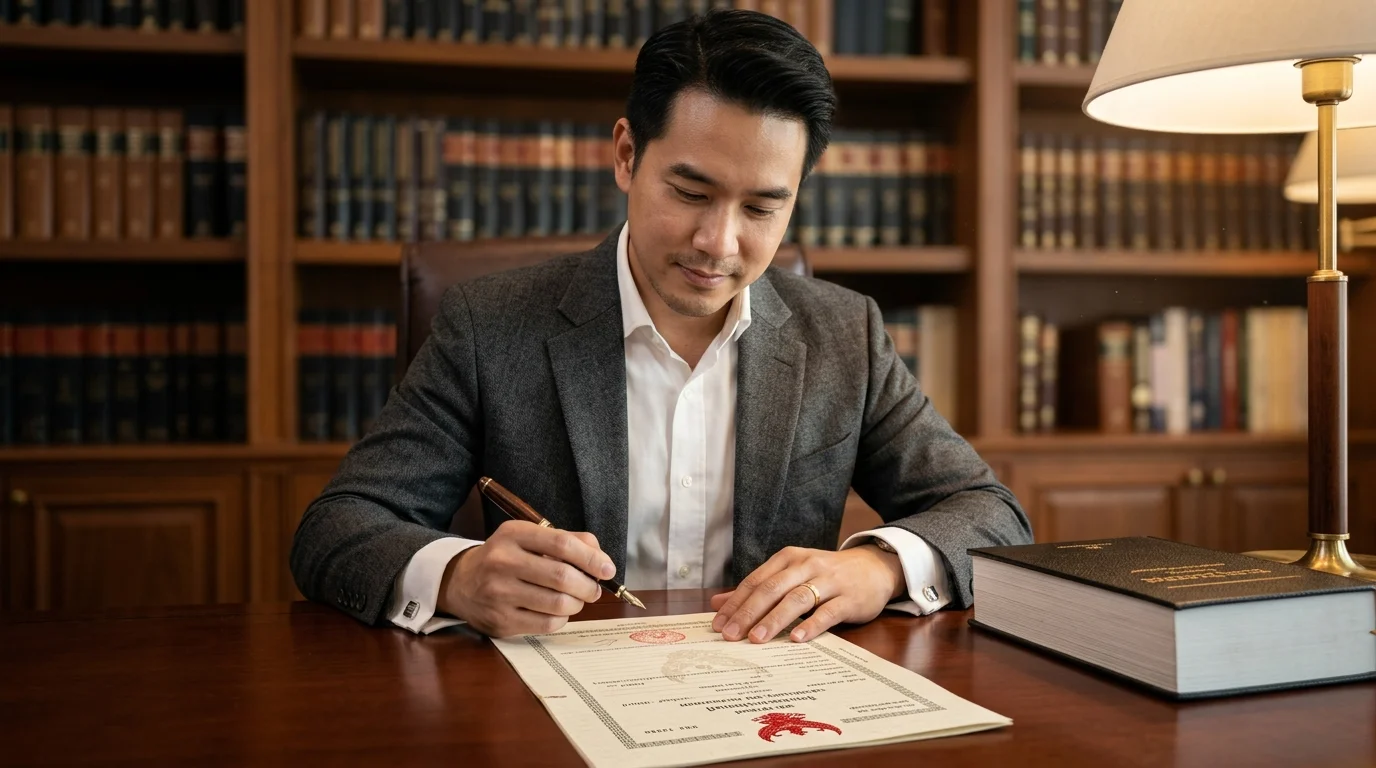
Understanding the Thai land title system is the single most critical step in securing your property rights. Thailand operates a complex hierarchy of land documents, but only three offer a legitimate path to secure a financial investment. The Chanote (Nor Sor 4 Jor) is the absolute freehold title deed, marked with a red Garuda crest, and features accurately surveyed GPS boundaries marked by official concrete posts. Buying a property with a Chanote is the safest route for a UK national. The Nor Sor 3 Gor, displaying a green Garuda, confirms the right to use the land and has aerial-surveyed boundaries, meaning it can usually be upgraded to a full Chanote. Conversely, the Nor Sor 3 carries a black Garuda and lacks precise boundary measurements, making it highly vulnerable to neighbour disputes. If you purchase an off-plan apartment, the developer will initially hold the master Chanote for the entire plot of land, which is later subdivided into individual unit titles upon completion. Never proceed with a purchase if the seller only holds a possessory right document like a Por Bor Tor 5. Always insist on a Chanote title to guarantee your ownership rights are fully protected under Thai civil law.
Discover how UK investors can secure reliable property management in Thailand. Learn about fees, essential services, and avoiding remote landlord risks.
| Title Deed Type | Identifying Mark | Survey Method | Legal Status for Buyers |
|---|---|---|---|
| Chanote (Nor Sor 4 Jor) | Red Garuda | GPS coordinates and concrete markers | Absolute freehold ownership; safest option |
| Nor Sor 3 Gor | Green Garuda | Aerial survey boundaries | Confirmed right of use; upgradable |
| Nor Sor 3 | Black Garuda | No precise survey | Right of use; high risk of boundary disputes |
| Por Bor Tor 5 | No official crest | Unsurveyed tax document | Possessory right only; do not purchase |
The Reservation Deposit and Sale Agreement
Securing a property begins with a reservation deposit, which removes the unit from the open market while your lawyer drafts the Sale and Purchase Agreement (SPA). This initial payment typically ranges from 50,000 to 200,000 THB (£1,100 to £4,400) depending on the overall property value. You must ensure the reservation agreement explicitly states the deposit is fully refundable if the legal due diligence fails. Once the deposit is cleared, the formal drafting of the SPA commences. For resale properties, the SPA is heavily negotiated between the buyer and seller, covering exact tax apportionments and default penalties. When buying an off-plan unit, the developer must use a standard SPA format mandated by the Thai Consumer Protection Board, which heavily penalises late completion. UK buyers frequently discover that standard developer contracts heavily favour the seller, often omitting crucial clauses about construction delays or material substitutions. Your legal counsel will amend these specific clauses to balance the financial risk. The SPA will also define the payment schedule, which for off-plan purchases usually aligns with physical construction milestones. Never sign an SPA or pay the reservation deposit until your lawyer confirms the contract contains a strict subject-to-clear-title clause.
Due Diligence and Land Department Searches
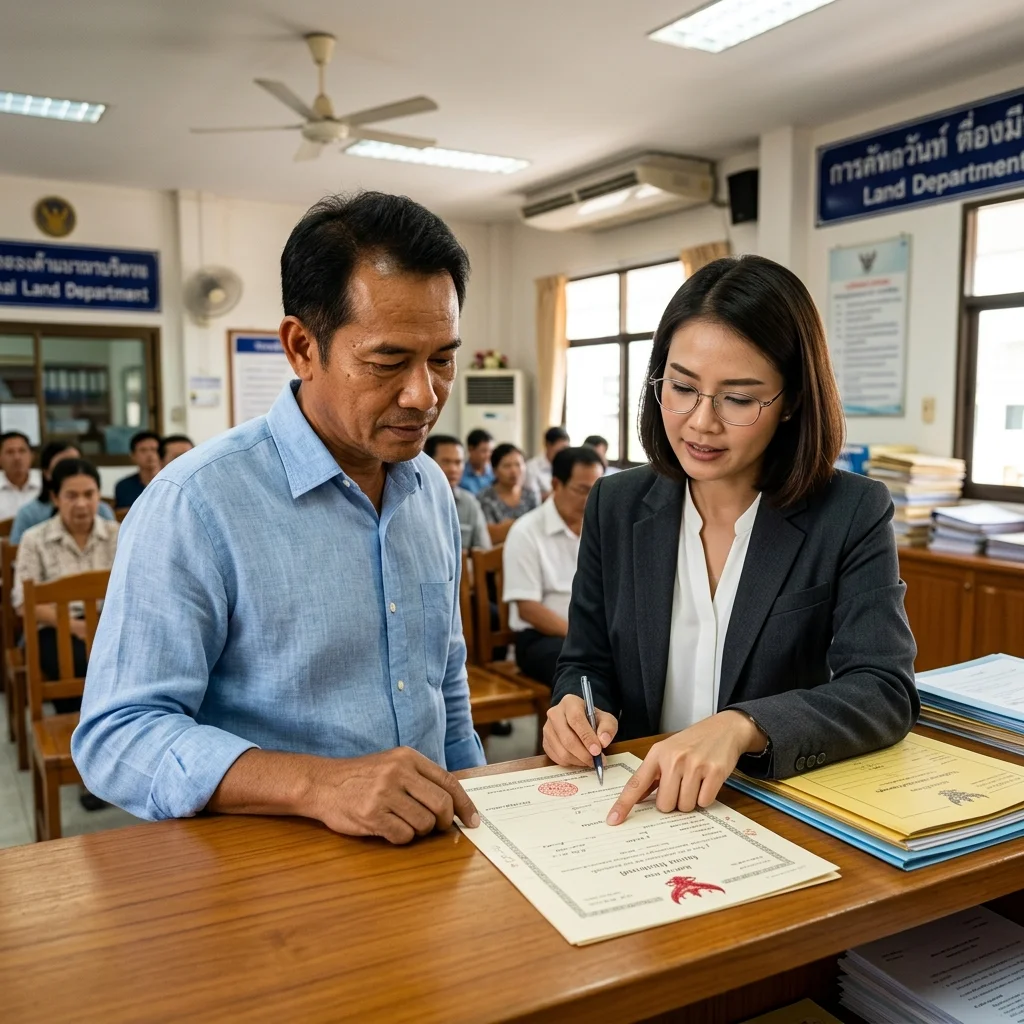
A comprehensive due diligence check at the local Land Department guarantees the seller has the legal right to transfer ownership to you. This process is entirely distinct from a structural building survey. Your legal representative will physically visit the Land Office to conduct a full title search against the original Chanote. This search reveals the registered owner and uncovers any registered encumbrances, such as mortgages, leases, usufructs, or servitudes that would transfer with the property. For off-plan purchases, due diligence extends to the developer's corporate history and financial standing. Your lawyer must verify that the developer holds the correct building permits and has secured Environmental Impact Assessment (EIA) approval. Purchasing an off-plan unit before EIA approval is granted carries severe financial risks, as construction legally cannot commence without it. The due diligence report will also confirm the current foreign ownership quota of the apartment building, ensuring the 49% legal limit for foreign freeholders has not been breached. If the quota is full, you cannot register the title in your name. Completing an exhaustive title search protects your capital and ensures the property is legally clear for transfer.
Transferring Funds for Foreign Ownership
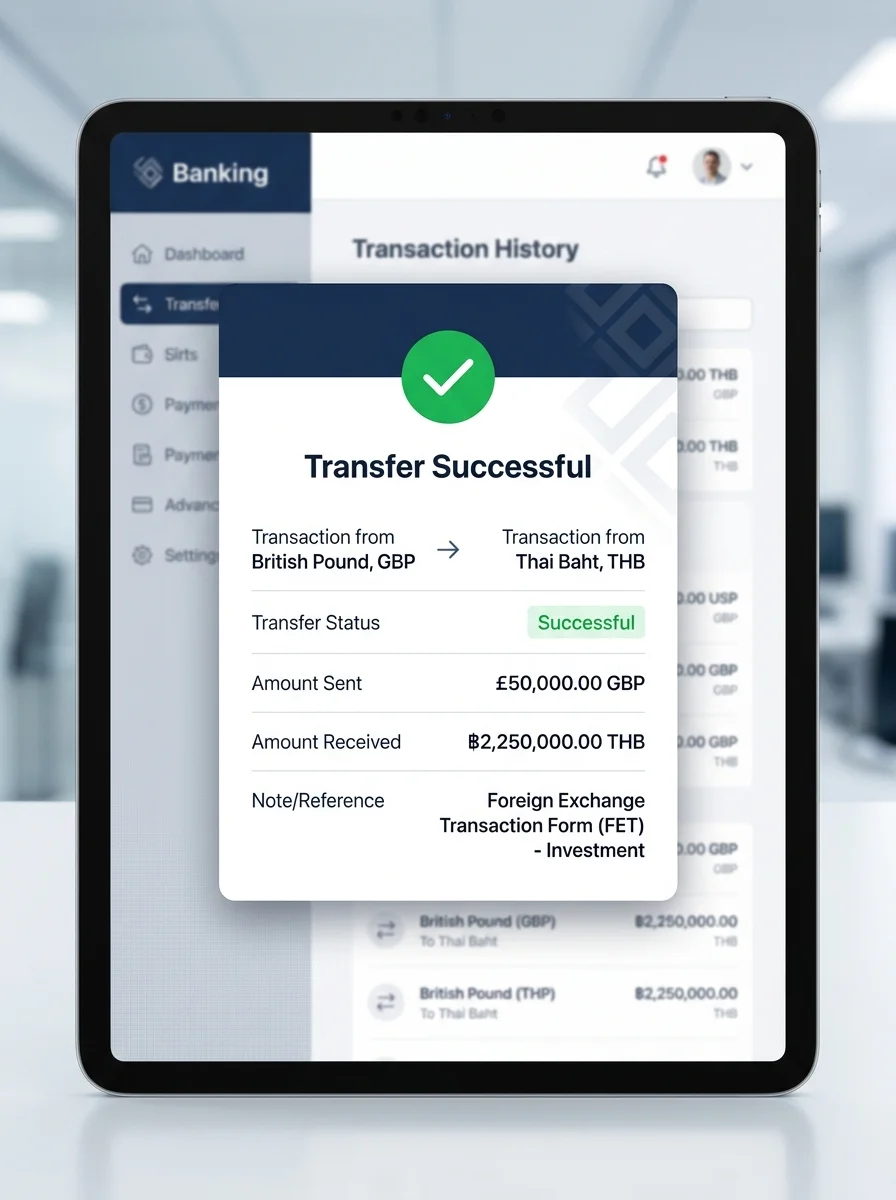
UK buyers must remit purchase funds into Thailand according to strict Bank of Thailand regulations to qualify for foreign freehold ownership. To register an apartment under the foreign quota, every penny of the purchase price must originate from outside Thailand. You must transfer the funds in a foreign currency, such as Great British Pounds (GBP), and allow the receiving Thai bank to execute the conversion into Thai Baht. If you convert the funds to Baht before sending them, the Land Department will reject your registration. For any transfer exceeding the equivalent of $50,000 USD, the receiving Thai bank will issue a Foreign Exchange Transaction Form (FETF). This document is the absolute prerequisite for foreign ownership. The transfer instructions must explicitly state the purpose of the funds, using precise wording such as 'For the purchase of a apartment unit'. If you are buying off-plan, you will typically transfer funds directly into the developer's account, relying on them to secure the FETF on your behalf. For resale properties, buyers often open a Thai bank account to receive the funds and generate the FETF before paying the seller via cashier's cheque. Always follow these exact remittance rules to ensure your legal ownership rights are successfully registered.
Leasehold Structures for Land and Villas
Because foreign nationals are strictly prohibited from owning land freehold in Thailand, purchasing a villa requires navigating the registered leasehold system. The standard legal route involves leasing the land upon which the villa sits for a maximum registered term of 30 years. You can legally own the physical building freehold in your own name, completely separate from the land title. The 30-year lease must be officially registered at the Land Department; any lease over three years is legally void unless recorded on the back of the Chanote. Developers frequently market these structures as 90-year leases, comprising an initial 30-year term with two pre-agreed 30-year renewals. You must understand that under Thai civil law, these renewals are contractual promises rather than automatic property rights, and enforcing them against a future landowner requires precise legal drafting. Your lawyer must draft robust succession clauses to ensure the lease remains valid if either the landowner or the lessee passes away. Never rely on informal agreements or corporate structures using nominee Thai shareholders, as the Thai government actively prosecutes these illegal workarounds. Always register a 30-year surface lease to guarantee your legal right to occupy the land.
Completing at the Land Department
The final transfer of ownership takes place exclusively at the local Land Department office, where the official title deed is updated and transaction taxes are paid. This process usually occurs 30 to 60 days after signing the Sale and Purchase Agreement. As a UK buyer, you do not need to be physically present in Thailand for completion. You can grant your legal representative a Power of Attorney to execute the transfer on your behalf. On the day of completion, your lawyer will meet the seller or their representative at the Land Office. They will present the FETF, the SPA, and cashier's cheques drawn from a Thai bank to cover the purchase balance alongside the specific transaction taxes. The Land Department officials will process the paperwork and update the original Chanote by printing your name in Thai script on the reverse side. Simultaneously, you will receive the official Thai blue house book (Tabien Baan) for the property, which lists the official address. Once the official stamps are applied, the property legally belongs to you. Retain all transaction receipts and the updated Chanote in a secure location, as you will need them if you ever decide to sell the property.
Costs and Fees
Transaction taxes in Thailand are calculated using the government-appraised value of the property, which is often lower than your actual purchase price. The primary cost is the transfer fee, set at 2% of the appraised value, which is conventionally split equally between buyer and seller. You will also encounter either the Specific Business Tax (SBT) at 3.3% or Stamp Duty at 0.5%. SBT applies if the seller is a company or an individual who has owned the property for less than five years. If SBT is charged, Stamp Duty is exempt. These taxes, alongside a Withholding Tax of 1% to 3%, are legally the seller's responsibility, but developer contracts often attempt to pass them to the buyer. Independent legal fees typically range from 30,000 to 80,000 THB (£660 to £1,770). Property agent commissions are paid entirely by the seller. Ensure your lawyer negotiates the tax apportionment clearly before signing the contract.
| Cost Item | Rate or Amount | Paid By | Notes |
|---|---|---|---|
| Transfer Fee | 2% of appraised value | Usually split 50/50 | Appraised value is often lower than market price |
| Specific Business Tax | 3.3% of appraised value | Seller | Applies if owned under 5 years or corporate seller |
| Stamp Duty | 0.5% of appraised value | Seller | Applies only if SBT is exempt |
| Withholding Tax | 1% to 3% | Seller | Calculated based on seller's income bracket |
| Legal Fees | 30,000 to 80,000 THB | Buyer | Varies based on transaction complexity |
| Agent Commission | 3% to 5% | Seller | Buyers do not pay agent fees in Thailand |
Common Mistakes and How to Avoid Them

Signing developer contracts without legal review. Buyers assume standard developer contracts are non-negotiable and legally balanced. You must hire an independent lawyer to insert clauses protecting your deposit if the project fails.
Paying deposits before checking the foreign quota. UK nationals sometimes pay reservations only to discover the 49% foreign ownership allocation is already full. Verify the quota status with the building's juristic office before transferring any money.
Transferring funds in Thai Baht. Converting your GBP to THB before sending it to Thailand violates the rules for foreign freehold ownership. Always remit funds in GBP and instruct the receiving Thai bank to perform the conversion.
Ignoring the Environmental Impact Assessment. Buying an off-plan unit in a project lacking EIA approval risks severe construction delays. Demand proof of official EIA clearance from the developer before signing the purchase agreement.
Practical Tips
Open a Thai bank account as early as possible. This simplifies the process of securing your Foreign Exchange Transaction Form and paying local utilities.
Structure your reservation deposit as fully refundable. A strict subject-to-clear-title clause ensures you can recover your funds if the Land Department search reveals hidden mortgages.
Demand to see the reverse side of the Chanote. The back of the title deed reveals the complete history of ownership and any active encumbrances registered against the property.
Factor the sinking fund into your initial budget. New apartment purchases require a mandatory, one-off payment to the building's emergency reserve fund upon completion.
Use a cashier's cheque for the final settlement. The Land Department requires guaranteed funds drawn from a local Thai bank to process the final transfer of ownership.
Check the exact dimensions of an off-plan unit upon completion. Thai law permits a slight variance in final floor space, and your final payment should be adjusted to reflect the exact surveyed area.
Draft a Thai will immediately after completion. Securing your property under a local will ensures your UK beneficiaries avoid lengthy cross-border probate complications if you pass away.
Quick Reference Table
| Item | Detail | Notes |
|---|---|---|
| Ownership Route | Foreign Freehold (Apartments) or Registered Leasehold (Land/Villas) | Land cannot be owned freehold by foreign nationals |
| Foreign Quota | 49% of the total saleable floor area | Applies to apartment buildings only |
| Title Deed Type | Chanote (Nor Sor 4 Jor) is highly recommended | Avoid possessory right documents entirely |
| Purchase Costs | Typically 1% to 1.5% of the property value | Assumes a 50/50 split of the 2% transfer fee |
| Fund Transfer | Foreign Exchange Transaction Form (FETF) required | Funds must enter Thailand in a foreign currency |
| Legal Representation | Independent Thai property lawyer required | Never rely solely on a developer's legal team |
| Typical Timescales | 30 to 60 days from offer to completion | Off-plan timescales depend on construction milestones |