Koh Phi Phi Diving
The underwater world of the Andaman Sea reveals its most dramatic assets around the limestone walls of the Phi Phi Islands, where vertical drop-offs plunge into deep channels patrolled by resident blacktip reef sharks and green sea turtles. Diving here places you directly in a marine playground where massive schools of yellow snapper swarm over military shipwrecks, and limestone caves offer shelter to delicate seahorses and ghost pipefish.
This guide covers everything you need to experience the underwater world of Koh Phi Phi, helping you select the right dive operator, choose between day trips or liveaboard excursions, and budget for national park fees. We will explain the certification courses available, detail the seasonal conditions, and identify the top dive sites so you can plan your diving itinerary with total confidence.

Choosing Your Koh Phi Phi Dive Operator
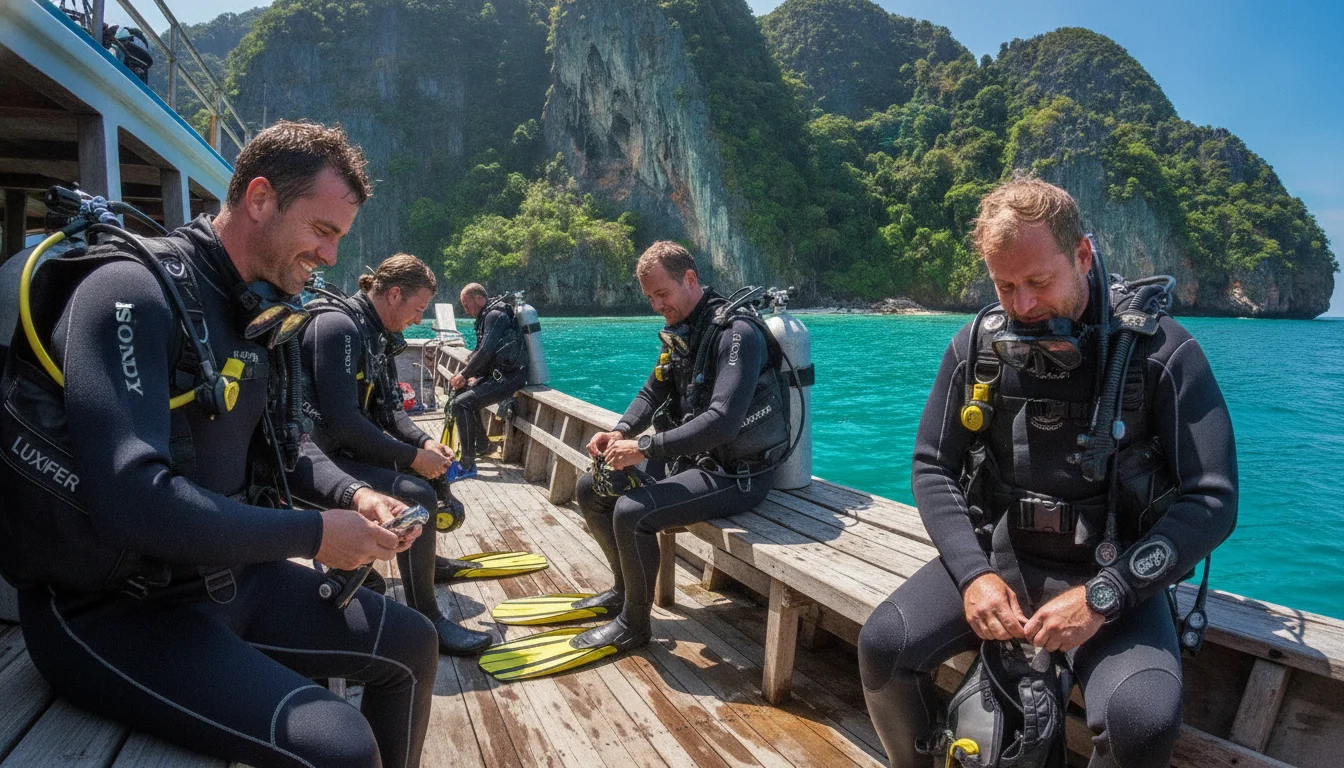
Selecting the correct dive school depends on whether you value long-term local heritage, high-level instructor training, or premium resort-based convenience. Princess Divers, operating since 2001 from Tonsai Bay, stands as the island's longest-running shop, offering both SSI and PADI paths with direct access to custom speedboats that cut travel times in half. If you seek professional development, Adventure Club is a certified PADI 5-Star Career Development Centre (CDC) that actively drives local conservation, including building artificial reefs and coral nurseries. For those staying at the northern luxury resorts, Sea Bees operates directly from the SAii Phi Phi Island Village, providing a premium experience utilising custom-built dive catamarans and top-tier Aqualung equipment. These schools maintain strictly regulated student-to-instructor ratios of four-to-one or better to ensure safety. Daily trips typically depart early, meaning your choice of operator dictates whether you board from the busy main pier or a quiet northern beach.
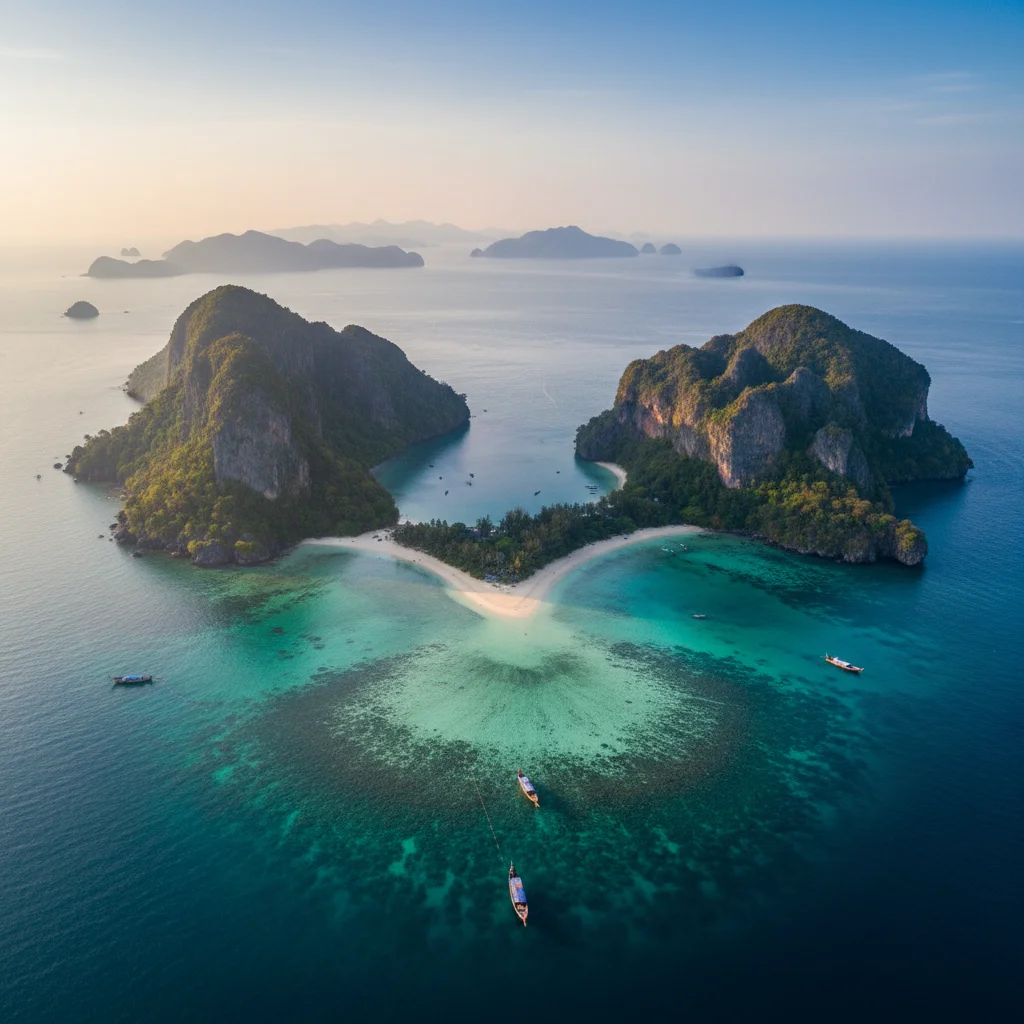
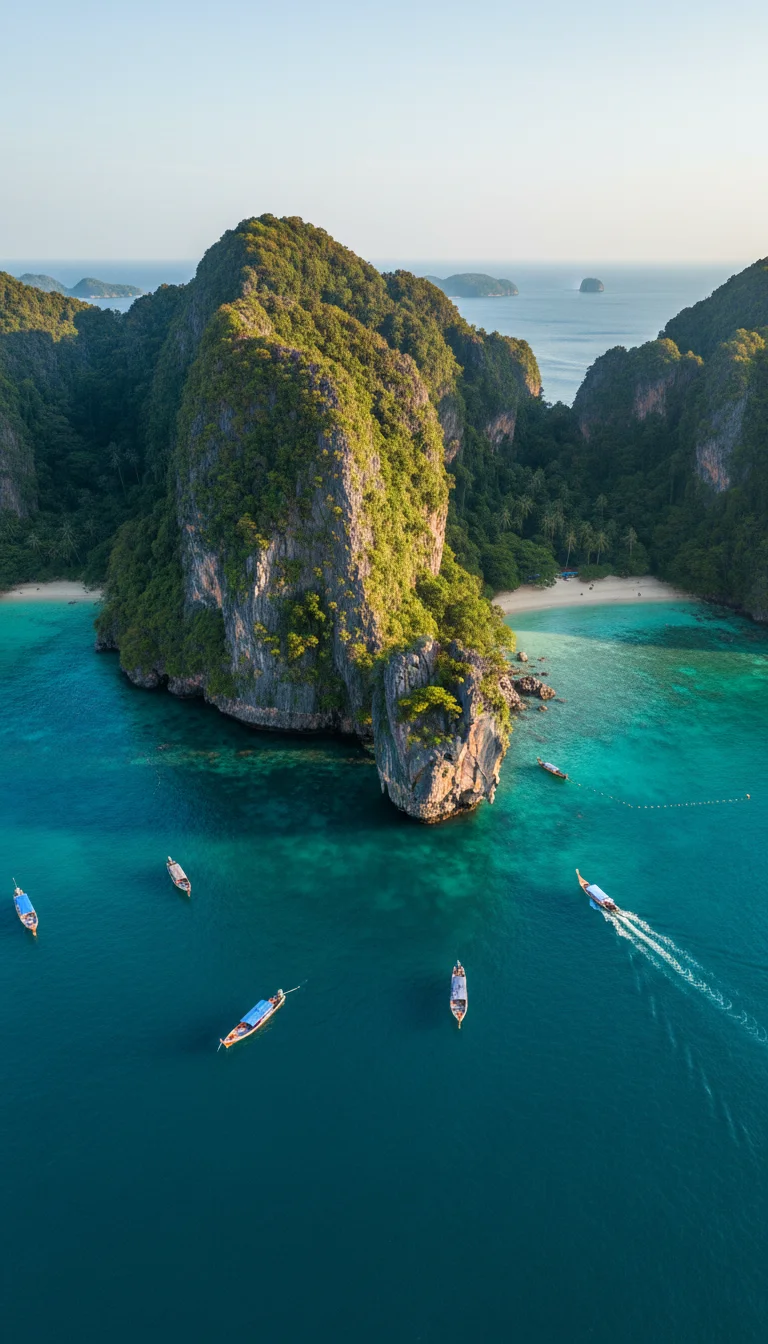
Master the Phi Phi Islands geography before you arrive. Discover 314-metre limestone peaks, hidden lagoons, and the layout of this Andaman archipelago.
Always check if your chosen school departs directly from your beach to avoid long longtail boat transfers before your dive even begins.
| Operator | Location & Base | Primary Specialty | Starting Price (2-Dive Trip) |
|---|---|---|---|
| Princess Divers | Tonsai Village | Speedboat operations and SSI/PADI flexibility | THB 3,400 (£77) |
| Adventure Club | Tonsai Central | PADI 5-Star CDC and marine conservation | THB 3,500 (£80) |
| Sea Bees | SAii Phi Phi Resort (North) | Luxury catamaran trips and premium gear | THB 4,200 (£95) |
| Blue View Divers | Tonsai East | Eco-focused small group diving | THB 3,300 (£75) |
Scuba Diving Courses and Certification Pathways
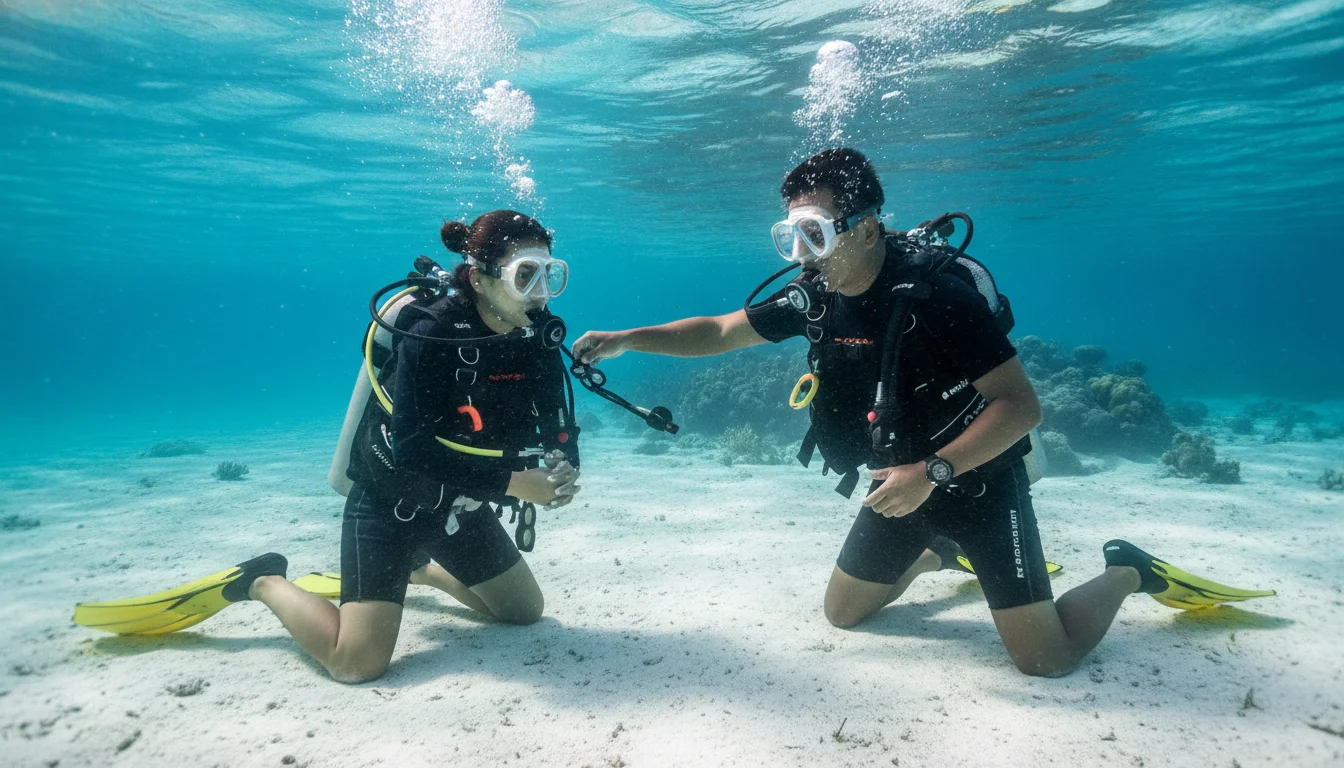
Koh Phi Phi offers an ideal training ground with clear, shallow bays for beginners and deep walls for advanced certifications. Complete novices can opt for a one-day Discover Scuba Diving experience, which costs approximately THB 4,500 (£102) and includes two closely supervised open-water dives down to twelve metres. The standard PADI or SSI Open Water Course takes three full days, costing around THB 14,500 (£330), which covers essential theory, shallow-water skills, and four open-water dives. For certified divers, the Advanced Open Water certification costs roughly THB 12,500 (£284) over two days, introducing deep diving down to thirty metres and underwater navigation. Phi Phi's steep underwater topography means you can complete your deep training dives just minutes from the main island. These certified courses require online e-learning modules to be completed prior to your arrival to maximise your practical water time.
Complete your theory online before arriving in Thailand so you do not spend your holiday inside a classroom.
Day Trips Versus Liveaboard Excursions
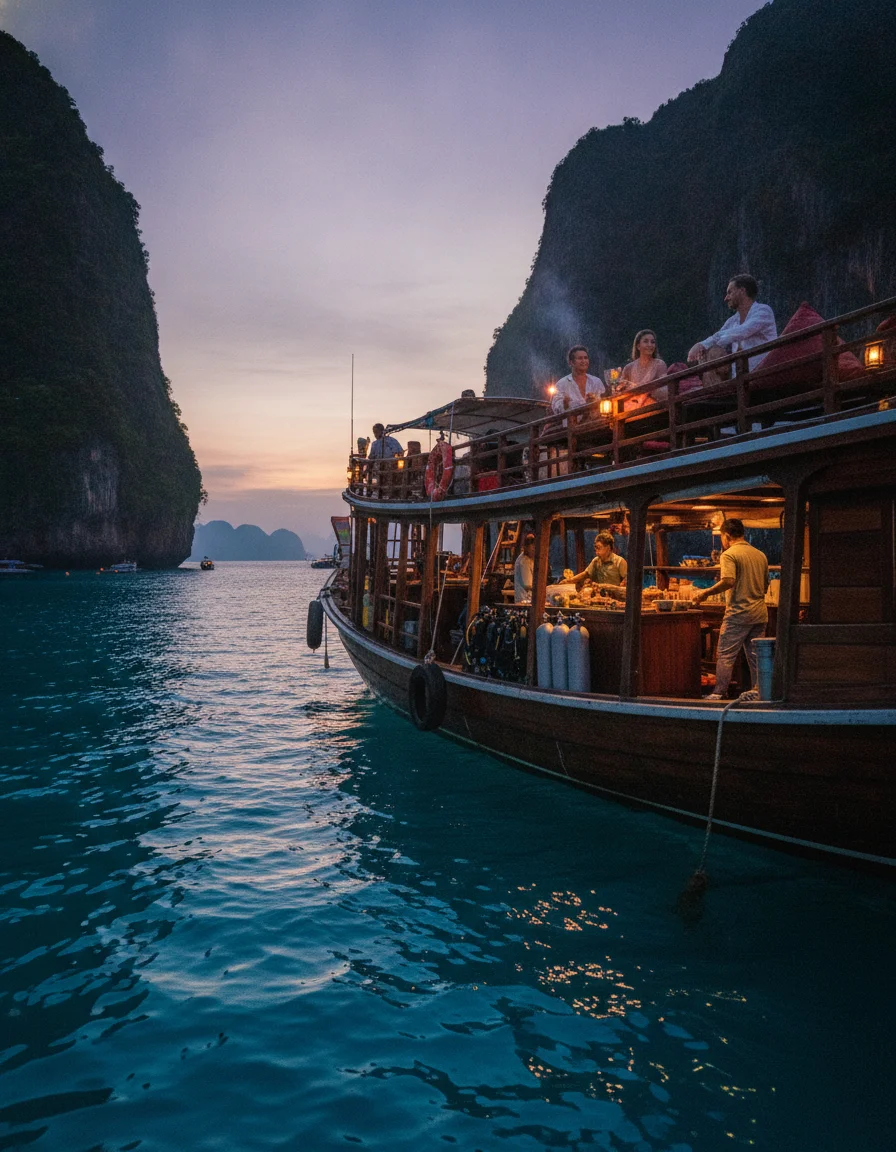
Deciding between daily boat trips and multi-day liveaboards determines the variety of dive sites you can realistically access. Local day trips depart daily from Tonsai Pier, taking you to sites like Bida Nok and the Kled Gaeow wreck within thirty minutes via speedboat or ninety minutes on a larger dive boat. These trips are highly cost-effective, averaging THB 3,400 (£77) for a two-dive package, allowing you to return to your resort by mid-afternoon. In contrast, liveaboard vessels operate as floating hotels, carrying you to remote, elite southern sites such as Hin Daeng and Hin Muang, famous for manta rays and whale sharks. A typical three-night liveaboard cruise departing near Phuket or stopping at Phi Phi costs upwards of THB 25,000 (£568), which covers all meals, accommodation, and up to fourteen dives. While liveaboards demand a significant time and financial commitment, they offer unparalleled access to pristine reefs far beyond the reach of day-trippers.
Choose day trips if you want to enjoy Phi Phi's land-based dining and nightlife, but book a liveaboard if your sole focus is maximum bottom time at remote offshore reefs.
| Aspect | Day Trips | Liveaboard Excursions |
|---|---|---|
| Average Daily Cost | THB 3,400 to 4,500 (£77 to £102) | THB 8,000 to 12,000 (£182 to £273) |
| Time Commitment | 4 to 6 hours per day | 2 to 5 full days onboard |
| Dive Sites Visited | Bida Islands, local wrecks, Phi Phi Ley | Hin Daeng, Hin Muang, Similans, Phi Phi |
| Best Suited For | Casual divers and families | Dedicated dive enthusiasts |
Seasonal Visibility and Marine Conditions
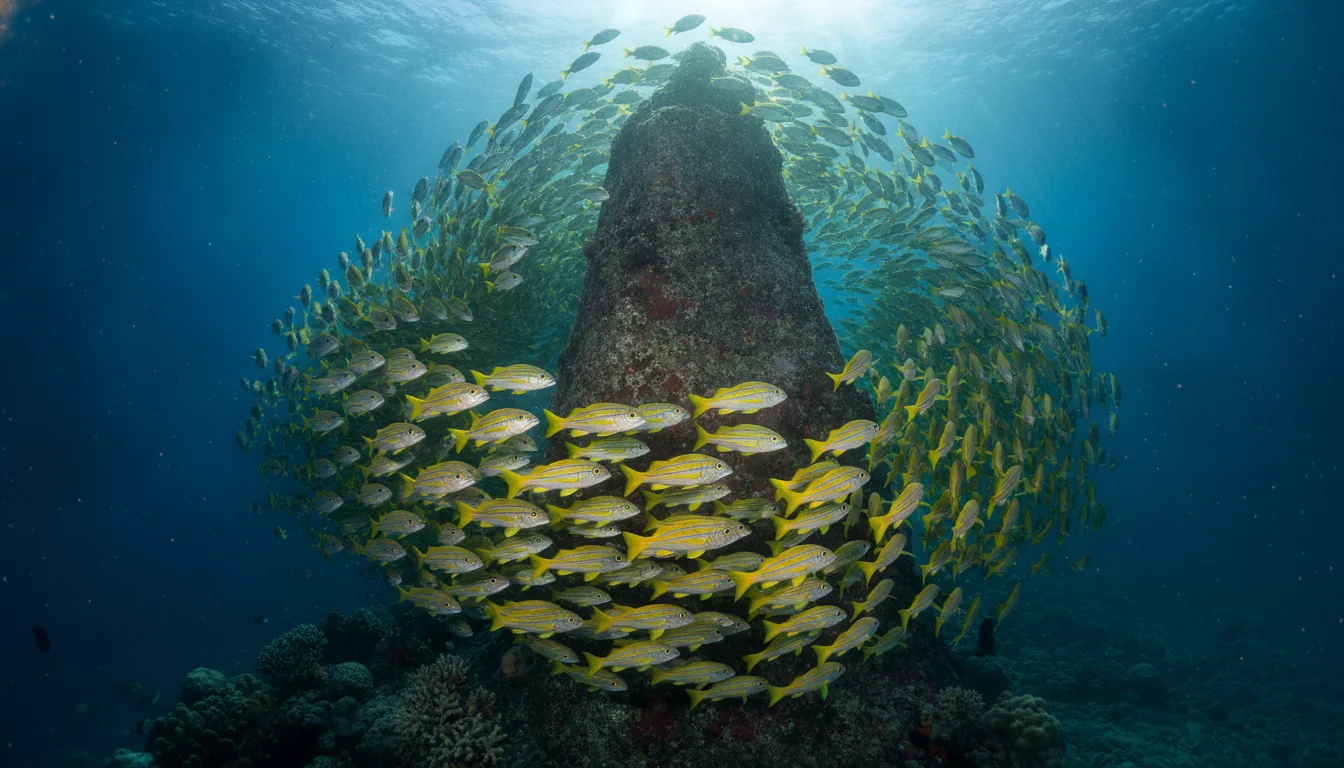
Understanding the Andaman Sea's seasonal shifts is critical to avoiding poor underwater visibility and storm-related trip cancellations. The peak diving window runs from November through to April, when dry northeasterly winds bring flat, calm seas and underwater visibility regularly exceeds twenty-five metres. During these months, water temperatures hover around a comfortable twenty-nine degrees Celsius, meaning a basic three-millimetre shorty wetsuit is all you need. From May to October, the southwest monsoon brings heavy rain, strong swells, and reduced underwater visibility, which can drop to under ten metres. While dive operators run year-round, safety dictates that trips to outer sites are frequently rescheduled or moved to sheltered bays during the monsoon. June and September are historically the wettest months, often causing sea conditions that make boat travel uncomfortable for those prone to motion sickness.
Plan your dive holiday between January and March to secure the absolute best water clarity and the lowest risk of weather-related cancellations.
Essential Gear and Equipment Standards
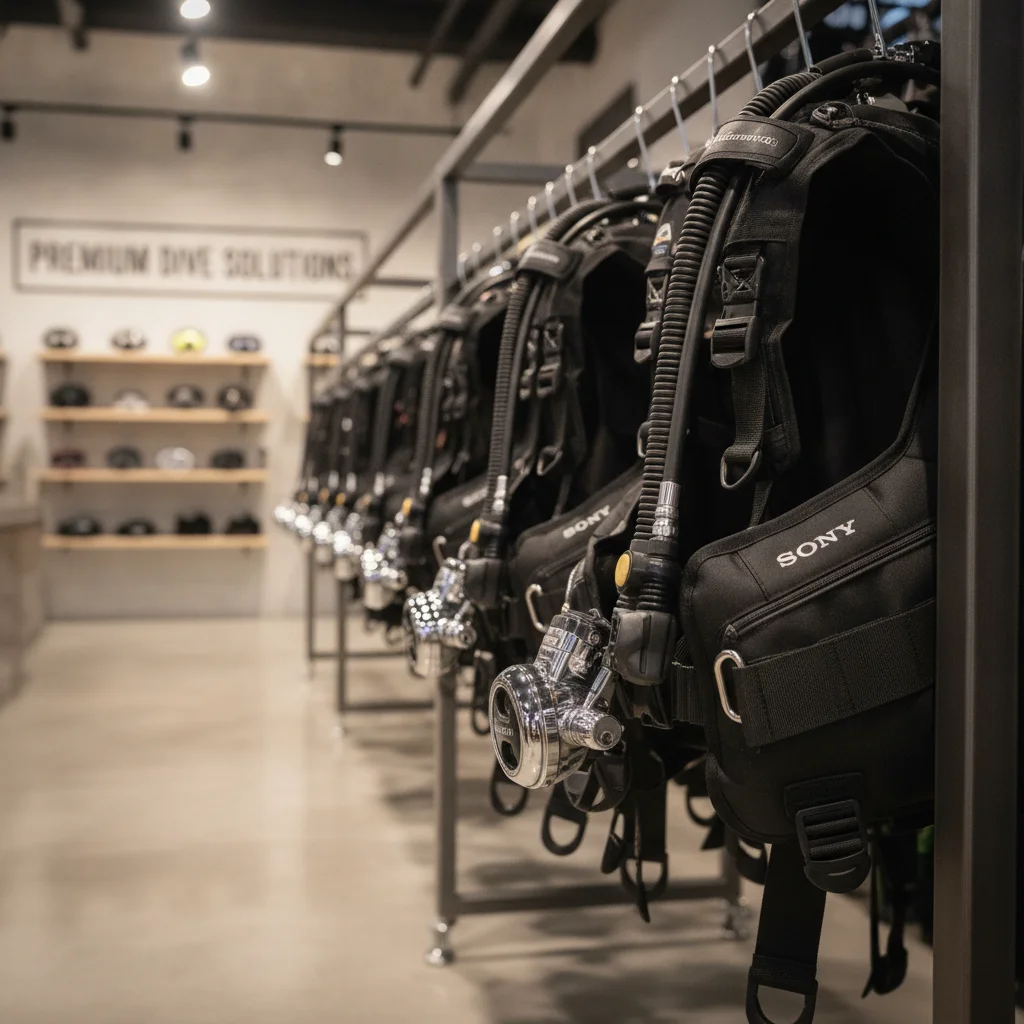
High-quality, regularly serviced rental gear is standard across Phi Phi's top-tier operators, but knowing what to inspect remains vital for safety. Most established shops include full equipment rental in their package prices, covering a regulator, buoyancy control device (BCD), wetsuit, mask, snorkel, and fins. You should look for brands like Scubapro, Aqualung, or Mares, which are widely used and trusted by professional operations across the island. If you prefer to bring your own gear, shops usually offer a discount of around ten percent on daily dive packages. Ensure your dive computer is set correctly for the warm, highly saline waters of the Andaman Sea, where salinity levels average thirty-three parts per thousand. It is wise to inspect the mouthpiece of your rental regulator and check the service decals on the cylinders before boarding.
Ask your dive master to show you the compressor room; a clean, well-ventilated filling station is a key indicator of clean breathing air.
Best Dive Locations and Reef Access in Koh Phi Phi
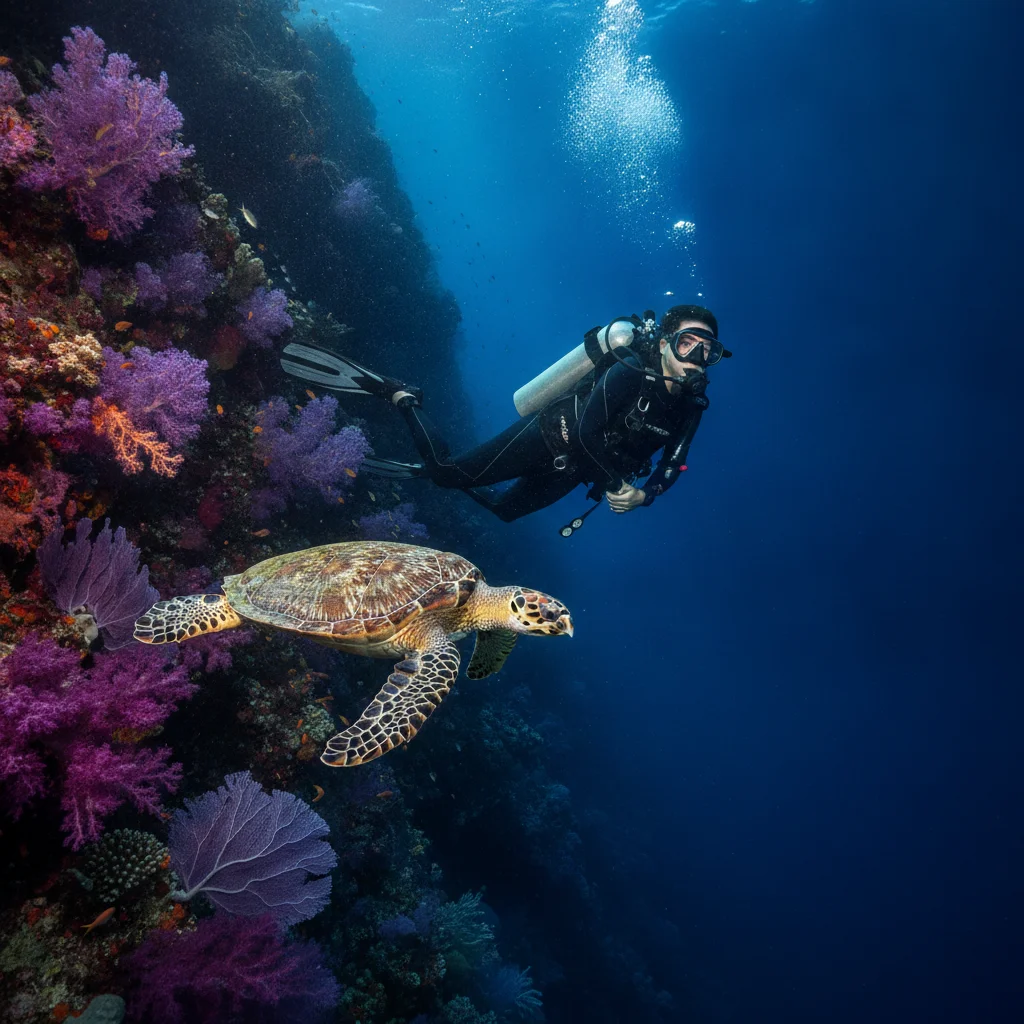
The premium diving action is concentrated around the southern tip of the archipelago. Bida Nok and Bida Nai are two limestone islets offering dramatic vertical walls dropping to thirty metres, populated by blacktip reef sharks, banded sea snakes, and ornate ghost pipefish. For wreck enthusiasts, the Kled Gaeow, a forty-seven-metre-long former Royal Thai Navy transport ship, was purposely sunk in 2014 and sits upright at a depth of twenty-six metres, attracting massive schools of yellow snapper and giant pufferfish. If you are based in Tonsai Village, you can access these key sites via a short twenty-minute speedboat ride. For those seeking quieter reefs with fewer divers, the northern sites around Koh Yung (Mosquito Island) offer shallow coral gardens, though parts remain protected and closed to allow reef recovery. First-time divers should start with the sheltered waters of Maya Corner, where gentle currents and shallow depths provide a stress-free environment to build confidence.
Costs and Budgeting
Budgeting for a diving trip to Koh Phi Phi requires factoring in both the cost of the dives and the mandatory national park fees. A standard two-dive day trip for certified divers costs between THB 3,300 (£75) and THB 4,200 (£95), which typically includes lunch, water, and equipment. You must also pay the Hat Noppharat Thara-Mu Ko Phi Phi National Park entry fee of THB 400 (£9) plus a THB 200 (£4.50) daily diving fee. This fee is paid in cash directly to your operator or the park rangers on your first day of diving.
| Option | Cost (THB) | Cost (GBP approx) | Notes |
|---|---|---|---|
| Discover Scuba Diving (1 Day) | THB 4,500 | £102 | Includes 2 dives and basic instruction |
| Open Water Course (3 Days) | THB 14,500 | £330 | Full certification, materials included |
| 2-Dive Day Trip (Certified) | THB 3,400 | £77 | Includes gear rental, boat, and lunch |
| National Park Entry Fee (First Day) | THB 400 | £9 | Paid in cash, valid for three days |
| Daily Dive Fee | THB 200 | £4.50 | Paid daily for marine park conservation |
Essential Safety and Medical Requirements
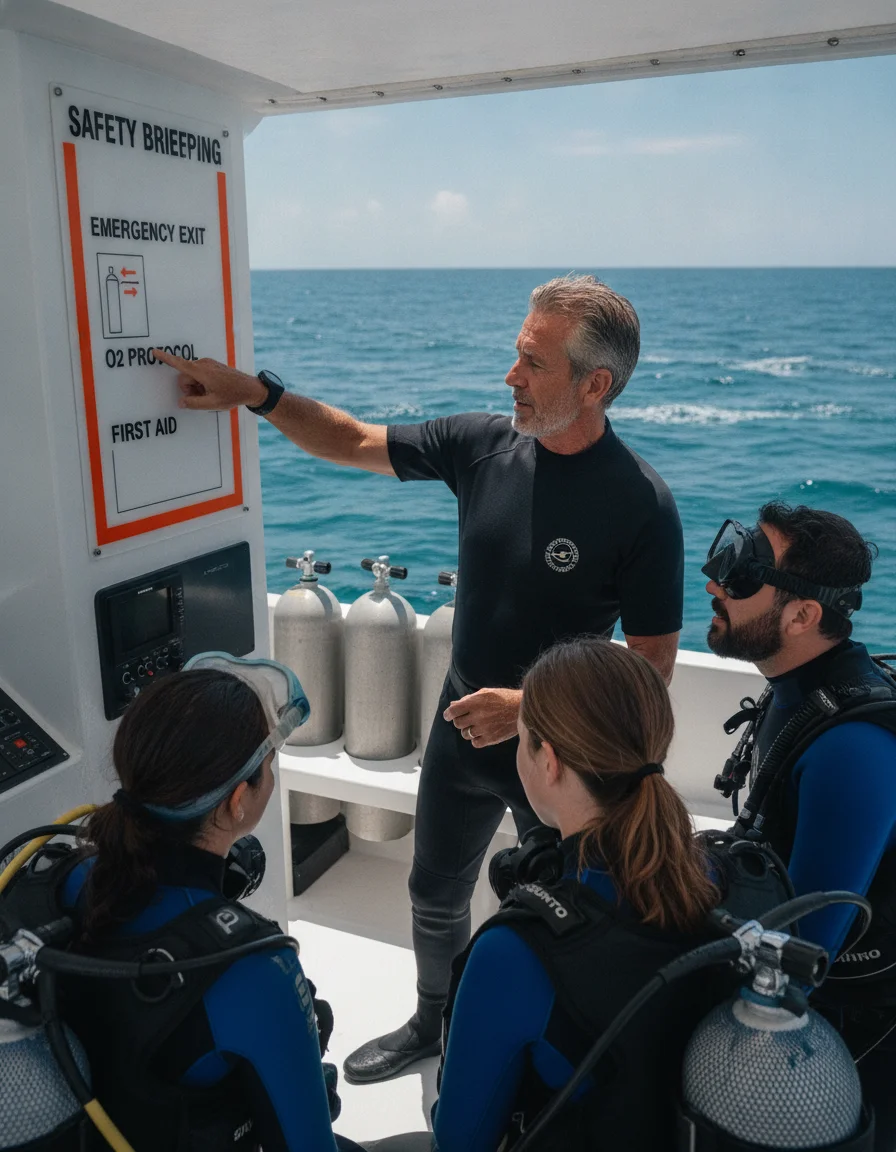
You must complete a medical self-assessment form before you are allowed to dive. If you answer yes to any health conditions like asthma or high blood pressure, you will need a signed doctor's certificate from a local clinic before boarding. Make sure your travel insurance explicitly covers scuba diving up to your certified depth limit. Standard holiday insurance often excludes underwater activities, meaning you would face massive bills in the event of an emergency evacuation. You must observe a strict twenty-four-hour no-fly window after your final dive before boarding any flight. Disregarding this rule puts you at high risk of decompression sickness due to the cabin pressure changes of commercial aircraft. Finally, carry physical cash for your marine park fees. Operators cannot process credit card payments for government park tickets on the boat.
Insider Tips for Your Phi Phi Diving Holiday
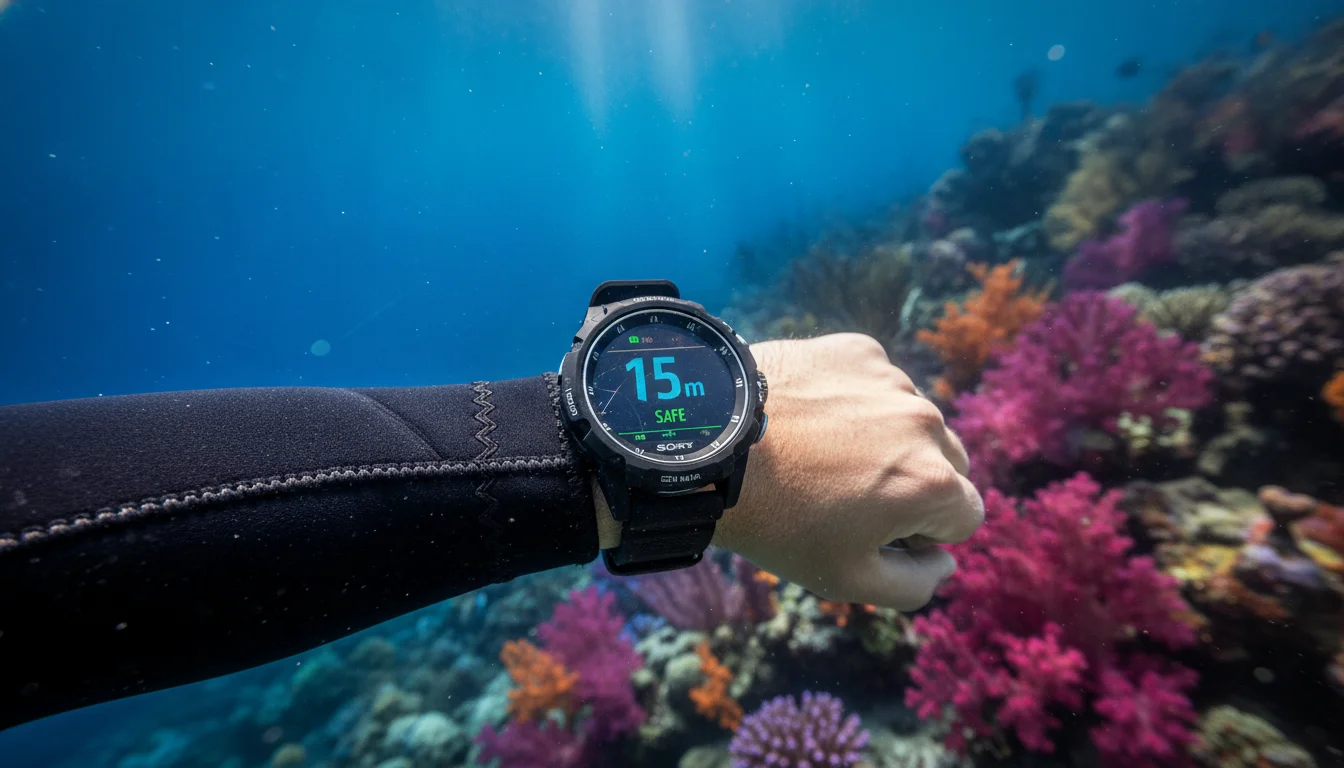
Book your morning trips early during the high season. Boats depart around 07:30 to reach Bida Nok before the heavy day-trip crowds arrive from Phuket and Krabi.
Inspect your rental wetsuit for fit and wear before leaving the shop. A loose suit allows cold water to circulate constantly, which lowers your body temperature during consecutive dives.
Keep your national park receipt safe in a waterproof dry bag. You will need to show this paper ticket to the rangers if they board your vessel for an inspection.
Request a 15-litre tank if you have a high air consumption rate. Most operators default to 12-litre aluminium cylinders, but larger tanks are usually available for a small fee of THB 200 (£4.50).
Stay hydrated by drinking electrolyte solutions available at local 7-Eleven shops. The combination of salt water, tropical heat, and breathing dry tank air causes rapid dehydration.
Wear reef-safe sunscreen that does not contain oxybenzone or octinoxate. These chemicals are legally banned in Thai marine national parks to protect fragile coral reefs.
Dive with a surface marker buoy (SMB) and know how to deploy it. The waters around Koh Phi Phi experience heavy longtail boat traffic, making a visible surface signal essential during ascents.
Koh Phi Phi Diving At-A-Glance
| Item | Detail | Notes |
|---|---|---|
| Best Diving Months | November to April | Optimal visibility and calmest sea conditions |
| Wet Season | May to October | High chance of wind, rain, and reduced clarity |
| Water Temperature | 28°C to 30°C (82°F to 86°F) | Only a 3mm shorty wetsuit is required |
| Nearest Hyperbaric Chamber | Phuket Town | Roughly 2 hours away by speedboat |
| Marine Park Fee | THB 600 (£13.50) total first day | THB 400 entry fee plus THB 200 diving fee |
| Standard Dive Ratios | Max 4 divers per instructor | Promotes safety and personalized guidance |
| Minimum Age for Kids | 10 years old | For PADI Junior Open Water courses |
| Common Marine Life | Blacktip reef sharks, turtles, snappers | Whale sharks occasionally spotted at outer pinnacles |