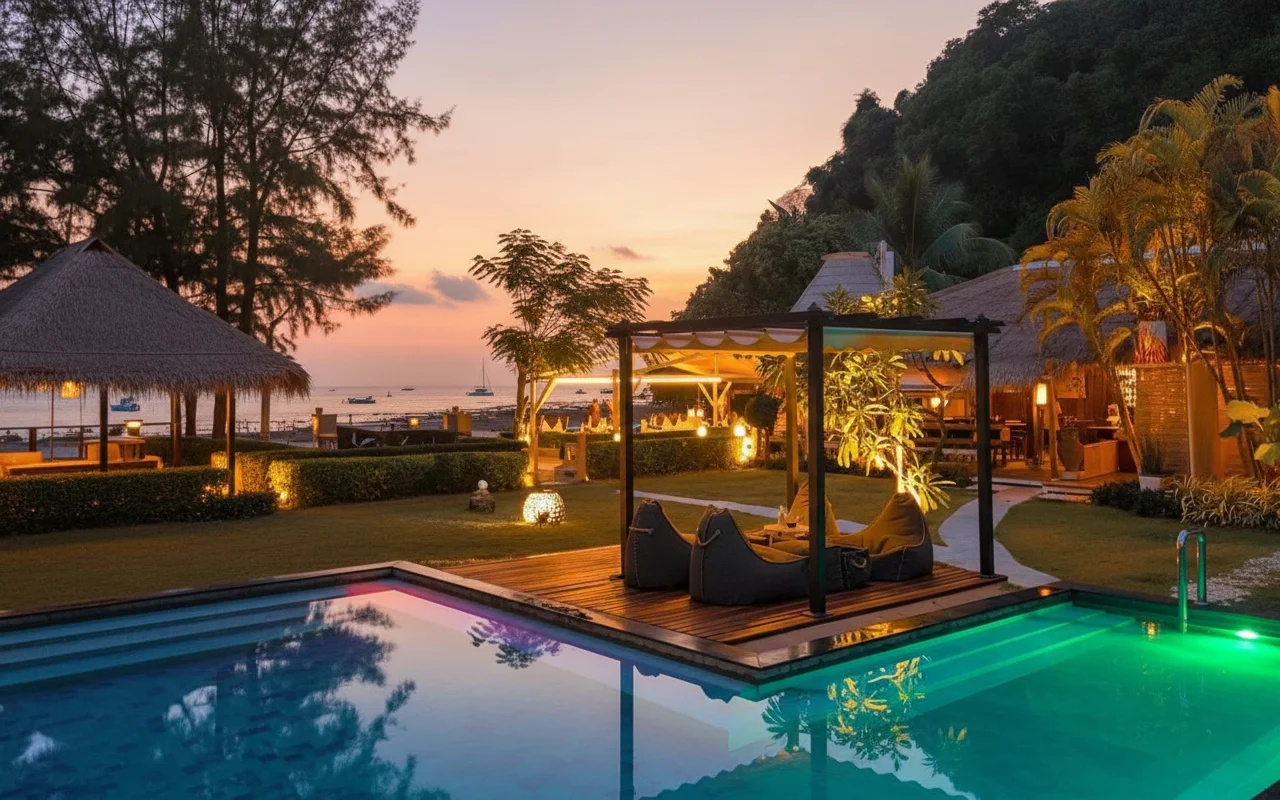
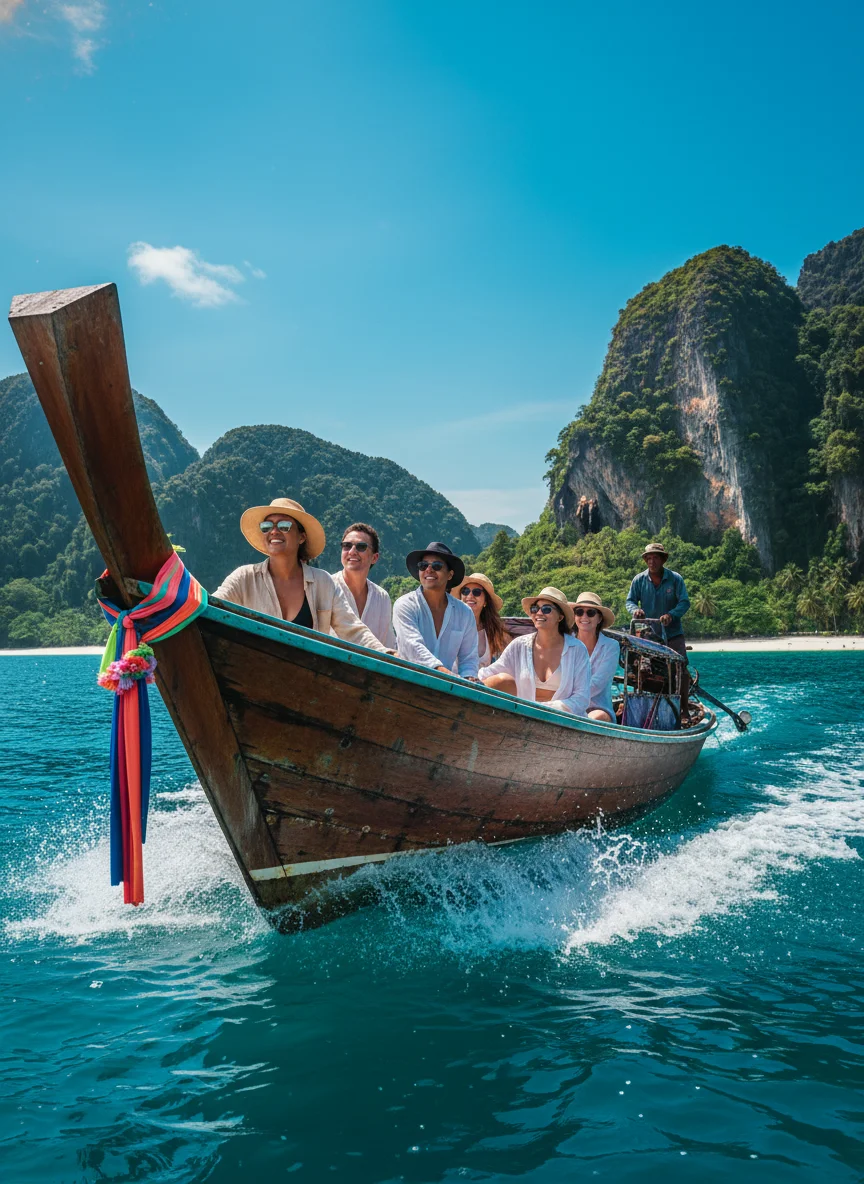
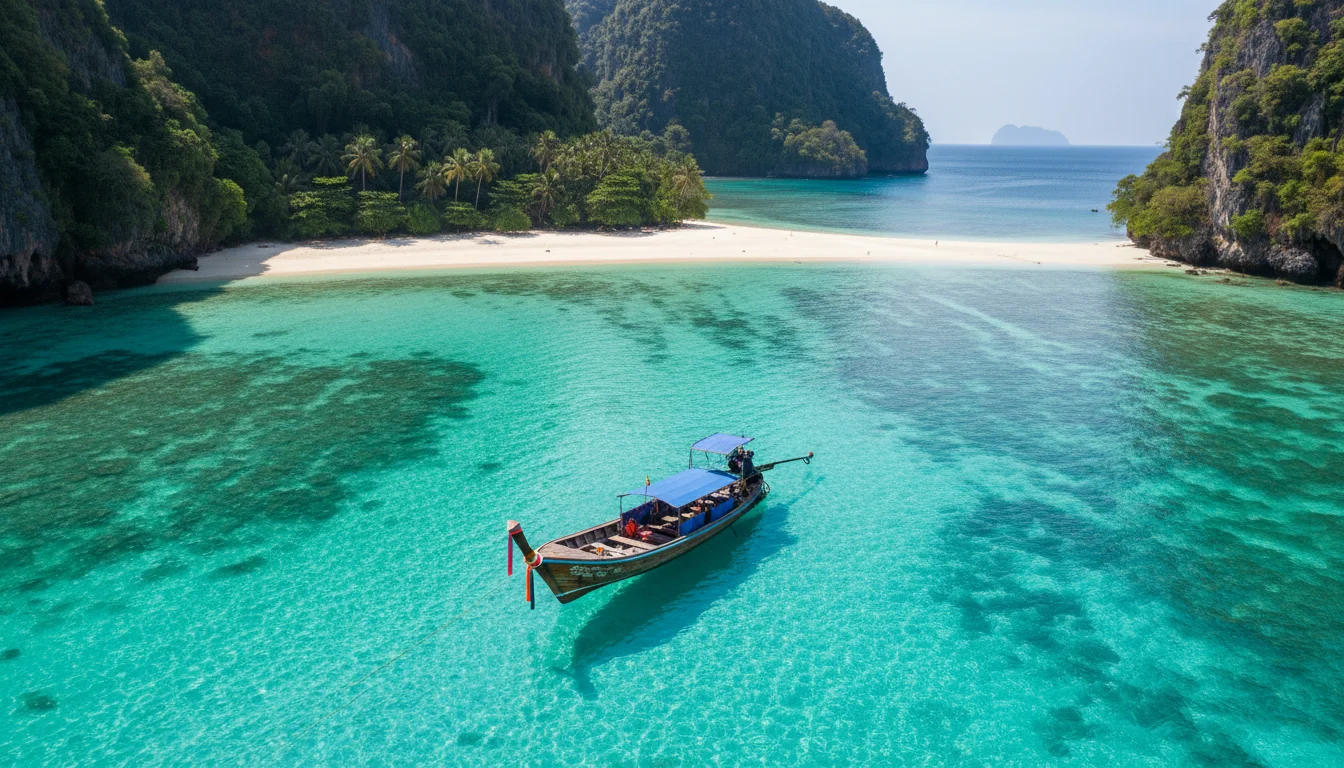
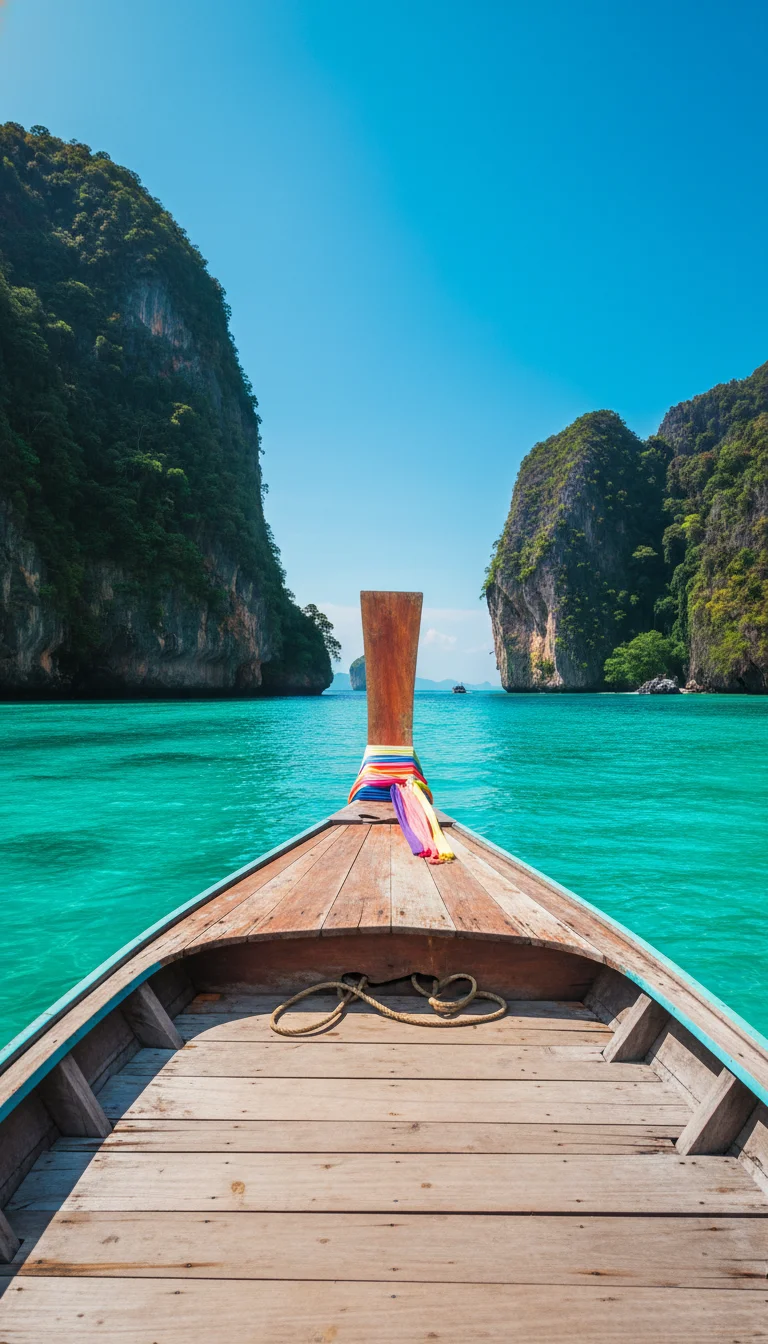
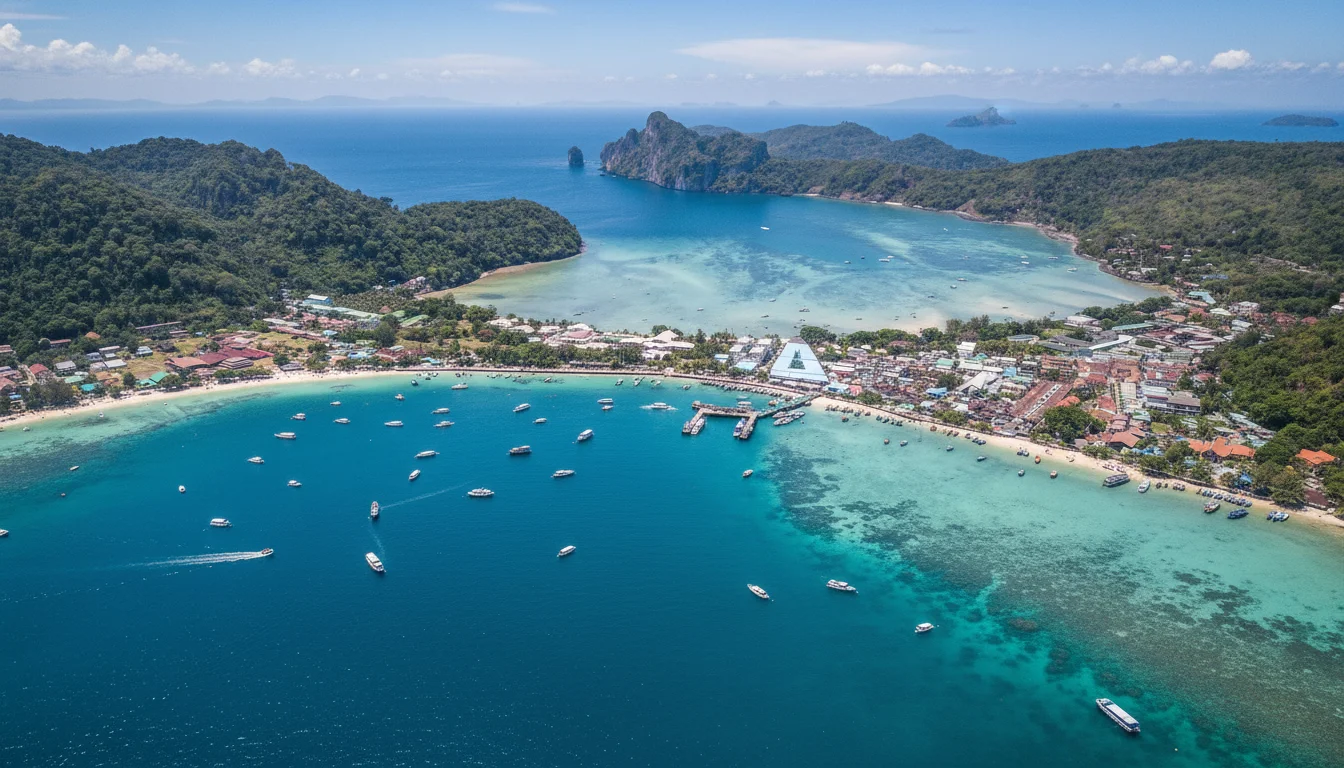
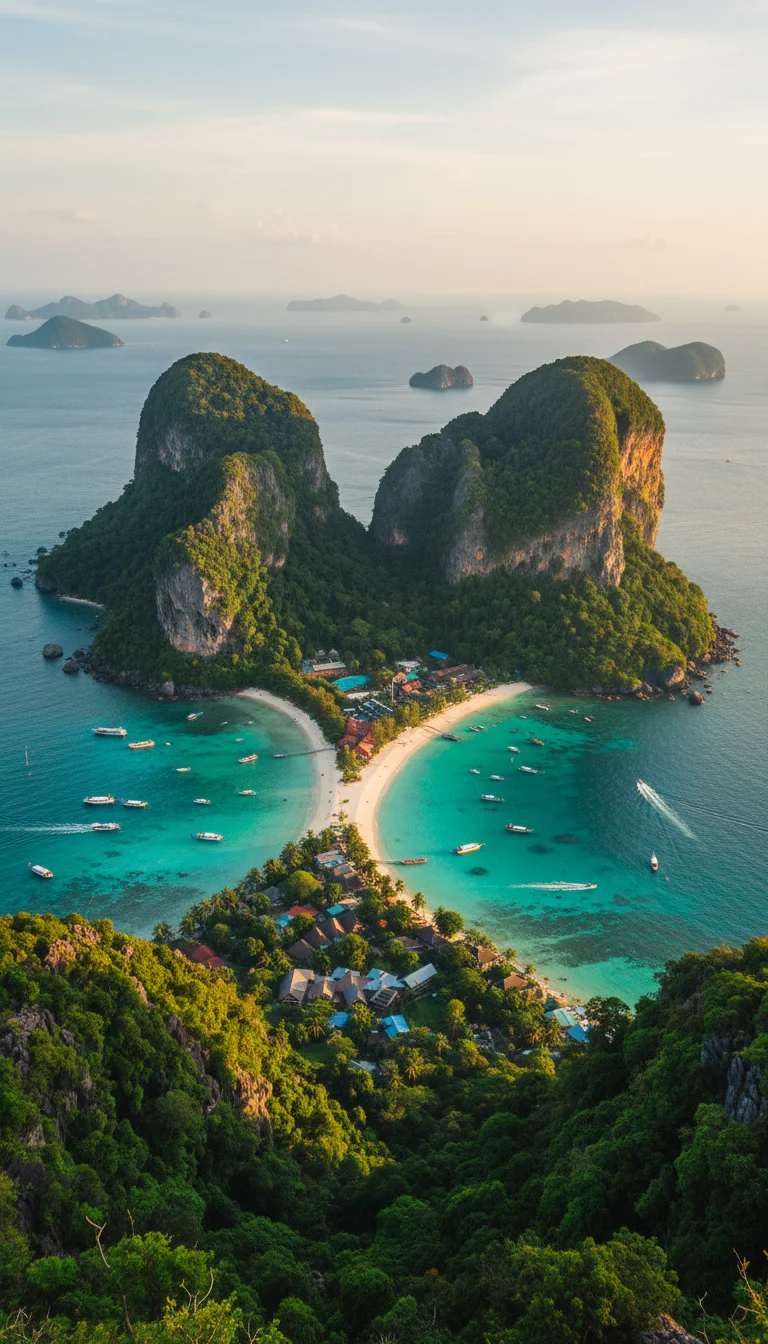
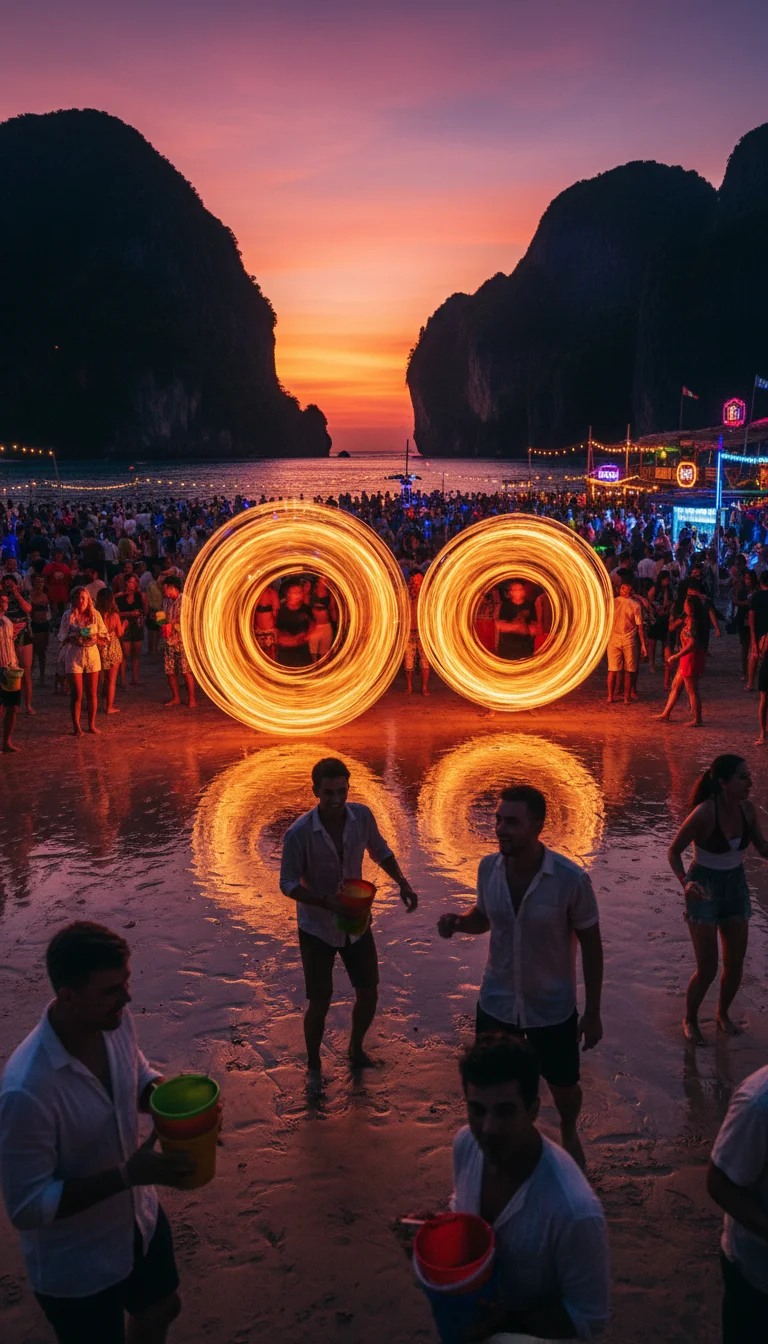
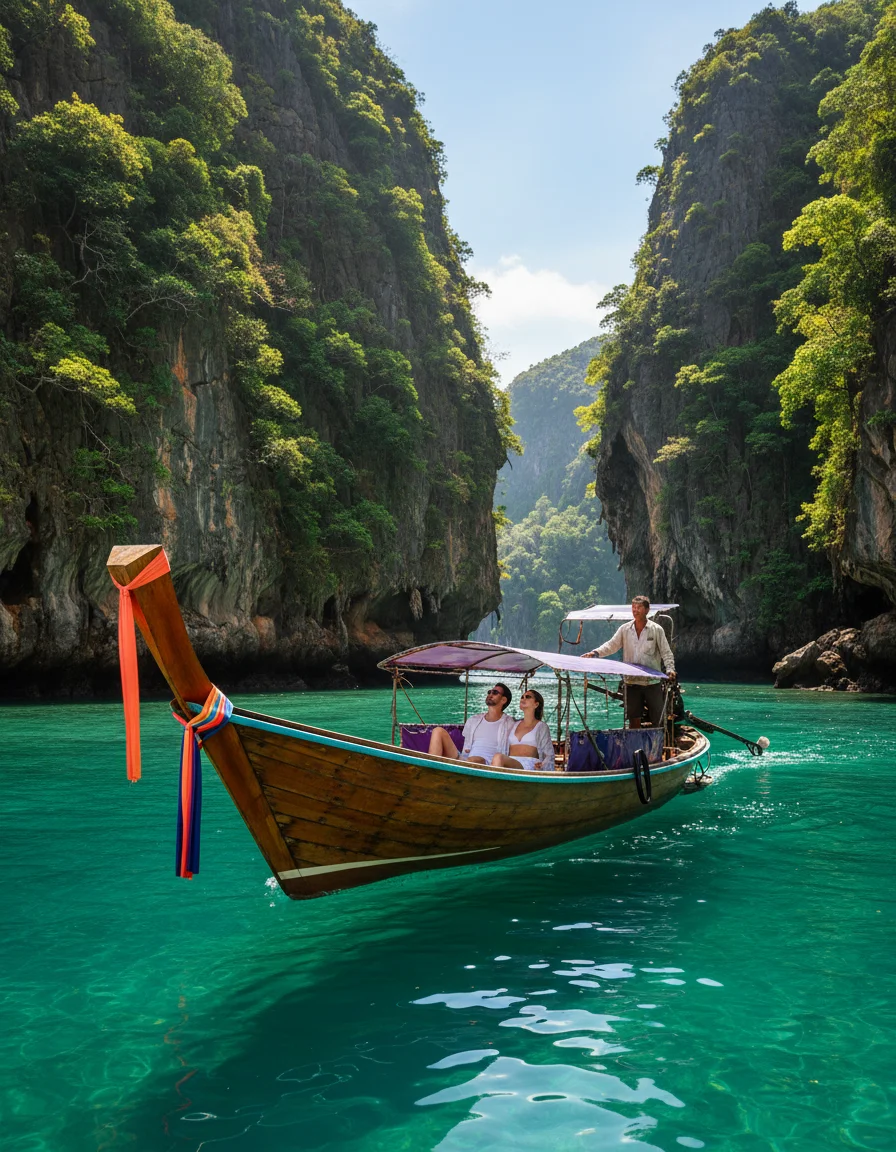
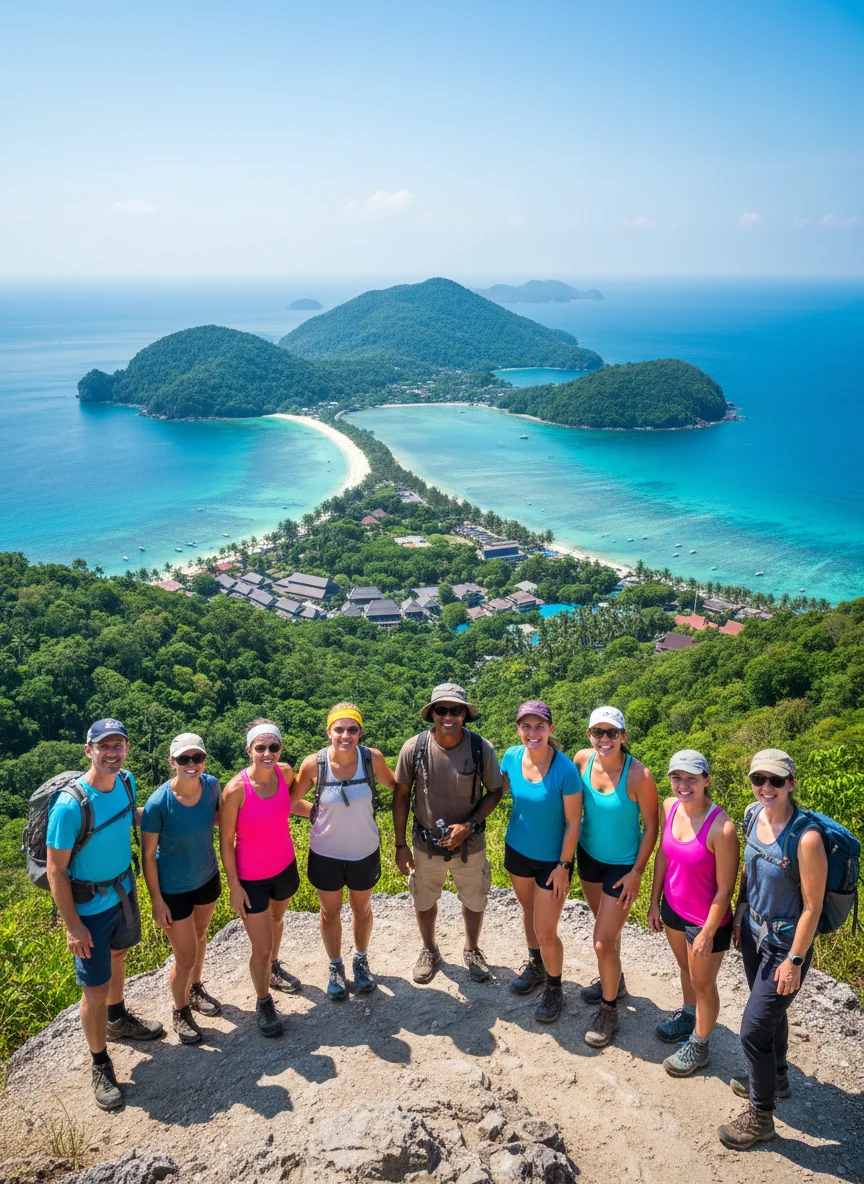
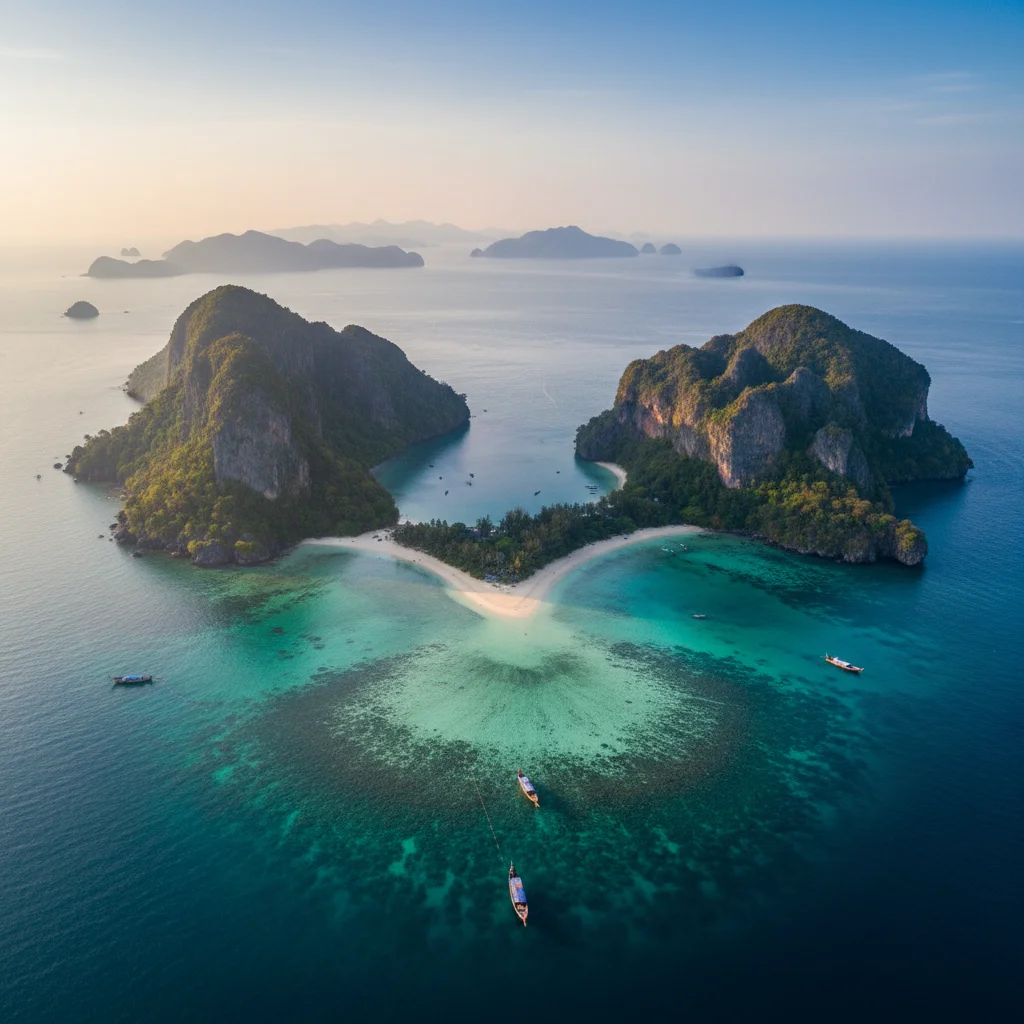
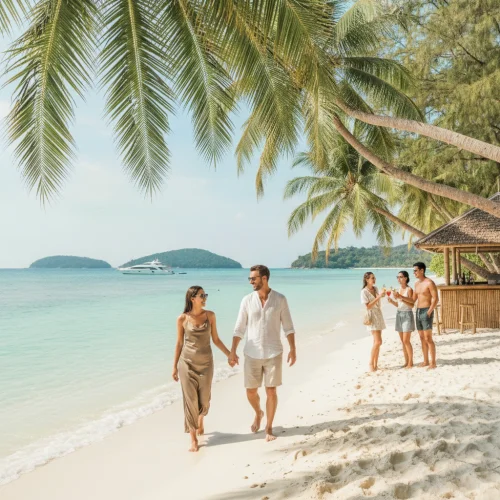
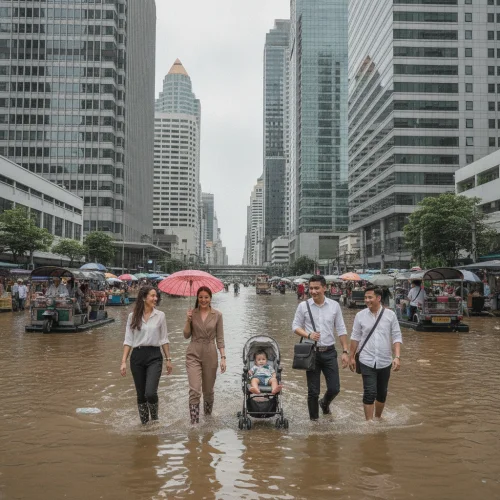
There are no roads here, meaning your entire existence revolves around tidal charts and the gentle putt-putt of longtail boat engines.
Unlike the mainland resorts where you can jump in a taxi, reaching your hotel often requires wading knee-deep through the Andaman Sea with your luggage held aloft. It forces you to slow down instantly. You trade the usual transit rush for a distinctly aquatic pace of life right from the moment you step off the passenger ferry.
Flying from London Heathrow to Bangkok Suvarnabhumi with Thai Airways or EVA Air takes roughly eleven hours and costs around 26,000 THB (£600). From Bangkok, you need a domestic hop down to either Phuket or Krabi, which AirAsia or Bangkok Airways covers in ninety minutes for about 1,300 THB (£30). Krabi is often the smarter gateway. Once there, you must take a taxi to Klong Jilad Pier and catch a ferry or speedboat to Tonsai Pier. The standard Andaman Wave Master ferry takes two hours and costs 450 THB (£10), while speedboats slice that time in half for 900 THB (£20). Always book your combined flight and ferry tickets with a buffer. If your flight is delayed, the last boat leaves Krabi at 3:00 PM. Spending an unplanned night on the mainland is a rite of passage you should probably avoid.
You will rely entirely on your own two feet and the local longtail boats, as motorised vehicles are completely banned on the islands. Walking through Tonsai Village is a shoulder-to-shoulder affair down narrow paved paths, taking about twenty minutes to cross the central isthmus. For anything further, you must hire a longtail boat from the beach. Short hops to nearby bays like Long Beach cost 150 THB (£3.50) per person during the day, but prices magically double after sunset. If you want a private boat for a half-day tour to Maya Bay, expect to pay around 1,500 THB (£35). Ride-hailing apps like Grab, Bolt, or InDrive are entirely useless here. The most common overcharge happens when negotiating private boat hire. Captains often quote a flat rate of 3,000 THB (£70) to fresh arrivals who have not checked the official rate boards posted near Tonsai Pier. Always agree on the exact duration and destination before stepping onto the wooden deck. When sorting your travel insurance, ensure it covers small boat travel, as clambering in and out of these vessels with the tide pulling at your ankles is a daily reality.
GETTING OUT
Moving on from the islands usually means heading to Phuket, Koh Lanta, or deeper south into the Andaman Sea. The two-hour ferry to Phuket’s Rassada Pier operates four times daily and costs 600 THB (£14). The air-conditioning inside can mimic a meat locker, so bring a jumper. If you fancy the much quieter Koh Lanta, the Saladan Pier ferry takes an hour and sets you back 500 THB (£11.50). Day trips to Bamboo Island are incredibly popular, requiring a forty-minute longtail boat ride that costs about 2,500 THB (£58) for a private group return trip.
Tonsai Pier is the absolute focal point of your arrival and departure. All major operators, including Tigerline and Bundhaya Speed Boat, dock at this concrete jetty. You must pay a 20 THB (£0.45) environmental fee in cash the moment you step off the boat. Porters with metal handcarts will immediately swarm you. Paying them 100 THB (£2.30) to haul your suitcase through the sandy alleys to your hotel is money incredibly well spent.
A shoestring budget here requires about £40 a day, while a comfortable mid-range trip with air-conditioned hotels and seafood dinners lands around £100. Luxury travellers booking premium cliffside resorts should expect to spend £250 or more daily. ATMs are everywhere in Tonsai Village, mostly operated by Krungsri and Bangkok Bank, but they vanish entirely once you leave the main hub. Card acceptance is patchy outside of high-end resorts. The smartest approach is bringing a Monzo or Starling card, withdrawing a thick wad of 1,000 THB notes upon arrival, and breaking them at the 7-Eleven immediately.
CONNECTIVITY
Buying an AIS or TrueMove tourist eSIM before you travel saves you from queuing in the heat. A 15-day unlimited data package costs roughly 600 THB (£14). AIS offers the strongest signal across the archipelago. Hotel wifi is generally decent in the main village, but drops out constantly during heavy rain. If you stay on the remote eastern beaches, your signal will frequently bounce off mainland masts, causing random roaming disconnections mid-call.
British passport holders currently receive a 60-day visa exemption upon arriving in Thailand. Tipping is not mandatory, but leaving a 50 THB (£1.15) note for your room maid or rounding up a restaurant bill by 100 THB (£2.30) is always appreciated. Sockets take the two-pin flat or round plugs, delivering 220V. In an emergency, dial 1155 for the Tourist Police. One crucial detail most forget is that the island's single pharmacy prices reflect their monopoly. Buying basic paracetamol here costs triple the mainland price, so pack a comprehensive first aid kit before boarding the ferry.