Thap Sakae - Prachuap Khiri Khan
At this ultra-narrow waist of Thailand, you can stand on a quiet beach and be only twelve kilometres from the rugged mountain border of Myanmar. Thap Sakae offers a rare coastal escape where international mass tourism has yet to establish a foothold, leaving its long, sandy shoreline completely in the hands of local coconut farmers and traditional fishermen.
Thap Sakae is a low-key coastal district situated in the southern half of Prachuap Khiri Khan Province, approximately 320 kilometres south of Bangkok. The region is defined by its vast coconut groves, which sweep from the base of the Tenasserim Hills directly down to the waters of the Gulf of Thailand. It draws independent travellers, slow-travel retirees, and expats who seek the slow rhythm of a traditional Thai working town rather than the curated commercialism of busier resort areas. This makes it an ideal stopover for those journeying south towards Phuket or Koh Samui.

Coastal Character and Geographical Setting
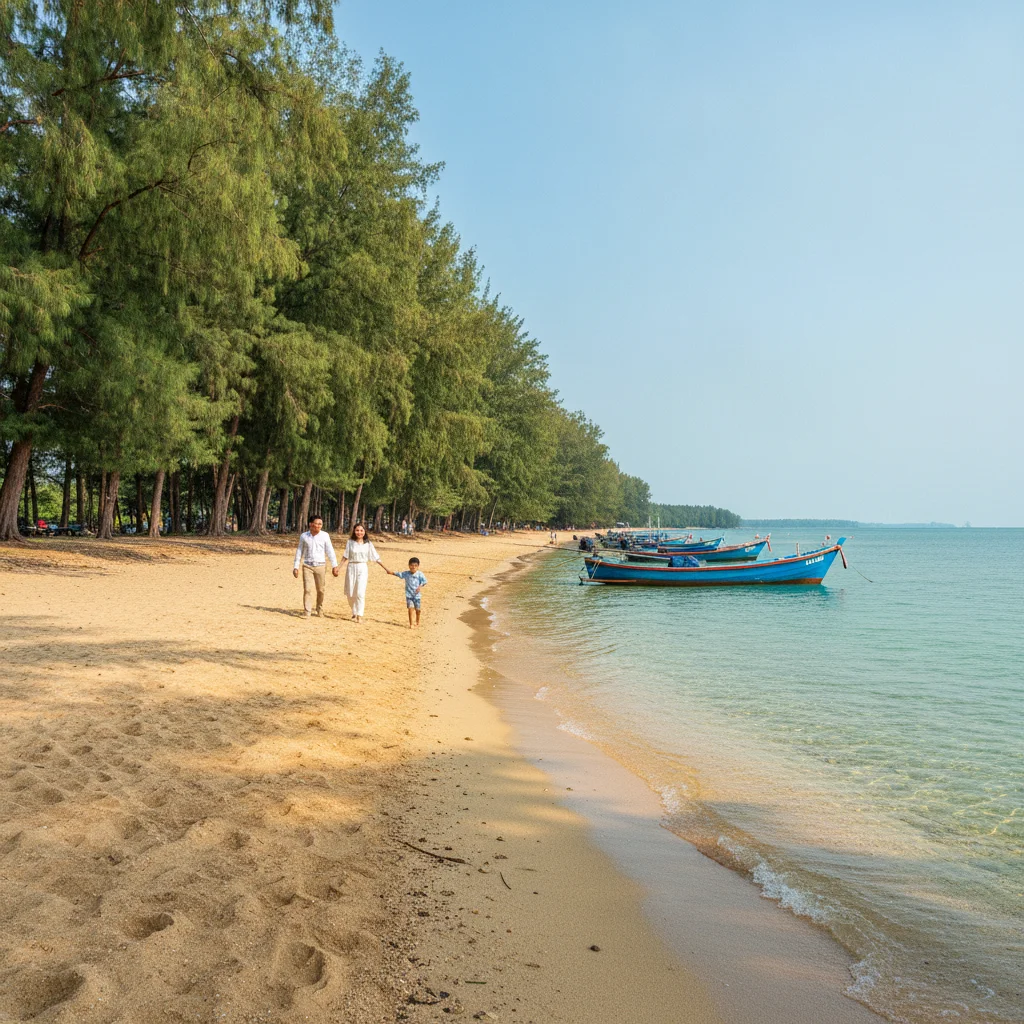
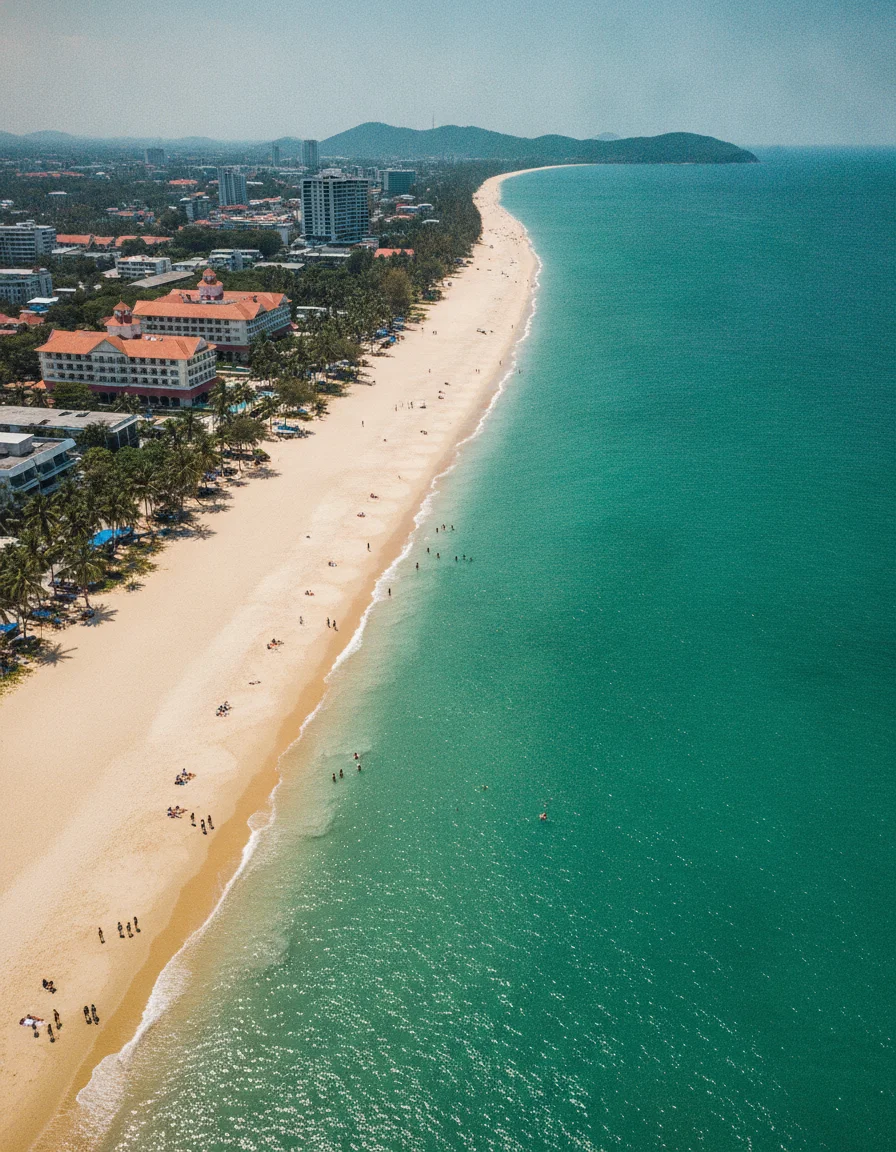
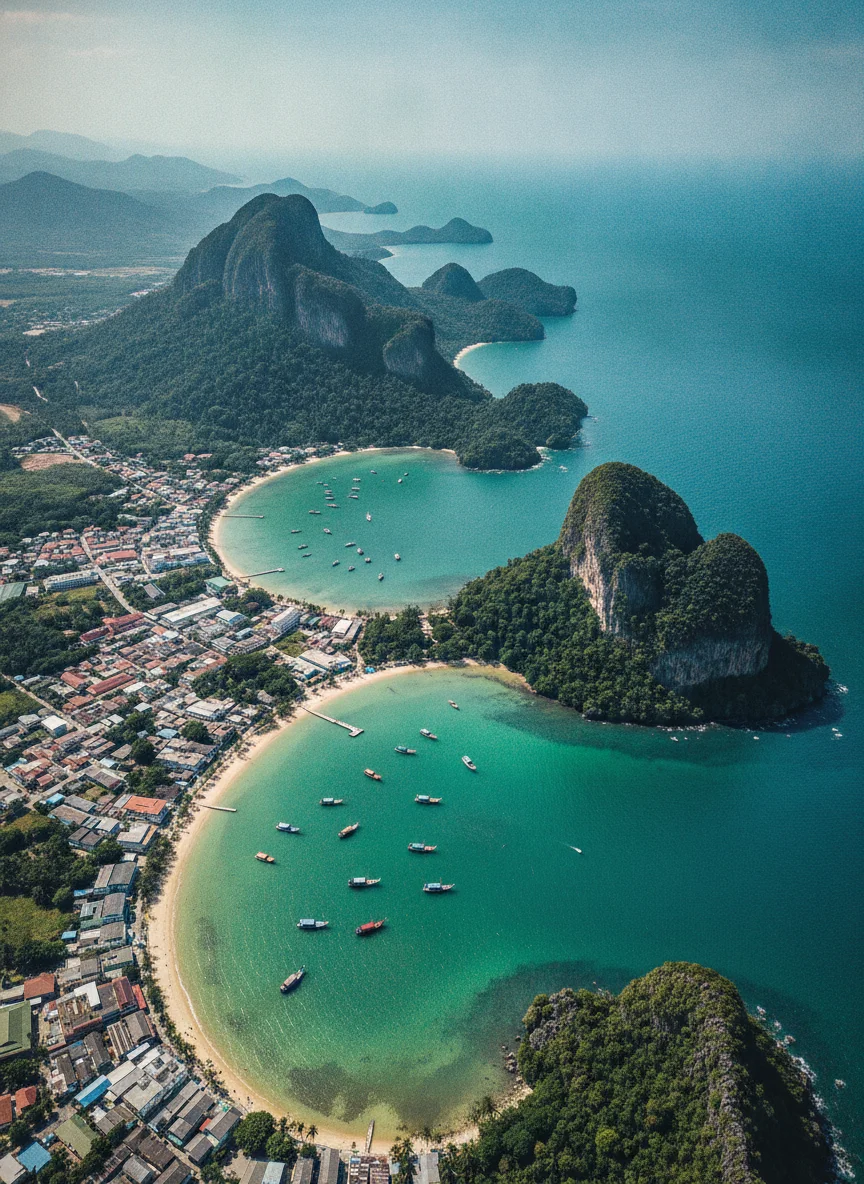
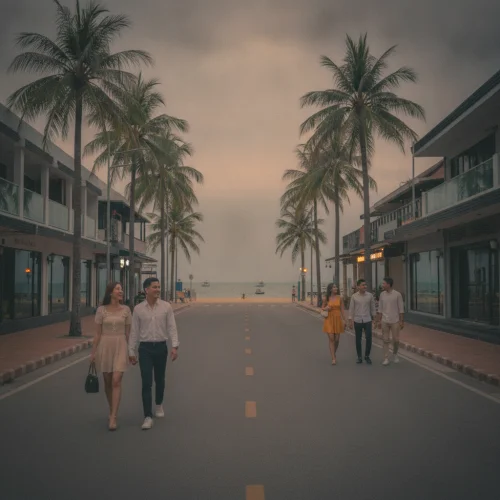
The coastal strip of Thap Sakae is defined by its extreme geographical narrowness and its profound connection to the agricultural rhythms of the southern provinces. Hemmed in by the Tenasserim mountain range to the west and the sea to the east, the district feels isolated from the main overland transit corridors despite Route 4 running directly through its western edge. Unlike the heavily developed coastlines of Hua Hin to the north, the beaches here remain wild, flat, and largely uninterrupted by high-rise condominiums or concrete seawalls. Coconut plantations dominate the landscape, with millions of slender palms swaying in the sea breeze and providing the primary source of income for the local population alongside small-scale artisanal fishing. The town centre itself is structured around a quiet grid of streets near the railway line, where old wooden shophouses stand alongside modern hardware stores and family-run pharmacies. You will notice a distinct lack of western franchise operations, with no McDonald's or Starbucks in sight, preserving an authentic southern Thai provincial atmosphere. Life moves slowly here, dictated by the heat of the midday sun and the evening return of the local squid boat fleet.
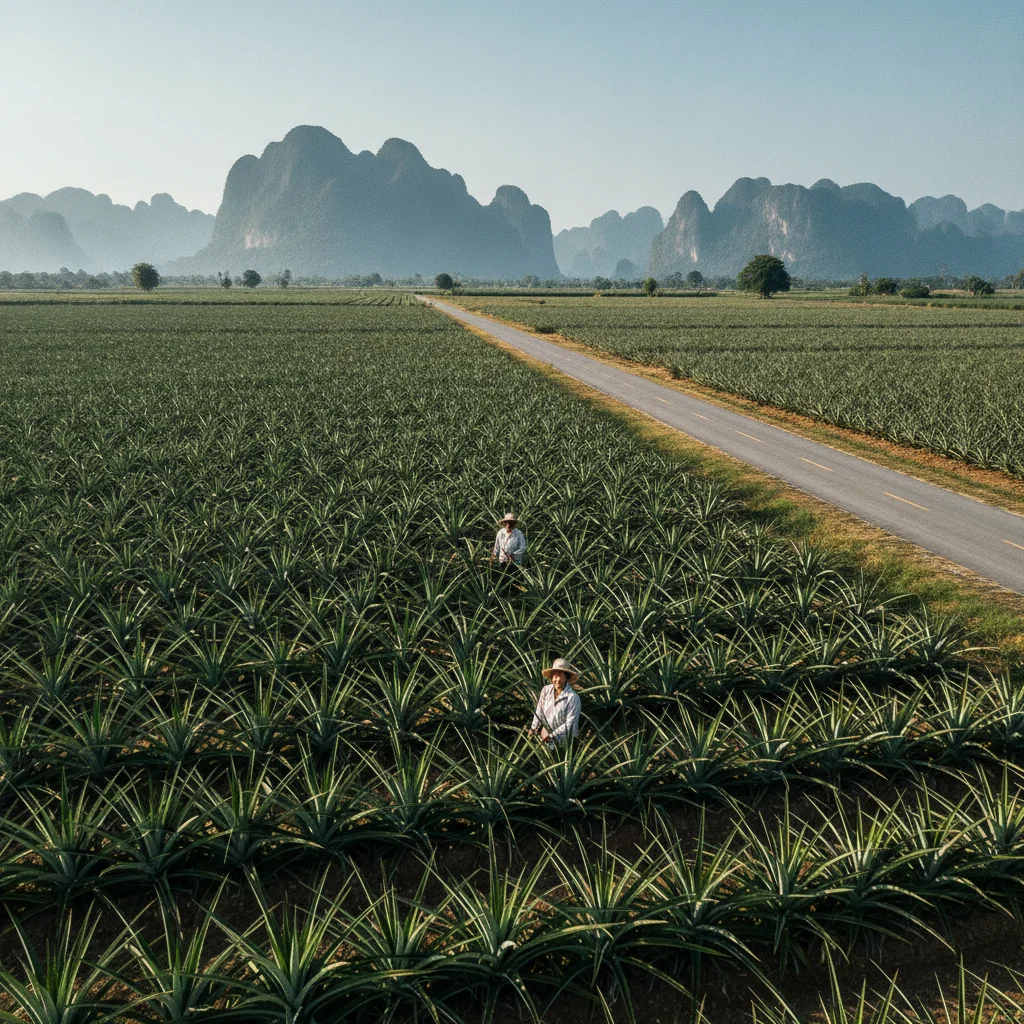
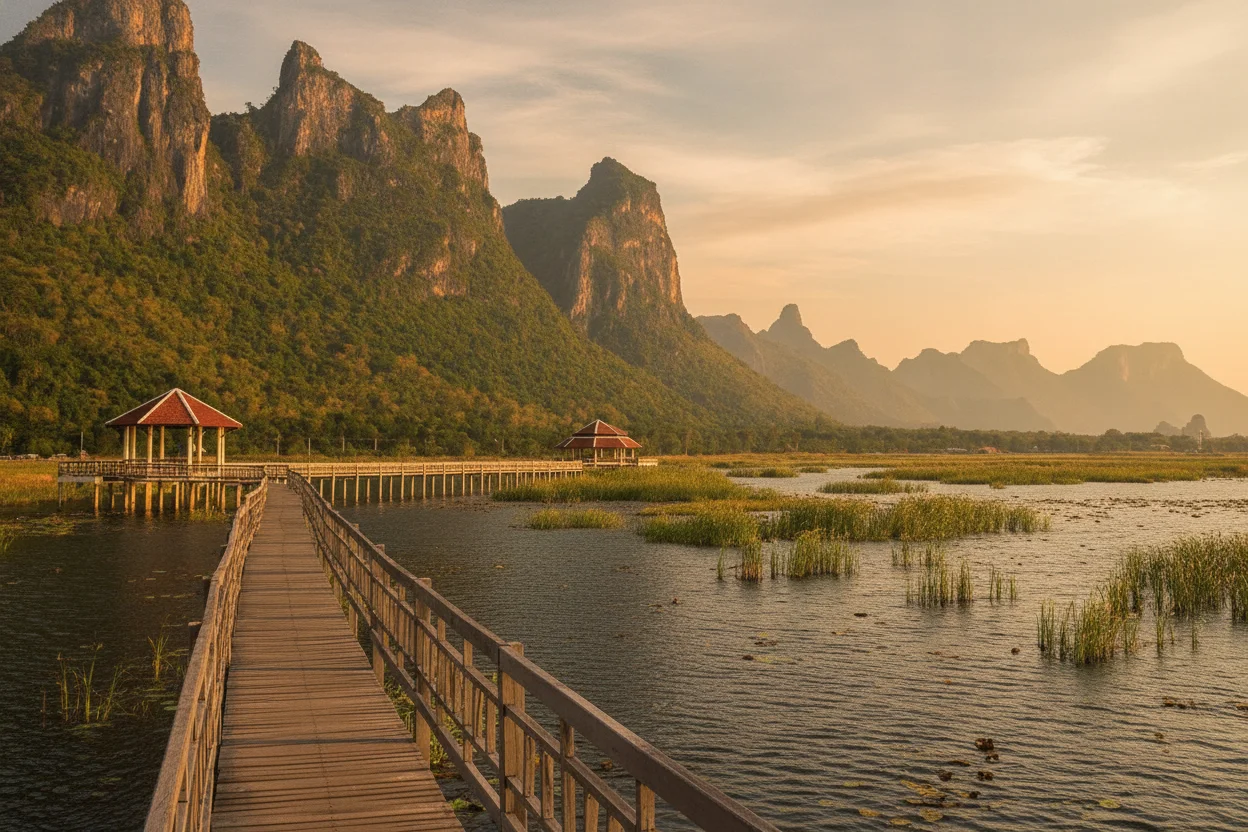
Discover Kui Buri, a quiet agricultural town in Thailand. Explore empty beaches, local pineapple plantations, and scenic viewpoints. Plan your trip now.
For travellers seeking a genuine slice of coastal Thai life unaffected by international resort trends, the geography of Thap Sakae provides an unspoiled sanctuary.
Key Landmarks and Cultural Treasures
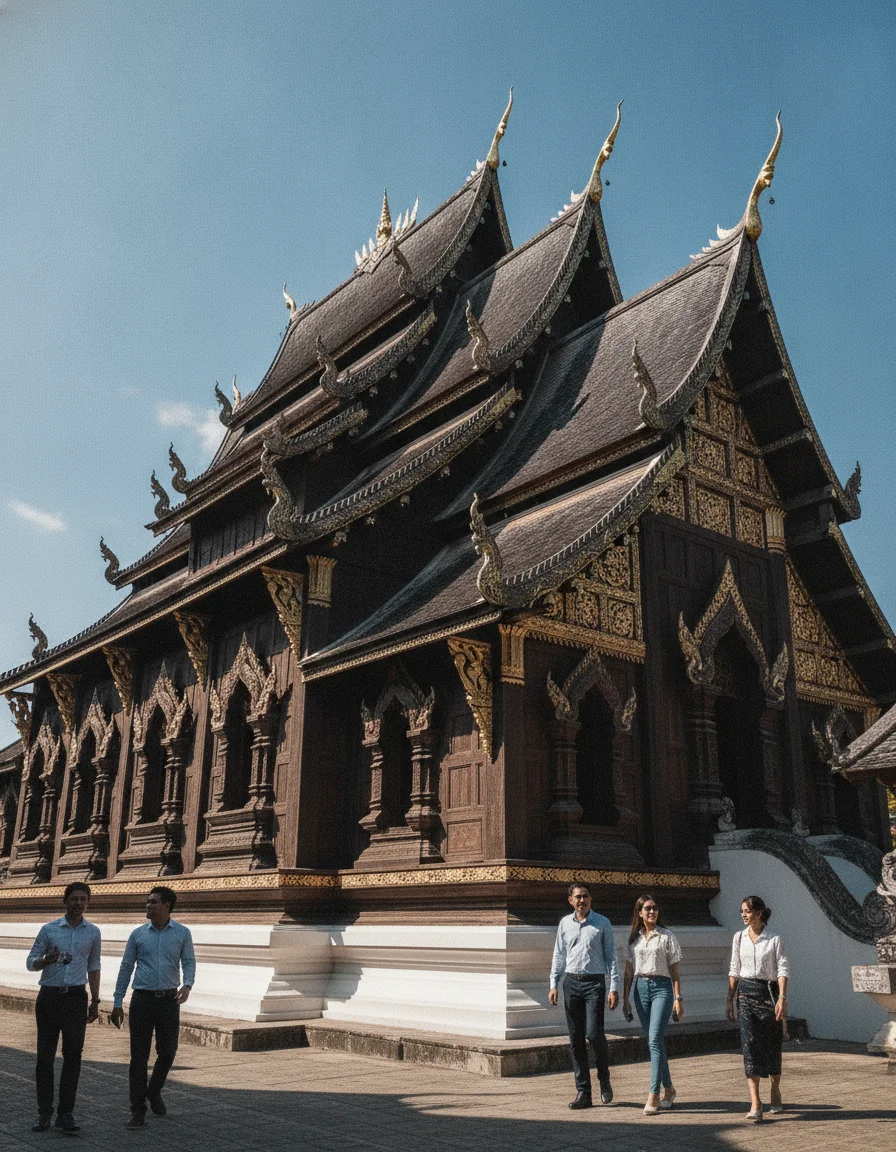
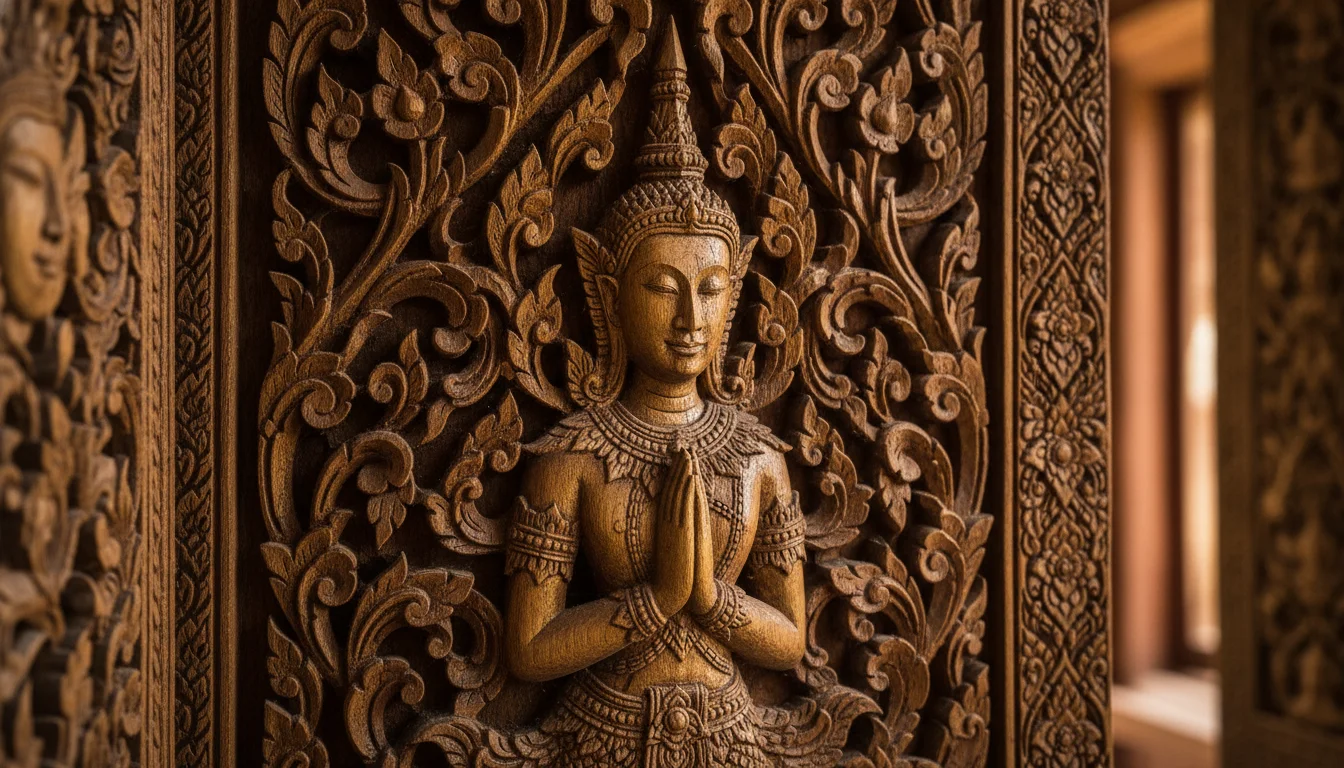
The architectural and cultural landmarks of Thap Sakae reflect its deep Buddhist heritage and its close relationship with the surrounding natural environment. Chief among these is Wat Huai Leuk, an extraordinary temple constructed from golden teakwood and local timber, situated just a short drive from the main town centre. This temple stands out for its intricate hand-carved panels depicting scenes from the Jataka tales, showcasing the high level of woodworking craftsmanship distinctive to this forested region of Thailand. Further along the coast lies the vast expanse of Wanakon National Park, a protected coastal reserve covering over thirty-eight square kilometres of land and sea. Here, you can walk along a quiet seven-kilometre beach shaded by towering ironwood and pine trees, with entry costing just 100 THB (£2.30) for foreign visitors. For those looking to explore offshore, the nearby island of Koh Talu offers some of the healthiest shallow-water coral reefs in the upper Gulf. Private day boat tours to this privately owned island depart from nearby piers and cost around 1,200 THB (£27.60) per person, including snorkeling gear and lunch.
Exploring these sites offers a rare opportunity to experience pristine national parks and distinctive teakwood temples without the crowds found elsewhere.
Local Food and Southern Culinary Scene
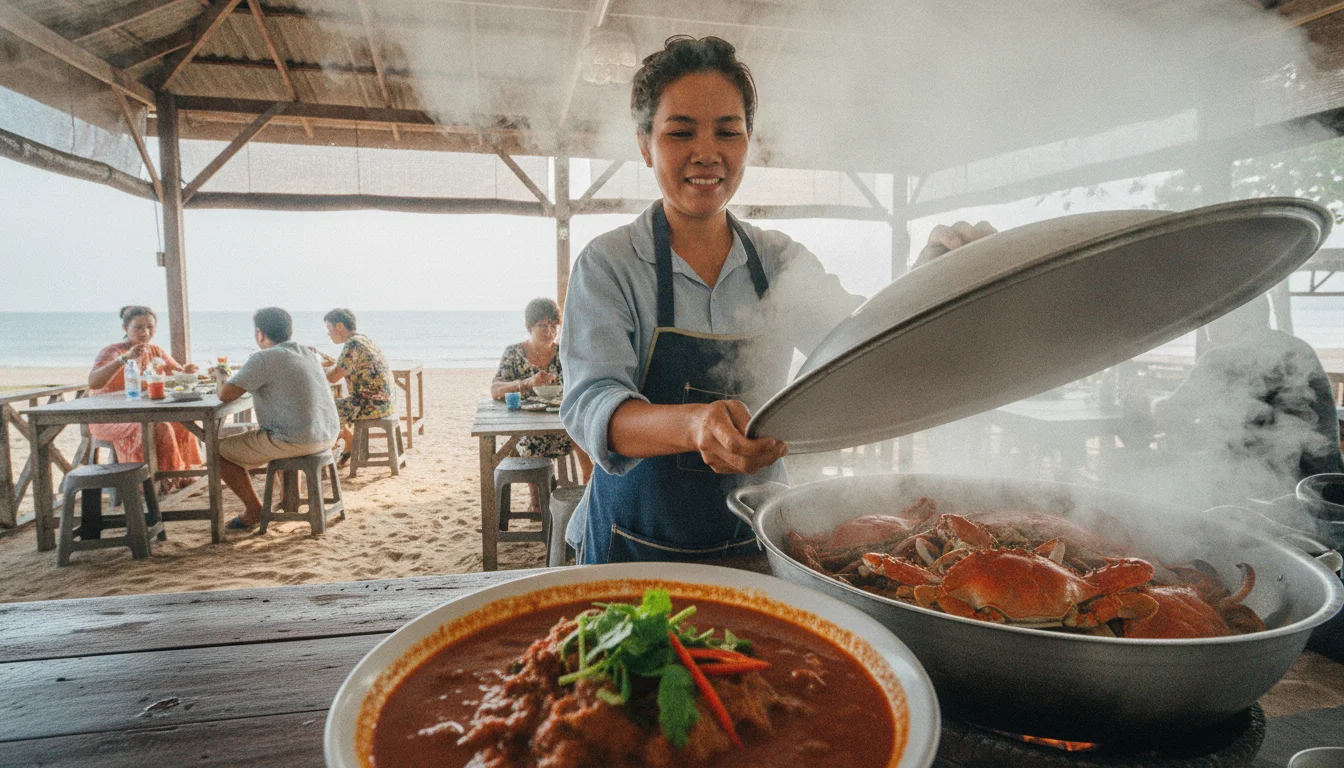
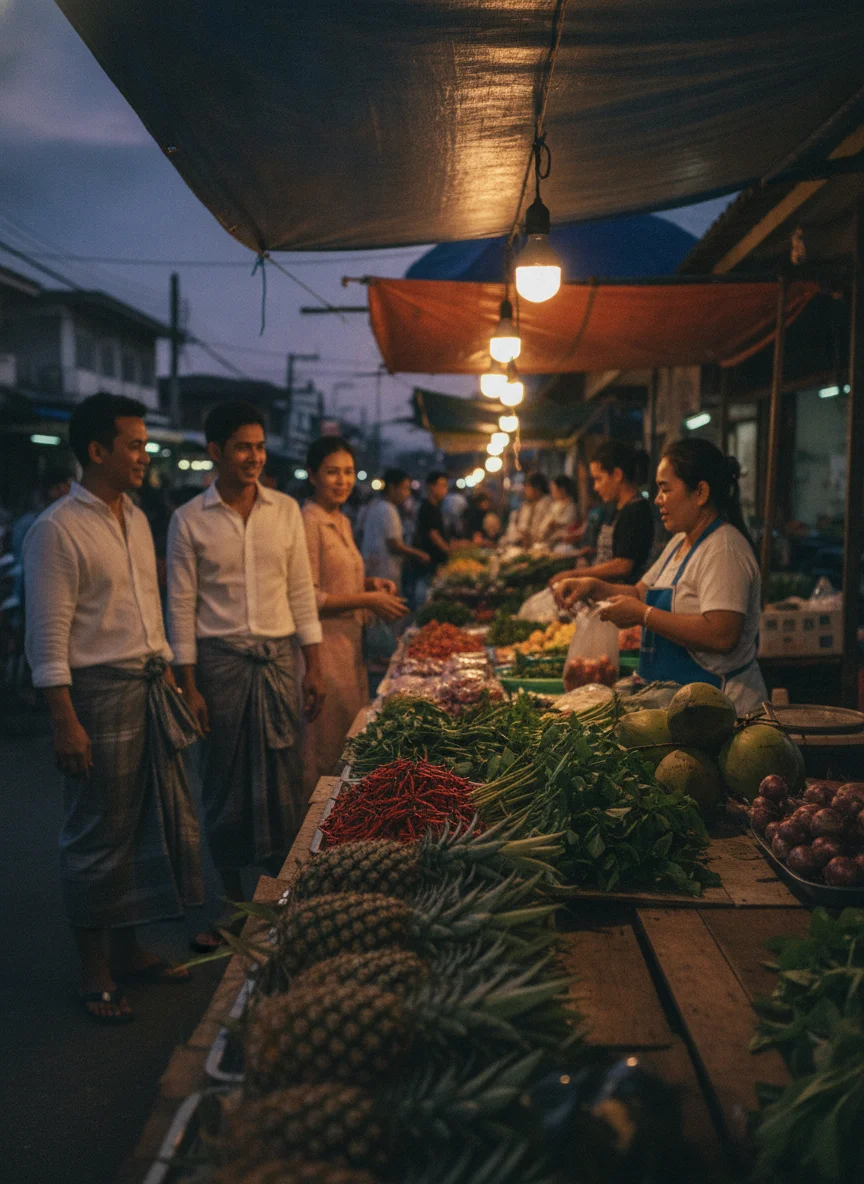
Dining in Thap Sakae is a rustic, highly flavourful experience centred around the daily catch brought in by the local fishing fleet and the fiery spices of southern Thai cuisine. The local specialty is poo ma, or blue swimmer crab, which is served steamed with a pungent, spicy green chilli and garlic dipping sauce at simple beachside shacks along Huai Yang and Thap Sakae beaches. A generous plate of these fresh crabs typically costs between 250 and 400 THB (£5.75 to £9.20), depending on the season and the daily catch. For those who appreciate bold flavours, local shophouses in the town market serve authentic southern curries like Gaeng Som, a sour and spicy fish curry infused with fresh turmeric, and Gaeng Tai Pla, a thick, dark fish viscera curry that is notoriously fiery. These dishes are traditionally accompanied by a large platter of fresh local herbs and vegetables to help cool the palate. You will also find small wooden carts along the main railway road selling local coconut-based sweets, reflecting the district's status as a major coconut-growing hub. Be sure to try the freshly baked Khanom Babin, a sweet, chewy pancake made with shredded young coconut and sticky rice flour.
Seafood lovers and culinary adventurers will find Thap Sakae's unpretentious eateries to be both exceptionally cheap and incredibly authentic.
Accommodation Options and Coastal Retreats
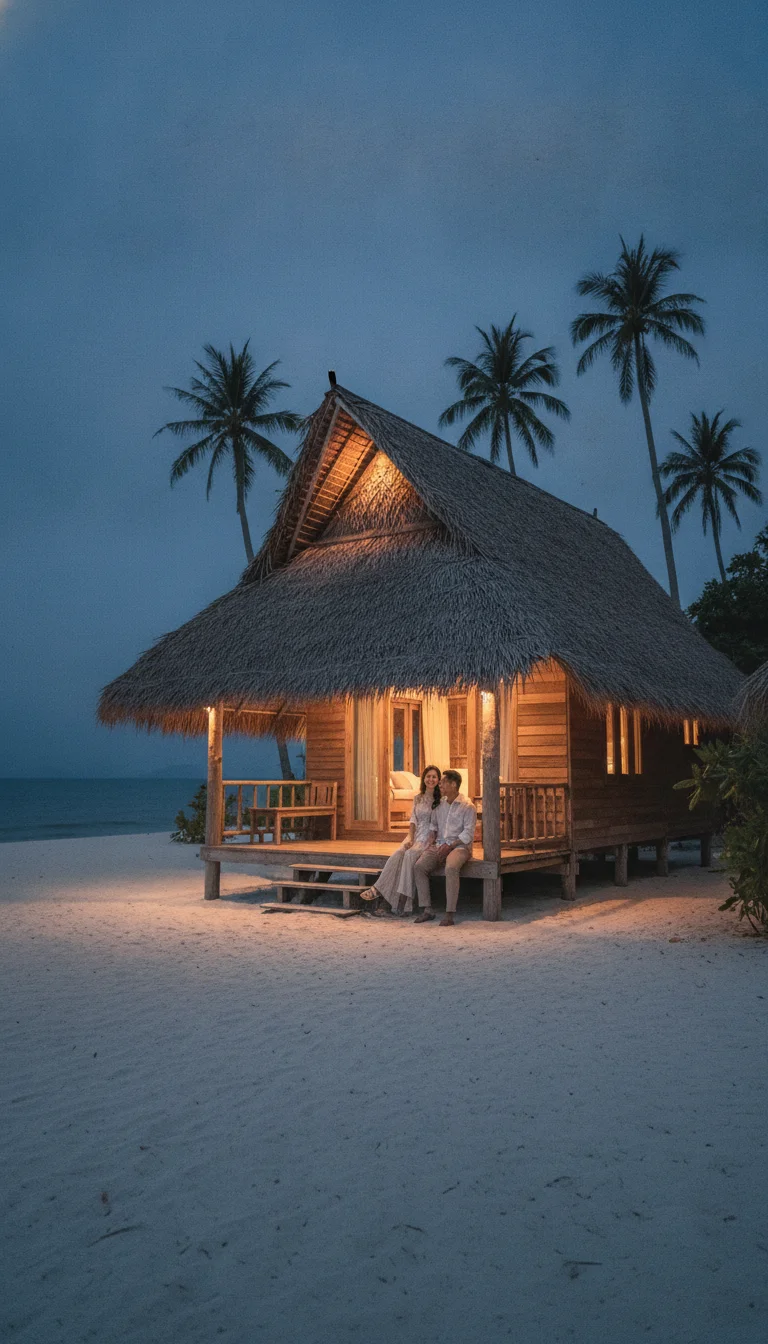
The accommodation landscape in Thap Sakae is split between simple, family-run town homestays and low-key beachfront resorts that offer excellent value for money. Near the railway station and the central market, you will find basic guesthouses catering to independent backpackers and transit travellers, with clean fan rooms starting from as little as 300 THB (£6.90) per night. These budget spots are ideal for those who want to be close to local food stalls and transport links. For a more comfortable experience, the coastal road features several mid-range properties, such as the well-regarded Sunshine Paradise Resort, which offers beachfront villas, private plunge pools, and kayak rentals. Rates at these coastal resorts typically range from 1,500 to 3,500 THB (£34.50 to £80.50) per night, representing a fraction of the cost of equivalent accommodations in Hua Hin or Phuket. Many of these properties provide complimentary bicycles, allowing you to explore the flat coastal lanes at your own leisure. There are no large-scale international chain hotels here, ensuring that your accommodation expenditure directly supports local business owners and their families.
Whether you choose a simple town-centre room or a beachfront villa, you will receive warm hospitality and genuine value.
Coastal Exploration and Outdoor Activities
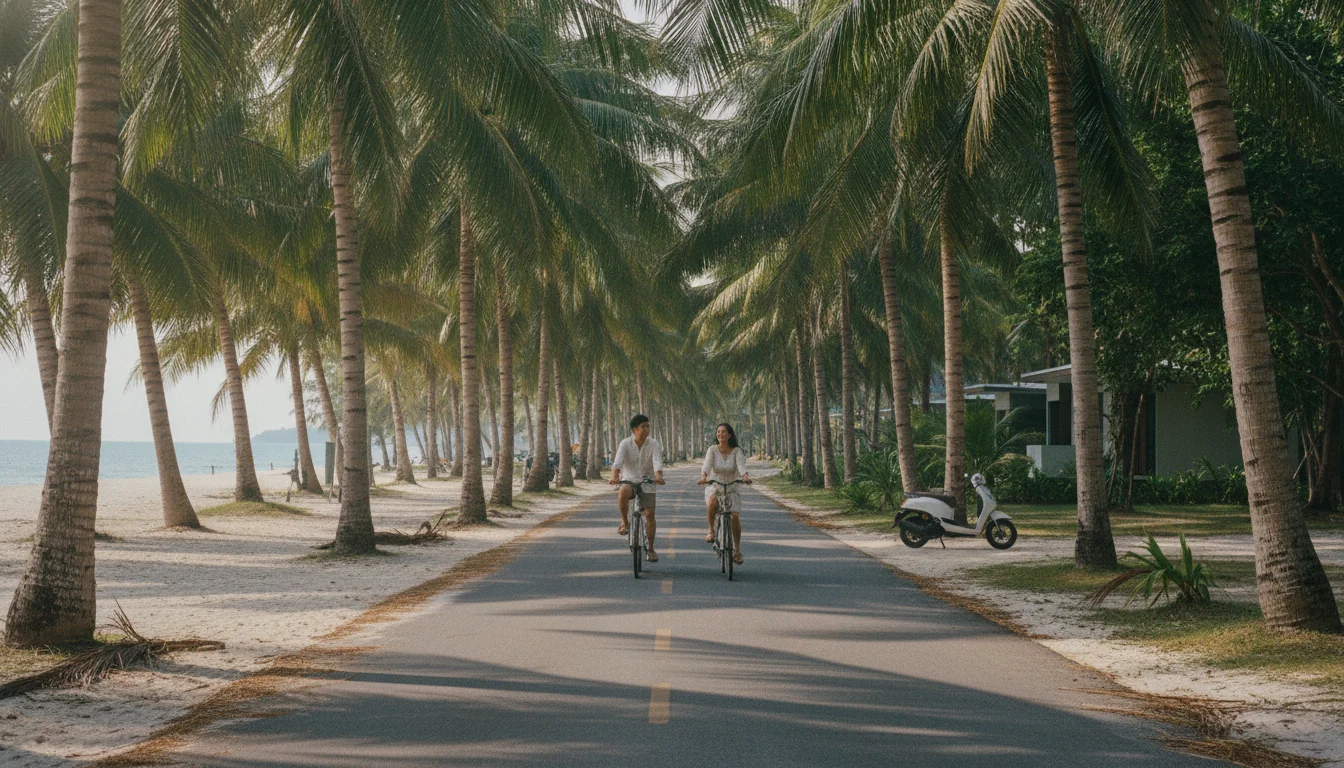
Outdoor activities in Thap Sakae focus on slow-paced exploration of the natural environment and the traditional agricultural landscape. Cycling is one of the best ways to experience the area, with flat, well-paved country roads winding through endless coconut plantations and quiet fishing hamlets. You can easily rent a basic bicycle from your guesthouse or hire a scooter from a town rental shop for around 250 THB (£5.75) per day. A popular route takes you north towards Huai Yang Waterfall National Park, located about twenty kilometres away, where a multi-tiered cascade offers cool freshwater pools for swimming amid lush jungle foliage. Alternatively, you can head south along the coast to explore the quiet fishing village of Ban Krut, known for its hilltop golden temple, Wat Tang Sai, which provides panoramic views of the entire coastline. For those interested in local industries, several family-run coconut processing yards welcome visitors, offering a fascinating look at how coconuts are harvested, husked, and processed into oil and milk. These activities provide a wholesome, self-guided travel experience far removed from the structured excursions of major tourist resorts.
Renting a scooter or bicycle gives you total freedom to discover waterfalls, hilltop temples, and quiet fishing coves at your own pace.
| Activity / Attraction | Estimated Cost (THB) | Estimated Cost (GBP) | Best Time to Visit | Key Highlights |
|---|---|---|---|---|
| Wanakon National Park Entrance | 100 THB | £2.30 | 08:00 - 16:30 | Seven-kilometre pine-fringed beach, birdwatching, coastal walks |
| Koh Talu Snorkeling Trip | 1,200 THB | £27.60 | 08:30 - 15:00 | Shallow coral reefs, sea turtle conservation project, lunch included |
| Scooter Rental (Per Day) | 250 THB | £5.75 | Daily | Total freedom to explore coastal roads, plantations, and waterfalls |
| Wat Tang Sai Temple Visit | Free (Donations welcome) | Free | 07:00 - 17:00 | Panoramic hilltop views of Ban Krut, striking golden architecture |
| Huai Yang Waterfall Entry | 100 THB | £2.30 | 08:30 - 16:30 | Multi-tiered forest waterfall, freshwater swimming pools, hiking trails |
Getting There and Getting Around
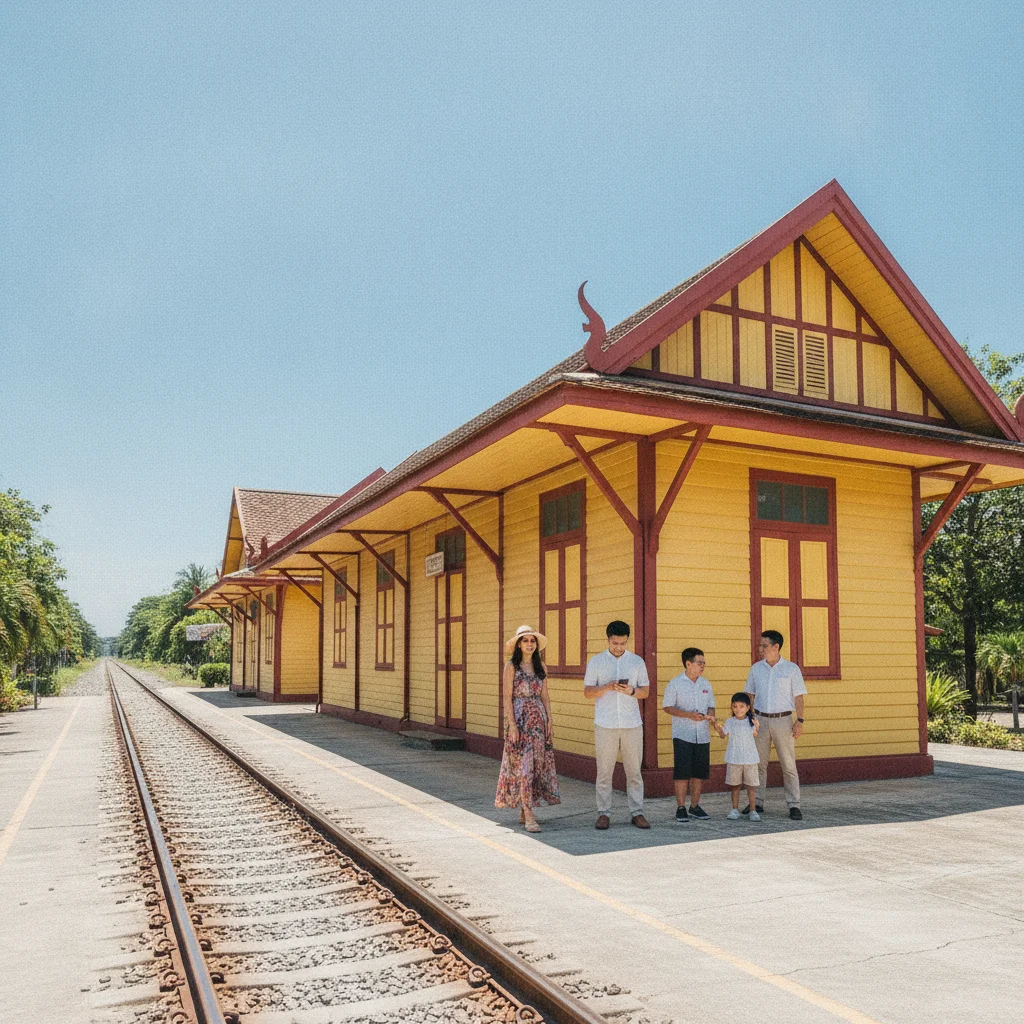
Reaching Thap Sakae from Bangkok is a straightforward and highly scenic journey that highlights the transitioning landscape of southern Thailand. The most authentic option is the Southern Line train departing from Bangkok's Krung General Terminal, with several daily departures stopping at Thap Sakae Station. A ticket for a rapid or express train in a second-class air-conditioned carriage costs approximately 300 to 450 THB (£6.90 to £10.35), taking around five to six hours. Alternatively, regular air-conditioned coaches depart from Bangkok's Southern Bus Terminal (Sai Tai Mai), costing about 280 THB (£6.45) for a one-way trip of approximately five hours. Once you arrive at the town station, local transport is delightfully low-tech. You can hire a local motorbike sidecar, known locally as a saleng, to transport you and your luggage to your beachfront accommodation for about 100 to 150 THB (£2.30 to £3.45). There are no app-based ride-hailing services like Grab operating here, making scooter rentals or simple walking the primary ways to navigate the town.
Costs and Budgeting
Thap Sakae is exceptionally pocket-friendly, offering some of the lowest travel costs along the entire Gulf coast of Thailand. Because the town does not cater to high-end luxury tourism, prices for food, lodging, and transport reflect local southern Thai realities. A budget traveller can easily get by on 800 THB (£18.40) per day, covering a basic fan room, street food meals, and a couple of cold beers. Mid-range travellers can expect to spend around 1,800 to 2,500 THB (£41.40 to £57.50) daily, which secures an air-conditioned beachfront resort room, fresh seafood dinners, and scooter rental. Comfortable, higher-end travel, including private pool villas and organized boat excursions, rarely exceeds 4,500 THB (£103.50) per day. The value here is outstanding compared to major holiday destinations, as you will pay local prices for virtually everything you consume.
| Expense Item | Budget Cost (THB) | Mid-Range Cost (THB) | Notes |
|---|---|---|---|
| Accommodation (Per Night) | 300 - 500 THB | 1,200 - 2,200 THB | Budget: local guesthouse near railway. Mid-range: beachfront resort. |
| Daily Meals (Three meals) | 150 - 250 THB | 400 - 800 THB | Budget: market stalls and curries. Mid-range: fresh seafood dinners. |
| Local Transport (Per Day) | 100 THB | 250 - 350 THB | Budget: walking or local saleng. Mid-range: daily scooter rental with fuel. |
| Activities & Attractions | Free - 100 THB | 300 - 1,200 THB | Budget: temple visits and beaches. Mid-range: national parks and boat trips. |
| Drinks & Sundries | 80 - 150 THB | 200 - 400 THB | Budget: convenience store drinks. Mid-range: beachside bar beers and juices. |
Who It Suits
Thap Sakae is tailor-made for independent backpackers, slow-travel retirees, and digital nomads who appreciate peace, nature, and cultural authenticity. If you enjoy empty beaches, local markets, and riding a scooter along quiet country roads, this destination will suit you perfectly. However, it is not the right choice for holidaymakers seeking lively nightlife, western shopping malls, or structured family entertainment complexes. There are no beach parties, jet-skis, or fine-dining establishments here. It appeals directly to travellers who want to step off the rapid transit route and slow down to the natural rhythm of coastal Thai life.
What to Know Before You Go
Planning a successful visit to Thap Sakae requires keeping a few specific regional realities in mind before you pack your bags. First, cash is king in this district, with very few establishments accepting international credit cards outside of the larger beachfront resorts. You must ensure you carry sufficient Thai Baht, as local ATMs are concentrated in the main town centre and can occasionally run out of cash during public holiday weekends. Second, English is not widely spoken outside of resort receptions, meaning a translation app or a few basic Thai phrases will prove invaluable during your stay. Third, the railway schedule dictates the daily rhythm of the town, so checking train times in advance is crucial if you plan to arrive or depart by rail. Lastly, the sandflies on some of the quieter, undeveloped beaches can be highly active during the early morning and late afternoon. Applying a high-quality local insect repellent or coconut oil is essential to protect your skin while enjoying the empty shoreline.
Practical Tips
Pack a bottle of pure coconut oil for beach days
Applying this to your skin is the most effective local method for preventing itchy sandfly bites while relaxing on the sand.
Visit the morning market near the railway line before eight o'clock
This is when the market is liveliest, offering the freshest local fruits and delicious, cheap breakfast snacks.
Keep a light rain jacket in your scooter seat
The proximity to the Tenasserim mountain range means sudden, brief rain showers can occur even during the dry season.
Carry a small flashlight when walking along the beach at night
Many stretches of the shoreline have no artificial lighting, making it easy to lose your footing on driftwood or rocks.
Plan your fuel stops along the main highway
The smaller coastal lanes do not have large petrol stations, meaning you will need to rely on local hand-cranked fuel drums if you run low.
Book your train tickets several days in advance
Second-class sleeper berths on the Southern Line sell out quickly, particularly during the peak travel months from December to February.
Dress respectfully when visiting Wat Huai Leuk temple
This is an active place of worship for the local community, requiring you to cover your shoulders and knees before entering.
Secure your scooter rental directly through your guesthouse
Local owners are highly protective of their vehicles, and renting through your accommodation ensures a reliable transaction without the risk of passport scams.
Quick Reference Table
| Item | Detail | Notes |
|---|---|---|
| Location Name | Thap Sakae | Coastal district in Prachuap Khiri Khan |
| Province | Prachuap Khiri Khan | Central-Southern Thailand |
| Region | Southern Gulf Coast | Sits on the narrowest strip of Thailand |
| Nearest Major City | Prachuap Khiri Khan Town | Located 50 kilometres to the north |
| Nearest Airport | Hua Hin Airport (HHQ) | Approx. 140 kilometres north; limited flights |
| Distance from Bangkok | 320 kilometres | Roughly 4.5 to 5 hours by road or rail |
| Typical Visit Duration | 3 to 5 days | Ideal for slow travel and relaxation |
| Best Time to Visit | November to February | Dry, cooler weather with calm sea conditions |
| Average Daily Budget | 1,500 THB (£34.50) | Mid-range estimate including meals and scooter |
| Currency Accepted | Thai Baht (THB) | Cash is highly preferred in local shops |
| Primary Transport | Motorbike sidecar (Saleng), Scooter | Best rented locally for daily exploration |
| Notable Landmarks | Wat Huai Leuk, Wanakon National Park | Teakwood temple and pristine pine-fringed beach |