Songthaews / Local Transport
Operating as the primary mode of provincial transit across Thailand, songthaews are modified pick-up trucks equipped with twin bench seats that carry millions of commuters daily for as little as 10 THB (£0.22) per ride. Master the unspoken rules of flagging, route confirmation, and roadside payment to unlock the most cost-effective ground transport system in Southeast Asia.
Songthaews—literally translating to "two rows" in Thai—are semi-flexible passenger pick-up trucks managed by local transport guilds, municipal concessionaires, and private operators across every province in Thailand. They fill the crucial transit gap between fixed city bus networks and expensive private road taxis, providing reliable shared connections along fixed urban corridors and rural highways. The service caters best to budget travellers, island hoppers, solo backpackers, and commuters comfortable with open-air seating and informal stop requests. While songthaews lack air conditioning and scheduled timetables, they deliver an affordable, practical transport solution for moving between transport hubs, coastal beaches, and town centres outside Bangkok.

Regional Hubs and Vehicle Networks
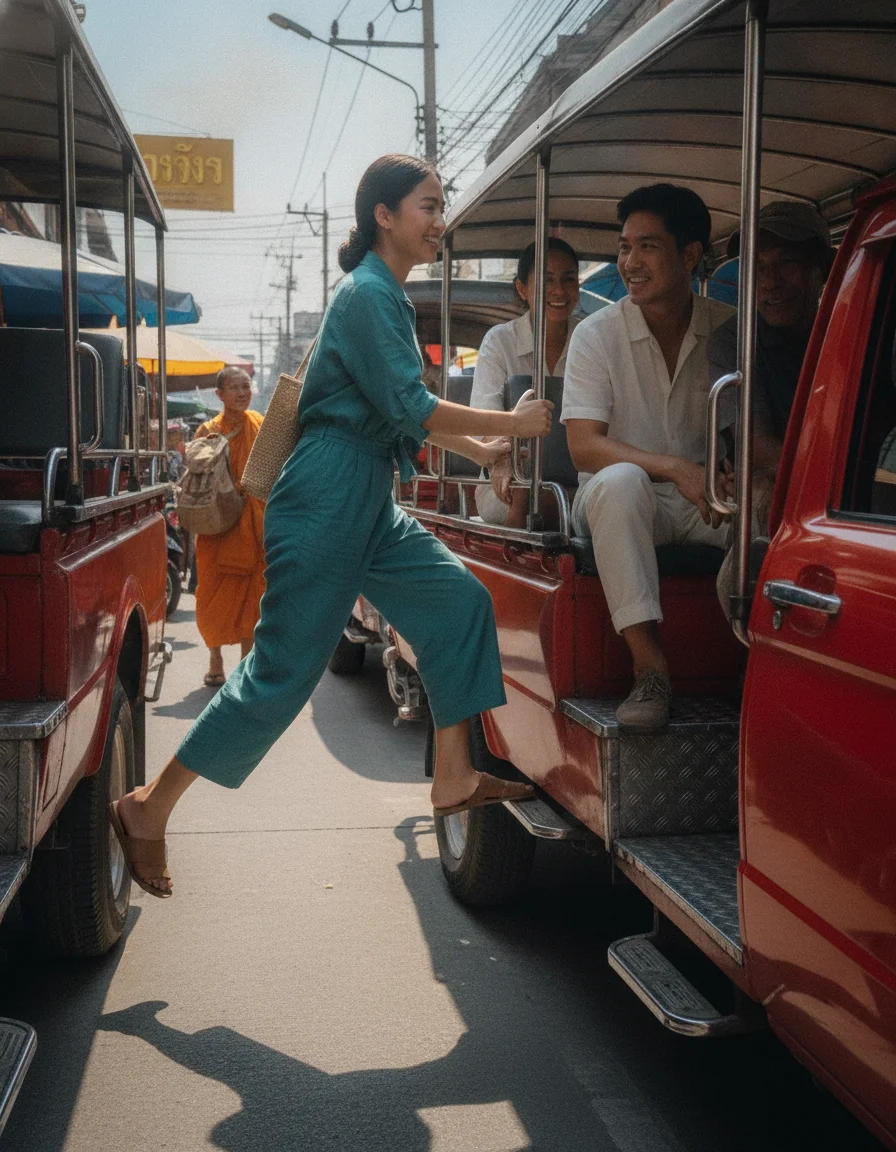
Every major tourist region in Thailand adapts the fundamental songthaew vehicle concept to fit local geography, municipal regulations, and colour-coded transit lines. In northern Chiang Mai, the iconic scarlet-painted Rod Daeng acts as a hybrid between a shared hailing taxi and a flexible bus across the historic center, complemented by distinct outer-district trucks departing from Warorot Market. Coastal Pattaya relies on dark blue trucks that travel continuous circular loops along Beach Road and Second Road to move visitors along the main promenade. Hua Hin operates a disciplined colour system where green vehicles run from Khao Takiab to the northern airport, white trucks serve the royal palace bypass roads, and red trucks cover inner residential districts. Down in Phuket, large blue wooden songthaews known locally as Po Thong depart from Ranong Road market in Phuket Town, carrying beachgoers to western shores like Patong, Kata, and Karon. Recognising the correct truck shade and front destination board prevents boarding the wrong route in multi-line transit hubs.
Operational Dynamics and Route Systems
Fixed-route songthaews follow predefined arterial roads, whereas shared-charter variants adapt their exact trajectory based on passenger drop-off requests. Fixed vehicles display their primary destinations in Thai text—and occasionally English—on the front roof box and side panels, operating very much like regular city buses. Drivers operating dynamic shared services, such as Chiang Mai's red trucks, accept passengers travelling in the same general cardinal direction, continually recalculating their drop-off order as new riders hop aboard. If you request a drop-off far outside the driver's current zone, they will either decline the ride or quote a private charter rate to take you directly to your location. Chartering an entire songthaew converts the vehicle into a private taxi, granting exclusive use of the rear bench bay for a pre-negotiated flat price.
| Vehicle Type | Route Structure | Capacity | Typical City Fare (THB / GBP) |
|---|---|---|---|
| Songthaew | Fixed corridor or shared directional | 8–16 passengers | 10–50 THB (£0.22–£1.11) |
| Tuk-Tuk | Direct private charter only | 2–3 passengers | 100–300 THB (£2.22–£6.67) |
| Metered Taxi | Direct private hire via meter | 1–4 passengers | 50–200 THB (£1.11–£4.44) |
| Grab / Bolt App | App-based point-to-point | 1–4 passengers | 80–350 THB (£1.78–£7.78) |
Shared songthaew routes maintain low, regulated pricing regardless of dynamic traffic conditions along the city corridor.
Plan a journey along Thailand’s Andaman coast, with practical guidance on island gateways, marine parks, diving, ferries and monsoon travel.
The Boarding and Riding Process
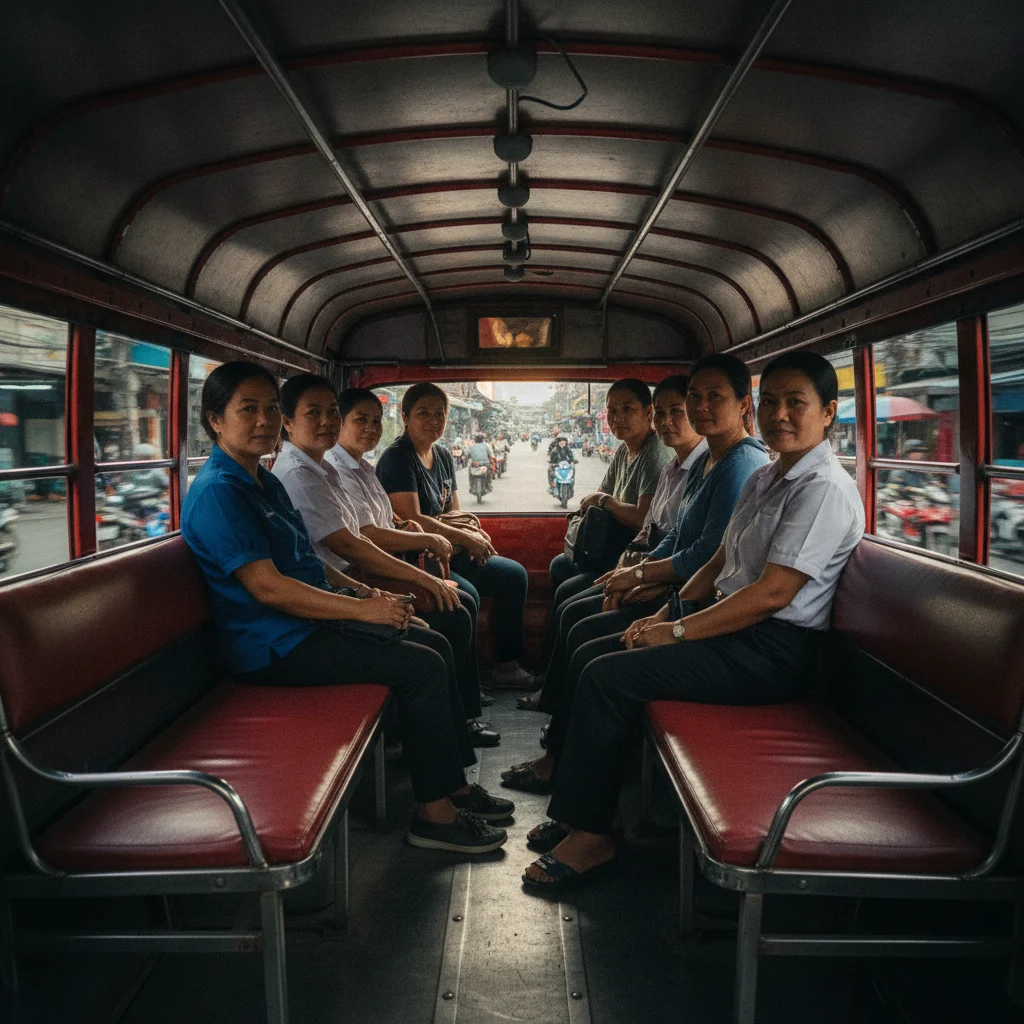
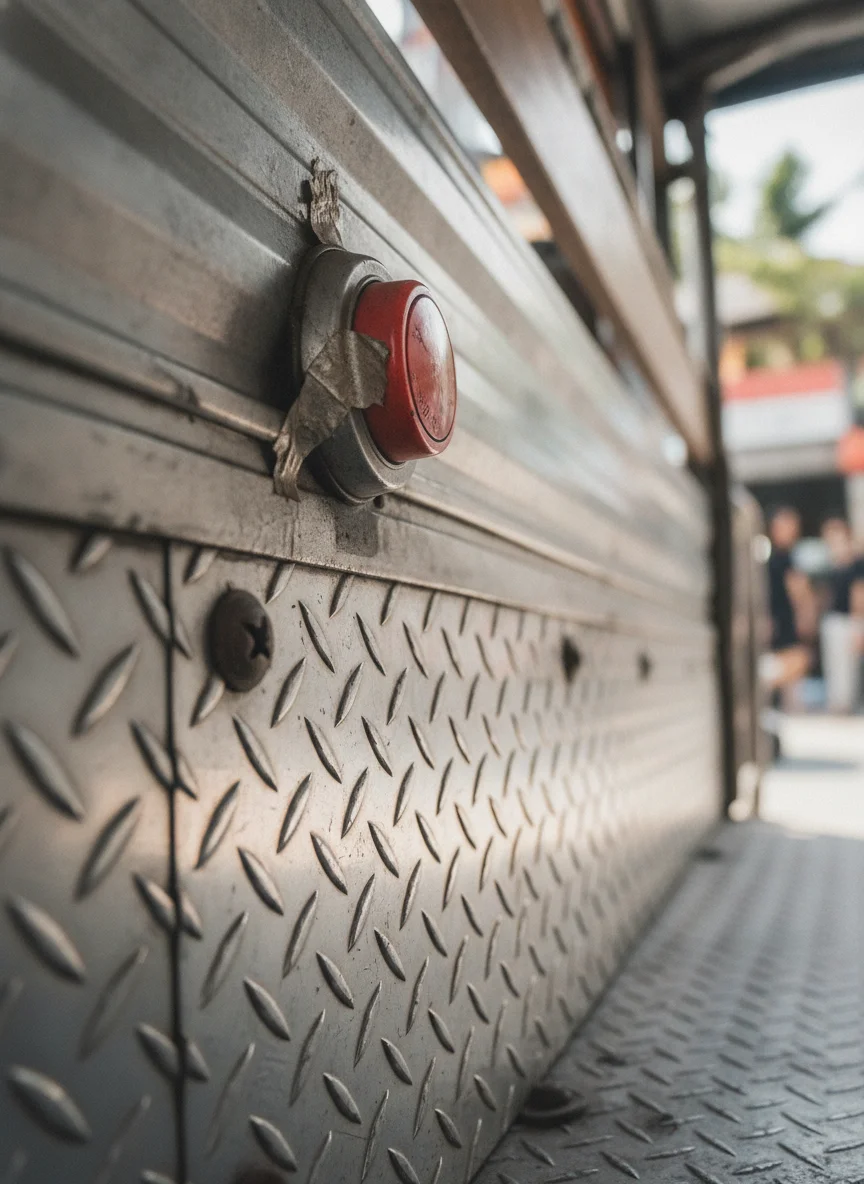
Flagging down an approaching songthaew requires extending your arm downward toward the roadside with your palm facing the tarmac rather than waving wildly in the air. Once the vehicle slows and pulls up to the curb, walk to the passenger-side window to state your destination before stepping aboard if the truck is running an open directional service. On strict fixed routes like Pattaya's beach loop or Phuket's beach commuters, you simply board via the rear footboard and take a bench seat without speaking to the driver at all. Mind your head on the low metal ceiling frame as you enter, and slide forward toward the cab to make room for incoming commuters when seats fill up. When your destination approaches, press one of the electric buzzer buttons mounted along the interior roof lining to sound the driver's signal. The truck will pull over at the nearest safe roadside clearing to let you alight.
Fare Structures and Payment Etiquette
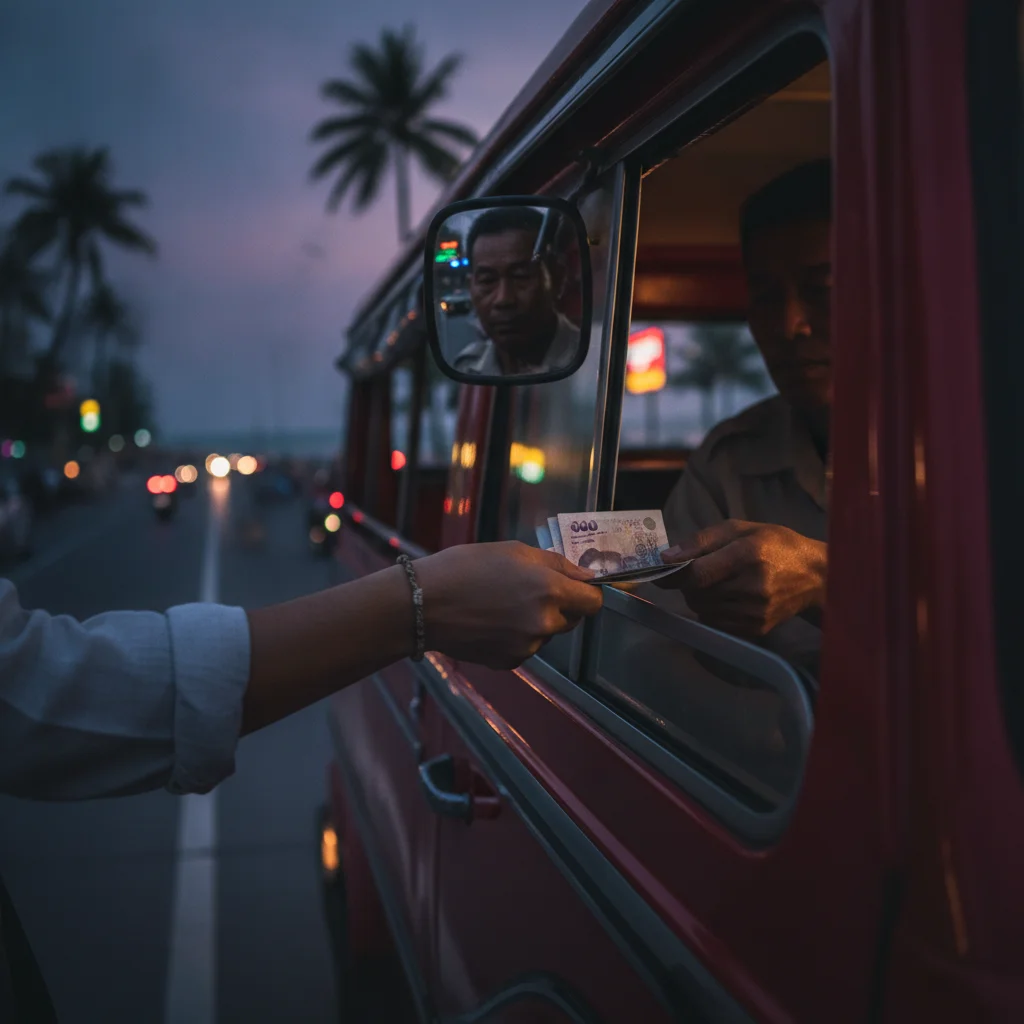
Standard fixed-route songthaew fares remain low and are paid strictly in cash after you step out of the vehicle at your destination. Passengers exit via the rear step plate, walk up to the front passenger cab window, and hand the exact cash fare directly to the driver before walking away. Standard inner-city hops cost between 10 THB (£0.22) and 30 THB (£0.67), while longer inter-district journeys like Phuket Town to Patong Beach cost between 40 THB (£0.89) and 50 THB (£1.11). Never offer payment before boarding unless you are negotiating an all-day private charter with an agreed fixed price. Carrying small-denomination currency like 20 THB notes and 10 THB coins prevents unnecessary payment delays or change disputes at the passenger window.
Songthaews vs Alternative Road Transit
Songthaews offer substantial cost savings when compared to private tuk-tuks, metered taxis, and smartphone ride-hailing services like Grab or Bolt across regional provinces. Tuk-tuks target tourists heavily in resort areas like Phuket and Hua Hin, often demanding 200 THB to 400 THB (£4.44–£8.89) for short journeys that a songthaew completes for 20 THB (£0.44). Metered taxis remain rare outside Bangkok and regional airport ranks, leaving travellers reliant on high app fares during peak traffic hours. Grab and Bolt offer private air-conditioned comfort and exact GPS tracking, but prices surge significantly during rainstorms or holiday weekends. Songthaews hold steady fixed rates regardless of rush-hour congestion, making them the most sustainable daily transport choice for budget-conscious visitors. Utilising shared trucks keeps total trip expenditure low while integrating you directly into the daily local rhythm of Thai travel.
Locating Main Terminals and Primary Routes
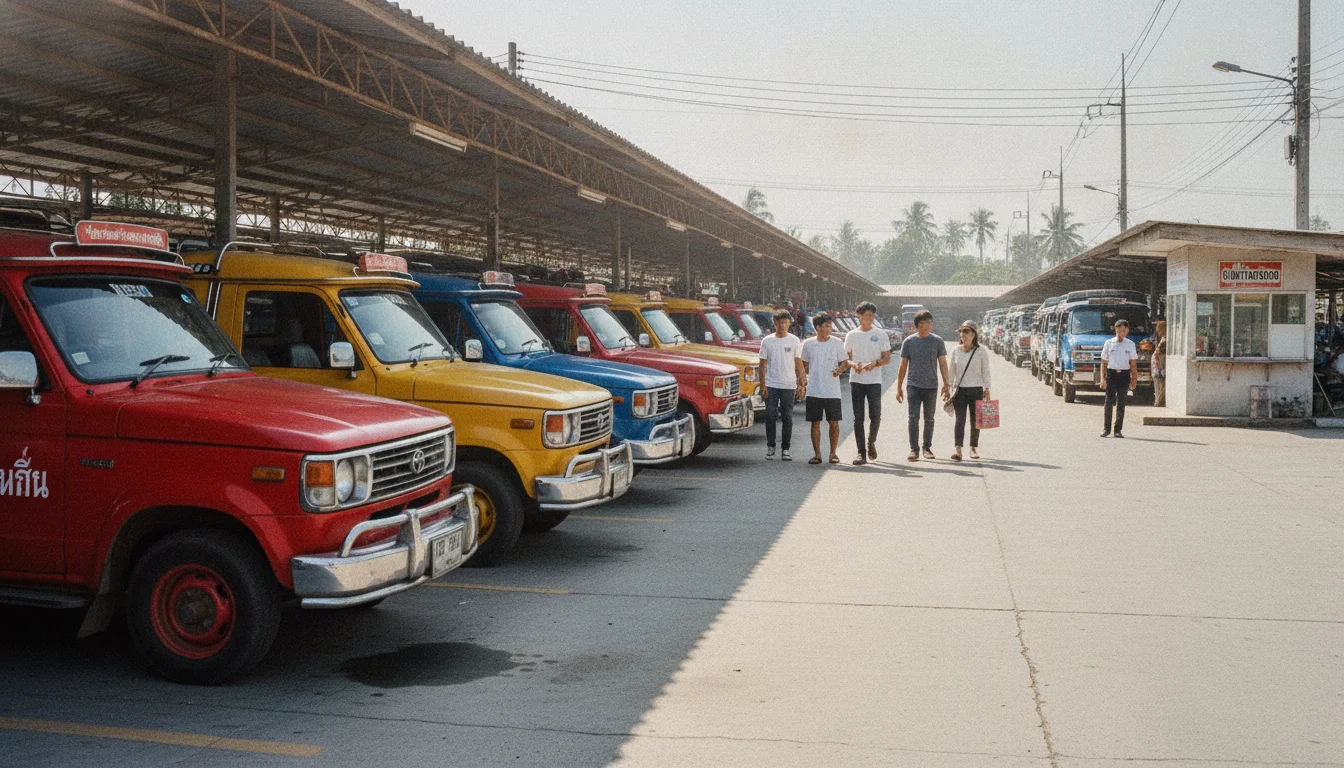
Finding regional songthaew terminals requires locating central fresh markets, municipal clock towers, and primary bus stations in each destination town. In Chiang Mai, outer-district songthaews gather outside Warorot Market alongside the Ping River, located 1.5 kilometres east of the Old City moat. Pattaya's main loop trucks operate continuously around the Beach Road and Second Road loop, reachable within minutes from any downtown hotel. Phuket's regional island songthaews anchor along Ranong Road near the Central Market, situated 33 kilometres south of Phuket International Airport. A taxi from Phuket Airport to the Ranong Road market costs roughly 650 THB (£14.44) and takes 45 minutes, where you can board beach-bound trucks for 40 THB (£0.89). Main regional depots feature stationary vehicles with painted side boards detailing major route stops in both English and Thai.
Pricing Patterns and Private Charter Rates
Songthaew pricing operates on predictable tiers based on whether you board a public shared route or hire the whole vehicle as a private charter. Shared public route fares range from 10 THB (£0.22) for short town loops up to 80 THB (£1.78) for steep mountain routes like Chiang Mai to Wat Phra That Doi Suthep. Private charters require clear fare bargaining with the driver before stepping onto the rear footboard. Chartering an entire truck for a single direct town ride typically costs 150 THB (£3.33) to 300 THB (£6.67), whereas full-day private hires range between 1,200 THB (£26.67) and 2,000 THB (£44.44) depending on mountain inclines and fuel requirements. Shared fares stay identical across high and low tourist seasons, though drivers may ask for higher private charter fees during busy holiday periods like Songkran.
| Option | Cost (THB) | Cost (GBP approx) | Notes |
|---|---|---|---|
| City Short Hop (Fixed Route) | 10–20 THB | £0.22–£0.44 | Standard flat fare in Pattaya, Hua Hin, and downtown Chiang Mai |
| Inter-District Route | 30–50 THB | £0.67–£1.11 | Connects major town centers to outlying beaches or attractions |
| Mountain / Rural Route | 50–80 THB | £1.11–£1.78 | Covers steep climbs such as Doi Suthep or island interior passes |
| Private Town Charter | 150–300 THB | £3.33–£6.67 | Exclusive hire for direct point-to-point city journeys |
| Full-Day Private Charter | 1,200–2,000 THB | £26.67–£44.44 | Covers custom day-long itineraries with driver and fuel included |
Suitability for Overseas Visitors
Songthaews cater exceptionally well to budget travellers, solo backpackers, island hoppers, and active couples looking to control daily local transit expenses. They offer an open-air, authentic perspective on local daily travel that closed private cars cannot replicate. However, songthaews are poorly suited for travellers with limited physical mobility due to high rear entry steps and narrow footboards. Families travelling with large suitcases, double buggies, or young infants will find the crowded bench seating difficult during morning commuter hours. Time-sensitive travellers heading to airports or train stations should select private taxis or ride-hailing apps instead, as shared trucks make frequent pickup stops along the road.
What to Know Before You Board
Avoid asking the driver for the price before boarding on standard fixed-route loops like Pattaya or Hua Hin. Inquiring about the fare signals that you are an inexperienced tourist, which may cause the driver to demand a full private charter price upon arrival.
Regional songthaew routes in coastal and island destinations usually stop running early in the evening. Most island songthaews wrap up operations around 18:00, leaving late-night commuters dependent on costlier tuk-tuks or Grab rides.
Hold firmly onto the metal roof handrails during sudden acceleration and sharp turns along mountain roads. Songthaew driving styles can be assertive, and open rear passenger compartments lack seatbelts or safety harnesses.
Carry exact physical cash in small notes and coins to hand through the cab window upon drop-off. Drivers rarely carry enough change for 500 THB or 1,000 THB notes during early morning shifts.
Essential Practical Tips for Songthaew Passengers
Carry plenty of 10 THB coins and 20 THB paper notes in your wallet. Having exact currency ensures a fast drop-off process and avoids awkward change delays at the cab window.
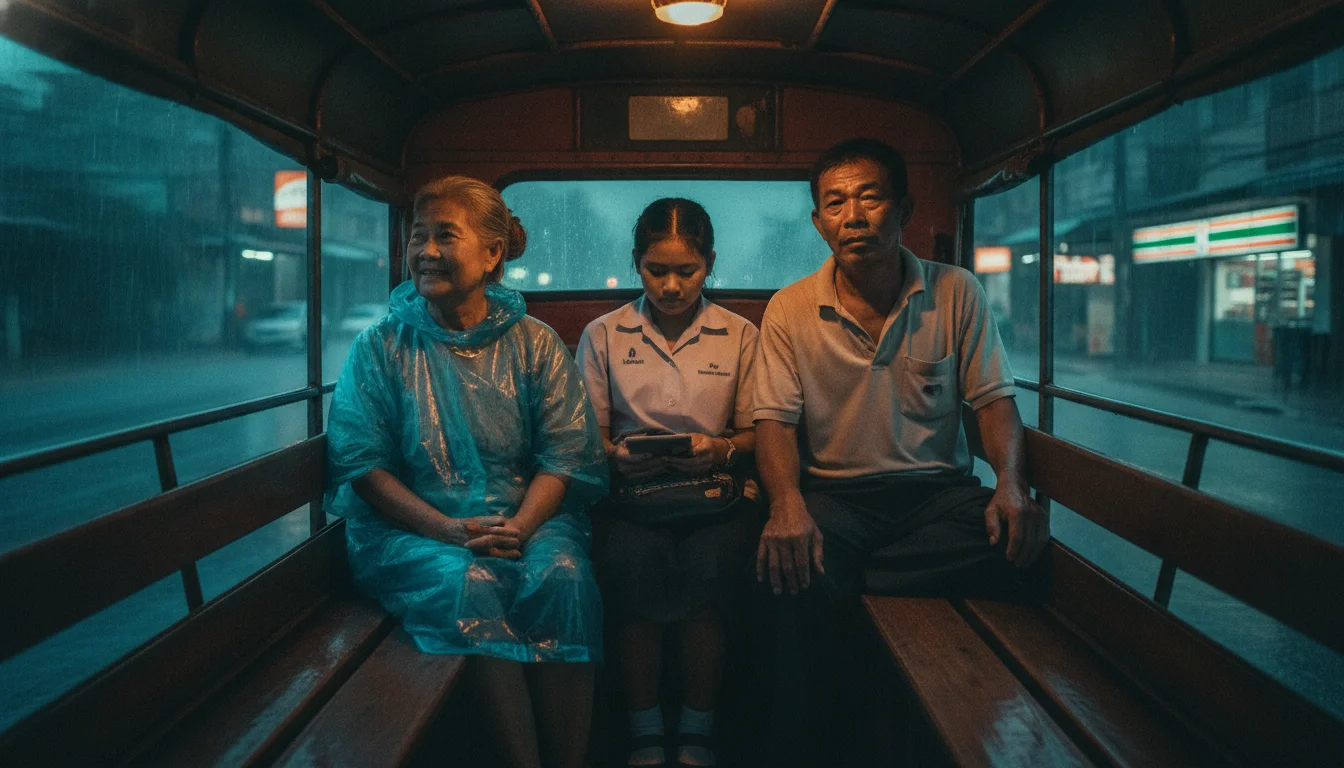
Track your location live on an offline smartphone map while moving down the route. Drivers do not announce individual stop names, so tracking GPS allows you to hit the ceiling buzzer button at the correct intersection.
Move down toward the front cab bulkhead when new commuters step onto the rear board. Keeping the entrance clear makes boarding and exiting easier for everyone during peak hours.
Sit firmly on the interior bench seats rather than perching on the back step plate while travelling. Standing on the outer rear platform should only occur when interior seats are completely full and you have a firm two-handed grip on the frame.
Keep large backpacks on your lap or under the bench seats during busy periods. Keeping the floor channel clear ensures other passengers can step in and out without tripping over bags.
Check the vehicle side paint and windshield signs before stepping into trucks at major transport depots. Outer provincial trucks often park next to each other at central markets but travel toward entirely different rural districts.
Press the roof buzzer button roughly 50 metres before your desired drop-off point. Giving the driver advance notice permits a gentle, safe pull-in along busy roadside shoulders.
Quick Reference Guide
| Item | Detail | Notes |
|---|---|---|
| Vehicle Type | Shared Pick-Up Truck Taxi | Converted Toyota or Isuzu pick-up with rear bench seats |
| Common Names | Songthaew, Rod Daeng, Baht Bus, Po Thong | Terminology varies by region and vehicle design |
| Operating Hours | 06:00 – 18:00 typical (Pattaya operates 24/7) | Island routes stop early in the evening |
| Average Urban Fare | 10 THB – 30 THB (£0.22 – £0.67) | Standard rate for short municipal loops |
| Average Beach / Rural Fare | 40 THB – 80 THB (£0.89 – £1.78) | Applies to long inter-district routes |
| Payment Method | Physical cash only | Paid directly to driver upon drop-off |
| Air Conditioning | None | Open-air rear bay with overhead metal canopy |
| Luggage Space | Limited | Best suited for daypacks and small hand luggage |
| Major Route Hubs | Warorot Market (Chiang Mai), Ranong Rd (Phuket) | Primary departure points for regional lines |
| Safety Features | Handrails and roof buzzers | No individual seatbelts provided |
FAQ: Songthaew
Should you ask the driver for the fare before boarding a songthaew in Thailand?
How do you pay for a songthaew ride in Thailand?
How do you flag down a songthaew in Thailand?
How do you signal a songthaew driver to stop?
Do songthaews in Thailand operate late at night?
Can you hire an entire songthaew as a private charter?
Are songthaews suitable for travellers with heavy luggage or limited mobility?
Do songthaew drivers announce upcoming stop names?
Is standing on the back platform of a songthaew allowed?
Reviewed by the Thailand Guide Editorial Team • Last reviewed: 24 July 2026
This page provides general information only and is not financial, legal, or immigration advice. Always verify current rules with official Thai government sources or a qualified professional before making decisions.