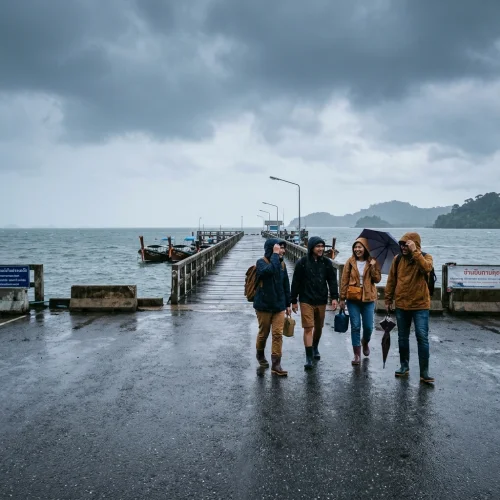
The Thai Meteorological Department has issued a weather warning forecasting heavy rainfall and strong wind gusts across 15 provinces on 21 October 2026.
The unsettled weather is caused by a monsoon trough positioned over the Gulf of Thailand and the lower southern provinces, combined with a high-pressure system advancing from China over upper northern and north-eastern Thailand. This pressure dynamic is drawing moisture from the South China Sea into the lower central plains, eastern provinces, and Bangkok. For British citizens living in or relocating to Thailand, this seasonal change impacts daily transport, residential maintenance, and travel across the country.
Bangkok and the Central Plains
Bangkok faces isolated thundershowers and sudden wind gusts throughout the day. Minimum temperatures remain between 26°C and 27°C, with daytime highs reaching between 33°C and 35°C. Southeasterly winds are blowing at speeds between 10 and 20 kilometres per hour.
Street drainage remains the primary issue for residents in the capital. Flash flooding frequently submerges minor side streets (sois) within thirty minutes of intense downpours. Low-lying neighbourhoods, particularly along Sukhumvit, Rama IV, and Lat Phrao, often experience standing water that halts traffic and limits access to residential side streets.
In surrounding central provinces—including Phra Nakhon Si Ayutthaya, Suphan Buri, Kanchanaburi, Ratchaburi, Nakhon Pathom, Samut Sakhon, and Samut Songkhram—similar storm conditions prevail. Temperatures in these provinces range from 23°C to 36°C with easterly winds. Expatriates commuting between Bangkok and industrial zones in Samut Sakhon or Ayutthaya should prepare for prolonged road journeys during the evening peak hours.
The Eastern Seaboard
Storm activity covers eastern provinces including Chon Buri, Rayong, Chanthaburi, Trat, Nakhon Nayok, Prachin Buri, and Chachoengsao. The regional forecast indicates isolated thundershowers, wind speeds reaching up to 30 kilometres per hour, and temperatures between 23°C and 35°C.
Offshore conditions require caution. Sea waves are averaging under one metre in fair conditions but exceed two metres during thundershowers. British residents living in coastal areas such as Pattaya, Bang Saray, or Rayong must note that small leisure craft and passenger ferries to offshore islands—including Koh Lan and Koh Samet—may suspend services during squalls. High-rise apartment dwellers along the coast should secure balcony furniture to prevent damage from sudden gusts.
Southern Provinces and Coastal Islands
The southern region is experiencing the heaviest and most sustained rainfall.
On the eastern Gulf coast, scattered thundershowers and heavy downpours affect Prachuap Khiri Khan, Chumphon, Surat Thani, Nakhon Si Thammarat, Phatthalung, Songkhla, Pattani, Yala, and Narathiwat. Winds from Surat Thani northward are easterly at 15 to 30 kilometres per hour. South of Nakhon Si Thammarat, southeasterly winds blow at identical speeds. Waves exceed two metres near thundershowers.
On the western Andaman coast, rainfall covers Ranong, Phang Nga, Phuket, Krabi, Trang, and Satun. Temperatures remain between 24°C and 35°C. Marine activity faces identical hazards, with wave heights rising above two metres in stormy waters.
British expatriates based in Phuket, Krabi, or Koh Samui should monitor local weather updates closely. Landslip risks increase along hillside roadways following consecutive days of rain, particularly along the routes connecting Patong to Phuket Town, and throughout rural Koh Samui. Marine transport between islands—such as the ferry routes connecting Surat Thani, Koh Samui, Koh Phangan, and Koh Tao—may face timetable delays.
Northern and North-Eastern Regions
Upper Thailand is entering the transition into the dry, cooler season.
In the North, isolated thundershowers are largely confined to Phitsanulok, Phetchabun, and Phichit. Temperatures drop to between 21°C and 25°C at night, rising to 36°C in the afternoon. Easterly winds range from 10 to 20 kilometres per hour.
In the North-East, rain affects Nakhon Ratchasima, Buriram, Surin, Si Sa Ket, and Ubon Ratchathani. Night-time minimum temperatures sit between 23°C and 24°C, with daytime highs around 35°C under northeasterly winds.
For British retirees and remote workers in Chiang Mai, Chiang Rai, or Isaan, this period marks the gradual reduction of monsoon rains and the onset of cooler evening conditions. However, isolated storms in the lower North-East can still cause local surface flooding on secondary roads.
Transport and Commuting Advice
Road transport requires extra vigilance during the late October weather transitions.
Standing water hides road defects. Potholes on unpaved roads and broken kerbs on urban pavements become invisible beneath flooded water. British motorists driving hire cars or private vehicles must reduce speeds to prevent aquaplaning. Those using two-wheeled transport face higher risks. Riding a motorcycle during heavy rain on wet painted road markings or metal drainage covers frequently leads to loss of traction.
Public transport offers a reliable alternative during urban storms in Bangkok. The elevated railway (BTS) and underground mass transit (MRT) operate continuously regardless of surface rain, although passenger queues expand significantly at station ticket machines and platform barriers during downpours. Ride-hailing services also see extended wait times and increased fares when storms hit.
Residential and Property Considerations
Property maintenance is essential for expatriates renting or owning property in Thailand during heavy rainfall periods.
Tenants in high-rise residential flats should ensure balcony drains remain clear of debris. Blocked drains cause rainwater to back up rapidly, which can seep beneath sliding glass doors and damage internal wooden flooring. If you are absent from your apartment during work hours, keep all external windows closed firmly. Driving rain can penetrate window frames that lack watertight rubber seals.
Those living in detached houses or townhouses should inspect their perimeter walls, roof guttering, and ground-level drainage outlets. High rainfall volumes often overwhelm household soakaways, leading to water accumulation in carports and gardens. Furthermore, heavy storms occasionally trigger short electrical outages. Keeping rechargeable lighting, fully charged mobile phones, and a supply of bottled drinking water in your home helps mitigate sudden utility disruptions.
Health and Environmental Measures
Shifting weather patterns create specific health risks that newly arrived residents should manage proactively.
Standing water provides breeding sites for mosquitoes. Dengue fever cases frequently rise following late-season rains. Applying mosquito repellent containing DEET, emptying standing water from plant saucers around your home, and ensuring fly screens are fitted to open windows are sensible precautions.
The mixture of high humidity and temperatures reaching 35°C places stress on the body. Maintain adequate hydration and avoid prolonged outdoor exertion during the midday heat. When moving between air-conditioned buildings and humid outdoor air, sudden temperature variations can cause mild respiratory discomfort.
British nationals residing across Thailand should track routine updates directly from the Thai Meteorological Department via official English-language channels or local administrative announcements.
Source: thethaiger.com
Reviewed by the Thailand Guide Editorial Team • Last reviewed: 21 October 2026
This page is provided for general information only. While we aim for accuracy, details can change — please verify anything important independently before relying on it.