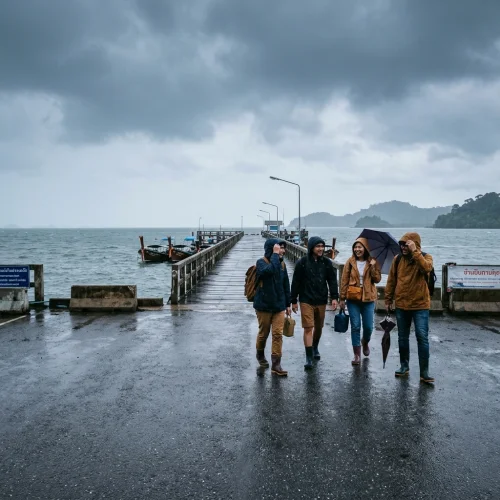
Sichon - Surat Thani
Sichon is a coastal district in northern Nakhon Si Thammarat Province, facing the Gulf of Thailand between Tha Sala and Khanom. Its visitor areas are spread out: Sichon town provides everyday services, Pak Nam Sichon is the river-mouth and fishing area, the main beach zone lies east of town, and the road north towards Khao Phlai Dam links a succession of bays, hills and viewpoints.
The district combines beaches with places of religious and archaeological interest. Wat Chedi, widely known through the local devotion to Ai Khai, attracts Thai pilgrims, while Khao Ka preserves evidence of an older Hindu religious landscape. A car or scooter makes the coast much easier to explore, as the beaches, town, temple and inland sites are not concentrated in one walkable centre.

Coastal Character and Working Harbours
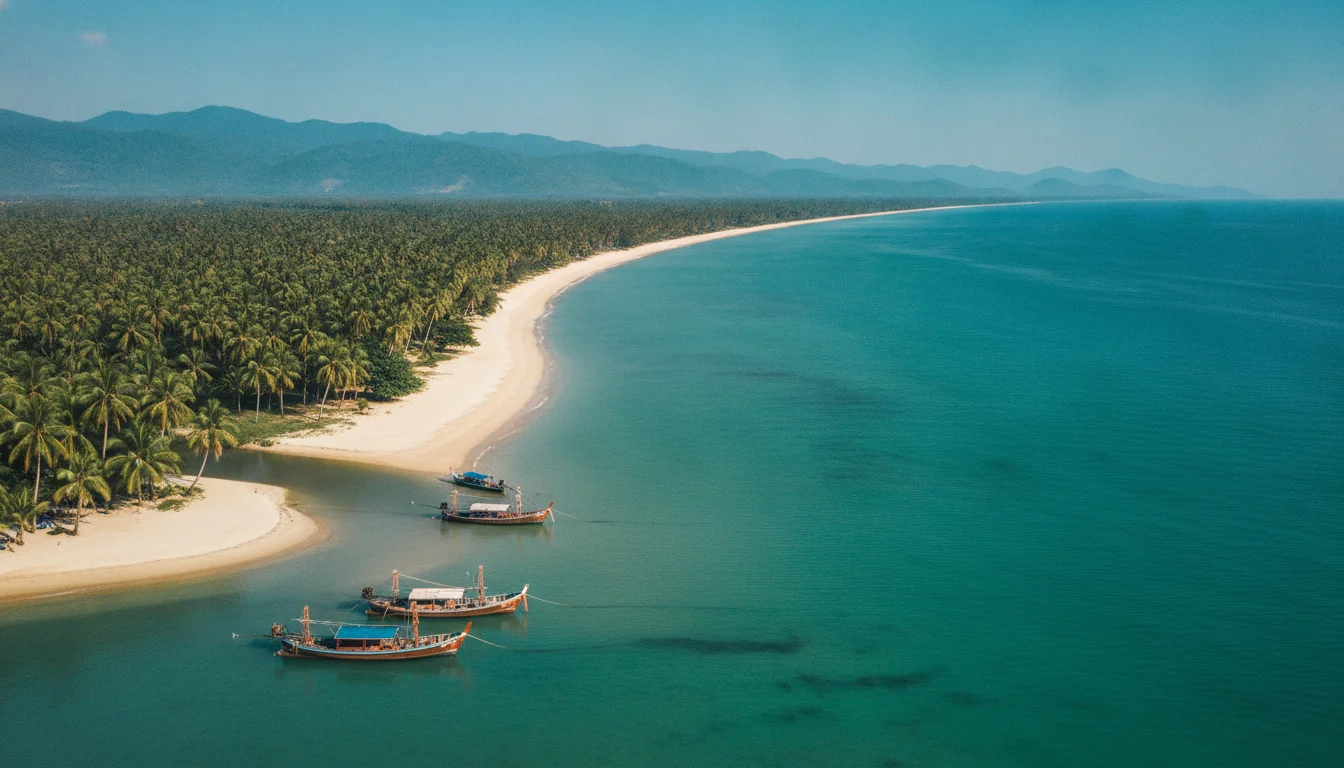
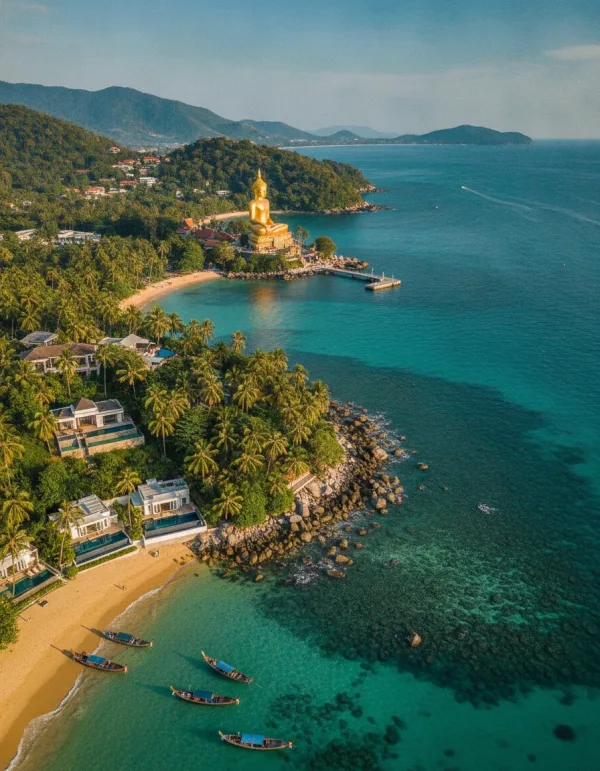
Sichon Beach, sometimes called Hua Hin Sichon locally, is the district's established seaside area. Accommodation and restaurants are available around the beach, but development is smaller in scale than in Thailand's major island resorts. The shape of the coast varies between sandy bays, rockier sections and river mouths, so conditions and facilities differ from one beach to the next.
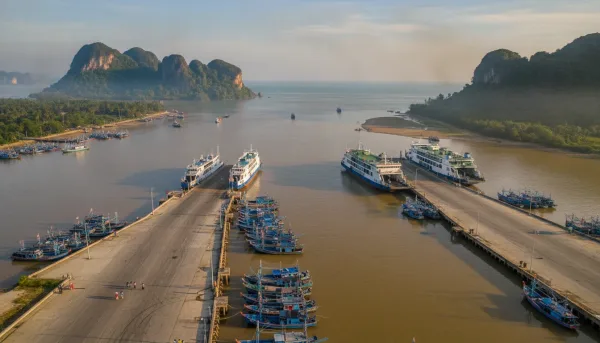
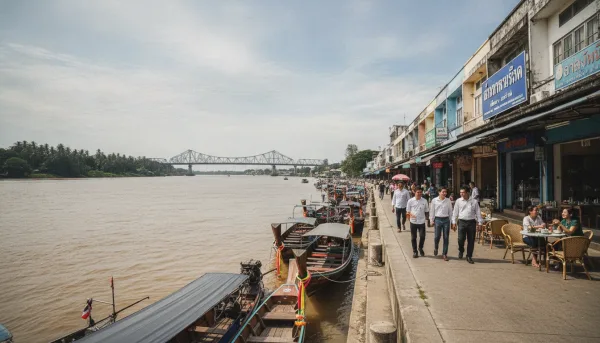
Pak Nam Sichon is connected to the district's fishing economy. Boats, landing areas and seafood restaurants form part of a working waterfront rather than a purpose-built resort promenade. Visitors should leave clear access around piers and working areas, particularly when catches are being unloaded.
Inland from the sea, Highway 401 is the main north–south road through the district. Smaller roads run east to the coast and west towards rural communities, plantations and forested hills. This dispersed layout is central to planning a visit: staying beside the beach gives convenient access to the sea, while accommodation nearer the town is better placed for shops, markets, banks and onward road transport.
The coast is exposed to changing Gulf weather. Even when the water appears calm, check local conditions before swimming and take particular care around rocks, river mouths and during rough weather. Beach facilities are not consistent across the district, and some smaller coves have little shade or visitor infrastructure.
Wat Chedi and the Ai Khai Tradition
Wat Chedi is in Chalong subdistrict, inland from Sichon's main beach area. It is commonly called Wat Chedi Ai Khai because of the devotion associated with Ai Khai, a boy spirit connected in local tradition with the revered southern monk Luang Pu Thuat.
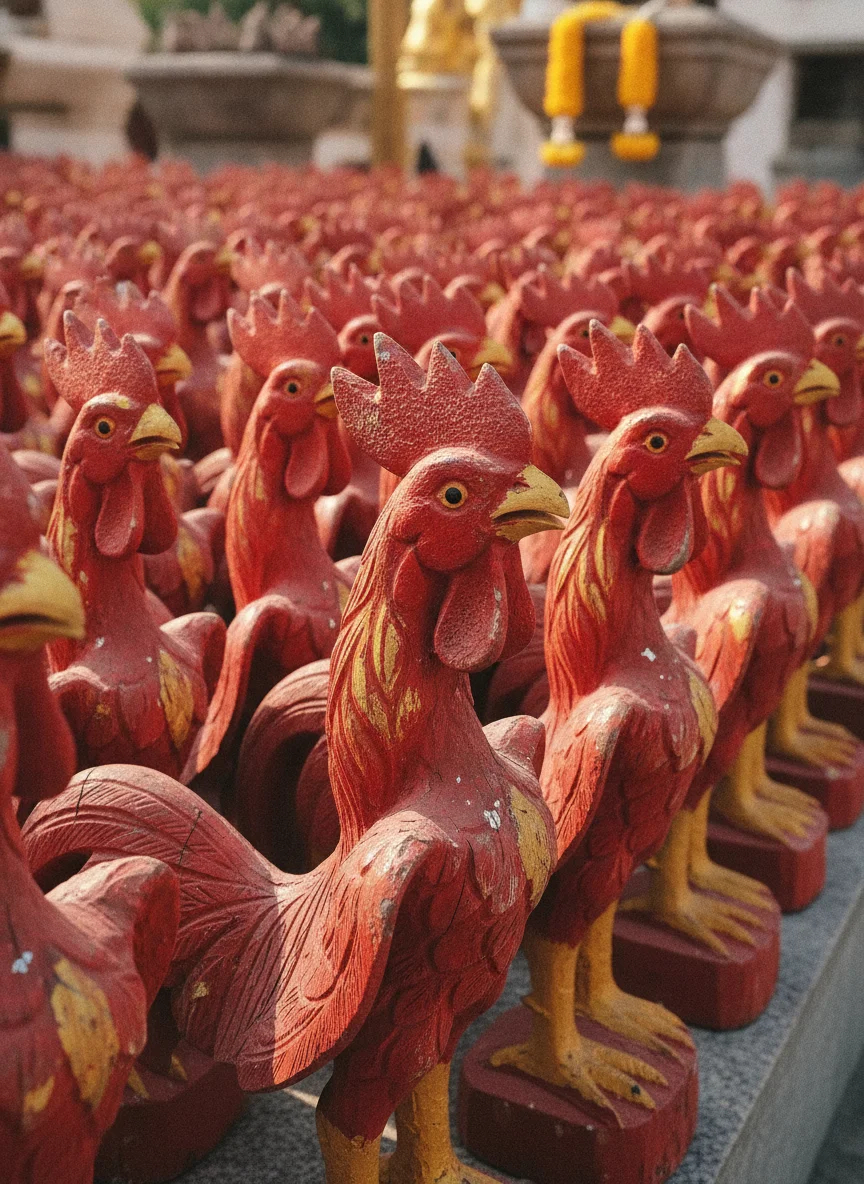
Devotees visit to ask for success, protection or good fortune. Rooster figures and firecrackers are among the offerings made after a vow is believed to have been fulfilled, and the large collections of rooster statues are among the temple's most recognisable features. These practices are living expressions of faith, not displays arranged solely for visitors.
Allow time for traffic and parking, particularly on weekends, public holidays and important religious dates. The grounds can be busy, and firecrackers may create sudden loud noise. Dress for an active Buddhist temple by covering shoulders and knees, remove shoes where indicated, keep voices low in worship areas and follow signs or instructions from temple staff. Ask before photographing people at prayer.
Opening arrangements can change for ceremonies or special events. Check the temple's current information before making a dedicated journey, especially if travelling from outside the district.
Plan a Koh Samui holiday with practical guidance on beaches, accommodation areas, ferries, local transport, costs, weather and Ang Thong trips.
Seafood and Southern Thai Food
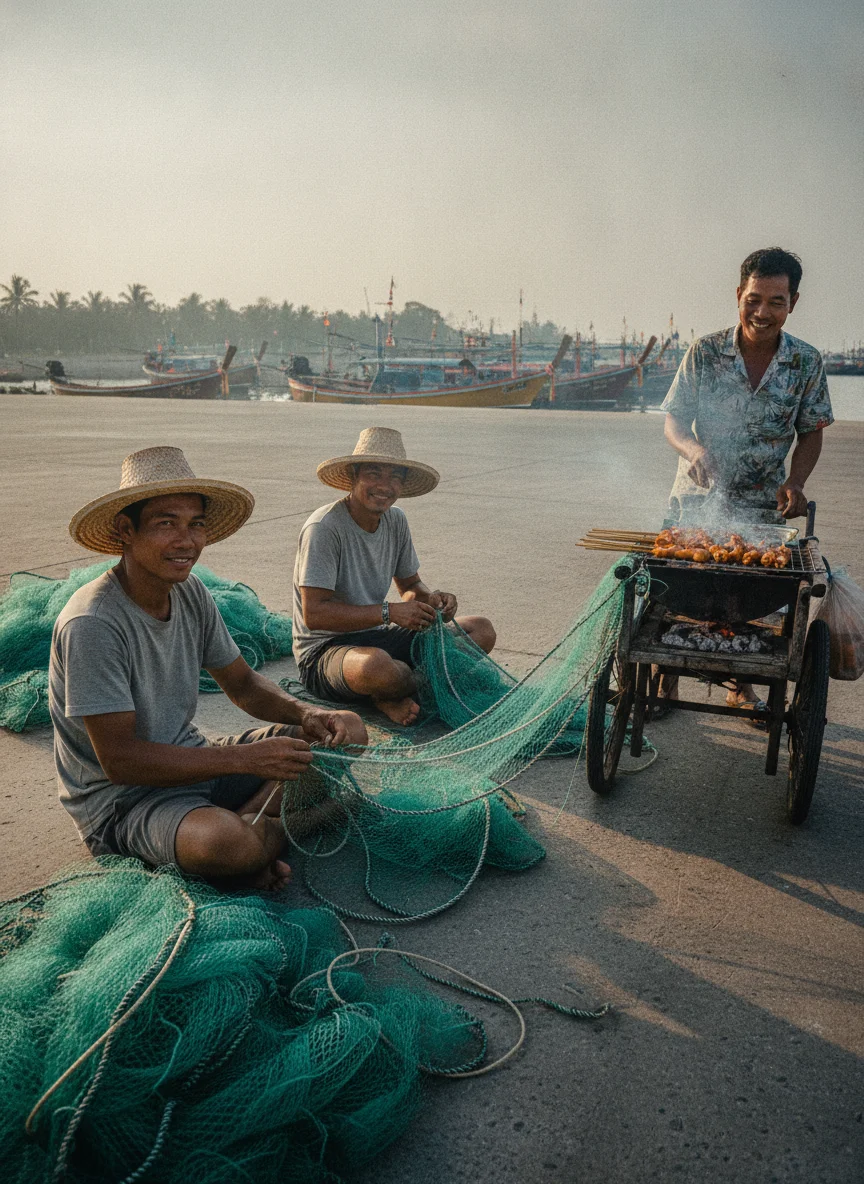
Fishing shapes much of Sichon's local food. Seafood restaurants are concentrated around the beach and river-mouth areas, while markets and simple restaurants in and around the town serve dishes intended primarily for local customers. Availability and prices depend on the day's catch, season, size and preparation.
Southern Thai cooking is often strongly seasoned. Khua kling is a dry curry usually made with minced meat, chillies, turmeric and aromatic leaves. Gaeng tai pla is a powerful fish curry built around fermented fish innards and vegetables. These dishes can be considerably hotter than versions prepared for international visitors, so ask for less chilli if necessary, although some curries are cooked in batches and cannot easily be adjusted.
For whole fish, crab, prawns and squid, confirm whether the displayed price is per dish, per 100 grams or per kilogram before ordering. Ask to see the weight where seafood is sold from an iced display, and check whether cooking carries a separate charge. Small restaurants and market stalls may accept cash or Thai bank transfers but not international cards.
Morning markets are useful for fruit, prepared food and local snacks, while the coastal restaurant areas are generally better for a longer seafood meal. Opening days and hours can change, so confirm locally rather than making a journey for one named stall.
Hin Ngam Beach and the Northern Coastal Road
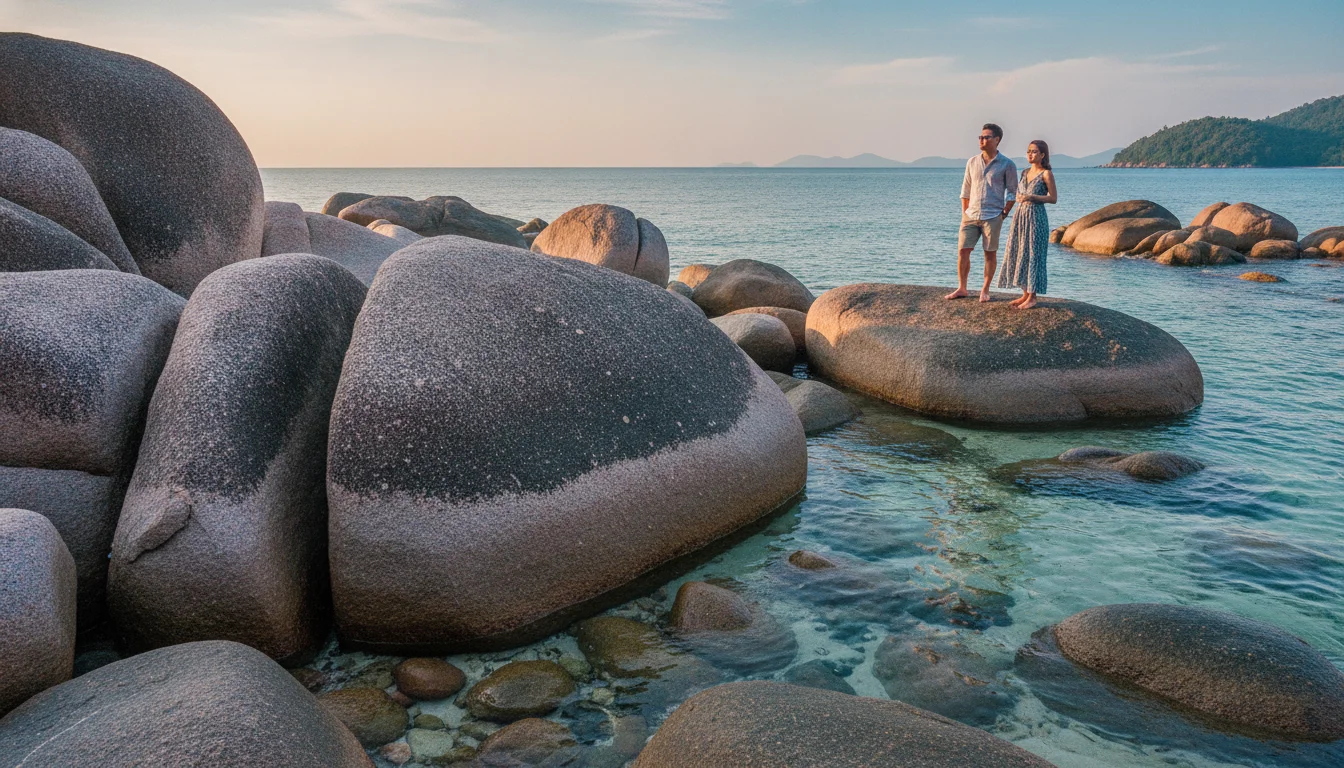
Hin Ngam Beach is known for the rounded stones that give the beach its name, meaning “beautiful stones”. The shore is visually different from Sichon's sandy beach areas and is better approached as a coastal landscape stop than as a full-service beach. The Tourism Authority of Thailand notes that there are no facilities along the beach itself, so bring drinking water and take rubbish away.
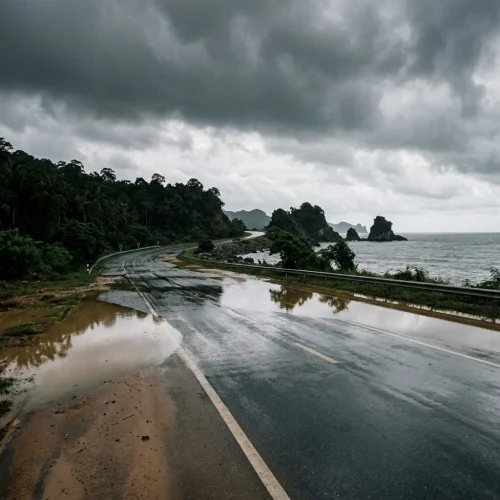
The northern part of Sichon rises towards Khao Phlai Dam, where hills meet the Gulf near the boundary with Khanom district. The coastal road passes headlands, bays and elevated stretches before continuing towards Khanom. The route is useful for a scenic drive, but viewpoints, cafés and access arrangements can change; do not assume that every apparent track provides public beach access.
Hat Kho Khao, also known as Hat Piti, lies beside Hin Ngam and has accommodation and restaurants. Farther north, the coastal landscape becomes hillier around Khao Phlai Dam. Allow more time than a map distance suggests, especially if stopping frequently or travelling after rain.
Drivers should watch for bends, uneven surfaces, animals and slow local traffic. A scooter provides flexibility, but it is appropriate only for riders with a valid licence, suitable insurance and experience on rural roads. Wear a helmet, avoid riding in poor visibility and do not depend on finding fuel at every small coastal settlement.
Khao Ka and Inland Sichon
Khao Ka Archaeological Site in Sao Phao subdistrict broadens Sichon's appeal beyond its beaches and Buddhist temples. The hill and surrounding remains formed a Hindu religious centre associated with Shaivism. Lingam and yoni elements, water channels and structural remains help explain the site's ritual use and its connection with the idea of Mount Meru in Hindu cosmology.
The site is important for understanding the long history of cultural and maritime connections on the Nakhon Si Thammarat coast. Visitors should treat the stone remains as protected heritage: stay on established access routes, do not climb on structures and do not move fragments. Current opening arrangements and on-site interpretation should be checked before travelling, as facilities may be limited.
Sichon district also extends west into forested uplands. Namtok Si Khit National Park covers mountainous rainforest and watershed areas in and around the district. Waterfall access, road conditions, trail availability and safety restrictions can change with rainfall. Contact the Department of National Parks or the park directly before a visit, and obey closures rather than relying on an old map or travel post.
Where to Stay in Sichon
Accommodation is divided between Sichon Beach, other coastal stretches and the town area. Beach properties place you close to the sea and restaurants, but they can be several kilometres from markets, transport stops and the inland temple. Town accommodation is more practical for an overnight stop or an early onward journey, though it does not provide the same immediate beach access.
The district has small resorts, guesthouses, bungalows and a limited number of more polished beachfront properties. Standards vary, so check recent room photographs and confirm air conditioning, hot water, breakfast, beach access and transport before booking. “Beachfront” may describe a property beside a rocky or tidal section rather than a broad swimming beach.
As a current named reference, an Agoda-linked listing for Sichon Cabana Beach Resort advertised rooms from about 3,075 THB (approximately £69) for a stay in late August 2026. This is a starting price for sampled dates, not a typical rate for all Sichon accommodation. Less expensive rooms and properties are available, while weekends and Thai public holidays can raise demand. Compare the final price, taxes, meal inclusions and cancellation conditions, and confirm current rates before payment.
Book early if a stay overlaps a Thai public holiday or a major event at Wat Chedi. Travellers without their own vehicle should also ask whether the property can arrange collection from the town, airport or a main-road minibus stop.
Getting There and Getting Around

Nakhon Si Thammarat Airport is the most convenient airport for many journeys to Sichon. It is about 60 kilometres by road from the town area, and the drive typically takes around an hour in ordinary conditions. Flights, fares and operating airlines change, so compare the airport's current schedule rather than relying on a fixed list of carriers.
An airport transfer or hire car is the simplest option for reaching a beach property directly. Public transport generally requires a connection through Nakhon Si Thammarat city or a stop on Highway 401. A current commercial transfer listing also serves the airport–Wat Chedi route, but availability must be booked or confirmed rather than assumed on arrival.
Minibuses connect Nakhon Si Thammarat with Sichon, although departure points, frequency and fares can change. Ask whether the vehicle terminates in Sichon town, continues along Highway 401 or can drop you near the turning for your accommodation. A main-road drop-off may still leave a substantial final journey to the beach.
Surat Thani Airport and Surat Thani railway station are alternatives for travellers arriving from Bangkok or other parts of Thailand, but both require a longer road transfer. Rail passengers should check State Railway of Thailand schedules and the exact station before booking; Sichon has no passenger railway station.
Within the district, a car is the most practical choice for combining Wat Chedi, Khao Ka, Sichon Beach, Hin Ngam and the northern coast. Local transport is limited away from the main road, and app-based cars may not be available when needed. Arrange return transport in advance if visiting without a vehicle.
Current Costs and Booking
Sichon can suit a range of budgets, but a single daily figure is unreliable because transport and accommodation make up very different proportions of the cost. A traveller with a hire car and a beachfront room will spend differently from someone staying in town and using local minibuses.
| Current Price Reference | Sichon Cabana Beach Resort | Nakhon Si Thammarat–Sichon minibus |
|---|---|---|
| Thai Baht | About 3,075 THB | 60 THB |
| Approximate GBP | Approximately £69 | Approximately £1.35 |
| Basis | Advertised starting room rate for sampled late-August 2026 dates | Published route fare; confirm the departure point and current charge |
Food, private transfers, vehicle hire and rooms vary too widely for a dependable district-wide price table. Confirm current prices before travel or payment, and ask whether tax, breakfast, fuel, delivery or collection is included. Carry enough cash for smaller restaurants, markets and local transport, while keeping a card or other backup for accommodation and larger purchases.
Planning a Sichon Stay
Two nights give enough time for the main coast and Wat Chedi if you have your own transport. Add another day for Khao Ka, the northern coastal road or a carefully planned visit to the forested interior. Build the itinerary geographically rather than crossing the district repeatedly.
A practical first day can focus on Sichon town, Pak Nam Sichon and the main beach. Wat Chedi and Khao Ka can be paired on an inland day if current opening arrangements allow. Hin Ngam, Hat Kho Khao and Khao Phlai Dam fit naturally into a northbound drive towards Khanom.
Sichon works best for travellers interested in a locally oriented Thai coastal district, seafood, road exploration and religious or archaeological sites. Those who depend on frequent public transport should choose accommodation carefully and arrange transfers in advance. Nightlife and large-scale resort facilities are limited, and the district's appeal lies in its spread of small coastal and inland places rather than one concentrated visitor centre.
Weather and Temple Etiquette
Sichon faces the Gulf of Thailand, where the wettest part of the year commonly falls later than on the Andaman coast. Heavy rain and rough seas are more likely during the north-east monsoon period, particularly towards the final months of the year, but conditions vary from year to year. Check a current forecast and any marine warnings before swimming, boating or driving into upland areas.
Rain can affect waterfalls, forest roads and trails even when the coast seems manageable. Avoid entering fast-flowing water and follow all park closures. In hotter months, carry drinking water and use shade where possible, especially when walking around temple or archaeological grounds.
At Wat Chedi, visitors share the grounds with worshippers fulfilling vows. Rooster statues, firecrackers and other offerings should be observed respectfully. Do not touch offerings or interrupt ceremonies for photographs. The temple may be crowded and noisy, so visitors with sensory sensitivities should plan accordingly.
Practical Tips for Sichon
Download offline maps and save the Thai script for your hotel and key destinations. Similar English spellings can appear on maps, and showing a Thai address is often easier than relying on pronunciation.
Keep cash in smaller denominations for markets, food stalls and local journeys. Card acceptance is more likely at larger hotels than at small coastal businesses. ATMs are easiest to find around the town and main commercial roads.
If hiring a scooter or car, photograph its condition, check the insurance, identify the correct fuel and ask what to do after a breakdown. Never leave a passport as security if another deposit arrangement is available.
Mobile coverage is generally useful for navigation, but gaps are possible in hills and quieter coastal sections. Tell your accommodation where you are going before setting out for a remote waterfall, cove or forest road.
Take drinking water and sun protection to beaches with few facilities. Do not remove stones from Hin Ngam, and carry all rubbish out. Around fishing areas, keep away from working ropes, winches, boats and slippery landing surfaces.
For onward travel, confirm the pickup location in Thai and recheck it on the day. “Sichon” may refer to the district, town, beach area or a stop on Highway 401, which can be several kilometres from the place you intend to reach.
Protect your journey against unexpected travel disruption and medical emergencies in Thailand.
Quick Reference Guide
| Item | Detail | Notes |
|---|---|---|
| Location | Sichon District | Northern Nakhon Si Thammarat Province |
| Main Visitor Areas | Sichon town, Pak Nam Sichon and Sichon Beach | Separate areas requiring local transport |
| Nearest Airport | Nakhon Si Thammarat Airport (NST) | About 60 km by road from Sichon town |
| Main Road | Highway 401 | Links the district with Nakhon Si Thammarat and Surat Thani directions |
| Local Transport | Car, scooter and limited local services | Arrange transfers if staying away from the main road |
| Key Cultural Sites | Wat Chedi and Khao Ka Archaeological Site | Check current access before a dedicated journey |
| Coastal Stops | Sichon Beach, Hin Ngam and Hat Kho Khao | Facilities and swimming conditions vary |
| Suggested Stay | 2 to 3 nights | Longer if including inland nature areas |
| Weather Pattern | Gulf coast monsoon | Heavier rain and rougher seas are more likely late in the year |
| Payment | Thai baht | Carry cash for small businesses and local transport |
FAQ: Sichon - Surat Thani
What is the best way to explore Sichon, Thailand?
What should visitors know when visiting fishing areas in Sichon?
Where is the best place to stay in Sichon, Thailand?
What safety precautions should visitors take when swimming in Sichon?
What is the proper etiquette for visiting Wat Chedi in Sichon?
How spicy is Southern Thai food in Sichon?
What should visitors know when ordering seafood in Sichon?
What should visitors know about Hin Ngam Beach in Sichon?
What precautions should be taken when hiring a car or scooter in Sichon?
What should travellers confirm for onward travel from Sichon?
Reviewed by the Thailand Guide Editorial Team • Last reviewed: 21 August 2026
This page is provided for general information only. While we aim for accuracy, details can change — please verify anything important independently before relying on it.