Don Sak - Surat Thani
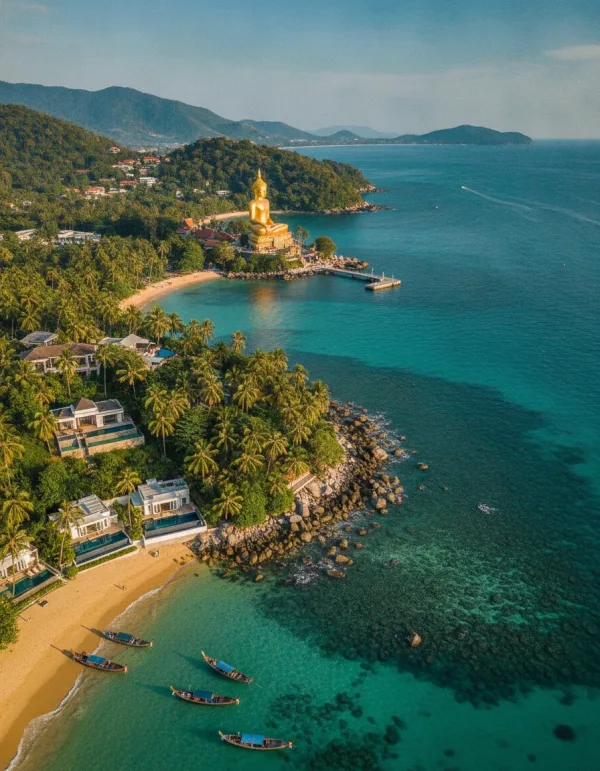
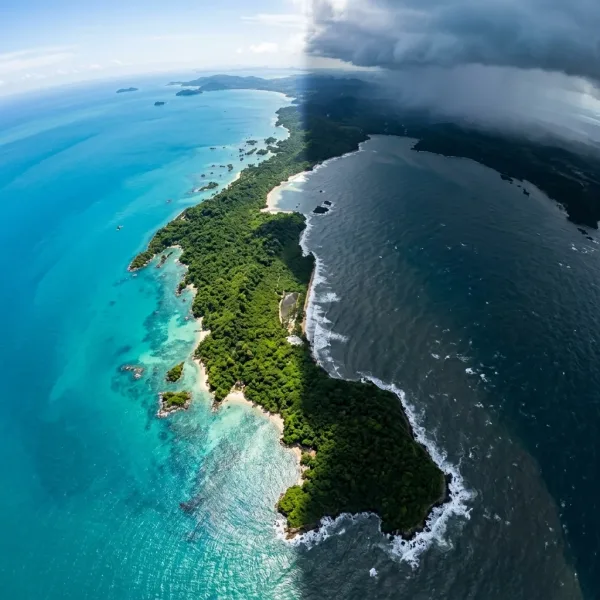
Don Sak is the mainland ferry gateway for journeys to Koh Samui and Koh Phangan, but the district extends beyond its two large car-ferry terminals. Its Gulf of Thailand coastline includes fishing settlements, small beaches, rocky viewpoints and low islands, while Don Sak town provides everyday shops, markets and services away from the piers.
Most visitors encounter Don Sak while changing between a flight, train or long-distance coach and an island ferry. An overnight stay can still be useful when connections do not line up, when travelling with a vehicle, or when you want time to visit the district’s temples and waterfront. This is a working coastal district rather than a conventional beach resort, so independent transport makes a substantial difference if you intend to explore.

Character and Setting of Don Sak
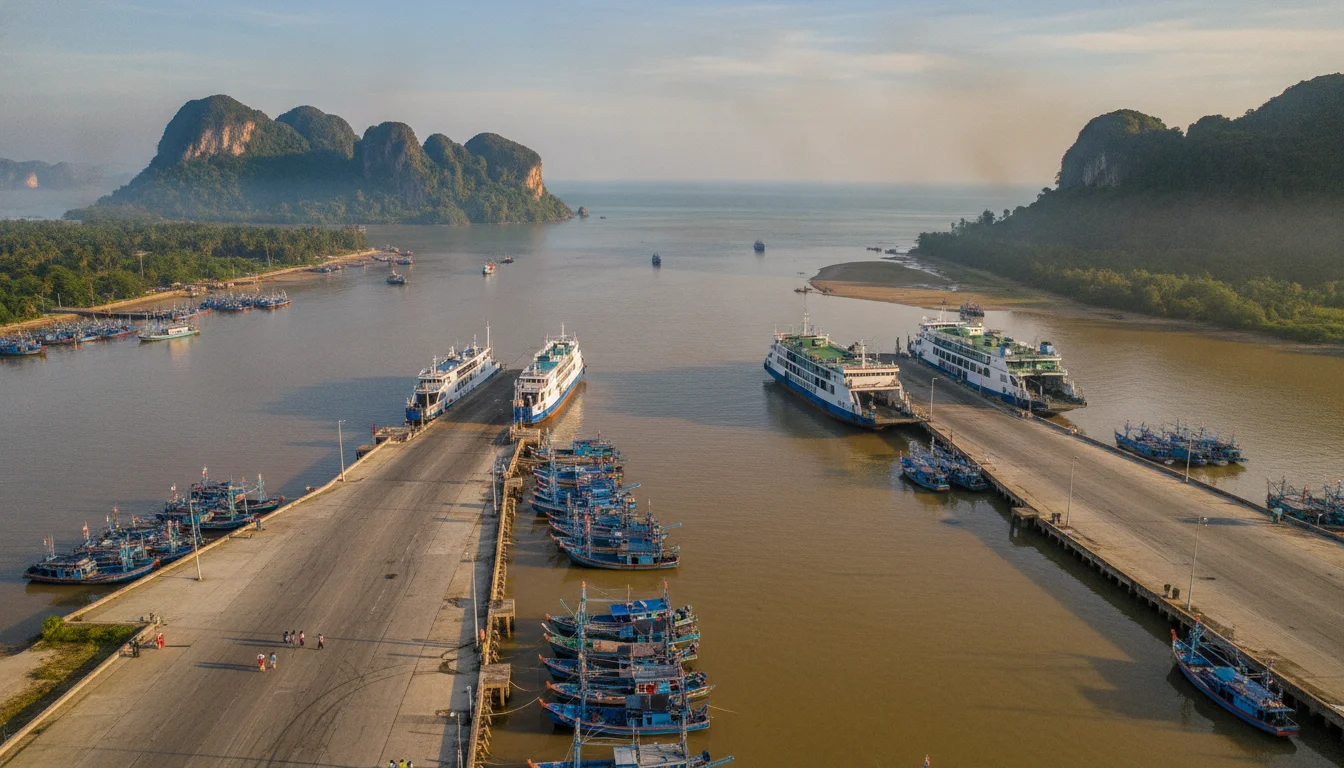
Don Sak District occupies the eastern edge of Surat Thani Province, with the Gulf of Thailand to the north and Nakhon Si Thammarat Province immediately to the east. The district comprises four subdistricts: Don Sak, Chonlakhram, Chaiyakhram and Pak Prak. Don Sak town, the fishing waterfront and the ferry coast are related but separate areas, so a map is useful when choosing accommodation or arranging a transfer.
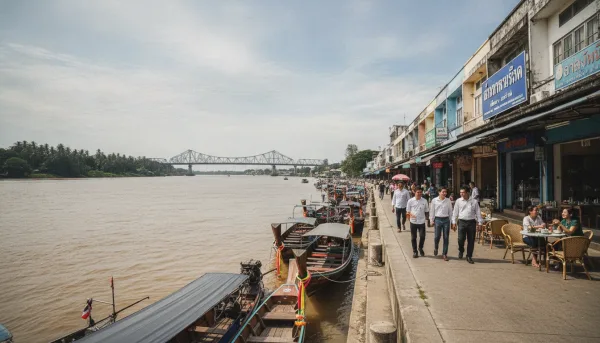
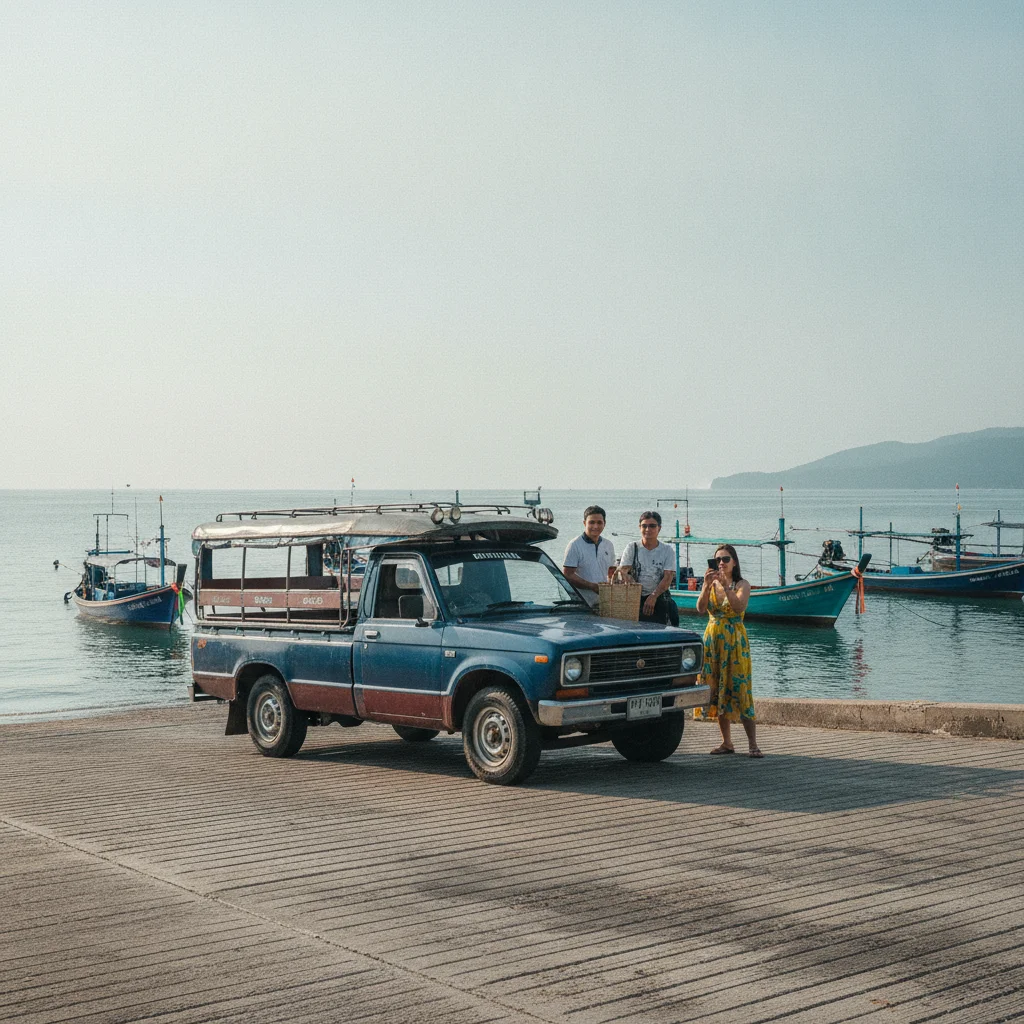
The coastal landscape combines estuaries, fishing jetties, wooded hills and maritime infrastructure. Around Pak Klong Don Sak, fishing boats unload seafood for onward sale, while the ferry terminals farther along the coast handle passengers, cars, motorbikes, coaches and freight. The district’s roads can therefore become busy around sailing times even when the town itself feels comparatively quiet.
Don Sak was formed as a minor district in 1969 from territory previously administered by Kanchanadit, and became a full district in 1971. For travellers, its modern importance comes from the transport link between the mainland road network and the islands offshore.
Ferry Piers and Island Connections
Raja Ferry Port and Seatran Ferry operate from different terminals on the Don Sak coast. Both carry passengers and vehicles to Koh Samui, while Raja Ferry also publishes a Don Sak–Koh Phangan service. Routes, sailing times and check-in arrangements can change, so use the operator named on your ticket and confirm the correct terminal before travelling.
Raja Ferry’s currently published passenger fare is 200 THB (approximately £4.50) one way from Don Sak to Koh Samui and 270 THB (approximately £6) to Koh Phangan. Its published Koh Samui vehicle fares include 260 THB (approximately £6) for a motorbike up to 250cc and 640 THB (approximately £14.50) for a car, jeep, van or pickup. The Koh Phangan vehicle charges are higher. Confirm current fares, sailing times, vehicle categories and any advance-booking requirements directly with the operator before payment.
Raja’s published Don Sak–Koh Samui timetable shows an approximately 90-minute crossing. Actual journey and waiting times depend on the sailing, weather, loading and operational conditions. Travellers with cars or motorbikes should reserve vehicle space where the operator permits it, particularly around Thai public holidays and other busy travel periods.
Plan a Koh Samui holiday with practical guidance on beaches, accommodation areas, ferries, local transport, costs, weather and Ang Thong trips.
Wat Khao Suwan Pradit and Coastal Landmarks
Wat Khao Suwan Pradit stands on a hill near Don Sak town. A road and staircase lead towards the upper level, where a four-sided chedi contains Buddha relics. The terrace provides views over Pak Nam Don Sak, the nearby coastline and offshore islands; Koh Samui can be visible in suitable conditions. The temple is associated with Luang Pho Choi, a former abbot who developed the hilltop religious site.
Wat Don Sak is another prominent religious site in the district. Its large seated image of Luang Pu Thuat is visible from a distance, and the grounds also contain other devotional statues and a pond. Both are active Buddhist sites: wear clothing covering shoulders and knees, speak quietly and follow any instructions displayed at the entrance.
Along the coast, Wang Hin is a small rocky waterfront recreation area, while Laem Thuat and Pak Klong Don Sak offer views connected with the district’s fishing life. These are local public spaces rather than managed resort attractions, and facilities can be limited.
Local Food and Dining
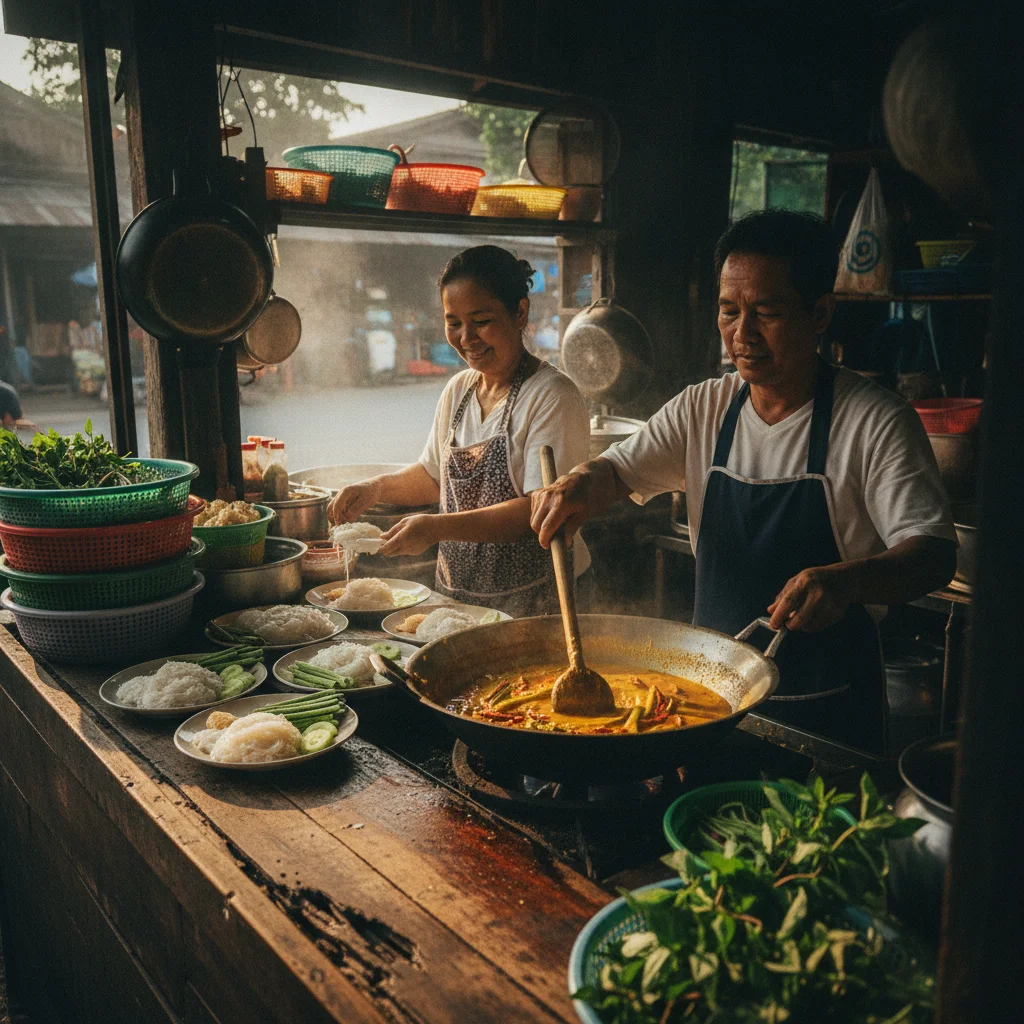
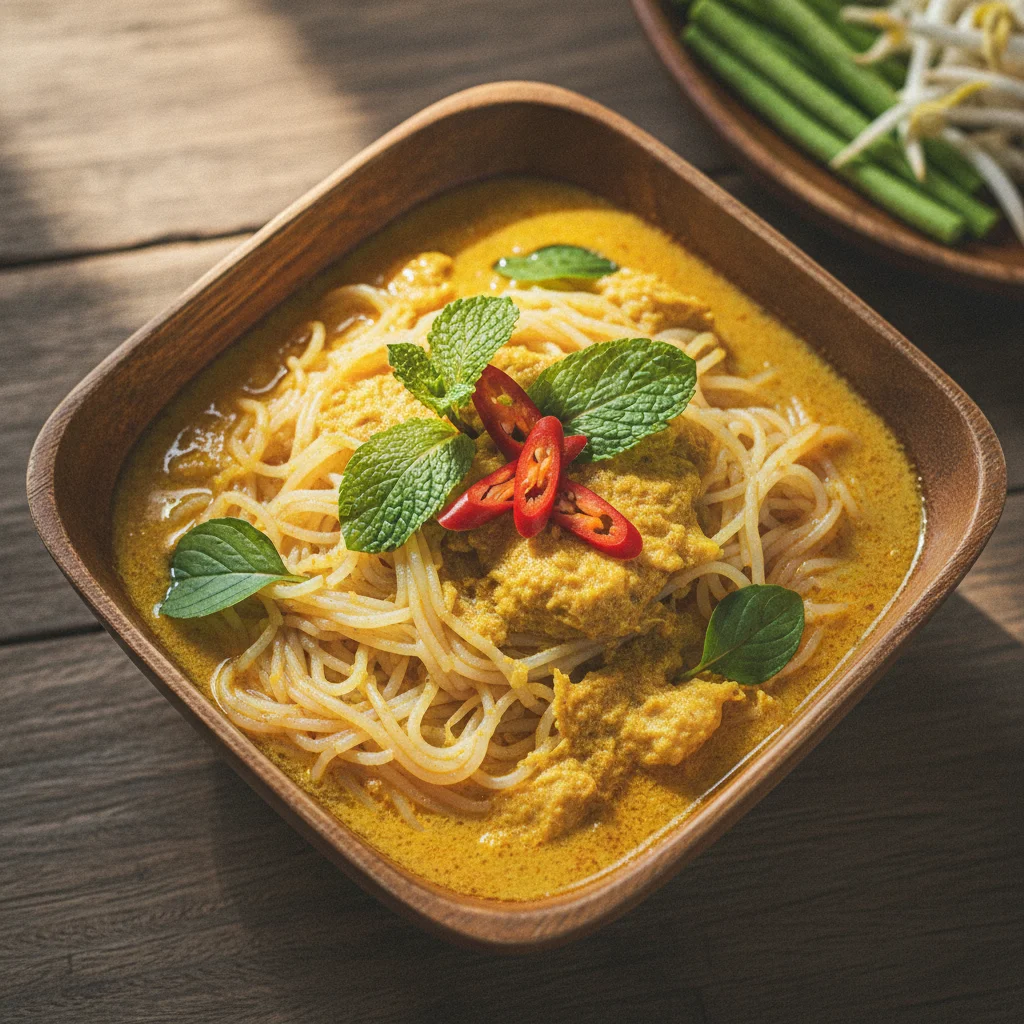
Don Sak’s food is rooted in the everyday cooking of southern Thailand and its fishing economy. Look for rice and curry shops, noodle stalls, grilled chicken, made-to-order dishes and seafood restaurants along the main roads, around town and near the waterfront. Khanom chin—fresh rice noodles served with a choice of curry and raw or lightly blanched vegetables—is a useful breakfast or lunch, while southern curries may contain considerably more chilli than visitors expect.
Seafood varies with the catch and market price. Fish, squid, prawns and crabs may be sold by weight, so ask to see the price per kilogram and agree how the dish will be prepared before ordering. Ferry-terminal cafés and convenience shops are useful during a connection, but the choice is usually broader in town and around established coastal dining areas.
Opening patterns are local rather than nightlife-driven. Morning stalls may finish early, and some small restaurants close once ingredients sell out. Carry cash for modest purchases and use simple requests such as “mai phet” if you want less chilli, while understanding that a curry base may already have been prepared.
| Dining Option | What to Expect | Practical Point |
|---|---|---|
| Khanom chin and curry shops | Rice noodles, southern curries and vegetables | Often best earlier in the day |
| Rice and noodle shops | Quick, inexpensive local meals | Pointing at displayed dishes can simplify ordering |
| Seafood restaurants | Fish, crab, prawns and squid | Check weight-based prices before ordering |
| Ferry-terminal food outlets | Simple meals, drinks and snacks | Convenient, but tied to terminal operating hours |
Wat Khao Suwan Pradit

The hilltop chedi at Wat Khao Suwan Pradit is one of Don Sak’s clearest landmarks. Visitors can approach the upper area by the temple road or use the steps, depending on local access. From the open terrace, the relationship between the town, fishing coast, ferry route and islands becomes easier to understand.
This remains a place of worship rather than simply a viewpoint. Avoid obstructing ceremonies, remove footwear where required and ask before photographing people at prayer. The exposed upper terrace can become hot, so an earlier or later visit is more comfortable than the middle of the day.
Accommodation in Don Sak
Accommodation is spread between Don Sak town, the approach roads, the ferry coast and small beachfront or waterfront properties. A room near one pier is not necessarily convenient for the other, and the town centre is separate from both terminals. Check the map location and transfer arrangements instead of relying only on a property’s use of “Don Sak Pier” in its description.
The district’s stock consists mainly of guesthouses, bungalows and small resorts rather than large full-service hotels. Current booking-platform data places a typical three-star weekend room in Don Sak at about US$26, equivalent to roughly 900 THB or £20, while individual rates vary materially with date, room type, occupancy, taxes and availability. Treat this as an orientation figure and check the full price for your actual night before booking.
For an early ferry, prioritise the correct terminal, reliable transport and a check-in arrangement that works with your arrival time. Travellers with a vehicle may prefer a roadside property with parking; those staying for the coast should check whether the beach is suitable for their plans and whether meals are available nearby.
Things to Do Beyond the Ferry
Don Sak rewards modest expectations and a little independent mobility. The principal visits are Wat Khao Suwan Pradit, Wat Don Sak, the fishing waterfront and small coastal recreation areas. The Stone Fish Museum, reached from Highway 4142 beyond the district office, displays carved stone fish and is listed by the Tourism Authority of Thailand as opening daily from 08:00 to 16:00. Confirm the hours locally before making a special journey.
Koh Rat lies close to the Don Sak coast and has a long-established Thai-Chinese fishing community. Community-based routes in the wider Don Sak–Koh Phaluai area introduce coastal livelihoods, local products and marine scenery, but boat access and activities require direct confirmation rather than an assumption that departures operate every day.
The upper Gulf around Don Sak and neighbouring Khanom is associated with Indo-Pacific humpback dolphins, often described locally as pink dolphins. Sightings are never guaranteed, and trips marketed from the wider coast may leave from locations outside Don Sak District. Verify the departure point, boat operator, lifejackets, weather policy, total price and return arrangements before booking.
Getting There and Getting Around
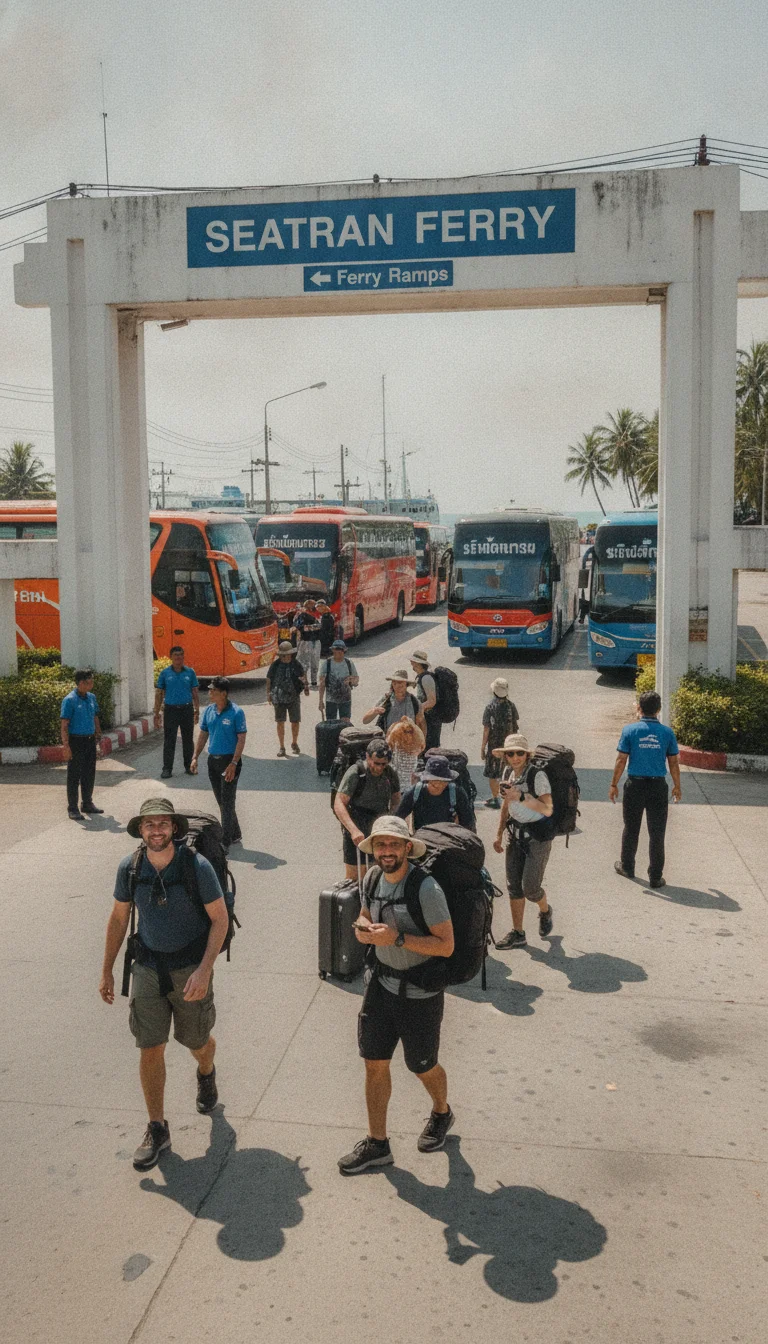
Surat Thani Airport and Surat Thani Railway Station are the main arrival points for travellers coming by air or rail. The railway station is at Phunphin, west of Surat Thani city, rather than at the airport or in Don Sak. Through-tickets commonly combine a coach or minibus transfer with a ferry, reducing the risk of choosing the wrong pier.
If buying separate tickets, allow substantial time between the flight or train and the ferry. A quoted transfer duration can be affected by passenger collection, city traffic, stops and ferry check-in. Confirm whether a transfer serves Raja Ferry Port, Seatran Ferry or another pier, and whether the ticket includes the complete mainland and sea journey.
Drivers approach Don Sak through the provincial road network and should follow the terminal specified by the operator. Vehicle fares depend on type and route; roof loads, trailers or unusual dimensions may require different handling. Arrive within the operator’s stated check-in window rather than relying on the ferry’s departure time alone.
Local public transport is limited compared with Surat Thani city or Koh Samui. Shared vehicles and motorcycle taxis may be available around transport points, but schedules and prices are not consistently published. Arrange a pickup with your accommodation when arriving late or travelling between town, a beach and a ferry terminal. A hired car gives the most flexibility for district exploration, provided your licence and insurance cover driving in Thailand.
Food Costs and Everyday Spending
Everyday meals in Don Sak can be inexpensive, but a useful total budget depends on your room, terminal transfer and whether seafood is ordered by weight. Ferry fares should be budgeted separately for each passenger and vehicle. A private taxi from an airport or railway station can cost much more than a place on a combined coach-and-ferry service.
For short stays, compare the total rather than the room rate alone. A slightly more expensive room with a confirmed pier transfer may cost less than a remote bungalow plus two private journeys. Keep smaller notes for markets, food stalls and local transport, while cards are more likely to be accepted by larger hotels, operators and booking platforms.
| Current Reference Cost | Thai Baht | Approximate GBP | Basis |
|---|---|---|---|
| Raja Ferry passenger to Koh Samui | 200 THB | £4.50 | One way, published operator fare |
| Raja Ferry passenger to Koh Phangan | 270 THB | £6 | One way, published operator fare |
| Raja Ferry small motorbike to Koh Samui | 260 THB | £6 | Up to 250cc, published operator fare |
| Raja Ferry car or pickup to Koh Samui | 640 THB | £14.50 | Published operator vehicle category |
| Typical three-star weekend room | About 900 THB | About £20 | Current Don Sak booking-platform average |
Who Don Sak Suits
Don Sak works best as a practical mainland stop for ferry passengers, motorists taking a vehicle to an island and travellers interested in a low-key coastal district. Staying one night can remove pressure from a connection and create time for a temple visit or seafood meal.
It is less convenient for a resort-style holiday without private transport. Beaches and visitor sights are dispersed, local transfers need planning and evening entertainment is limited. Travellers whose only priority is reaching an island will usually find a through-ticket the simplest way to pass through the district.
What to Know Before You Go
The name on the ferry booking matters more than a generic reference to “Don Sak Pier”. Raja and Seatran use separate terminals, and a transfer to the wrong one can jeopardise the connection. Save the operator, route, booking reference and terminal position offline before setting out.
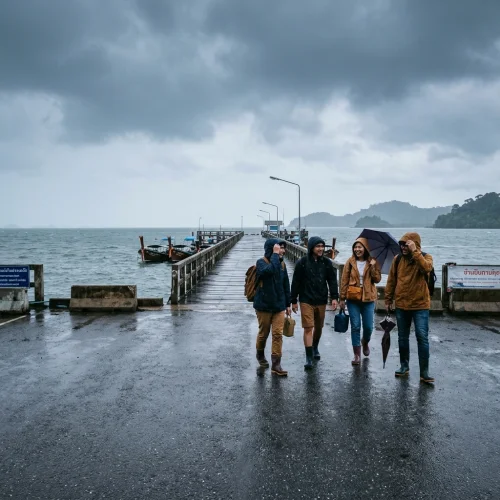
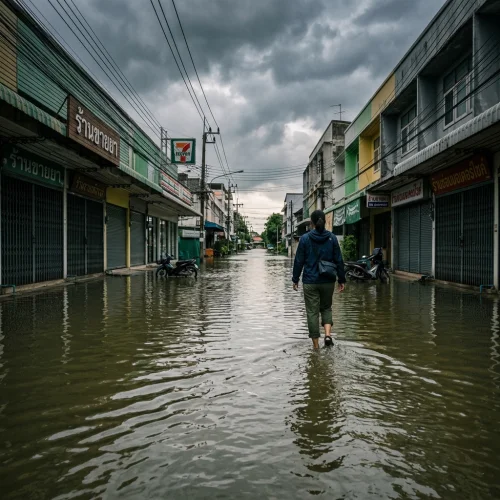
Weather can disrupt Gulf crossings at any time, with heavier rainfall and rougher conditions more common during parts of the Gulf monsoon. Follow the ferry operator’s current notices and allow flexibility around onward flights or other fixed connections. Travel insurance terms vary, so check what your policy actually covers.
Cash remains useful away from large terminals and hotels. ATMs and convenience shops are available in the developed areas, but do not depend on a small stall taking cards. Mobile coverage is generally useful for navigation, though downloading the terminal location and Thai address is sensible.
Practical Tips
Check the terminal name
Match the ferry company and terminal on your ticket with your transfer or driving directions. Do this before leaving the airport, railway station or hotel.
Allow time for check-in
Use the operator’s current check-in guidance, especially with a vehicle. Loading can begin before the published departure and procedures may differ by route.
Reserve vehicle space
Book cars and motorbikes in advance when possible. Passenger capacity and vehicle-deck capacity are separate, and a passenger ticket does not guarantee space for a vehicle.
Plan local transfers
Ask your accommodation to confirm pickup availability and price in writing. This is particularly important for early sailings, late arrivals and properties away from town.
Dress for temple visits
Cover shoulders and knees, remove footwear where indicated and behave quietly at Wat Khao Suwan Pradit and Wat Don Sak.
Carry small notes
Smaller denominations are useful for food stalls, markets and short local journeys. Keep your main cash secure and use ATMs in busier areas.
Leave flexibility in bad weather
Do not place a tight flight or train connection immediately after a sea crossing. Operator notices are the best source for delays and cancellations.
Quick Reference Table
| Item | Detail | Notes |
|---|---|---|
| Location | Don Sak District | Eastern Surat Thani Province, on the Gulf of Thailand |
| Main Town | Don Sak | Separate from the coastal ferry terminals |
| Main Ferry Links | Koh Samui and Koh Phangan | Route and operator depend on the ticket |
| Main Operators | Raja Ferry and Seatran Ferry | Use separate terminals in Don Sak |
| Rail Gateway | Surat Thani Railway Station | Located at Phunphin |
| Air Gateway | Surat Thani Airport (URT) | Through-transfers are widely used for island journeys |
| Local Transport | Shared vehicles, motorcycle taxis and arranged transfers | Availability and fares should be confirmed locally |
| Notable Places | Wat Khao Suwan Pradit, Wat Don Sak, Pak Klong Don Sak | Temples, viewpoint and fishing waterfront |
| Typical Stay | Transit stop or one-night visit | Longer exploration is easier with private transport |
| Currency | Thai baht (THB) | Cash useful for small local purchases |
FAQ: Don Sak - Surat Thani
What is Don Sak known for?
Why might a traveller consider staying overnight in Don Sak?
Which ferry companies operate from Don Sak and where do they travel?
What should travellers know when booking accommodation in Don Sak?
What kind of local food can visitors expect in Don Sak?
What are some notable places to visit in Don Sak beyond the ferry terminals?
How can travellers get around Don Sak to explore the district?
What is a critical step to ensure a smooth ferry connection from Don Sak?
What is the appropriate dress code for visiting temples in Don Sak?
What should travellers consider regarding cash and card payments in Don Sak?
Reviewed by the Thailand Guide Editorial Team • Last reviewed: 21 August 2026
This page is provided for general information only. While we aim for accuracy, details can change — please verify anything important independently before relying on it.