Gulf of Thailand
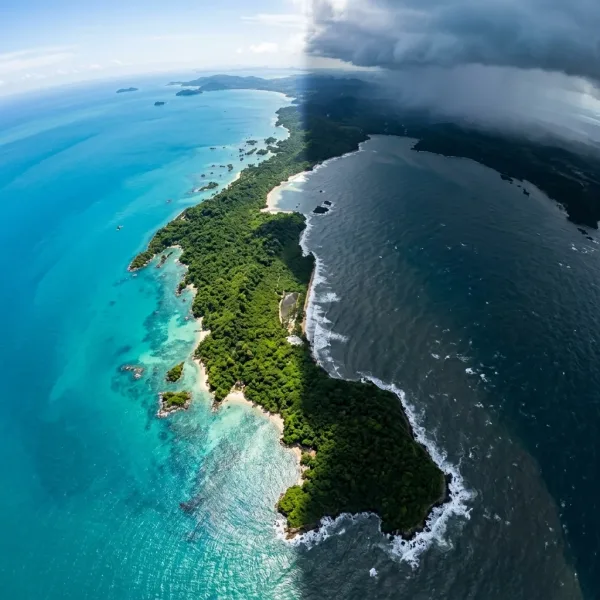
The Gulf of Thailand is a broad, shallow arm of the South China Sea shared by Thailand, Cambodia, Vietnam and Malaysia. It covers roughly 320,000 square kilometres, with an average depth of about 58 metres and a maximum of about 85 metres. Thailand's coast curves around most of its western and northern sides, from Trat and the eastern seaboard past the Bay of Bangkok and down the Malay Peninsula.
For travellers, “the Gulf” is not one compact destination. It includes city beaches, fishing towns, national parks and several island groups separated by long overland journeys. Pattaya and the eastern islands lie within reach of Bangkok; Hua Hin and Prachuap Khiri Khan sit on the upper western shore; and the Samui archipelago is much farther south in Surat Thani province. Choosing one part of the coast, or allowing enough time for the distance between regions, produces a more practical itinerary than trying to link every Gulf island in one trip.

Understanding the Gulf's Regions

The head of the gulf forms the Bay of Bangkok, where the Chao Phraya, Tha Chin, Mae Klong and Bang Pakong river systems meet a low, sediment-rich coast. Bangkok, Samut Prakan, Samut Sakhon and Samut Songkhram occupy this heavily developed inner-gulf area. Ports, industrial zones, mangroves, salt farms and fishing communities are more characteristic than offshore resort islands.
East of Bangkok, Chonburi and Rayong combine major ports and cities with established beach destinations. Pattaya and Jomtien have the widest choice of accommodation and entertainment, while Koh Samet is reached from Ban Phe. Farther east, Chanthaburi and Trat lead towards the forested islands of the Koh Chang archipelago, including Koh Chang, Koh Mak and Koh Kood.
The western and southern Thai shore runs through Phetchaburi, Prachuap Khiri Khan, Chumphon, Surat Thani, Nakhon Si Thammarat, Songkhla, Pattani and Narathiwat. Cha-am and Hua Hin are convenient mainland resorts, Chumphon is a gateway to Koh Tao, and Donsak is the principal car-ferry gateway for Koh Samui and Koh Phangan. Rail and road routes follow much of this side of the peninsula.
Choosing Where to Go

The eastern Gulf works well with a Bangkok itinerary. Pattaya provides the greatest concentration of nightlife and urban facilities, Koh Samet offers a relatively short mainland-and-boat journey, and Koh Chang, Koh Mak and Koh Kood require more travel time but support a longer island stay.
Cha-am, Hua Hin and Prachuap Khiri Khan suit a mainland rail or road itinerary combining beaches, markets and national parks. Chumphon is useful as a coastal stop and a gateway to Koh Tao. Farther south, Koh Samui, Koh Phangan and Koh Tao form the Gulf's clearest multi-island group: Koh Samui has the widest resort choice, Koh Phangan combines beach areas with major nightlife events, and Koh Tao centres on diving.
Food markets and seafood restaurants occur throughout the coast, so access, atmosphere and onward transport are more useful ways to choose between regions. Distances matter more than the shared sea name suggests. Combining one neighbouring cluster is usually more efficient than crossing between the eastern islands and the Samui archipelago.
Plan a journey along Thailand’s Andaman coast, with practical guidance on island gateways, marine parks, diving, ferries and monsoon travel.
Islands, Marine Parks and Coastal Landscapes

Mu Koh Ang Thong National Park protects 42 islands west of Koh Samui and Koh Phangan. Its limestone formations, forest, small beaches and enclosed Thale Nai lagoon make it one of the lower Gulf's principal boat-trip destinations. Most visitors arrive on organised day tours from Koh Samui or Koh Phangan. Koh Wua Talap contains the park headquarters and a steep viewpoint trail, while the steps above Thale Nai on Koh Mae Koh overlook the lagoon. Heat, wet steps and sharp gradients make supportive footwear more useful than beach sandals for either climb.
Koh Tao is the Gulf's best-known centre for recreational diving, with training schools and boat access to reefs and offshore sites. Conditions vary by season and site, and deeper locations such as Chumphon Pinnacle require an appropriate qualification and an operator's assessment of the day's current and visibility. Snorkelling trips also run around Koh Tao and nearby Koh Nang Yuan, subject to sea conditions and local access rules.
Mainland protected landscapes broaden the region beyond island beaches. Khao Sam Roi Yot National Park in Prachuap Khiri Khan includes limestone hills, wetlands and Phraya Nakhon Cave, reached by a walk with steep sections. In Rayong, Khao Laem Ya–Mu Koh Samet National Park covers coastal land and islands including much of Koh Samet.
Weather and When to Visit
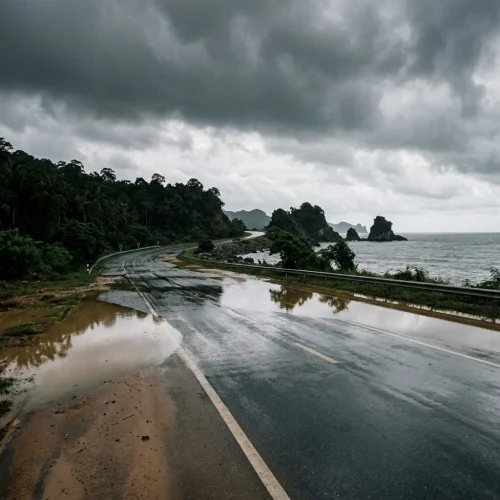
The Gulf spans several climate zones, so it does not have one reliable best season. The eastern seaboard and Trat islands receive substantial southwest-monsoon rain, commonly from May into October. Koh Samui, Koh Phangan and Koh Tao have a different pattern, with the heaviest rainfall often later in the year, particularly around October to December. Hua Hin is generally drier than many southern and eastern islands, but rain and rough seas remain possible in any month.
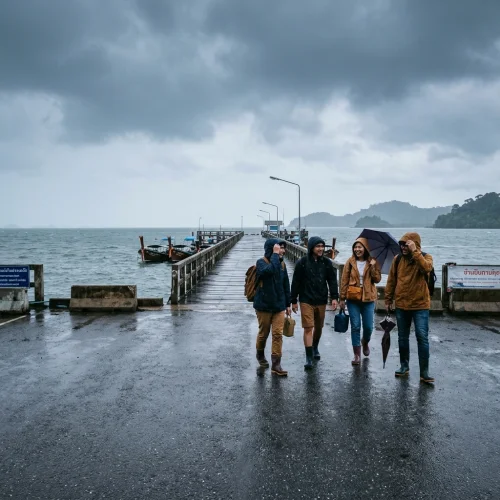
Short-range conditions should guide boat travel. The Thai Meteorological Department issues regional forecasts and marine warnings when monsoon winds or storms produce high waves; operators may delay or cancel services. Allow flexibility when an itinerary combines a ferry with a flight or train, especially during unsettled periods.
Getting to the Gulf Coast

Bangkok is the principal starting point for the upper Gulf and eastern seaboard. Pattaya and Rayong are reached by road, while buses and minivans continue to Trat and the Koh Chang ferry piers. Bangkok Airways operates Trat Airport and Samui Airport; its advertised domestic starting fares currently include 1,800 THB (approximately £40) for Trat and 2,500 THB (approximately £56) for Samui, before route-specific conditions and extras.
The State Railway of Thailand's Southern Line serves Phetchaburi, Hua Hin, Prachuap Khiri Khan, Chumphon and Surat Thani. Chumphon works well for boats to Koh Tao, while Surat Thani railway station is in Phunphin, outside Surat Thani city, and requires an onward road transfer to the ferry network. Joint rail-, bus- or air-and-ferry tickets can simplify connections, but check the transfer point, waiting time and contingency if the first service is delayed.
Local transport varies sharply. Larger mainland resorts have taxis, app-based cars, buses or songthaews; the islands rely more heavily on shared pick-ups, taxis and hired scooters. A low accommodation price can be offset by repeated taxi journeys, particularly at isolated beaches.
Ferries and Island Connections
Koh Samui, Koh Phangan and Koh Tao form the most straightforward multi-island route, with passenger services linking them to Donsak, Surat Thani and Chumphon. Lomprayah publishes routes among all three islands and the mainland; conventional vehicle ferries also serve Koh Samui and Koh Phangan from Donsak. Operators, piers and sailing times differ, so check the precise departure point shown on the ticket.
Current online listings commonly show foot-passenger fares from about 199 THB (approximately £4.45) between Koh Samui and Koh Phangan, from about 450 THB (approximately £10) between Koh Phangan and Koh Tao, and from about 450 THB between Chumphon and Koh Tao. These are starting prices and may exclude transfers or booking charges. Journey times range from roughly 20 minutes on the shortest fast crossing to several hours from mainland Surat Thani, depending on the pier, vessel and route.
Elsewhere, car ferries connect the Trat mainland with Koh Chang, and seasonal passenger boats link islands within the Trat archipelago. Ban Phe is the main mainland departure point for Koh Samet. Travel between these eastern islands and the Samui archipelago normally returns to the mainland and continues by road, rail or air. Weather, maintenance and operating decisions can alter sailings, so reconfirm close to travel and leave a margin before onward connections.
Where to Stay Around the Gulf

Accommodation ranges from city guesthouses and dive hostels to family resorts and private-pool villas. Prices depend heavily on the exact coast, room standard, dates and cancellation terms. Mainland centres such as Pattaya, Rayong, Cha-am, Hua Hin and Chumphon generally offer more competition and easier access to shops and public transport. Island stays carry extra transfer costs, and secluded properties may require taxis, shared pick-ups or hotel boats.
Koh Tao has dormitories, simple rooms and dive resorts concentrated around Mae Haad and Sairee, with smaller clusters elsewhere. Koh Samui offers the Gulf's broadest island range, from budget rooms to international luxury resorts, while Koh Phangan ranges from social hostels to quiet beach resorts and wellness stays. Koh Chang has substantial choice along its west coast; Koh Mak and Koh Kood have fewer properties and more limited local transport.
The ranges below are planning figures for a standard room or bed, not fixed tariffs. Holiday periods, full-moon dates on Koh Phangan and peak demand can push rates higher.
| Accommodation Type | Common Locations | Typical Nightly Range | Practical Points |
|---|---|---|---|
| Hostel dormitory | Koh Tao, Koh Phangan, Pattaya | 250–700 THB (approximately £5.60–£15.70) | Check air conditioning, locker access and whether a dive-course discount affects the room rate |
| Simple private room | Mainland towns and larger islands | 700–1,800 THB (approximately £15.70–£40) | Location and onward transport can matter more than facilities |
| Mid-range hotel or resort | Hua Hin, Rayong, Koh Chang, Koh Samui | 1,800–4,500 THB (approximately £40–£101) | Pool, breakfast and beach access vary; taxes may be additional |
| Upscale resort or pool villa | Koh Samui, Hua Hin, Koh Kood | 5,000–25,000+ THB (approximately £112–£560+) | Transfers, meal plans, service charges and cancellation terms can materially change the total |
Compare a live rate for your exact dates and check whether taxes, breakfast and transfers are included before payment.
Food, Seafood and Markets

Seafood is a constant along the Gulf, but the cooking changes as the coast runs from central to southern Thailand. Markets and restaurants commonly sell squid, prawns, blue swimmer crab, shellfish and whole fish by weight. Ask for the price before ordering larger fish or crab, as the menu may quote a rate per 100 grams rather than for the whole dish.
Ang Sila in Chonburi is associated with seafood markets and stone mortars, while Samut Songkhram and the Mae Klong estuary are known for salt, shellfish and fishing. Farther south, Surat Thani is noted for large cultivated oysters, often served with garlic, chilli paste, lime, fried shallots and fresh leaves. Southern-style gaeng som is a sharp, hot curry commonly made with fish or seafood, turmeric and vegetables.
Tom yum goong combines prawns with lemongrass, galangal, makrut lime leaves, chilli and lime. Preparations range from a clear, sharply sour broth to a richer version containing evaporated milk or chilli paste. Other common choices include steamed fish with lime, stir-fried crab with curry powder and grilled squid served with a hot green seafood sauce.
Night markets are useful for comparing dishes and prices without committing to a formal seafood restaurant. Look for clearly displayed prices, busy stalls and food cooked to order. Simple rice or noodle dishes often cost around 50–100 THB (approximately £1.10–£2.25). A modest seafood dish may begin around 150 THB (approximately £3.35), while prawns, crab and whole fish can raise the bill considerably. Confirm the current price and weight basis before ordering.
Planning a Gulf Coast Budget
Costs differ too much across this region for a single daily figure to describe every trip. A mainland stay using local food and public transport can be considerably cheaper than an island itinerary involving fast ferries, taxis, diving and beachfront accommodation. Treat the figures below as broad planning ranges per person and price the major elements for your actual route.
| Item | Useful Planning Range | Notes |
|---|---|---|
| Local meal | 50–150 THB (approximately £1.10–£3.35) | Seafood sold by weight costs more |
| Hostel bed or simple room | 250–1,800 THB (approximately £5.60–£40) | Per bed or room as stated; dates matter |
| Mid-range room | 1,800–4,500 THB (approximately £40–£101) | Check taxes and breakfast |
| Short island ferry | 199–750 THB (approximately £4.45–£16.80) | Route, vessel and booking fees vary |
| Organised snorkelling or park trip | 1,000–3,000 THB (approximately £22–£67) | Confirm park fees and transfers |
| Two recreational dives | 2,000–4,000 THB (approximately £45–£90) | Equipment and marine-park fees may be separate |
A frugal mainland day may fall around 1,200–2,000 THB (approximately £27–£45), excluding long-distance travel. A comfortable island day with a private room, meals and local transport is more likely to begin around 3,000 THB (approximately £67), before diving, tours or flights. Confirm all current prices before booking or payment.
Park Rules, Sea Safety and Practical Advice
Mu Koh Ang Thong National Park currently charges foreign visitors 300 THB (approximately £6.70) per adult and 150 THB (approximately £3.35) per child. The park usually closes from 1 November to 15 December, but annual dates and accessible areas can change. Tour prices do not always include admission, so check both the park's current status and what your operator includes.
Potentially dangerous box jellyfish occur in Thai Gulf waters. Follow beach warnings, use protective swimming enclosures where provided and seek immediate local assistance after a suspected sting. In national parks, sunscreens containing oxybenzone, octinoxate, 4-methylbenzylidene camphor or butylparaben are prohibited; choose a compliant product before visiting reefs or beaches within park boundaries.
Reserve popular overnight trains and island accommodation early for Christmas, New Year, Thai public holidays and major Koh Phangan event dates. Check the departure pier as well as the island name, because Koh Samui, Koh Phangan and the mainland use multiple piers.
Carry enough Thai baht for small piers, park fees, markets and local transport. Card acceptance and cash machines are widespread in larger towns and on the main islands, but less dependable at remote beaches and minor islands. Use a waterproof bag for passports, phones and medication on open boats, and allow spare time after any ferry journey.
If hiring a scooter, you need a licence valid for that class of vehicle and an appropriate International Driving Permit; helmet use is compulsory. Check national-park notices shortly before travel, as annual closures, local reef restrictions and temporary weather closures can affect landing sites, trails and boat tours.
Key Information at a Glance
| Item | Detail | Notes |
|---|---|---|
| Marine Region | Gulf of Thailand | Shallow arm of the South China Sea shared by Thailand, Cambodia, Vietnam and Malaysia |
| Approximate Area | 320,000 square kilometres | Average depth about 58 metres; maximum about 85 metres |
| Main Thai Travel Regions | Eastern seaboard, Bay of Bangkok, western mainland coast, Samui archipelago, lower southern Gulf | These are separated by substantial road, rail or sea journeys |
| Major Thai Islands | Koh Samui, Koh Phangan, Koh Tao, Koh Chang, Koh Kood, Koh Samet | Islands belong to different clusters with no single through-ferry circuit |
| Main Air Gateways | Bangkok, U-Tapao, Trat, Chumphon, Surat Thani and Koh Samui | Route availability varies by airport and season |
| Main Rail Access | Southern Line via Hua Hin, Chumphon and Surat Thani | Eastern islands require road and ferry connections |
| Typical Trip Length | 5–14 days | Best focused on one region or neighbouring island group |
| Weather Pattern | Varies between eastern, upper and lower Gulf coasts | Check local forecasts and marine warnings for the exact destination |
| Current Ang Thong Fee | 300 THB adult; 150 THB child for foreign visitors | Approximately £6.70 and £3.35; confirm fee, closure and tour inclusion |
| Primary Transport | Rail, road, domestic flights, ferries and local shared transport | Always verify the precise pier and onward transfer |
FAQ: Gulf of Thailand
What is a common mistake when planning a trip to the Gulf of Thailand?
Is it possible to travel directly by sea between the Koh Chang archipelago and the Samui archipelago?
What should travellers check before visiting national parks in the Gulf of Thailand?
What should travellers confirm when ordering seafood in the Gulf of Thailand?
How much do meals typically cost in the Gulf of Thailand?
What are the additional costs associated with staying on islands in the Gulf of Thailand?
What should travellers consider when planning onward connections after a ferry journey in the Gulf of Thailand?
What are the requirements for hiring a scooter in the Gulf of Thailand?
When is the best time to visit the Gulf of Thailand?
Are there restrictions on sunscreen use in national parks in the Gulf of Thailand?
Reviewed by the Thailand Guide Editorial Team • Last reviewed: 21 August 2026
This page is provided for general information only. While we aim for accuracy, details can change — please verify anything important independently before relying on it.