Central Thailand
Central Thailand is the broad lowland heart of the country: a landscape shaped by the Chao Phraya and its tributaries, old royal capitals, rice-growing plains and canal communities. Bangkok dominates the region’s transport network, but the surrounding provinces offer a different experience, from Ayutthaya’s monumental ruins to Kanchanaburi’s forested river valleys and Samut Songkhram’s tidal waterways.
The boundaries of Central Thailand vary between geographic, statistical and tourism systems. This guide uses a practical travel definition centred on the lower Chao Phraya plain and the western Kanchanaburi corridor. It covers Ayutthaya, Lopburi, Nakhon Pathom, Samut Songkhram and nearby central-plain destinations, with Kanchanaburi included as the main western extension. Bangkok has its own destination guide, while the upper-central provinces often grouped with Northern Thailand are outside this article’s main scope.
The distances are manageable, but the region is too large for a single rushed circuit. Ayutthaya works well as a rail day trip or overnight stop; Kanchanaburi deserves several days if you want to combine the railway history with Erawan National Park; and Amphawa is best planned around its weekend market. A regional stay becomes much easier when you choose two or three bases instead of returning to Bangkok after every outing.
Royal Heritage and Ancient Capitals
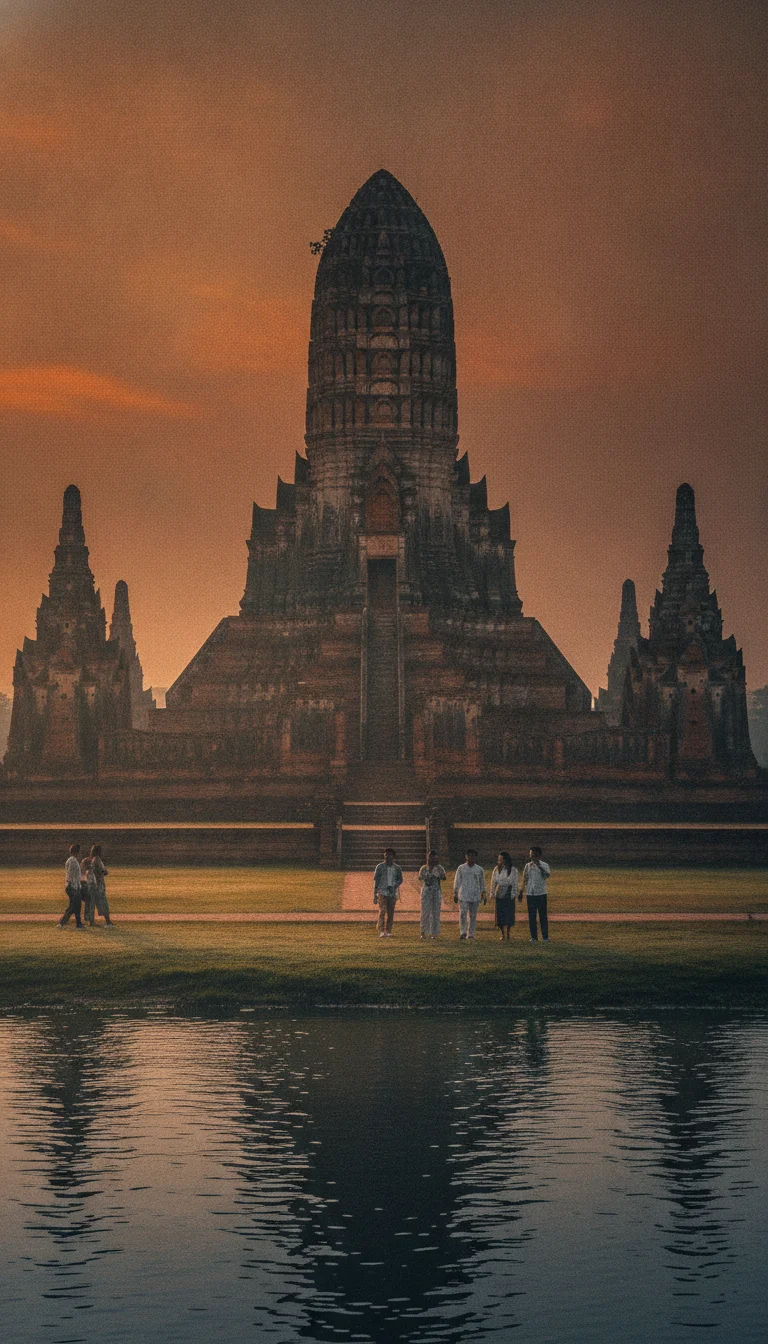
Ayutthaya was founded in 1350 and developed into a major centre of trade, diplomacy and royal power before a Burmese army razed the city in 1767. Its archaeological remains now form the Historic City of Ayutthaya UNESCO World Heritage Site. The old city occupied an island between three rivers, and the surviving street, canal and moat pattern still helps explain how water shaped its defence and urban plan.
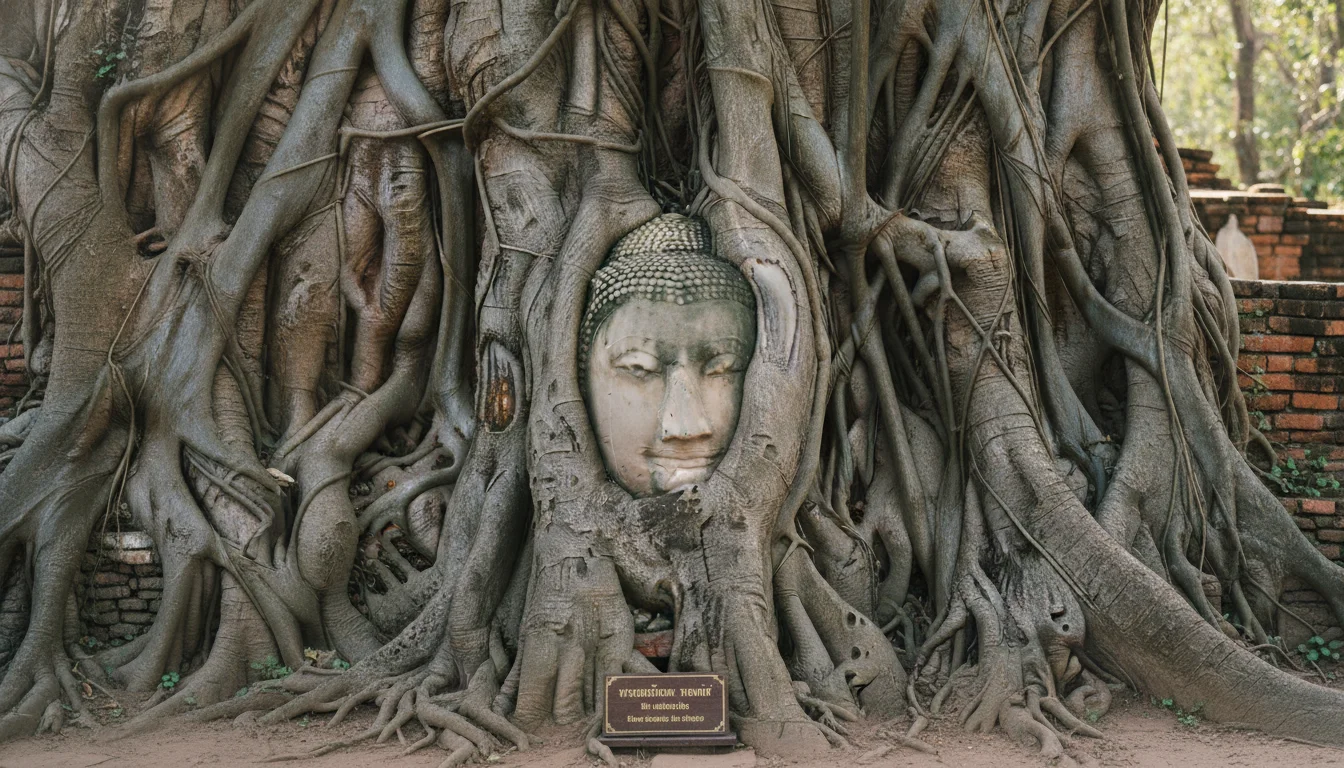
The historical park is not one enclosed attraction with a single entrance. Its monuments are spread around and beyond the island, among present-day roads, neighbourhoods and working temples. Wat Phra Si Sanphet preserves three aligned chedis beside the former royal palace area; Wat Mahathat is known for the stone Buddha head held among tree roots; and riverside Wat Chaiwatthanaram has a central prang surrounded by smaller towers. Cycling is useful on the level island, although traffic, heat and the distance to outlying sites make a tuk-tuk or hired car more comfortable for a wider circuit.
Several principal ruins charge separately, generally 20–50 THB (approximately £0.45–£1.10) for foreign visitors at the ticketed monuments. Combined passes are sometimes available, but their price and included sites have changed; ask at the first Fine Arts Department ticket office if you plan to visit several ruins.
Lopburi lies farther north on the same main railway corridor. Its old centre contains remains from different periods, including the three linked Khmer-style towers of Phra Prang Sam Yot and the later royal complex of Phra Narai Ratchaniwet. Foreign admission to Phra Prang Sam Yot is 50 THB (approximately £1.10), or 150 THB (approximately £3.35) for a combined ticket covering several historic sites. Macaques live around the monument and neighbouring streets; keep food, drinks and loose possessions inside a closed bag and follow local instructions.
Kanchanaburi and the Western River Valleys
Kanchanaburi changes the physical character of the journey. The flat central plain gives way to limestone hills, forest, reservoirs and the Khwae Noi and Khwae Yai river systems. Kanchanaburi town is the practical base for the bridge, museums and war cemeteries, while the national parks and surviving railway farther west require additional travel.
The Burma–Thailand Railway was built under Japanese direction during the Second World War by Allied prisoners of war and Asian labourers, many of whom died through disease, starvation, ill-treatment and exhausting work. In Kanchanaburi town, the steel bridge now crossed by trains became internationally associated with the “River Kwai” story. The Kanchanaburi War Cemetery and the Thailand–Burma Railway Centre provide important human context close to the town centre.
Ordinary State Railway of Thailand trains continue from Kanchanaburi across the bridge and along the timber Wampo Viaduct towards Nam Tok. The foreign visitor fare on the Thonburi–Nam Tok ordinary service is 100 THB (approximately £2.25) per journey. This is a working local railway rather than a museum ride, so check the current timetable and allow for delays.
Hellfire Pass lies well beyond Kanchanaburi town, beside Highway 323. The interpretive centre and walking trail explain the cutting of the railway through rock and the experiences of the people forced to build it. The terrain is steep in places, with steps between the centre and the former track bed. Carry water, wear suitable shoes and allow more time than a brief roadside stop.
Erawan National Park is another separate excursion, reached by road northwest of town. Its best-known feature is a sequence of waterfall tiers reached along a forest trail. Foreign admission is currently 300 THB (approximately £6.70) for adults and 200 THB (approximately £4.45) for children. Water levels, trail conditions and access to upper tiers vary with rainfall and park management, so check the park’s current notices before setting out.
Allow at least two nights in Kanchanaburi if you want both the town’s railway-history sites and one substantial trip beyond it. Hellfire Pass and Erawan are in different directions and are better treated as separate days unless you have private transport and a carefully planned route.
Plan a journey along Thailand’s Andaman coast, with practical guidance on island gateways, marine parks, diving, ferries and monsoon travel.
Canals, Orchards and Weekend Markets
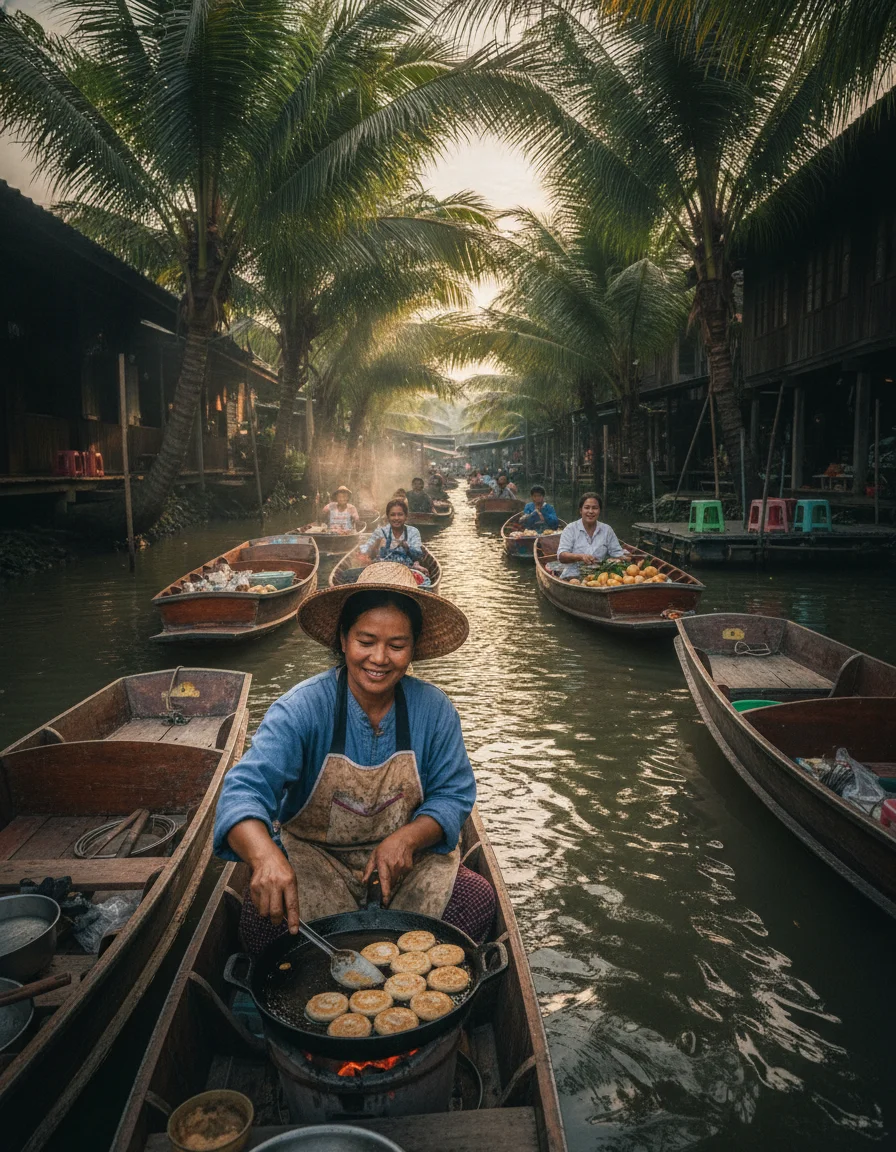
South and west of Bangkok, canals connect orchards, riverside settlements and old trading centres with the Mae Klong and the lower Chao Phraya system. Roads now carry most regional traffic, but markets and settlements still follow the waterways.
Nakhon Pathom’s principal landmark is Phra Pathommachedi, the enormous orange-tiled chedi at the centre of a working temple complex. The present structure developed through major royal rebuilding from the nineteenth century and is regarded as Thailand’s tallest chedi. Current foreign admission is 60 THB (approximately £1.35). Dress for an active religious site and be prepared to remove shoes where requested.
The Mae Klong Railway Market occupies a section of track near Mae Klong station in Samut Songkhram. Vendors move awnings and goods clear when scheduled trains enter or leave. It is an operating railway and market, not a staged performance: remain behind the line indicated by traders and railway staff, and check the day’s train times rather than relying on a tour itinerary.
Amphawa Floating Market is an afternoon and evening weekend market along Amphawa Canal, with stalls in waterside shopfronts and food sold from some boats. Current Tourism Authority information lists Friday, Saturday and Sunday operation, plus some public holidays, but individual stalls and boat services vary. Saturday tends to have the fullest range, while an overnight stay avoids having to organise a late return to Bangkok.
Boat trips are offered from the market area for canal sightseeing, temple visits and evening firefly viewing. Compare the route, duration and whether the quoted price is per person or for the whole boat before paying. Firefly activity is natural and seasonal, and sightings or numbers cannot be guaranteed.
Food of the Central Plain
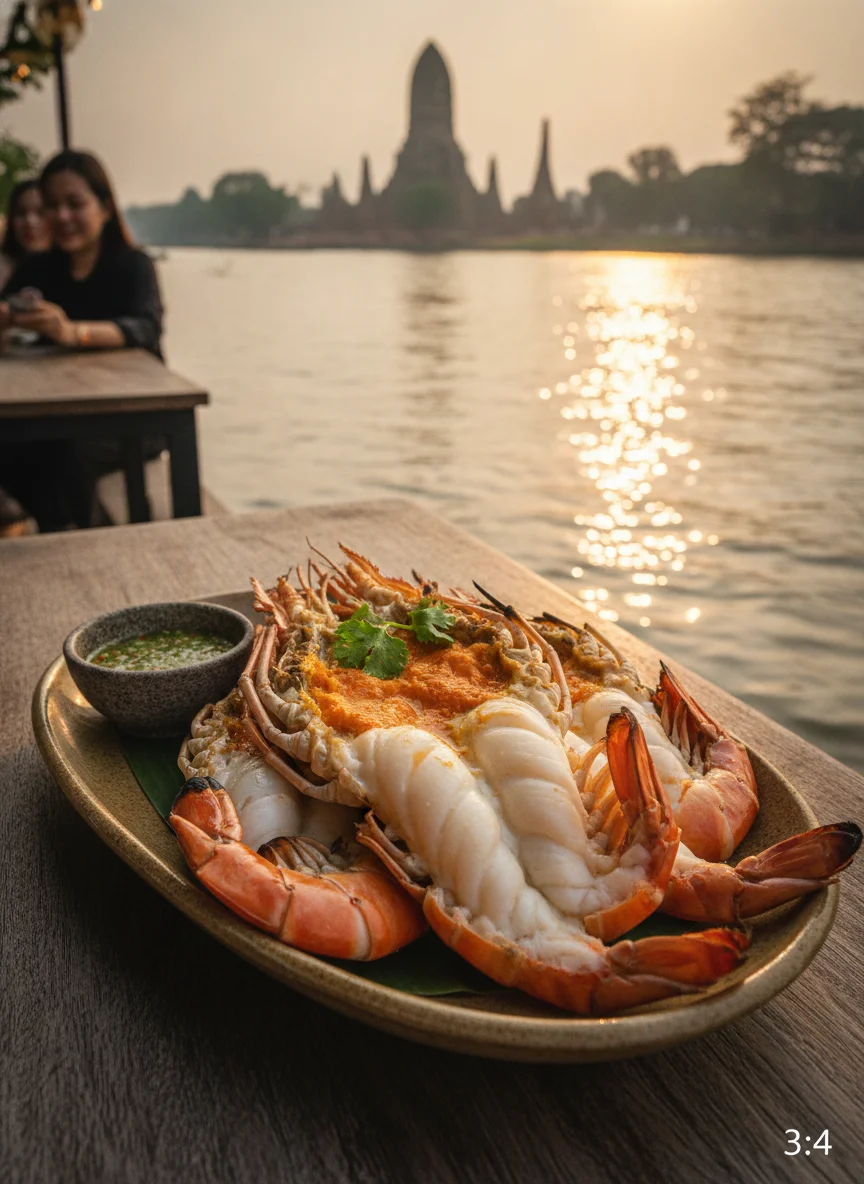
Waterways and agriculture shape much of the regional food. Freshwater fish, river prawns, rice, coconuts and palm sugar recur, but the central plain is too large to reduce to one menu. Provincial markets are useful places to try local dishes without building a journey around a particular restaurant.
Ayutthaya is strongly associated with grilled giant river prawns. They are commonly sold by weight, and the price rises sharply with size, so ask to see the prawns and confirm the price per kilogram before ordering. A current practical range is roughly 800–1,500 THB (approximately £18–£33) per kilogram, although very large specimens can cost more. Roti sai mai is the city’s portable sweet: fine strands of sugar are wrapped in a thin roti, often sold in sets with several wrappers.
Samut Songkhram is known for Mae Klong mackerel and coconut palm sugar produced around its orchard and canal landscape. At Amphawa, seafood, noodle dishes, sweets and snacks appear across both land-based stalls and boat vendors. Kanchanaburi’s river restaurants often serve freshwater fish, but prices and species depend on the venue and catch. For budget planning, simple market dishes commonly begin at about 50–80 THB (approximately £1.10–£1.80), while seafood and river prawns are ordered separately and may be considerably more expensive.
Where to Stay and Current Room Costs
Accommodation is concentrated in the provincial towns and around major visitor areas. Ayutthaya has guesthouses and small hotels around the old city, with some riverside and heritage-style properties beyond the island. Kanchanaburi offers the broadest spread, from town hotels near the railway-history sites to raft and riverside resorts farther along the Khwae Noi. Amphawa has homestays and small canal-side properties that are particularly useful for weekend-market visits.
Current booking samples support the ranges below for an ordinary room for two people. Rates vary by weekday, season, room type, cancellation terms, breakfast and taxes; weekend river properties can sit above the range. Confirm the full price and conditions before payment.
| Tier | Typical Nightly Cost | What It Usually Covers |
|---|---|---|
| Simple guesthouse or town hotel | 500–1,000 THB (approximately £11–£22) | Basic private room; air conditioning and private bathroom vary |
| Mid-range hotel or small riverside property | 1,200–3,000 THB (approximately £27–£67) | Private bathroom, air conditioning and often a pool or breakfast |
| Upper-range raft, heritage or resort stay | 3,500–7,000 THB (approximately £78–£156) | Larger room or raft accommodation, resort facilities and a more secluded setting |
Check the map carefully before booking a property described as being in Kanchanaburi. Some river resorts are many kilometres from the town and may require a hotel transfer, private vehicle or boat. In Ayutthaya, staying close to the historical island helps with early sightseeing, while an Amphawa overnight stay is most useful from Friday to Sunday.
Getting Around Central Thailand
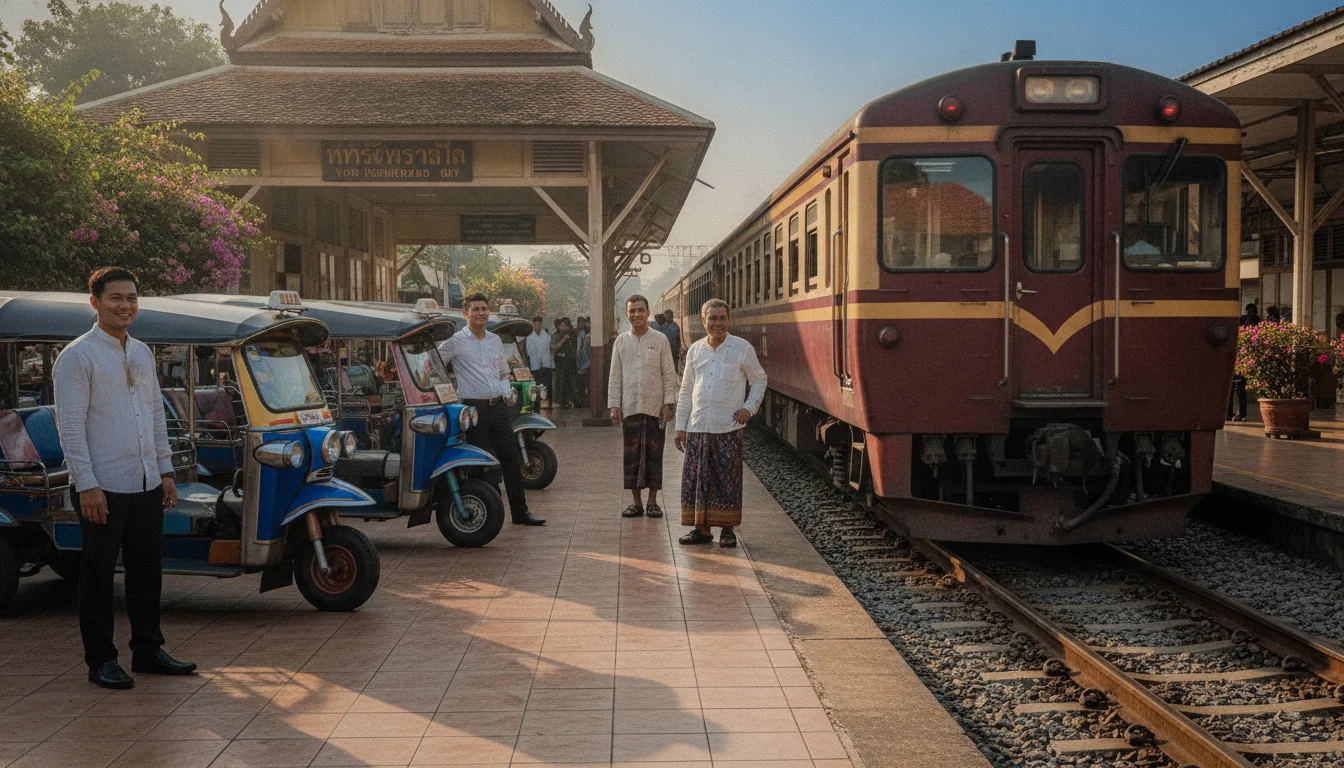
Bangkok is the main gateway, but Central Thailand does not have one transport system that links every attraction neatly. Rail is useful for Ayutthaya, Lopburi, Nakhon Pathom and Kanchanaburi; buses and minivans fill many gaps; and a car is valuable for parks, rural accommodation and multi-province routes.
Most long-distance northern-line trains serving Ayutthaya and Lopburi use Krung Thep Aphiwat Central Terminal, while some ordinary and commuter services start at Bangkok Hua Lamphong. Kanchanaburi and Nam Tok trains use Thonburi station. The separate Mae Klong railway is reached through Wongwian Yai and Mahachai, a ferry across the Tha Chin River, and the Ban Laem branch. Always check the operating station as well as the departure time.
Third-class fares can be very low, but not every service uses the same fare or rolling stock. The current foreign fare from Thonburi to Kanchanaburi or Nam Tok on the ordinary trains is 100 THB (approximately £2.25) one way. Tickets for local ordinary services are normally bought at the station; reserved express seats can be checked through the official SRT booking system.
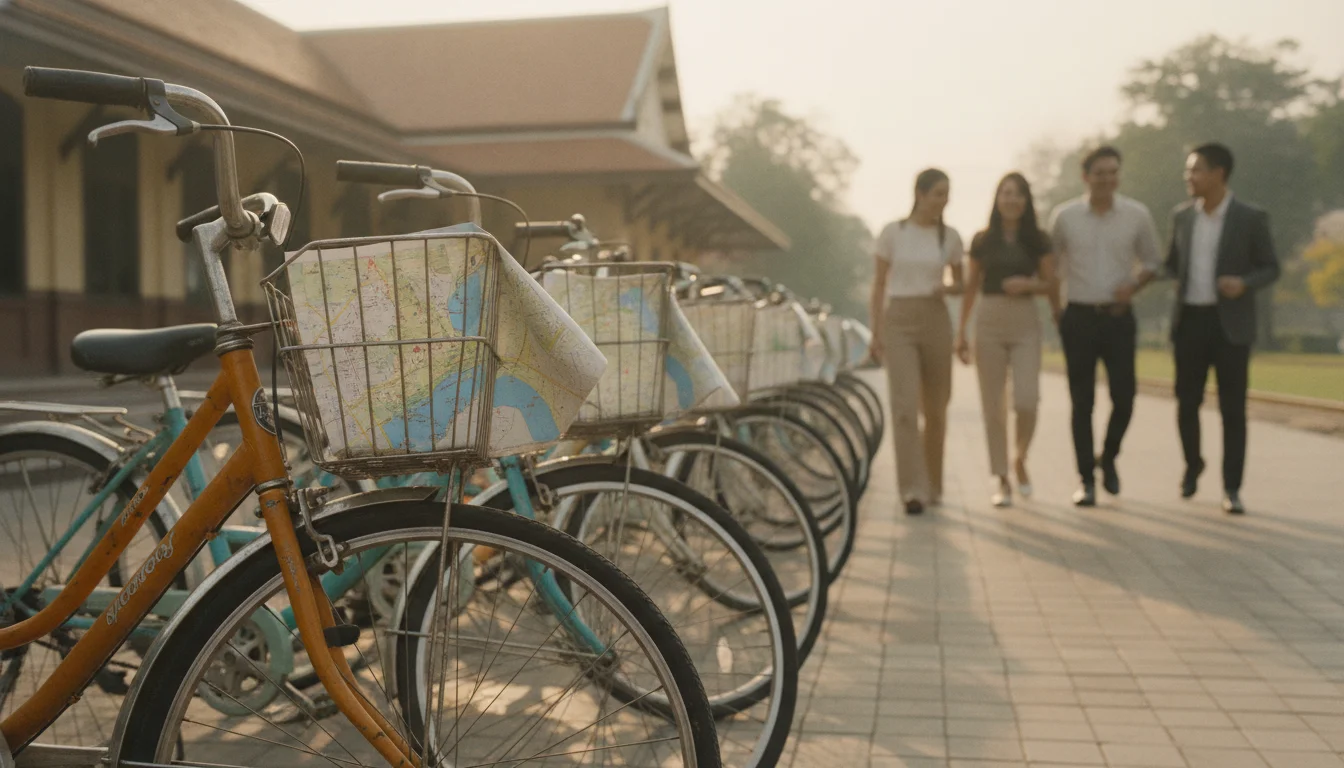
Within Ayutthaya, bicycles work for a compact island route, while tuk-tuks are better for outlying monuments. Agree the duration, route and price before starting a private hire. In Kanchanaburi, public songthaews cover parts of town, but reaching Erawan, Hellfire Pass and remote resorts often requires a bus, organised excursion or private vehicle. Ride-hailing coverage is strongest in the larger towns and should not be assumed in rural areas.
Daily Costs in Central Thailand
The region can be inexpensive when you use ordinary trains, simple rooms and local markets, but park excursions, private transfers, riverfront accommodation and large seafood orders change the total quickly. The estimates below are planning ranges per person per day, assuming two people share a room. They exclude flights, long-distance travel into Thailand, travel insurance and major shopping.
| Item | Budget | Mid-range | Notes |
|---|---|---|---|
| Accommodation share | 250–500 THB | 750–1,500 THB | Half of a shared double room |
| Meals and drinks | 300–550 THB | 700–1,400 THB | Market meals versus cafés, restaurants and seafood |
| Local transport | 100–300 THB | 500–1,500 THB | Local rail and shared transport versus private hire |
| Sights and activities | 100–400 THB | 400–1,000 THB | Historic-site tickets, parks and boat trips vary |
| Typical daily total | 750–1,750 THB (approximately £17–£39) | 2,350–5,400 THB (approximately £52–£121) | Per person, based on two sharing |
A Kanchanaburi park day or a privately hired vehicle may sit above these totals. Ayutthaya is easier to keep within the budget range because the principal ruins are close together and rail access from Bangkok is inexpensive.
Choosing an Itinerary
For a first regional trip, Ayutthaya and Kanchanaburi make the strongest contrasting pair. Three days allow one full day among the Ayutthaya monuments and two in Kanchanaburi, although four or five days provide a more realistic pace if Erawan or Hellfire Pass is included. Amphawa can be added at the weekend, but it lies southwest of Bangkok and does not fit naturally between Ayutthaya and Kanchanaburi by public transport.
Lopburi is practical as a stop on the northern railway rather than an automatic addition to every central loop. Nakhon Pathom can be visited independently by rail or road. Travellers interested mainly in waterways and markets can build a separate Samut Songkhram trip around Mae Klong and Amphawa rather than trying to include the ancient capitals.
Weather, Air Quality and River Conditions
November to February normally brings lower humidity and more comfortable conditions for outdoor sightseeing, but it is also a popular period for domestic travel. March to May is usually the hottest part of the year. Exposed archaeological sites offer limited shade, so start early, carry water and allow indoor breaks rather than relying on a fixed afternoon schedule.
The rainy season usually develops from May and continues into October, with the wettest period varying by province and year. Rain can improve waterfall flow but can also make trails slippery and affect access. Low-lying parts of the Chao Phraya basin have a history of flooding, particularly after sustained upstream rain. Check Thai Meteorological Department forecasts, park notices and local transport updates close to travel.
Air quality can deteriorate during the dry season through a combination of traffic, industry, weather conditions and open burning. Conditions change daily and are not identical across the whole region. Anyone sensitive to pollution should check the official Air4Thai readings and adjust long outdoor visits when levels are elevated.
Practical Advice
Carry cash in smaller notes for local transport, markets and ticket booths, while keeping a card or reserve cash for hotels and larger expenses. Do not assume that every provincial station, boat operator or market stall accepts contactless payment.
At active temples, wear clothing that covers shoulders and knees and follow signs about shoes and restricted areas. Archaeological ruins are protected sites: do not climb masonry, touch fragile sculpture or stand on platforms that are closed to visitors.
Cycling in Ayutthaya is straightforward on level ground but still involves live traffic, junctions and heat. Inspect the bicycle, test the brakes, use lights after dark and avoid leaving valuables in a basket. A tuk-tuk is a sensible alternative for a longer outer-temple route.
Around Lopburi’s macaques, keep food out of sight and avoid trying to retrieve an item directly from an animal. At waterfalls and rivers, obey closure notices and barriers even when other visitors ignore them. Rocks can be slippery and currents change after rain.
For the Burma–Thailand Railway sites, allow time for museums and memorials instead of treating the bridge as a quick photograph. The story includes Allied prisoners of war and the far larger Asian labour force compelled or recruited to build the line.
Download official rail information and any ride-hailing apps before leaving Bangkok, but keep your accommodation name and address in Thai for drivers. Rural mobile coverage and vehicle availability can be inconsistent.
Quick Reference Guide
| Item | Detail | Notes |
|---|---|---|
| Region | Central Thailand | Lower Chao Phraya plain with the western Kanchanaburi corridor in this guide |
| Main bases | Ayutthaya, Kanchanaburi, Amphawa | Choose bases according to history, nature or waterways |
| Transport hub | Bangkok | Check the correct rail terminal for each route |
| International airports | Suvarnabhumi (BKK), Don Mueang (DMK) | Both are in Greater Bangkok |
| Suggested duration | 3–6 days | Longer if combining several remote park excursions |
| More comfortable months | November–February | Usually less humid; still check current weather |
| Hot season | March–May | Exposed ruins can be demanding in daytime heat |
| Rainy-season consideration | May–October | Heavy rain can affect trails, rivers and low-lying roads |
| Budget guide | 750–1,750 THB (approximately £17–£39) daily | Per person with two sharing a simple room |
| Main transport | Trains, buses, minivans, songthaews and hired cars | Rural attractions often need road transport |
| Principal heritage | Ayutthaya, Lopburi and the Burma–Thailand Railway sites | Ayutthaya is UNESCO-listed |
| Regional foods | River prawns, freshwater fish, *roti sai mai*, Mae Klong mackerel and coconut palm sugar | Seafood prices often depend on weight |
FAQ: Central Thailand
How should I plan my itinerary for Central Thailand?
How should I explore the Historic City of Ayutthaya?
What should I know about visiting Lopburi with its macaques?
How many days should I spend in Kanchanaburi?
What should I know when visiting the Mae Klong Railway Market?
What should I consider before taking a boat trip at Amphawa Floating Market?
How should I order grilled giant river prawns in Ayutthaya?
What is the dress code for visiting active temples in Central Thailand?
What is a typical daily budget for Central Thailand?
When is the best time to visit Central Thailand for comfortable weather?
Reviewed by the Thailand Guide Editorial Team • Last reviewed: 21 August 2026
This page is provided for general information only. While we aim for accuracy, details can change — please verify anything important independently before relying on it.