Germany has awarded Thailand a non-repayable grant of €15 million (approximately 570 million baht) to fund two major climate adaptation initiatives.
Announced by Natural Resources and Environment Minister Suchart Chomklin on 23 October, the funding targets agricultural reform and coastal defence systems across vulnerable provinces. The finance is provided through the German Environment Ministry's International Climate Initiative. Unlike standard international development loans, the capital does not need to be repaid.
Urban flood defence and coastal management
Part of the funding focuses on low-lying urban centres. Thailand will receive €5 million (190 million baht) over seven years for the ANCHOR project, an initiative shared with the Philippines.
This scheme covers Bangkok, the Eastern Economic Corridor, and the coastline along the Gulf of Thailand. These areas contain the highest concentrations of British expatriates in the country, particularly within Bangkok, Pattaya, and Rayong.
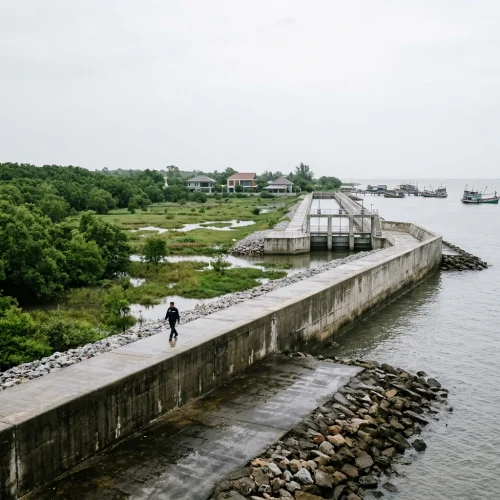
The project prioritises nature-based defences over conventional concrete seawalls and pump stations. Mangrove restoration, urban wetlands, and natural drainage corridors will be deployed to absorb storm surges and excessive seasonal rainfall.
For British citizens renting or buying property in these regions, the success of these schemes will directly affect local flood vulnerability. Monsoon rains routinely cause severe surface flooding in low-lying residential roads and ground-floor units.
The funding arrives as seasonal floods continue to affect 16 Thai provinces. In Bangkok alone, recent flood events have hit 168,203 households across two low-lying outer districts.
Agricultural reform and supply chains
The larger portion of the German grant, totalling €10 million (380 million baht), supports the five-year ENNaCT programme. Managed by Thailand’s Department of Climate Change and Environment, this project combines biodiversity protection with emissions reductions in the agricultural sector.
The initiative introduces green budgeting rules and sustainable financing directly into farming supply chains.
For long-term UK residents, changes to agricultural practices and supply systems could alter domestic food pricing over time. Thailand has faced erratic weather patterns that regularly disrupt crop yields, driving up the cost of staple goods in local markets and supermarkets.
Wider climate funding and expat considerations
The German grant forms part of a broader push by Thai authorities to secure external climate finance. Over the past fortnight, the Ministry of Natural Resources and Environment has secured more than 670 million baht in total grant funding.
Thailand is also negotiating a US$200 million clean energy loan from the World Bank. Furthermore, officials held talks on 15 October regarding a US$120 million bilateral carbon-trading framework with Switzerland.
International environmental indices now rank Thailand 17th globally for climate risk.
For British nationals living in Thailand or planning a relocation, flood exposure is becoming an essential financial consideration. Flood risks influence building maintenance fees, local transport access during the autumn monsoon, and insurance costs for vehicles and private properties. Expatriates purchasing an apartment or taking on a residential lease must look closely at local municipal drainage capacity before making financial commitments.
The Ministry of Natural Resources has confirmed that both German-funded projects will operate from national policy level down to individual municipalities. However, the government has not yet published formal start dates or specific district timetables. British residents in low-lying zones will need to track local council announcements to see when neighbourhood drainage works commence.
Source: thethaiger.com
Reviewed by the Thailand Guide Editorial Team • Last reviewed: 28 October 2026
This page is provided for general information only. While we aim for accuracy, details can change — please verify anything important independently before relying on it.