Pran Buri Dam - Prachuap Khiri Khan
Pran Buri Dam holds back a vast freshwater reservoir across the Pran Buri River in Prachuap Khiri Khan province. Built and managed by Thailand's Royal Irrigation Department, the installation operates as a major piece of civil water management infrastructure. Its storage basin irrigates more than 200,000 rai of agricultural plantations across the surrounding district, channels raw water supplies to municipal treatment facilities serving Hua Hin and neighbouring settlements, and moderates seasonal river crests during monsoon downpours.
Beyond its civil utility, the reservoir provides an expansive inland environment that contrasts sharply with the built-up coastal corridor of northern Prachuap Khiri Khan. Hemmed in by the forested hills of the Tenasserim mountain chain, the water catchment draws independent travellers looking for wide rural landscapes, open cycling and walking routes, and quiet lakeside vantage points.

The Dam and Reservoir Landscape
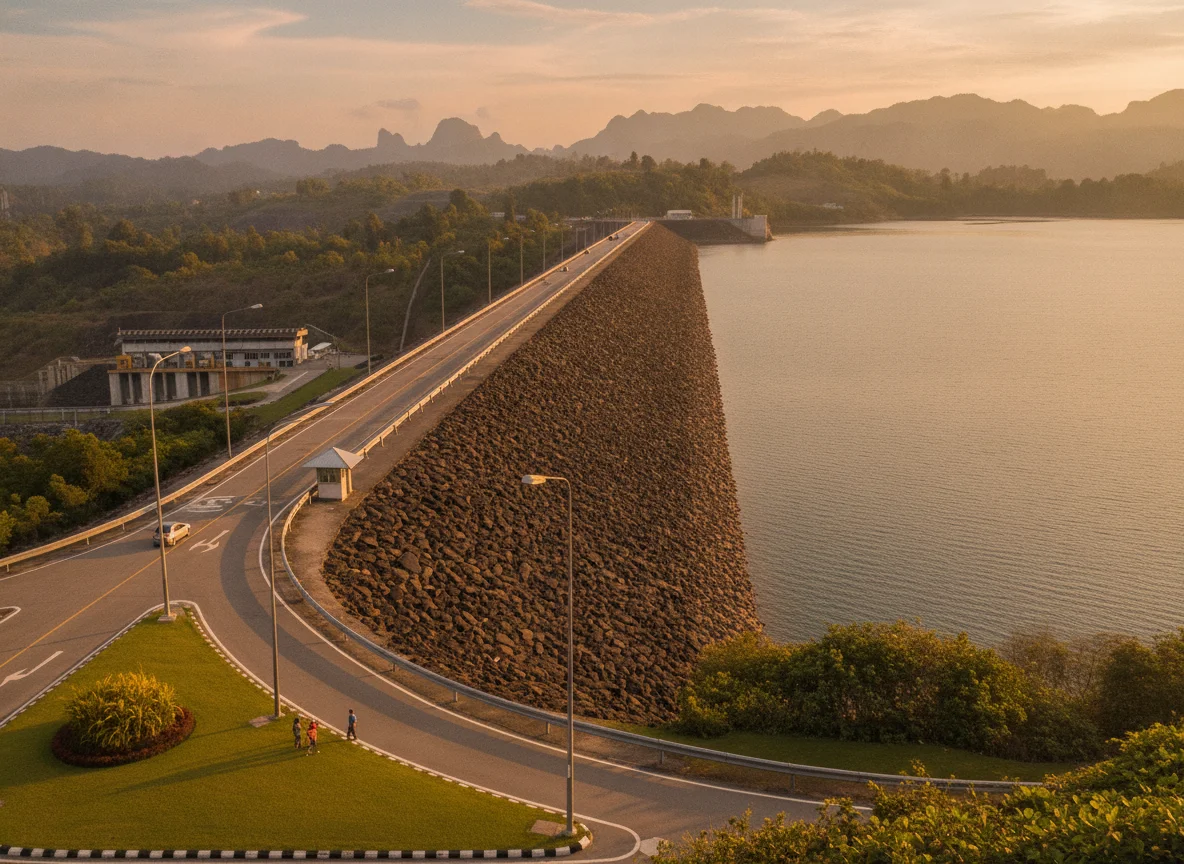
Rather than a towering concrete barrier, Pran Buri Dam is constructed as a substantial earth-fill embankment. Completed in 1982 following a construction programme initiated in the late 1960s, the earthworks span 1,500 metres in crest length, stand 42 metres high from the riverbed base, and measure 8 metres across the crest road. The impounded basin has a standard storage capacity of approximately 391 million cubic metres of water, creating an expansive surface that broadens deep into the foothills.
A paved two-lane public road runs along the top of the embankment. Travellers standing along the ridge can take in unobstructed vistas in two directions. To the west, the reservoir stretches toward the Myanmar border ridge, mirroring shifts in weather from glassy calms on clear mornings to wind-whipped surfaces under overcast skies. To the east, the view drops past the discharge spillway toward the low-lying farming belt, where pineapple fields, rubber groves, and small hamlets stretch across the plain.
Local Life and Waterside Activities
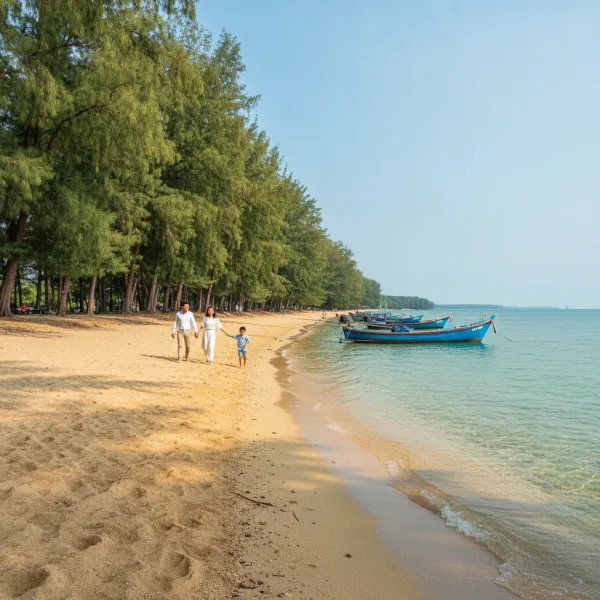
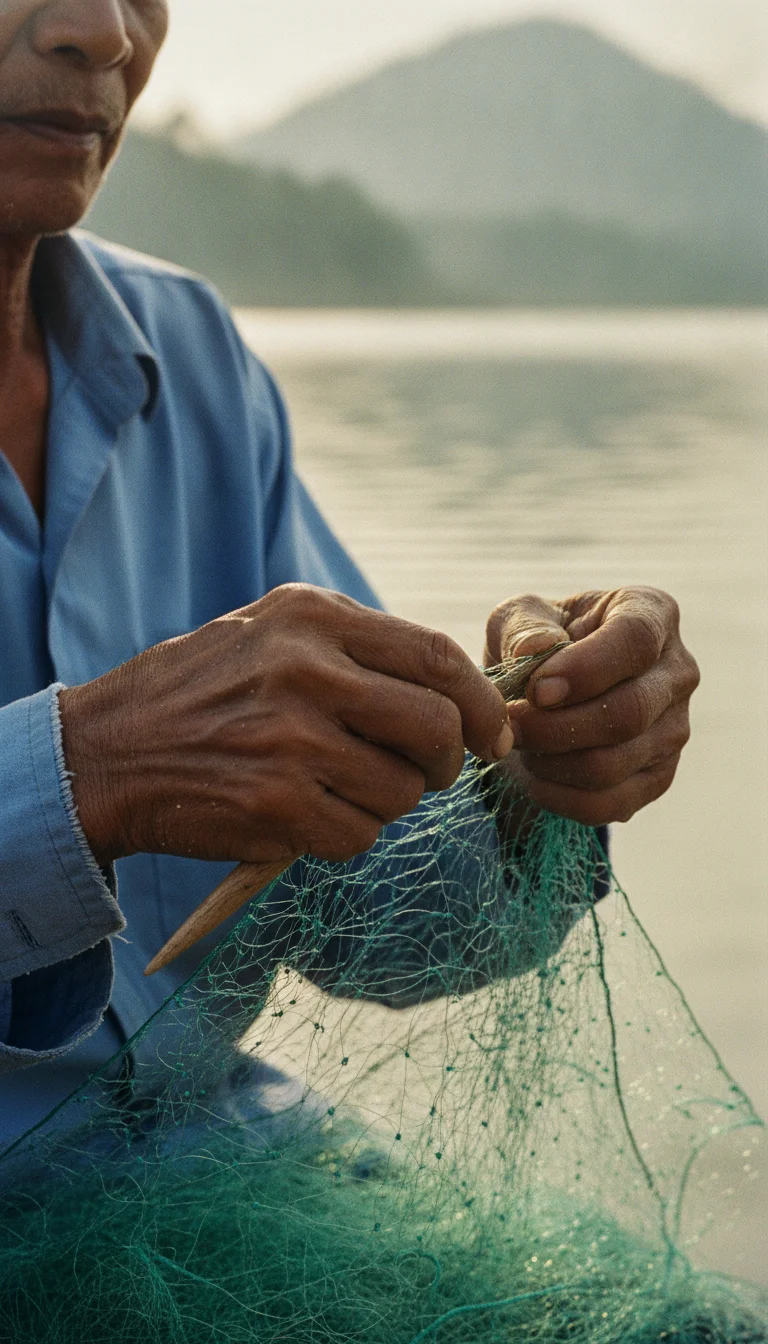
The reservoir supports a distinct riverside rhythm anchored in local agriculture and subsistence fishing. Local residents deploy narrow longtail boats and traditional hand nets to harvest freshwater species such as snakehead, catfish, and carp, which have populated the basin through provincial fisheries stock releases. Early mornings and late afternoons see these small vessels moving quietly across the shallows near the river inlet.
Seasonal fluctuations in the water reserve create shifting landscapes along the shoreline. When water drawdowns expose broad grassy banks, local farmers bring flocks of sheep and herds of goats down to graze on the emergent lakeside meadows. This pastoral sight has made the exposed flats behind the main ridge a regular subject for regional photographers and touring motorists. For recreational visitors, the open water allows self-supported activities such as kayaking and stand-up paddleboarding, particularly during the early morning before midday winds generate chop across the open basin.
An expert UK guide to Cape Nidhra Hotel in Hua Hin, covering private pool suites, beachfront dining, Cape Spa facilities, room rates, and transport from Bangkok.
Ridge Access and Amenities
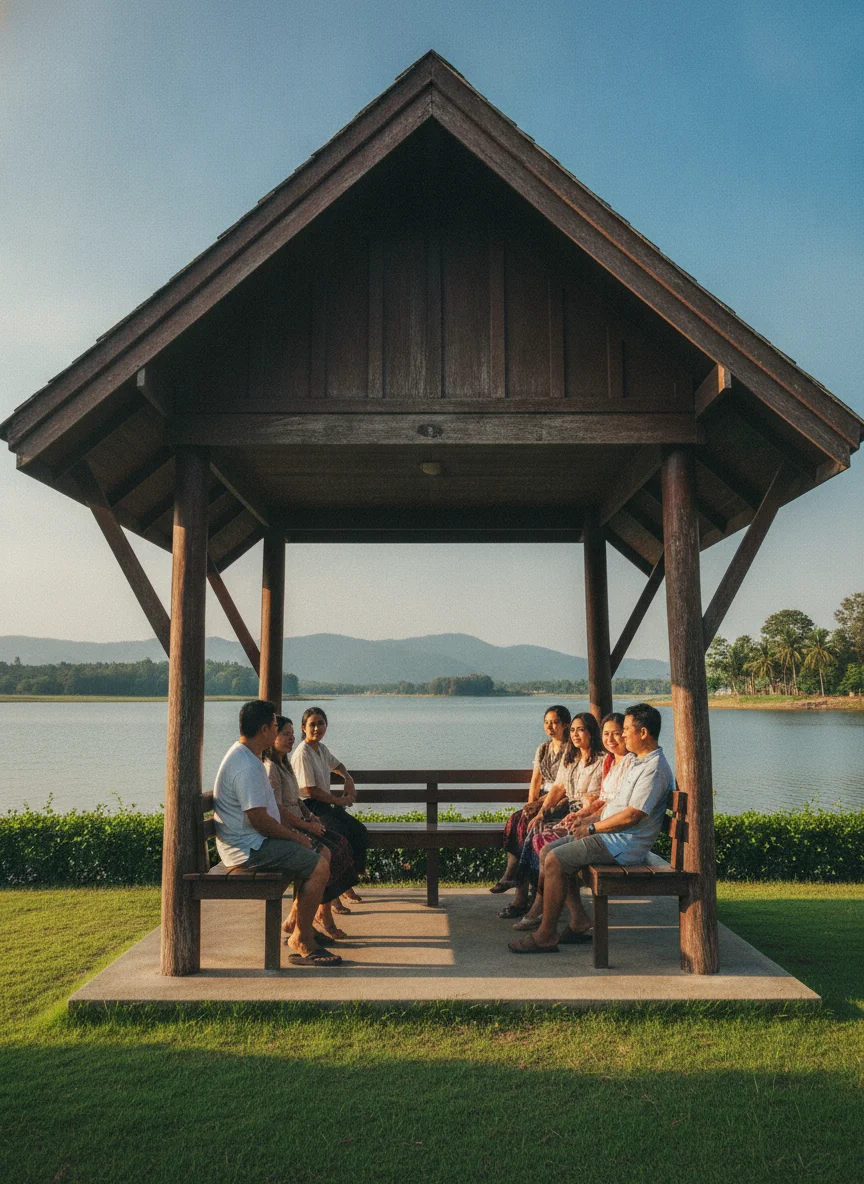
Pran Buri Dam functions strictly as an operational irrigation site rather than an entertainment-focused attraction. As a result, commercial infrastructure along the crest remains minimal. Paved parking turnouts and simple shaded pavilions border sections of the ridge and administrative compounds, giving visitors clear resting spots without interfering with maintenance traffic.
No permanent restaurants, souvenir stores, or commercial visitor centres operate directly on the dam ridge. A handful of independent mobile coffee stalls and roving snack vendors sometimes park near the crest during weekend late afternoons to cater to domestic day-trippers, but their presence remains informal. Public convenience facilities near the administrative entry gates are basic and maintained to operational government standards. Late afternoon remains the most active visiting period, when lower temperatures and softening light draw walkers, cyclists, and families to the dam top to watch the sun drop behind the mountains.
Natural Environment and Wildlife
The construction of the reservoir created a rich freshwater ecosystem set within a transition zone between coastal lowlands and upland wilderness. The vast surface and surrounding reed banks draw a healthy variety of resident and migratory waterbirds. Great egrets, little cormorants, kingfishers, and pond herons hunt the shallows, while swallows and swiftlets feed over the open water during the cooler hours of the day.
Behind the lake perimeter, scrub-covered limestone crags and tropical woodland rise towards the eastern edges of the Tenasserim mountain chain, forming part of the broader ecological corridor that runs north towards Kaeng Krachan. While larger mammals remain tucked deep in the protected interior hills, the immediate vicinity of the reservoir supports monitor lizards, freshwater turtles, and butterflies, giving the perimeter a calm, grounded natural character.
Location and Getting There
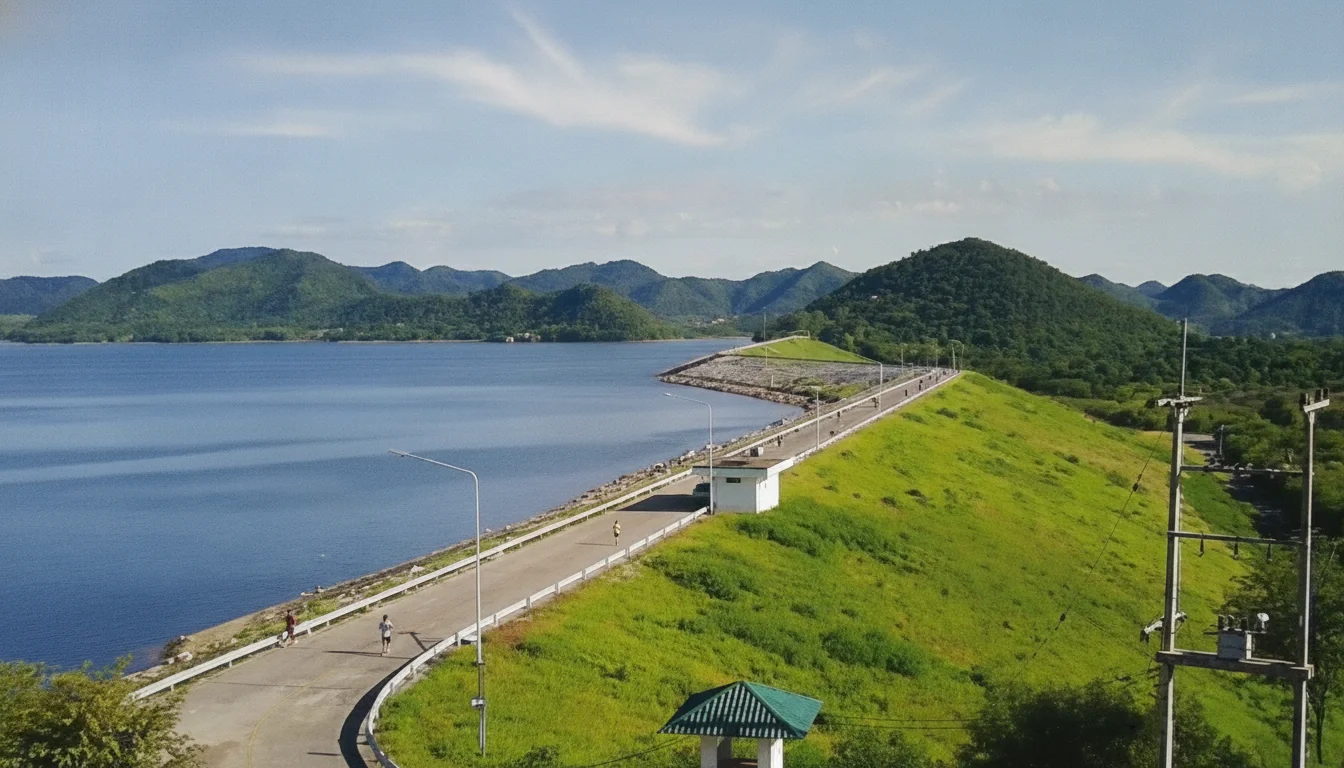
Pran Buri Dam lies in the Pran Buri District of Prachuap Khiri Khan Province, roughly 35 kilometres southwest of central Hua Hin and approximately 20 kilometres inland from the Gulf coast. While Hua Hin is the primary resort destination in the region, the provincial capital is Prachuap Khiri Khan town further south. The dam sits well inland, bordered by pineapple plantations, rural hamlets, and the forested foothills flanking the Tenasserim mountain range along the Myanmar border.
Travel from the UK begins with international flights arriving at Bangkok’s Suvarnabhumi Airport (BKK). From Bangkok, travellers can reach Hua Hin by direct airport coach, scheduled long-distance train from Krung Thep Aphiwat Central Terminal, or private vehicle down Highway 4 (Phetkasem Road), a journey of roughly three to four hours depending on traffic.
Public transport does not extend directly to the reservoir. While passenger trains and buses connect Bangkok to Hua Hin and Pran Buri town, reaching the dam crest requires private transport. Most visitors rent a car or scooter in Hua Hin or charter a private taxi for a return trip. The drive takes 35 to 45 minutes from Hua Hin, branching off Highway 4 onto rural roads that wind through agricultural countryside to the dam wall. Ride-hailing app drivers will drop passengers off at the reservoir, but return vehicles cannot be hailed from the area due to patchy coverage and remote roads, so visitors relying on taxis should negotiate a return pick-up or waiting time beforehand.
Costs and Booking
Pran Buri Dam operates as public infrastructure managed by the Royal Irrigation Department, meaning there are no entry tickets, admission gates, or advance booking requirements. Visitors arriving by car, motorbike, or bicycle can access the dam crest and viewpoints free of charge. Parking at the roadside pull-offs and viewing points is also complimentary.
Because entry is free, visitor costs centre on transport and local refreshments. For travellers staying in Hua Hin, transport is the main expenditure. A pre-arranged round trip by chartered taxi, private hire car, or songthaew typically costs between 600 and 1,000 THB (£13.20 to £22.00). Organising your return journey in advance is advisable, as ride-hailing drivers are rarely available for pick-up around the reservoir. A one-way private car transfer from Bangkok costs approximately 2,500 to 3,500 THB (£55.00 to £77.00).
Incidental costs at the dam remain low. Roadside vendors near the viewpoints sell bottled water, soft drinks, coconuts, and light snacks, usually priced between 20 and 50 THB (£0.45 to £1.10) per item. Those stopping to feed the roaming herds of goats along the banks can purchase bunches of leaves from local handlers for around 20 THB.
| Option | Cost (THB per day) | Cost (GBP approx) | Notes |
|---|---|---|---|
| Entry Fee | Free | Free | Access to the dam and general recreational areas is complimentary. |
| Parking | Free | Free | Designated parking areas are available and are generally free of charge. |
| Local Transport (Day Trip from Hua Hin) | 600 - 1,000 | £13.20 - £22.00 | Estimated cost for a round-trip taxi or songthaew from Hua Hin. |
| Private Car Hire (Bangkok to Dam) | 2,500 - 3,500 | £55.00 - £77.00 | One-way hire cost from Bangkok, can be negotiated for return trips. |
| Snacks and Drinks | 50 - 150 | £1.10 - £3.30 | Approximate cost for personal consumption of local refreshments. |
Arranging vehicle hire or private transit ahead of time is the most dependable way to manage expenses when planning an excursion to the reservoir.
Who It Suits

Pran Buri Dam suits independent travellers looking to explore rural Prachuap Khiri Khan at an unhurried pace. Landscape photographers find wide vantage points across the reservoir basin and the backdrop of the Tenasserim hills, particularly in the late afternoon. It also appeals to birdwatchers, cyclists, and families wanting an informal picnic spot beside the water, away from the busier coastal strips of Hua Hin and Pran Buri town.
The dam is poorly suited to anyone expecting structured resort facilities, commercial watersports, or guided tour infrastructure. Visitors seeking nightlife, upscale dining, or shopping will find nothing of that kind here. Because the site functions primarily as a working irrigation reservoir rather than a managed tourist park, it rewards self-reliant visitors who appreciate quiet open space over organised entertainment.
What to Know Before You Visit
Pran Buri Dam is a working public infrastructure asset managed by the Royal Irrigation Department rather than a commercial tourist venue, meaning no advance reservations, permits, or entry bookings are required to access its perimeter and public viewpoints.
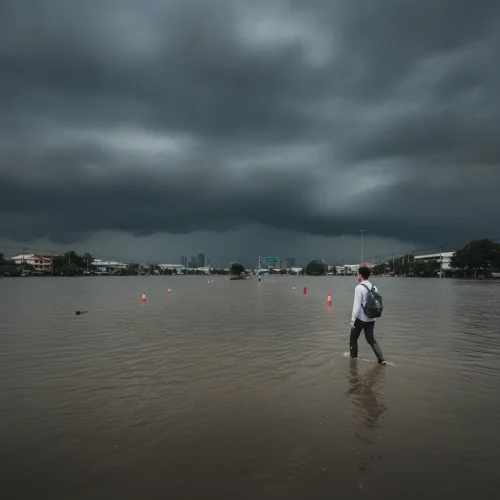
Because the reservoir’s primary function is water storage, flood mitigation, and regional agricultural irrigation, its operational cycle directly governs the landscape. Water volumes shift significantly between the dry season and the monsoon. During extended dry spells, falling water levels expose broad expanses of the lakebed and create temporary grassy plains, whereas post-monsoon storage pushes the water line high against the surrounding hills.
Operational access rules also require consideration. As an active hydrological installation, the Royal Irrigation Department may periodically close service tracks or restrict vehicle movement across the dam crest for maintenance without prior announcement. Mobile network coverage is patchy along rural access roads bordering the water. Timing also influences the setting: the reservoir remains largely quiet on weekdays, but weekends and Thai public holidays draw local families and day-trippers, shifting the environment from quiet seclusion to a lively community gathering.
Practical Tips

Visiting during the cooler, dry months between November and February provides the most comfortable conditions. The dam ridge extends for roughly 1.5 kilometres with minimal tree cover, making early mornings and late afternoons the sensible times to arrive. Midday temperatures on the open crest can be intense, whereas late afternoon visits bring cooler breezes and softer light across the water and surrounding hills. Bring sun protection, including a hat and sunglasses, as there is little shelter along the walkway.
On-site amenities along the reservoir ridge are limited to basic drink stalls, so carry sufficient drinking water and snacks for your outing. Pack a rubbish bag to take any waste back with you, as bins are scarce across the grassy perimeter. Sturdy walking shoes are recommended if you intend to walk the length of the crest or step down onto the sloped banks. Apply insect repellent if staying until dusk. Visitors keen on birdwatching should bring binoculars to view waterbirds across the basin, and carrying small cash notes is useful for buying feed from shepherds on the seasonal grazing flats. Modest attire remains appropriate when interacting with nearby village communities.
Quick Reference Table
| Item | Detail | Notes |
|---|---|---|
| Managing Authority | Royal Irrigation Department | Operational civil water infrastructure and reservoir management |
| Structure Type | Earth-fill embankment | Completed in 1982; stands 42 m high with an 8 m wide crest road |
| Crest Length | 1,500 metres (1.5 km) | Paved two-lane public road along the ridge |
| Storage Capacity | Approx. 391 million m³ | Irrigates over 200,000 rai of agricultural land |
| Location | Pran Buri District, Prachuap Khiri Khan | Roughly 35 km southwest of Hua Hin and 20 km inland from the coast |
| Entry Fee | Free | No admission charges, permits, or booking requirements |
| Parking | Free | Available at roadside pull-offs and designated viewing points |
| Best Time to Visit | November to February | Cooler dry season; early mornings and late afternoons offer best light and weather |
| Hua Hin Day Trip Transport | 600 – 1,000 THB (£13.20 – £22.00) | Approximate round-trip fare via chartered taxi or songthaew (35–45 min drive) |
| Bangkok Private Transfer | 2,500 – 3,500 THB (£55.00 – £77.00) | Estimated one-way private hire cost from Bangkok |
| On-Site Amenities | Basic toilets and mobile snack vendors | No permanent restaurants, shops, or commercial visitor centres on the crest |
| Key Activities | Sightseeing, walking, cycling, birdwatching | Self-supported kayaking and paddleboarding during early morning calms |
FAQ: Pran Buri Dam
Where is Pran Buri Dam located?
What is the purpose of Pran Buri Dam?
Is there an entry fee for Pran Buri Dam?
How can visitors get to Pran Buri Dam?
Is it possible to use ride-hailing services for a return trip from Pran Buri Dam?
What is the best time of year to visit Pran Buri Dam?
What is the best time of day to visit Pran Buri Dam?
What amenities are available at Pran Buri Dam?
What kind of visitor is Pran Buri Dam not suitable for?
What should visitors bring to Pran Buri Dam?
Reviewed by the Thailand Guide Editorial Team • Last reviewed: 24 September 2026
This page is provided for general information only. While we aim for accuracy, details can change — please verify anything important independently before relying on it.