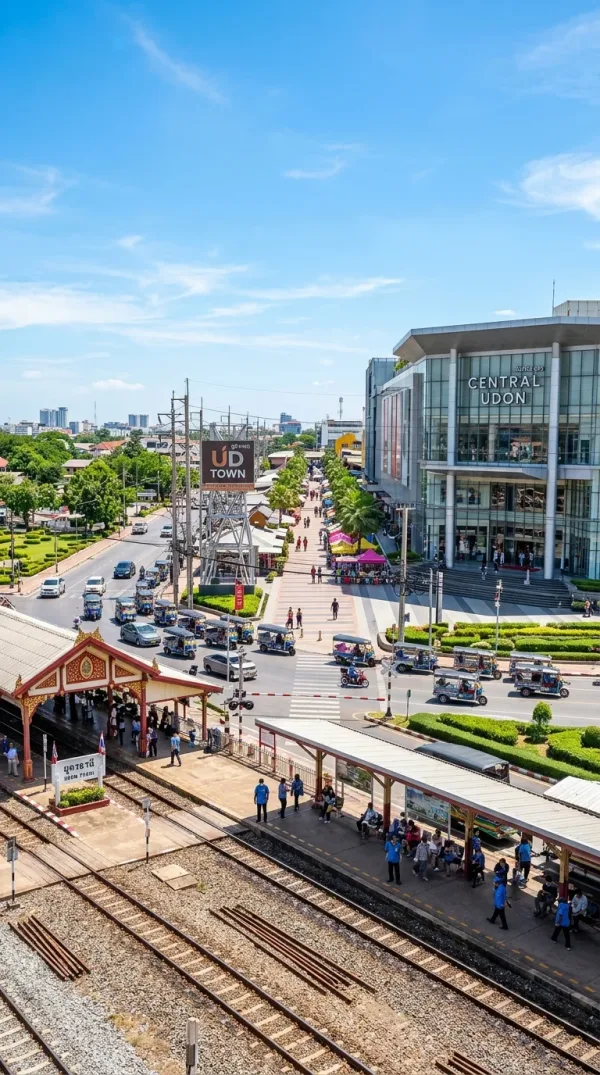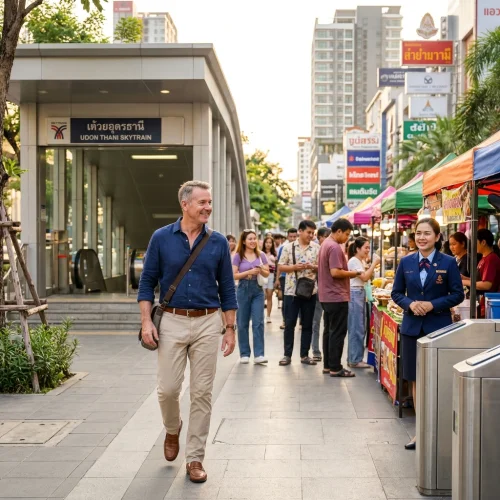
Udon Thani generated 11.096 billion baht in tourism revenue from 3.97 million visitor trips between January and September 2026, confirming its role as the primary transport and commercial hub for upper north-eastern Thailand.
The United Kingdom ranks as the second-largest foreign visitor market in the province, surpassed only by neighbouring Laos. For British expatriates living in Isaan or considering relocating to the region, sustained investment in local infrastructure, retail services, and cross-border transport directly affects day-to-day living conditions, travel connections, and short-term housing costs.
Regional Revenue and Expat Demographics
Udon Thani recorded a 4.5% increase in visitor trips and a 3.6% rise in tourism revenue across the first nine months of 2026. Average hotel occupancy reached 61.46% between January and August, rising to 68.80% in September. Across the whole of 2025, the province recorded more than five million visitors and approximately 14 billion baht in tourism revenue.
Within the wider Northeast, Udon Thani ranked second for total visitor numbers during the first eight months of the year, behind Nakhon Ratchasima’s 6.45 million trips and ahead of Khon Kaen’s 3.49 million. The province ranked third in total tourism revenue, generating 9.87 billion baht between January and August, behind Nakhon Ratchasima (16.72 billion baht) and Khon Kaen (11.57 billion baht).
Foreign visitor spending remains Udon Thani's primary distinction within the regional economy. Foreign arrivals generated 2.39 billion baht in the first eight months of 2026, representing a 5.61% increase year-on-year. While neighbouring Nong Khai recorded more foreign entries—800,043 compared to Udon Thani's 724,316—Udon Thani earned significantly more revenue from international visitors.
Average spending per trip illustrates this commercial gap. Domestic Thai travellers spend an average of 1,700 baht per person over a typical two-day visit, whereas foreign visitors spend between 2,500 and 2,600 baht. British nationals, alongside visitors from Vietnam, the United States, and Germany, form the core of this western market.
Cross-Border Trade and Transport Infrastructure
Cross-border mobility underpins the provincial economy. Lao motorists crossing via the Thai–Lao Friendship Bridge at Nong Khai and the newer crossing at Bueng Kan travel regularly into Udon Thani at weekends for retail, dining, and private healthcare. Retail operators at major commercial developments, including Central Udon, report substantial retail turnover from these visiting cross-border families.
For British residents, the expansion of transport links offers improved access to Bangkok, other Thai provinces, and regional aviation networks. Udon Thani International Airport provides regular domestic flights to Bangkok’s Don Mueang and Suvarnabhumi airports, as well as direct services to Chiang Mai, Phuket, Hat Yai, and the eastern seaboard via carriers including Nok Air, AirAsia, and Thai Lion Air.
Direct international flights remain limited. South Korean tour groups currently access the province by flying into Vientiane’s Wattay International Airport in Laos before transferring by coach across the border to play on local 18-hole golf courses during the northern hemisphere winter. Charter operations from Chinese cities such as Yiwu and Wuxi have operated intermittently, though rising aviation fuel costs have affected commercial consistency.
Rail connections have also improved. Scheduled rail services link Bangkok’s Krung Thep Aphiwat Central Terminal with Nakhon Ratchasima, Khon Kaen, Udon Thani, and Nong Khai, before continuing across the border to Vientiane. These routes provide reliable options for expatriates completing routine administrative trips, visa extensions, or domestic travel without using regional motorways.
The Horticultural Expo and Short-Term Property Demand
The Udon Thani International Horticultural Expo 2026, scheduled from late 2026 to early 2027, is expected to place short-term pressure on local accommodation and services. The Department of Agriculture is targeting a visitor distribution of 70% domestic travellers and 30% international arrivals.
British expatriates renting property or planning local travel during this period should anticipate higher occupancy and seasonal price increases. The Tourism Authority of Thailand (TAT) plans to redirect visitor overflow to neighbouring provinces, including Nong Khai—located roughly 50 kilometres to the north—and Khon Kaen to the south.
Short-term rental rates for a serviced apartment or residential unit in central Udon Thani are likely to rise as visitors arrive for the event. Long-term residents planning lease renewals during late 2026 and early 2027 may encounter less flexibility from landlords and local estate agents during the peak months of the exposition.
Regional Touring Corridors and Cultural Sites
The provincial tourism authority manages Udon Thani alongside Nong Khai and Bueng Kan, marketing the three provinces as a combined corridor. Each area provides distinct amenities:
Udon Thani: Functions as the primary commercial, retail, and medical centre, alongside historical destinations such as the UNESCO World Heritage sites at Ban Chiang and Phu Phrabat, and the natural lake at the Red Lotus Sea. Nong Khai: Serves as the primary river crossing into Laos, featuring residential developments along the Mekong River and established seasonal events such as the Naga fireball celebrations. * Bueng Kan: Focuses on regional nature travel, including the geological rock formations at Hin Sam Wan (Three Whale Rock), Kinnari Waterfall, and the elevated trail networks at Naka Cave.
Religious tourism routes linked to traditional Naga beliefs generate consistent visitor traffic throughout the calendar year. These itineraries connect Kham Chanod and Wat Pa Dong Nong Sao in Udon Thani with riverside locations in Nong Khai's Sangkhom district and upland sites in Bueng Kan. This year-round domestic footfall provides revenue stability for rural businesses, smallholder transport operators, and independent restaurants situated along secondary road networks.
Environmental Factors and Long-Stay Planning
Environmental conditions continue to affect travel patterns and regional quality of life. Slower economic growth and household repair costs following wet-season flooding in central Thailand have occasionally constrained domestic travel from Bangkok.
Air quality represents a recurring seasonal problem for expatriates living in the upper Northeast. During the dry season, elevated levels of PM2.5 airborne particulate matter regularly affect Nong Khai, Bueng Kan, and rural Udon Thani. When regional monitoring stations report pollution reaching red alert status, domestic cancellations increase, and outdoor activities become hazardous.
For British retirees and remote workers establishing a base in upper Isaan, these dry-season pollution peaks require practical planning, including air filtration within domestic properties and scheduled travel during the most affected weeks.
Despite seasonal and environmental headwinds, the sustained commercial development of Udon Thani ensures steady access to private hospitals, western goods, retail centres, and international transport links, maintaining the province's status as the principal administrative and residential hub for foreign nationals living in north-eastern Thailand.
Source: nationthailand.com
Reviewed by the Thailand Guide Editorial Team • Last reviewed: 4 November 2026
This page is provided for general information only. While we aim for accuracy, details can change — please verify anything important independently before relying on it.