Bridge Over the River Kwai
Spanning 300 metres across the Khwae Yai River in Tha Ma Kham, the Bridge Over the River Kwai stands as Section 277 of the 415-kilometre Thai-Burma Railway constructed by Allied prisoners of war in 1943. While Allied air strikes destroyed the original wooden and steel spans in 1945, the reconstructed iron bridge remains fully operational today, carrying local passenger trains across the water six times daily.
The Bridge Over the River Kwai is a national memorial and functional railway bridge managed by the State Railway of Thailand, located three kilometres north of central Kanchanaburi town. Constructed under the supervision of the Imperial Japanese Army during World War II, the landmark serves as the focal point for military history tourism in western Thailand. The site operates as a free public attraction supported by adjacent state-managed museums and private transport operators. It best suits independent history travellers, military heritage researchers, school groups, and British visitors tracing family ties to the Far East campaign.

Structural Architecture and Engineering Features
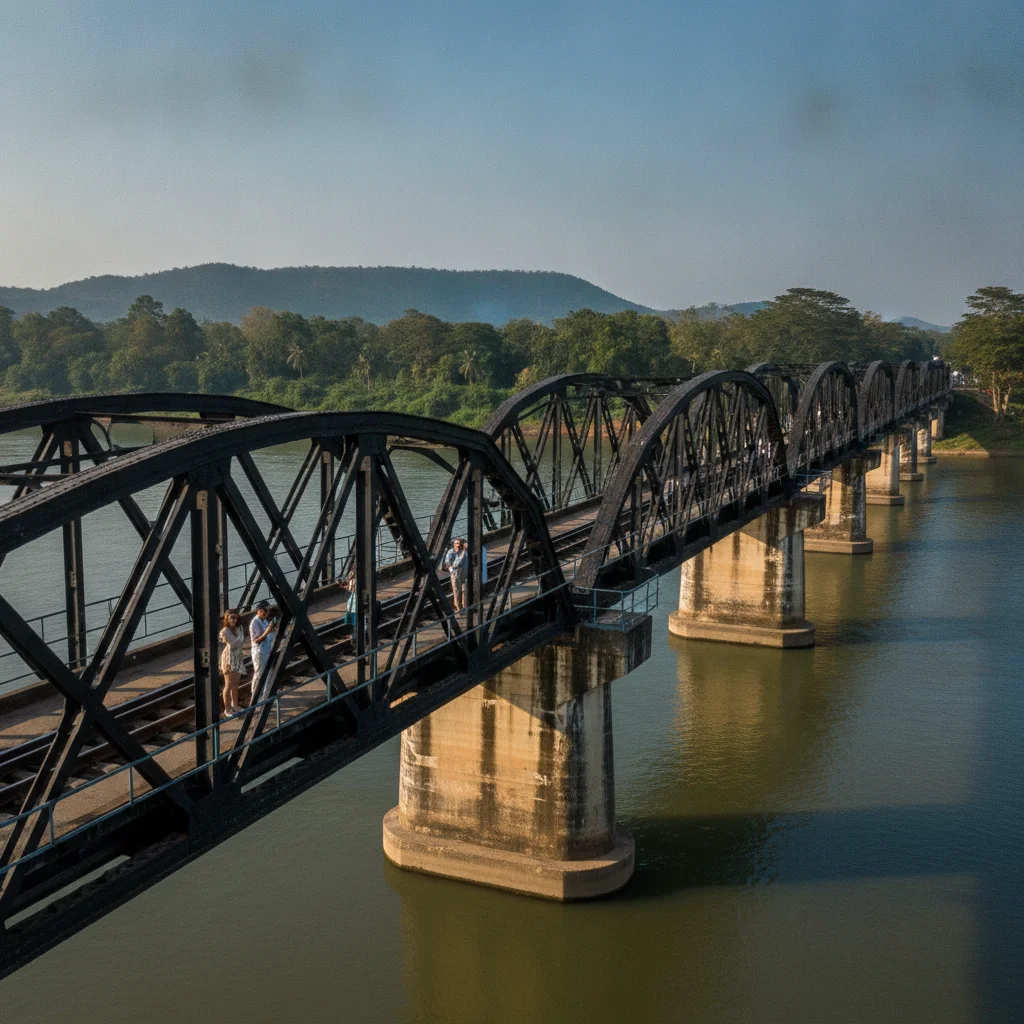
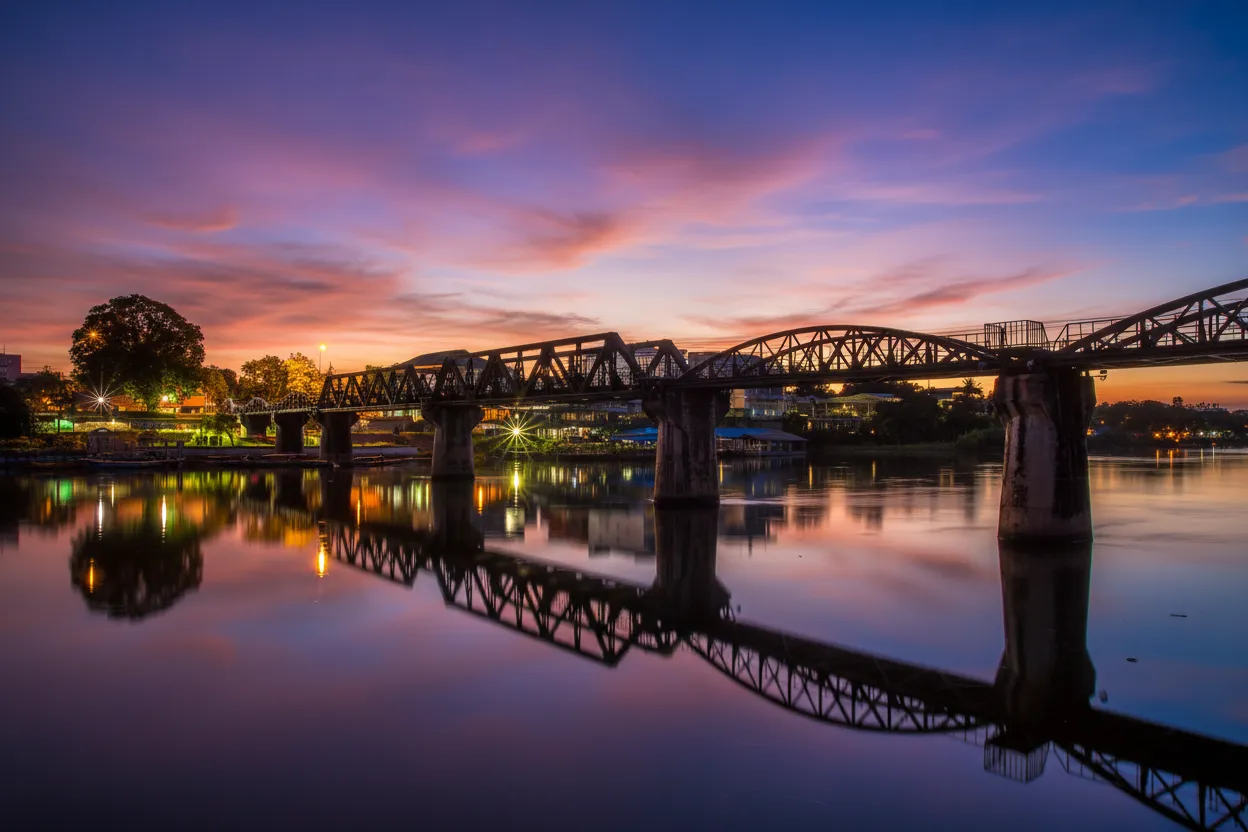
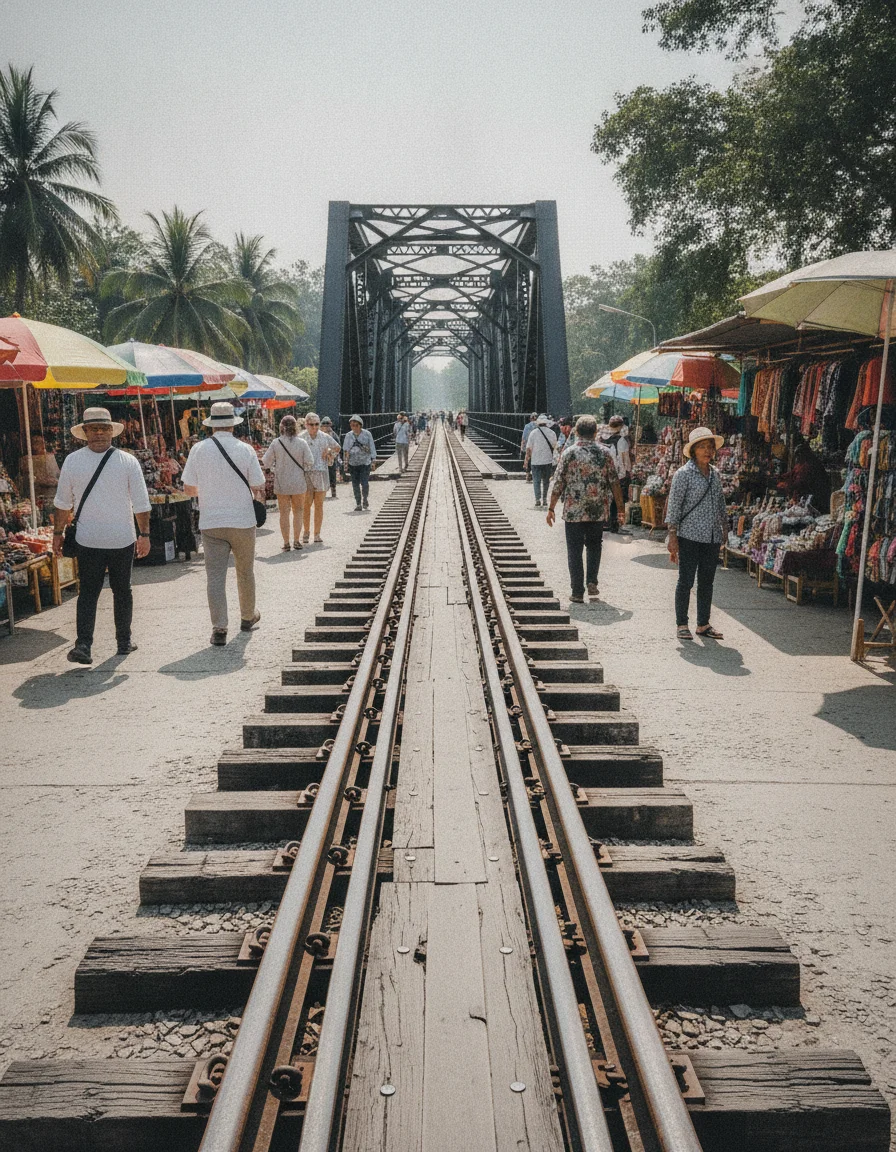
The bridge comprises eleven curved steel truss spans supported by reinforced concrete piers set deep into the riverbed of the Khwae Yai River. Imperial Japanese engineers supervised the assembly using steel bridge components transported from Java in late 1942. The original structure measured 300 metres in length, designed to handle narrow-gauge 1,000mm rolling stock carrying military supplies toward the Burmese border. Following heavy Allied bombing in February and June 1945, two curved central spans were completely severed. The Japanese government installed two rectangular steel truss spans after World War II as part of war reparations, creating a visible visual distinction between the curved 1943 sections and the straight post-war replacements. Pedestrians cross along steel plates fitted between the rails, while triangular safety alcoves extend over each concrete pier to allow visitors to step off the track when locomotives approach. Walking the full 300-metre length across the metal deck takes approximately ten minutes each way, assuming minimal crowd congestion.
Discover the true culture of Kanchanaburi, from monks rowing morning alms on the river to the fiery communal joy of jungle curry. Learn local customs today.
WWII Construction and the Thai-Burma Railway History
Between October 1942 and October 1943, Imperial Japanese forces compelled over 60,000 Allied prisoners of war and 180,000 Romusha Asian forced labourers to construct the railway line connecting Ban Pong to Thanbyuzayat. Workers constructed a temporary wooden trestle bridge 100 metres upstream in February 1943 before completing the permanent steel-and-concrete bridge in May of the same year. Dysentery, cholera, tropical malaria, and severe malnutrition claimed the lives of over 12,000 Allied POWs, including 6,648 British soldiers, alongside an estimated 90,000 Asian labourers across the entire 415-kilometre route. The river beneath the bridge was historically known as the Mae Klong. In 1960, the Thai government officially renamed this upper stretch the Khwae Yai to match the geographical setting popularized by Pierre Boulle's 1954 novel and David Lean's 1957 film. Physical marks on the steel girders, including original construction rivets and post-war weld lines, demonstrate the structural adaptations made during wartime emergency repairs.
| Site Name | Distance from Bridge | Key Feature | Visitor Experience Focus |
|---|---|---|---|
| Bridge Over the River Kwai | 0 km | Original steel bridge spans and active train line | Physical walking access and live railway operation |
| Kanchanaburi War Cemetery | 2.8 km | Graves of 6,982 Commonwealth service personnel | Formal memorial grounds and quiet reflection |
| Hellfire Pass (Konyu Cutting) | 80 km | 73-metre long, 25-metre deep rock cutting | Immersive audio-guided walking trail through jungle cutting |
| Death Railway Museum (TBRC) | 2.7 km | POW relics, personal letters, and scale models | Detailed historical context and photographic archives |
The Death Railway Train Experience and Active Rail Lines
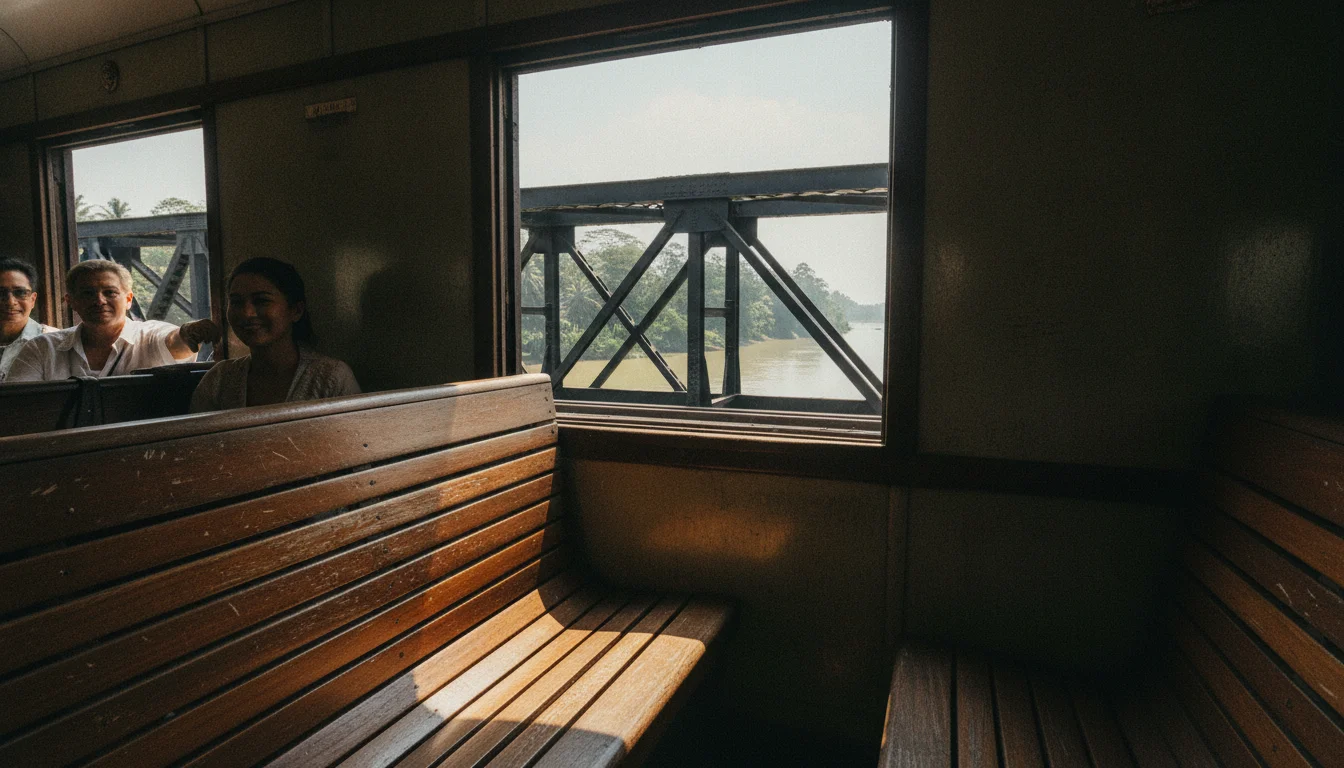
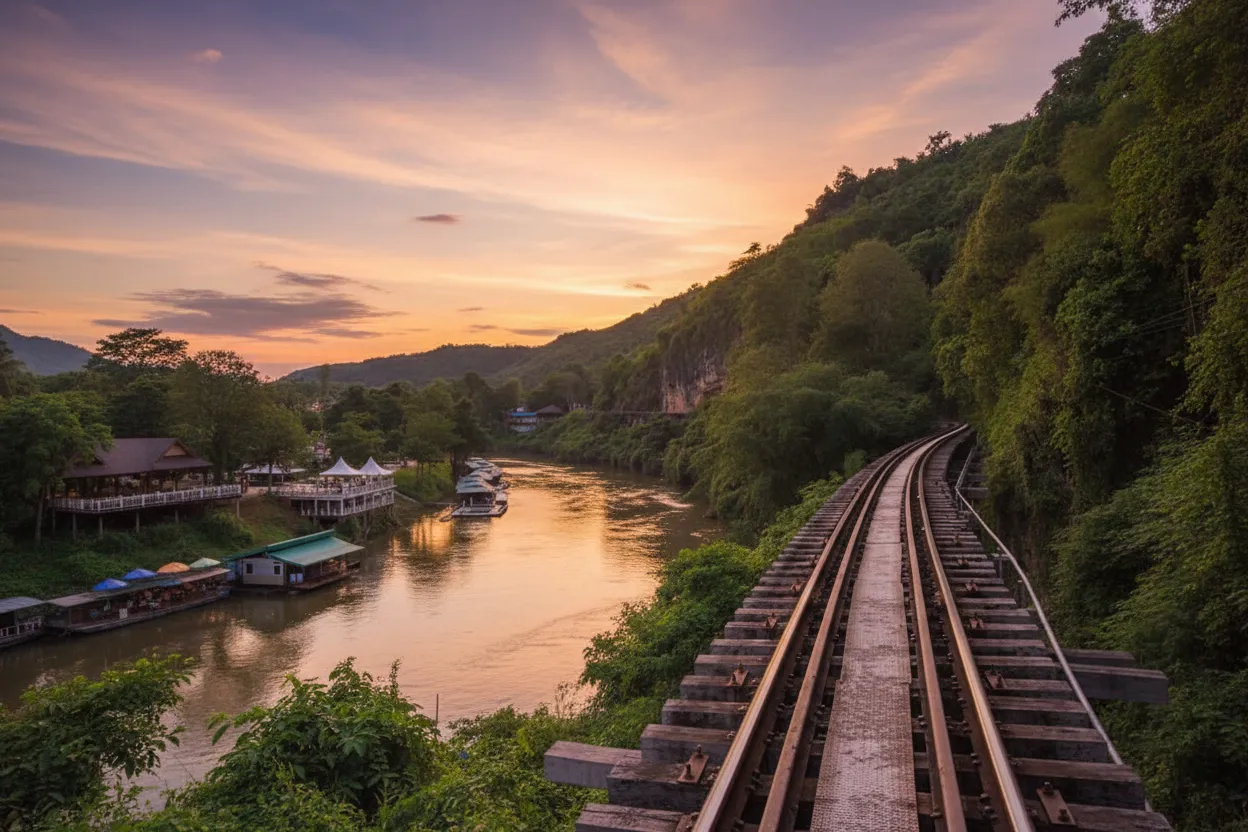
Passengers can ride third-class passenger trains operated by the State Railway of Thailand directly across the bridge along the remaining 130-kilometre operational section of the track. Trains depart Kanchanaburi Station daily at 06:07, 10:35, and 16:26, pausing at River Kwai Bridge Station before continuing west toward the terminus at Nam Tok. The journey passes over the wooden trestle viaduct at Wampo (Tham Krasae), where the track clings directly to limestone cliffs high above the Khwae Noi River. Wooden bench seating and open windows maintain an authentic mid-20th-century rail atmosphere without air conditioning. Foreign visitors pay a flat fare of 100 THB (£2.25) for a standard third-class ticket, while weekend tourist trains offer air-conditioned carriages for 300 THB (£6.75) per seat. Standing on the open gangways between carriages yields clear views of the iron framework as the train crosses the river at 10 km/h. Boarding the 10:35 morning train from Kanchanaburi to Nam Tok offers the best balance of daylight photography and dramatic cliffside scenery at Wampo Viaduct.
Surrounding Memorial Sites and Local Waterfront Precinct
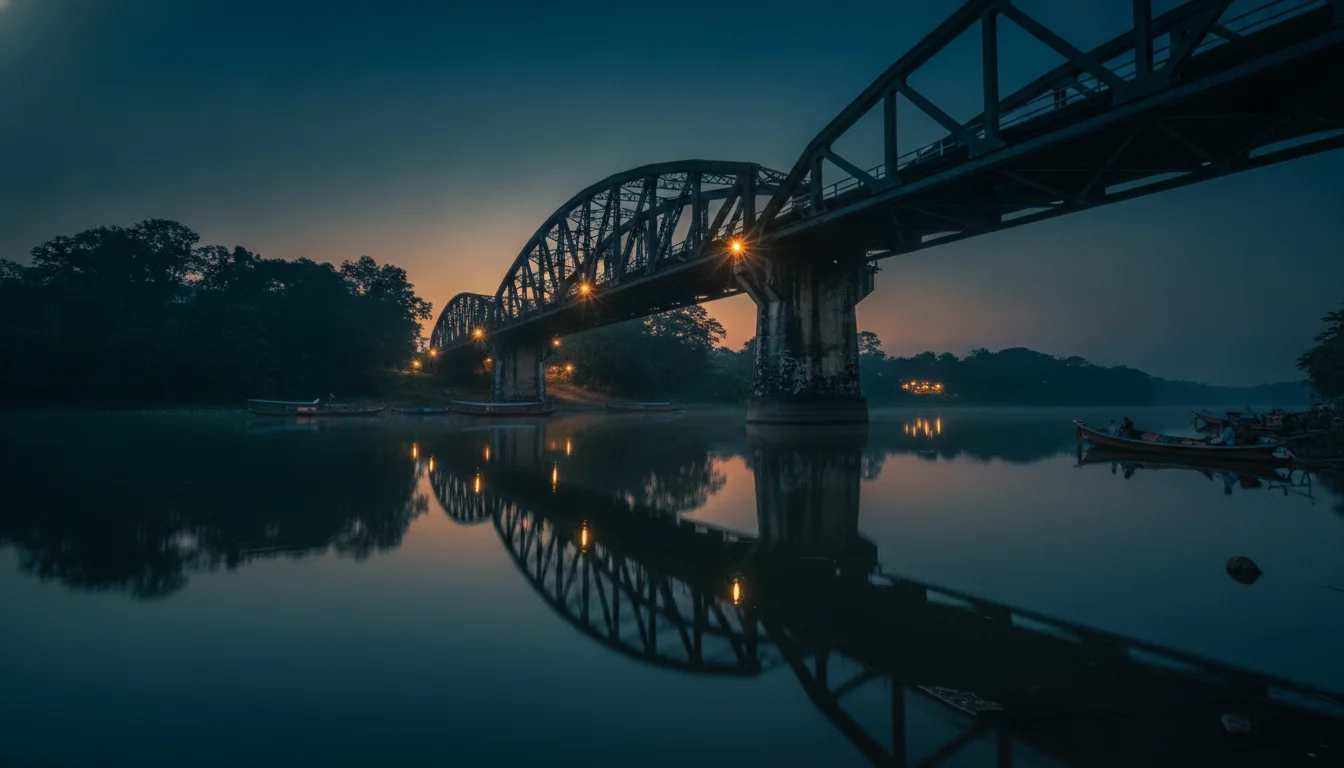
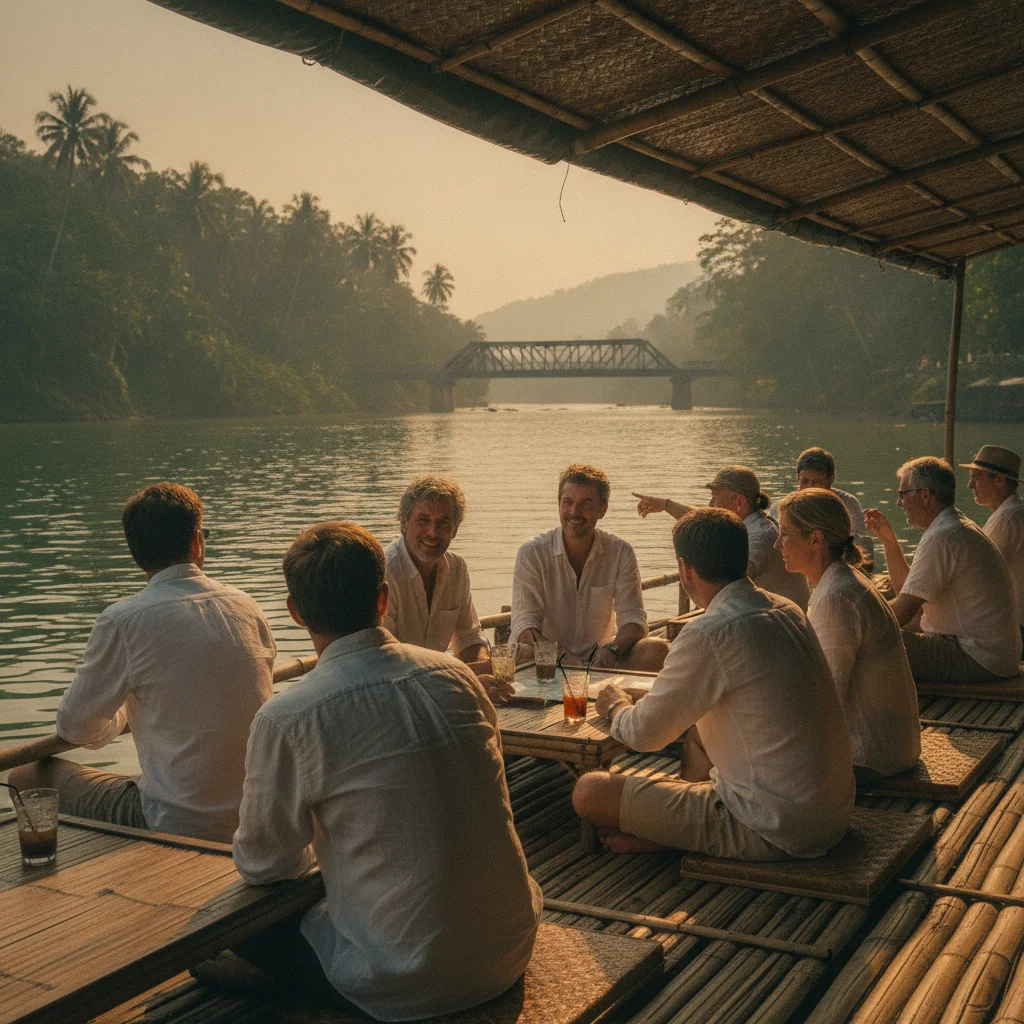
The riverbank area adjacent to the eastern bridgehead features military relics, memorial sculptures, and riverfront dining venues. A static Japanese C56-31 steam locomotive stands beside the entrance plaza, providing visitors with a direct example of the rolling stock used during the line's wartime operation. Across the river on the western bank sits Wat Metta Dhamma Chetawan, a Chinese Buddhist temple complex visible from the bridge deck. Floating pontoon restaurants line the water downstream, serving regional specialties such as fried red-tail catfish and green curry while river currents flow beneath the dining decks. Private motorboat operators offer one-hour river tours departing from the public pier for 500 THB (£11.25) per boat, taking passengers downriver to view the junction where the Khwae Yai and Khwae Noi rivers merge to form the Mae Klong. Renting a longtail boat from the pier provides clean photographic angles unobstructed by pedestrian crowds on the bridge deck.
Location and Transport Access
The bridge sits in the Tha Ma Kham sub-district, 3.5 kilometres northwest of central Kanchanaburi town and 128 kilometres west of Bangkok. From Bangkok, ordinary trains depart daily from Thonburi Railway Station at 07:45 and 13:55, arriving at River Kwai Bridge station three hours later for 100 THB (£2.25). Minibuses depart every 30 minutes from Bangkok's Southern Bus Terminal (Sai Tai Mai) or Mochit New Van Terminal to Kanchanaburi Bus Terminal, taking two hours for 150 THB (£3.40). Local songthaews (converted pickup trucks) run from Kanchanaburi Bus Terminal directly to the bridge plaza for 20 THB (£0.45), while Grab rides cost roughly 100 THB (£2.25). Private car hire from central Bangkok costs between 2,000 THB (£45.00) and 2,500 THB (£56.25) for a full-day return trip including driver and highway tolls.
Costs, Fares, and Admission Fees
Accessing the ground area and walking across the Bridge Over the River Kwai is entirely free of charge 24 hours a day. Expenses arise when using local transport, visiting museum facilities, or riding the train along the active Death Railway line. The State Railway of Thailand charges standard fixed rates for foreign passenger tickets bought at local station counters. Guided excursions starting from Bangkok vary in price based on group size, vehicle quality, and included meal packages. Small admission fees at surrounding government-operated memorial centres support site upkeep and educational archives.
| Option | Cost (THB per person) | Cost (GBP approx) | Notes |
|---|---|---|---|
| Bridge Site Access | Free | Free | Open 24 hours to pedestrians |
| Local SRT Train Ticket | 100 THB | £2.25 | Kanchanaburi to Nam Tok (one-way foreign fare) |
| Weekend Tourist Excursion Train | 300 THB | £6.75 | Includes air conditioning and reserved seat |
| Private Longtail Boat Rental | 500 THB | £11.25 | Per boat (up to 6 passengers) for 1-hour trip |
| Bangkok Joint Day Tour | 1,200 - 1,800 THB | £27.00 - £40.50 | Includes transfers, bridge entry, and Hellfire Pass |
Target Visitor Profile
This historical site caters directly to World War II history enthusiasts, military veterans, and British or Commonwealth families researching ancestors who served in the Far East campaign. Cultural travellers seeking tangible historical landmarks will appreciate the authentic structural features and operational railway line. It is equally appropriate for independent travellers exploring western Thailand by rail. The location is less suited to visitors seeking high-tech interactive exhibits or modern theme park entertainment, as the site relies on self-guided exploration and historical reading.
Key Information Before Visiting
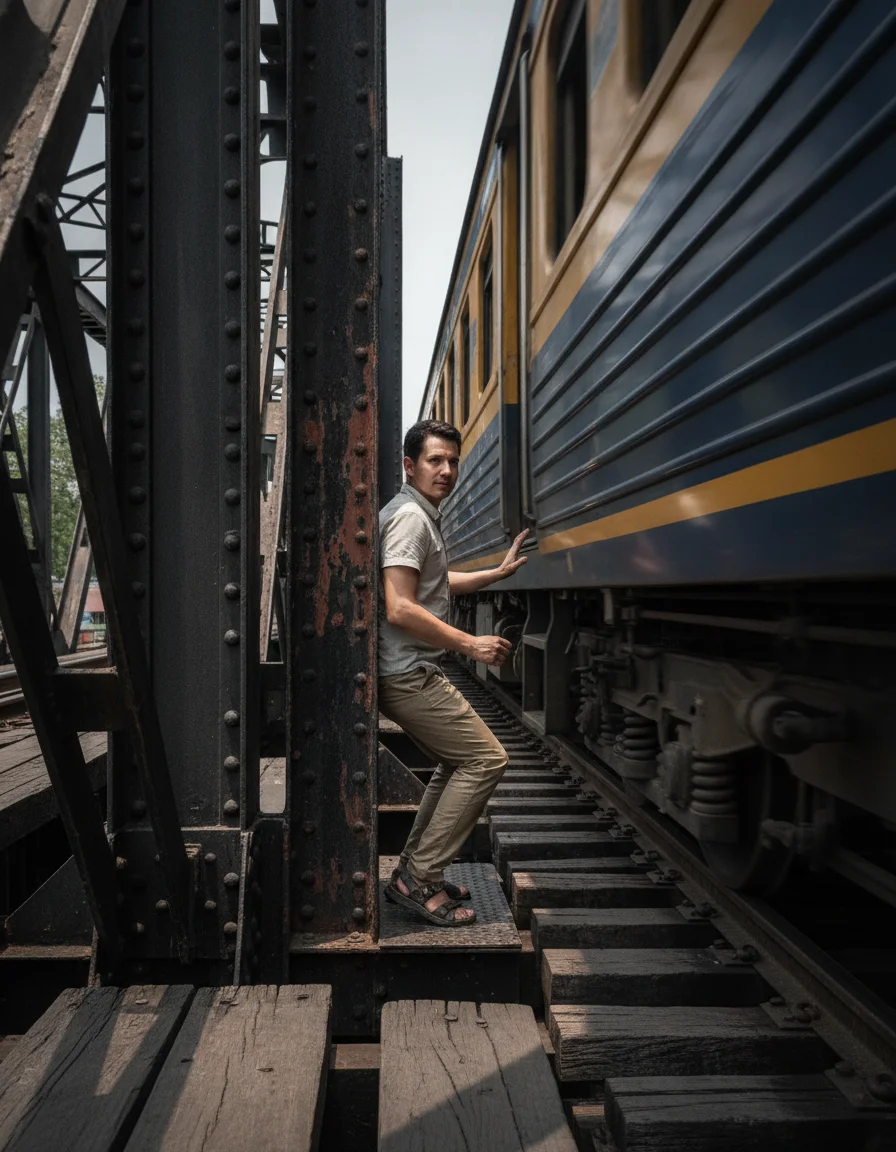
Active passenger trains cross the bridge six times daily without automatic safety barriers dropping across the pedestrian walkways. You must remain alert to warning whistles and move quickly into the triangular safety platforms protruding over the piers. Midday temperatures on the exposed metal bridge deck regularly exceed 38°C during April and May. Visiting before 09:00 or after 16:30 avoids the intense radiant heat reflected off the iron trusses. Large tour groups arrive daily between 10:30 and 14:00, filling the narrow walkway across the river. Arrive early in the morning to experience a quiet atmosphere and snap clear photographs along the rail line. Steel floor plates and exposed wooden sleepers create uneven footing across the bridge deck. Wear sturdy flat shoes with good rubber soles to prevent slipping between the timber gaps.
Essential Practical Tips
Arrive at the bridge plaza before 08:30 for uncrowded photography. Tour buses from Bangkok arrive by 10:00, creating heavy foot traffic along the tracks.
Buy third-class train tickets directly at the River Kwai Bridge station ticket window 30 minutes before departure. Ticket counters do not issue advance bookings for ordinary non-air-conditioned trains, but seat allocations remain generous.
Visit the Thailand-Burma Railway Centre near Kanchanaburi War Cemetery before walking across the bridge. The museum provides detailed context that makes visiting the physical bridge far more meaningful.
Sit on the left side of the train when heading west from Kanchanaburi toward Nam Tok. This seat position offers unobstructed views of the river and the cliffside wooden trestles at Wampo Viaduct.
Carry sufficient THB cash in small banknotes for songthaew fares, cold bottled water, and public restroom entry fees. Local vendors around the railway plaza rarely accept credit cards.
Hire a motorboat from the pier south of the bridge for low-angle structural photos. Looking up from the water highlights the contrast between the post-war rectangular spans and the original 1943 arches.
Apply sun cream and bring a hat before walking across the metal structure. The open railway bridge offers zero shade against the sun.
Quick Reference Summary
| Item | Detail | Notes |
|---|---|---|
| Landmark Name | Bridge Over the River Kwai | Section 277 of the former Death Railway |
| Location | Tha Ma Kham, Kanchanaburi, Thailand | 3.5 km northwest of Kanchanaburi town centre |
| Property Type | Historical Landmark and Memorial Bridge | Operational railway line and public monument |
| Managing Body | State Railway of Thailand | Maintains rail track and bridge infrastructure |
| Length & Structure | 300 metres, 11 steel truss spans | Concrete piers set into the Khwae Yai Riverbed |
| Opening Hours | Open 24 hours daily | Public pedestrian access across rail tracks |
| Admission Fee | Free | Charges apply for trains, boats, and nearby museums |
| Nearest Airport | Bangkok Suvarnabhumi (BKK) / Don Mueang (DMK) | Approx 150 km eastbound (2.5 hours driving) |
| Active Train Schedule | 6 crossings daily (approx 06:10, 07:12, 10:45, 14:30, 16:30, 17:40) | Schedules subject to State Railway of Thailand changes |
| Distance to Town Centre | 3.5 kilometres | Connected by songthaew, taxi, and tuk-tuk |
| Nearest War Cemetery | Kanchanaburi War Cemetery (Don-Rak) | 2.8 km south of the bridge site |
| Official Booking Platform | State Railway of Thailand / Agoda / GetYourGuide | Local tickets sold on-site at station counters |