Kanchanaburi operates entirely on jungle valley time, meaning the climate here feels heavier and more absolute than down on the islands.
That romantic morning mist rolling off the River Kwai is entirely real, but by midday, the surrounding limestone mountains trap the humidity to create a genuine greenhouse effect. You will sweat in places you didn't know possessed pores, but that dense, damp air is exactly what keeps the province so incredibly green.
The year kicks off with the 'Cool' season from November through February, though that term is wildly relative. Expect daytime highs around 32°C and beautifully crisp nights dropping to 18°C, which actually feels genuinely chilly when you are sleeping in a floating raft house.
Things shift aggressively in March. The Hot season lasts until late May, and the heat here is not just a number on a thermometer; it is a physical weight pressing down on your shoulders. Temperatures regularly smash the 40°C mark, turning the historical sites in town into absolute roasting tins by 11 AM. You survive this by doing as the locals do: finishing all outdoor activities before noon and retreating to the shade of the river.
By June, the Rainy season arrives to break the tension, lasting through October. The thermometer drops back to a manageable 28°C to 33°C, but the humidity sits stubbornly at 85%. This is when the waterfalls roar back to life. Instead of being frightened off by the clouds, you just need to embrace the rhythm of the tropics.
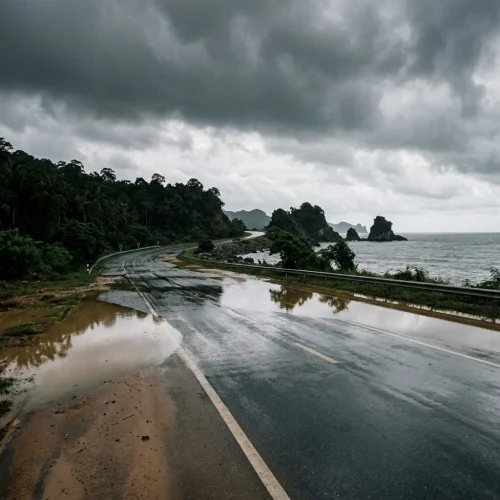
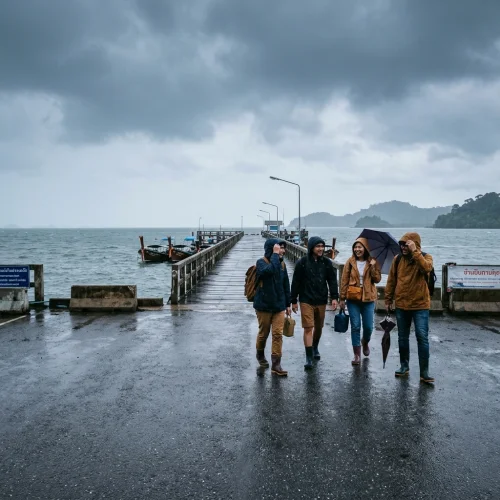
Rain in this province rarely means a week of miserable grey drizzle. From June to August, the monsoon behaves like clockwork, building up a suffocating afternoon humidity before dumping absolute torrents of water between 4 PM and 6 PM. September is the outlier. This is peak flood risk month, where the River Kwai swells dramatically and those idyllic floating hotels can occasionally experience rough currents. Heavy downpours during this time can also trigger minor landslides on the winding mountain roads up to Sangkhlaburi, temporarily halting minibus routes. Do not panic. The Thai highway authorities clear these with incredible speed. When the sky inevitably turns black, ducking into a café is your best bet. If you must keep moving, grab a flimsy but functional 7-11 plastic poncho for 50 THB (£1.15). Save your money on the 350 THB (£8.05) quality umbrellas; the sudden valley downdrafts will snap the spokes inside of ten minutes anyway.
AIR QUALITY & THE BURNING SEASON
Between late February and April, agricultural burning across western Thailand and neighbouring Myanmar pushes Kanchanaburi’s AQI into the unhealthy 150-plus range. The air takes on a campfire smell, and the usually sharp limestone peaks disappear behind a thick, milky haze. It is an annoyance, but easily managed. Pick up a high-quality 3M N95 mask from any local pharmacy for 80 THB (£1.85) for the worst days. If the smoke gets too thick in the main town, your best escape strategy is to hire a car and drive up the elevation to Pilok or Erawan, where the air is noticeably fresher.
Leave the heavy denim and synthetic polyester at home in the UK. In this 80% humidity, a cotton-polyester blend will cling to you like a wet plastic bag within ten minutes of leaving your air-conditioned room. Pack loose, breathable linen or lightweight merino wool t-shirts instead. The UV index here routinely hits 11 (extreme), so sun protection is non-negotiable. Bring your favourite SPF50 from Boots. Buying a reliable, non-whitening Western brand like Banana Boat locally will set you back an eye-watering 550 THB (£12.65) at Watsons. You will also need to navigate the strict modesty rules at local temples and the war cemeteries while battling 35°C heat. The easiest workaround is wearing light, breathable shorts for the heat, and keeping a cheap pair of 100 THB (£2.30) 'elephant pants' in your daypack to pull over your legs just before walking through the gates.
Jungle heatstroke is a fast track to ruining your holiday. You will lose more water than you realise while climbing the seven tiers of Erawan Waterfall. Fix this by drinking a Royal-D electrolyte sachet—available at every single 7-11 for 10 THB (£0.23)—mixed into cold water every morning. The dense greenery also means mosquitoes are a 24-hour reality, not just a dusk annoyance, carrying a genuine but manageable dengue risk. Buy a pink bottle of local Soffell repellent for 45 THB (£1.05) on arrival; it contains 12% DEET and works far better than natural citronella sprays.
BEST TIME TO VISIT
The absolute Goldilocks window is late November to January. The skies are aggressively blue, the river is calm, and the temperatures sit at a perfectly comfortable 30°C. However, July is the true insider’s secret. The waterfalls are gushing, the jungle is an impossible shade of neon green, and because it is technically the wet season, you get the historical sites largely to yourself.