Phetchaburi
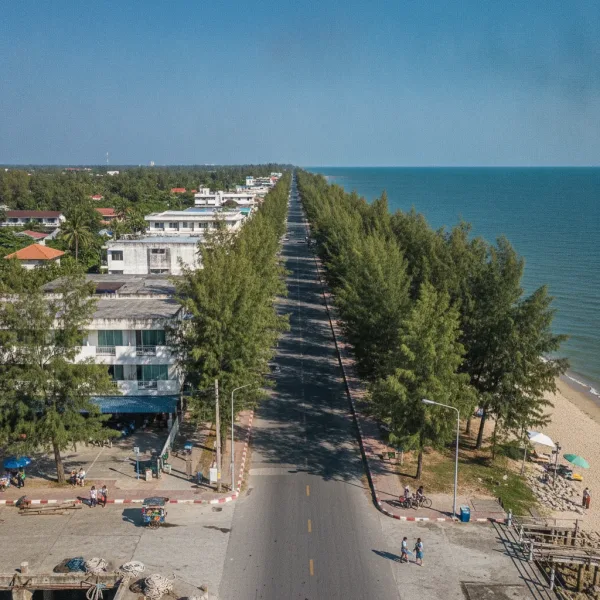
Phetchaburi is a provincial capital located on the fertile central river plains roughly 125 kilometres southwest of Bangkok. Bisected by the Phetchaburi River, the town is one of Thailand's oldest settlements, retaining a distinct historic character shaped by centuries of trade and royal patronage. Its landscape features Ayutthaya-era temples, subterranean cave shrines, and 19th-century hilltop palaces rising above the flat agricultural basin.
Beyond its riverside old town and hillside landmarks, Phetchaburi is notable for regional culinary traditions rooted in extensive toddy palm orchards, producing distinctive palm sugar used across both savoury curries and traditional desserts. While nearby coastal hubs like Cha-am and Hua Hin cater to mainstream beach tourism, Phetchaburi provides a quieter, culturally focused destination for travellers seeking historic architecture, craft heritage, and regional cuisine.
Hilltop Palaces and Ancient Temples
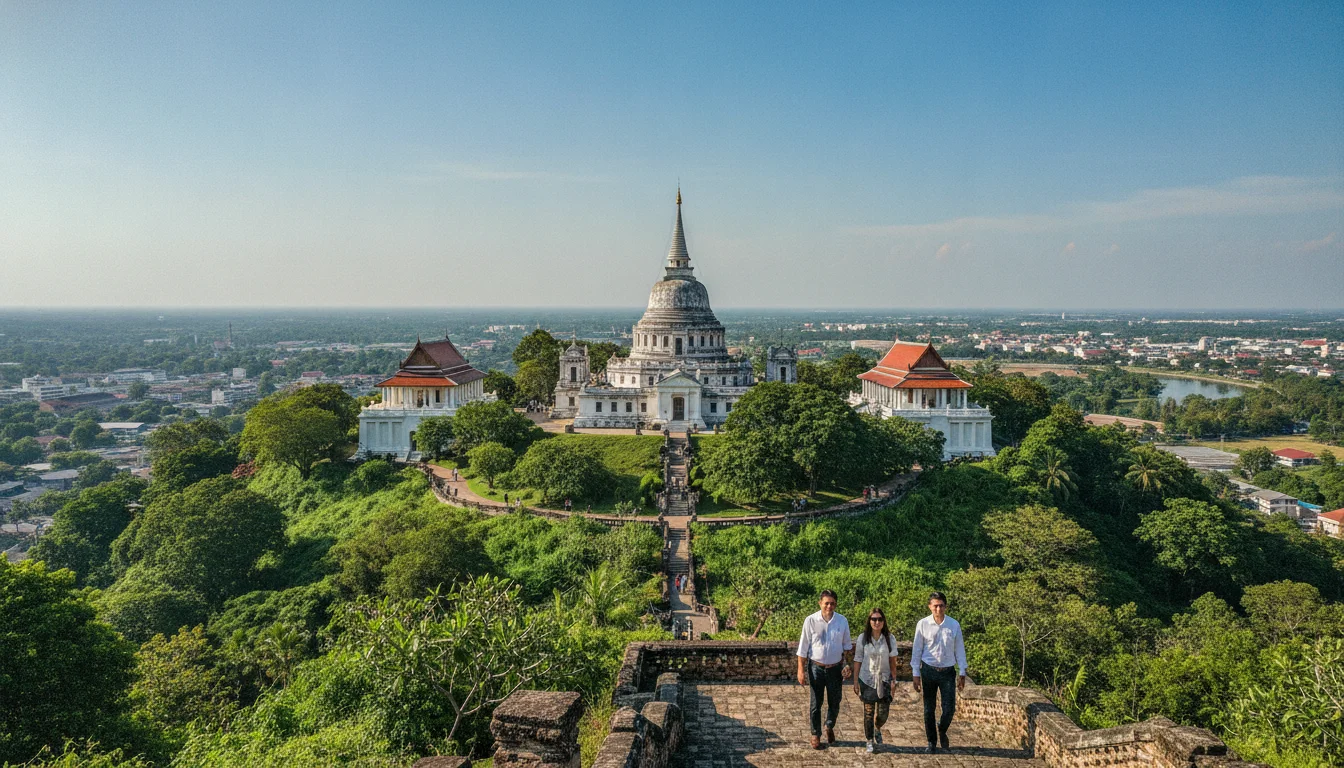
Phra Nakhon Khiri Historical Park, known locally as Khao Wang (Palace on the Hill), dominates the skyline above Phetchaburi. Built in 1860 as a summer retreat for King Mongkut (Rama IV), the complex spans three forested hilltop peaks connected by cobbled walkways. The architecture blends neoclassical European pavilions, Chinese decorative motifs, and traditional Thai temple structures. Visitors reach the summit either along brick walking trails or by using the funicular cable car on the western slope.
Across the ridge, the three peaks house distinct compounds. The western summit holds the former royal residence, now operating as the Phra Nakhon Khiri National Museum with 19th-century royal furnishings and astronomical instruments. The middle peak is crowned by Phra That Chom Phet, a 40-metre-tall white stupa holding Buddhist relics, while the eastern peak contains Wat Phra Kaew Noi, built as a royal temple modelled after Bangkok's Temple of the Emerald Buddha. Free-roaming troops of macaques frequent the pathways and courtyards throughout the complex.
Down in the town centre along the riverbank, Wat Mahathat Worawihan forms the city's religious heart. The temple complex is marked by its five-spired white prang (Phra Prang Ha Yod), a central tower reaching over 40 metres that displays Khmer and Ayutthaya architectural influences. Around the central courtyard, covered cloisters display rows of gilded Buddha figures in the subduing Mara posture, while the surrounding prayer halls feature late Ayutthaya-era murals and intricate Phetchaburi stucco carvings.
Subterranean Wonders and Royal Residences
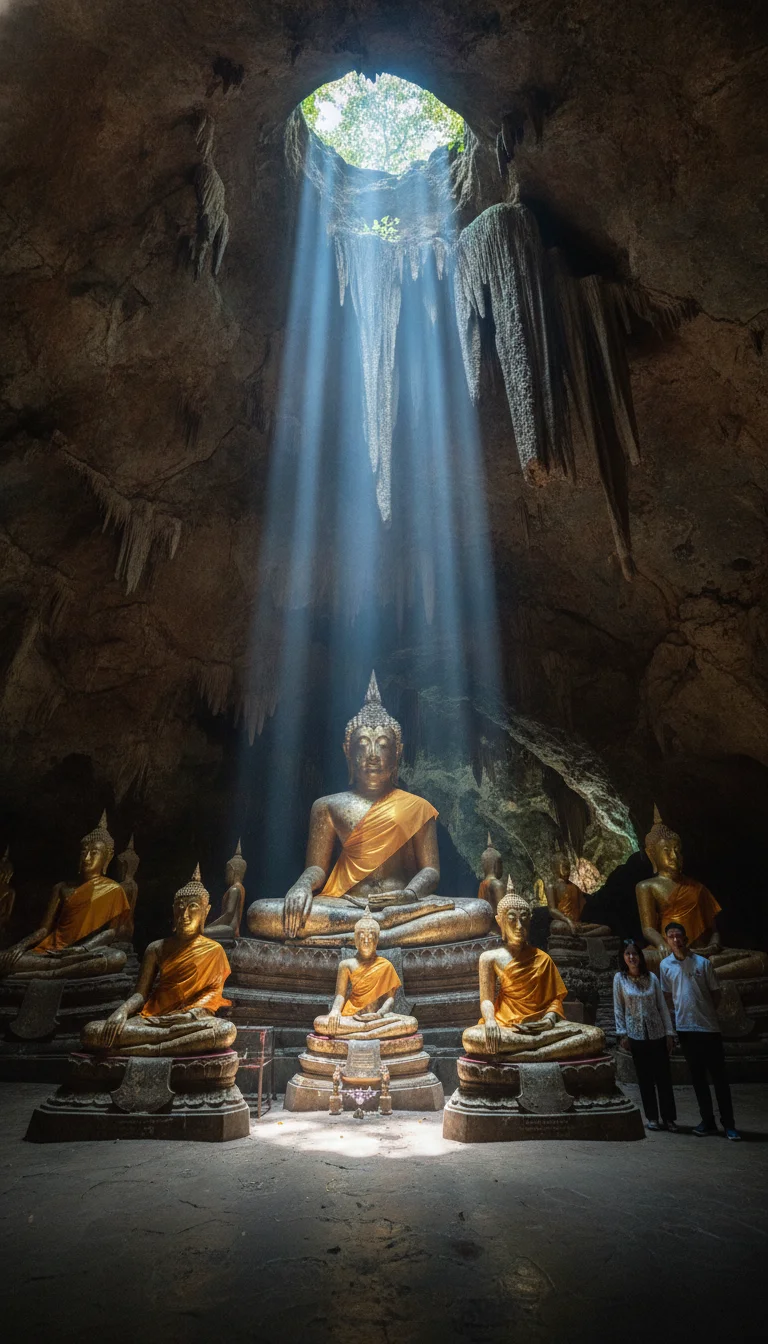
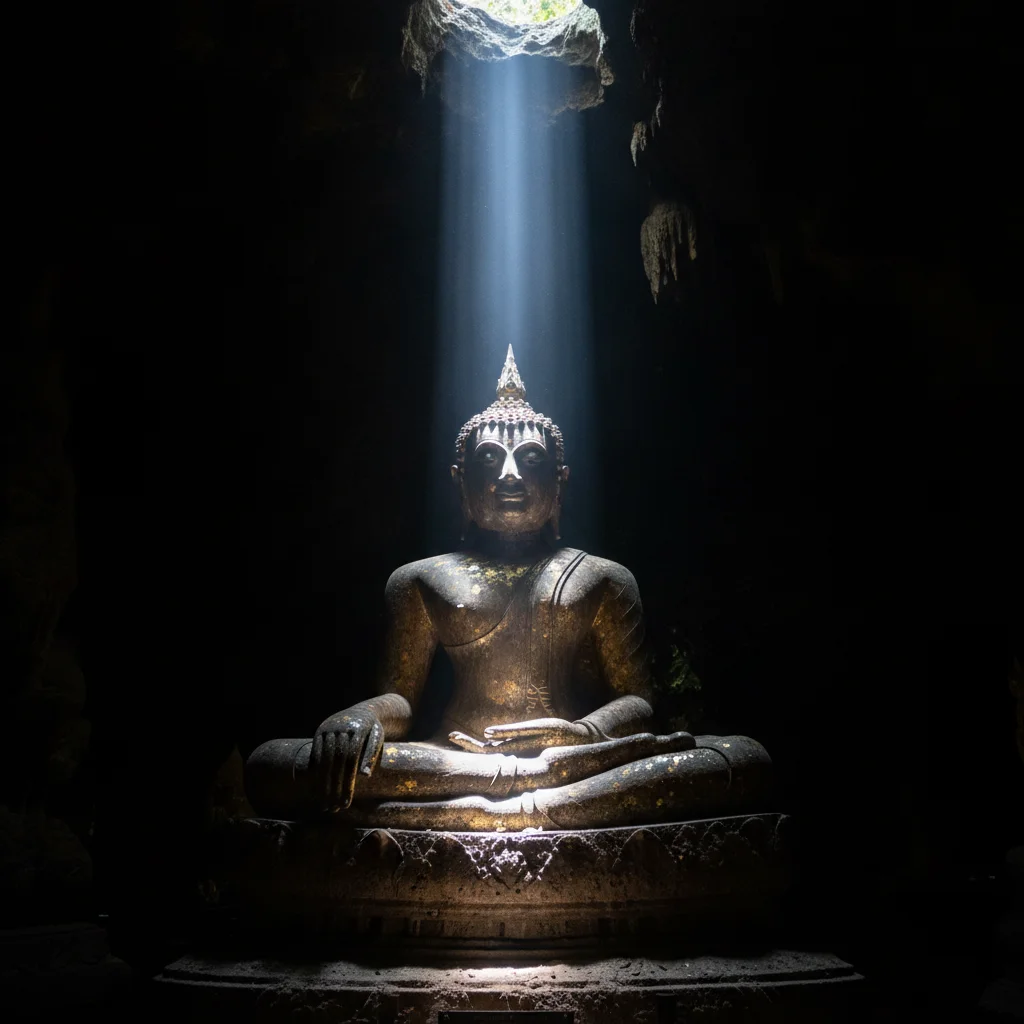
A short drive north of central Phetchaburi, Tham Khao Luang is a cavernous limestone temple complex set beneath a forested hill. Sunlight streams through a broad natural aperture in the chamber ceiling, illuminating dozens of seated, standing, and reclining Buddha statues set into the rock formations. Many of these images were dedicated during the reigns of King Rama IV and King Rama V, who visited the cavern for quiet contemplation. The main chamber is reached by a flight of stone steps down from the upper entrance, where resident macaques gather near the tree line.
In the southern part of the town, Phra Ram Ratchaniwet—locally referred to as Ban Puen Palace—provides a striking architectural contrast. Commissioned in 1910 by King Chulalongkorn (Rama V) as a rainy-season retreat and finished in 1916 under King Rama VI, the estate was designed by German architect Karl Döhring. The two-storey building departs entirely from traditional Siamese court styles, adopting European Art Nouveau and Jugendstil architecture with steep mansard roofs, glazed ceramic tiles, and an interior courtyard that held Siam's first badminton court. Today, the complex operates as a museum managed by the Royal Thai Army, opening early twentieth-century royal apartments, grand staircases, and period decor to the public.
Plan a visit to Cha-am in Phetchaburi, with current guidance on the beach, seafood, hotels, trains, Mrigadayavan Palace and forest-park trails.
A Taste of Phetchaburi: Culinary Traditions
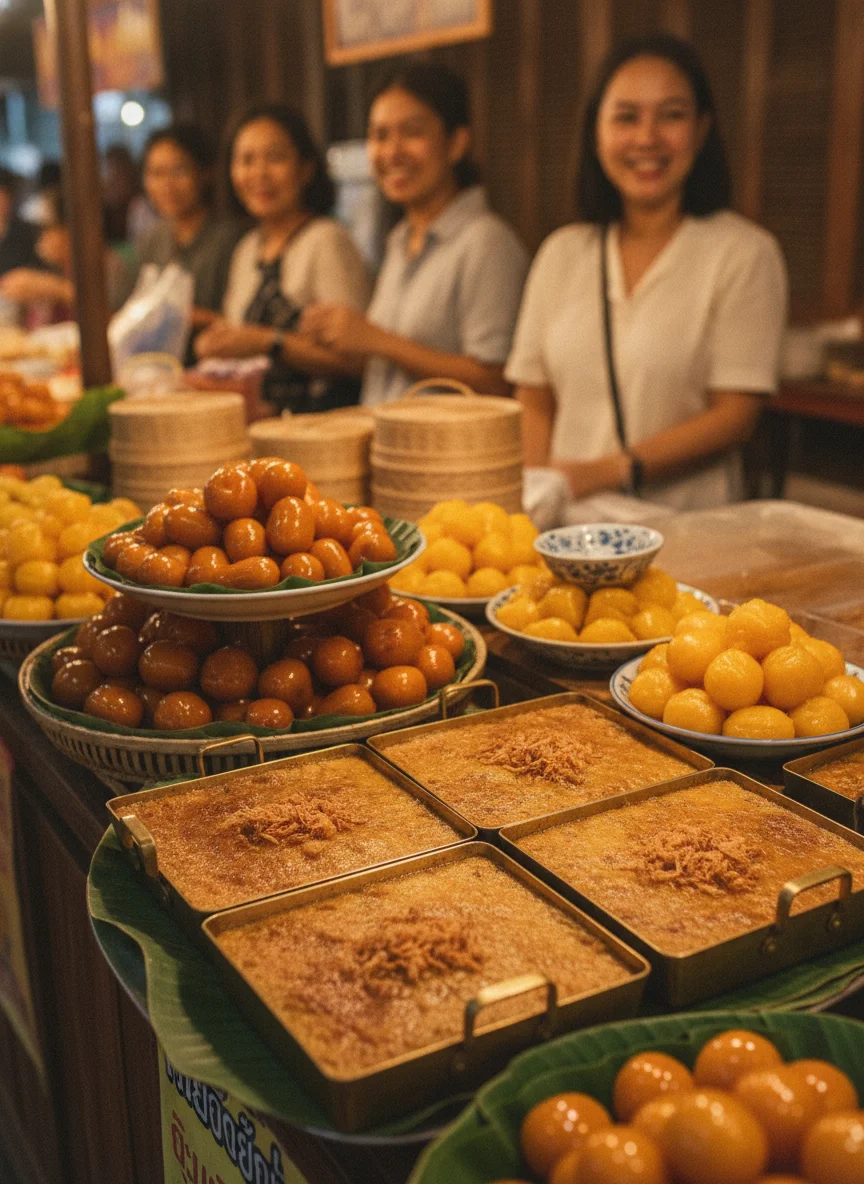
In 2021, UNESCO designated Phetchaburi a Creative City of Gastronomy, recognising a regional food culture shaped by centuries of trade and local agriculture. The province is celebrated across Thailand for its balance of three foundational flavours: sweetness from toddy palm sugar, saltiness from coastal sea salt pans in Ban Laem, and acidity from native limes.
Toddy palm sugar (nam tan tanot) forms the cornerstone of both sweet and savoury cooking across the province. Extensive palm plantations provide a rich, caramel-toned sweetness found throughout the town's confectionery shops. The most famous local dessert is khanom mor gaeng, a baked custard made from eggs, coconut milk, and palm sugar, traditionally finished with a scatter of crisp fried shallots.
Savoury dishes mirror this distinctive flavour profile. Kuay teow nam daeng (red broth noodles) combines noodles with stewed pork or beef in a dark broth seasoned with palm sugar, local soy sauce, and warm spices, traditionally served with a fiery Karen chilli sauce. Another staple is khao chae, a refreshing dish of cooked rice served in chilled, jasmine-scented water. In Phetchaburi, it comes paired with three classic side dishes: deep-fried shrimp paste balls (luk kapi), sweet shredded preserved radish (chai po), and caramelised stir-fried fish (pla yisun).
Street stalls across the old quarter, food vendors near Phetchaburi railway station, and family-run dessert shops along the river sell these dishes daily, providing a practical way to sample the province's culinary heritage.
Getting There and Getting Around
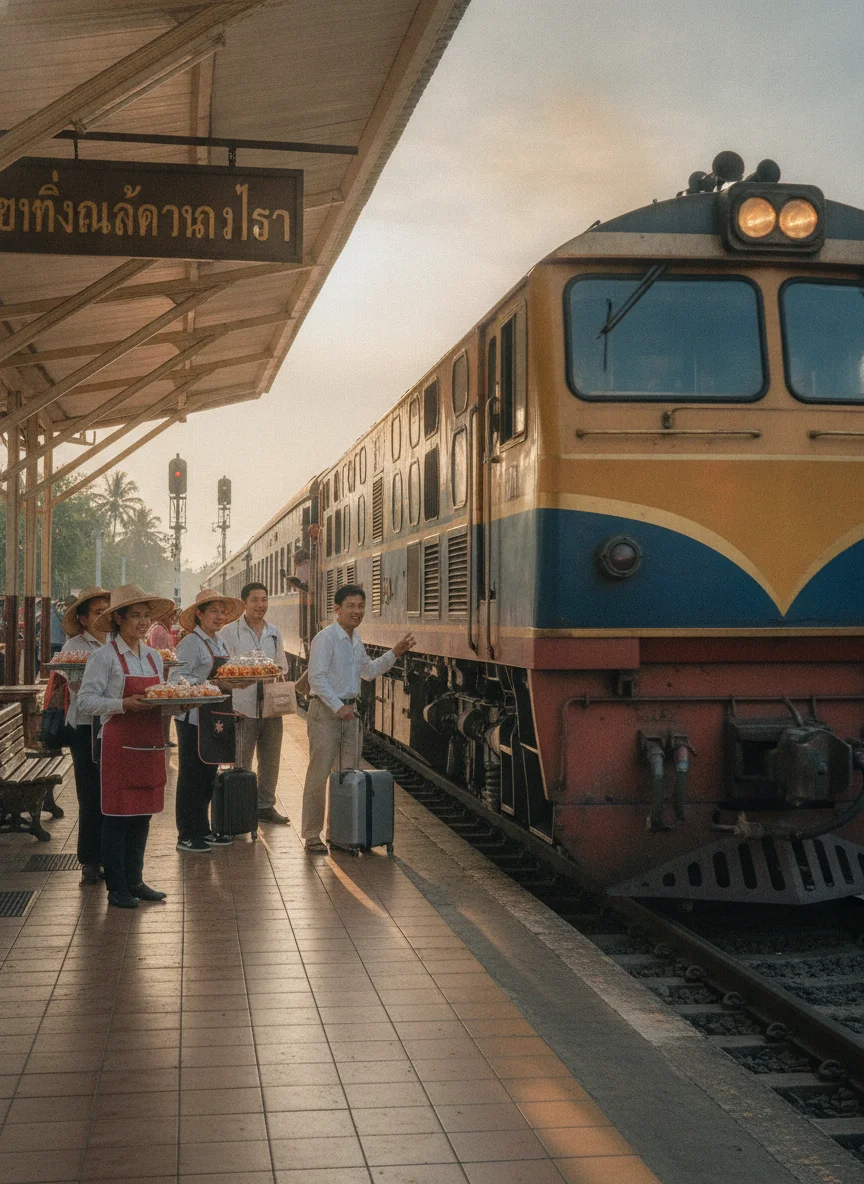
Phetchaburi sits roughly 120 kilometres south-west of Bangkok, making it straightforward to reach by rail or road after landing at Suvarnabhumi Airport or Don Mueang International Airport. The rail journey is among the most scenic and relaxed ways to travel. State Railway of Thailand Southern Line trains depart regularly from Krung Thep Aphiwat Central Terminal and Thon Buri Station, taking between two and a half and four hours depending on the service. Third-class seats on ordinary and rapid trains cost from 35 to 50 THB (roughly £1), while air-conditioned second-class seats on express services cost between 150 and 388 THB.
For a faster road trip, passenger minivans and buses leave Bangkok from the Southern Bus Terminal (Sai Tai Mai) and Mochit New Van Terminal. Minivans typically complete the run in around two hours, with fares ranging from 100 to 140 THB per passenger. Most minivans set down passengers near the central market or along Phetkasem Road on the edge of town, where onward transport is readily available.
Getting around Phetchaburi is straightforward. The compact historic centre can be navigated on foot or via local songthaews (shared converted pick-up trucks) that ply fixed routes for 10 to 30 THB per ride. For sights located outside the town centre, such as the subterranean cave shrines at Tham Khao Luang, hiring a 125cc scooter for around 200 to 300 THB per day provides total flexibility. Motorbike taxis and chartered songthaews wait outside the railway station and market areas, where you should agree a fixed price before starting your journey.
Costs and Budgeting
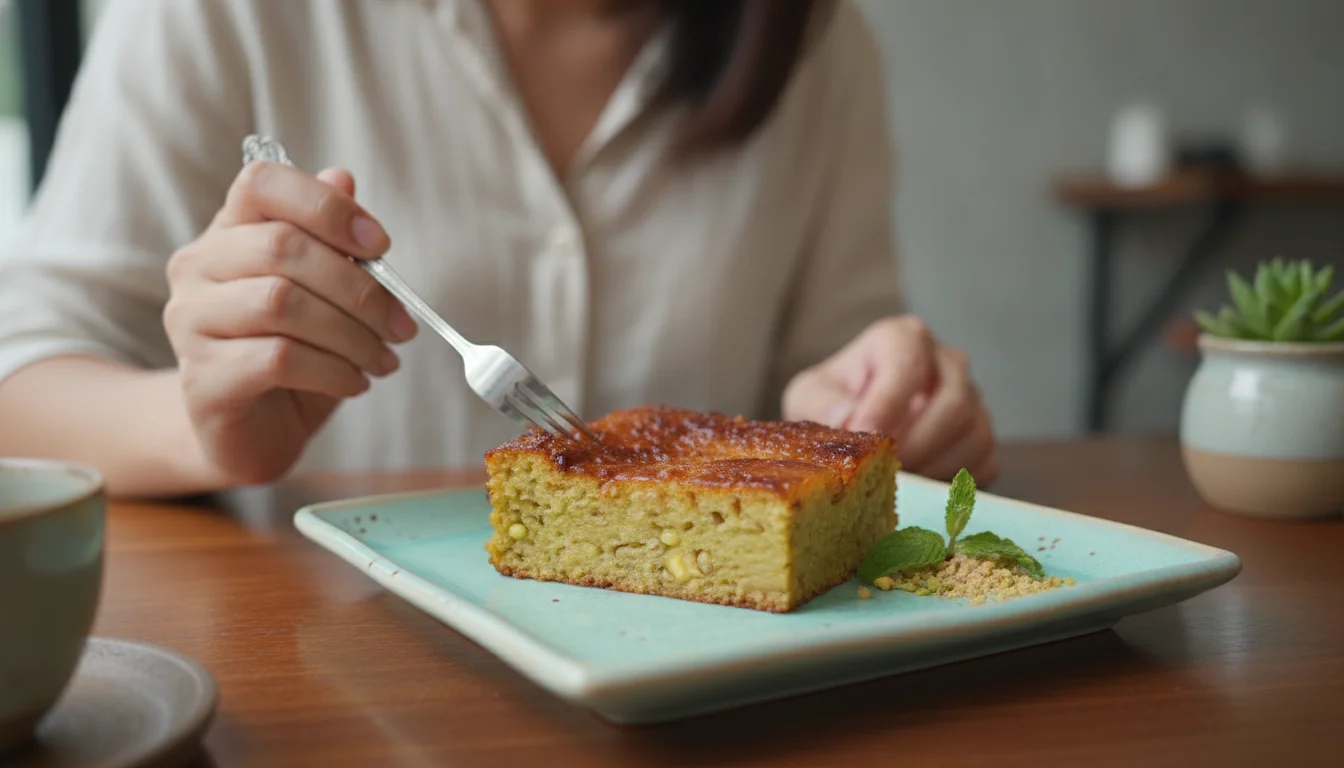
Phetchaburi is an economical provincial destination where daily travel expenses remain markedly lower than in nearby resort centres like Hua Hin or Bangkok. Independent travellers can comfortably manage on modest daily budgets while exploring the town's historical monuments, active temples, and open-air markets.
Accommodation in town centres on clean, independent guesthouses and standard mid-range hotels. Basic private rooms typically start from around 400 to 600 THB (£9 to £14) per night, while comfortable air-conditioned heritage stays and riverside hotels range between 700 and 1,500 THB (£16 to £34).
Dining costs are low across the provincial capital. Street stalls and morning railway markets sell local noodle bowls, savoury snacks, and traditional palm-sugar desserts for 40 to 80 THB (£1 to £1.80) per dish. Sit-down local restaurants generally charge between 100 and 200 THB (£2.30 to £4.60) for multi-dish meals.
Sightseeing expenses are equally accessible. Foreign entry to Phra Nakhon Khiri Historical Park is 150 to 200 THB, with the optional funicular cable car adding 50 to 60 THB for a return trip. Phra Ram Ratchaniwet palace charges 50 THB, while active religious shrines such as Tham Khao Luang and Wat Mahathat Worawihan are free to enter. Within town, short songthaew journeys run from 10 to 30 THB, and daily motorbike hire averages 200 to 300 THB.
Practical Fit and Trade-offs
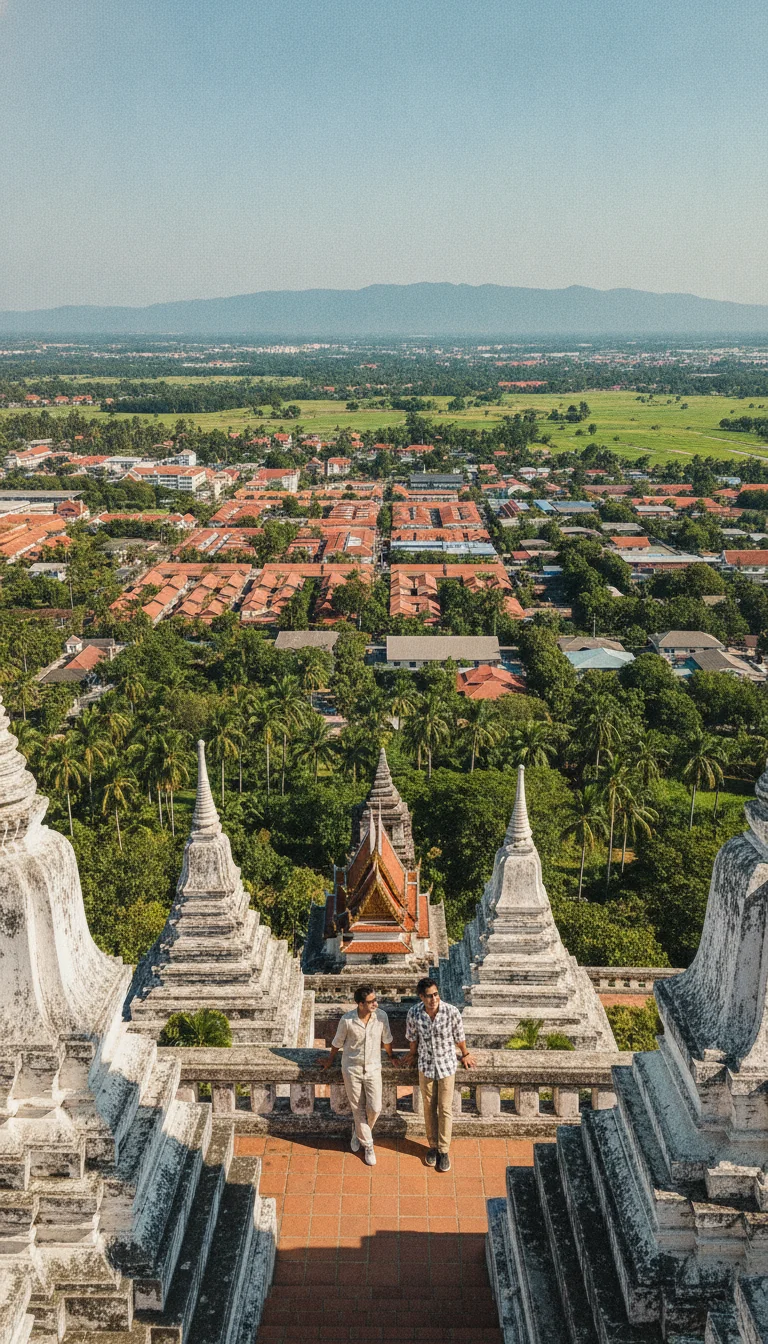
Phetchaburi suits travellers who prioritise cultural heritage, Ayutthaya-era temple architecture, and regional cooking over beach resorts or lively nightlife. Because the town functions as an administrative centre rather than an international tourist hub, English-language signage and spoken English are less prevalent than in Bangkok or nearby Hua Hin. Independent visitors will benefit from carrying a translation app and cash for small family-run eateries.
The central district is relatively compact and manageable on foot or by local songthaew, with riverside lanes, shophouses, and historic monasteries clustered together. Reaching outlying spots such as Tham Khao Luang cave or venturing into the wider province requires hiring a motorbike or booking a private driver.
The wild macaque populations around Khao Wang and surrounding hills require common sense; keep food and loose items concealed to avoid unwanted attention. Weather-wise, the dry season from November to April is the most comfortable period for exploring open-air palaces and temple compounds. November through February brings milder temperatures and minimal rainfall, while March and April turn hot and humid ahead of the main monsoon rains between May and October.
What to Know Before You Go
Planning a trip to Phetchaburi requires a few practical adjustments, particularly regarding local wildlife, temple customs, market traditions, and day-to-day transport. A small amount of preparation helps you explore the historic provincial town with ease.
Wildlife Precautions - The troops of crab-eating macaques that inhabit the forested slopes of Phra Nakhon Khiri (Khao Wang) and the entrance area of Tham Khao Luang are habituated to humans and quick to snatch loose items. Keep snacks, plastic carrier bags, drinks bottles, and sunglasses secured inside a zipped rucksack before climbing the hill or walking along the stone pathways. Do not feed the monkeys, do not approach them for close-up photographs, and avoid holding direct eye contact, which primates perceive as an aggressive challenge.
Temple Etiquette - Working monastic sites and historic shrines across the town, including Wat Mahathat Worawihan and Wat Yai Suwannaram, require modest dress. Ensure shoulders and knees remain covered before stepping onto temple grounds. Remove footwear before entering any consecrated prayer hall (ubosot), viharn, or chedi chamber. Thai custom also dictates stepping over the raised wooden doorsill rather than treading upon it, and keeping conversation quiet within sacred spaces.
Local Confectionery and Markets - Phetchaburi's signature sweets, crafted using locally harvested toddy palm sugar, coconut cream, and duck eggs, carry an intense sweetness. If you have dietary restrictions or monitor your sugar intake, ask market vendors about ingredients or sample items in modest portions. Fresh toddy palm juice and trays of baked egg custard (khanom mor gaeng) are sold at morning stalls across the central river market and around the railway station.
Visiting Phra Nakhon Khiri - The hilltop historical park opens daily from 8:30 am to 4:30 pm. Visitors can walk up via the paved eastern path or ride the electric funicular tram on the western slope. Planning your visit for early morning avoids the midday heat on the exposed summit ridge, where shade between the palaces and stupas is limited. Carrying drinking water is advisable throughout the climb.
Local Travel and Train Schedules - Exploring central Phetchaburi on foot or by bicycle is straightforward, while reaching outlying sites such as Tham Khao Luang is easiest by hired scooter or local songthaew. Motorcyclists must hold a valid motorcycle licence alongside an International Driving Permit and wear a helmet. If you plan to travel by train back to Bangkok, check the current State Railway of Thailand timetable in advance, particularly if you want air-conditioned second-class seats on rapid or special express services.
Quick Reference Table
| Item | Detail | Notes |
|---|---|---|
| Location | Central river plains, ~120–125 km south-west of Bangkok | Bisected by the Phetchaburi River |
| Train fares | 35–50 THB (third-class); 150–388 THB (second-class A/C) | Fares depend on service speed and carriage class |
| Getting there by minivan | ~2 hours from Bangkok | Depart from Southern Bus Terminal (Sai Tai Mai) or Mochit; 100–140 THB |
| Phra Nakhon Khiri (Khao Wang) | Open daily 8:30 am–4:30 pm; entry 150–200 THB | Optional funicular tram costs 50–60 THB return |
| Phra Ram Ratchaniwet | Entry 50 THB | German Art Nouveau palace managed by the Royal Thai Army |
| Tham Khao Luang & Wat Mahathat | Free admission | Active religious sites; modest dress required |
| Local transport | Songthaews 10–30 THB; motorbike hire 200–300 THB/day | Shared pick-up trucks ply fixed routes in town |
| Budget accommodation | 400–600 THB (£9–£14) per night | Clean, independent guesthouses and basic private rooms |
| Mid-range accommodation | 700–1,500 THB (£16–£34) per night | Air-conditioned heritage stays and riverside hotels |
| Typical meal costs | 40–80 THB (street food); 100–200 THB (local restaurants) | UNESCO Creative City of Gastronomy noted for toddy palm sugar dishes |
| Best time to visit | November to April (dry season) | November–February is coolest; March–April is hot and humid |
FAQ: Phetchaburi
What type of traveller is Phetchaburi best suited for?
What is Phetchaburi's culinary reputation?
What are some traditional dishes to try in Phetchaburi?
How can I travel to Phetchaburi from Bangkok by train?
What is the fastest way to get to Phetchaburi from Bangkok?
How do I get around Phetchaburi?
What is the best time of year to visit Phetchaburi?
How should I interact with the macaques in Phetchaburi?
What is the proper temple etiquette in Phetchaburi?
What is the best time of day to visit Phra Nakhon Khiri Historical Park?
Reviewed by the Thailand Guide Editorial Team • Last reviewed: 26 September 2026
This page is provided for general information only. While we aim for accuracy, details can change — please verify anything important independently before relying on it.