Ban Suan Luang - Prachuap Khiri Khan
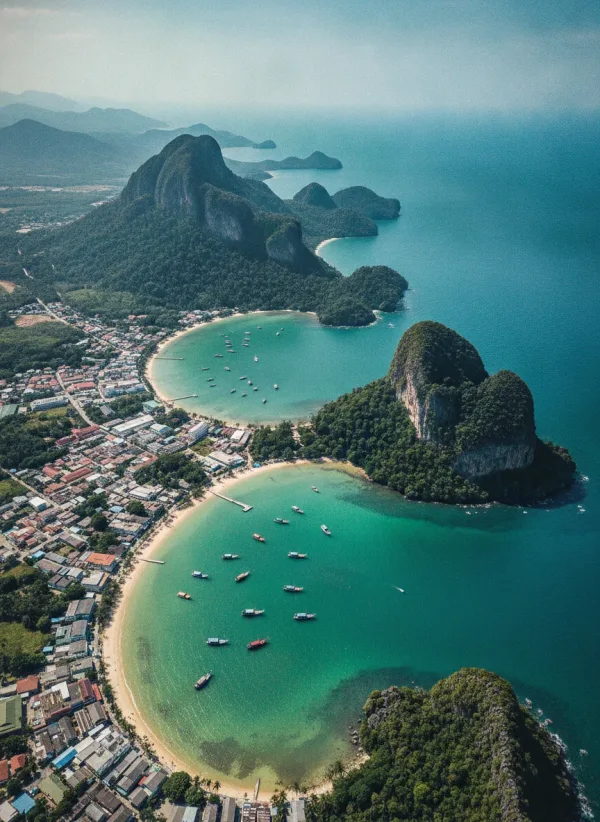
Ban Suan Luang is a coastal village in Phong Prasat subdistrict, Bang Saphan district, on the southern Gulf coast of Prachuap Khiri Khan. The village adjoins Suan Luang Beach, part of the long shoreline that continues around Bang Saphan Bay towards Bang Saphan Noi. It is a useful base for travellers who want direct beach access and a quieter setting than the larger resort centres farther north.
The area is spread out rather than built around a compact tourist centre. Accommodation and places to eat are scattered along the coastal roads, while Bang Saphan Yai provides the railway station, markets, banks, shops and other everyday services. A car, motorbike or pre-arranged transfer therefore makes a substantial difference to a stay.

Suan Luang Beach and the Village Layout
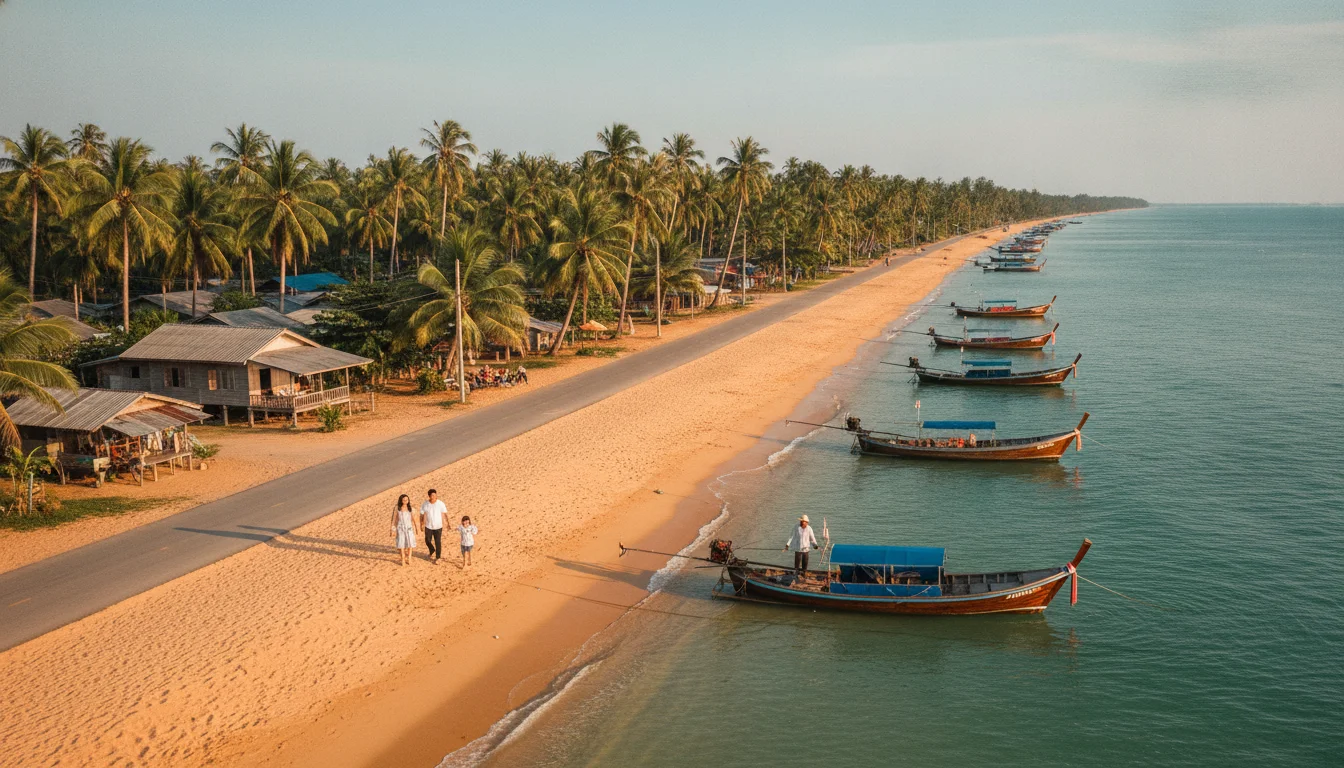
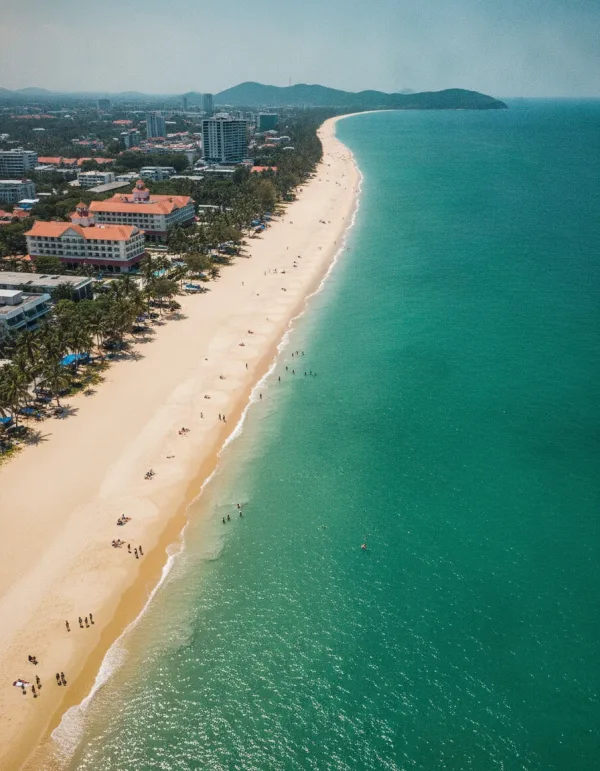
Suan Luang Beach lies on the Bang Saphan Bay coast, east of Phetkasem Road. Thailand's official tourism directory describes the bay shoreline as continuing from the Bang Saphan town area towards Bang Saphan Noi, with beach access at intervals. Ban Suan Luang occupies part of this coastal strip in Moo 9 of Phong Prasat subdistrict.
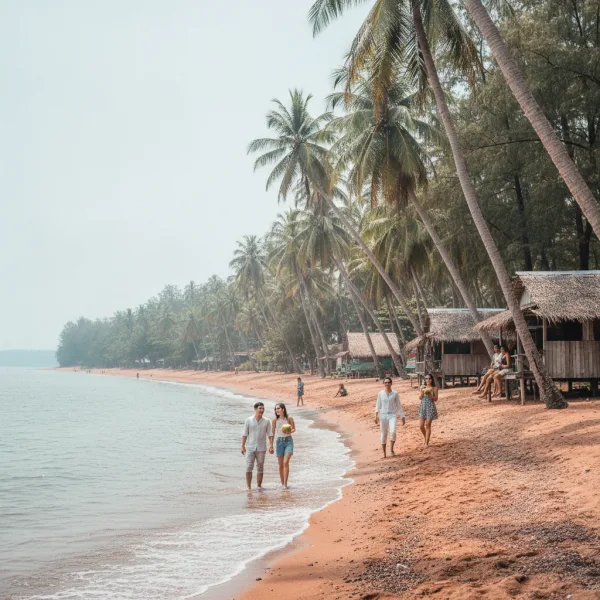
The beach is backed by a mixture of coconut trees, local homes, small accommodation properties and undeveloped plots. Development is low-rise and dispersed, so the experience changes along the shore: some sections have resorts or access roads, while others have little immediately behind the sand. Fishing boats may be seen along the coast, but Ban Suan Luang remains a living village rather than a purpose-built resort precinct.
There is no continuous promenade linking every part of the bay. Visitors reach different stretches from side roads leading east from the inland routes. This makes a map useful when choosing accommodation: two properties described as being in the Bang Saphan beach area can be several kilometres apart. Check the exact location of a room before booking, especially if you do not plan to hire transport.
Beach conditions vary with tide, wind and season. At lower tide, more firm sand may be exposed for walking; at higher tide, the usable strip can narrow considerably. The open Gulf setting also means that the sea is not always calm. Treat the beach as an unpatrolled natural shoreline, check conditions locally and supervise children closely around the water.
Places to Visit Around Bang Saphan
Ban Suan Luang works best as a base for exploring the wider Bang Saphan coast rather than as a destination with a long list of formal attractions. The beach itself is the principal draw, with mornings and late afternoons generally the most comfortable times for walking.
Bang Saphan Yai is the practical centre for the area. Its market, railway station and local shops are useful during a longer stay, and visiting the town gives a clearer sense of the district beyond the beachfront. West of town, Wat Khao Tham Ma Rong is associated with a limestone cave complex and is one of the better-known inland sights in Bang Saphan. Conditions inside caves can be slippery and lighting may be limited, so wear suitable footwear and ask locally about access before entering.
Farther north, Mae Ramphueng Beach and the coast around Bang Saphan provide additional places to stop for food or a change of scenery. Ban Krut and Wat Thang Sai are also possible day trips, but they are in the Thong Chai area well north of Ban Suan Luang. Wat Thang Sai stands on Khao Thong Chai above the Ban Krut coast and is known for Phra Mahathat Chedi Phakdi Prakat. Allow for a proper road journey rather than treating it as a nearby village sight.
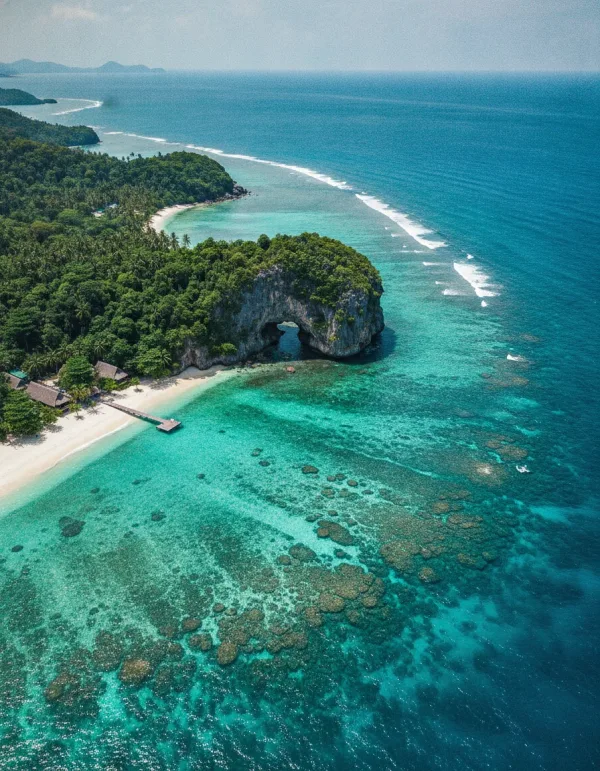
To the south, the coastline continues towards Bang Saphan Noi. Boat excursions associated with Koh Talu usually depart from the Bang Saphan Noi side of the coast and should be arranged with an established operator. Departure point, sea conditions and availability can change, particularly outside the calmer part of the year.
Plan a visit to Thap Sakae in Prachuap Khiri Khan, with practical guidance on beaches, national parks, accommodation, trains and local travel.
Food and Seafood
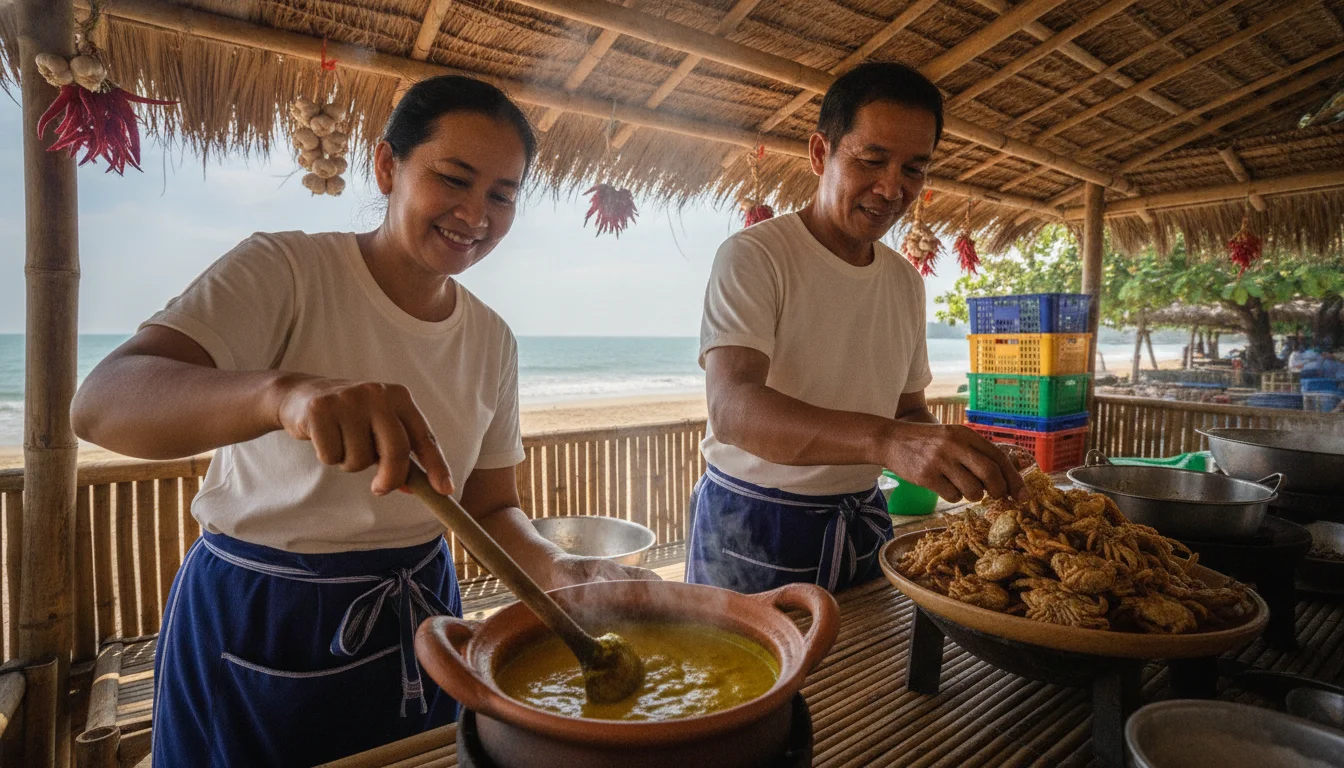
Food around Ban Suan Luang reflects its coastal setting. Small restaurants and accommodation kitchens commonly serve Thai dishes, seafood, fried rice, noodles, curries and simple breakfasts. Availability can be irregular because the customer base is small and some businesses close for a weekly rest day or during quieter periods.
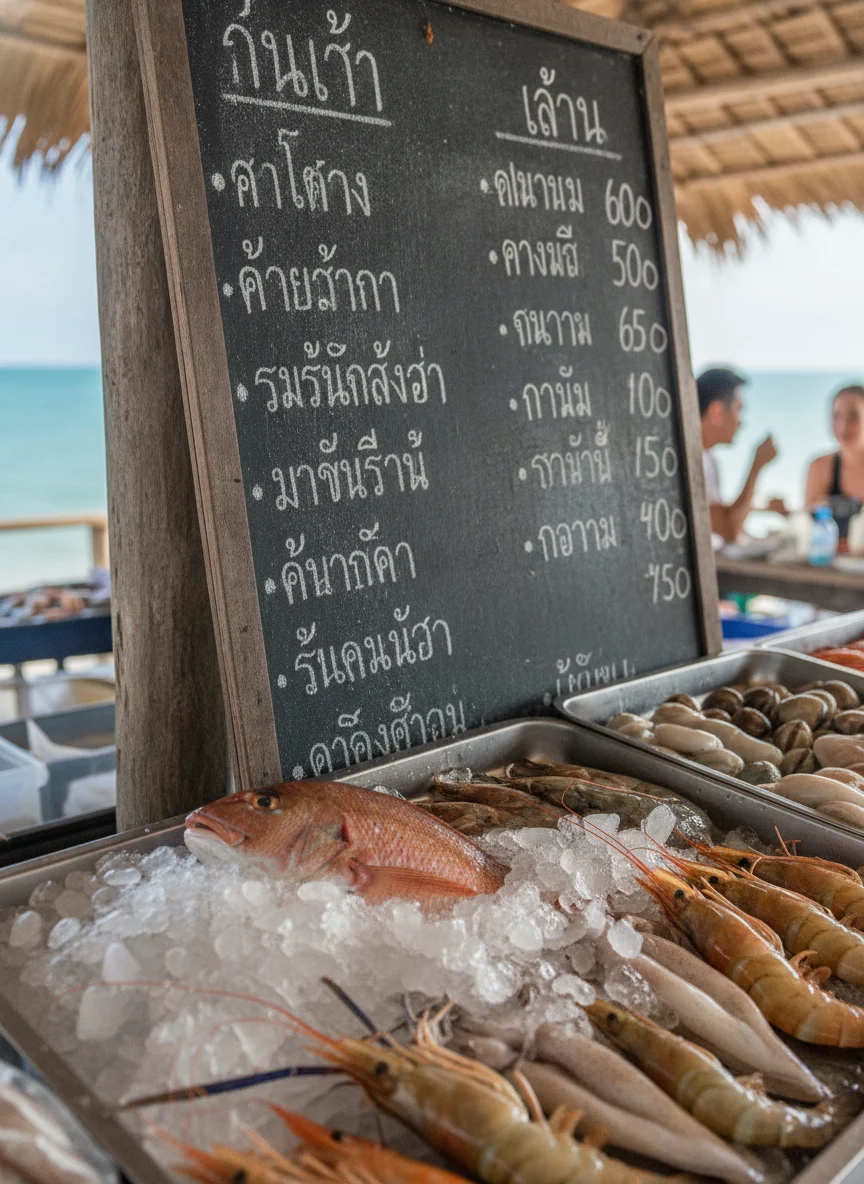
Seafood is often priced by weight or according to the day's catch. Ask for the price before ordering whole fish, crab, prawns or squid, and confirm whether cooking is included. Southern-style dishes can be considerably hotter than many central Thai recipes; ask for mai phet if you prefer less chilli, while recognising that a curry paste may already contain chilli.
Ban Suan Luang does not have a concentrated restaurant district. Travellers without their own transport should check whether their accommodation serves dinner and how far the nearest alternatives are. Bang Saphan Yai offers a broader choice of markets, local restaurants, convenience stores and supplies. Carrying some cash is sensible because small vendors may not accept cards, although QR payment is widespread among Thai customers.
Accommodation and Current Room Prices
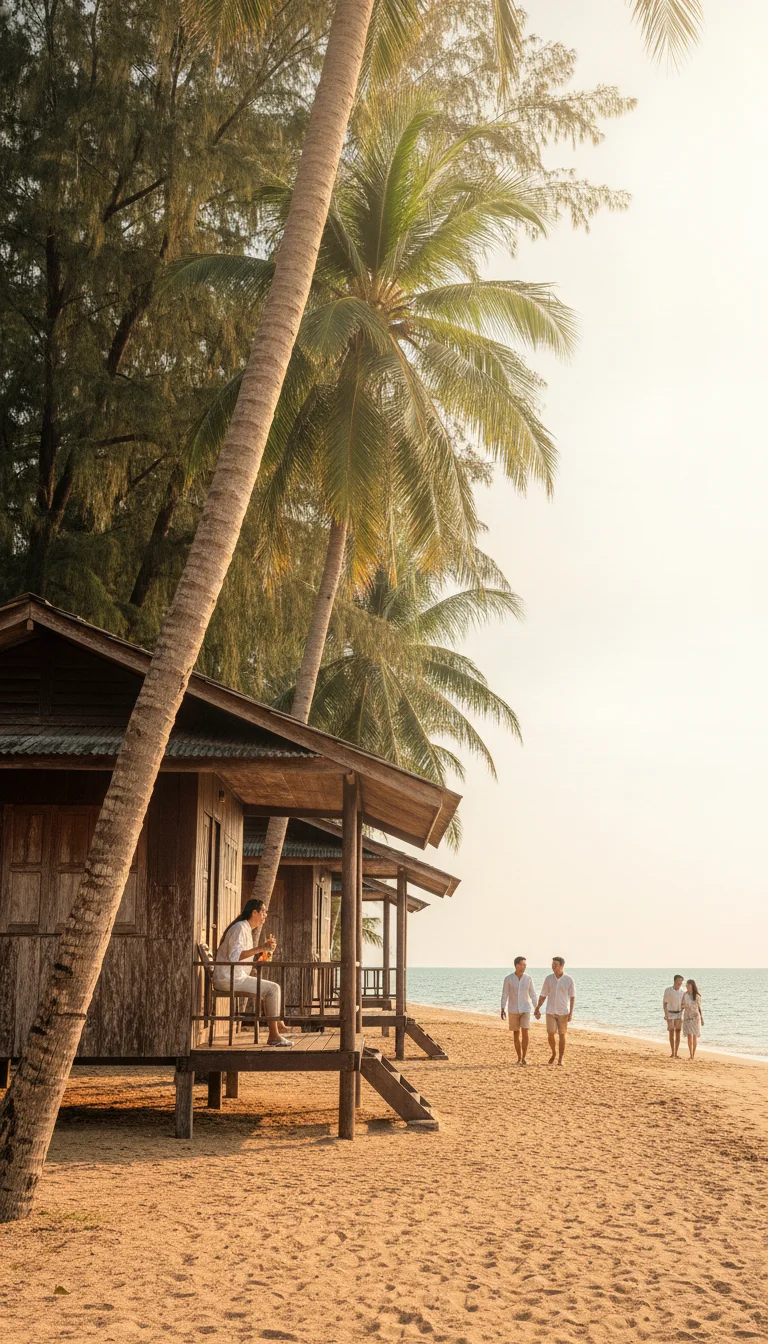
Accommodation around Suan Luang Beach is mainly low-rise, ranging from straightforward rooms and bungalows to established beach resorts. Coral Hotel Bangsaphan is a confirmed Ban Suan Luang property at 171 Moo 9, Phong Prasat. Its official site lists classic and superior rooms, family cottages and deluxe suites, together with two restaurants. Other properties marketed near Suan Luang Beach may be elsewhere around Bang Saphan Bay, so the map matters as much as the destination name.
Current booking-platform searches commonly place simpler Bang Saphan rooms at about 700–1,500 THB (approximately £16–£34) per night and more fully equipped beach resorts from roughly 1,800 THB (approximately £41), with larger rooms and higher-category properties costing more. Rates depend heavily on dates, room type, occupancy, breakfast, cancellation terms and taxes. Holiday weekends and the period around New Year can produce higher prices or limited availability. Confirm the final live price and exact location before payment.
Long stays should be negotiated directly with the property. A monthly quote may exclude electricity, water, cleaning or linen changes, and an attractive rate is less useful if the room is several kilometres from food and transport. Inspect the room, mobile signal and access road before committing to an extended booking where possible.
| Accommodation Type | Typical Current Price | What to Check |
|---|---|---|
| Simple room or bungalow | 700–1,500 THB (approximately £16–£34) per night | Air conditioning, hot water, distance from the beach and meal availability |
| Mid-range beach property | From about 1,800 THB (approximately £41) per night | Breakfast, pool, taxes, cancellation terms and exact shoreline location |
| Family cottage or suite | Price varies by dates and occupancy | Bed configuration, extra-person charges, cooking facilities and transport |
| Monthly stay | Quoted directly by the property | Utilities, deposit, cleaning, internet and minimum term |
Getting There and Getting Around
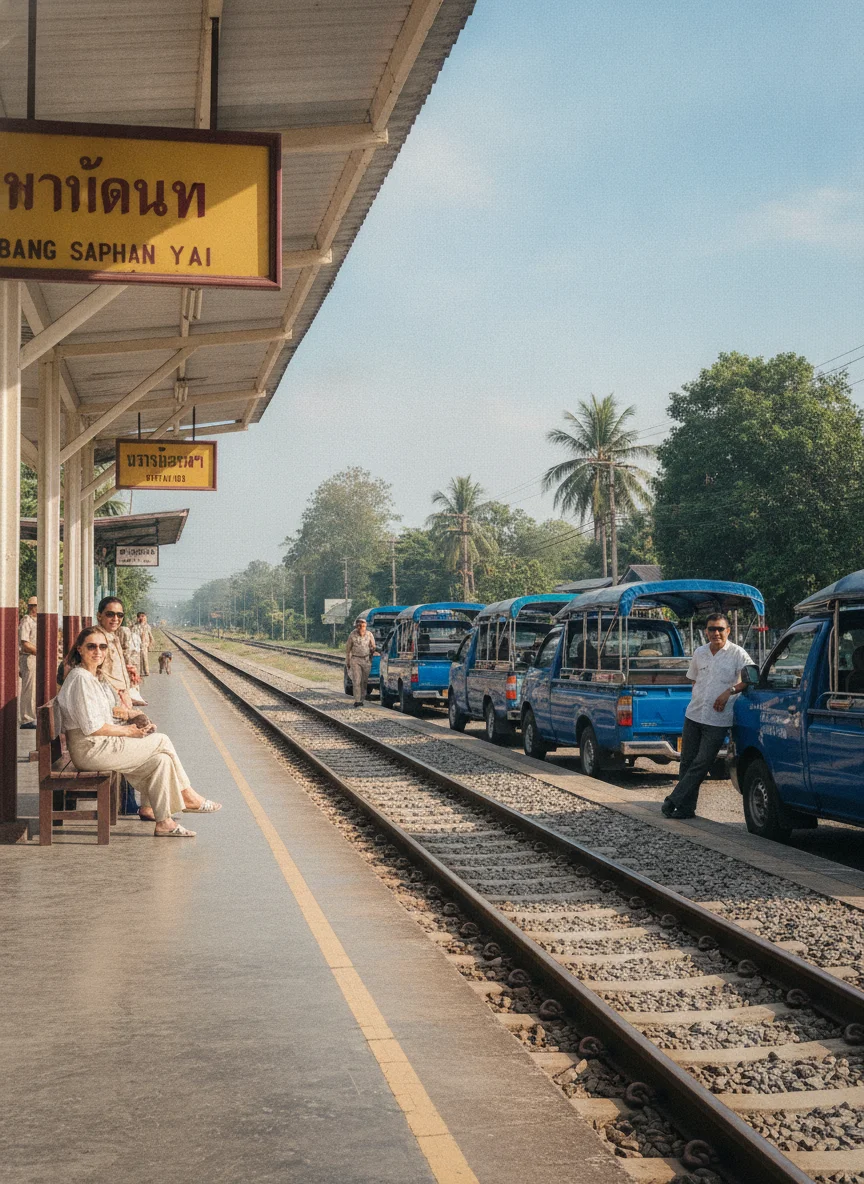
Bang Saphan Yai station is the nearest useful railway stop. Southern Line trains connect it with Bangkok and destinations farther south, but the number of trains, classes and Bangkok terminal can vary by service. Scheduled journeys between Krung Thep Aphiwat Central Terminal and Bang Saphan Yai generally take about six to seven hours. Check the State Railway of Thailand timetable for your date and search using “Bang Saphan Yai”, not Bang Saphan Noi.
Rail fares vary substantially by train and class. Current published ranges are approximately 218 THB (£5) for a third-class fan seat, 397 THB (£9) for a second-class air-conditioned seat and 697 THB (£16) for a second-class air-conditioned sleeper when bought at the station; online agents may add a booking fee. These figures are useful guides rather than a quote for every service. Confirm the train, carriage class, berth type and final price when booking.
Ban Suan Luang is several kilometres from the station, and there is no dependable high-frequency public service along the beach. Arrange a pickup with your accommodation, use a local taxi or motorbike taxi, or have your own vehicle. Agree the fare before setting off when a taxi does not use a meter.
By road, Bang Saphan is reached from Phetkasem Road, Highway 4, with local roads running east towards the coast. The drive from central Bangkok is roughly 360–380 kilometres depending on the route and start point. Allow additional time for stops and traffic rather than treating the distance as a fixed journey time.
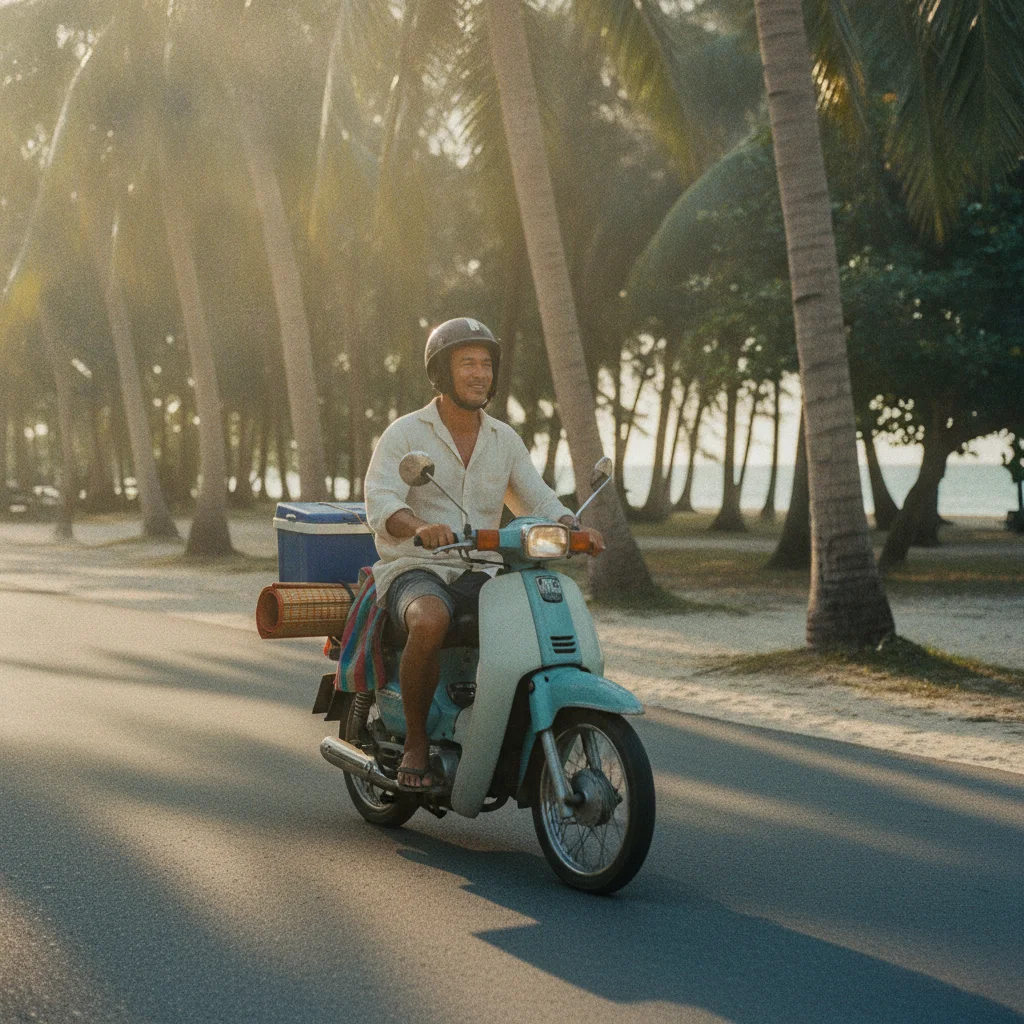
For travel within the area, a car is the easiest option. A motorbike gives more flexibility but should only be used by appropriately licensed and insured riders wearing a helmet. Inspect tyres, brakes, lights and existing damage before accepting a hire vehicle. Walking works for the immediate stretch around a well-positioned property, but distances between accommodation, restaurants and shops can be inconvenient in the heat or after dark.
Daily Costs in Ban Suan Luang
Costs are shaped mainly by accommodation and transport. A traveller staying in a simple room and eating local Thai food may spend around 1,200–2,000 THB (approximately £27–£45) a day before long-distance travel. A mid-range stay with a beach property, seafood meals and local vehicle hire can more realistically reach 2,500–4,500 THB (approximately £57–£102) a day. These are planning ranges rather than fixed budgets.
| Item | Useful Planning Range | Basis |
|---|---|---|
| Simple accommodation | 700–1,500 THB (approximately £16–£34) | One room per night, date dependent |
| Mid-range beach accommodation | From about 1,800 THB (approximately £41) | One room per night; higher for larger rooms and peak dates |
| Local Thai meal | About 60–150 THB (approximately £1.40–£3.40) | Simple individual dish; seafood priced separately |
| Seafood meal | About 250–700 THB (approximately £6–£16) per person | Depends on species, weight and venue |
| Local onward transfer | Agree before travel | Distance, vehicle and pickup time affect the fare |
Cash, cards and QR payment acceptance vary. Keep smaller baht notes for markets, taxis and simple restaurants, and confirm current prices before travel or payment.
Who Ban Suan Luang Suits
Ban Suan Luang suits travellers who are comfortable with a dispersed coastal area and who place beach access above nightlife, shopping or a dense choice of restaurants. It can work particularly well for a short quiet break, a road-trip stop or a longer stay with private transport.
The main trade-off is convenience. Travellers expecting to walk from a railway station to a resort district, choose among many restaurants every evening or book activities from storefront agents may find the area restrictive. Families can enjoy the space, but should choose accommodation with suitable food, a pool or other facilities because the sea and local services cannot be assumed to meet every need.
Weather and Sea Conditions
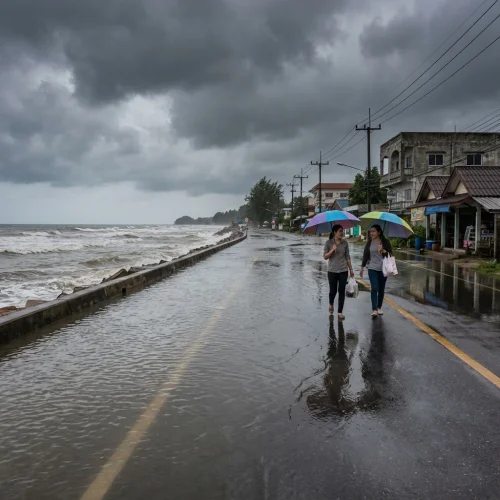
Bang Saphan has a tropical Gulf climate, with warm conditions throughout the year and rainfall possible in every month. The lower western Gulf often receives its heaviest rain later in the year than Andaman Coast destinations, particularly around October and November. December to April is commonly chosen for drier conditions, but sunshine, visibility and calm water are never guaranteed.
Sea state can change quickly with wind and storms. There may be no lifeguard, warning flag or clearly marked swimming zone on quieter sections of Suan Luang Beach. Ask locally about currents, avoid swimming alone and stay out of the water during thunderstorms or visibly rough conditions. Boat trips should always be treated as weather dependent.
Practical Tips
Choose Accommodation by Map
Check the exact pin, beach access and distance to food before booking. “Bang Saphan” and “Suan Luang Beach” are used broadly on accommodation platforms.
Arrange the Station Transfer
Ask your accommodation to confirm a pickup from Bang Saphan Yai and state your train number and expected arrival time. Do not rely on finding a waiting vehicle late at night.
Carry Some Cash
Keep a mixture of 20, 50, 100 and 500 THB notes for small restaurants, markets and local transport. The most dependable cluster of banking and shopping services is in Bang Saphan Yai.
Plan Evening Meals
Check restaurant closing times during the day. If your property has no kitchen or restaurant, buy water and essential food before returning to an isolated stretch of beach.
Use Licensed, Insured Transport
Carry the correct driving licence and insurance cover if hiring a motorbike or car. Wear a helmet on every motorbike journey, including short trips along the beach road.
Protect Against Sun and Insects
Shade can be limited on exposed parts of the shore. Use sun protection and carry repellent, particularly around vegetation near dusk.
Dress Respectfully at Temples
Cover shoulders and knees when visiting temple grounds, remove shoes where indicated and avoid disturbing ceremonies or residential monastic areas.
Quick Reference Table
| Item | Detail | Notes |
|---|---|---|
| Location Name | Ban Suan Luang | Coastal village beside Suan Luang Beach |
| Administrative Area | Moo 9, Phong Prasat, Bang Saphan | Prachuap Khiri Khan province |
| Coast | Western Gulf of Thailand | Part of the wider Bang Saphan Bay shoreline |
| Nearest Useful Town | Bang Saphan Yai | Railway station, markets, banks and shops |
| Bangkok Road Distance | Roughly 360–380 km | Varies by start point and route |
| Railway Station | Bang Saphan Yai | Check the Southern Line timetable for the travel date |
| Typical Stay | 2–5 nights | Longer stays work best with private transport |
| Commonly Drier Period | December to April | Rain and rough seas remain possible |
| Typical Daily Spend | 1,200–4,500 THB (approximately £27–£102) | Mainly dependent on room and transport choices |
| Payment | Thai baht | Carry cash for small businesses and local transport |
| Getting Around | Car, motorbike or arranged transfer | Public transport along the beach is limited |
| Nearby Excursions | Bang Saphan Yai, Wat Khao Tham Ma Rong, Ban Krut, Bang Saphan Noi | Road distances make independent transport useful |
FAQ: Ban Suan Luang - Prachuap Khiri Khan
What kind of travel experience does Ban Suan Luang offer?
Why is it important to check accommodation location on a map in Ban Suan Luang?
What are the typical beach conditions at Suan Luang Beach?
What services are available in Bang Saphan Yai?
What should travellers do when ordering seafood in Ban Suan Luang?
How can visitors request less spicy food in Ban Suan Luang?
How should travellers arrange transport from Bang Saphan Yai station?
What is a typical daily budget for Ban Suan Luang?
Who is Ban Suan Luang best suited for?
When is the best time to visit Ban Suan Luang for drier weather?
Reviewed by the Thailand Guide Editorial Team • Last reviewed: 21 August 2026
This page is provided for general information only. While we aim for accuracy, details can change — please verify anything important independently before relying on it.