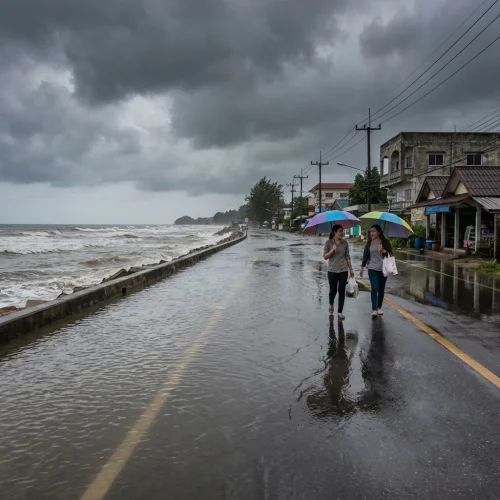
The Thai Meteorological Department has issued an eight-day severe weather warning covering widespread regions of Thailand between 18 October and 25 October 2026.
The alert, designated Warning No 1 (260/2026), forecasts prolonged spells of heavy to very heavy rainfall across southern, eastern, and central provinces. Flash floods, rapid surface run-off, and localised landslides represent the primary hazards during this period. For British citizens residing in or relocating to Thailand, the unsettled weather marks the annual transition from the south-west monsoon to the cooler northeast monsoon. This seasonal shift frequently generates intense localised downpours that disrupt transport networks, utility services, and residential areas.
Weather Outlook: 18–25 October 2026
Meteorological Conditions
The adverse weather is driven by two converging atmospheric systems. A monsoon trough currently lies across the lower southern provinces while south-westerly winds affect the lower Andaman Sea.
Over the coming days, this trough is forecast to move northwards, crossing the upper southern provinces, the upper Gulf of Thailand, and the eastern seaboard. Concurrently, a moderate high-pressure system from China is extending southwards over northern Thailand, the upper northeast, and the South China Sea. The collision of cool continental air with warm, moist maritime air will destabilise atmospheric conditions. This interaction will trigger prolonged thunderstorms, squalls, and unevenly distributed downpours across major population centres.
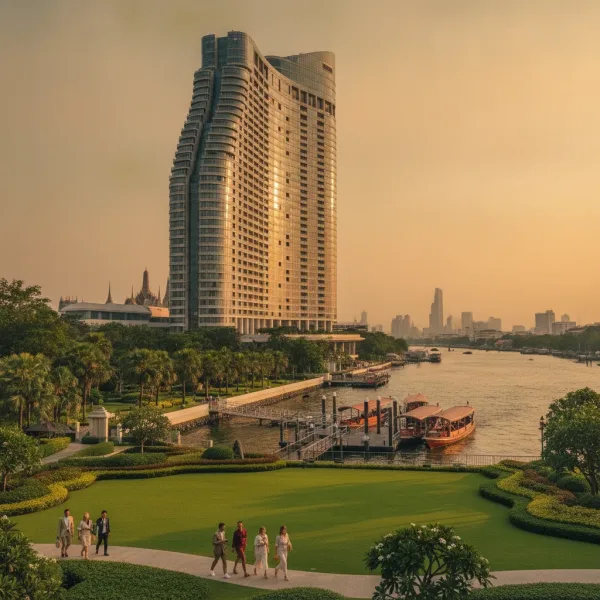
Bangkok and Central Region Disruption
Bangkok and its surrounding provinces face elevated flooding risks from 21 October through 24 October.
Rainfall totals between 35.1mm and 65mm are forecast across 24-hour windows in affected districts. Heavy precipitation across short durations routinely exceeds the capacity of the capital's municipal drainage network. Low-lying neighbourhoods, particularly those along Sukhumvit sois, Ramkhamhaeng, Ladprao, and riverside communities along the Chao Phraya, are prone to standing water.
Commuters should anticipate delays. Surface water regularly reduces road capacity during morning and evening rush hours, causing widespread congestion on arterial routes and expressways. British expatriates who rely on road transport, including private vehicles, taxis, and motorcycle services, should budget extra travel time. Rail transit networks, specifically the BTS Skytrain and MRT underground lines, remain the most dependable commuter options during torrential rain, though station entrances occasionally experience foot-traffic bottlenecks.
Bangkok Rainfall & Commute Forecast
Regional Breakdown for Expatriate Areas
The severity and timing of the rainfall vary substantially by province over the eight-day period.
In the eastern provinces of Chonburi and Rayong—home to large communities of foreign retirees and manufacturing specialists—very heavy rain is forecast from 20 October to 24 October. Low-lying sections of Pattaya, including Beach Road and Third Road, frequently flood during downpours of this scale.
In the southern provinces, popular expatriate locations including Phuket, Krabi, and Surat Thani (which includes Koh Samui, Koh Phangan, and Koh Tao) will experience recurrent heavy rain between 18 October and 25 October. Hilly terrain throughout Phuket and Samui presents risks of slope failure and mudslides along hillside access roads. Residents occupying properties constructed on steep gradients should inspect boundary walls, slope stabilisation netting, and exterior drainage channels.
Maritime and Transport Disruptions
Maritime conditions in southern and eastern coastal waters will deteriorate significantly during this eight-day weather window.
Wave heights in both the Andaman Sea and the Gulf of Thailand are forecast to exceed three metres in areas experiencing thunderstorms. Small vessels should remain in port during squalls. Commercial passenger ferry operators serving islands such as Koh Samui, Koh Phangan, Koh Tao, Koh Chang, and the Phi Phi archipelago may alter sailing timetables or suspend crossings at short notice on safety grounds.
British nationals scheduling domestic leisure travel or visa-run journeys should verify ferry and flight schedules before departing. Heavy rain and low cloud cover can cause air traffic delays at regional hubs, including Phuket International Airport, Samui Airport, and Suvarnabhumi Airport.
Property and Vehicle Protection
Expatriates living in detached houses or ground-floor properties should review their drainage readiness.
- Clear perimeter drainage: Ensure household drains, perimeter gullies, and gutter downpipes are clear of leaves and debris before heavy rain begins. - Inspect electrical systems: Check ground-level sockets, external lighting fixtures, and swimming pool pump circuits for adequate waterproofing. - Review vehicle parking: Park cars on elevated drives or upper levels of parking structures rather than on low-lying street levels prone to flash flooding. - Assess insurance cover: Verify that comprehensive motor insurance policies explicitly include flood damage cover (Type 1 cover in Thailand standardly covers water inundation, whereas basic third-party policies do not).
Driving through standing floodwater in Thailand carries severe mechanical and health risks. Hidden hazards beneath murky floodwaters include displaced manhole covers, deep road subsidences, and construction debris. Driving through water higher than half the vehicle's wheel rim can flood engine air intakes, causing catastrophic mechanical failure.
Official Information and Emergency Contacts
The Thai Meteorological Department updates its forecasts every six hours during severe weather events.
Residents can monitor live radar scans and weather bulletins via the official TMD website (tmd.go.th). For direct enquiries, the department operates a 24-hour public telephone helpline on 1182, alongside landlines at 02-399-4012 and 02-399-4013.
In the event of civil emergencies, flood inundation, or blocked access routes, expatriates should contact the Department of Disaster Prevention and Mitigation (DDPM) hotline on 1784. English-speaking assistance for foreign nationals is accessible through the Tourist Police on 1155. British citizens requiring urgent consular assistance relating to life-safety emergencies can contact the British Embassy Bangkok on +66 (0) 2 305 8333.
Source: nationthailand.com
Reviewed by the Thailand Guide Editorial Team • Last reviewed: 17 October 2026
This page is provided for general information only. While we aim for accuracy, details can change — please verify anything important independently before relying on it.