Cha-am - Phetchaburi
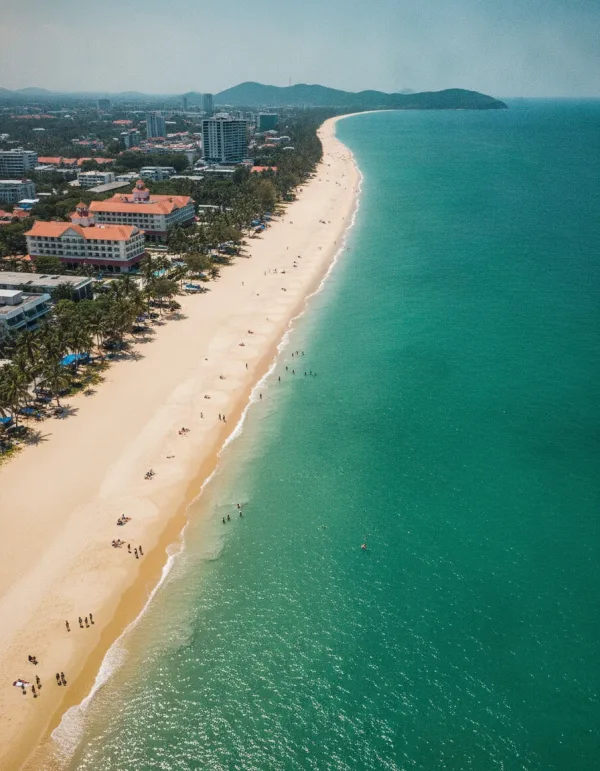
Cha-am is a long-established seaside town on the Gulf of Thailand in Phetchaburi Province, about 160 kilometres by road south-west of central Bangkok. Its broad beach, seafood stalls and straightforward road-and-rail access make it especially popular for short breaks from the capital. The busiest part of town is compact enough to explore on foot or by bicycle, while larger resorts extend south along the coast towards the boundary with Hua Hin.
The town’s character changes noticeably through the week. Weekdays are generally quieter, while weekends and Thai public holidays bring many more domestic visitors. Cha-am is therefore best understood as a working Thai beach town as well as a resort: fishing boats, food markets and local neighbourhoods sit close to hotels, deckchairs and the seafront road.

The Layout of Cha-am Beach
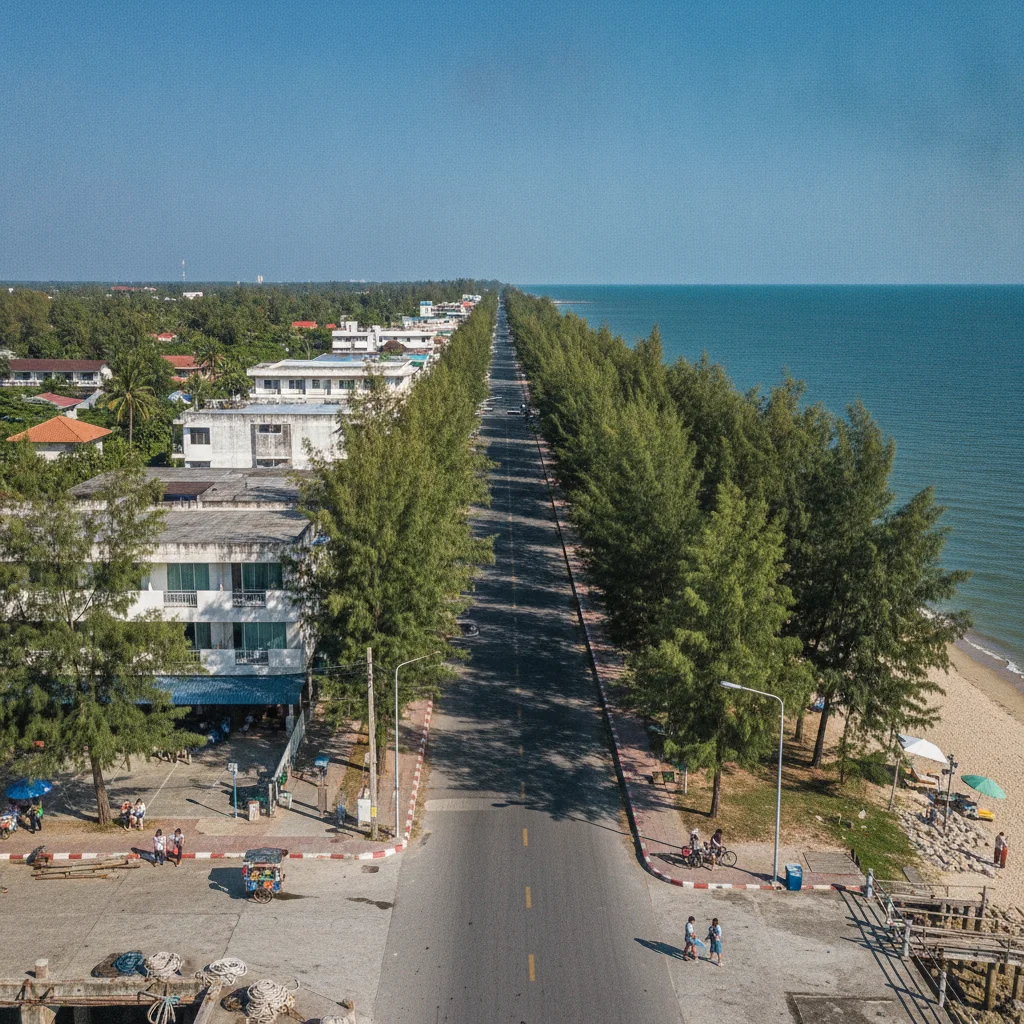
Cha-am’s visitor area centres on the beach and Ruamjit Road, which runs beside it. Narathip Road approaches from Phetkasem Road and reaches the seafront near the middle of the main strip. This junction is a useful reference point for shops, food, local transport and access to the inland town.
North of Narathip Road, the seafront continues towards the fishing harbour and seafood markets. Southwards, development becomes more spread out, eventually reaching a succession of larger hotels and resorts along the coast towards Hua Hin. A hotel described online as being in “Hua Hin–Cha-am” may be several kilometres from either centre, so check the map rather than relying on the marketing name.
Much of the central beach is lined with casuarina trees. Vendors normally arrange umbrellas, tables and reclining chairs on the sand, with food and drinks ordered from your seat. Prices vary by section and vendor; recent visitor reports commonly place chair hire at about 30–50 THB (approximately £0.70–£1.10). Confirm the charge before sitting down, particularly if ordering food as well.
The beach is long and flat, but distances between the main town, northern harbour and southern resort strip are greater than they first appear. Staying around Narathip Road gives the easiest access to everyday amenities. The northern end is useful for seafood and the harbour, while the southern coast suits travellers who are content to use taxis or hotel transport.
Mrigadayavan Palace
Mrigadayavan Palace, also widely written as Maruekhathaiyawan Palace, stands within the Rama VI military camp south of central Cha-am. King Vajiravudh, Rama VI, commissioned the seaside residence in the early 1920s. Its linked pavilions, high ceilings and long covered walkways were designed to make use of coastal breezes.
The palace complex comprises three principal groups of buildings connected by raised wooden corridors. The open-sided architecture and restrained pastel colours distinguish it from Thailand’s more formal masonry palaces. Restoration has affected access in recent years, so a visit may focus on the grounds and selected buildings rather than every interior room.
The Tourism Authority of Thailand currently lists foreign adult admission at 90 THB (approximately £2). Recent visitor information indicates public opening on Fridays, Saturdays and Sundays, generally from 09:00 to 17:00, with ticket sales ending earlier. Opening days, interior access and restoration arrangements can change, so check the palace’s current announcement before travelling.
Dress respectfully for a royal site and military compound, with shoulders and knees covered. Carry photo identification and allow time for any entry procedure at the camp. The palace is well south of Cha-am town and is most practical by taxi, private vehicle or as part of a journey between Cha-am and Hua Hin.
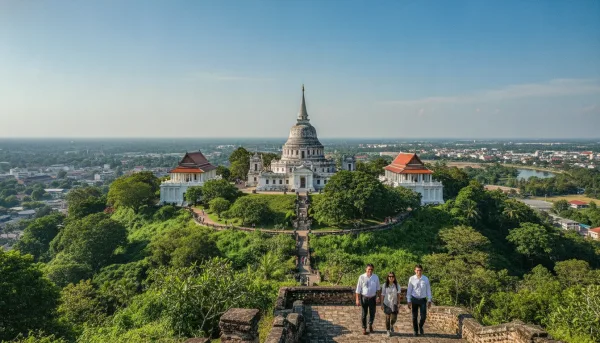
Discover Phetchaburi, Thailand's historic royal retreat. Explore hilltop palaces, subterranean cave temples, UNESCO gastronomy, transport, and travel costs.
Seafood and Markets
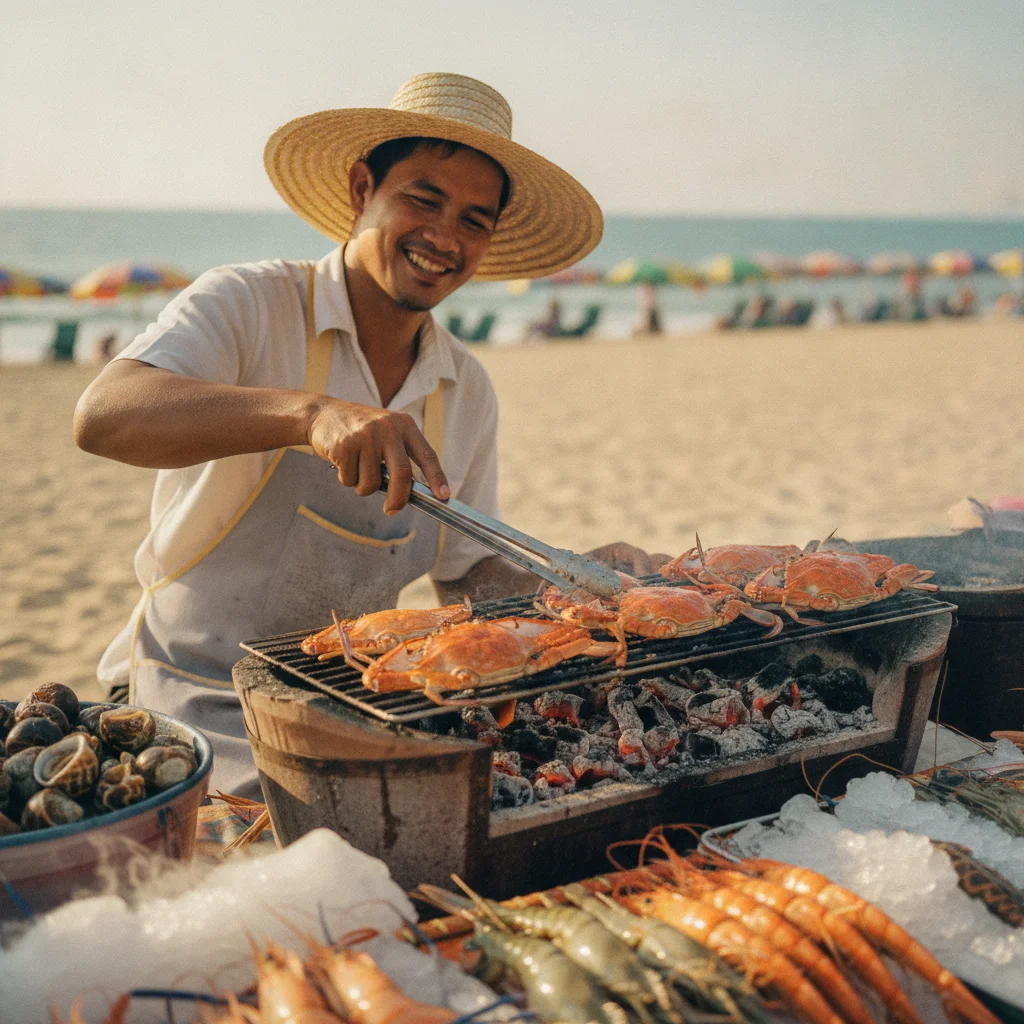
Seafood is central to eating in Cha-am. Blue swimming crab, prawns, squid and local fish are sold at markets and cooked by restaurants along the beach. At seafront seating areas, meals may be delivered directly to the tables and chairs on the sand. Near the northern harbour, the Pu Chuk–Saphan Yok market is a useful place to see the day’s catch and buy cooked or fresh seafood.
Blue swimming crab is commonly steamed and served with nam jim seafood, a sharp sauce made with chilli, lime, garlic and fish sauce. Prices depend on size, season and whether the crab is sold fresh, cooked or as part of a restaurant meal. A working guide for medium blue swimming crab is around 350–500 THB per kilogram (approximately £8–£11), but ask for the price per kilogram and confirm whether cooking is included before ordering.
Phetchaburi is also known for sweets made with palm sugar. Khanom mor kaeng is a baked custard commonly made with mung beans, eggs, coconut milk and palm sugar. Shops along Phetkasem Road and markets in Cha-am sell it alongside other provincial specialities.
Cha-am holds seasonal food events on the beachfront. The 2026 Cha-am Squid Festival is scheduled for 12–19 September, from 19:00 to 23:00, with seafood stalls and evening activities. Event dates and programmes change annually, so later visitors should check municipal or local tourism announcements.
Khao Nang Phanthurat Forest Park
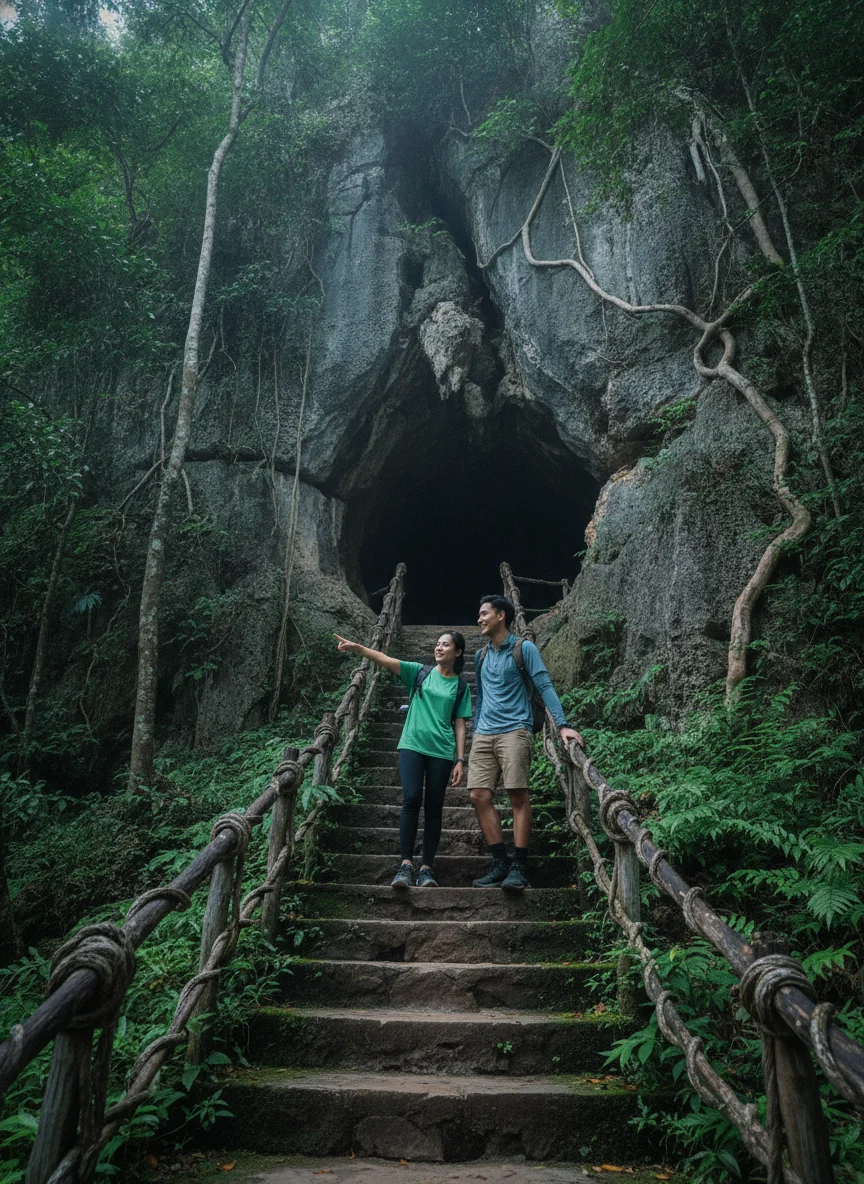
Khao Nang Phanthurat Forest Park protects limestone hills inland from Cha-am, about 9 kilometres from the beach. Its name and several formations are associated with Nang Phanthurat, the giantess in the Thai literary tale Sang Thong. Interpretive signs and sculptures around the visitor area explain the connection.
The park has short paths, steeper climbs, viewpoints and limestone features. Trails can be uneven and slippery after rain, and some caves or routes may close for safety or conservation. The principal cave near the visitor centre has been reported closed to visitors, so do not plan a visit around cave access without checking locally.
Entry is currently free. Recent information gives opening hours of approximately 08:30–17:00. Take drinking water, sun protection and footwear with a firm grip; the exposed limestone steps become hot in strong sun. There is limited food near the park, and having your own transport makes the visit much easier.
The park’s compact scale makes it suitable for a morning or late-afternoon outing rather than a full trekking day. Its viewpoints give a different perspective on Cha-am’s coastal plain, but the steepest sections will not suit every visitor.
Where to Stay and Current Room Costs
Accommodation in central Cha-am ranges from simple guesthouses near the beach to established hotels with swimming pools. Farther south, larger resorts occupy more spacious coastal sites, but many are isolated from the town’s markets and casual restaurants. Check the property’s exact location and transport options before booking.
Current listings show basic rooms near the beach from about 900 THB (approximately £20) a night, while the wider Cha-am hotel market averages considerably more. Three-star accommodation commonly falls around 1,300–2,500 THB (approximately £29–£56), and four-star properties often start around 2,500–5,000 THB (approximately £56–£112). Five-star resorts and private pool villas can exceed 8,000 THB (approximately £179), especially at weekends and during holidays.
These are working ranges, not fixed tariffs. Saturday nights, long weekends, school holidays, room occupancy, breakfast and cancellation terms can change the total substantially. Confirm the final price, taxes and inclusions before payment.
| Accommodation Type | Typical Current Range | What to Check |
|---|---|---|
| Simple guesthouse or small hotel | From about 900 THB (approximately £20) | Air conditioning, lift access, parking and distance from the beach |
| Three-star hotel | About 1,300–2,500 THB (approximately £29–£56) | Breakfast, swimming pool, room size and weekend supplements |
| Four-star resort | About 2,500–5,000 THB (approximately £56–£112) | Exact coastal location, transport and whether taxes are included |
| Five-star resort or pool villa | About 5,000–12,000+ THB (approximately £112–£269+) | Occupancy, private-pool terms, deposits and meal inclusions |
Getting There and Getting Around
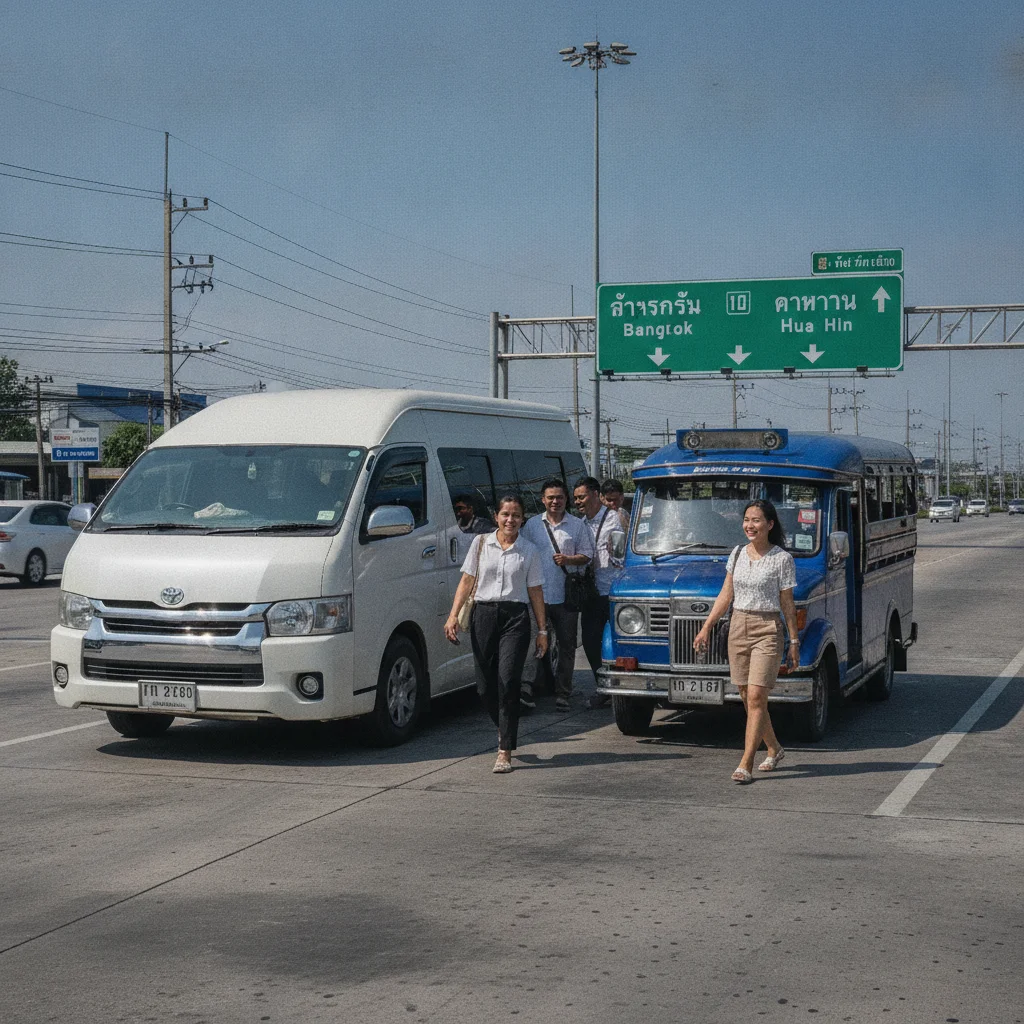
Cha-am lies on the southern railway line and on the main road corridor between Bangkok, Phetchaburi and Hua Hin. Rail is often the most straightforward public-transport choice because Cha-am station is in town, roughly 2 kilometres inland from the central beach. Trains serving the southern line use either Krung Thep Aphiwat Central Terminal or Thon Buri station in Bangkok, depending on the service.
Journey times vary by train and stopping pattern. Allow roughly three to four hours from Bangkok, then take local transport from Cha-am station to your accommodation. Third-class ordinary trains can be inexpensive, while rapid, express and air-conditioned services cost more and may require reservations. Check the State Railway of Thailand timetable and D-Ticket system for the correct departure station, current fare and seat availability.
Coaches and minivans also serve the Bangkok–Cha-am–Hua Hin corridor, but departure points and stopping arrangements change. Some services set down on Phetkasem Road rather than at the beach. Confirm the Bangkok terminal and precise Cha-am stop when booking. Road travel commonly takes about three hours in normal conditions, but weekend and holiday traffic can add substantial time.
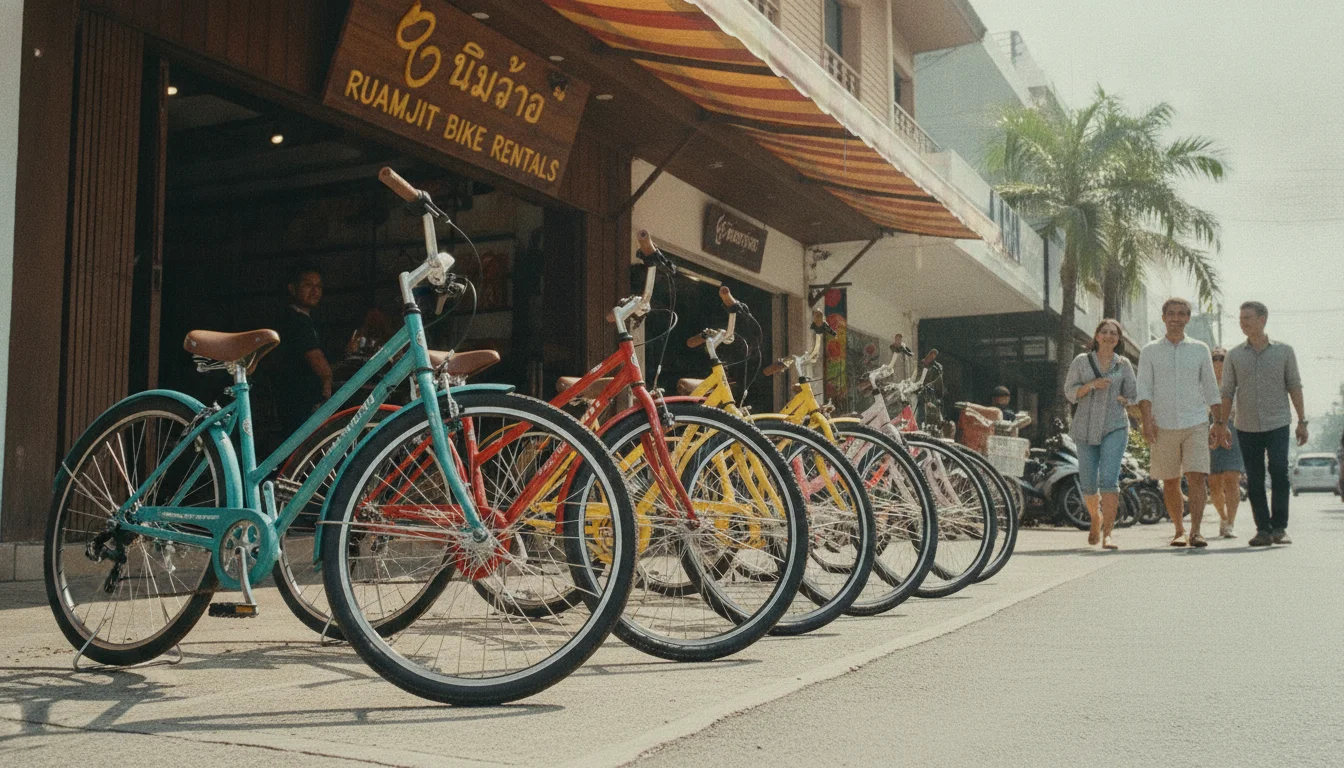
Within central Cha-am, walking and cycling cover many short journeys. Local songthaews, motorcycle taxis and taxis connect the railway station, beach and inland streets, although services are less standardised than in Bangkok. Agree a fare before boarding an unmetered vehicle. App-based cars may be available, but waiting times and coverage vary.
Scooters are widely offered, commonly from around 250 THB (approximately £5.60) per day, excluding fuel. Only hire one if you hold the appropriate licence and travel insurance, and inspect the vehicle and helmet before accepting it. A bicycle is a simpler option on the flat seafront, although heat, traffic and limited cycle infrastructure require care.
Planning Your Spending
Cha-am can accommodate modest and higher budgets, but a single daily figure is rarely useful because room rates and seafood meals vary sharply. The table below gives practical current ranges for common purchases. Confirm prices before travel or payment.
| Item | Typical Price | Notes |
|---|---|---|
| Simple room near the beach | From about 900 THB (approximately £20) | Weekday rate; weekends may cost more |
| Local rice or noodle dish | About 50–100 THB (approximately £1.10–£2.20) | Market or simple restaurant |
| Seafood meal | About 300–800 THB (approximately £7–£18) per person | Depends on species, weight and restaurant |
| Beach chair | About 30–50 THB (approximately £0.70–£1.10) | Ask whether food orders affect the charge |
| Scooter hire | From about 250 THB (approximately £5.60) per day | Fuel and insurance generally separate |
| Mrigadayavan Palace | 90 THB (approximately £2) | Foreign adult admission currently listed by TAT |
| Khao Nang Phanthurat Forest Park | Free | Access and trail closures can change |
For a lower-cost stay, choose a central guesthouse and eat at markets or simple local restaurants. A mid-range visit with a hotel pool, occasional taxis and a substantial seafood dinner will cost considerably more. Cash remains useful for markets, beach vendors and smaller transport operators, although hotels and larger businesses usually accept cards or electronic payment.
When Cha-am Works Best
Cha-am is particularly convenient for a short seaside break reached overland from Bangkok. Central accommodation suits travellers who want to walk to the beach and local food, while the southern resort strip works better for a self-contained stay with a private vehicle or planned transfers.
The beach faces the Gulf of Thailand and the water is commonly less clear than at many Andaman islands. Conditions change with weather, tides and runoff, so assess the sea on the day rather than assuming it will be suitable for swimming. Cha-am has little reef snorkelling immediately offshore; the main attractions are the beach itself, local food and easy access to Phetchaburi and Hua Hin.
Weekends create the liveliest atmosphere and the widest choice of open vendors, but they also bring heavier traffic and higher demand for rooms. Midweek stays are quieter and can offer lower room prices. Travellers seeking international restaurants, extensive shopping or a larger nightlife scene will find more choice in Hua Hin, about 25 kilometres to the south.
What to Know Before You Go
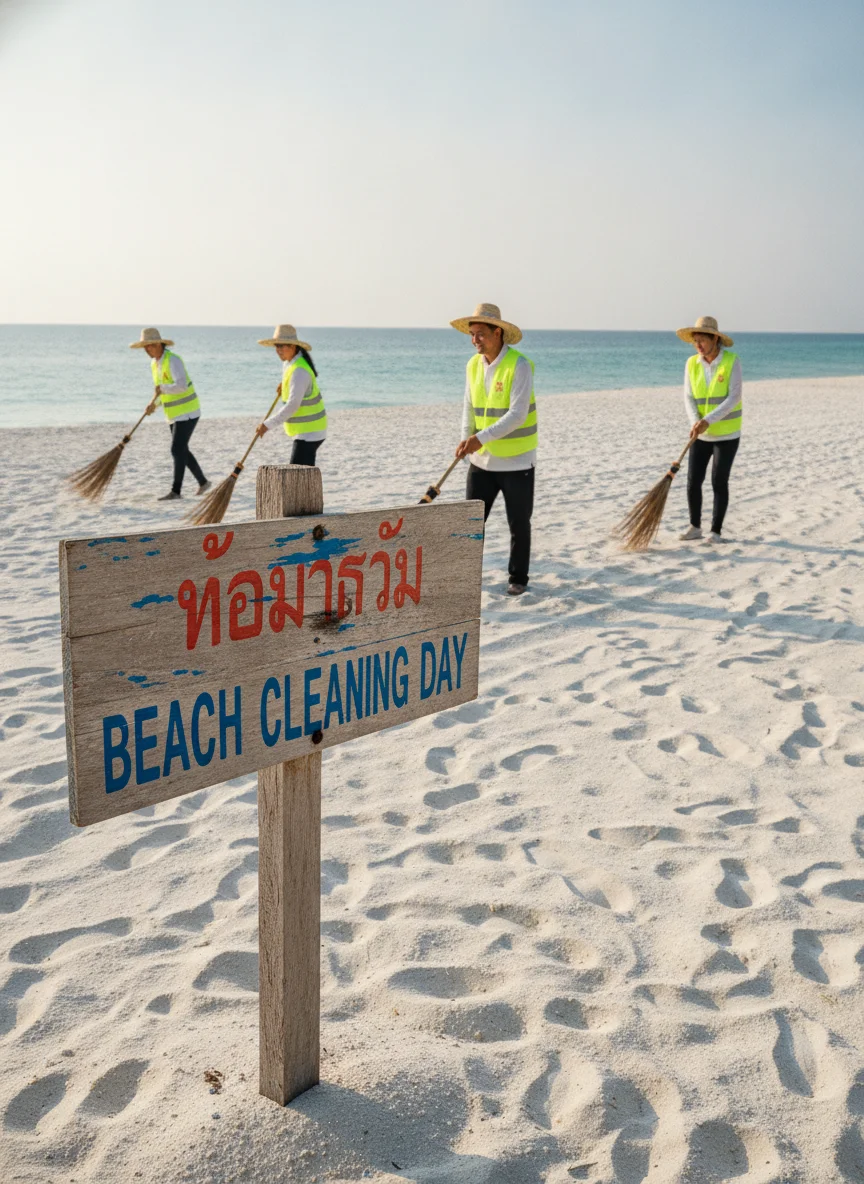
Every Wednesday, the municipality keeps a five-kilometre section of Cha-am Beach free of commercial umbrellas and deckchairs while additional cleaning takes place. Visitors can still use the beach and may bring their own mats, chairs or small tables. Carry water and sun protection because the usual rented shade and seating will not be present.
Friday evenings, Saturdays and public-holiday periods are the busiest times. Reserve accommodation and return transport early for popular dates, and allow extra time on the road. The seafront can also be busy with bicycles, scooters, delivery vehicles and pedestrians, particularly around Narathip Road.
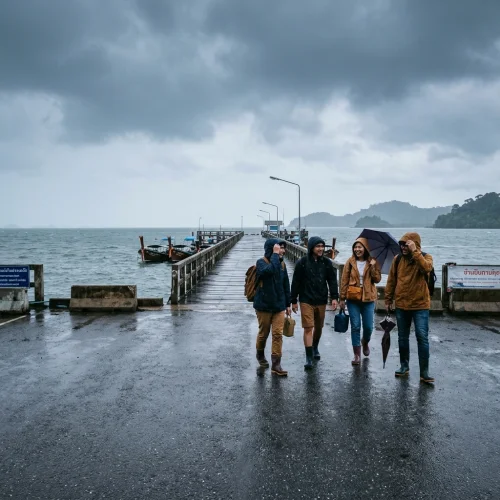
Sea conditions are variable. Avoid swimming close to the fishing harbour or boats, follow any local warning flags and leave the water during thunderstorms or rough conditions. Jellyfish and other marine hazards can occur in the Gulf; follow current local and official advice rather than relying on seasonal assumptions.
Practical Tips
Choose your location before choosing your hotel. A resort with a Cha-am or Hua Hin address may be well outside both centres, making taxis or a private vehicle necessary.
Use a bicycle for short trips along the central seafront, but avoid the hottest part of the day and use lights after dark. Check brakes and tyres before leaving the hire shop.
Visit the northern harbour and Pu Chuk–Saphan Yok market in the morning for the strongest connection with Cha-am’s fishing economy. Ask vendors whether seafood prices are per item, plate or kilogram.
Check the palace opening days immediately before visiting. Restricted days and restoration work can affect which areas are accessible.
Carry some cash in small denominations for market food, chairs and local transport. Do not assume every small operator will accept an international card.
For Khao Nang Phanthurat, take your own water and wear shoes suitable for steep limestone paths. Turn back if rain makes the steps slippery or a route is closed.
If returning to Bangkok on a Sunday or public holiday, reserve a train or road seat in advance and avoid a tight onward connection.
Use Hua Hin as a day trip for its larger night markets, shopping and restaurant selection. Confirm the last practical transport back to Cha-am before setting out.
Quick Reference Table
| Item | Detail | Notes |
|---|---|---|
| Location Name | Cha-am | Coastal town and district |
| Province | Phetchaburi | Gulf of Thailand coast |
| Region | Western Thailand | Often grouped with Central Thailand for travel planning |
| Nearest Major Resort Town | Hua Hin | About 25 kilometres south |
| Nearest Railway Station | Cha-am | Roughly 2 kilometres inland from the central beach |
| Distance from Bangkok | About 160 kilometres by road | Commonly around 3 hours, traffic dependent |
| Typical Visit Duration | 2–3 days | Suitable for a short beach break |
| Drier, Cooler Period | Approximately November to February | Weather varies from year to year |
| Currency | Thai baht (THB) | Cash useful for small purchases |
| Main Visitor Transport | Walking, bicycle, songthaew and taxi | Private transport useful outside the centre |
| Notable Landmark | Mrigadayavan Palace | Royal seaside residence south of town |
| Nature Site | Khao Nang Phanthurat Forest Park | Limestone trails about 9 kilometres inland |
FAQ: Cha-am - Phetchaburi
When is Cha-am busiest?
What should travellers be aware of when booking accommodation advertised as 'Hua Hin–Cha-am'?
What should visitors do before using beach chairs in Cha-am?
What is the dress code for visiting Mrigadayavan Palace?
What should visitors confirm when ordering seafood in Cha-am?
Should visitors plan to access caves at Khao Nang Phanthurat Forest Park?
What happens on Cha-am Beach every Wednesday?
What precautions should travellers take when hiring a scooter in Cha-am?
Is cash necessary for purchases in Cha-am?
What is important to consider when returning to Bangkok from Cha-am on a Sunday or public holiday?
Reviewed by the Thailand Guide Editorial Team • Last reviewed: 21 August 2026
This page is provided for general information only. While we aim for accuracy, details can change — please verify anything important independently before relying on it.