Chiang Mai International Airport
Chiang Mai International Airport (CNX) is the primary aviation hub for northern Thailand, situated in the Suthep subdistrict roughly three kilometres south-west of the Old City walls. Managed by Airports of Thailand (AOT), the airport connects Chiang Mai with major domestic destinations including Bangkok, Phuket, and Krabi, alongside direct international routes across East and South-East Asia.
The facility operates from a single two-storey terminal building with adjoining domestic and international wings, located directly east of the Doi Suthep-Pui National Park foothills. Handling close to ten million passengers annually, it functions as the central arrival point for holidaymakers, long-stay expatriates, and digital nomads heading into the Nimmanhaemin area. Because the airport sits so close to the urban centre, road transfers to the Old City typically take between ten and twenty minutes, making onward travel straightforward.

Terminal Architecture and Facility Layout
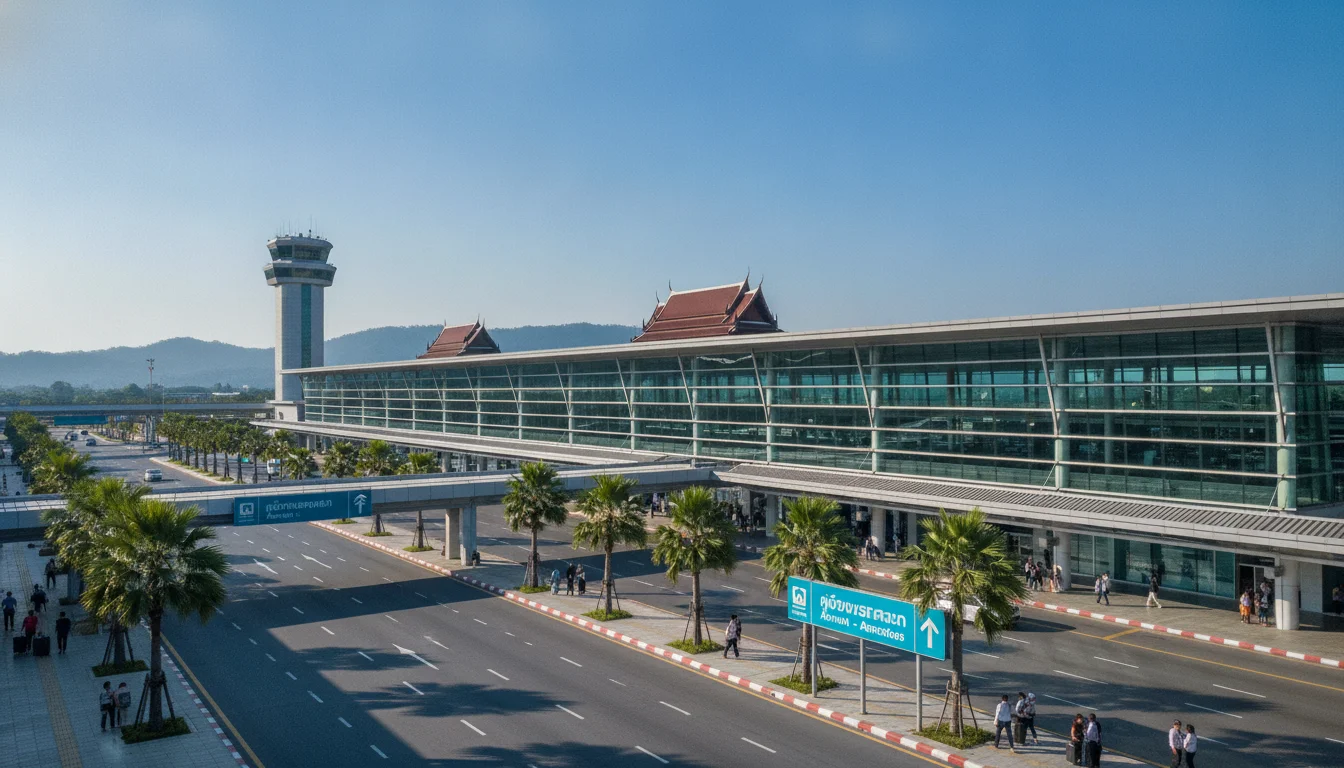
Chiang Mai International Airport operates from a compact, two-storey terminal building split into two interconnected wings. Domestic services occupy the northern section, while international flights use the southern section. Because both operations share a single continuous structure, transferring or walking between the domestic and international zones takes roughly three to five minutes along air-conditioned corridors on either level.
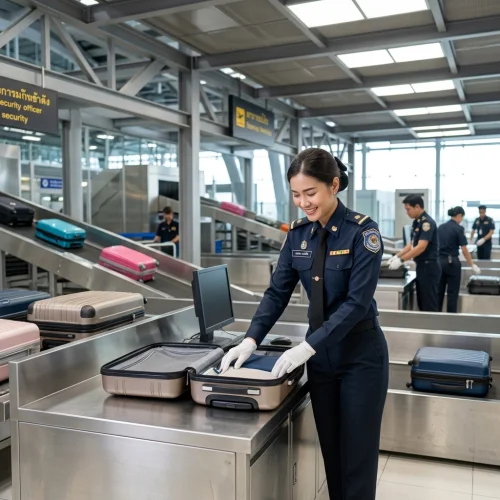
The terminal layout follows a straightforward vertical division. The ground floor accommodates airline check-in rows, self-service check-in kiosks, passenger arrivals halls, baggage reclaim belts, customs inspection, and ground transport service desks. The upper floor is dedicated to passenger security screening checkpoints, international passport control counters, airline departure lounges, and boarding gates. Domestic departures typically board through Gates 1 to 6, while international flights depart from Gates 7 to 10.
Passenger navigation is straightforward throughout the facility. Clear bilingual signage in Thai and English directs foot traffic across both levels, supported by airport information counters situated near Door 1 on the domestic side and Door 9 at the international end. Landside arrivals halls feature cash machines, currency exchange booths, and official mobile network kiosks selling local tourist SIM cards. Check-in desks generally open two hours before scheduled domestic departures and three hours prior to international flights, allowing travellers sufficient time to clear security screening before boarding.
Regional Flight Operations and Airport Comparisons
Chiang Mai International Airport (CNX) ranks as the fourth-busiest airport in Thailand, behind Bangkok's Suvarnabhumi and Don Mueang, and Phuket International. The facility operates as an operational base for Thai AirAsia and a focus city for Bangkok Airways and Thai Airways. Scheduled domestic services to the capital are frequent, with flights to Suvarnabhumi (BKK) and Don Mueang (DMK) departing roughly every 30 to 45 minutes during peak daytime hours across multiple airlines, including Thai Vietjet, Nok Air, and Thai Lion Air.
Direct international scheduled flights link Chiang Mai to major regional transport hubs across East and Southeast Asia, including Singapore, Kuala Lumpur, Taipei, Shanghai, Hong Kong, Seoul, and Osaka. These non-stop cross-border services allow overseas travellers to access northern Thailand directly without transferring through Bangkok.
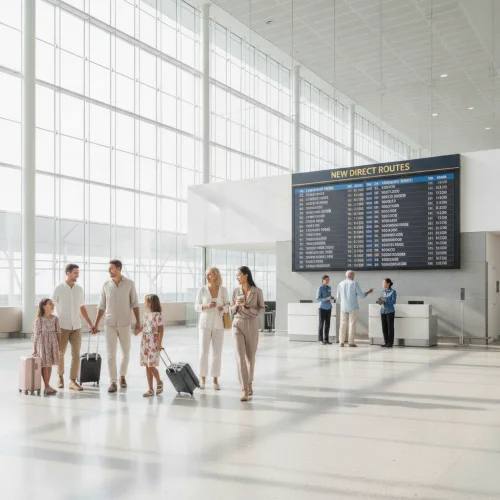
Compared to Phuket International (HKT), which handles significantly higher passenger volumes across separate domestic and international buildings, Chiang Mai's single integrated terminal layout provides shorter walking routes between aircraft gates and ground transport. Unlike Koh Samui (USM), a private airfield operated by Bangkok Airways where limited carrier access raises ticket prices, CNX is managed by Airports of Thailand (AOT), supporting budget airline competition that keeps domestic fares lower. Hat Yai (HDY) functions predominantly as a southern domestic hub, whereas CNX serves as the principal international entry point for northern Thailand.
| Airport | Operating Body | Annual Passenger Volume | Key International Connections | Terminal Layout |
|---|---|---|---|---|
| Chiang Mai (CNX) | Airports of Thailand (AOT) | ~9.5–10 million | Singapore, Taipei, Kuala Lumpur, Seoul, Osaka | Single terminal with connected wings |
| Phuket (HKT) | Airports of Thailand (AOT) | ~14–16 million | Singapore, Kuala Lumpur, Middle East, Europe | Separate domestic and international terminals |
| Koh Samui (USM) | Bangkok Airways | ~2.5–3 million | Singapore, Chengdu | Open-air pavilion design |
| Hat Yai (HDY) | Airports of Thailand (AOT) | ~4 million | Kuala Lumpur, Singapore | Single combined passenger terminal |
Master the terrain of northern Thailand. Our Chiang Mai geography guide covers the 2,565-metre peak of Doi Inthanon, local topography, and monsoon forests.
Passenger Lounges, Services, and Dining
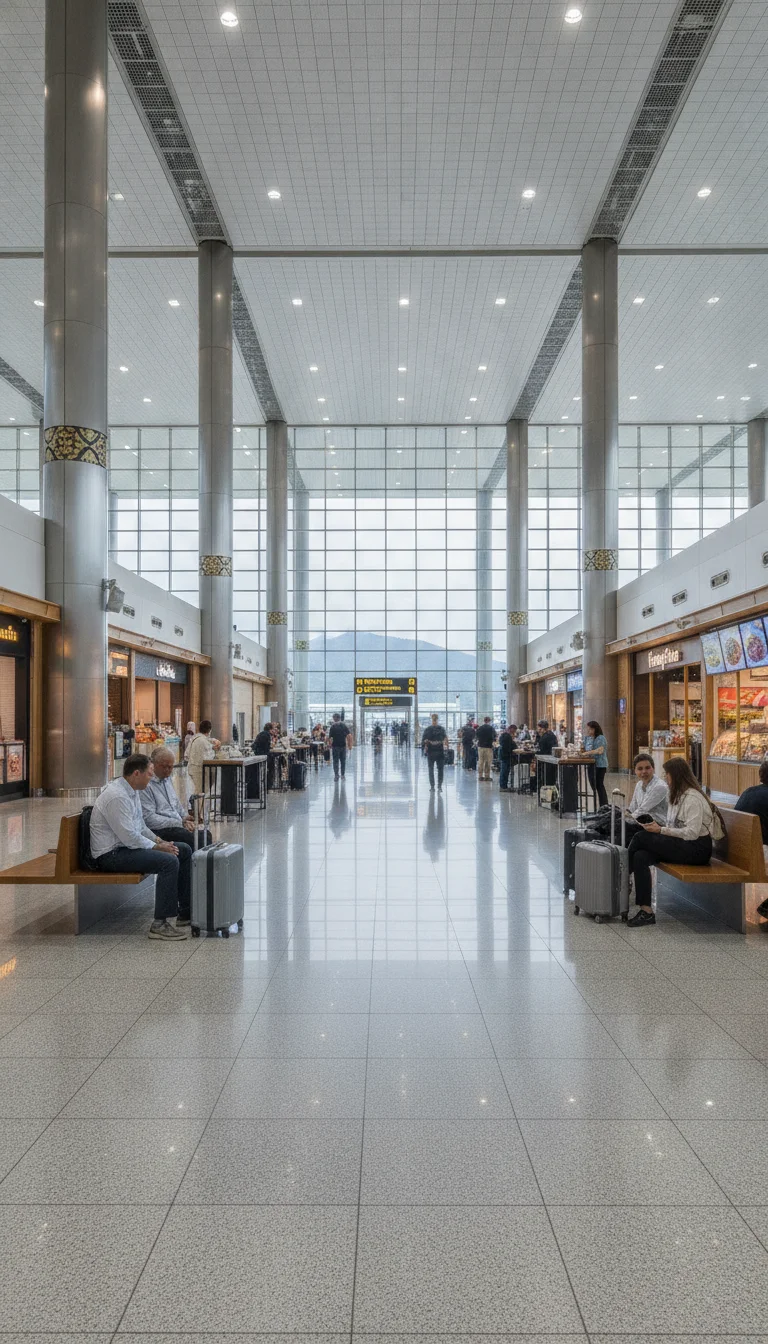
Chiang Mai International Airport provides a practical selection of executive lounges, dining venues, and passenger amenities across its two-storey terminal.
Departing travellers have access to several lounge facilities on the second floor. The Coral Executive Lounge operates airside in both the domestic and international departure zones, providing hot buffets, quiet workspaces, and internet access for lounge-pass members and walk-in passengers. Bangkok Airways runs its Boutique Lounge and Blue Ribbon Club on the domestic landside concourse, while Thai Airways maintains a Royal Orchid Lounge airside near Gate 3 for premium and Star Alliance passengers.
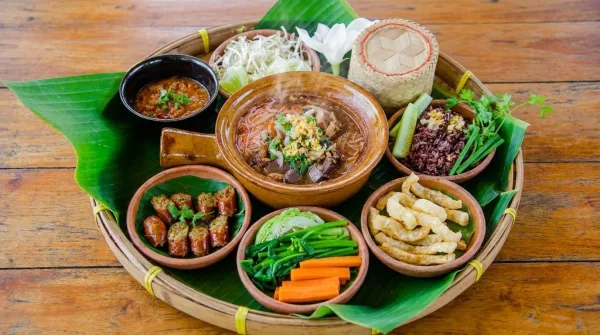
Food outlets distributed across public and departures areas include familiar international chains such as Starbucks, McDonald’s, and Subway alongside northern Thai specialities like Khao Soi noodles. The ground-floor arrivals level also houses casual local eateries and grab-and-go coffee counters.
Free terminal Wi-Fi supplied by Airports of Thailand (AOT) gives passengers up to two hours of wireless access per device after completing a basic online registration form. Terminal facilities also feature dedicated Muslim prayer rooms, Buddhist monk reception areas, baby-changing rooms, and power charging sockets positioned near the departure boarding gates.
Shopping, Duty-Free, and Retail Outlets
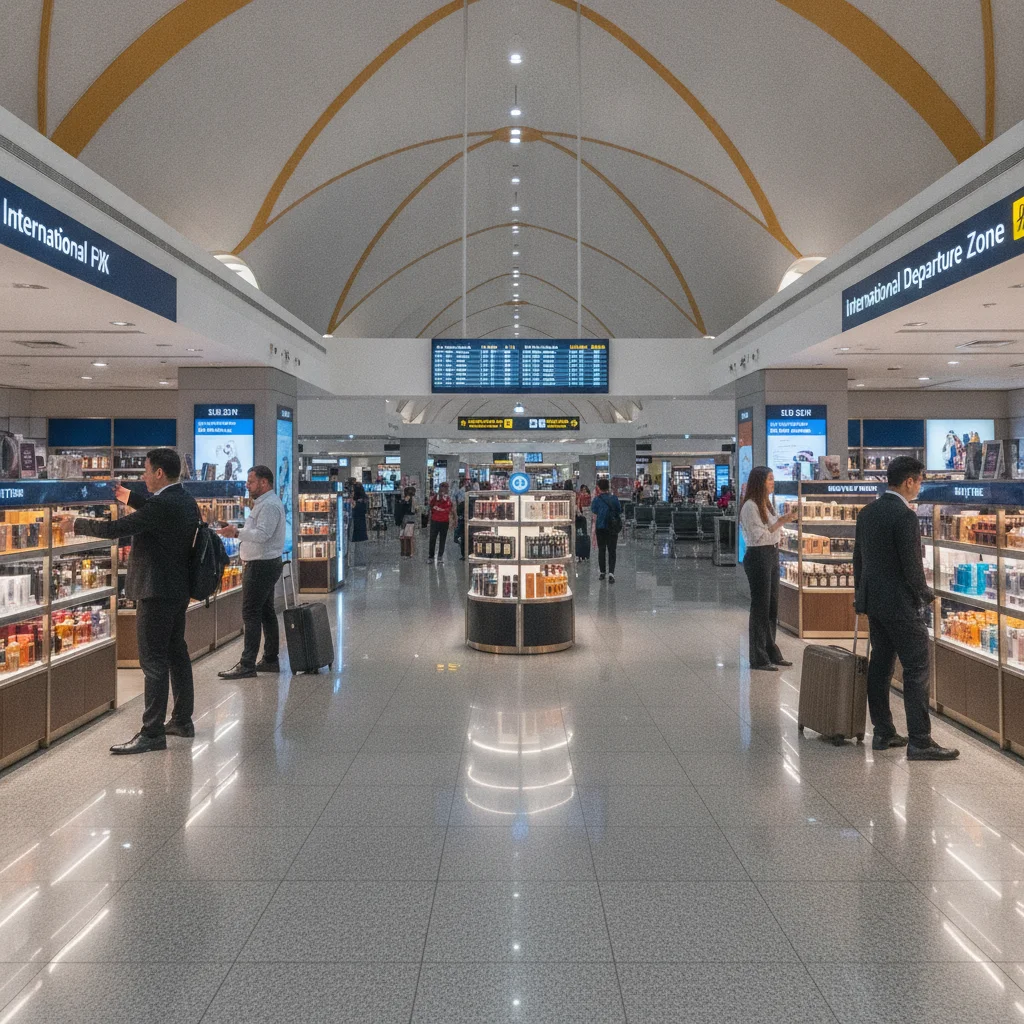
Retail at Chiang Mai International Airport balances northern Thai regional crafts with standard airside duty-free shopping. In the international departures lounge, King Power operates duty-free outlets selling perfume, cosmetics, liquor, tobacco, and imported confectionery. Pricing matches King Power’s nationwide airport tariffs, though product selection is noticeably smaller than at Bangkok’s primary aviation hubs.
Across the domestic concourse and public landside areas, independent shops and regional kiosks focus on northern Thai produce and crafts. Departing passengers can purchase packaged regional foods—such as crispy pork rinds (cap moo), northern sausages, and dried fruit—alongside whole-bean Arabica coffee harvested from northern highland estates. Stalls also stock traditional Lanna handicrafts, woven silk textiles, and northern silver jewellery.
Terminal facilities include newsstands, pharmacies, and small sundries shops across both floors for toiletries, magazines, and last-minute gifts. Unlike high-street convenience stores, terminal retailers apply standard airport pricing markups. Travellers looking for wider selections or lower prices on silverware, textiles, and edible souvenirs are better served completing their shopping at city night markets or the nearby Central Chiang Mai Airport complex before arriving at the airport.
Operating Hours and Peak Transit Windows
Chiang Mai International Airport operates 24 hours a day, following an expansion by Airports of Thailand in November 2023 from its former 06:00 to midnight schedule. This round-the-clock operation accommodates late-night international flights and early morning regional departures.
Terminal activity surges during two distinct daily windows: the morning rush from 07:00 to 09:00 and the late afternoon rush from 16:00 to 19:00. Check-in desks, security screening, and passport control queues can lengthen considerably during these peak periods. Travellers departing on domestic services should arrive at least two hours before departure, whilst international passengers are advised to allow between two and a half and three hours.
Passengers transferring from an incoming international flight to a domestic connection must pass through passport control, collect any checked luggage, clear customs, and proceed to the upper departure level to check in for their onward sector. Seasonal agricultural haze between February and April can occasionally reduce morning visibility across the valley, so monitoring flight schedules during northern Thailand's dry season remains sensible.
Location and Ground Transport
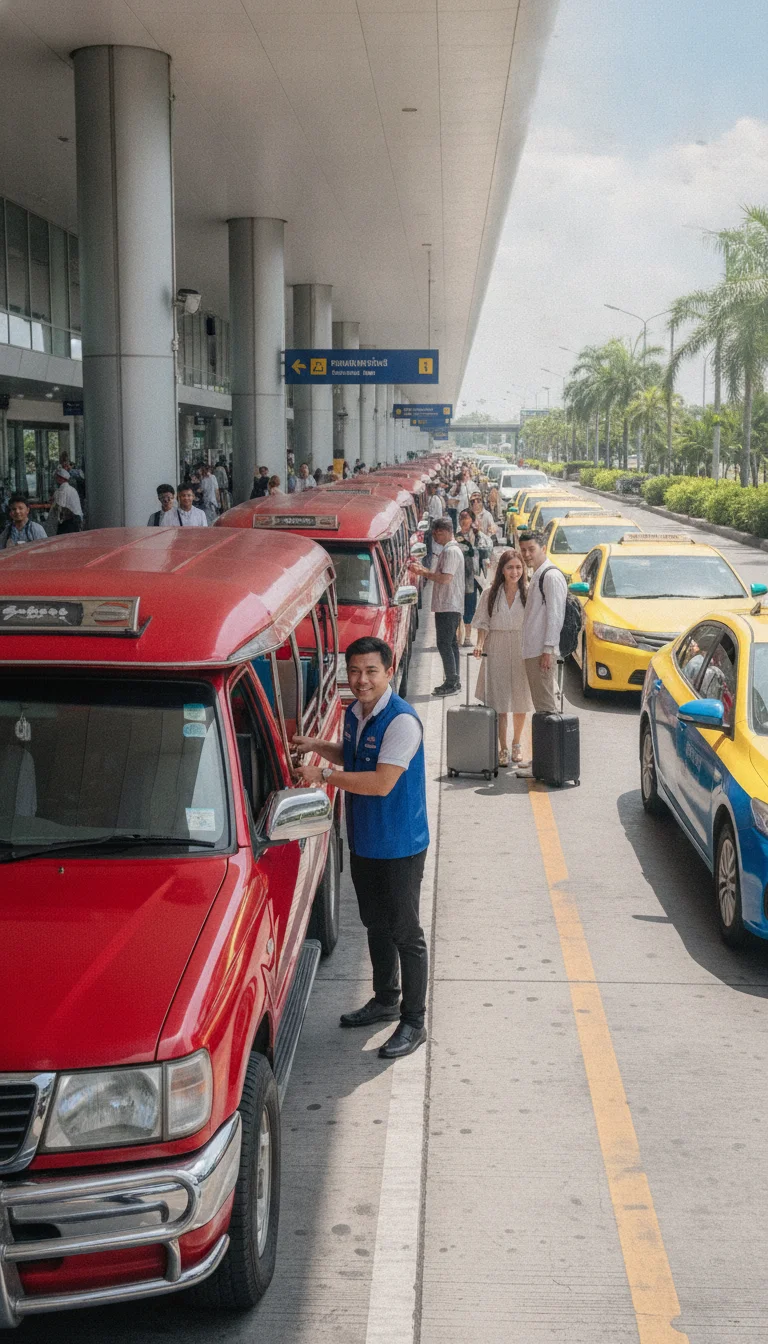
Chiang Mai International Airport sits in the Suthep subdistrict, roughly 3 to 4 kilometres southwest of the historic Old City and around 4 kilometres from the Nimmanhaemin district. Road journeys to central accommodation typically take between 10 and 15 minutes in normal traffic via Highway 1141 and connecting radial avenues, though peak rush hours can extend journeys to 25 minutes.
Arriving travellers have several ground transport choices immediately outside the terminal. Official airport taxi desks inside the arrivals hall arrange standard saloon cars for a fixed flat fare of 150 THB (around £3.35) to destinations across the central urban zone, paid directly to drivers upon arrival. App-based rides via Grab and Bolt collect passengers from a designated pickup shelter near the domestic exit, with fares to the Old City generally ranging from 80 THB to 180 THB (£1.80–£4.00) depending on vehicle type and live demand. Red songthaew shared pickup trucks also wait outside the terminal, charging around 40 THB to 60 THB (£0.90–£1.35) per passenger. Air-conditioned RTC Smart City buses depart outside Door 1, charging a flat 50 THB (£1.10) fare into the city.
Parking and Terminal Service Costs
Chiang Mai International Airport provides straightforward, reasonably priced auxiliary services for arriving and departing passengers. Vehicle parking is available across open-air surface lots directly facing the terminal building as well as a dedicated ten-storey multi-storey car park located a short distance away, which operates a complimentary electric shuttle cart between the facility and the passenger terminal.
Parking rates start at 20 THB (approx. £0.45) for the first hour, increasing incrementally to 30 THB for two hours, 40 THB for three hours, and 100 THB for up to twelve hours. Drivers leaving vehicles overnight or for extended trips pay a daily ceiling rate of 200 THB (approx. £4.45) per 24-hour period in both facilities.
Terminal left-luggage counters, including the AIRPORTELs desk on the ground floor near Door 7, provide secure short- and long-term baggage storage. Standard daily luggage storage rates typically range from 100 THB to 150 THB (approx. £2.20–£3.35) per bag, offering a practical option for travellers making brief regional excursions around northern Thailand without heavy bags. Passengers seeking a quieter space before departure can purchase single-visit entry to The Coral Executive Lounge for around 1,000 THB to 1,200 THB (approx. £22.30–£26.75), which includes refreshments, Wi-Fi, and comfortable seating.
| Service | Cost (THB) | Approx. Cost (GBP) | Details |
|---|---|---|---|
| Short-Term Parking (First Hour) | 20 THB | £0.45 | Surface lots and multi-storey garage |
| Daily Maximum Parking Rate | 200 THB | £4.45 | Per 24-hour period across airport parking |
| Left-Luggage Storage | 100–150 THB | £2.20–£3.35 | Per bag per 24-hour period at ground floor desks |
| Coral Executive Lounge Access | 1,000–1,200 THB | £22.30–£26.75 | Airside entry with refreshments and Wi-Fi |
Who Chiang Mai Airport Suits
Chiang Mai International Airport suits holidaymakers, remote workers heading to Nimmanhaemin, and expatriates based across northern Thailand. The terminal sits roughly four kilometres from the Old City, giving passengers a straightforward 10- to 15-minute transfer by road. This proximity reduces transit fatigue for families and solo travellers arriving with luggage.
Passengers planning multi-stop domestic itineraries benefit from high-frequency routes connecting Chiang Mai to Bangkok’s two main airports, alongside direct flights to southern destinations such as Phuket and Koh Samui. For travellers originating in the UK or Europe, direct non-stop flights are unavailable; journeys require a connection through Bangkok, Singapore, Kuala Lumpur, or Middle Eastern transit hubs.
Crucial Pre-Booking Information
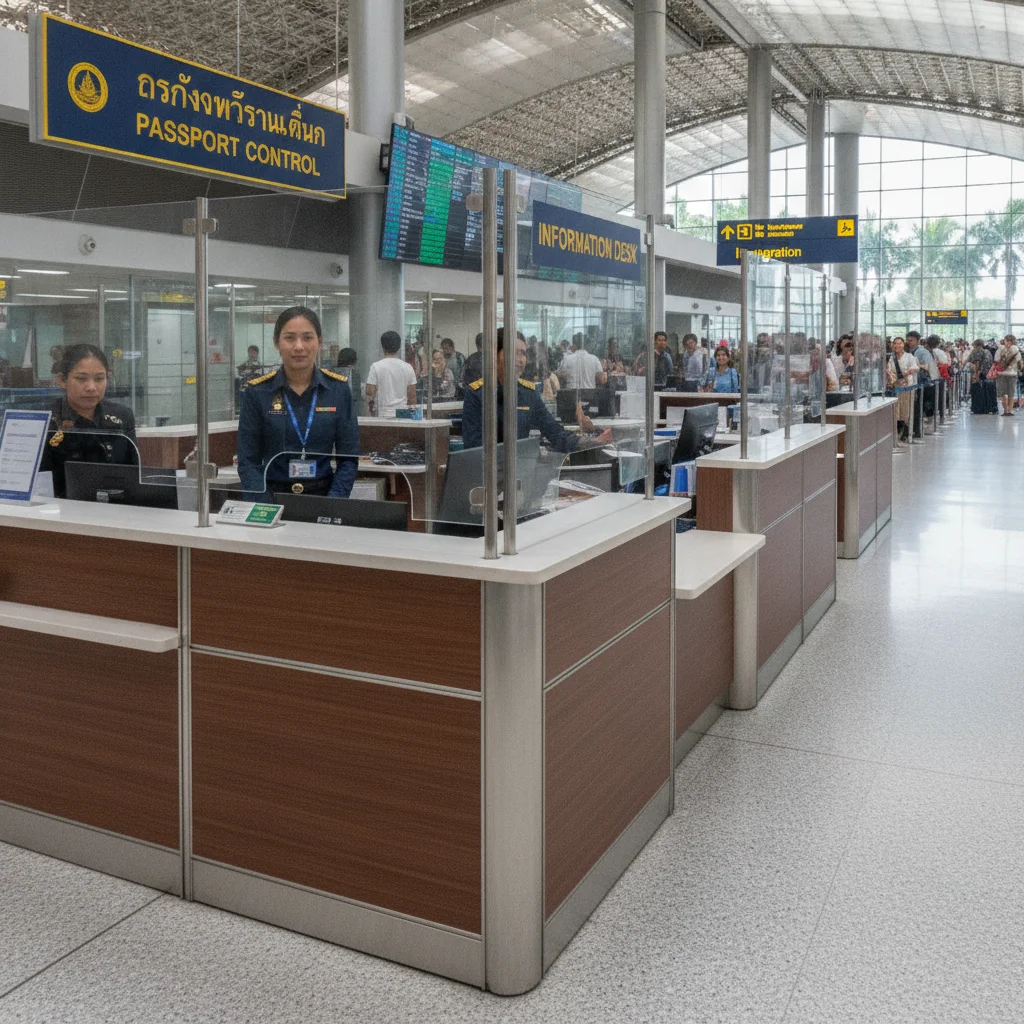
Official taxi desks operate inside the arrivals hall, issuing fixed-rate fare slips to central Chiang Mai before you step outside. Unofficial drivers approaching passengers beyond the baggage area often quote inflated prices, so always arrange transport through official desks or verified apps. App-based rideshares, including Grab, collect passengers exclusively from a dedicated pickup shelter situated outside the terminal. Trying to meet app drivers at the standard airport taxi rank risks driver cancellations and terminal traffic fines.
Between February and April, seasonal agricultural burning across northern Thailand creates heavy atmospheric haze that can occasionally disrupt flight schedules and reduce visibility. Checking flight status updates and regional air quality readings during these months avoids unexpected delays. For late-night arrivals landing after public buses and shared songthaews cease operating, pre-booking a private airport transfer guarantees a driver will monitor your flight and meet you directly in the terminal arrivals area.
Practical Airport Tips
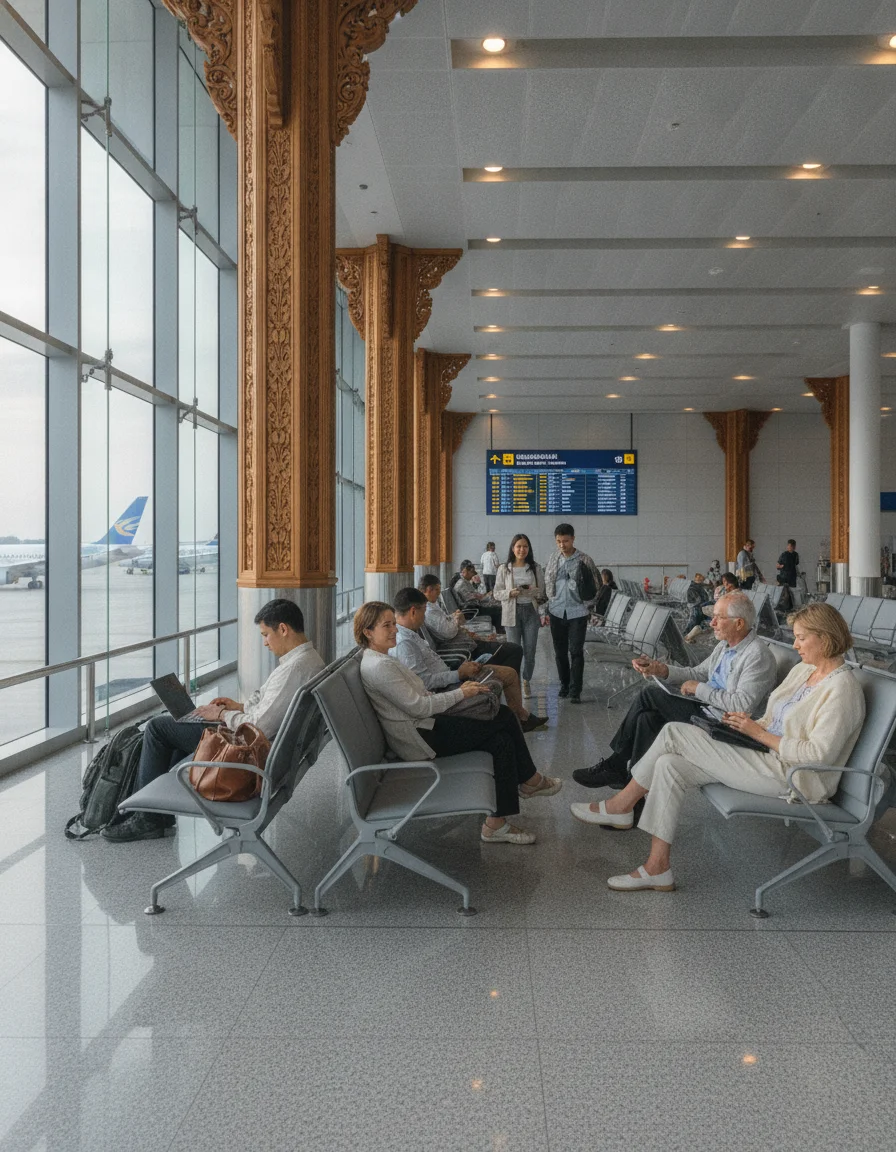
Cash remains necessary for most local onward transport. While ride-hailing applications accept debit and credit cards, traditional red songthaew shared vehicles and metered taxis rely almost entirely on cash. Multiple bank ATMs stand in the first-floor arrivals hall, making it practical to withdraw Thai Baht notes before stepping out of the terminal.
Tourist SIM cards and eSIM packages are available immediately after clearing baggage collection. Service counters for Thai network providers, including AIS and True, operate directly in the arrivals area. On-site staff configure data settings and complete mandatory passport registration, ensuring mobile data is running before you head outside.
For budget transit into town, prepare exact cash or a compatible transport card when boarding the RTC Smart Bus. Drivers hold limited change reserves, so low-denomination banknotes prevent boarding delays at terminal stops.
Departing passengers taking domestic flights during morning peak windows should reach security checkpoints at least 90 minutes before departure. Bangkok-bound flights depart in rapid succession throughout the early morning, causing periodic surges at upstairs screening lanes.
If you have a long layover between connections, a left-luggage facility operates on the first floor near the domestic arrival concourse. Leaving heavier luggage here enables you to explore the Old City unencumbered.
Dining options landside on the ground floor are noticeably less expensive than airside restaurants beyond security. Grabbing a meal or beverage prior to entering departure screening offers broader local selections at normal high-street rates.
Keep all luggage claim stickers readily accessible until exiting the building. Security staff at terminal exit doors periodically inspect claim receipts against baggage tags before passengers leave the arrival area.
Quick Reference Table
| Item | Detail | Notes |
|---|---|---|
| Airport Code | CNX | Primary aviation gateway for northern Thailand |
| Operating Authority | Airports of Thailand (AOT) | State-owned operator managing four major Thai airports |
| Operating Hours | 24 hours daily | Round-the-clock operations implemented in November 2023 |
| Location | Suthep subdistrict | 3–4 km south-west of Chiang Mai Old City |
| Annual Passenger Volume | ~9.5–10 million | Fourth-busiest airport in Thailand |
| Terminal Layout | Single two-storey building | Adjoining domestic (north) and international (south) wings |
| City Transfer Time | 10–15 minutes | Can reach 20–25 minutes during peak road traffic |
| Official Airport Taxi Fare | 150 THB (approx. £3.35) | Fixed flat rate to central Chiang Mai destinations |
| RTC Smart Bus Fare | 50 THB (approx. £1.10) | Flat fare departing from outside Door 1 |
| Red Songthaew Fare | 40–60 THB (approx. £0.90–£1.35) | Per passenger in shared red pickup trucks outside terminal |
| App Rideshare Fare (Grab/Bolt) | 80–180 THB (approx. £1.80–£4.00) | Pick-up exclusively from designated domestic exit shelter |
| Short-Term Parking | 20 THB (approx. £0.45) | First hour rate across surface lots and multi-storey garage |
| Daily Maximum Parking | 200 THB (approx. £4.45) | Per 24-hour period; multi-storey garage offers free shuttle |
| Left-Luggage Storage | 100–150 THB (approx. £2.20–£3.35) | Per bag per 24 hours at ground-floor desks near Door 7 |
| Coral Executive Lounge Access | 1,000–1,200 THB (approx. £22.30–£26.75) | Walk-in airside entry in domestic and international zones |
| Free Terminal Wi-Fi | Up to 2 hours per device | Provided by AOT via basic online registration |
| Peak Transit Hours | 07:00–09:00 and 16:00–19:00 | Morning and late-afternoon surge windows |
| Recommended Arrival Times | 2 hours (domestic) / 2.5–3 hours (international) | Check-in desks open 2 hours (domestic) and 3 hours (international) prior |
FAQ: Chiang Mai International Airport
How far is Chiang Mai International Airport from the Old City?
How is the terminal at Chiang Mai International Airport organised?
How much time should I allow for check-in at Chiang Mai International Airport?
What are the operating hours of Chiang Mai International Airport?
What are the ground transport options from Chiang Mai International Airport to the city?
How can I avoid inflated taxi fares when arriving at Chiang Mai International Airport?
Where should I meet my Grab or Bolt driver at Chiang Mai International Airport?
Is cash necessary for ground transport from Chiang Mai International Airport?
Can I purchase a local SIM card at Chiang Mai International Airport?
What should travellers know about flying to Chiang Mai during the dry season?
Reviewed by the Thailand Guide Editorial Team • Last reviewed: 1 September 2026
This page provides general information only and is not financial, legal, or immigration advice. Always verify current rules with official Thai government sources or a qualified professional before making decisions.