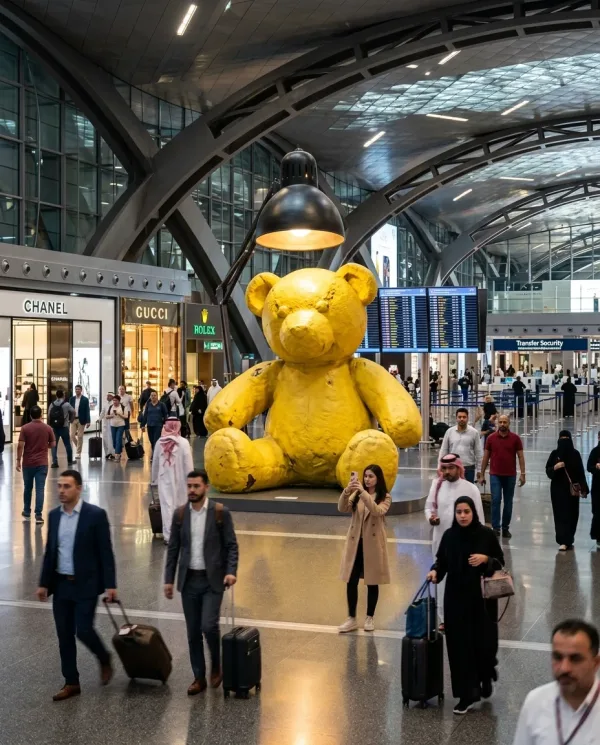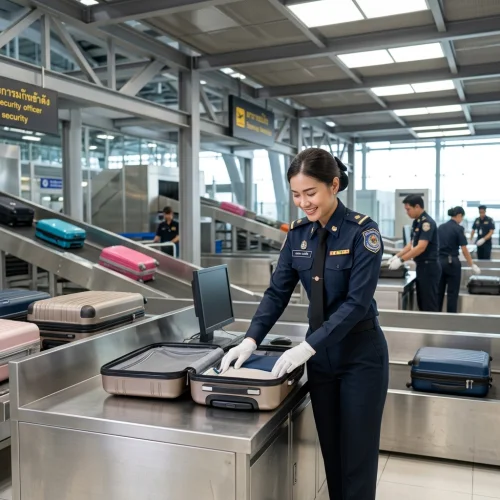
Airport security personnel across Thailand have been granted formal authority to open and inspect checked luggage without the passenger present.
The policy took effect following a notification issued by the Civil Aviation Authority of Thailand (CAAT). Under the updated rules, airport staff no longer need to locate travellers or wait for their physical attendance before examining hold luggage flagged during security screening. The measure applies to all commercial departures across the country, directly affecting British nationals residing in Thailand as well as those travelling regularly between the UK and Southeast Asia.
Inspection Thresholds and Procedures
Searches will not be conducted on general passenger baggage at random. Officials may only open an item of luggage if standard X-ray screening detects suspicious objects or prohibited items that could compromise aviation safety.
When an irregularity is identified, the bag is transferred immediately to a specialised screening area. Security officers will conduct physical examinations within these monitored spaces rather than holding flights while locating passengers across departure terminals. Thai authorities confirmed that the protocol aligns local airport operations with international civil aviation standards already enforced across the United Kingdom, continental Europe, the United States, Singapore, and Japan.
Documentation and Passenger Notification
Strict oversight mechanisms have been introduced to maintain accountability throughout the search process. Photographic evidence and digital logs must be collected at every stage of the inspection.
These records document the identity of the inspecting personnel, the time of the intervention, and the specific items examined or confiscated. Once a search is complete, authorities must provide formal notification to the owner, confirming that the baggage was opened under statutory powers. This ensures travellers are informed of the intervention prior to collecting their property at their final destination.
Practical Considerations for British Residents
For British expatriates navigating domestic or international routes, the regulatory change requires closer attention to packing practices and luggage security.
Standard padlocks and non-compliant luggage straps may be cut or broken if a bag requires physical inspection. To avoid property damage, passengers should secure their belongings using recognised universal locks, such as TSA-compatible mechanisms, which allow airport security staff to unlock and relock cases using master tools. Travellers who use basic padlocks risk arriving with damaged fasteners and unsealed bags.
Packing compliance is critical to preventing unnecessary baggage interventions. Power banks, loose lithium-ion batteries, and e-cigarettes—which remain illegal under Thai domestic law—are strictly prohibited in hold luggage and represent the most frequent triggers for secondary baggage screening. Placing these items in checked bags will lead to automatic intervention by ground staff.
The primary objective of the directive is to prevent hazardous cargo from entering aircraft holds while reducing departure delays caused by passenger searches at the gate. British nationals living in Thailand should ensure all restricted electronics remain in their hand luggage and verify that checked cases comply with standard aviation security rules before arriving at the airport.
Source: nationthailand.com
Reviewed by the Thailand Guide Editorial Team • Last reviewed: 17 October 2026
This page is provided for general information only. While we aim for accuracy, details can change — please verify anything important independently before relying on it.