SRT Red Lines
Connecting Don Mueang International Airport to Krung Thep Aphiwat Central Terminal in seventeen minutes, the SRT Red Line network provides suburban electric rail travel with base fares starting from 12 THB (around £0.27). Centred at the capital's main railway hub in Bang Sue, this dual-line elevated network gives travellers a fast transit route across northern and western Bangkok that bypasses heavily congested surface roads.
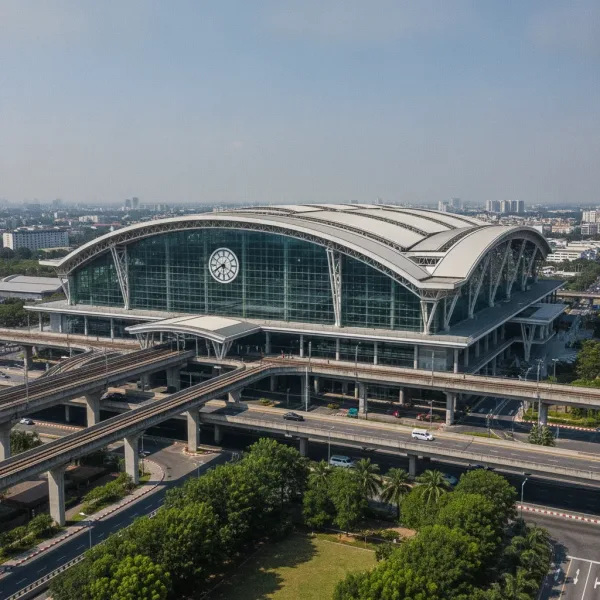
Owned and operated by the State Railway of Thailand, the system opened for full commercial service in November 2021. It fills a distinct niche in Bangkok's public transport system, linking long-distance railway corridors with outer suburban commuter routes. The elevated lines cater to air passengers arriving at Don Mueang, intercity rail travellers at Krung Thep Aphiwat, and suburban commuters, while providing direct interchange connections to the MRT underground network.

Network Architecture and Route Coverage

The SRT Red Line network operates across two radial commuter corridors branching out from Krung Thep Aphiwat Central Terminal in Chatuchak. Running northwards, the Dark Red Line spans 26.3 kilometres to Rangsit in Pathum Thani province. This northern branch incorporates ten operational stations, running parallel to the Vibhavadi Rangsit highway corridor and serving suburban hubs, an interchange with the MRT Pink Line at Lak Si, and Don Mueang International Airport.
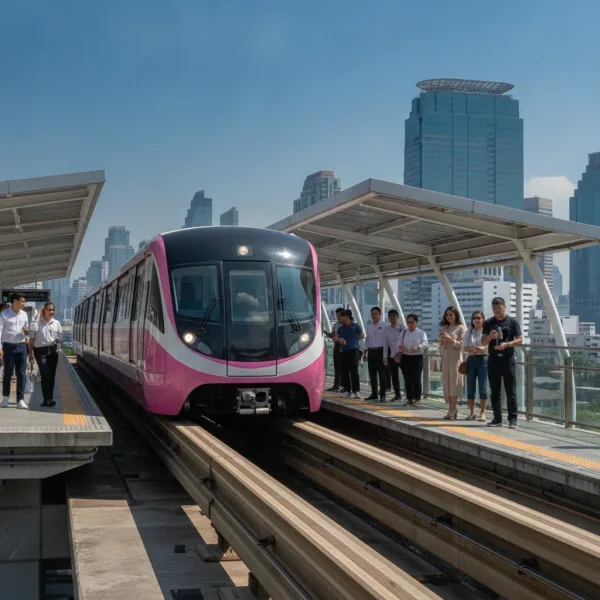
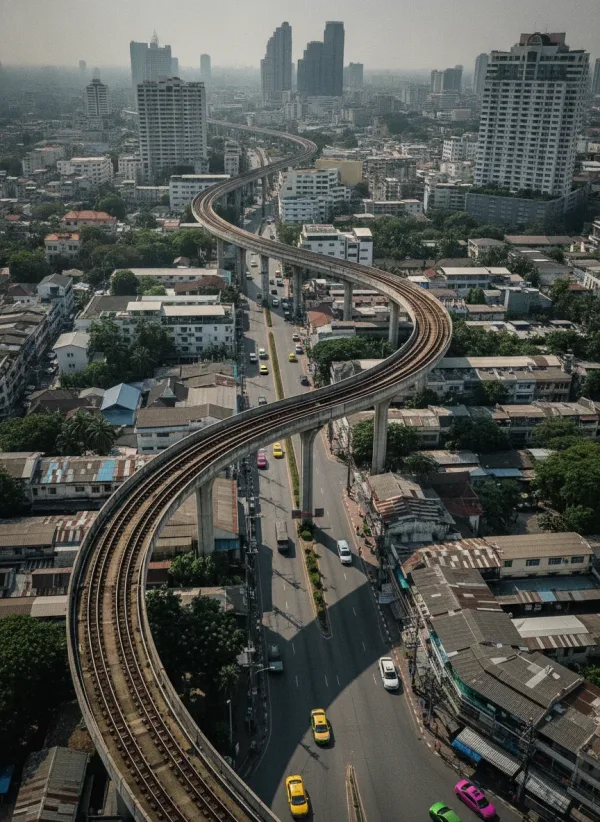
The Light Red Line extends 15 kilometres westwards across the Chao Phraya River to Taling Chan on the Thonburi side of the capital. It serves four operational stations: Krung Thep Aphiwat, Bang Son (which connects with the MRT Purple Line), Bang Bamru, and Taling Chan. Dedicated elevated viaducts carry the tracks above Bangkok's congested surface roads, eliminating level crossings and allowing commuter trains to achieve operating speeds up to 120 kilometres per hour. Station platforms feature wide island and side configurations equipped with tactile guidance paving, yellow safety edge markings, and clear bilingual signage in Thai and English across all concourses.
Comparison with BTS Skytrain and MRT Underground
The SRT Red Line network operates as an electrified suburban commuter railway rather than a dense urban metro. While the BTS Skytrain and MRT Blue Line navigate inner-city commercial corridors with closely spaced stops averaging 1.0 to 1.2 kilometres apart, the Red Line features wider station spacing of two to three kilometres. This alignment enables Japanese-built Hitachi electric trainsets to maintain higher cruising speeds across the northern and western suburbs. Station structures also reflect heavy-rail specifications: concourses are fully enclosed multi-level facilities equipped with public washrooms, ticket halls, lifts, and wide escalators.
| Transit Network | Primary Coverage | Station Spacing | Ticketing System |
|---|---|---|---|
| SRT Red Line | Northern and western suburbs, Don Mueang Airport | 2.5 to 3.0 km | Standalone (EMV contactless or token; transfer exit required) |
| BTS Skytrain | Sukhumvit, Silom, central commercial core | 1.0 km | Standalone (Rabbit Card or single ticket) |
| MRT Blue Line | Central urban loop, Chinatown, Thonburi | 1.2 km | Standalone (EMV contactless or token) |
| Airport Rail Link | Suvarnabhumi Airport to Phaya Thai | 3.5 km | Standalone (EMV contactless or token) |
Bangkok transit lines maintain separate ticketing barriers. Even where payment methods overlap—such as contactless EMV bank cards accepted on both the SRT Red Line and MRT lines—passengers transferring between systems must exit through the ticket gates and pay a separate entry fare on the connecting line. At major transport hubs like Krung Thep Aphiwat Central Terminal, changing between the Red Line platforms and the underground MRT Blue Line requires a walk of five to eight minutes.
Discover Bangkok's 1.5-metre altitude delta terrain, winding khlongs, and alluvial plains. Master the city's flat geography for your urban adventure.
Airport Transit and Major Interchange Hubs

Don Mueang Station connects directly to Don Mueang International Airport, catering to both domestic and international passengers. An elevated, covered skybridge links the station concourse across Vibhavadi Rangsit Road to Level 2 of Terminal 2, allowing travellers to transfer between the railway and the terminal building without navigating surface street traffic. Passengers arriving at Terminal 1 can access the walkway via the adjoining terminal corridor.
Journey times between Krung Thep Aphiwat Central Terminal and Don Mueang Station take approximately 15 to 17 minutes on the Dark Red Line. Krung Thep Aphiwat operates as the primary railway interchange, featuring direct underground pedestrian tunnel access to Bang Sue Station on the MRT Blue Line for onward connections across Bangkok.
The terminal also consolidates long-distance rail travel, allowing direct transfers to State Railway of Thailand intercity services bound for northern, north-eastern, and southern provinces within the same building complex. Full step-free access, including wide lifts and escalators, is available from concourse levels to train platforms across the network.
Rolling Stock, Onboard Experience, and Service Frequency

Passenger services on the SRT Red Lines are operated with Japanese-built Hitachi electric multiple units, running in four-car configurations on the Light Red Line and six-car formations on the busier Dark Red Line. Built by Hitachi at its Kasado plant, these modern trainsets provide a clean, fully air-conditioned environment designed for suburban heavy rail. Interiors feature durable longitudinal bench seating, overhead luggage racks suitable for carry-on bags, wide gangways, and designated spaces for wheelchair users.
Digital passenger information screens mounted above the carriage doors show upcoming stations and interchange connections in both Thai and English, accompanied by bilingual audio announcements before each stop. Clearly designated priority seating is allocated for monks, elderly passengers, pregnant women, and travellers with disabilities. Daily train services operate across both lines from 05:00 until midnight. On the Dark Red Line towards Don Mueang and Rangsit, departures run every 10 minutes during morning and evening rush hours and every 15 minutes during off-peak periods, while the Light Red Line to Taling Chan operates at 20-minute intervals throughout the day.
Navigating to SRT Red Line Hubs

The central interchange hub of the SRT Red Line system is Krung Thep Aphiwat Central Terminal in Bangkok’s Chatuchak district, situated roughly four kilometres by road from Mo Chit 2 bus terminal.
Passengers arriving at Suvarnabhumi Airport (BKK) can reach the Red Line network entirely by public rail. Take the Airport Rail Link to Makkasan Station for 35 THB (around £0.80), cross via the pedestrian linkway to MRT Phetchaburi, and ride the MRT Blue Line north to Bang Sue Station, which connects directly into Krung Thep Aphiwat. From Don Mueang International Airport (DMK), access is even simpler: follow terminal signage to the covered second-floor walkway connecting directly to Don Mueang Red Line Station.
If you are travelling from central districts such as Sukhumvit, Silom, or Siam, a metered taxi to Krung Thep Aphiwat typically costs between 150 THB and 250 THB (£3.50 to £5.80), plus any expressway toll charges. Road journeys generally take 30 to 50 minutes, though Bangkok traffic can double that duration during rush hours, making underground rail transfers via Bang Sue considerably more reliable.
Ticketing Options and Fare Structures
Standard single-journey fares on the SRT Red Line operate on a distance-based scale ranging from 12 THB (£0.27) to 42 THB (£0.94). Under current Ministry of Transport flat-rate fare measures, single journeys across the Red Line network are capped at 20 THB (£0.45) per ride.
Passengers can pay using single-journey tokens or contactless bank cards. Red plastic RFID tokens are available from automated ticket vending machines or staffed ticket booths using Thai Baht cash. Station ticket counters accept cash payments only and cannot process debit or credit cards manually.
Automated fare barriers also accept direct contactless EMV payments using Visa or Mastercard credit or debit cards, allowing passengers to bypass ticket machines entirely. When tapping with cards issued outside Thailand, international transaction and currency conversion fees may apply depending on the card issuer.
| Fare Option | Cost (THB) | Cost (GBP approx) | Notes |
|---|---|---|---|
| Minimum Single Fare (1–2 stations) | 12 THB | £0.27 | Single entry and exit token |
| Capped Maximum Fare (Promotional) | 20 THB | £0.45 | Maximum per-ride fare across Dark or Light Line |
| Don Mueang Airport to Krung Thep Aphiwat | 20 THB | £0.45 | Direct transfer via Dark Red Line |
| Contactless EMV Tap (Visa/Mastercard) | 20 THB | £0.45 | Direct gate tap; foreign bank conversion fees apply |
Target Passenger Profiles
The SRT Red Line network serves specific passenger groups travelling through northern and western Bangkok rather than general inner-city sightseers.
It is practical for travellers landing at Don Mueang International Airport who want an affordable rail transfer to avoid surface expressway traffic. It also serves passengers catching long-distance intercity trains from Krung Thep Aphiwat Central Terminal, as well as commuters living in northern residential districts such as Rangsit and Lak Si who need direct access into the city's wider rail transit network.
Conversely, the network is impractical for tourists staying in central neighbourhoods such as Sukhumvit, Silom, or Siam who make short local journeys. Those inner-city areas rely on the BTS Skytrain and MRT Blue Line. Travellers heading to or from Suvarnabhumi Airport should also use the dedicated Airport Rail Link instead.
Key Travel Regulations and Operational Details

Single-journey passengers must retain their red plastic RFID token throughout the journey, tapping it at the entry barrier and depositing it into the turnstile slot at the destination exit. Losing a token incurs an exit penalty equal to the maximum single-journey fare of 42 THB (approximately £0.95), payable in cash at station customer service counters.
Automated ticket barriers enforce a 120-minute time limit between tapping in and exiting the paid network area. Exceeding two hours inside the system triggers an overstay penalty equal to the maximum standard fare of 42 THB.
Eating, drinking, smoking, and using e-cigarettes are strictly prohibited across all platforms, ticketing concourses, and train carriages. Strongly scented goods—most notably fresh durian fruit—are completely barred from the network. Station security checkpoints screen bags before entry, and guards will turn away passengers carrying restricted goods. For customer enquiries, SRTET operates a 24-hour hotline on 1690, with official guidance available at srtet.co.th.
Practical Advice for Red Line Passengers

Carry small Thai Baht banknotes or coins when purchasing single-journey tokens at station ticket machines. The automated kiosks accept 20, 50, and 100 THB notes alongside standard coins, but they decline 500 and 1,000 THB banknotes as well as creased or damaged paper currency.
Tap an EMV-compatible contactless bank card at the automated turnstiles to bypass ticket counter queues. UK credit and debit cards on Visa and Mastercard networks work directly at the gates, provided international transaction features and contactless payments are active on the account.
Follow the elevated pedestrian skybridge when connecting between Don Mueang International Airport and the railway. The covered walkway runs directly from Level 2 of Terminal 2 across Vibhavadi Rangsit Road into Don Mueang Station, removing the need to navigate ground-level roads with luggage.
Allow at least ten minutes of walking time when interchanging between suburban commuter services and long-distance intercity trains at Krung Thep Aphiwat Central Terminal. The station concourse is vast, and ticket checks for mainline departures close before train departures.
Avoid travelling with large suitcases during weekday peak commuter windows, particularly between 07:30 and 09:00. Inbound carriages from Rangsit carry heavy commuter crowds during morning rush hours, leaving restricted aisle space for bulky baggage.
Check platform departure screens carefully before boarding at Krung Thep Aphiwat. The terminal handles both the Dark Red Line to Rangsit and the Light Red Line to Taling Chan from separate platform sets on the upper level.
Quick Reference Table
| Item | Detail | Notes |
|---|---|---|
| Operator | State Railway of Thailand (SRT / SRTET) | Opened for full commercial service in November 2021 |
| Primary Central Hub | Krung Thep Aphiwat Central Terminal | Chatuchak; links directly to MRT Bang Sue and intercity trains |
| Dark Red Line Route | Krung Thep Aphiwat to Rangsit | 26.3 km corridor serving 10 operational stations |
| Airport Transit Time | 15 to 17 minutes | Dark Red Line between Don Mueang Airport and Krung Thep Aphiwat |
| Operating Hours | 05:00 to midnight daily | Services run across both lines seven days a week |
| Train Frequency | 10–15 minutes (Dark Red) / 20 minutes (Light Red) | Dark Red Line operates every 10 mins peak, 15 mins off-peak |
| Maximum Operating Speed | Up to 120 km/h | Hitachi electric multiple units (4-car and 6-car sets) |
| Standard Fares | 12 THB to 42 THB (£0.27 to £0.94) | Distance-based single journey scale |
| Capped Promotional Fare | 20 THB (£0.45) per ride | Government flat-rate fare cap across both lines |
| Accepted Payment Methods | Contactless EMV bank cards or RFID tokens | Turnstiles take Visa/Mastercard; ticket kiosks accept cash only |
| System Time Limit | 120 minutes | Exceeding 2 hours inside paid areas incurs a 42 THB penalty |
| Lost Token Penalty | 42 THB (£0.95) | Equivalent to the maximum standard fare; payable in cash |
| Customer Hotline | 1690 | SRTET 24-hour telephone enquiries |
| Official Website | srtet.co.th | Official operator portal for routes and timetables |
FAQ: SRT Red Lines
How long does it take to travel from Don Mueang Airport to Krung Thep Aphiwat Central Terminal on the SRT Red Line?
Who is the SRT Red Line primarily designed for?
Can I use the same ticket or card to transfer between the SRT Red Line and other Bangkok transit systems like the MRT?
How do I connect from Krung Thep Aphiwat Central Terminal to the MRT Blue Line?
What are the operating hours for the SRT Red Line?
How can I travel from Suvarnabhumi Airport (BKK) to the SRT Red Line network?
What payment methods are accepted for SRT Red Line fares?
Is there a time limit for how long I can stay within the SRT Red Line paid network area?
Are there any prohibited items or activities on the SRT Red Line?
Is it advisable to travel with large luggage on the SRT Red Line during peak hours?
Reviewed by the Thailand Guide Editorial Team • Last reviewed: 31 August 2026
This page provides general information only and is not financial, legal, or immigration advice. Always verify current rules with official Thai government sources or a qualified professional before making decisions.