Airport Rail Link
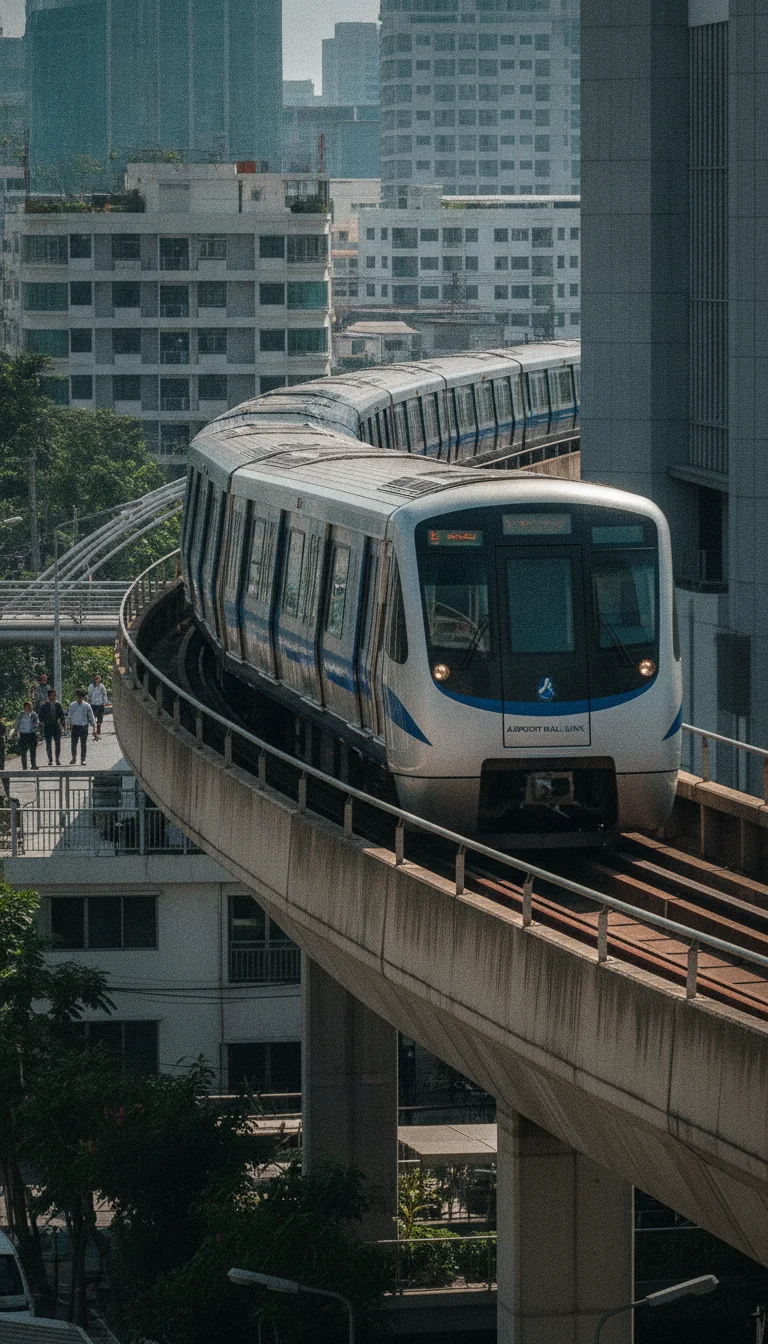
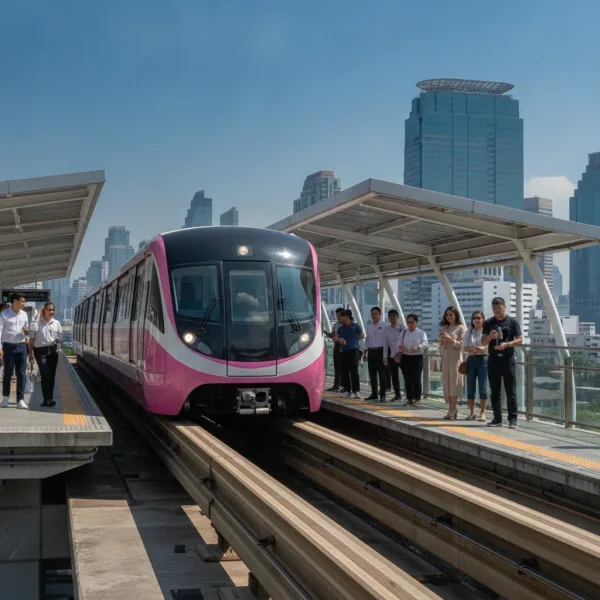
Bangkok’s Airport Rail Link provides a direct elevated train connection between Suvarnabhumi Airport and the city centre. Owned by the State Railway of Thailand, the route operates as an all-stations commuter rail service, running along a dedicated 28-kilometre corridor that bypasses Bangkok’s notoriously congested highway network.
The service operates as a standard public transit line rather than a dedicated airline express. While non-stop express trains previously ran on the corridor, passenger services now run exclusively as the City Line, catering jointly to local daily commuters and air travellers. Trains terminate directly beneath the passenger terminal at Suvarnabhumi, allowing inbound visitors to step off international flights and connect straight into the capital’s wider urban rail transit grid. For visitors arriving at or departing from Bangkok, the link remains a practical, economical transport choice when predictable journey timing matters.

The City Line
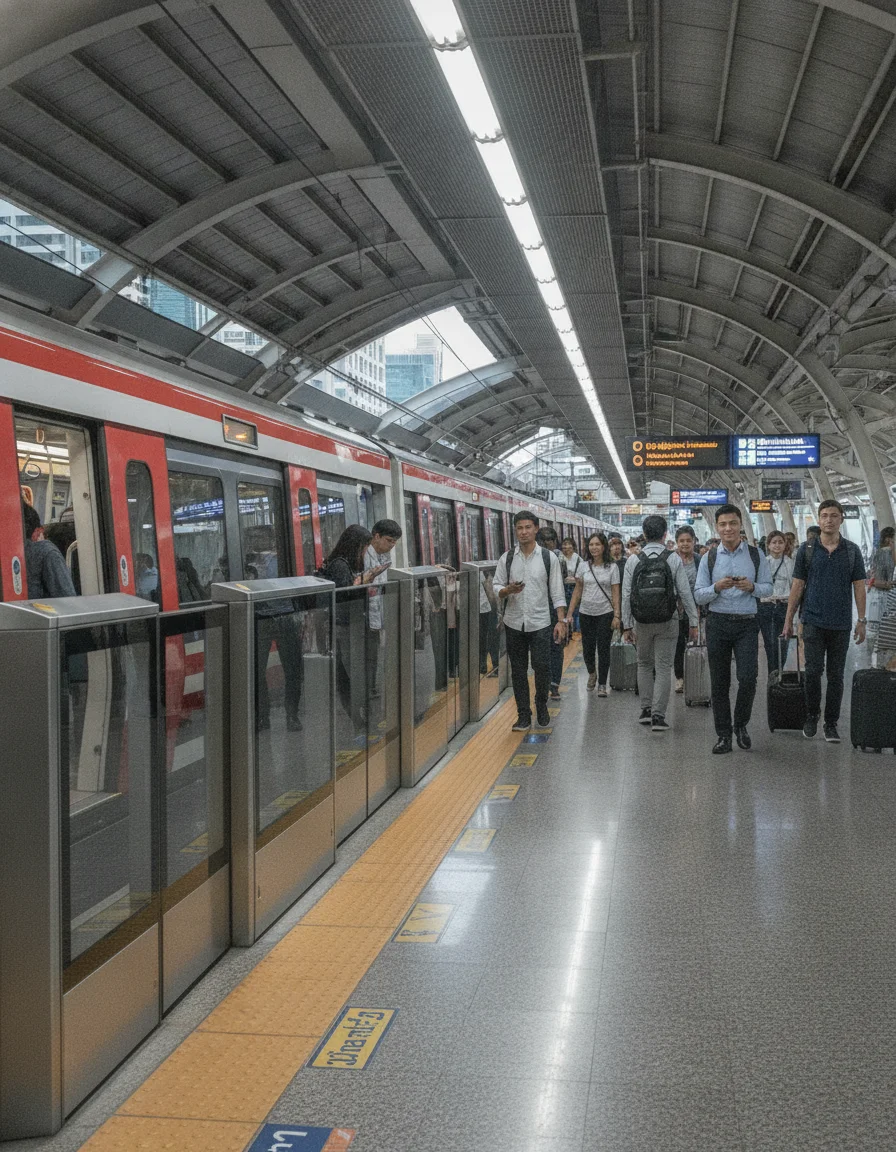
The City Line is the sole passenger service operating along the Airport Rail Link corridor, connecting Suvarnabhumi Airport to Phaya Thai in central Bangkok. While the network originally offered a non-stop Express Line alongside an all-stop commuter option, the express service was withdrawn in 2014. Today, all scheduled departures operate as stopping services across the full 28.6-kilometre route, serving daily urban commuters as well as incoming and departing flight passengers. Originally managed by the State Railway of Thailand, operations are now run under the AERA1 banner by private consortium Asia Era One.
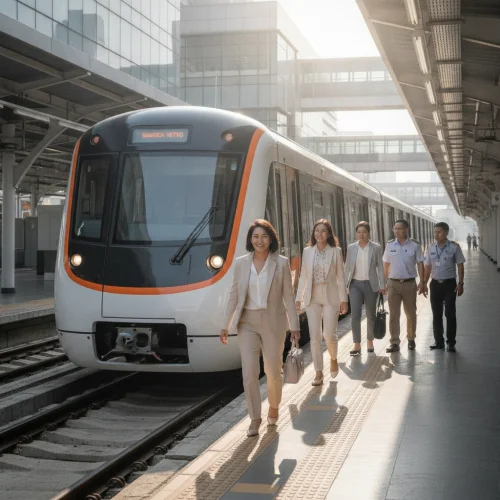
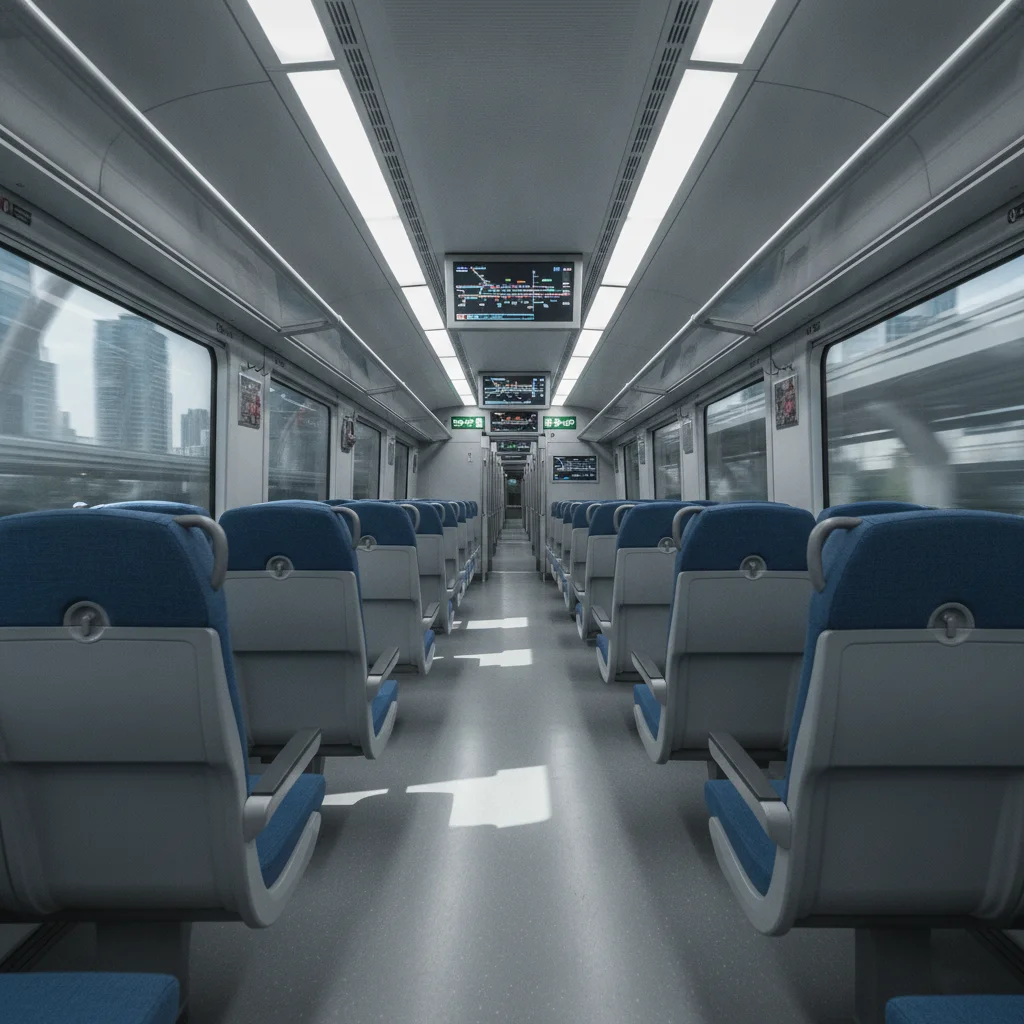
Services utilise electric multiple units built by Siemens, based on the Desiro Class 360 design familiar to UK rail travellers. The fleet consists of original three-car sets alongside refurbished four-car units repurposed from the discontinued express operation. To counter Bangkok’s tropical heat, each train is fitted with high-capacity rooftop air-conditioning units. Carriage interiors are configured with perimeter bench seating, wide central aisles to accommodate large bags, and overhead grab handles for standing travellers. Level boarding from platforms to carriage doors assists passengers travelling with heavy luggage. Throughout the journey, automated electronic displays and bilingual audio announcements call out each upcoming station in both Thai and English, ensuring arrivals can easily track their progress into the city.
Stations and Connectivity
The Airport Rail Link comprises eight stations along its 28-kilometre route, connecting Suvarnabhumi Airport directly to central Bangkok while linking into the capital's wider rail transit networks. Starting from the underground terminal beneath Suvarnabhumi Airport, the elevated line runs west through Lat Krabang, Ban Thap Chang, Hua Mak, Ramkhamhaeng, Makkasan, and Ratchaprarop before reaching its western terminus at Phaya Thai.
Three stations provide key rail interchanges for onward journeys across the city. Phaya Thai connects directly to the BTS Skytrain Sukhumvit Line via a direct pedestrian footbridge, allowing straightforward transfers toward commercial and hotel districts such as Siam and Sukhumvit. Makkasan links to Phetchaburi Station on the MRT Blue Line via a covered elevated skybridge, giving direct access to Silom, Asok, and Bang Sue. Farther east, Hua Mak provides an interchange with the MRT Yellow Line monorail, facilitating travel along the Srinakarin corridor.
Intermediate stops serve distinct districts. Ratchaprarop sits within walking distance of the Pratunam fashion and wholesale market area, while Ramkhamhaeng, Ban Thap Chang, and Lat Krabang serve eastern residential communities and suburban rail halts. Every station features staffed ticket booths, automated ticket vending machines, lifts, and clear bilingual signage in Thai and English, helping arriving travellers and commuters navigate their transfers with confidence.
Plan your Bangkok trip with practical advice for UK travellers, covering top neighbourhoods, BTS and MRT transit, realistic daily costs, and street food.
Operational Efficiency and Timings
The Airport Rail Link operates daily between 05:30 and midnight, providing a reliable schedule for passengers travelling between Suvarnabhumi Airport and central Bangkok. The first trains depart from both termini—Suvarnabhumi Airport and Phaya Thai—at 05:30, with the final departures of the night leaving at 00:00.
Train departure frequencies vary depending on the day and the time of travel. On regular weekdays during peak commuting periods, trains run every 9 to 10 minutes. During off-peak weekday hours, late evenings, weekends, and public holidays, intervals between departures widen to approximately 12 to 15 minutes. Digital display screens on station platforms indicate real-time departure countdowns for approaching services.
Completing the full 28.6-kilometre route across all eight stations between the airport and Phaya Thai takes approximately 26 to 30 minutes. Reaching intermediate transit hubs such as Makkasan takes roughly 22 minutes. Because the elevated track operates entirely independently of Bangkok’s street-level road congestion, transfer times remain predictable throughout the day. Travellers catching outbound flights or heading into the city can plan their journey with confidence, without having to factor in unexpected motorway gridlock during rush-hour traffic windows.
Location and Getting There
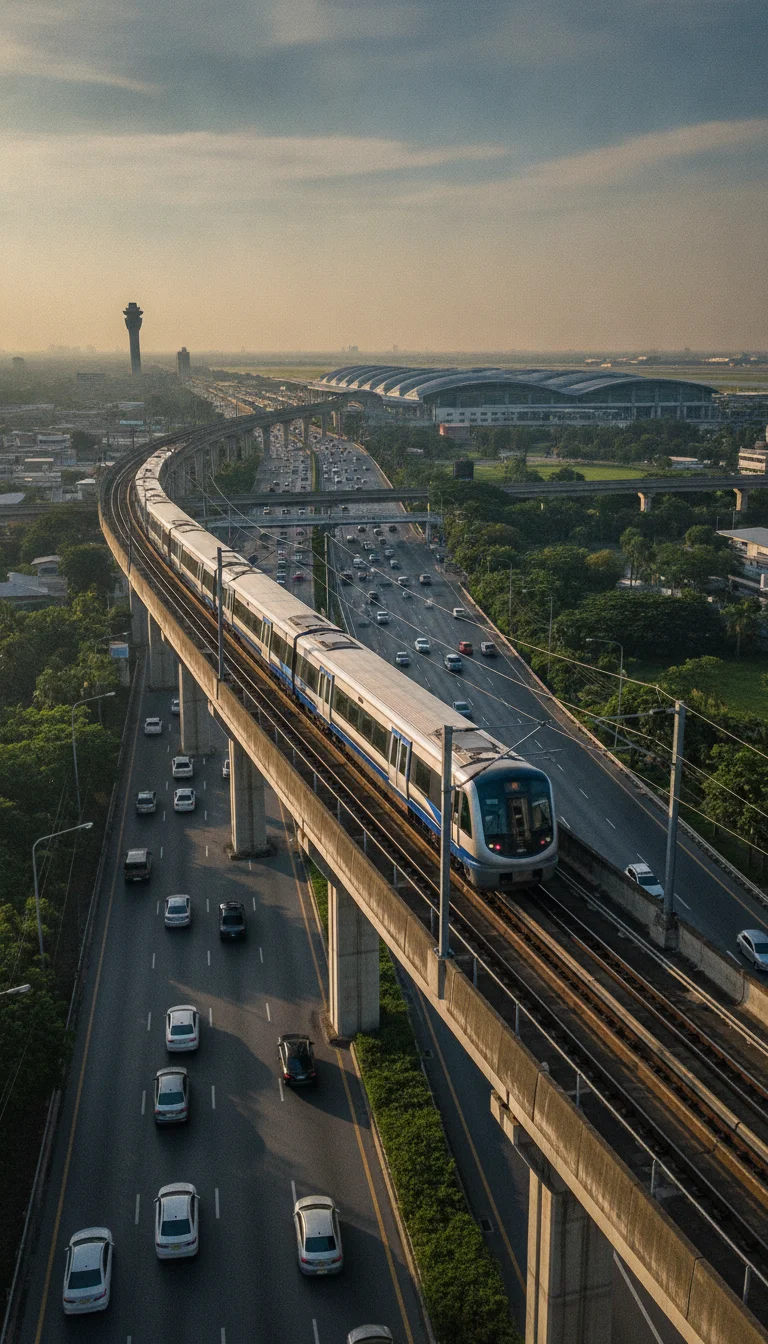
The Airport Rail Link runs along an elevated 28-kilometre corridor connecting Suvarnabhumi Airport (BKK), situated roughly 30 kilometres east of Bangkok, directly with the central city. At the airport terminus, the station sits on Basement Level B of the main passenger terminal, reachable by lifts and escalators directly below the Level 2 arrivals concourse, rather than at the distant perimeter transport centre. At the city end, the route terminates at Phaya Thai Station in Bangkok's central Ratchathewi district.
Reaching the line from central Bangkok is straightforward using the urban transit network. Travellers staying near Siam can ride the BTS Skytrain Sukhumvit Line just two stops north to Phaya Thai, a direct hop taking around four to five minutes, while the ride from lower Sukhumvit stops like Asok takes roughly ten to twelve minutes. Passengers travelling from areas served by the MRT Blue Line underground network can transfer onto the Airport Rail Link at Makkasan Station, which connects to MRT Phetchaburi Station via a covered, elevated pedestrian bridge.
A standard end-to-end journey between Phaya Thai and Suvarnabhumi Airport takes approximately 26 to 30 minutes and costs 45 THB (around £1.00). By comparison, taking a metered road taxi between central Bangkok and the terminal typically costs between 300 and 500 THB (£7 to £11), excluding toll fees and the 50 THB airport surcharge, and can take from 45 minutes to over an hour during peak traffic periods.
Costs and Booking
The Airport Rail Link operates a distance-based fare structure for all passenger journeys between Suvarnabhumi Airport and central Bangkok. Standard single-trip fares range from 15 THB (around £0.35) for short journeys between adjacent intermediate stations up to 45 THB (approximately £1.00) for the full line between Suvarnabhumi Airport and Phaya Thai. Travelling between the airport and the intermediate interchange at Makkasan costs 35 THB (roughly £0.80). Fares remain fixed throughout the year, with no seasonal price changes or peak-hour surcharges. Children under 12 years of age who measure under 90 centimetres in height travel free of charge.
There is no advance booking requirement or reservation facility for the rail link; travel is arranged on the day of departure at the station. Single-journey passengers purchase plastic RFID tokens from automated touch-screen ticket vending machines or staffed ticket counters located on the station concourse. Ticket vending machines accept Thai Baht coins (1, 5, and 10 THB) and banknotes (20, 50, 100, and 500 THB), returning change in coins. Turnstiles across all stations also accept direct tap-and-go payments with contactless EMV debit and credit cards (Visa and Mastercard), enabling passengers to bypass ticket machines and proceed straight to the platforms.
| Option | Cost (THB per journey) | Cost (GBP approx) | Notes |
|---|---|---|---|
| Phaya Thai to Airport | 45 | £1.00 | Full-line journey connecting to BTS Skytrain |
| Makkasan to Airport | 35 | £0.80 | Intermediate interchange for MRT Blue Line |
| Airport to Phaya Thai | 45 | £1.00 | Inbound journey to central Bangkok |
| Intermediate Stations | 15–40 | £0.35–£0.90 | Distance-based fares between intermediate stops |
Who the Service Suits
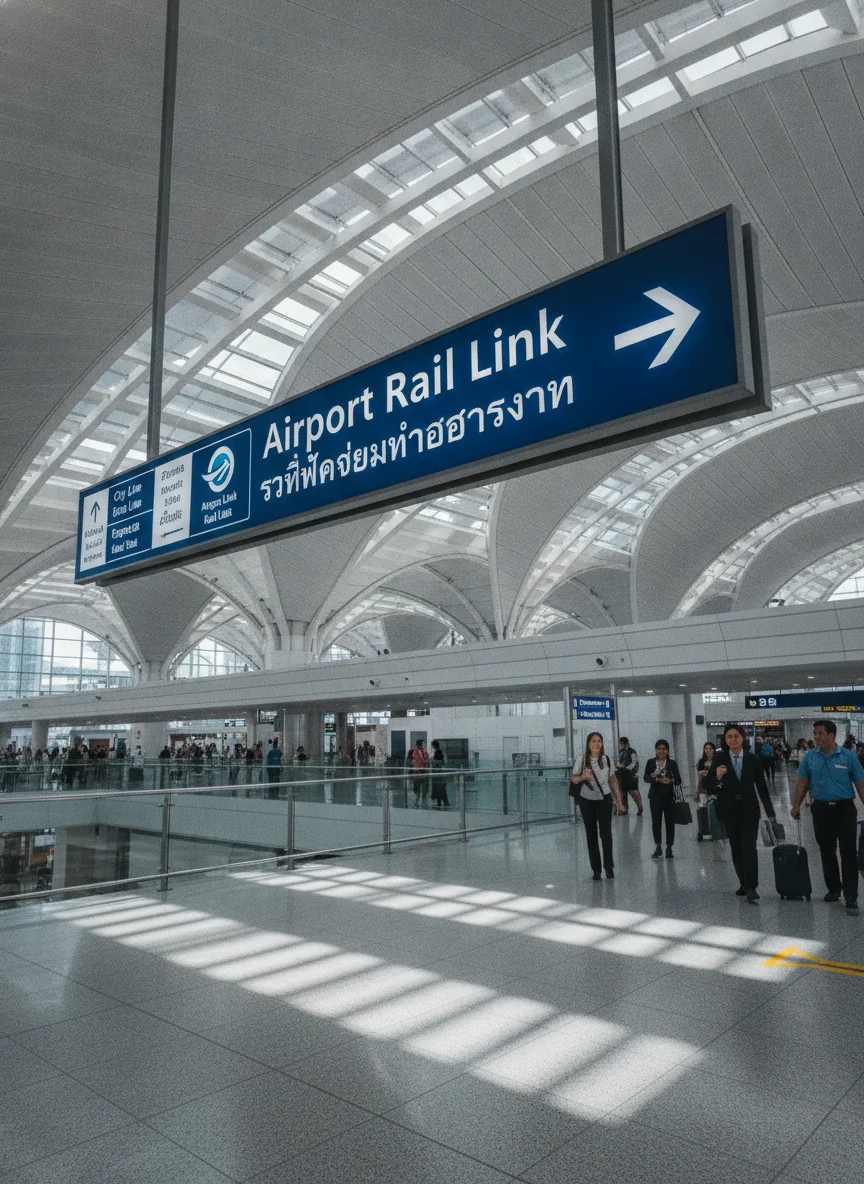
The Airport Rail Link works well for solo travellers, couples, and light-packing visitors heading to central Bangkok neighbourhoods directly served by rapid transit. Passengers who prioritise speed and predictable travel times during daytime hours gain the most value, as the train bypasses the heavy road congestion that frequently stalls expressway traffic into the city centre. Low fares make the service a practical choice for cost-conscious arrivals who are comfortable navigating transit concourses independently, especially those staying near Sukhumvit, Silom, or Siam.
Conversely, the rail link is less suitable for travellers carrying multiple large suitcases, groups with young children, or passengers arriving on late-night flights. Because daily train operations run from 05:30 until midnight, anyone landing after 23:00 risks missing the final departure once border control and baggage claim are completed. Trains operate commuter-style carriages with perimeter bench seating and standing space rather than dedicated baggage compartments, meaning large cases must be held in aisles. Those needing direct door-to-door transit, or staying in districts away from the mass transit network—such as Bang Lamphu, the Old City, or riverside neighbourhoods—often find a licensed taxi or private car transfer far simpler after a long flight.
Passengers intending to ride the train into central Bangkok should also factor in interchange mechanics and commuter peaks. Connecting to the BTS Skytrain at Phaya Thai or the MRT Blue Line at Makkasan involves leaving the station gate line and traversing elevated walkways, including a 166-metre covered skywalk linking Makkasan to MRT Phetchaburi Station. Bangkok transit operators do not share unified ticketing, so onward travel requires purchasing a separate ticket or tapping a distinct payment card at the next barrier. Navigating these transfers while managing multiple suitcases can prove tiring. During weekday rush hours—roughly 06:00 to 09:00 and 16:00 to 20:00—suburban commuters pack the carriages, leaving little physical room to manoeuvre bulky baggage onto trains.
Practical Tips
Plan your journey around commuter rush hours whenever possible. Trains heading into central Bangkok between 07:00 and 09:00, and departing towards the airport between 17:00 and 19:30, carry heavy local commuter traffic, making boarding with large suitcases challenging.
Keep your single-journey token secure throughout the trip. You tap the RFID token against the scanner pad to enter the station and insert it into the exit gate slot to leave. Contactless EMV credit and debit cards can also be tapped directly at entry and exit turnstiles. When using automated ticket machines, carry smaller Thai Baht banknotes (20, 50, or 100 THB) and coins, as machines do not accept 1,000 THB notes.
Carriages feature overhead racks for compact bags and designated floor zones near carriage doors for larger suitcases. There are no luggage straps, so keep hold of your bags during transit. Onboard automated announcements and electronic overhead displays provide station names in both Thai and English well before each stop, allowing plenty of time to prepare for interchanges at Makkasan or Phaya Thai.
Quick Reference Table
| Item | Detail | Notes |
|---|---|---|
| Route | Suvarnabhumi Airport to Phaya Thai | 28.6 km dedicated elevated rail corridor connecting airport to central Bangkok |
| Number of Stations | 8 stations | Suvarnabhumi, Lat Krabang, Ban Thap Chang, Hua Mak, Ramkhamhaeng, Makkasan, Ratchaprarop, Phaya Thai |
| Operating Hours | 05:30 – 00:00 daily | First departures at 05:30; last departures at midnight from both termini |
| Journey Time | 26–30 minutes (end-to-end) | Reaches Makkasan transit hub in approximately 22 minutes |
| Service Frequency | 9–10 mins (peak); 12–15 mins (off-peak & weekends) | Weekday commuter rush hours run roughly 06:00–09:00 and 16:00–20:00 |
| Standard Fares | 15–45 THB (£0.35–£1.00) | Full route costs 45 THB; Suvarnabhumi to Makkasan costs 35 THB (£0.80) |
| Child Fares | Free of charge | Applies to children under 12 years measuring under 90 cm in height |
| Payment Methods | Contactless EMV cards or single-journey RFID tokens | Tap-and-go with Visa/Mastercard; ticket machines accept Baht coins and 20–500 THB notes |
| Key Interchanges | Phaya Thai (BTS), Makkasan (MRT Blue Line), Hua Mak (MRT Yellow Line) | Covered skywalk connections at Phaya Thai and Makkasan (to MRT Phetchaburi) |
| Airport Station Location | Basement Level B, Suvarnabhumi Airport | Directly accessible by lift and escalator below the Level 2 arrivals concourse |
| Website | https://www.srtet.co.th/en | Official portal for timetable and passenger transit information |
FAQ: Airport Rail Link
How much does the Airport Rail Link cost from Suvarnabhumi to central Bangkok?
What is an advantage of using the Airport Rail Link in Bangkok?
What are the operating hours for the Airport Rail Link?
How long does a journey on the Airport Rail Link take?
Where is the Airport Rail Link station located at Suvarnabhumi Airport?
How can I pay for a ticket on the Airport Rail Link?
What are the main interchange stations for the Airport Rail Link?
Who is the Airport Rail Link best suited for?
Who might find the Airport Rail Link less suitable?
When should I avoid using the Airport Rail Link if I have large luggage?
Reviewed by the Thailand Guide Editorial Team • Last reviewed: 22 September 2026
This page provides general information only and is not financial, legal, or immigration advice. Always verify current rules with official Thai government sources or a qualified professional before making decisions.