MRT Orange Line
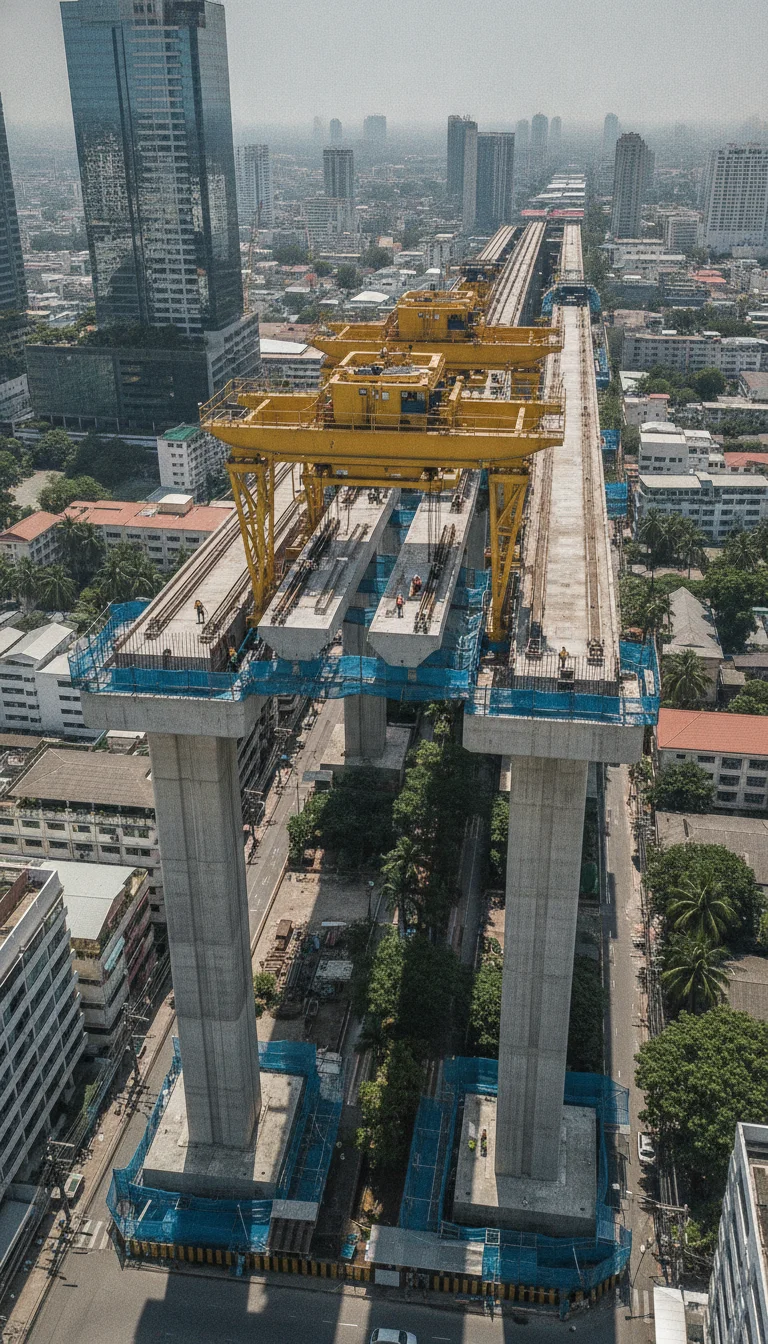
The MRT Orange Line is a major rapid transit corridor under construction across Bangkok, planned to establish a continuous east–west heavy rail link across the capital. Owned and supervised by the Mass Rapid Transit Authority of Thailand (MRTA), the project is engineered to bypass some of the city's most congested road corridors, connecting the dense eastern suburbs in Min Buri with Thonburi on the western bank of the Chao Phraya River. When fully operational, the line is projected to carry hundreds of thousands of passengers each day, easing pressure on surface roads and knitting suburban residential districts into Bangkok's central rapid transit grid.
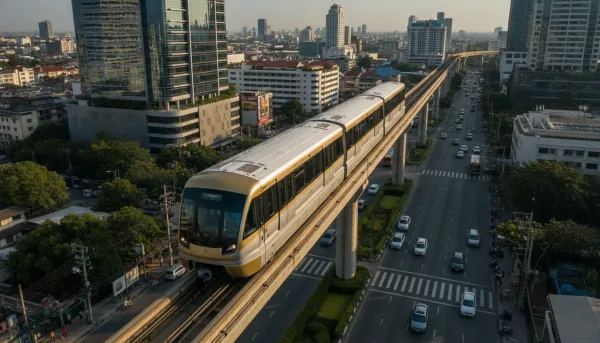
Covering a total distance of 35.9 kilometres, the line includes 28 stations, comprising 21 underground stops and 7 elevated stations. The infrastructure is divided into two primary sections: an eastern segment of 22.5 kilometres running between the Thailand Cultural Centre and Min Buri, and a 13.4-kilometre western segment extending entirely underground from Thailand Cultural Centre to Bang Khun Non. Construction and long-term rail operations are managed under a public-private partnership between the MRTA and Bangkok Expressway and Metro (BEM), which also operates the capital's MRT Blue Line.
By travelling directly beneath historic central districts and tunnelling under the Chao Phraya River, the Orange Line will substantially shorten cross-town travel times between eastern communities like Min Buri, central commercial districts, and the medical and residential hubs of Thonburi. For travellers and residents seeking to navigate these distant districts without relying on taxis or sitting in peak-hour traffic, the line represents a critical upgrade to Bangkok's public transport infrastructure. For those planning future journeys or booking sightseeing excursions across outer Bangkok, monitoring the line's staged rollout will reveal convenient new transit corridors across the metropolis.

Phases of Development and Key Stations
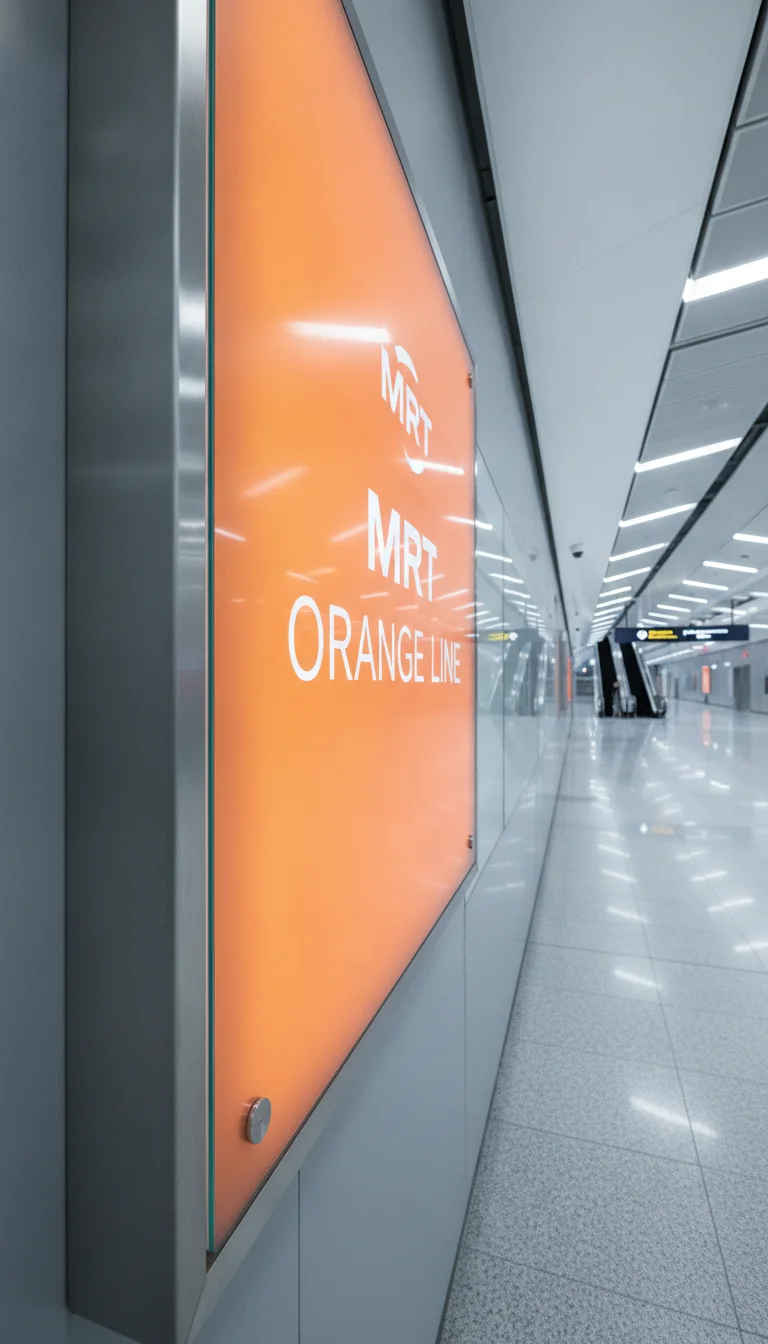
Bangkok’s MRT Orange Line is divided into two distinct construction phases meeting at Thailand Cultural Centre Station, creating a continuous 35.9-kilometre east-west corridor of 29 stations across the capital.
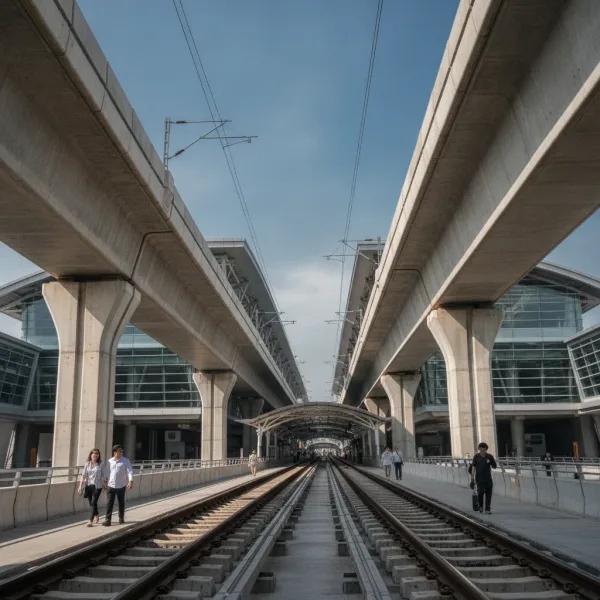
The eastern section spans 22.5 kilometres from Thailand Cultural Centre to Min Buri in outer eastern Bangkok. It features 17 stations, dividing into 10 underground stops through the central districts and seven elevated stops further east. The underground alignment travels beneath Rama IX and Ramkhamhaeng roads before rising onto an elevated viaduct beyond Khlong Ban Ma. Key stations along this stretch include MRTA headquarters, Ramkhamhaeng, Sports Authority of Thailand (beside Rajamangala National Stadium), Lam Sali, and the Min Buri terminus. Heavy civil engineering on the eastern section finished in 2023, with electrical systems installation and train testing preceding an anticipated opening between late 2027 and early 2028.
The western section extends 13.4 kilometres from Thailand Cultural Centre across central Bangkok to Bang Khun Non in Thonburi. Designed entirely underground across 11 stations, this alignment cuts beneath dense commercial hubs and historic Rattanakosin Island before tunnelling under the Chao Phraya River. Major planned stops include Pratunam, Ratchathewi, Yommarat, Democracy Monument, Sanam Luang, and Siriraj Hospital, with the line terminating at Bang Khun Non. Work on this underground corridor began in mid-2024 following contract awards, with full line operations targeted for 2030.
Technological Advancements and Rolling Stock
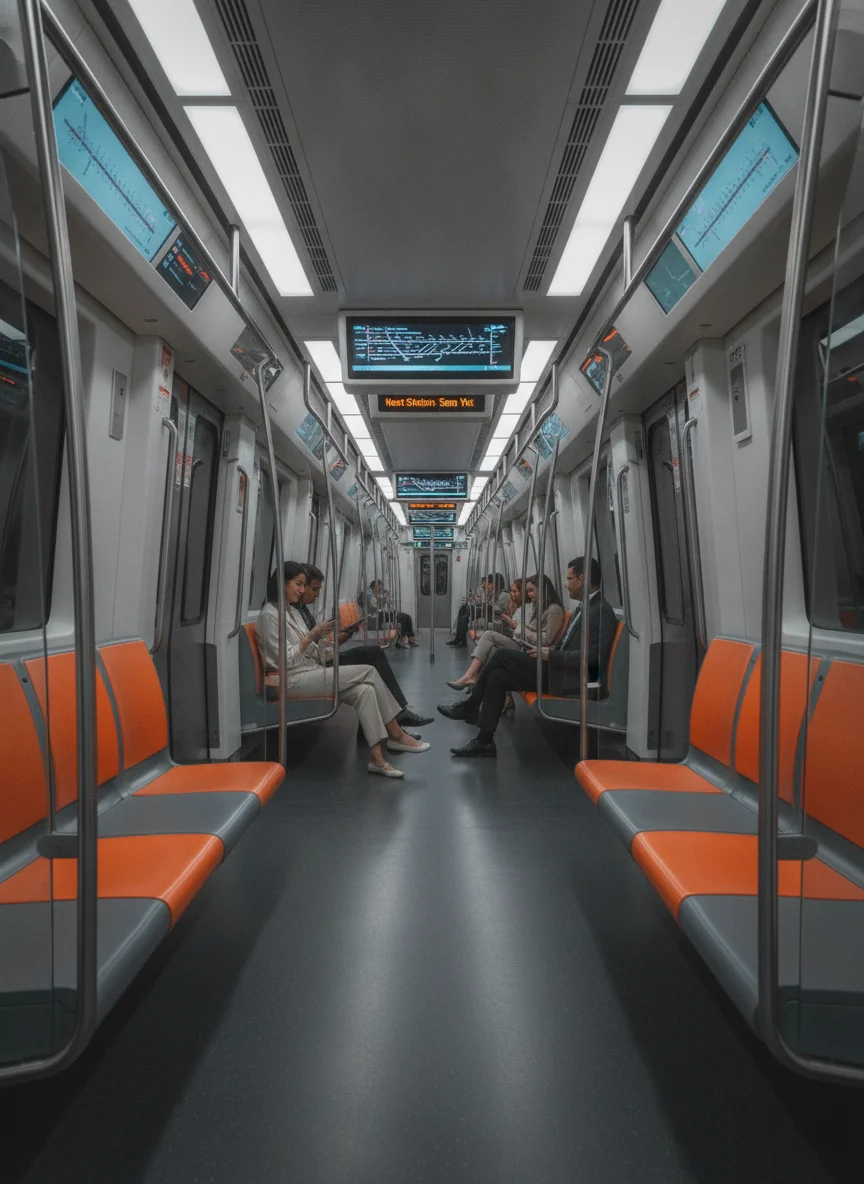
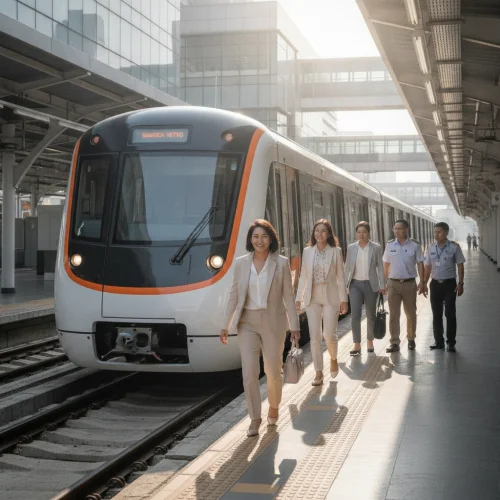
Passenger services on the MRT Orange Line will run on a dedicated fleet of 32 three-car electric multiple units. Concession holder Bangkok Expressway and Metro (BEM) awarded the turnkey rolling stock and electrical systems contract to a consortium led by Siemens Mobility, working in partnership with Turkish manufacturer Bozankaya and ST Engineering. Based on the Siemens Inspiro platform, the standard-gauge trainsets are assembled at Bozankaya's Ankara plant using Siemens bogies, traction, and braking systems. Each three-car formation draws power from a 750 V DC third rail and operates at speeds up to 80 km/h.
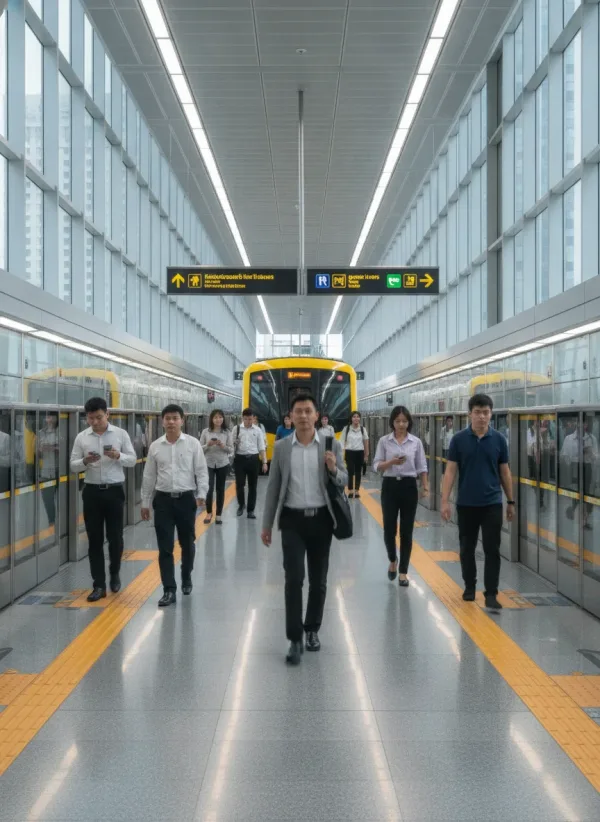
Car interiors provide wide walk-through gangways, real-time electronic information displays, and high-capacity climate control designed to manage Bangkok's tropical temperatures. Passenger safety is supported by platform screen doors throughout the network, consisting of full-height glass partitions at underground stations and half-height automated gates along elevated stops. Train movements are guided by communication-based train control (CBTC) technology with automated train operation (ATO) capabilities, allowing precise scheduling, smooth braking, and regular service frequencies. Fleet maintenance, workshop inspections, and central traffic monitoring are coordinated from the main line depot at Huai Khwang, with long-term system support overseen by Siemens.
Plan your Bangkok trip with practical advice for UK travellers, covering top neighbourhoods, BTS and MRT transit, realistic daily costs, and street food.
Integration with Bangkok's Transport Network
The MRT Orange Line functions as a crucial east-west spine designed to intersect with almost every major rapid transit line in Bangkok. By cutting across radial corridors that stretch from the outer suburbs into the city centre, the route links heavy rail metros, suburban monorails, and elevated transit systems, allowing passengers to transfer across the wider network without travelling through congested central interchanges.
Along the eastern segment, the line connects with two suburban monorail systems: the MRT Pink Line at Min Buri and the MRT Yellow Line at Yaek Lam Sali. Continuing westwards towards the central commercial districts, it interchanges with the underground MRT Blue Line at Thailand Cultural Centre Station, providing a direct transfer point for passengers heading north towards Chatuchak or south towards Sukhumvit and Silom.
Once the western section is completed, interchange options expand significantly across central Bangkok and Thonburi. The line links with the Airport Rail Link at Ratchaprarop Station, the BTS Sukhumvit Line at Ratchathewi Station, and the planned MRT Purple Line southern extension near Democracy Monument. At its western terminus at Bang Khun Non, passengers can reconnect with the MRT Blue Line loop and transfer to State Railway of Thailand commuter rail services.
Location and Getting There
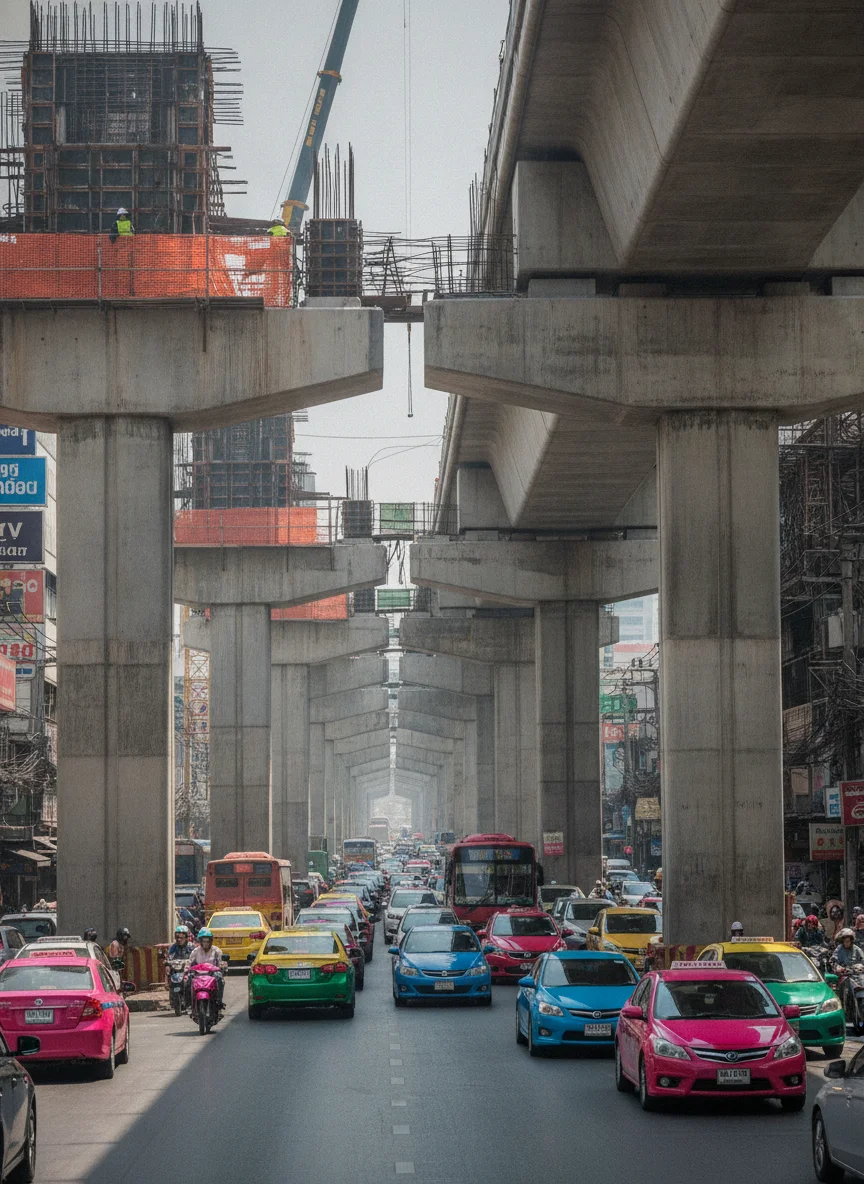
Bangkok's MRT Orange Line spans approximately 35.9 kilometres across the capital, creating an east-west transit corridor between the eastern suburb of Min Buri and Bang Khun Non on the Thonburi side of the Chao Phraya River. The line comprises two distinct sections meeting at Thailand Cultural Centre Station in the Huai Khwang district. The 22.5-kilometre eastern section runs from Min Buri through Saphan Sung and along Ramkhamhaeng Road. The 13.4-kilometre western section burrows underground through central commercial and administrative areas—including Din Daeng, Pratunam, Ratchathewi, and historic Rattanakosin Island—before crossing beneath the river into Bangkok Noi.
Because the route is an extensive transit line rather than a single destination, reaching it depends on your arrival point in Bangkok. Most UK visitors touch down at either Suvarnabhumi Airport (BKK) or Don Mueang International Airport (DMK).
From Suvarnabhumi, the most straightforward rail connection uses the Airport Rail Link from the airport basement to Makkasan Station. From Makkasan, an enclosed pedestrian walkway links directly to Phetchaburi Station on the MRT Blue Line, which delivers passengers to Thailand Cultural Centre just two stops to the north. Alternatively, the Airport Rail Link stops at Hua Mak and Ramkhamhaeng, providing road-level proximity to the eastern alignment.
From Don Mueang, travellers can take the SRT Dark Red Line south to Krung Thep Aphiwat Central Terminal in Bang Sue. A subterranean walkway connects the terminal to Bang Sue MRT Station, where Blue Line trains run directly south towards Thailand Cultural Centre and central interchange points. Taxis and app-based ride-hailing services also link both airports to any station entrance along the completed eastern thoroughfares.
Fares and Ticketing
Like the rest of Bangkok's rapid transit network, the MRT Orange Line operates as a walk-up urban railway with no advance booking, seat reservations, or extra surcharges. Travel is charged on a pay-as-you-go basis at automated station fare gates.
Fares will follow the standard distance-based pricing model regulated by the Mass Rapid Transit Authority of Thailand (MRTA) and operated by Bangkok Expressway and Metro (BEM). Under MRTA planning assessments, single-journey fares are projected to range between 15 THB and 45 THB (roughly £0.35 to £1.05) depending on distance travelled, with a contractual reference ceiling of 62 THB (around £1.45) for journeys covering 12 stations or more.
When passenger operations commence, overseas visitors can pay at fare gates using standard contactless payment methods. The system supports direct tap-in and tap-out at automated gates using international Visa and Mastercard contactless cards, removing any need to queue for tickets. Travellers paying in cash can purchase single-journey RFID tokens from touchscreen vending machines or ticket counters situated inside station concourses before entering the platforms.
Who It Suits Best
The MRT Orange Line is built primarily for daily commuters, students, and suburban residents travelling between outer residential districts and central Bangkok. Once fully open, it cuts road journey times substantially for people living in eastern suburbs like Min Buri, Saphan Sung, and Bang Kapi, as well as western Thonburi neighbourhoods around Bang Khun Non and Siriraj. It also directly serves major student and worker populations along the heavily congested Ramkhamhaeng corridor, including Ramkhamhaeng University and the Rajamangala National Stadium sporting complex.
For independent travellers and visitors, the line provides practical east–west rail access to areas previously reachable only by bus, taxi, or canal boat. The western underground section directly links central interchange hubs to key historic and retail areas, including Sanam Luang in Old Town Bangkok (Rattanakosin) and the Pratunam wholesale market district. While business travellers and tourists staying strictly in central Sukhumvit or Silom will rely mainly on existing BTS and Blue Line routes, the Orange Line offers direct, traffic-free transit for anyone attending major events at Rajamangala Stadium or exploring outer Bangkok districts.
What to Know Before Travelling
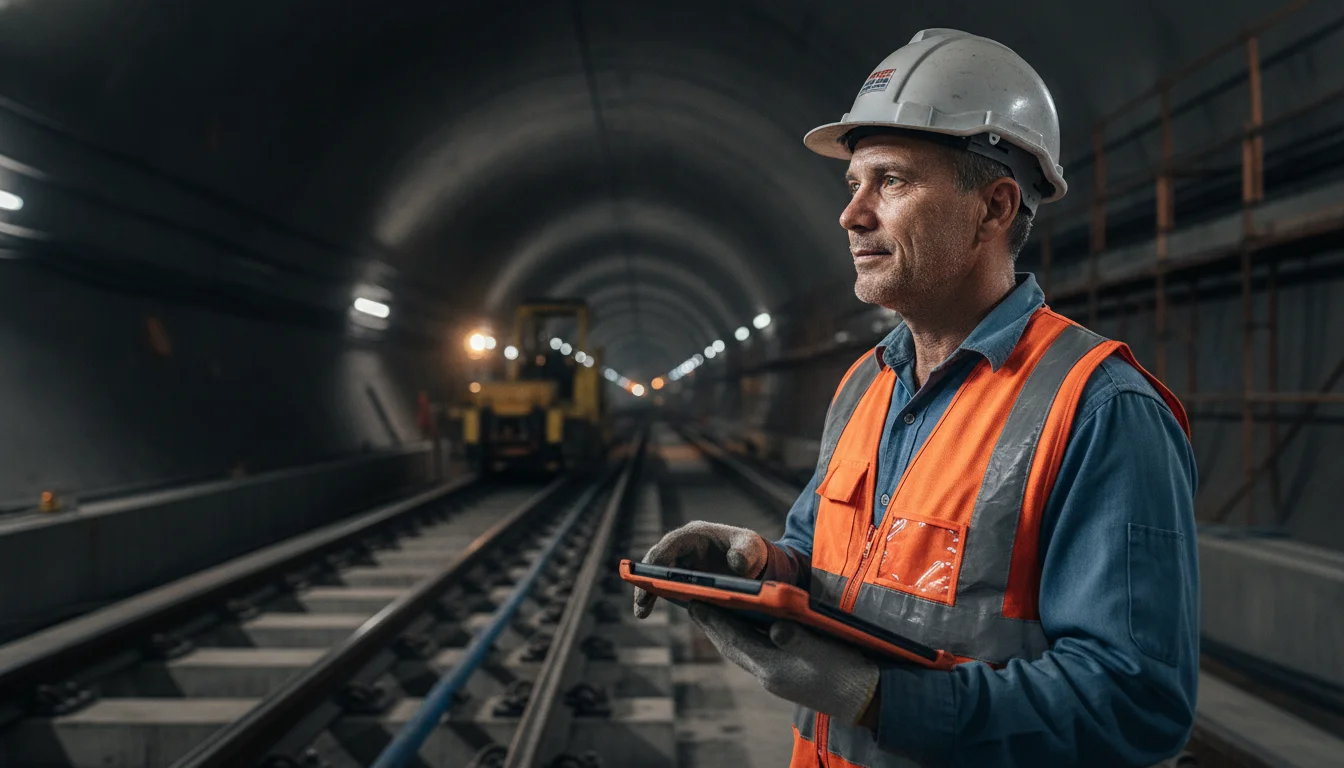
The MRT Orange Line is an urban rapid transit project currently under phased construction across Bangkok, not a bookable tour, private charter, or scheduled long-distance rail service. Advance reservations and pre-booked tickets do not exist for the line; when operational, passengers will simply pay at station turnstiles using standard transit media.
Because opening timelines are staggered across two distinct development contracts, travellers should confirm the operational status of individual sections rather than expecting the entire 35.9-kilometre corridor to be accessible at once. Civil engineering on the eastern segment—stretching between Thailand Cultural Centre and Min Buri—is structurally complete, with track installation, signalling integration, and train testing leading towards passenger operations scheduled for late 2027 or early 2028. Meanwhile, the western underground section linking Thailand Cultural Centre through central Bangkok to Bang Khun Non remains under heavy civil construction, with completion projected around 2030.
Until revenue services formally launch, trains do not carry the public on any part of the route. Visitors selecting accommodation or mapping travel routes near designated station sites along Ramkhamhaeng Road or through Phra Nakhon should rely on existing transport alternatives, such as the MRT Blue Line, BTS Skytrain, or canal boats, rather than factoring the Orange Line into immediate journey plans.
Practical Tips
Navigating Bangkok's expanding public transport system requires a degree of advance planning, particularly when travelling through active development corridors. Multi-modal navigation apps and digital transit planners provide reliable journey mapping, helping you coordinate connections between the Orange Line, the MRT Blue and Purple lines, the BTS Skytrain, and connecting bus routes.
Before heading out, check official announcements from the Mass Rapid Transit Authority of Thailand (MRTA) or concession operator Bangkok Expressway and Metro (BEM) for operational timelines and station schedules. Ongoing underground construction along the western corridor—running between Huai Khwang, Pratunam, and Bangkok Noi—regularly causes surface traffic diversions and lane closures. Travellers using taxis or buses along these central arteries should allow extra travel time to account for road congestion.
Ticketing in Bangkok remains divided across different transit authorities. The BTS Skytrain uses the reloadable Rabbit card, whereas BEM-operated MRT lines support direct EMV contactless payment using foreign or local Visa and Mastercard debit and credit cards at automatic entry gates. Carrying a contactless bank card eliminates the need to queue for single-journey tokens or purchase separate stored-value cards when riding the underground network.
Quick Reference Table
| Item | Detail | Notes |
|---|---|---|
| Route Length | 35.9 km | Divided into eastern (22.5 km) and western (13.4 km) sections |
| Total Stations | 28–29 stations | Comprises 21 underground and 7 elevated stations across both phases |
| Eastern Section | Thailand Cultural Centre to Min Buri | 17 stations (10 underground, 7 elevated); passenger services expected late 2027 to early 2028 |
| Western Section | Thailand Cultural Centre to Bang Khun Non | 11 stations (all underground); fully targeted for completion around 2030 |
| Governance & Operator | MRTA (owner) and BEM (operator) | Developed under a public-private partnership concession |
| Rolling Stock | 32 three-car trainsets | Siemens Inspiro platform assembled with Bozankaya; 750 V DC third rail with speeds up to 80 km/h |
| Key Interchanges | MRT Blue, Pink, Yellow, Purple lines, BTS Skytrain, ARL, SRT | Connects major radial routes across central and outer Bangkok |
| Projected Fares | 15 THB to 45 THB (£0.35 to £1.05) | Contractual ceiling of 62 THB (£1.45) for journeys of 12 or more stations |
| Payment Methods | Contactless EMV (Visa/Mastercard) and RFID tokens | Tap-in/tap-out at automated gates or buy single tokens at stations |
| Website | https://www.mrta.co.th | Official Mass Rapid Transit Authority of Thailand portal |
FAQ: MRT Orange Line
What is the purpose of the MRT Orange Line in Bangkok?
How long is the MRT Orange Line and how many stations does it have?
Who owns and operates the MRT Orange Line in Bangkok?
When is the MRT Orange Line expected to be fully operational?
What features do the MRT Orange Line trains offer passengers?
What other public transport lines does the MRT Orange Line connect with?
How can travellers reach the MRT Orange Line from Suvarnabhumi Airport (BKK)?
How can travellers reach the MRT Orange Line from Don Mueang International Airport (DMK)?
How much are the fares on the MRT Orange Line and how can passengers pay?
What should travellers know about the current operational status of the MRT Orange Line?
Reviewed by the Thailand Guide Editorial Team • Last reviewed: 22 September 2026
This page provides general information only and is not financial, legal, or immigration advice. Always verify current rules with official Thai government sources or a qualified professional before making decisions.