MRT Yellow Line
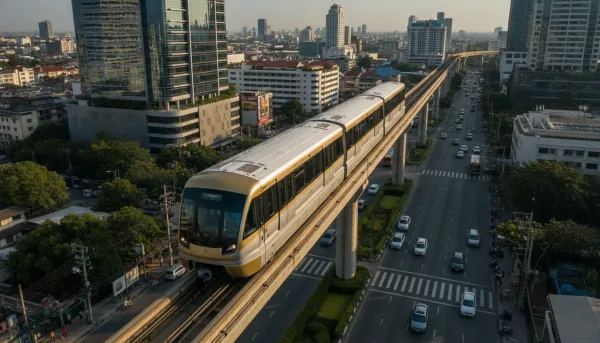
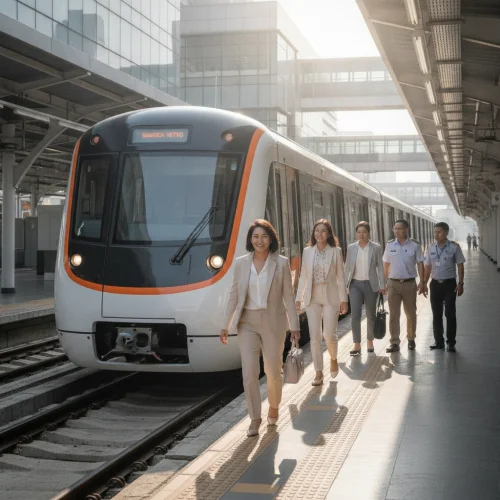
The MRT Yellow Line, officially designated the MRT Nakkhara Phiphat Line, is an elevated straddle monorail system operating across Greater Bangkok. Commissioned by the Mass Rapid Transit Authority of Thailand (MRTA) and operated by Eastern Bangkok Monorail Company Limited (EBM), the line launched commercial service on 3 July 2023 as Thailand's first straddle monorail transit route.
Unlike radial train lines that travel directly into central Bangkok, the Yellow Line functions as an orbital suburban bypass. The elevated route spans northern Bangkok through to Samut Prakan province, linking the northern district of Lat Phrao with Samrong in the south-east. By tracing the heavily congested corridors of Lat Phrao and Srinagarindra roads, the monorail provides commuters, residents, and visitors with a fast, reliable bypass above surface-level traffic.
The system acts as a transit bridge across eastern Bangkok, enabling passengers to transfer between major transit corridors without having to make lengthy detours into central Bangkok. Fully air-conditioned and running on dedicated elevated concrete guide beams, the Yellow Line provides a comfortable, dependable transit option for exploring residential neighbourhoods, regional suburban markets, and retail centres across the capital's eastern perimeter.

Route and Stations
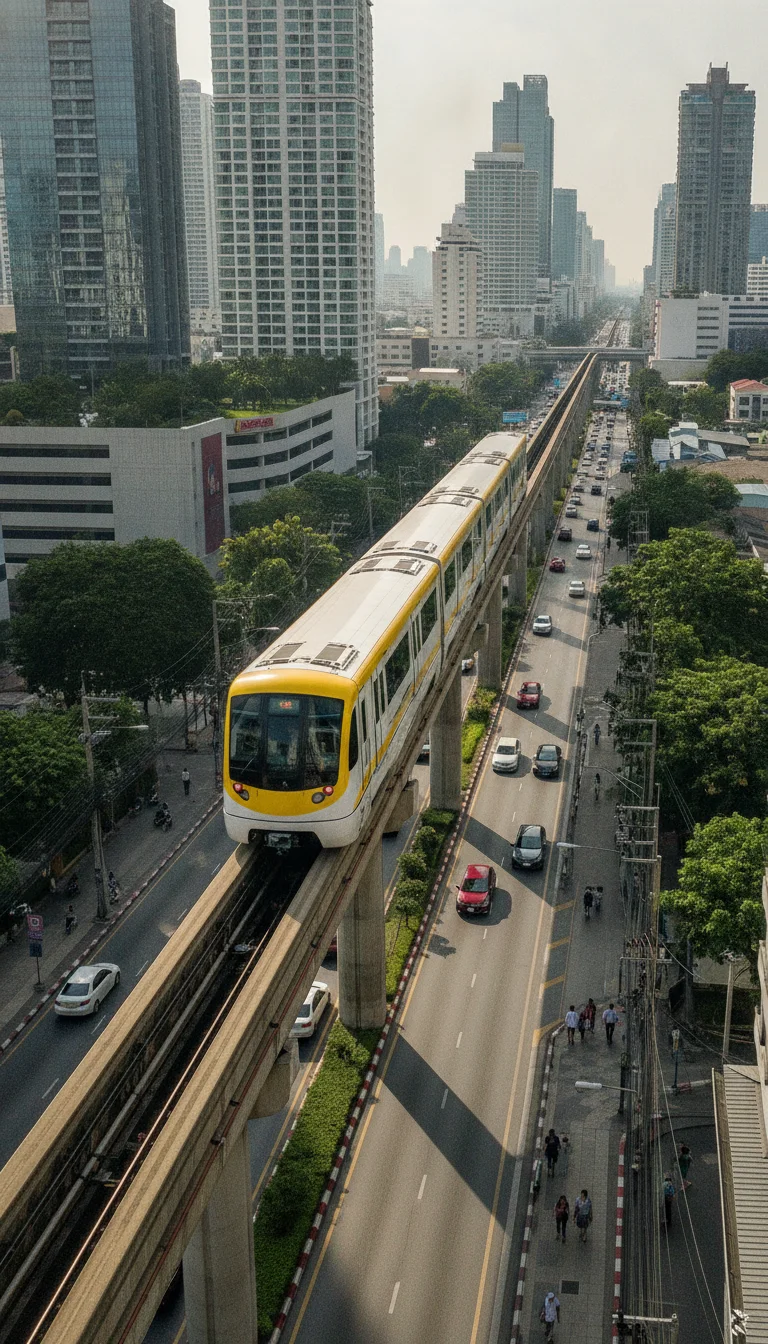
The MRT Yellow Line spans approximately 30.4 kilometres across eastern Bangkok and northern Samut Prakan province, operating across 23 elevated stations. Built as an automated straddle monorail system, the line links the northern terminal at Lat Phrao with Samrong in the south. This creates a dedicated orbital transit corridor designed to bypass heavily congested surface roadways and cut journey times across the eastern suburbs.
Starting at Lat Phrao station above the Ratchadaphisek–Lat Phrao road junction, the guideway heads east along Lat Phrao Road. Stations along this initial stretch serve dense residential and commercial communities, stopping at Phawana, Chok Chai 4, Lat Phrao 71, Lat Phrao 83, Mahat Thai, and Lat Phrao 101. At Bang Kapi and Yaek Lam Sali, the alignment curves south onto Srinagarindra Road, continuing past Si Kritha, Hua Mak, Kalantan, and Si Nut.
Continuing southward along Srinagarindra Road, the monorail serves Srinagarindra 38 and Suan Luang Rama IX, situated near King Rama IX Park and the Seacon Square retail complex. After Si Udom, it reaches Si Iam near the Debaratna (Bang Na–Trat) junction, where the system's central train maintenance depot and park-and-ride facilities are situated. Entering Samut Prakan province, the route calls at Si La Salle, Si Bearing, and Si Dan.
At the Thepharak intersection, the guideway swings west along Thepharak Road, calling at Si Thepha and Thipphawan before terminating at Samrong station on Sukhumvit Road. By connecting these outer-eastern suburbs directly across four major arterial roads, the 23-station route delivers a dependable transit option for commuters and visitors travelling across eastern Greater Bangkok.
Connectivity and Integration
Bangkok's MRT Yellow Line functions primarily as an orbital feeder route, linking eastern suburbs across Lat Phrao and Srinagarindra roads to several of the capital's major radial rail systems. By bridging these corridors, the monorail provides rapid alternatives to congested arterial surface traffic, enabling straightforward transfers between north-eastern Bangkok and Samut Prakan province.
At its northern terminus, Lat Phrao Station (YL01) connects with the underground MRT Blue Line via an elevated covered walkway. This link opens straightforward travel into central business districts, the transport hub at Bang Sue, and historic quarters including Chinatown.
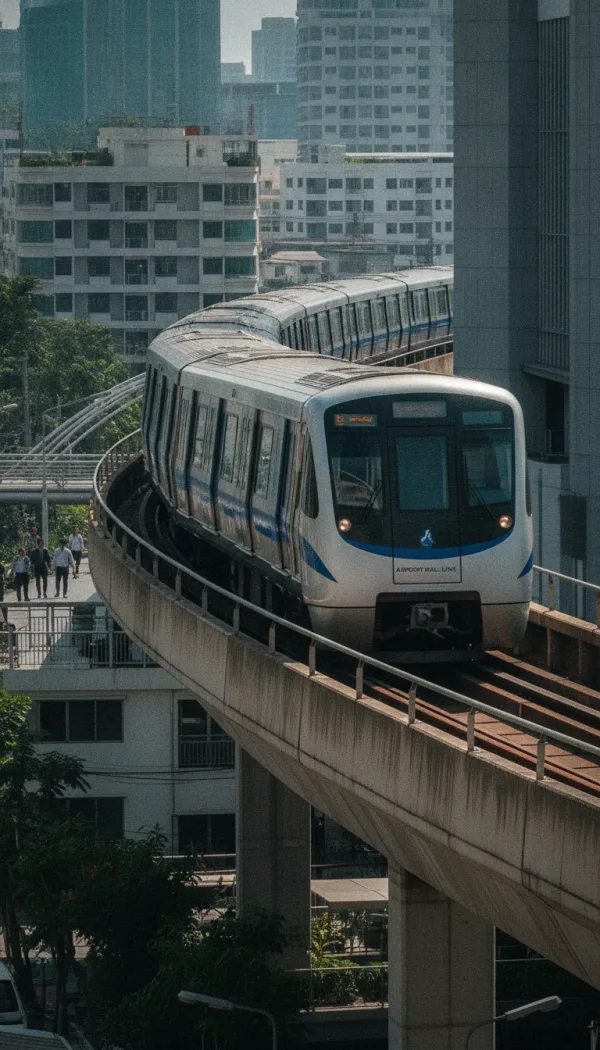
Midway along the corridor, Hua Mak Station (YL11) provides an interchange with the Airport Rail Link, allowing access eastwards to Suvarnabhumi Airport or westwards to central hubs such as Makkasan and Phaya Thai. The station also sits adjacent to the State Railway of Thailand's eastern commuter railway. Further north, Yaek Lam Sali Station (YL09) is built to connect with the MRT Orange Line.
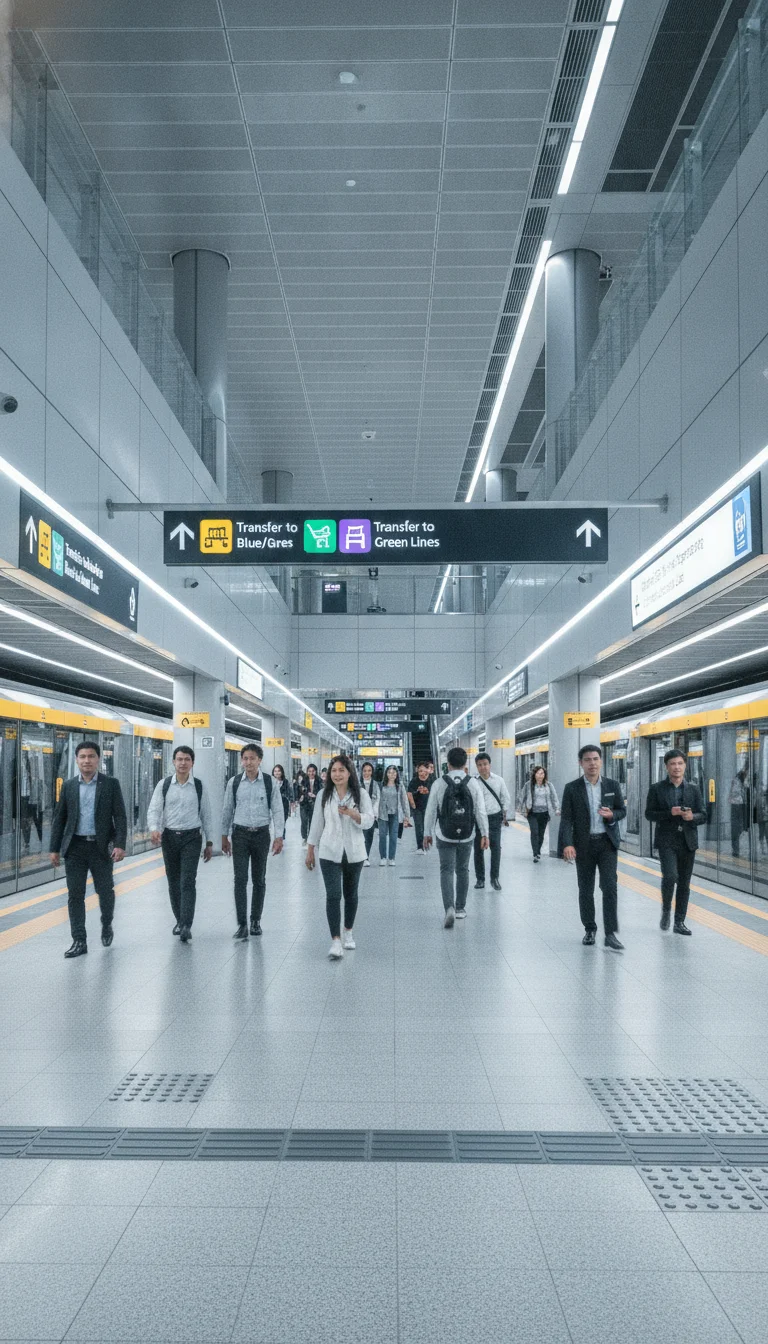
At the southern terminus, Samrong Station (YL23) connects via an overhead skybridge to the elevated BTS Sukhumvit Line. Passengers can continue into central commercial districts including Asok and Siam without negotiating ground-level highway bottlenecks. Although physical transfers require tapping through separate ticket gates between different operating concessions, contactless bank cards and shared transit cards keep interchange transitions straightforward.
Expect 32C days and 80 percent humidity in Bangkok. Beat the 4 PM monsoon downpours by grabbing a 49 THB / 1.15 GBP local poncho at any corner shop.
Accessibility and Passenger Experience
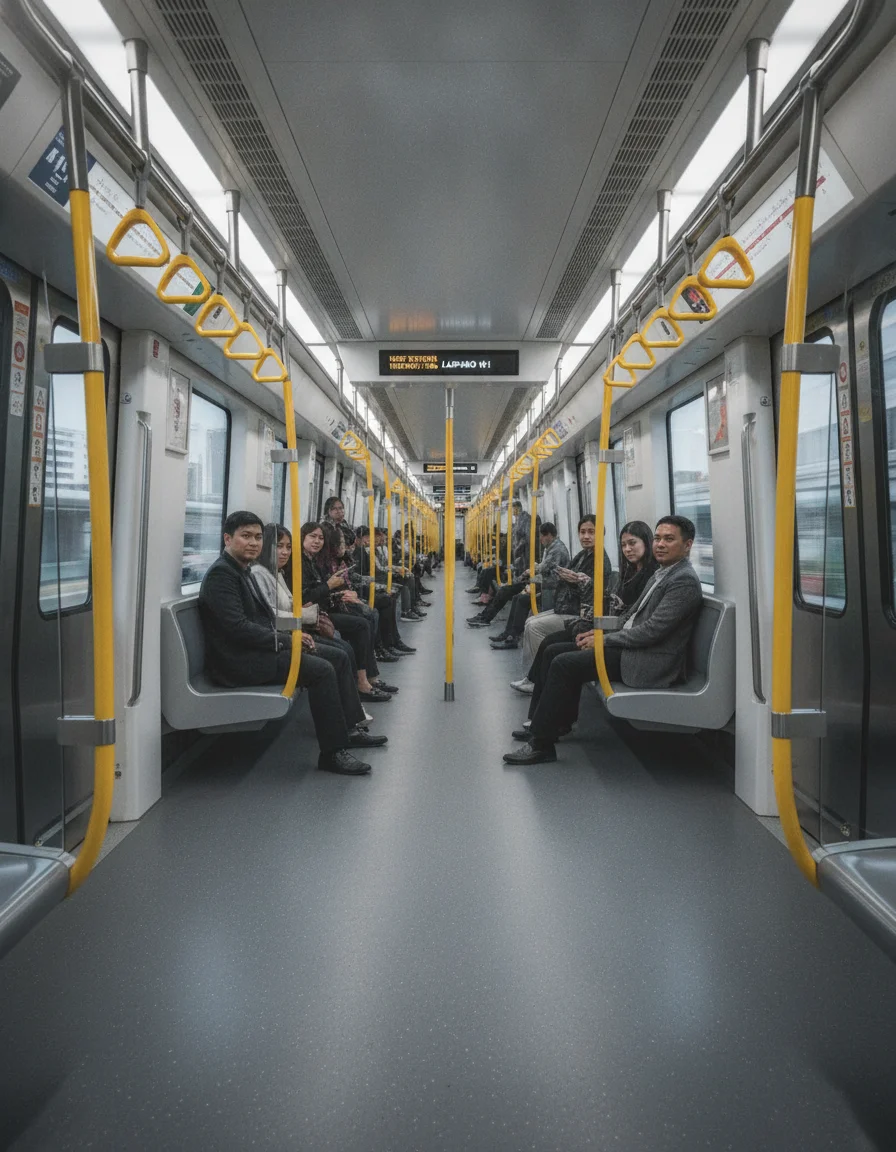
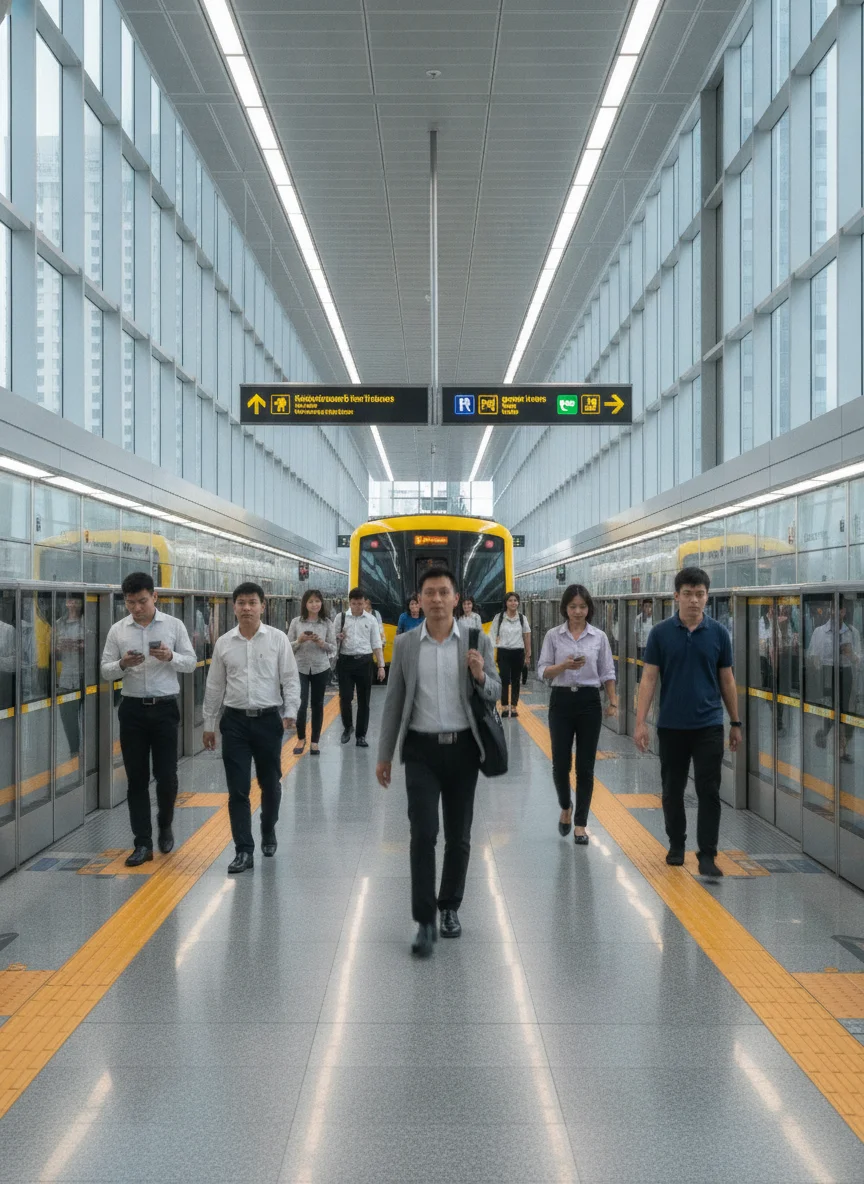
Bangkok's MRT Yellow Line was designed to modern universal accessibility standards, ensuring step-free travel across all 23 elevated stations. Unlike older sections of Bangkok's elevated transit network, every station along the corridor provides street-to-concourse and concourse-to-platform passenger lifts alongside escalators. Tactile paving runs throughout the stations to assist visually impaired passengers, guiding the way from street entrances to ticket areas and platform edges. Concourse barrier lines include wide accessible fare gates suitable for wheelchair users, pushchairs, and travellers handling heavy suitcases.
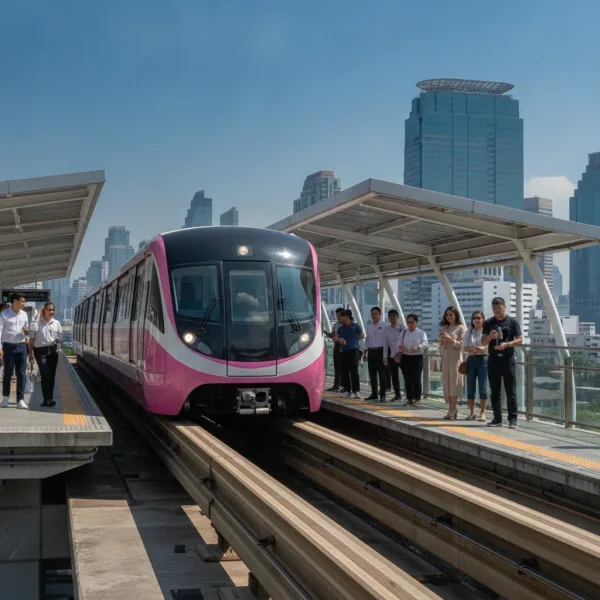
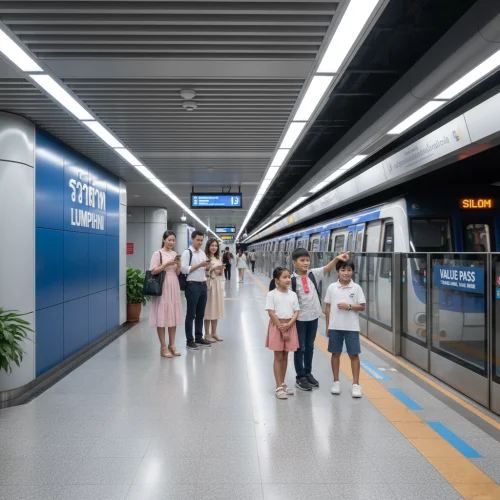
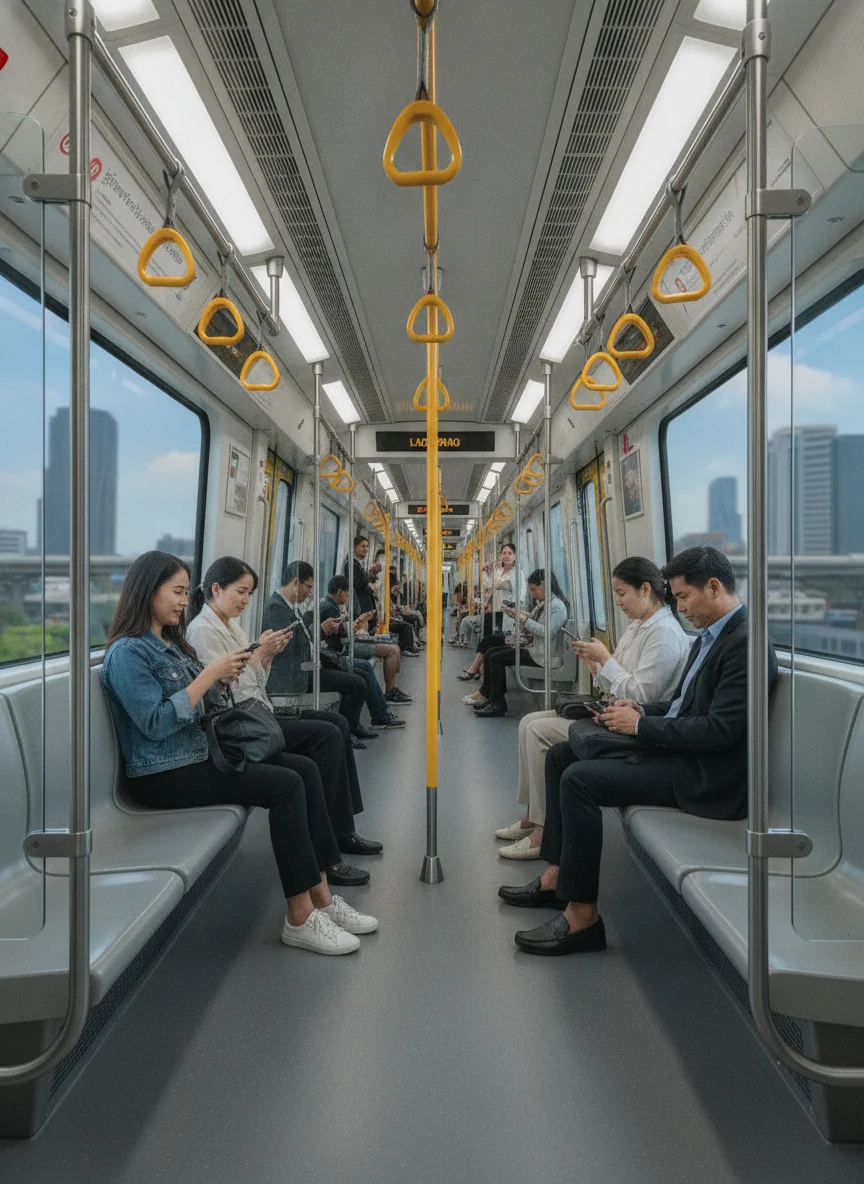
Platforms feature half-height screen doors that synchronise with the driverless monorail doors, enabling level boarding with minimal gaps between the platform edge and carriage floor. While elevated stations are open-air and can feel warm during the middle of the day, carriages are powerfully air-conditioned. The four-car Alstom Innovia trainsets feature bright interiors with dedicated wheelchair parking bays fitted with securing belts in the end cars, alongside clearly marked priority seating for elderly passengers, pregnant women, and monks.
Real-time journey tracking is provided by digital interior route maps mounted above the passenger doors and central display screens, supported by clear audio announcements in both Thai and English. Because the trains run automatically without an enclosed driver's cab, passengers can stand at the front and rear windscreens, where large glass panels deliver unobstructed, elevated panoramic views across the suburban skyline along Lat Phrao and Srinagarindra roads.
Fare Structure and Ticketing
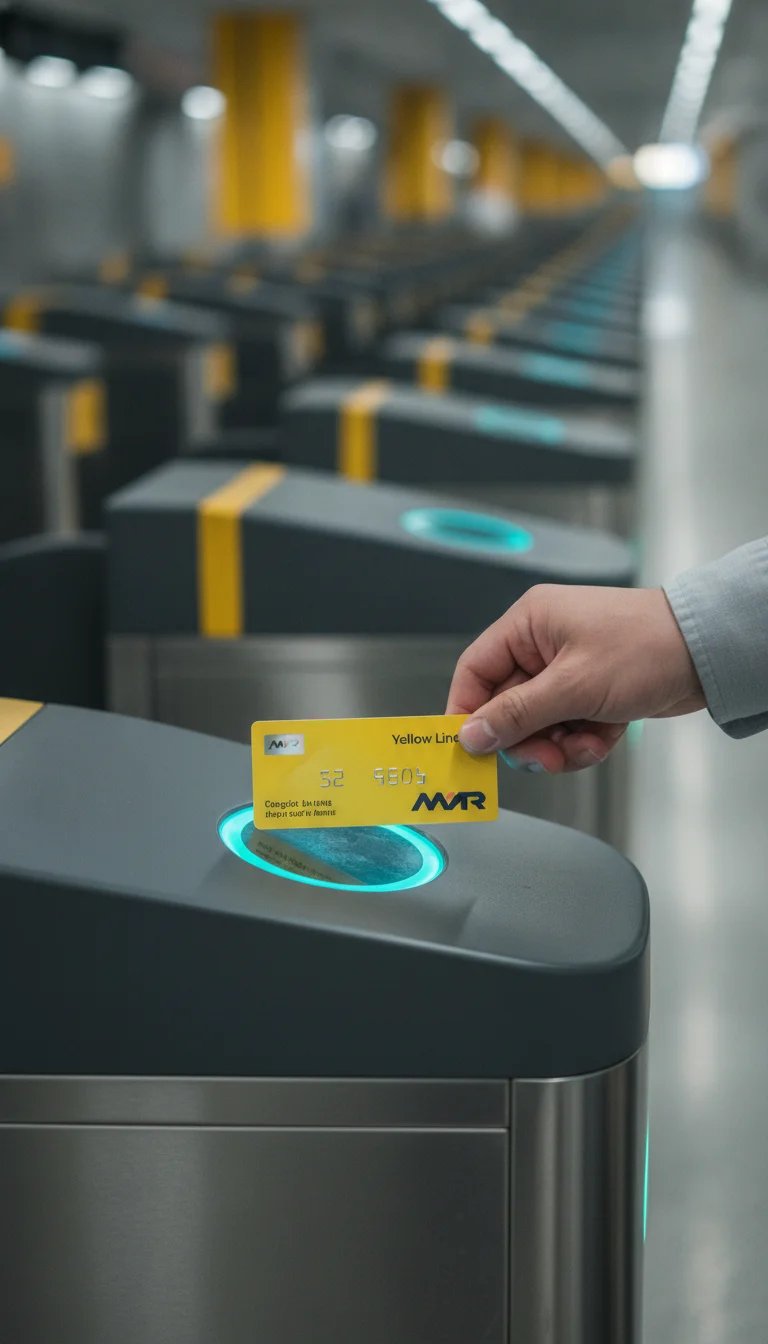
Fares on Bangkok's MRT Yellow Line operate on a graduated, distance-based structure determined by the number of stations travelled along the 23-stop corridor. Standard one-way adult fares start at 15 THB for a single-station journey and rise incrementally to a ceiling of 45 THB for the complete run between Lat Phrao and Samrong. Discounted concession fares exist for eligible Thai students and senior citizens presenting recognised identification, while international tourists and non-concession commuters travel on standard adult pricing. Elevated station concourses display clear fare charts above the ticket concourses, listing English and Thai station names alongside corresponding prices.
Single-journey tickets can be obtained at every station from bilingual touchscreen vending machines or staffed customer service windows. Ticket machines support both Thai and English, dispensing single-ride cards after receiving payment via Thai baht coins and banknotes or QR scans using compatible mobile banking applications. Ticket counters provide direct assistance, exchange change for machines, and issue physical stored-value media.
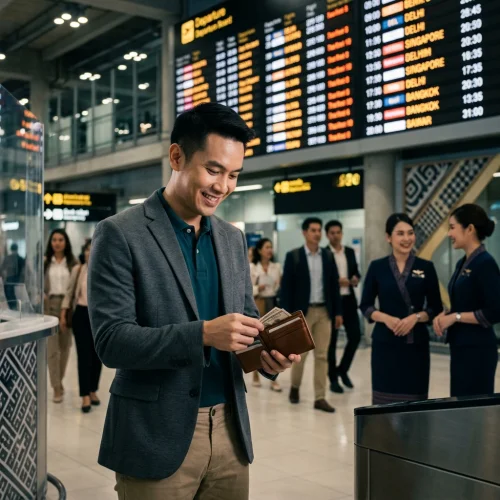
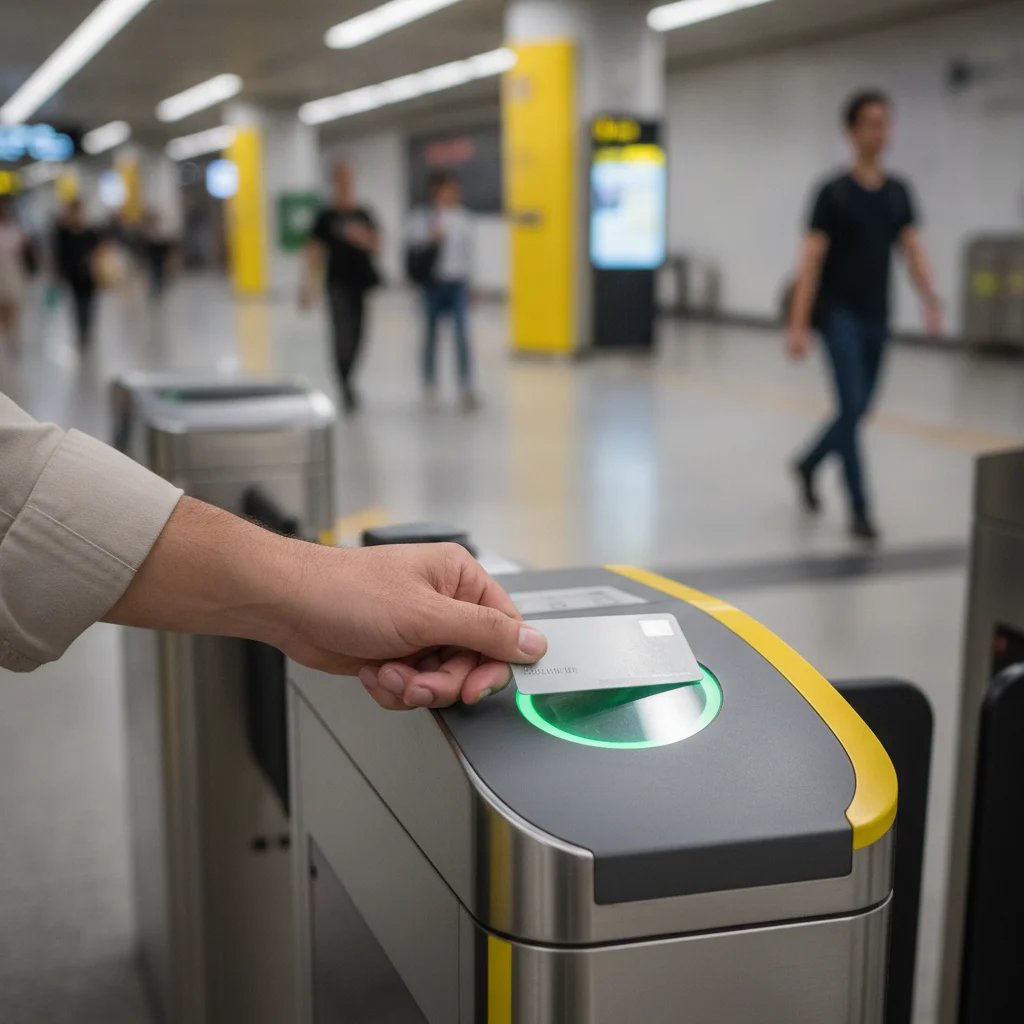
Because the monorail is managed by an affiliate of the BTS Skytrain system, ticketing integration differs from Bangkok’s underground rail lines. Stored-value payments require a standard Rabbit Card; older underground MRT cards are not accepted at Yellow Line fare barriers. In addition to Rabbit Cards, passengers can tap contactless EMV bank cards—including international Visa and Mastercard credit or debit cards—directly at automated gates to enter and exit. If you intend to navigate eastern Bangkok using this monorail route, arranging your preferred ticketing card ahead of time saves queuing at busy interchanges.
Location and Getting There
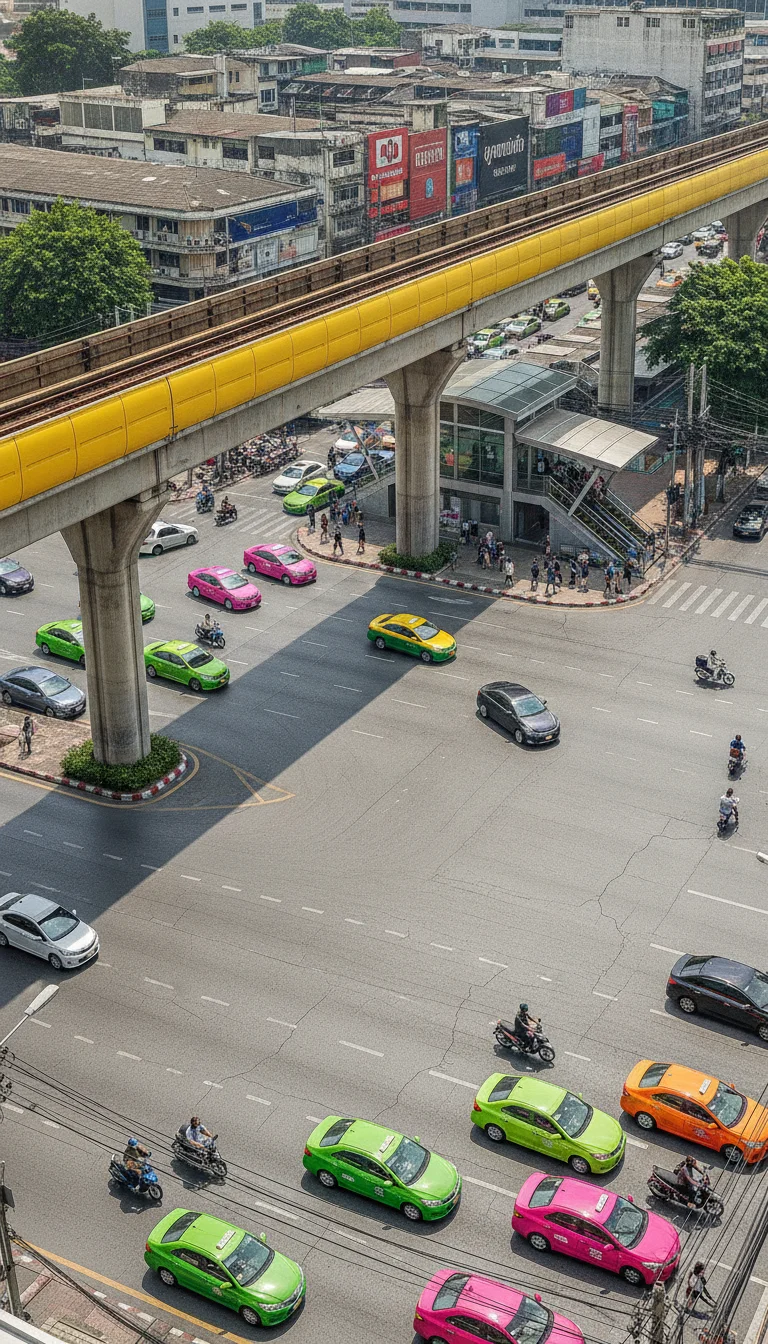
The MRT Yellow Line operates across the eastern flank of Greater Bangkok and into Samut Prakan province. Spanning 30.4 kilometres along the heavily travelled Lat Phrao Road and Srinagarindra Road corridors, the monorail runs between two outer terminal stations: Lat Phrao (YL01) in Chatuchak district, positioned at the junction of Lat Phrao and Ratchadaphisek roads, and Samrong (YL23) on Thepharak Road in Samut Prakan. The route cuts across several major eastern residential and commercial districts, including Wang Thonglang, Bang Kapi, Suan Luang, and Prawet, providing orbital transport outside the central core.
For travellers arriving via Suvarnabhumi Airport (BKK), connecting to the monorail avoids central Bangkok altogether. The Airport Rail Link (ARL), located on the basement level of the passenger terminal, provides a direct link to Hua Mak Station (A4). Trains depart every 10 to 15 minutes, taking roughly 15 to 17 minutes and costing 25 THB (around £0.55). From the ARL concourse at Hua Mak, an elevated covered footbridge connects directly to MRT Yellow Line Hua Mak Station (YL11), where passengers can board monorail services heading north towards Lat Phrao or south towards Samrong.
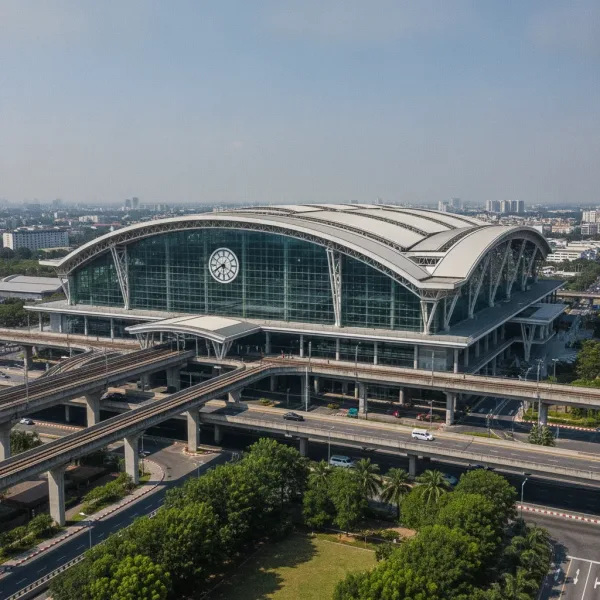
Reaching the line from Don Mueang International Airport (DMK) can be done by rail or road. By public transit, an overhead walkway links the airport terminals to Don Mueang Station on the SRT Dark Red Line commuter rail. Trains run to Krung Thep Aphiwat Central Terminal in roughly 15 to 17 minutes. An underground walkway connects the terminal complex to Bang Sue MRT Station on the Blue Line; from there, ride four stops eastward to Lat Phrao Station (BL15), where a covered skywalk links directly to the Yellow Line northern terminus (YL01). Alternatively, a metered taxi or ride-hailing vehicle from Don Mueang covers the 15-to-20-kilometre drive in roughly 30 to 50 minutes outside morning and evening rush hours, typically costing between 200 and 300 THB (£4.50 to £6.70), excluding expressway tolls and the standard 50 THB airport surcharge.
Costs and Ticketing
Fares on the MRT Yellow Line follow a distance-based pricing structure regulated by the Mass Rapid Transit Authority of Thailand (MRTA). As an urban monorail, the service requires no advance booking or seat reservations. Under current operational pricing, standard adult single fares start at 15 THB (approximately £0.35) for a single-station hop and cap at 45 THB (around £1.05) for the full 23-station journey between Lat Phrao and Samrong. For a visitor making multiple stops across eastern Bangkok in a single day, total expenditure typically ranges between 50 THB and 100 THB (£1.15 to £2.30), providing an economical alternative to hailing taxis along congested surface roads.
Single-journey trips use plastic smart cards rather than paper tickets or tokens. These can be purchased from automated ticket vending machines or staffed ticket counters in every concourse. Touchscreen machines provide English-language guidance and accept Thai baht coins and banknotes, alongside QR code mobile payments. Passengers tap the card against the turnstile sensor on entry, then feed it into the card return slot upon exit, where the gate collects it for reuse.
Contactless EMV bank cards allow UK travellers to bypass ticket queues entirely. Station fare gates accept contactless Visa and Mastercard credit or debit cards tapped directly at the sensor. The identical card or device must be tapped on entry and exit so the correct distance fare can be deducted. Rabbit Cards, the stored-value cards standard on the BTS Skytrain, are also accepted. Standard adult Rabbit Cards can be bought at station counters for 200 THB, which covers a 120 THB issuing fee and 80 THB in initial travel credit.
Unlimited day passes are not issued for the MRT Yellow Line, and BTS One-Day Passes do not work on the route. Transit cards designed for Bangkok's underground metro, such as the MRT Plus card, are also incompatible. Standard journeys incur no booking fees or peak supplements. When transferring between the Yellow Line and the MRT Blue Line at Lat Phrao, travellers paying with an EMV contactless card benefit from an integrated transfer discount, which waives the second entry fee if the connection is made within 30 minutes.
Fare Comparison Table
Fares on Bangkok's MRT Yellow Line operate on a distance-based structure ranging from 15 THB to 45 THB (roughly £0.33 to £1.00) per journey. Standard per-ride fares remain identical whether tapping an accepted bank card, using stored value, or buying single tickets. The table below outlines payment methods, journey costs, and key purchase conditions across the monorail network.
| Fare Option | Cost (THB) | Approx. Cost (GBP) | Details |
|---|---|---|---|
| Single-Journey Ticket | 15–45 | £0.33–£1.00 | Purchased at station ticket machines or counters; fare varies by distance travelled. |
| Contactless EMV Bank Card | 15–45 | £0.33–£1.00 | Tap supported contactless Visa or Mastercard debit or credit cards directly at the fare gates. |
| Rabbit Card (Stored Value) | 15–45 per trip | £0.33–£1.00 per trip | 200 THB initial purchase at ticket offices (includes card issuing fee and initial credit). |
| Day Pass | Not available | Not applicable | No unlimited single-day travel pass is currently offered for the Yellow Line network. |
Who the Yellow Line Suits
The MRT Yellow Line suits passengers moving between northern Bangkok and Samut Prakan who want to bypass persistent surface traffic along the Lat Phrao and Srinagarindra corridors. It works particularly well for independent travellers visiting eastern suburban destinations, including the Srinakarin Train Night Market, Seacon Square, and Suan Luang Rama IX Park, which are clustered near Suan Luang Rama IX station and previously required awkward taxi journeys from the BTS Skytrain. It also provides a practical bypass for commuters travelling between the MRT Blue Line at Lat Phrao, the Airport Rail Link at Hua Mak, and the BTS Sukhumvit Line at Samrong without cutting through the city centre.
The monorail is less practical for travellers carrying multiple large suitcases or bulky luggage. The four-car monorail trainsets have narrower interiors than Bangkok's heavy-rail underground trains and feature no dedicated luggage racks, so manoeuvring bags through station concourses and crowded aisles during rush hours can be awkward. Visitors whose itineraries stay within central tourist districts — such as Sukhumvit, Siam, Silom, or the riverside — will rarely encounter this suburban route. Those heading straight between the airport and a central hotel with heavy luggage will generally find metered taxis or direct rail connections on the Airport Rail Link far more convenient.
What to Know Before You Travel
Planning a journey on the MRT Yellow Line requires an understanding of how Bangkok's elevated monorail interacts with the surrounding transport network. Although the monorail provides direct connections to major routes—the MRT Blue Line at Lat Phrao, the Airport Rail Link at Hua Mak, and the BTS Sukhumvit Line at Samrong—it maintains a distinct ticketing perimeter. There are no direct paid-to-paid transfers between systems. When changing lines, you must tap out through the automated exit gates, walk across the designated elevated footbridges, and pass through a fresh set of ticket barriers on the connecting network. Setting aside five to ten minutes for these interchange walks ensures you navigate the barrier transitions smoothly without hurrying.
Passenger numbers fluctuate markedly across the eastern suburban corridor between north Bangkok and Samut Prakan. Standard weekday peak periods operate from 07:00 to 09:00 in the morning and from 17:00 to 20:00 in the evening, during which monorail services run at five-minute intervals. Across off-peak daytime hours, weekends, and public holidays, train frequency reduces to departures roughly every ten minutes. Because the four-car monorail train sets carry dense crowds of standing commuters during rush hours, navigating carriages with bulky luggage or prams is substantially simpler if you schedule journeys through the middle of the day.
Every one of the 23 stations along the 30.4-kilometre route is an elevated structure with passenger facilities spread across multiple levels. While each station provides street-level lifts, escalators, and fixed staircases up to the ticket concourse, as well as interior lifts connecting directly to the boarding platforms, lift access is not available at every street corner. Street-level staircases are built at multiple exits, but elevator shafts are positioned at specific designated entrances. Travellers requiring step-free access should check the ground-level station layout maps and directional signs posted along the pavement to reach the correct entrance.
Practical Tips
Consuming food and drinks within paid fare areas, on station platforms, or aboard monorail carriages is strictly prohibited across the Bangkok transit network. Takeaway drinks, iced coffees, and street snacks purchased at concourse retail kiosks outside the fare gates must remain sealed and stored inside a bag before you tap through the turnstiles. Even drinking plain water from a personal bottle on the platform or inside the carriage is disallowed, so finish beverages before passing the barriers. Strongly odorous items, particularly fresh durian, and smoking or vaping are forbidden throughout the stations. Security personnel at concourse checkpoints conduct routine visual bag inspections, so keep bags ready to open if requested.
Boarding runs smoothly when following the painted floor guides. Passengers queue in single file behind the yellow safety lines flanking each platform screen door, keeping the central walkway clear so disembarking passengers can step off first. Carriages feature clearly marked priority seats beside the doors. Thai social customs accord special deference to Buddhist monks, alongside elderly travellers, pregnant women, and passengers with disabilities; offer these seats promptly when eligible passengers board. Female travellers should take particular care not to touch or brush against Buddhist monks, as monastic vows forbid physical contact with women. Carriages can sway noticeably along elevated curves and track switches, so hold overhead straps or stanchions when standing, and slip rucksacks down to floor level during busy commuting hours to keep aisles clear.
Yellow Line monorails operate daily from 06:00 until 24:00 (midnight). Passenger carriages are heavily air-conditioned, providing welcome respite from tropical humidity, though the temperature drop can feel sharp after walking along sun-exposed walkways. Digital screens and bilingual automated announcements broadcast station names in Thai and English, confirming upcoming stops and indicating which side carriage doors will open. When planning transfers to connecting routes—such as the Blue Line at Lat Phrao, the Airport Rail Link at Hua Mak, or the Sukhumvit Line at Samrong—allow a buffer of 10 to 15 minutes to clear ticket barriers and walk across link bridges, particularly if managing luggage. Downloadable transit apps and Bangkok rail maps provide route timings and interchange layouts to coordinate travel efficiently.
Quick Reference Table
| Item | Detail | Notes |
|---|---|---|
| Official Name | MRT Nakkhara Phiphat Line | Elevated straddle monorail system commissioned by the MRTA and operated by EBM |
| Launch Date | 3 July 2023 | Thailand's first commercial straddle monorail route |
| Route Length | Approximately 30.4 km | Orbital suburban corridor spanning eastern Greater Bangkok and northern Samut Prakan |
| Termini | Lat Phrao (YL01) to Samrong (YL23) | Bypasses road congestion along Lat Phrao and Srinagarindra roads |
| Total Stations | 23 elevated stations | Step-free universal access with lifts, escalators, and platform screen doors at all stops |
| Operating Hours | 06:00–24:00 (midnight) daily | Operates seven days a week |
| Service Frequency | 5 to 10 minutes | Departures every 5 minutes during weekday peak hours (07:00–09:00 and 17:00–20:00); every 10 minutes off-peak, weekends, and holidays |
| Standard Fares | 15–45 THB (approx. £0.33–£1.00) | Distance-based graduated fare capped at 45 THB for the full 23-station journey |
| Payment Methods | Contactless EMV bank card, Rabbit Card, or single-journey token card | International Visa and Mastercard accepted; MRT underground smart cards and BTS day passes are incompatible |
| Rolling Stock | 4-car Alstom Innovia trainsets | Automated driverless monorails with air-conditioned carriages and panoramic front and rear views |
| Key Interchanges | Lat Phrao (MRT Blue Line), Hua Mak (Airport Rail Link), Samrong (BTS Sukhumvit Line) | Requires tapping out through gates and crossing covered skywalks (5–10 minute transfer walk) |
| Website | https://www.ebm.co.th | Official operator website for service updates, timetables, and route information |
FAQ: MRT Yellow Line
What is the purpose of Bangkok's MRT Yellow Line?
How long is the MRT Yellow Line and how many stations does it have?
Which other transit lines connect to the MRT Yellow Line?
Is the MRT Yellow Line accessible for all passengers?
How much do fares cost on the MRT Yellow Line?
What payment methods are accepted on the MRT Yellow Line?
Are there any day passes or integrated tickets for the MRT Yellow Line?
How can I get to the MRT Yellow Line from Suvarnabhumi Airport (BKK)?
Are food and drinks allowed on the MRT Yellow Line?
What are the boarding etiquette and social customs to observe on the MRT Yellow Line?
Reviewed by the Thailand Guide Editorial Team • Last reviewed: 22 September 2026
This page provides general information only and is not financial, legal, or immigration advice. Always verify current rules with official Thai government sources or a qualified professional before making decisions.